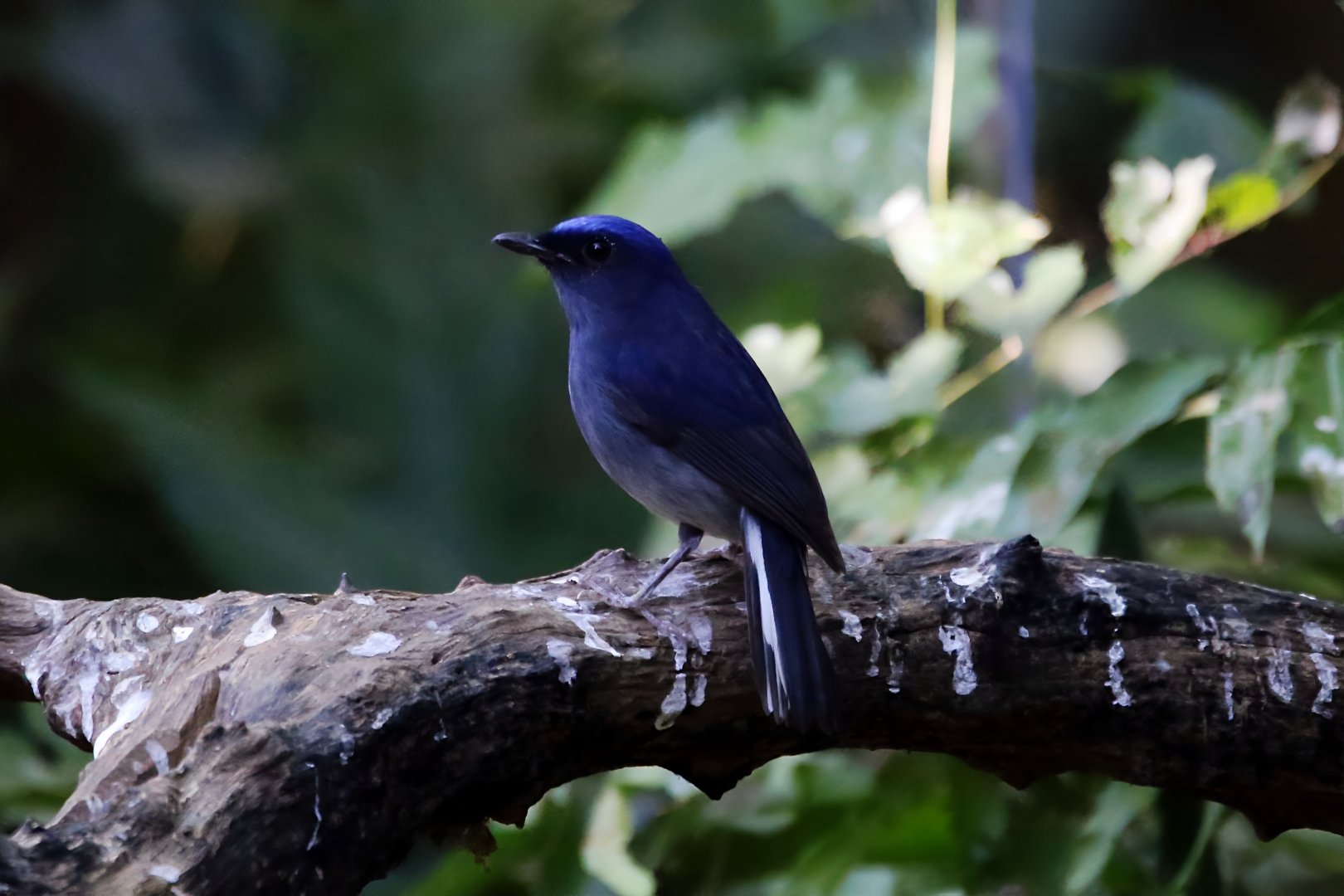
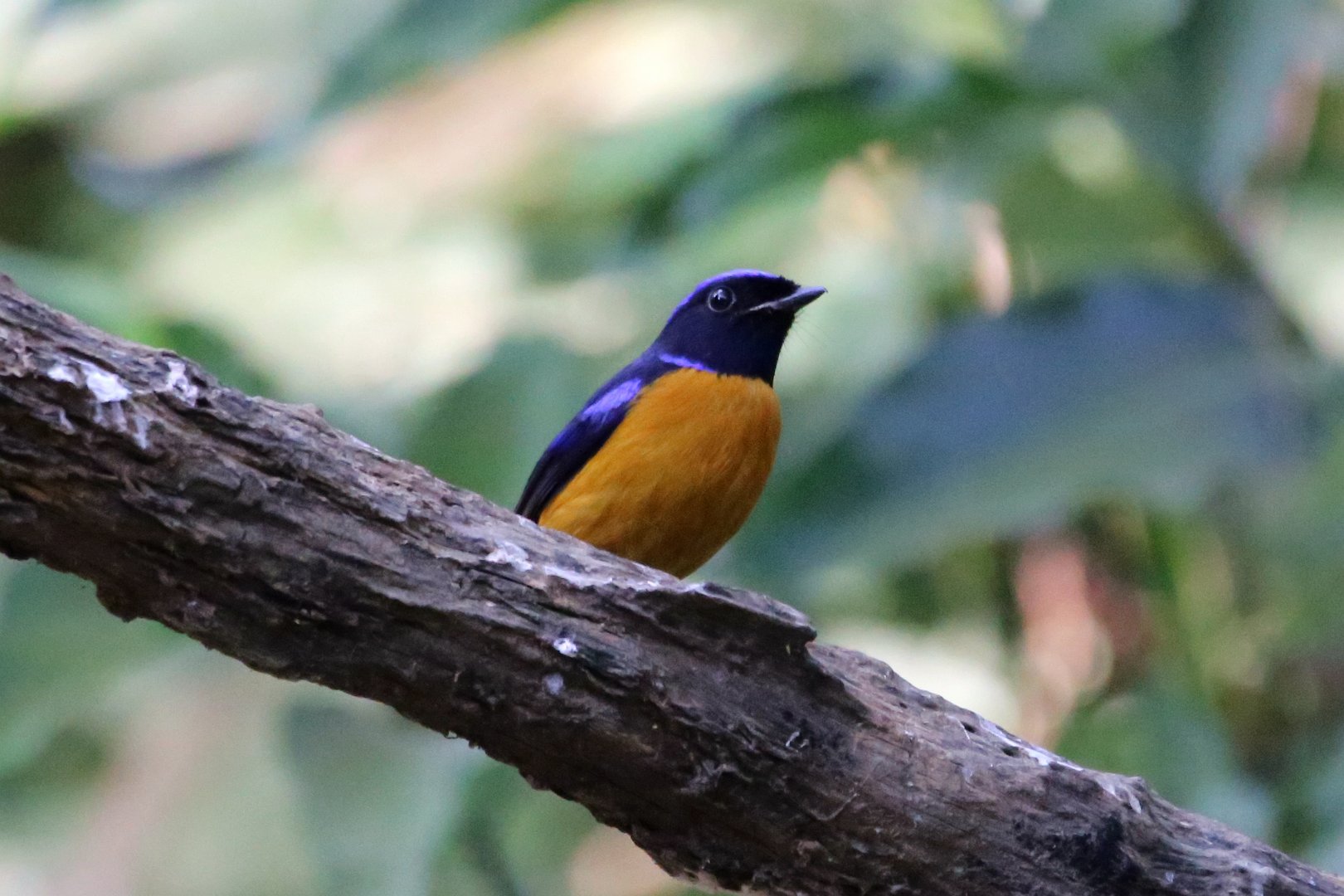
Trip to West Yunnan, January 2025

On my last trip to Japan, I was able to speak with several travelers who commented on the differences between traveling to Japan and traveling to China, and the truth is that they left China in a pretty bad light... They talked about the need to haggle prices with taxi drivers and that the drivers always tried to charge exorbitant prices. Added to this is the fact that the cooperative nature of the Japanese seems to have nothing to do with that of the Chinese, who treat you much worse... I'm constantly talking about things they told us; I have no experience with the Chinese beyond the airport, although I must admit that they confiscated two of my batteries there and the truth is that this doesn't make me feel much sympathy for them... Is it true about haggling to agree on a price with transport?

Once again, congratulations on the excellent thread.

Sorry for the late reply. While I couldn't speak for others, personally I never had such experience in any major Chinese cities. And if you want to reduce the risk to zero, you can always choose Didi or public transport (most major Chinese cities have good metro system). Of course it's trickier for smaller cities or obscure destinations, such as Yaojiaping and Hornbill Valley in my January trip. I consulted my friends who had been there and searched social media posts to get a general idea about how much it cost before I departed. It turned out I didn't have to haggle as the price I got from the drivers was quite similar to what I learned from the Internet.
 
Yes, this thread is still alive...

January 18, The "River Tern Site", Yingjiang


After a late night spent revising my paper, I woke up later than my companions the following morning. They had already gone to Yingjiang Wetland Park for a second round of birdwatching and had quite a fruitful experience, while I stayed behind. By the time I made it downstairs for breakfast, our bird guide had already arrived. For the next three days, we were in the capable hands of our guide in the Hornbill Valley.

The main reason we hired a bird guide was practicality. There are no public buses from downtown Yingjiang to the Hornbill Valley, and even a taxi ride costs around 300 RMB one way. Furthermore, Hornbill Valley is quite expansive, and even once you arrive, you'd still need to drive around. Hiring a guide took care of all these logistics, making the trip far more convenient. Additionally, Hornbill Valley's accommodations mostly consist of homestays, which aren't available for online booking. The guide handled all those arrangements, leaving us with one less thing to worry about. The cost for the first day, which included transportation from downtown Yingjiang to the Hornbill Valley, came to 500 RMB. The second day was 400 RMB for a full day of birding, and the third day, which included a morning birdwatching session followed by a ride to Tengchong Airport, totaled 700 RMB. For a group of four, the average cost per person was 133 RMB per day, which seemed like a reasonable price for the experiences we were about to have.

Our guide was a 29-year-old man from the Lisu ethnic group. His entire family works in the birdwatching industry, and his uncle was the first local to become a bird guide in the Hornbill Valley. However, birdwatching is only a seasonal occupation, so our guide had to take multiple jobs for a living. In addition to guiding, he is also a plantation owner, a part-time forest ranger, and a border patrol assistant. Growing up in the valley, he had an extensive knowledge of the local bird species, and though less extensive, wildlife in general. On the drive to the valley, he shared fascinating stories of his encounters with wildlife, including gibbons, black bears, and gaurs, the last of which are now locally extinct in Yingjiang.


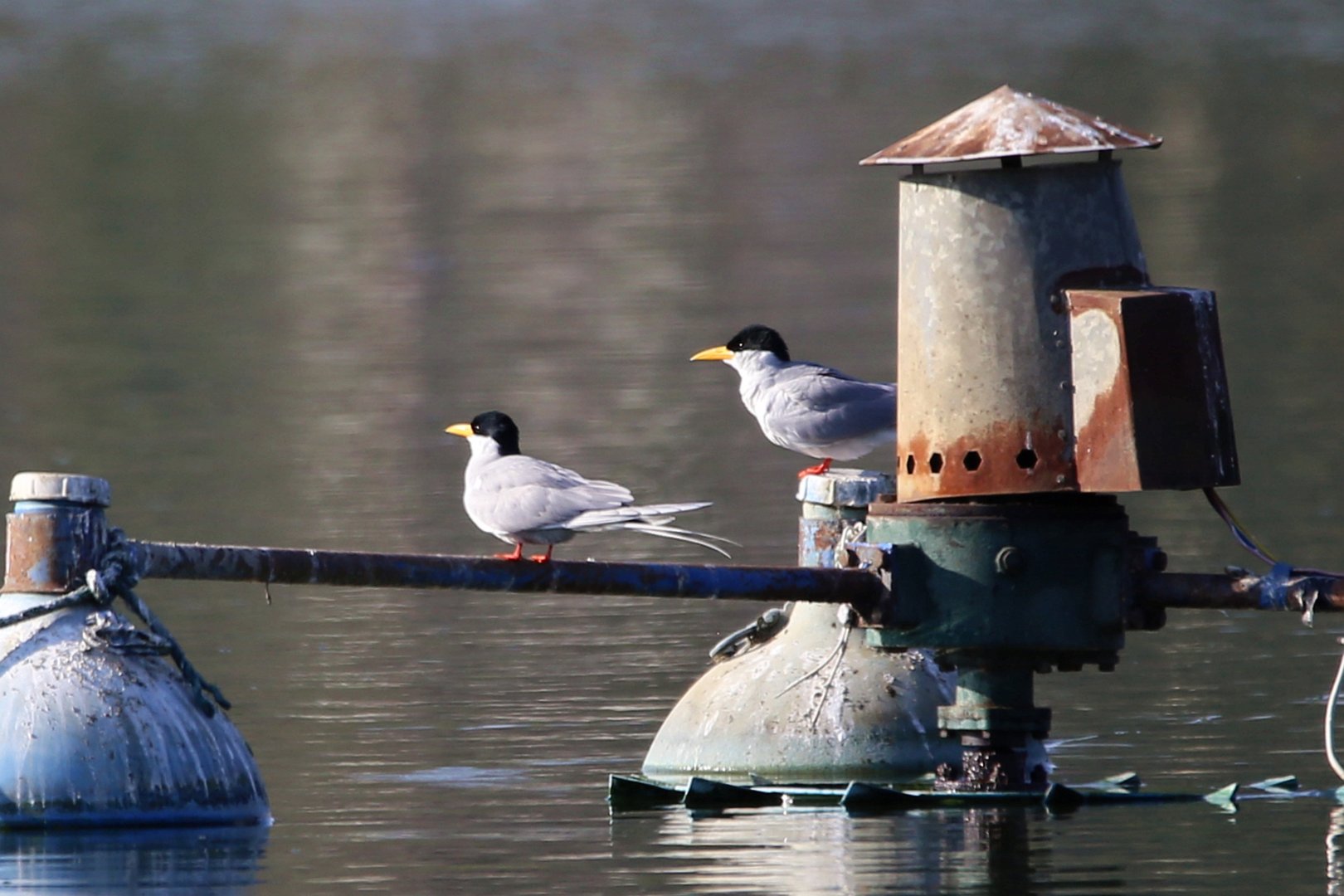
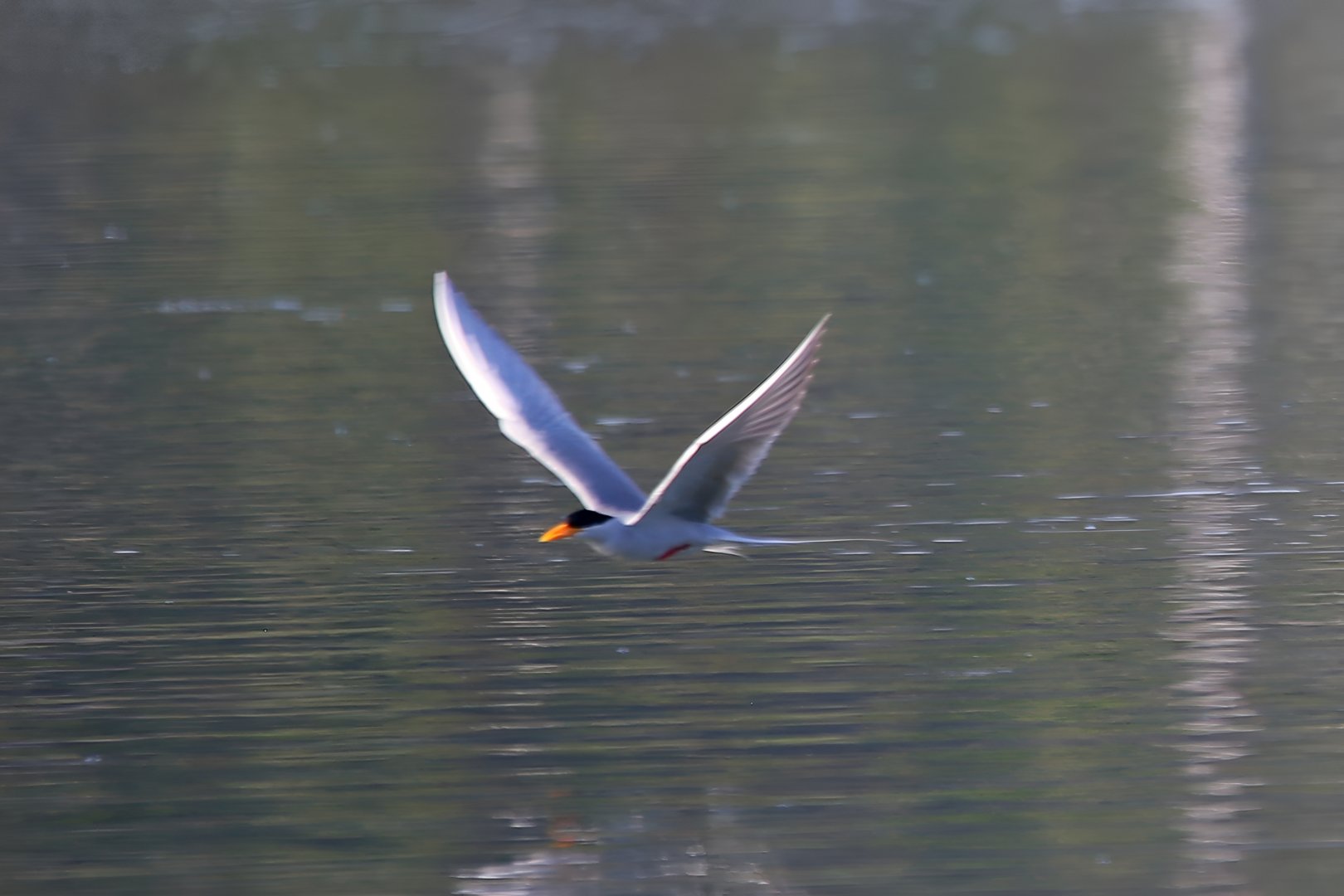
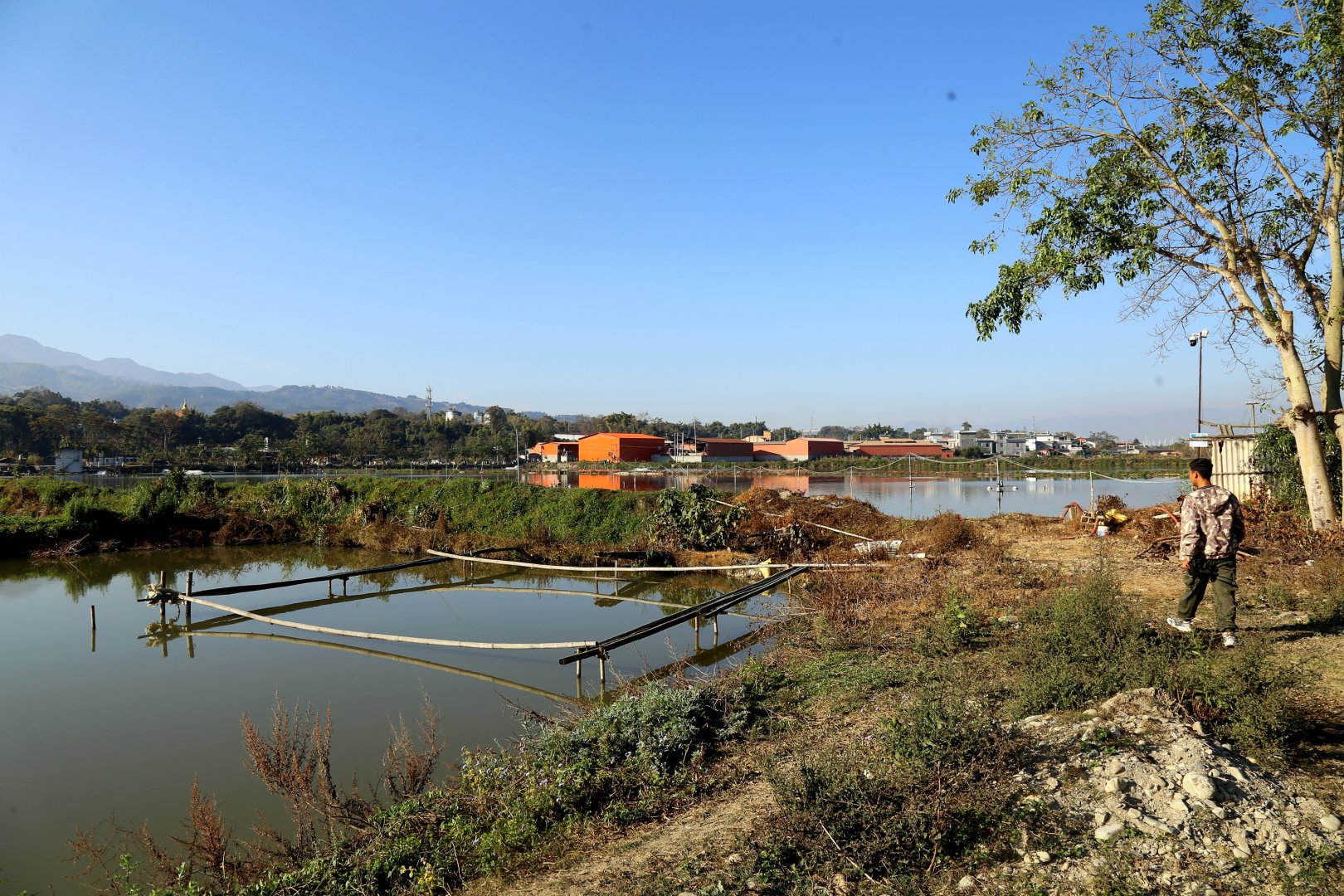
Before we drove to the Hornbill Valley, we stopped to see the river tern, a species that breeds in the Daying River Basin. These birds migrate from Myanmar in late December or early January, and stay in Yingjiang for about half the year, leaving in June or July. Nesting begins in February, and prior to that, the birds are in the courtship and pairing stage. During this period, they mainly frequent three to four fish ponds near downtown Yingjiang (about 10 minutes drive), so if you couldn't spot them in one, you simply move to another pond, and after a round you'll definitely find them. If the pairs successfully mate, they will lay eggs and hatch them on the on sandy islands along the Daying River.


We were lucky to find a pair of river terns at our second fish pond, which was literally 50% of the population in China. Yingjiang is currently the only known stable breeding site for the species in China. The population here is part of the Myanmar population that migrates annually for breeding. The number of river terns was relatively high in the 1980s, to the point that it was even considered a pest for stealing fish from local fisherman. The species was listed as a Class II protected species in 1988 (upgraded to Class I in 2021). However, efforts to monitor the species only began in 2014, and it was not until 2017 that substantial protection measures were introduced by the local government. Unfortunately, by then, the population had dwindled to just a few individuals, and it has remained critically low since. According to our guide, the local government is probably doing its best to save the species, including monitoring of nesting site and coordination with the local water conservation departments to maintain appropriate water levels. Despite the extensive efforts, the population continues to decline. The number of birds that migrated back in January was 7 in 2019 (with 6 successful hatchlings, the highest in a decade), 5 in 2020, 7 in 2021, 8 in 2022 (but only one chick survived), 5 in 2023, 4 in 2024, and 4 again this year. Given that the river tern population in Myanmar is also critically endangered, with only a few dozen birds remaining, the future of the small breeding population in China seems increasingly dire……


We left the river tern site for Hornbill Valley around 10:30. Below is the bird list of all three sites near downtown Yingjiang: Zoochat Big Year 2025
 
January 18, Hornbill Valley, Yingjiang, Part One

Our birdwatching journey in Yingjiang officially began that afternoon in the Hornbill Valley, but before diving into the experience, let me share a bit about the place itself. Hornbill Valley is part of the larger Tongbiguan (铜壁关) Provincial Nature Reserve. While the reserve is quite expansive, Hornbill Valley is located at its edge, in what is known as the "experimental zone". According to national regulations, activities like agriculture and eco-tourism can only be conducted in this area, while the core of the reserve is more strictly protected.

Despite its name, Hornbill Valley is not technically a valley. To reach the area, we drove southwest from downtown Yingjiang, along the Daying River for over an hour, until we reached the outskirts of the reserve. Upon entering the reserve, we were given a pass after registering our details at a checkpoint, a necessary step for anyone hoping to legally enter the area. For foreigners, the process is a bit more cumbersome, requiring a visit to the local police station in Mangyun (芒允) Township for lodging registration, which is nearly 20 miles northeast to the checkpoint. We did meet an international birdwatching group from Europe during our visit. I guess their birding guide handled the registration procedure for them.


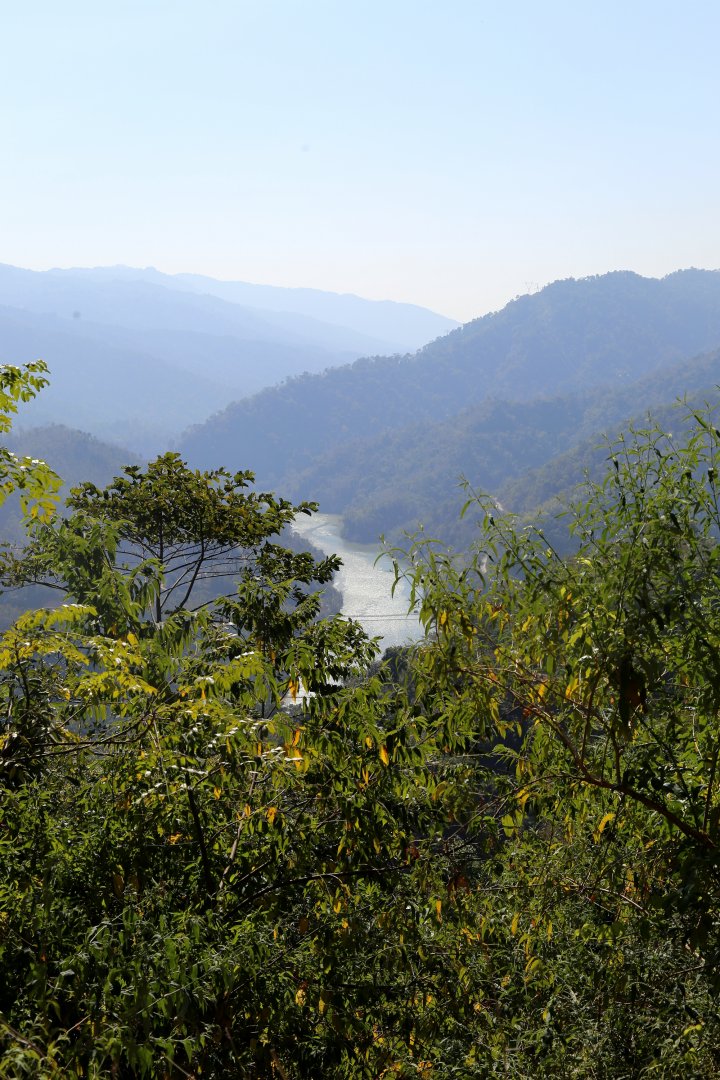
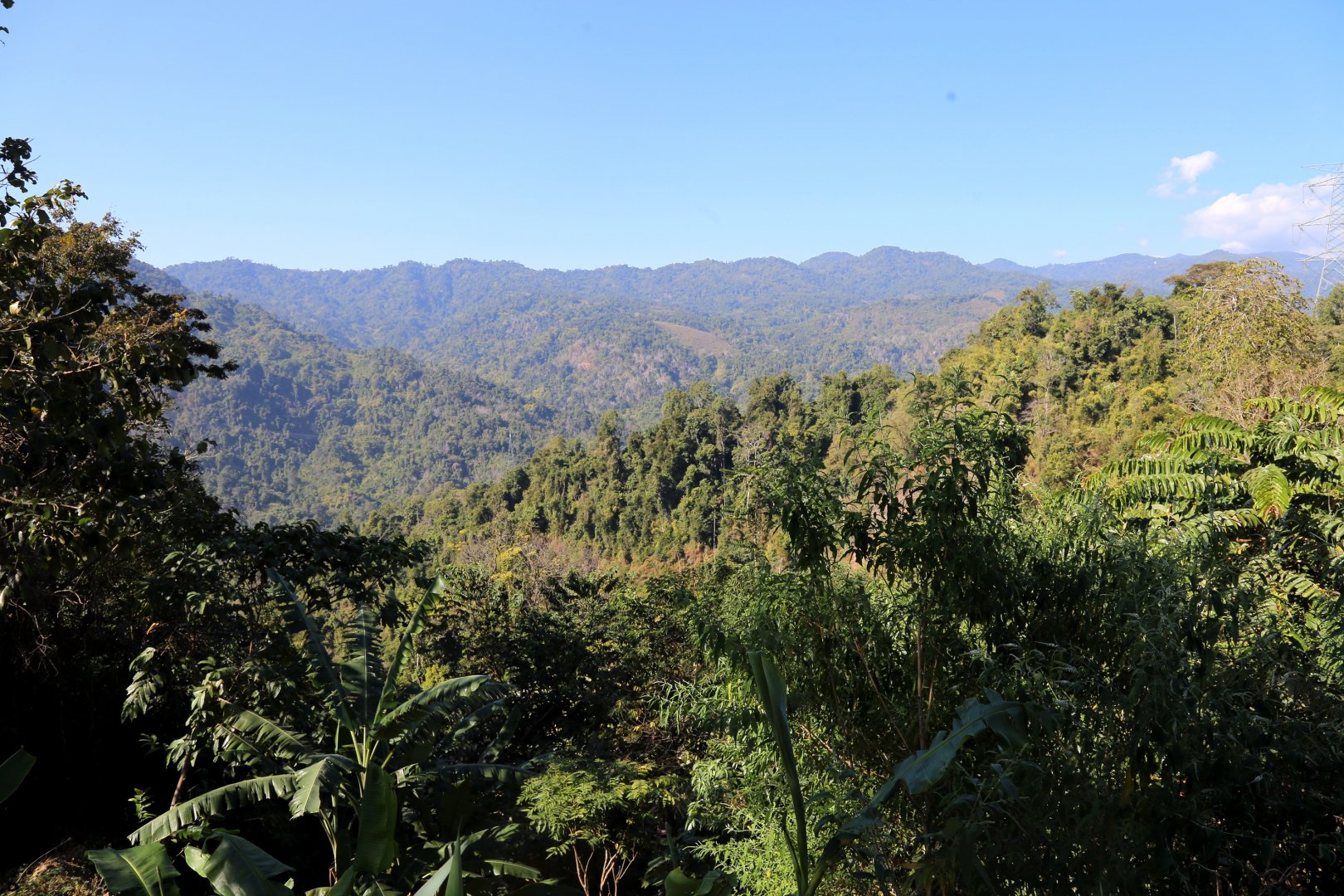
There was another half-hour drive from the checkpoint to our hotel. As we ventured further into the reserve, the landscape transformed, with towering trees lining both sides of the road. The drive is a scenic one, with the Daying River winding below and the road snaking along the mountainside. This is the "valley" part of the Hornbill Valley. Half of this valley stretches into Myanmar, with the other half located in China. It's here that we hoped to catch a glimpse of the famed hornbills. However, upon closer inspection, we noticed that much of the forest was mixed with agricultural crops. After asking our guide we learned that this was a result of local government initiatives that encouraged farmers to adopt modern techniques and reduce the destructive impact of traditional agriculture. The valley's residents, primarily from the Jingpo and Lisu ethnic groups, had traditionally practiced hunting and slash-and-burn farming. Now thanks to government policies, many had transitioned to more sustainable practices.

Initially, the local government had hoped to promote coffee cultivation. However, over time, the locals discovered that macadamia nuts, rather than coffee, were more suitable for farming in the reserve. The birdwatching industry in Yingjiang can only generate income for about half the year. From December to May, the region experiences the dry season, and the birdwatching business mostly operates during this period. After May, the rainy season arrives, bringing heavy rainfall that makes travel difficult. Moreover, the winding mountain roads into Hornbill Valley are prone to landslides, which occur every year. Our birding guide shared a story of a birdwatcher from Beijing who visited in August, only to get trapped in the valley for over 20 days due to a landslide that blocked the entire village's access to the outside world. Therefore, the birdwatching industry is limited to the dry season, while macadamia nuts need care during the rainy season. After May, the local villagers begin planting macadamia nuts, and by the time they harvest them, the birdwatching season is in full swing. This natural cycle allows the two industries to complement each other seamlessly. Now the macadamia nut trees have become integral to the local economy, offering a stable income for the villagers during the off-season for birdwatching tourism (and in fact the only source of income in the Covid years).
 
January 18, Hornbill Valley, Yingjiang, Part Two

Our destination was Hongbenghe (洪崩河), a small village at the border (or a 200-meter street, to be more precisely). It was once a bustling border town, but after the closure of the border post in the early 2000s, it became quieter. Hongbenghe had been an entry point for traders along the ancient trade route from Myanmar's Bamaw to Yunnan, with everything from timber and jade to illicit drugs passing through this narrow street. Today, it's little more than a small settlement. The elevation of Hongbenghe is about 200 meters. The road turns northeast here, and after driving about 10 kilometers uphill, there is another village called Shiti (石梯) at an elevation of over 700 meters. This is also the endpoint of the paved road. The "Hongbenghe-Baoqi Bum [Above Hongbenghe Village]" on eBird refers to this section. This section is primarily known for forest birds. Therefore, the true "Hornbill Valley" actually refers to the area centered around both Hongbenghe and Shiti Village.

Now, the reason we were here—Hornbill Valley is the only place in China where you can reliably observe three species of hornbills: the Great Hornbill, the Wreathed Hornbill, and the Oriental Pied Hornbill. The first two are particularly special, as Hornbill Valley is the only location in China with stable, accessible populations for birdwatchers. Interestingly, all five species of hornbills in China were historically found in the Hornbill Valley. Among the other two species, the Austen's brown hornbill, which our bird guide has never personally seen, went locally extinct by the 1990s. As for the rufous-necked hornbill, it still exists in the valley, but even our bird guide has only encountered it twice, making it nearly impossible for birdwatchers.

The peak season for observing the hornbills is during their breeding period, from late January to June, when these majestic birds are most active. Another opportunity comes in the autumn, when fruits ripen, attracting the hornbills to feed. Unfortunately, we arrived in mid-January when the fruit had already been eaten and the birds hadn't yet started their breeding rituals. Still, our guide remained optimistic, even though he warned us that sightings would be rare.


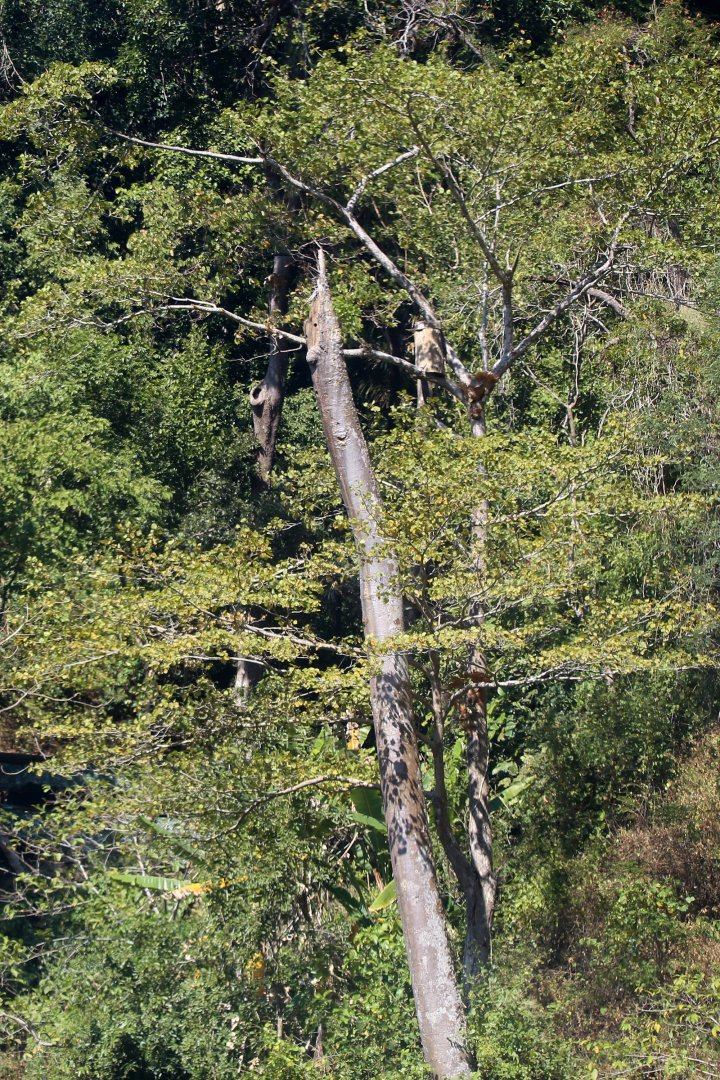
Before we reached Hongbenghe, we spotted a broken tree near the road—this once held a hornbill nest. For years, a pair of Wreathed Hornbills had returned each season to raise their young here. Sadly, the tree had been struck by strong winds and collapsed in 2023. Unwilling to lose their cash cow, locals built an artificial nest nearby, hoping the hornbills would return. The previous season, to everyone's surprise, the birds did indeed use the new nest. We stopped the car to take a photo of the artificial nest, and as it turned out, this might have been one of the most "hornbill-related" experience we got on this trip.

During our stay in Hongbenghe, we lodged in a small guesthouse run by a local woman. The accommodation, while modest by most standards, was the best in the street. It was the only place with private bathrooms in the rooms, and at 150 RMB a night, it was a bit more expensive than the other local options. Meals were enjoyed at a small restaurant across the street, run by a man from northeastern China who had settled in the area after marrying a local woman. The dining experience was unique—there were no menus, and the food was based on what ingredients were available that day. You could simply choose a dish after seeing what was offered, and the price would be decided after the meal. This informal style of dining felt quite different from what we were used to back home.
 
January 18, Hornbill Valley, Yingjiang, Part Three

After a quick meal and some rest, we headed straight to a bird blind—a sheltered spot designed for observing and photographing birds. In Hornbill Valley, birding can be done in two ways: traditional wild watching or blind watching, where photographers and birders hide in camouflaged shelters near feeding or watering stations. The valley has about 30 to 40 such blinds, some set up near stable breeding sites (like those for hornbills, making them almost like wild watching), while others attract birds with food and water. We visited two of the latter type.

Unlike Baihualing, where bird blinds developed more organically, Hornbill Valley's birding tourism is government-led. The nature reserve regulates the blinds—each must feature at least one or two rare species difficult to observe elsewhere to avoid the race-to-the-bottom competition. For instance, the one we visited that afternoon is famous for its white-cheeked partridge. Additionally, every blind must be managed by three households to ensure more villagers benefit from the birding economy. Many older villagers here belong to ethnic minorities and speak little Mandarin, so while they can't work as guides, they maintain the blinds, allowing them to profit from the industry. The entry fee is 70 yuan per camera, of which 20 yuan is allocated to each household. The remaining 10 is deposited into a collective fund owned by the community.


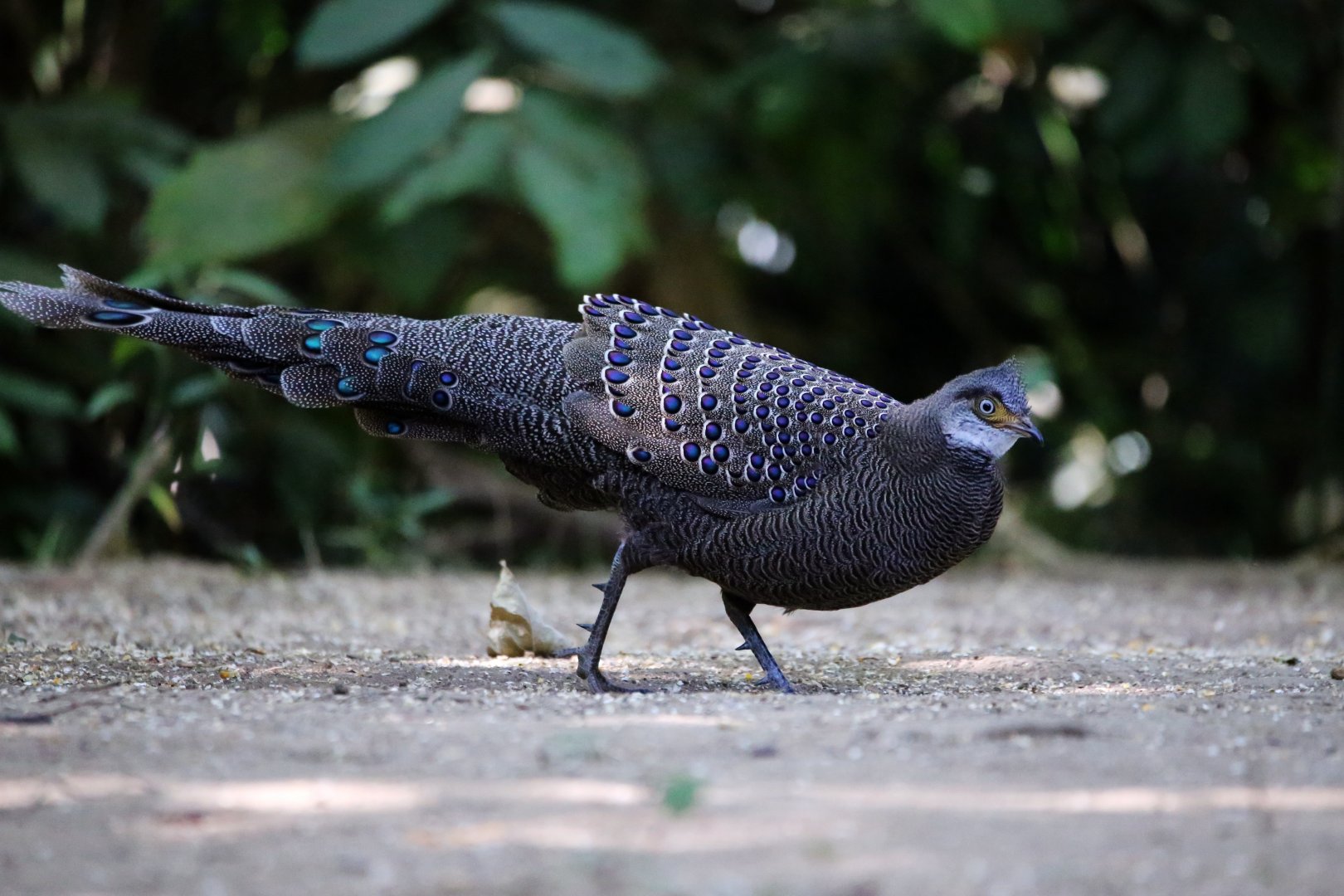
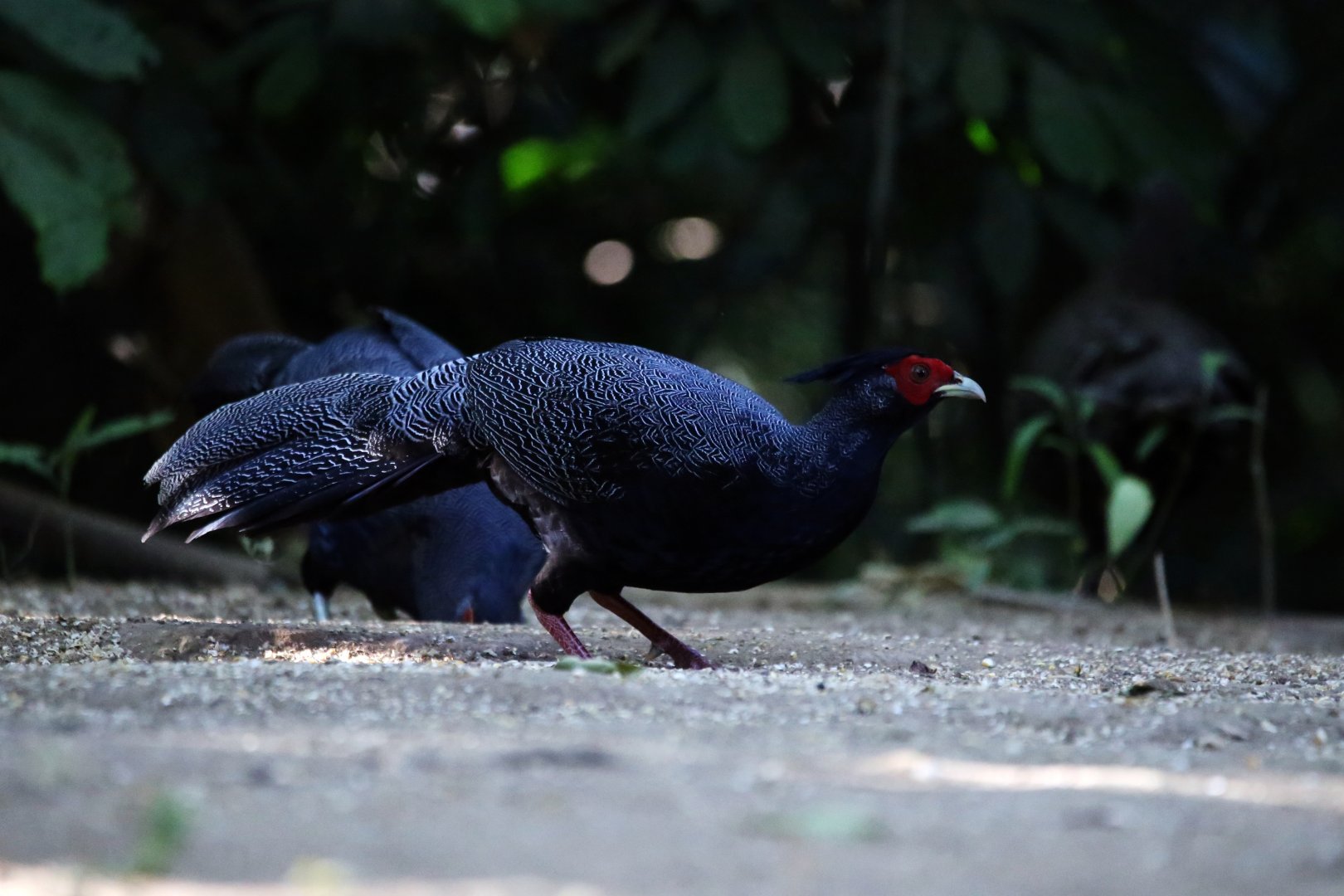
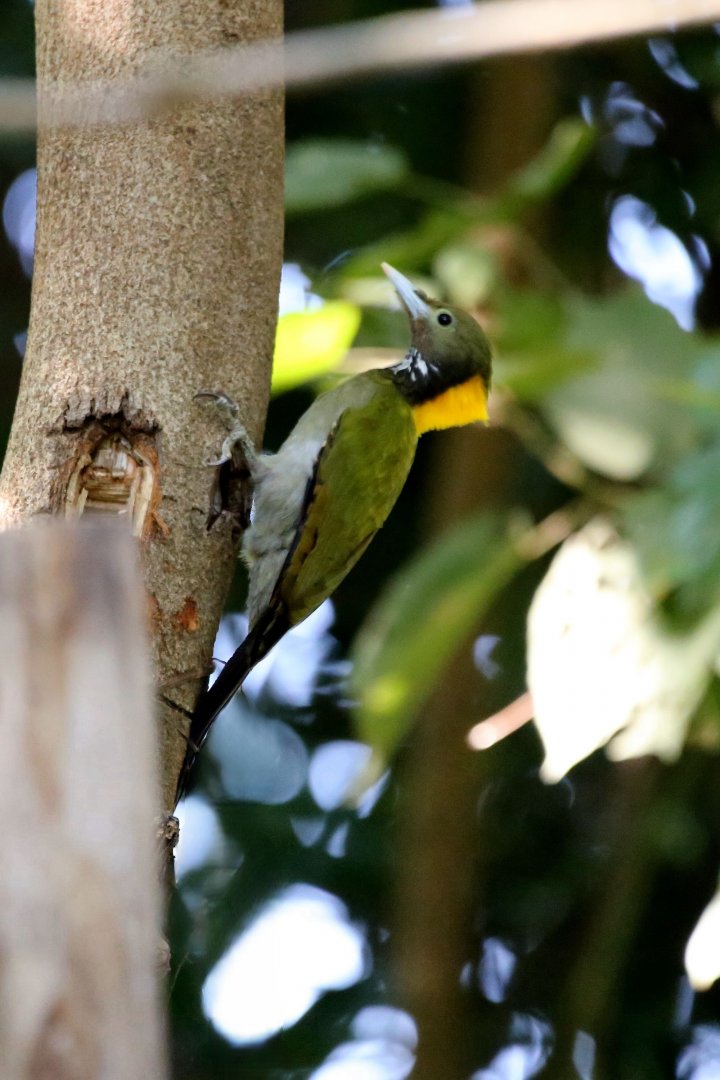
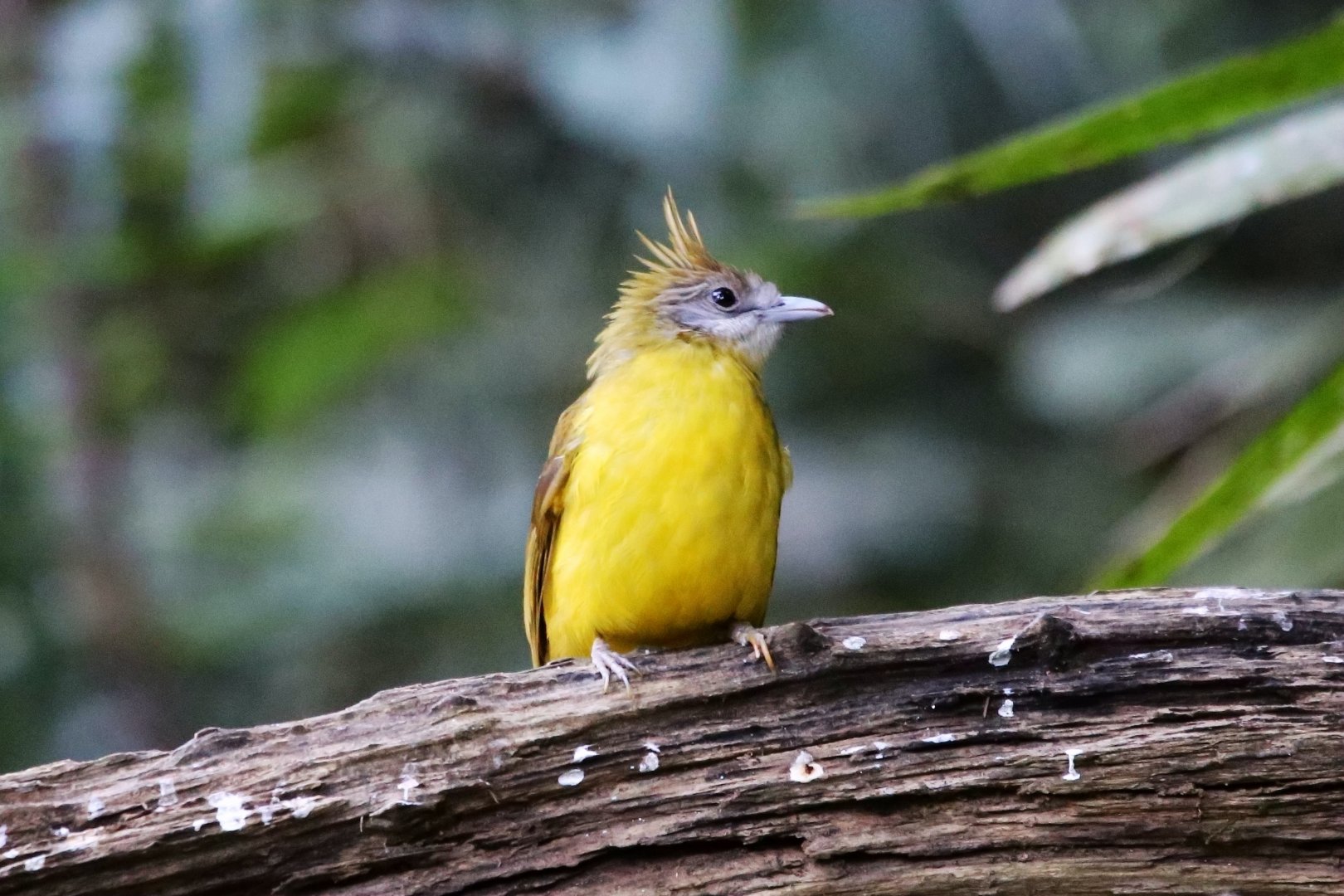
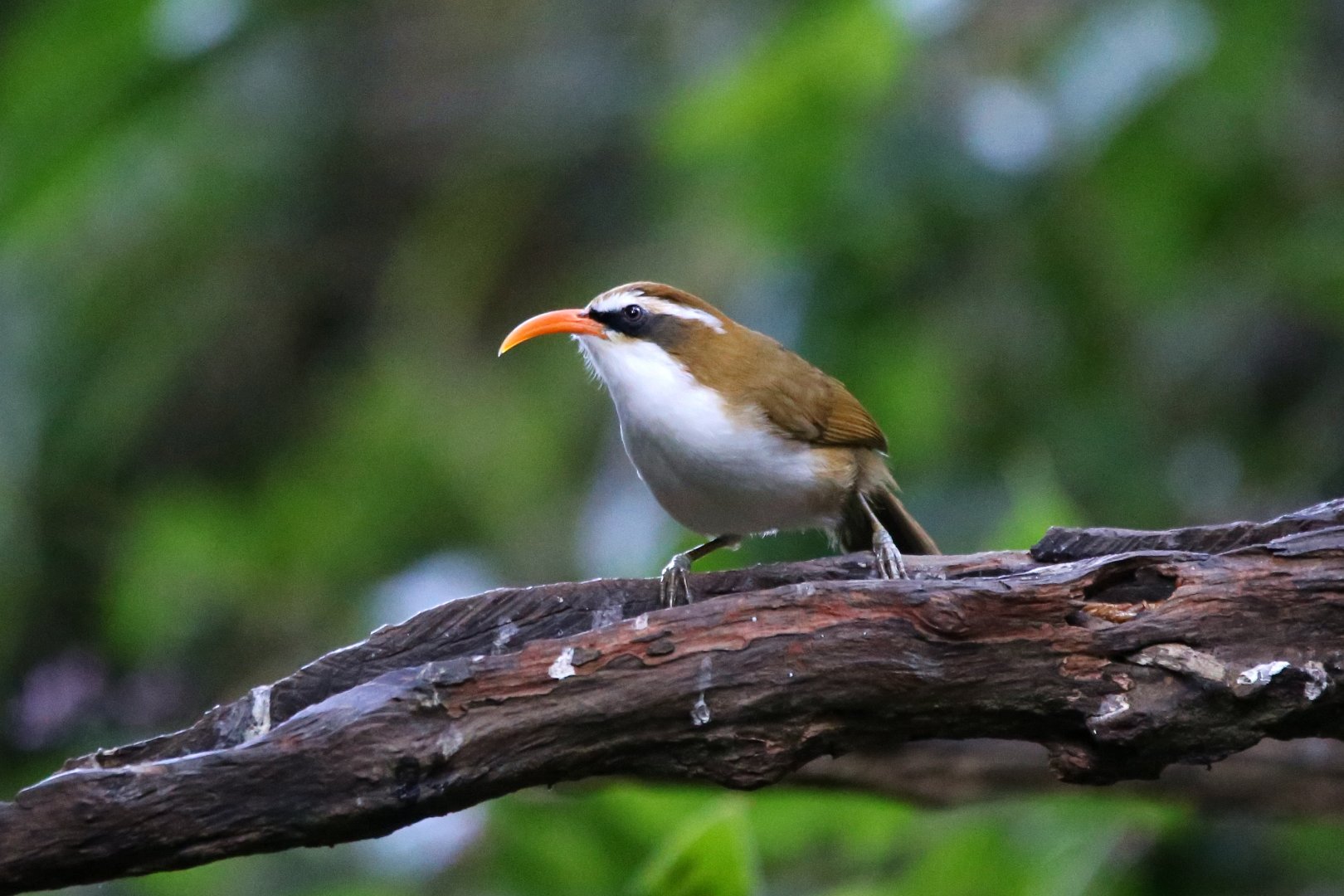
Getting to the blinds required a steep 500m to 1km hike from the ridge road into the primary forest—no easy feat. This was my first blind birding experience, and it felt like a mix between a zoo and true wilderness. There's more unpredictability than a zoo (you never know what might show up), but if you're targeting a specific species, you might wait for hours, as the blind's "star bird" might only appear once or twice a day. We ended up seeing around 30 species, but 20 showed up within the first hour. The remaining two hours grew tedious. Most birds we saw were also observable in the wild, but a few—like the grey peacock-pheasant—were blind specialties. Ironically, while the peacock-pheasant is extremely common in blinds, almost no visitors spot it in the wild. Meanwhile, red junglefowl, frequently seen outside, is rarer in blinds. Our highlights included grey peacock-pheasant, Kalij pheasant, and greater yellownape, but the white-cheeked partridge never appeared. We later learned it showed up at 6 pm—30 minutes after we left.


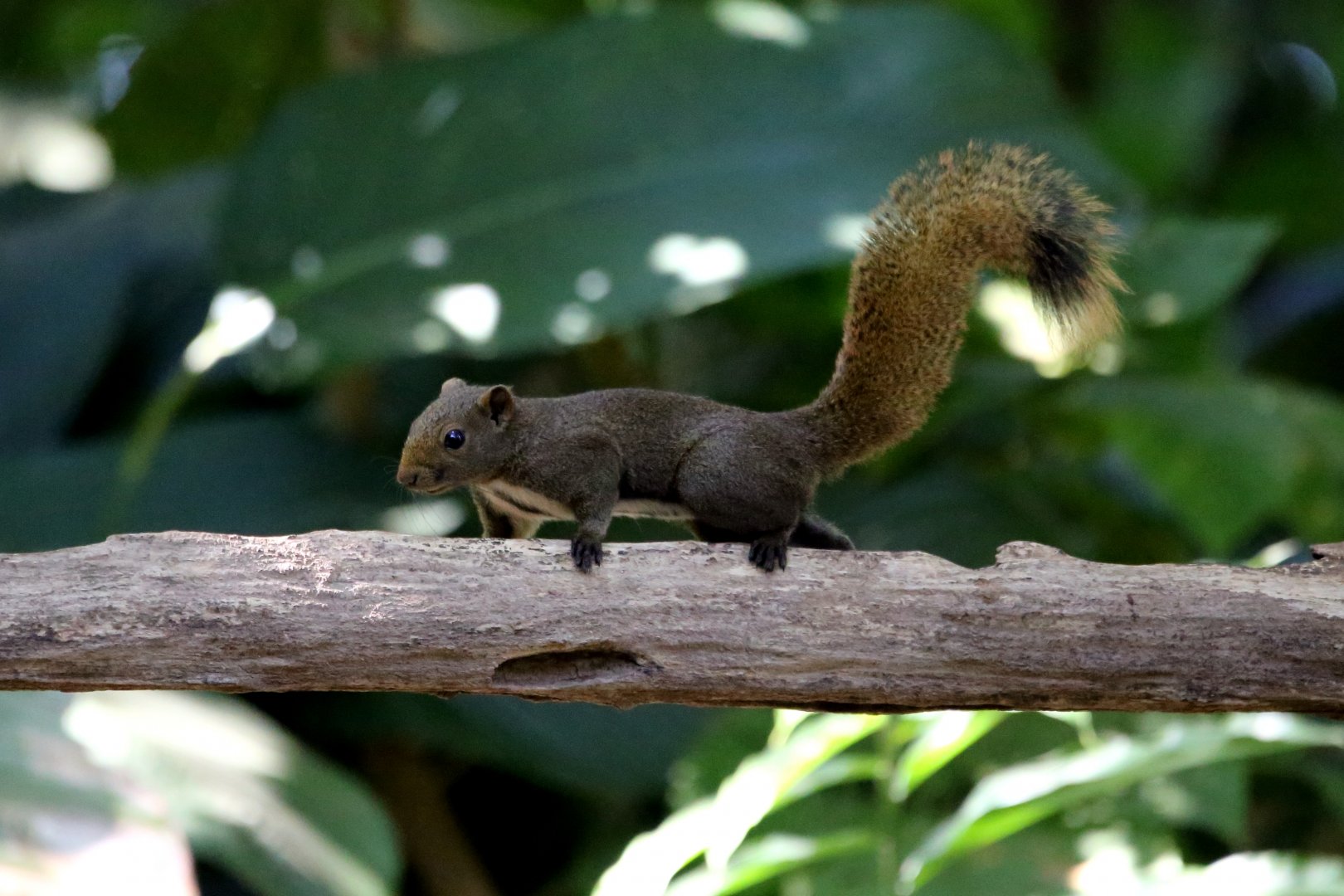
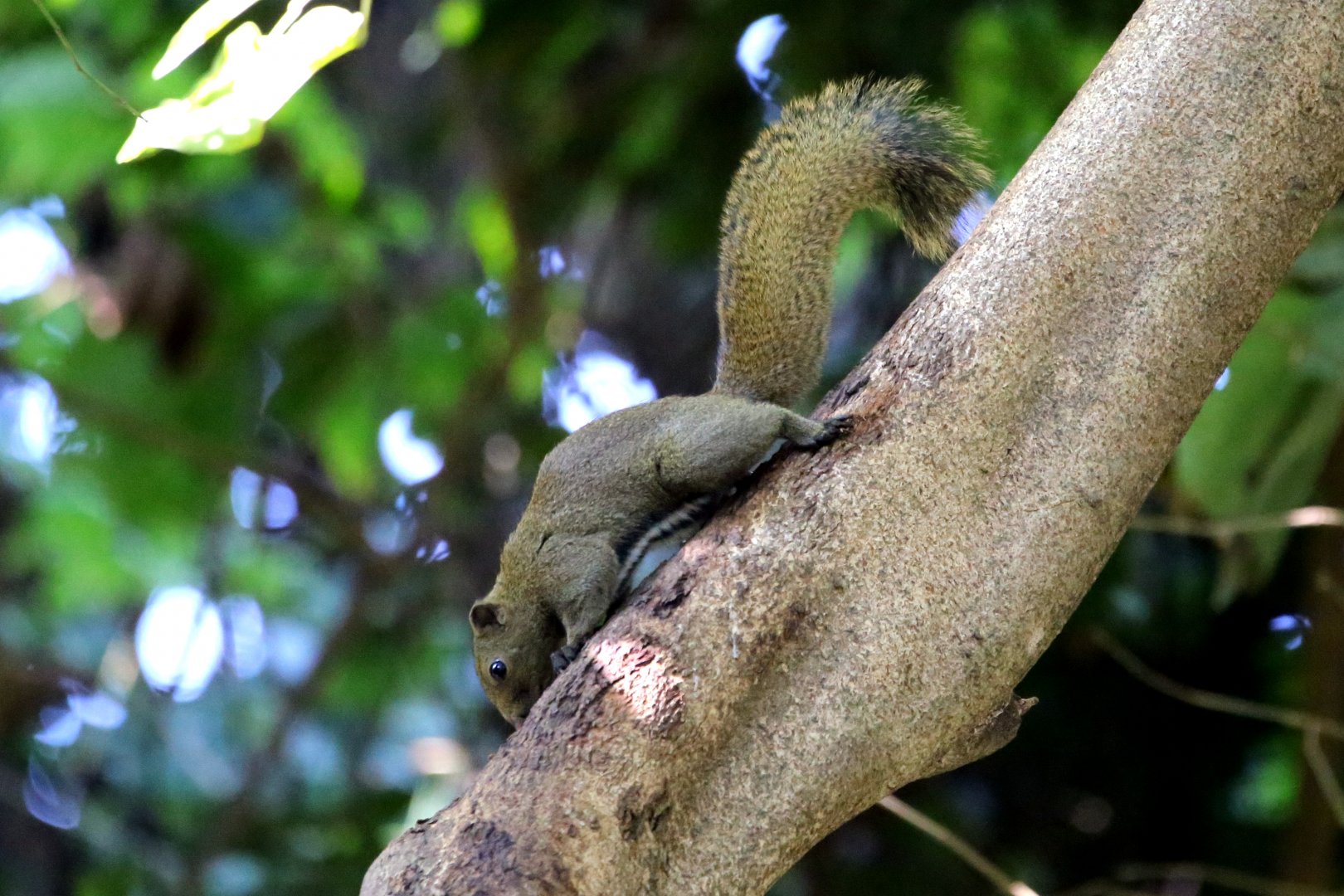
For me the most delightful bonus that afternoon was two species of squirrels: Anderson's squirrel (Callosciurus quinquestriatus) and Phayre's squirrel (Callosciurus phayrei). I hadn't even planned to look for them before I read Chlidonias's reports on Zoochat, which sparked my interest. To my excitement, right after we settled in the hide, several squirrels showed up, nibbling quietly at the feeding station. At first, I couldn't get a clear view of their undersides, making identification tricky. Then, just as I was watching one intently, it turned slightly—revealing the distinct five-striped, black-and-white pattern on its belly. It was definitely an Anderson's squirrel. We would later saw many more of them during our stay here. The sighting felt especially meaningful knowing that Ponsee, the type locality for this species, lies right within the Hornbill Valley area.


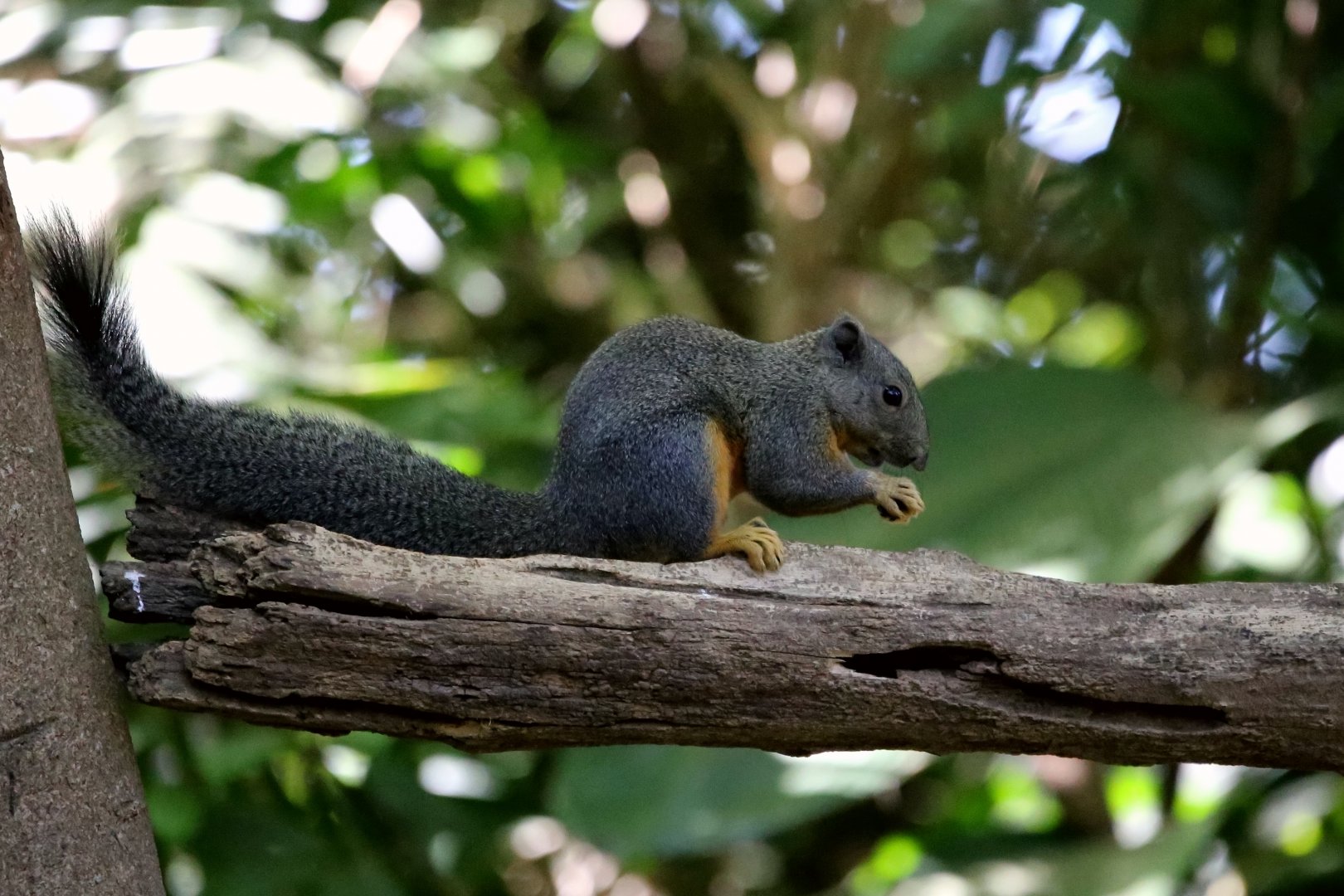
The sighting of Phayre's squirrel was a stroke of serendipity. Bird activity in the blinds was highly cyclical, alternating between long, quiet lulls—often broken only by bulbuls—and sudden, overwhelming flurries of activity. It was during one such quiet spell that I noticed a squirrel I initially mistook for another Anderson's. Something about its color seemed slightly off, though. I observed it more carefully and realized it was in fact a Phayre's squirrel—identified by its orange belly and feet. This individual turned out to be the only one we encountered on the trip, becoming a welcome addition to our mammal list and bringing our total squirrel species (and mammal species as well) count to four, which also included the Himalayan striped squirrels seen that day and Pallas's squirrels seen in Kunming.
 
January 18, Hornbill Valley, Yingjiang, Part Four


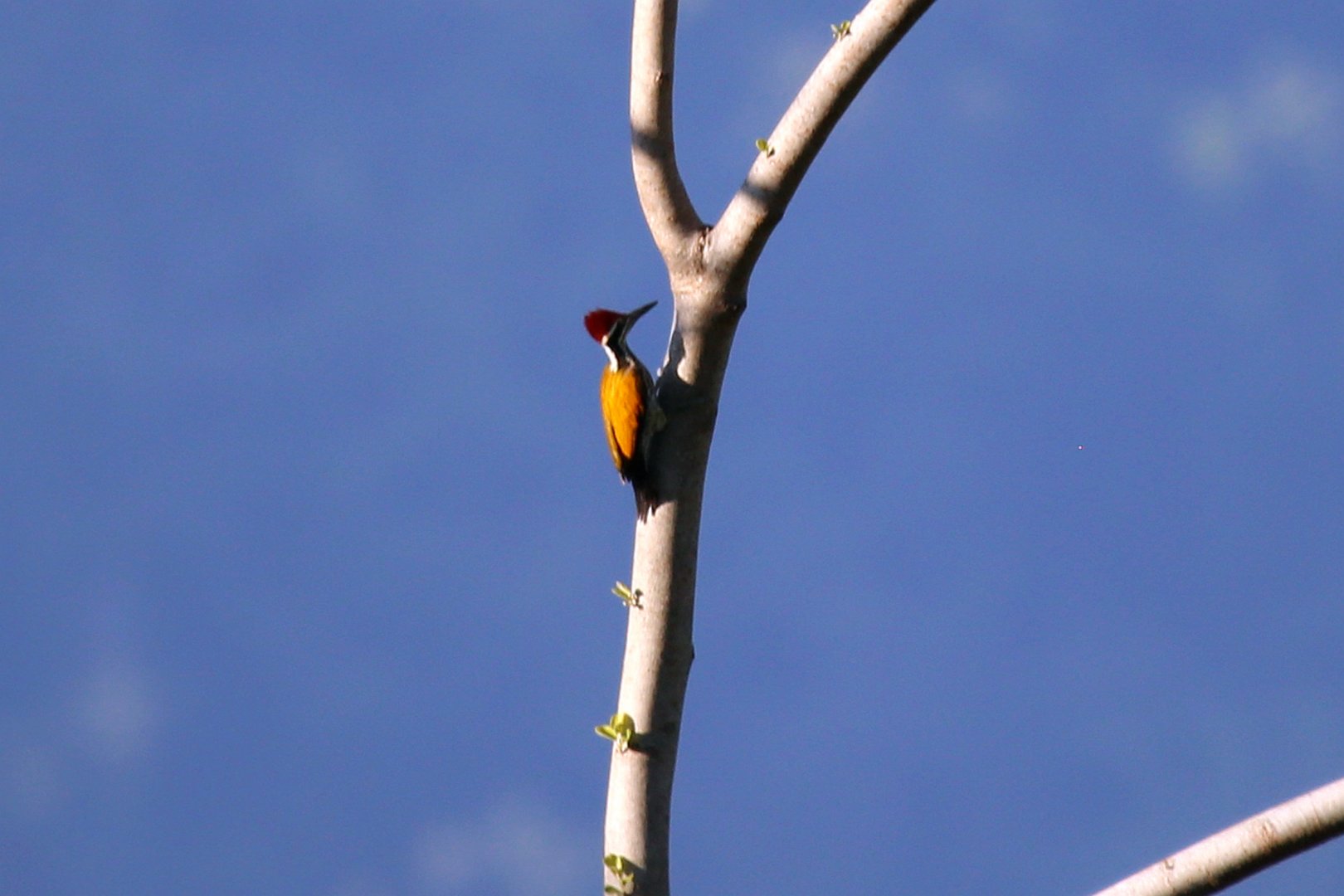
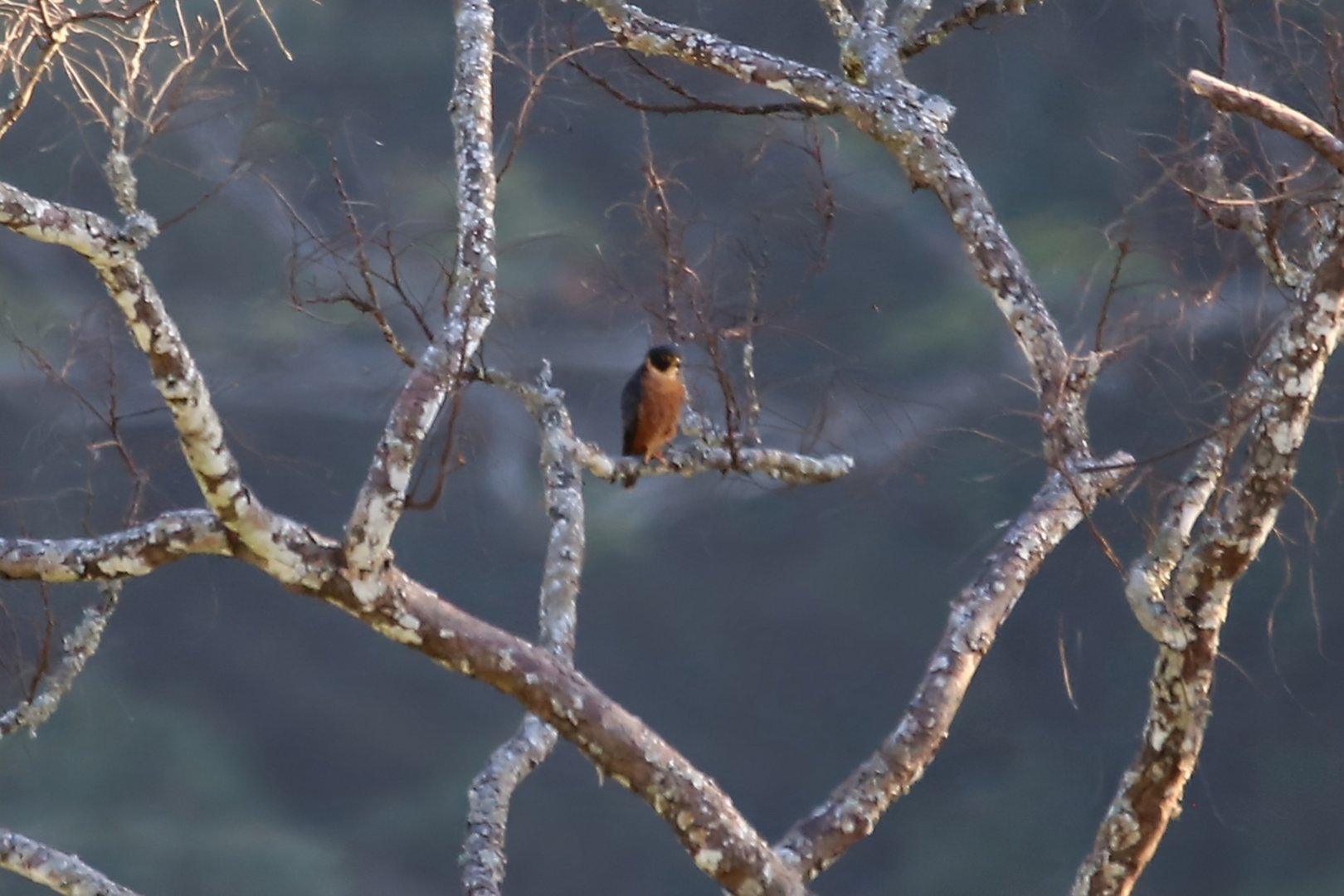
By 5:30 pm, we gave up on the partridge and moved to our next stop. Just as we went back to the ridge road, a magnificent greater flameback flew right past us and landed on a distant tree. The sunlight illuminated its golden back, creating a dazzling glow that was truly unforgettable. As we continued toward our next destination to see the collared falconets, our guide spotted an oriental hobby perching far in the distance—at least 200 meters away. Though I only managed a blurry, pixelated record shot, it still counted as a lifer for me.


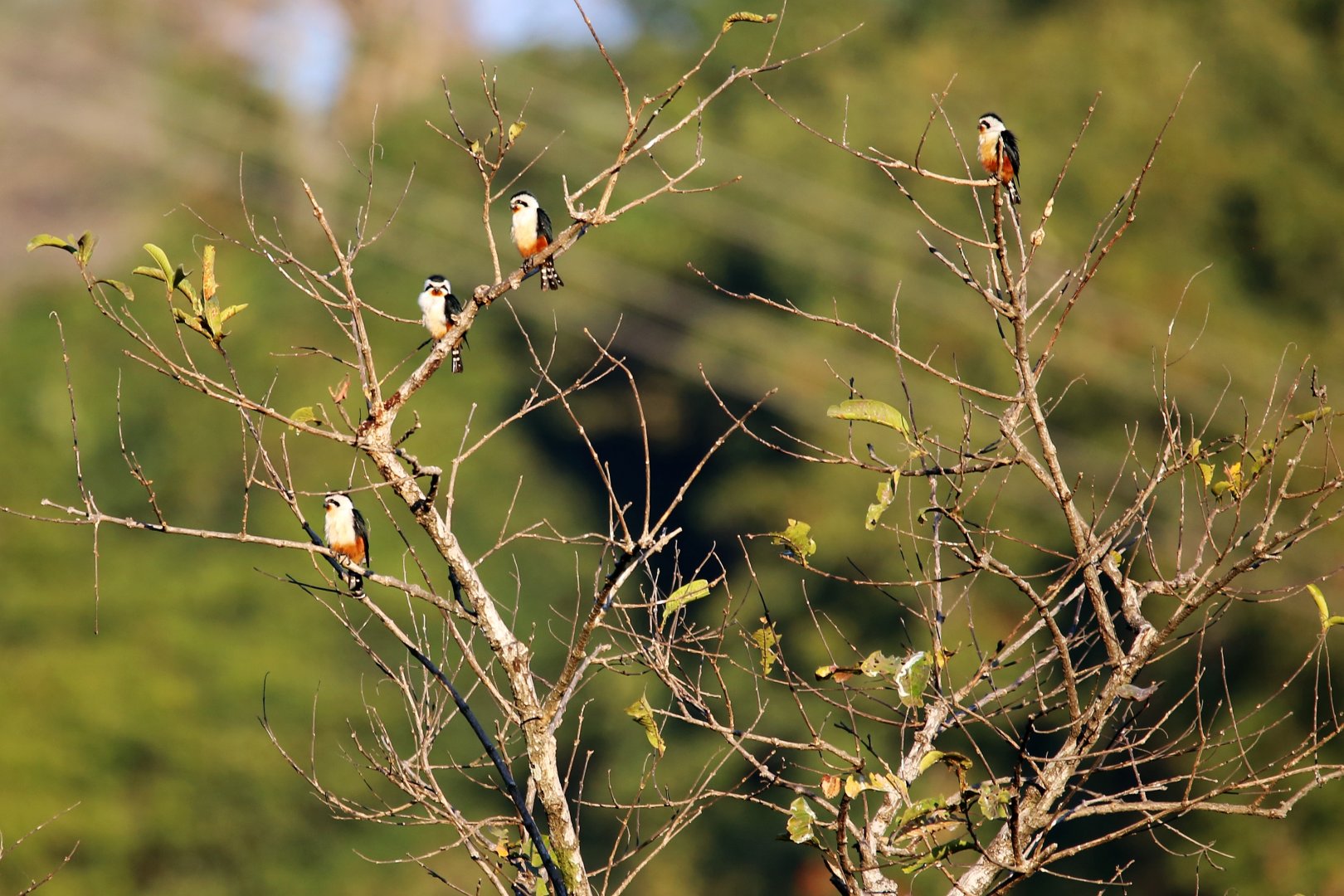
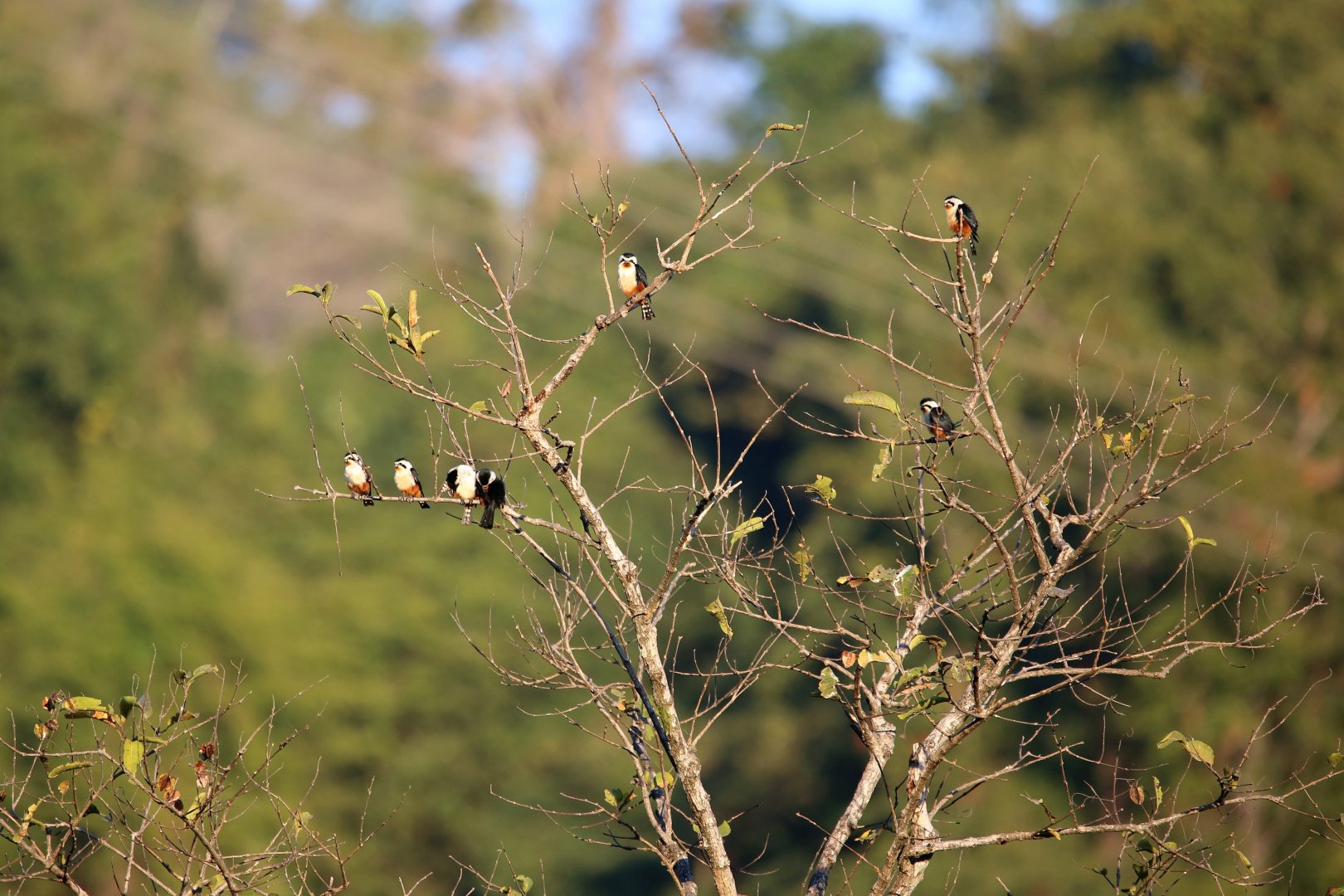
The collared falconet holds a special place in Yingjiang's birding history. The first specimen in China was collected here in 1979, and to this day, Yingjiang remains the only reliable site in the country to observe this species. Our guide took us to a specific tree where a group of falconets gathers every evening between 5:00 and 7:00 to bask in the last sunlight before returning to their nests. Our guide mentioned that the group sometimes numbers up to 11 individuals. When we first arrived, we saw four, and soon three more joined—seven in total, perched cutely against the fading light.


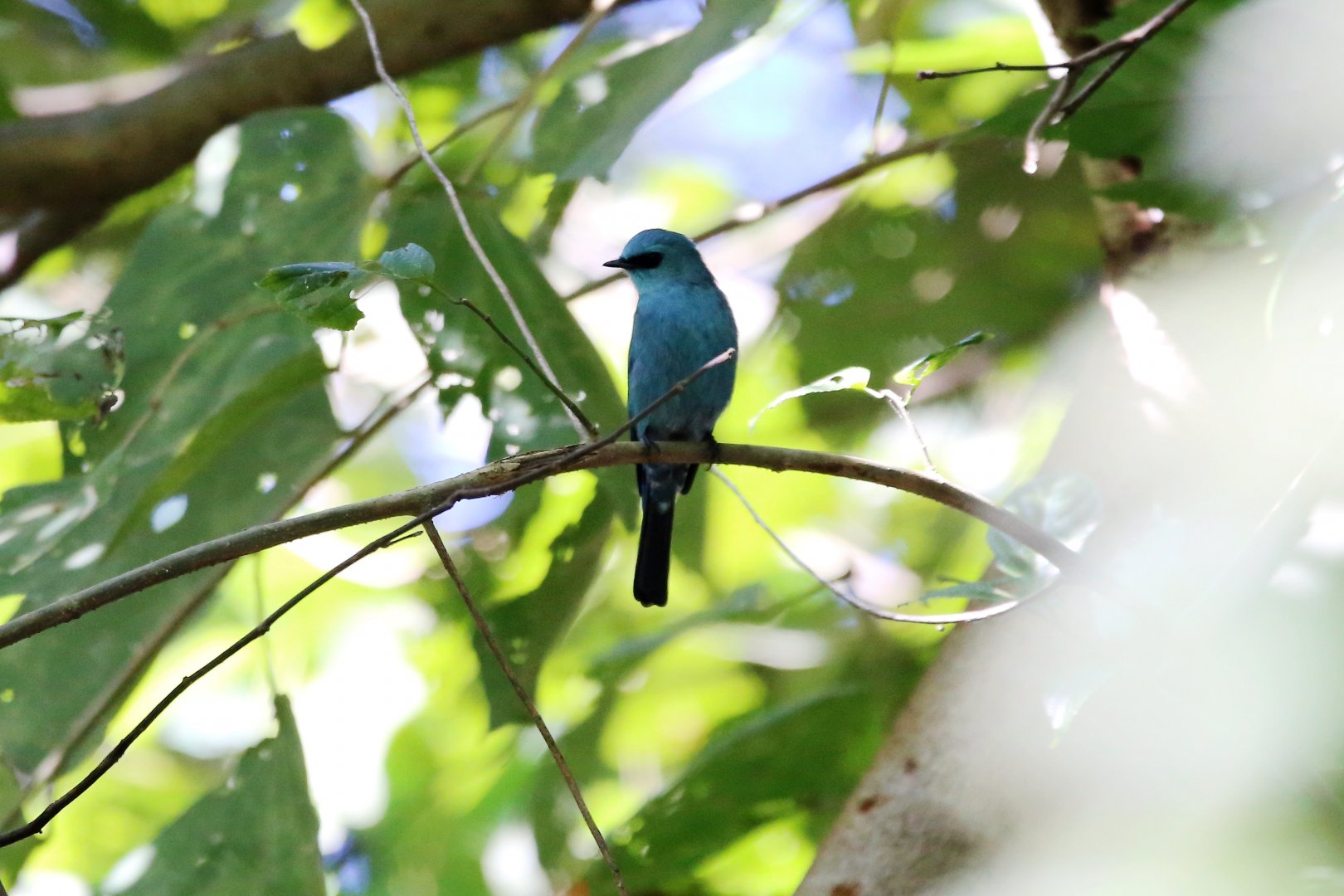
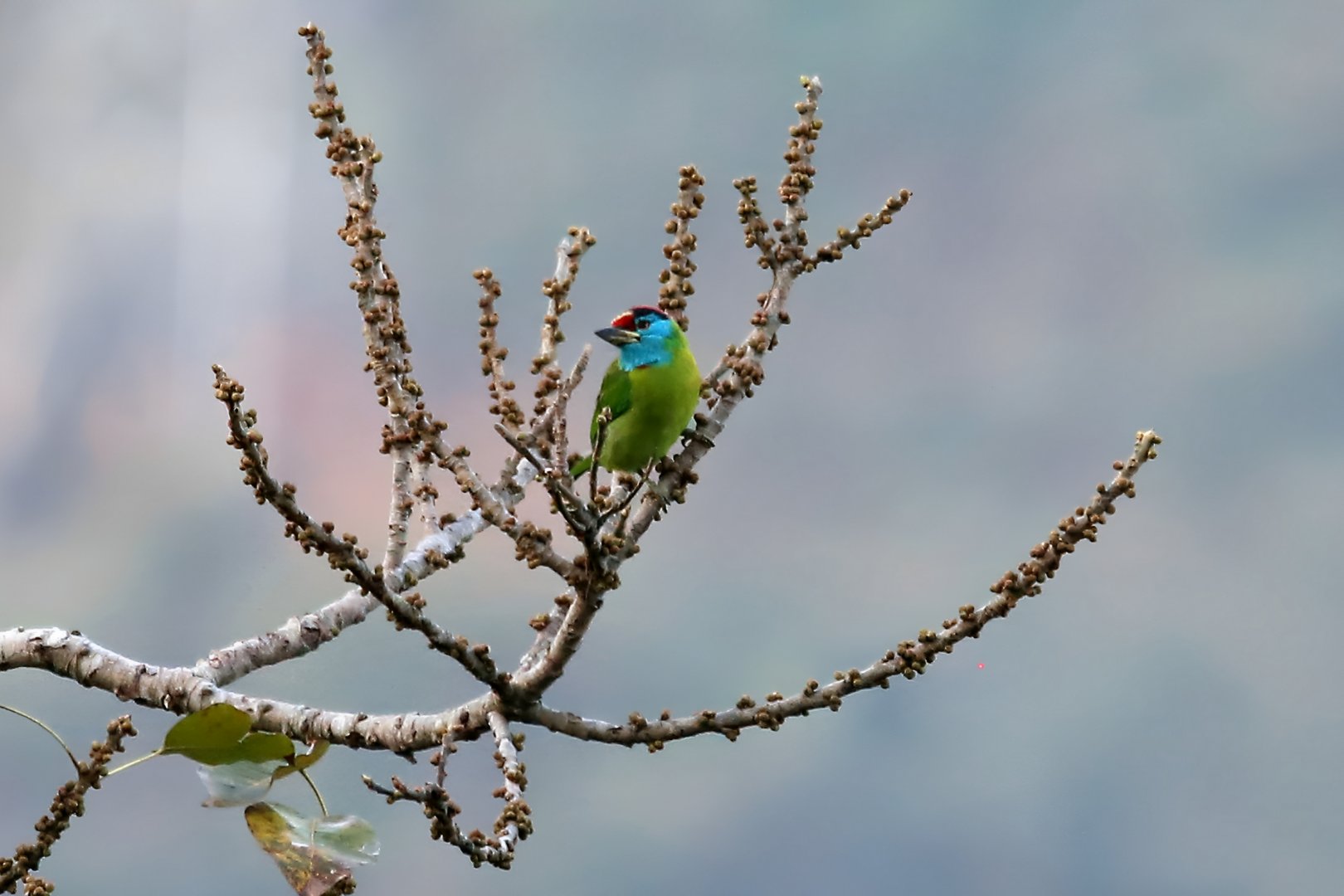
After enjoying the falconets, we headed to another famous birding spot: the "Surge Shaft", an auxiliary structure of a local hydropower station. A small platform overlooks the valley, offering a fantastic vantage point for observing birds returning to roost in the evening. It's particularly known for sightings of hornbills and the great slaty woodpecker. That day, we were treated to good views of a lot of bulbuls, hill mynas, a verditer flycatcher, blue-throated barbets, and two greater yellownapes. Our guide told us that during flowering season, the place attracts more birds, and offers great chances to see the black giant squirrels, macaques, and even Shan State langurs if you're lucky enough.


We had originally hoped to see hornbills at this site, but we learned that a pair of wreathed hornbills had already flown by around 5:30 pm. We could hear the calls of oriental pied hornbills echoing from within the valley, though we never caught sight of them. As dusk deepened, we joined a group of birders waiting patiently for the great slaty woodpecker. Just before 7 pm, we heard its distinctive call and caught a fleeting glimpse of a large bird flying across. It landed very briefly on a distant tree before vanishing again. I'm still unsure whether to count it as a lifer—while I "saw" it, the view was so rushed that I couldn't truly observe its key features. So, for now, I've decided not to add it to my ZooChat Big Year list.
 
January 19, Hornbill Valley, Yingjiang, Part One


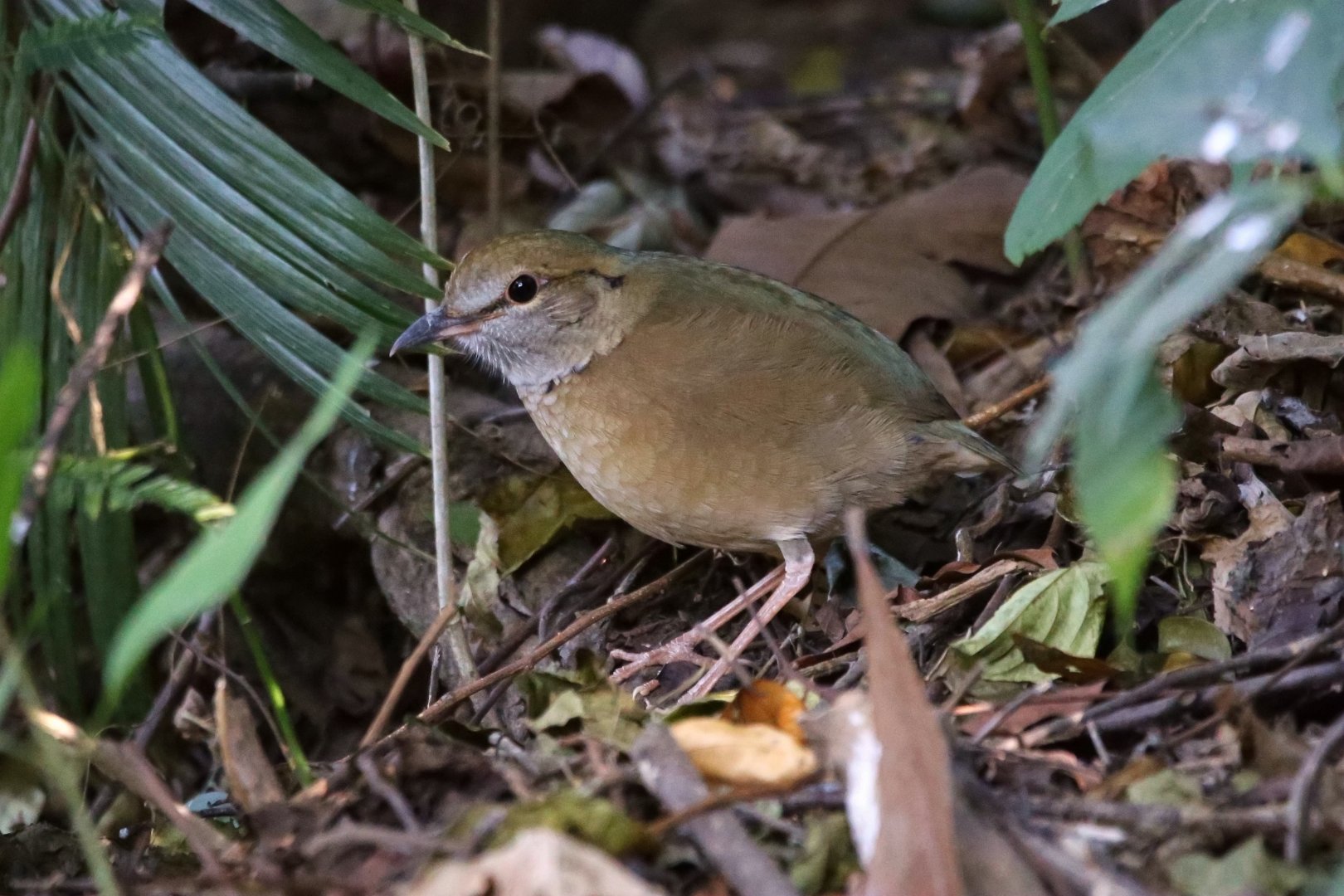
Our second day in the valley began early with a visit to another bird blind, this one dedicated to the Blue-naped Pitta. We had hoped to see at least one pitta species in Hornbill Valley, which is home to three: the Blue-naped, Rusty-naped, and Hooded Pitta. Since the Hooded is a migratory visitor absent during our trip, we had to choose between the two residents. We settled on the Blue-naped—a decision that later proved wise, as the Rusty-naped site happened to be bustling with a large group of schoolchildren on a nature field trip that very morning.


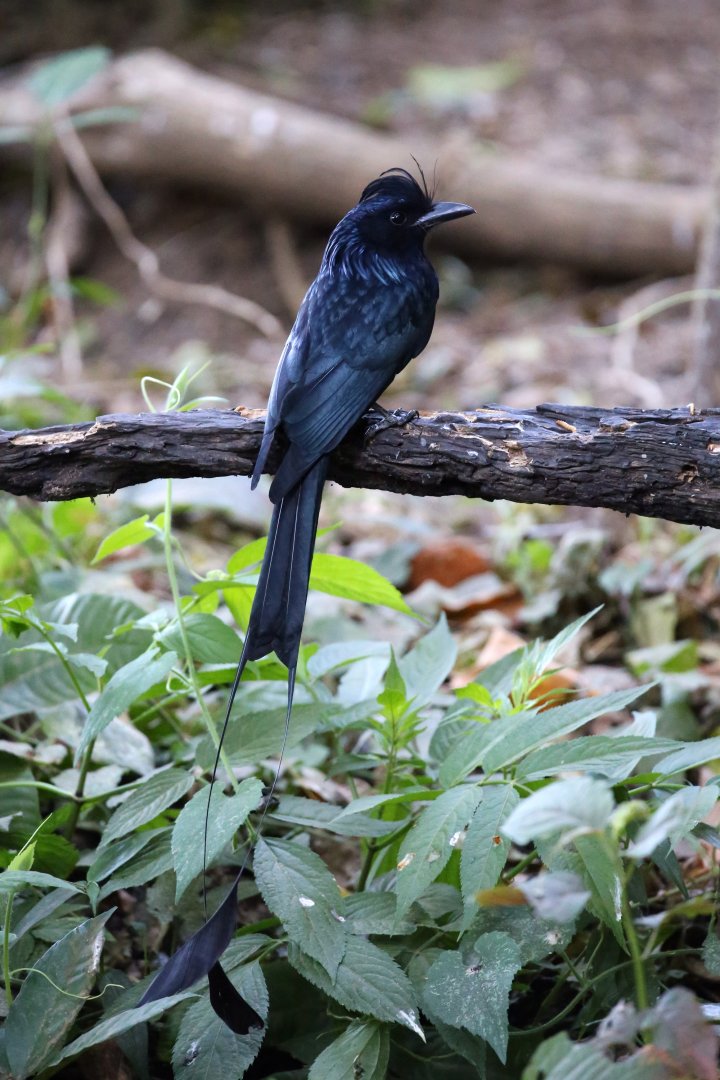
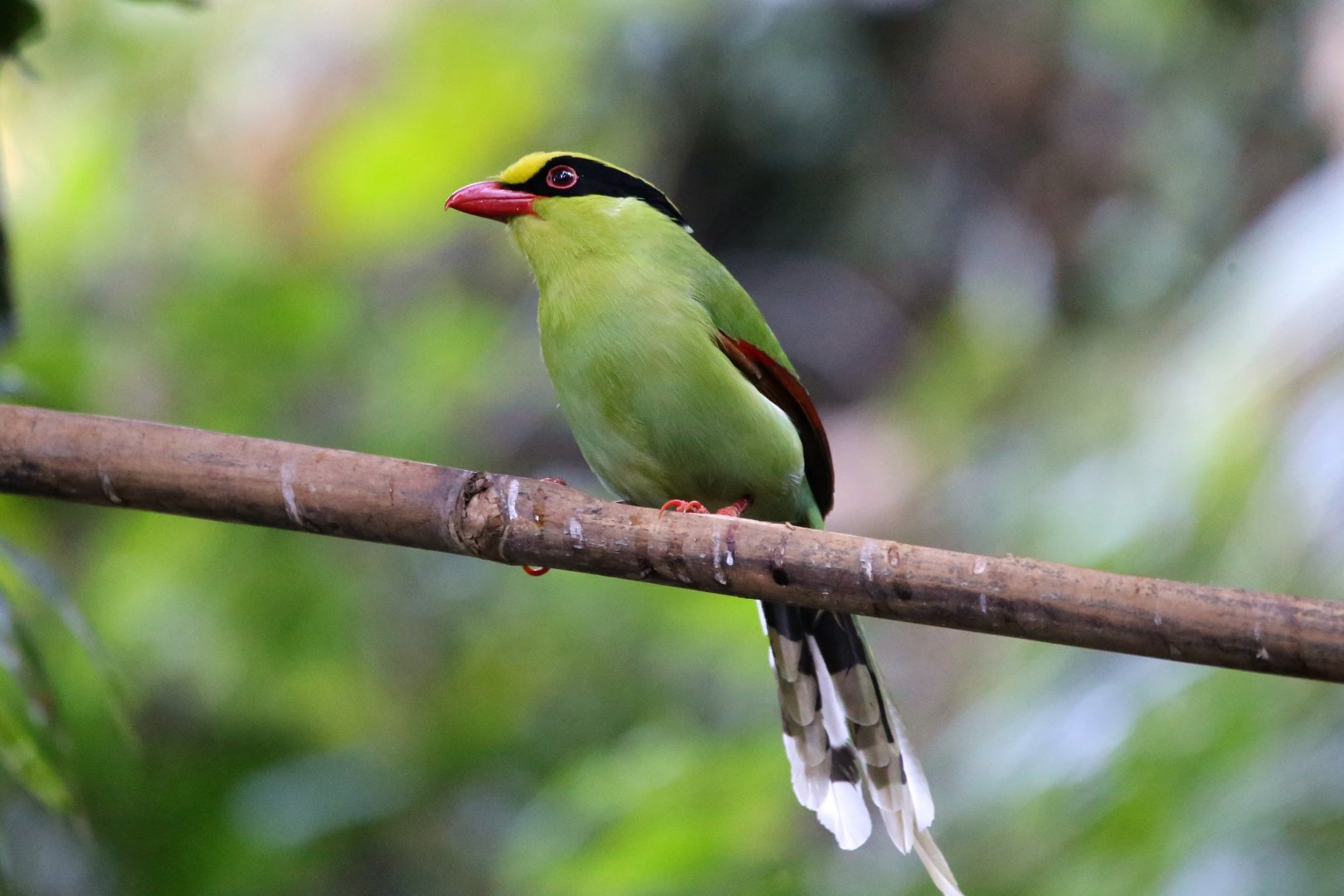
We arrived at the blind by 8 a.m. Whether due to the early hour or the shaded location, the cold was biting. Being unable to move freely for fear of scaring away the birds made the wait especially challenging. Although the species composition was similar to the previous day, we were rewarded with several new highlights, including the Lesser Yellownape, Greater Racket-tailed Drongo, and Common Green Magpie. Our guide told us the pitta might appear as early as 8 a.m. or as late as 11 a.m.—after which it likely wouldn't show at all. We waited until 11:30 a.m. Finally, the pitta emerged. It lingered cautiously at the edge of the clearing for a good five minutes before venturing into the open to feed. Meanwhile, the European birding group we'd met the day before arrived just as the pitta showed up. Talk about timing!


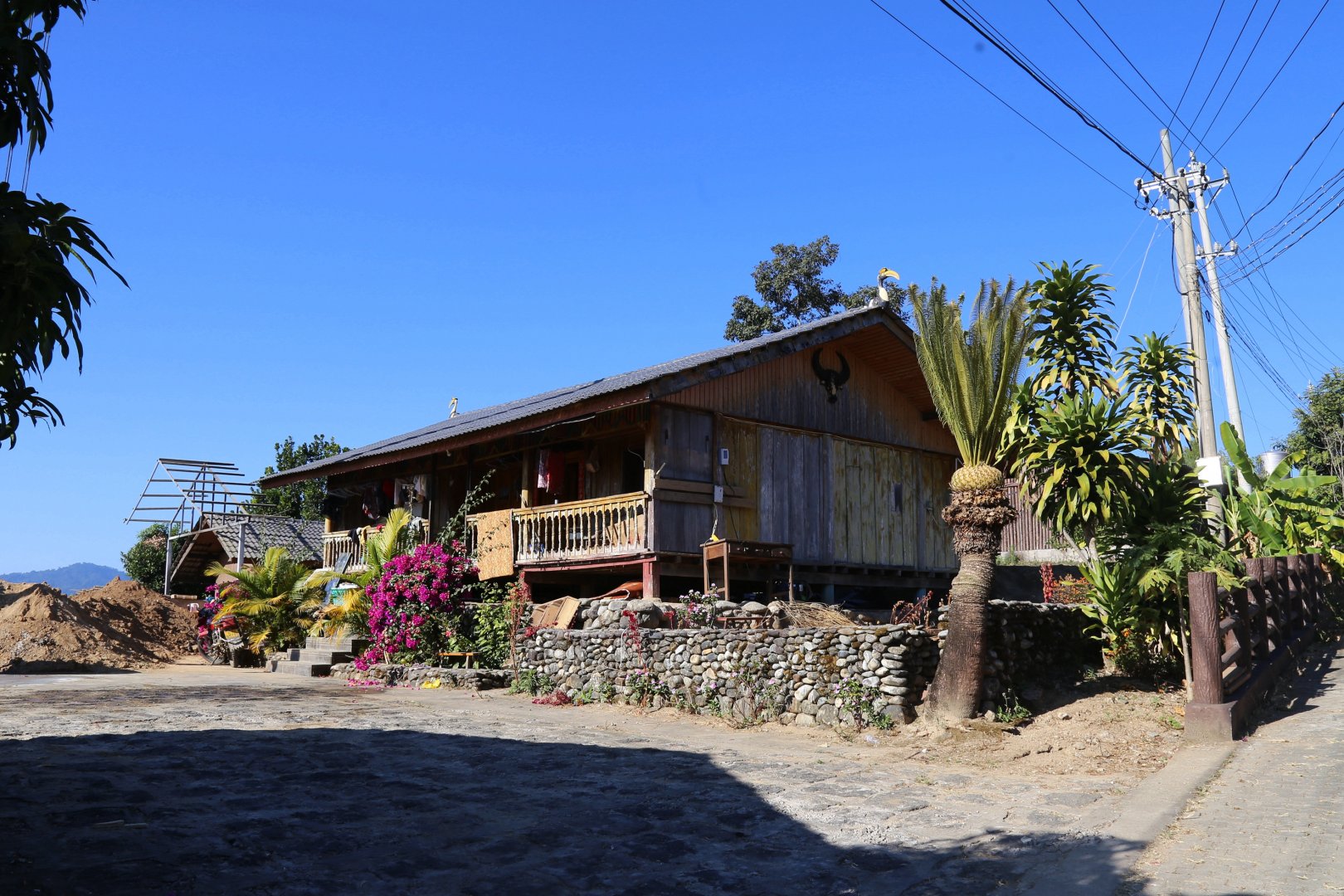
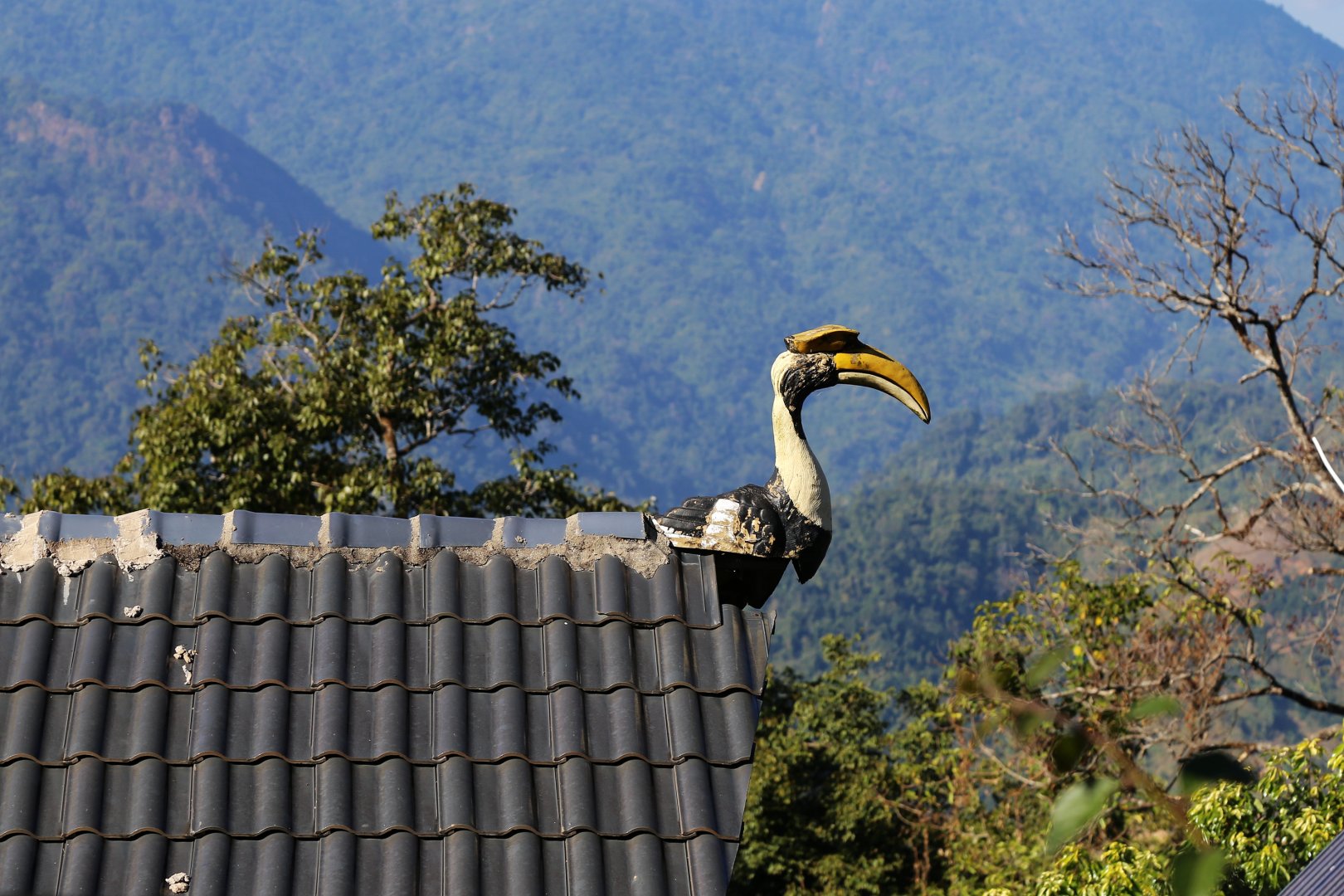
After a welcome midday break, we headed to Shiti Village. As mentioned earlier, the village is primarily inhabited by Jingpo and Lisu people, both subgroups of the Kachin. The new village is visually striking, with traditional-style houses adorned with hornbill motifs—a sacred symbol in Jingpo culture. We learned, however, that the current Shiti Village is actually a completely new settlement built after 2016. The original village wasn't a compact hamlet but a scattered collection of households spread over a large area. As part of a poverty-alleviation initiative, the government selected this site within the former village range and relocated residents here. For the first time, villagers now enjoy modern infrastructure such as electricity, tap water, internet, and a paved road. Though the old village was said to be far simpler than Hongbenghe, the new Shiti now offers better lodging. (We considered staying there but eventually chose Hongbenghe in hopes of better owl sightings at lower elevation.)


Besides Hongbenghe and Shiti, there was once a third village nearby: Dagudi (大谷地), located in the core zone of the Tongbiguan Nature Reserve. Our guide himself was from there. Due to its sensitive location, the villagers were entirely relocated to the outskirts of downtown Yingjiang in recent years. According to our guide, the Dagudi area held even denser and more diverse bird populations than Hongbenghe or Shiti, including rarities like Mrs. Hume's Pheasant and Blyth's Tragopan, and was also excellent for mammal watching. There was never a paved road to Dagudi, and the abandoned village is now completely off-limits to tourists.
 
January 19, Hornbill Valley, Yingjiang, Part Two


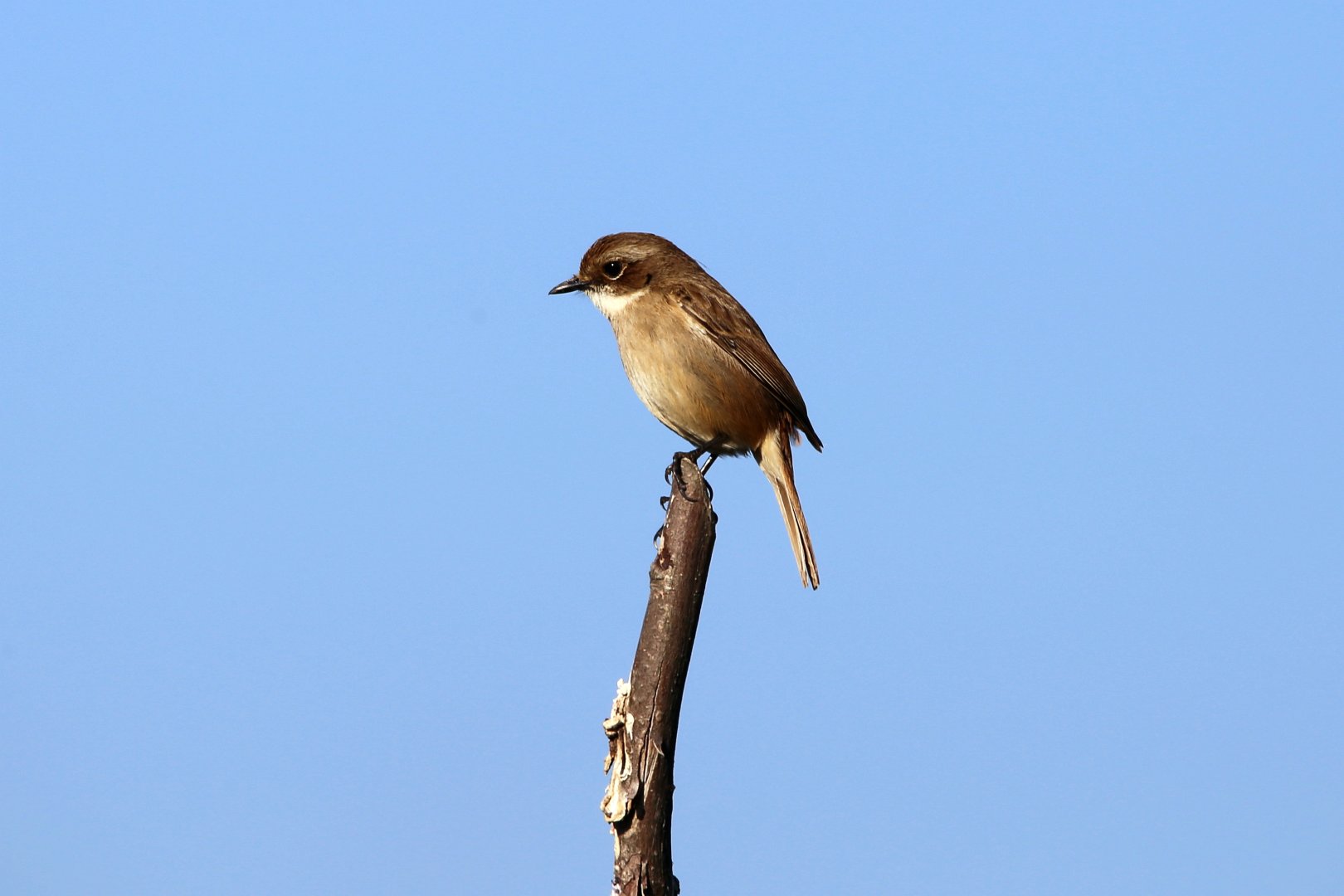
Situated a few hundred meters higher than Hongbenghe, Shiti hosts a different set of bird species. A dirt track leading uphill from the village is excellent for forest birds. We ran into the European group again here—they seemed to be having a productive session. In hindsight, we should have joined them. Our guide had brought us partly to see the village and partly to find the Blue-bearded Bee-eater, a species high on our wish list, at a known spot. Unfortunately, we didn't find the bee-eater there, and—preoccupied with the search—we missed the chance to thoroughly check the forest birds. We did, however, add two lifers: Pin-tailed Green Pigeon and Grey Bush Chat.


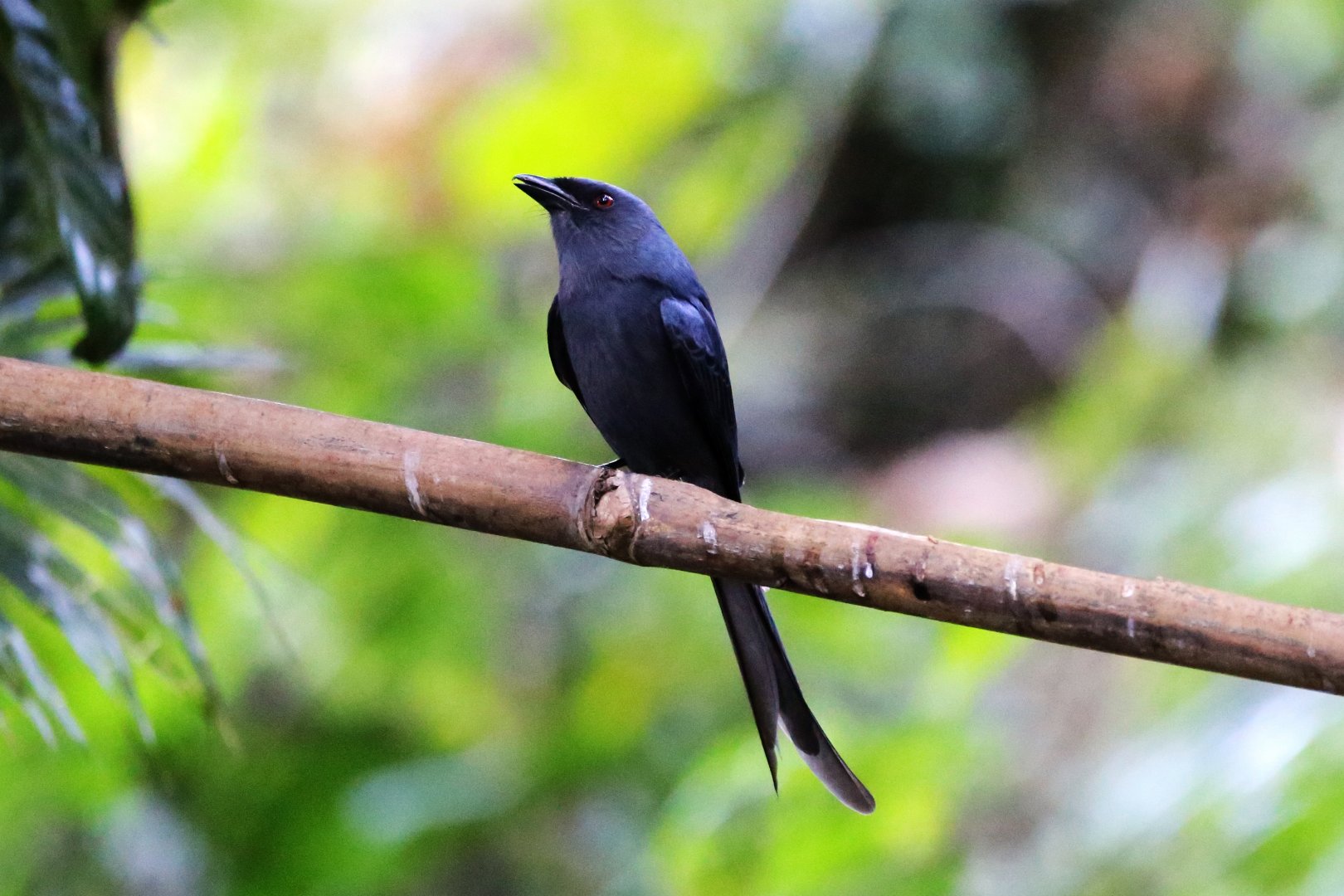
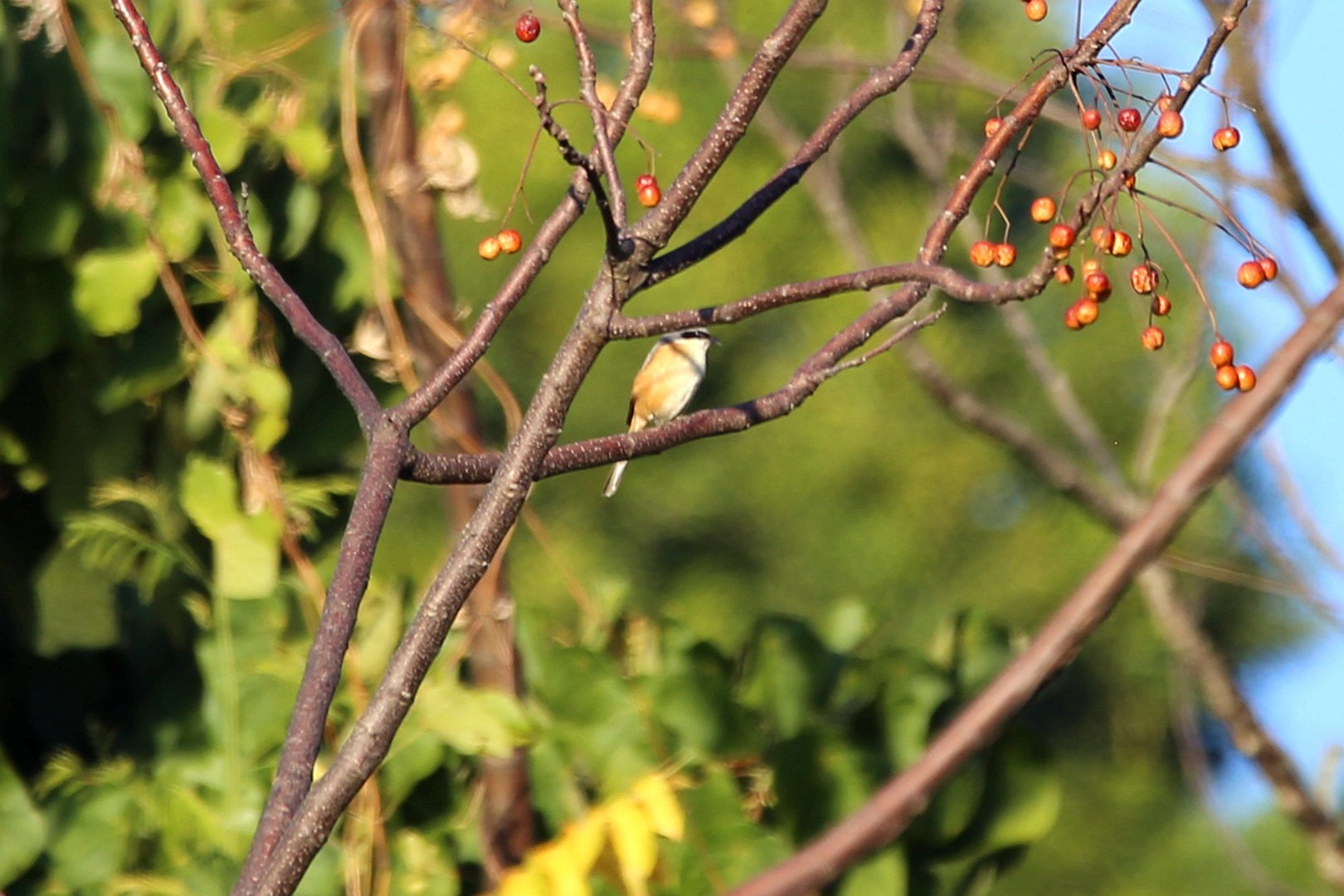
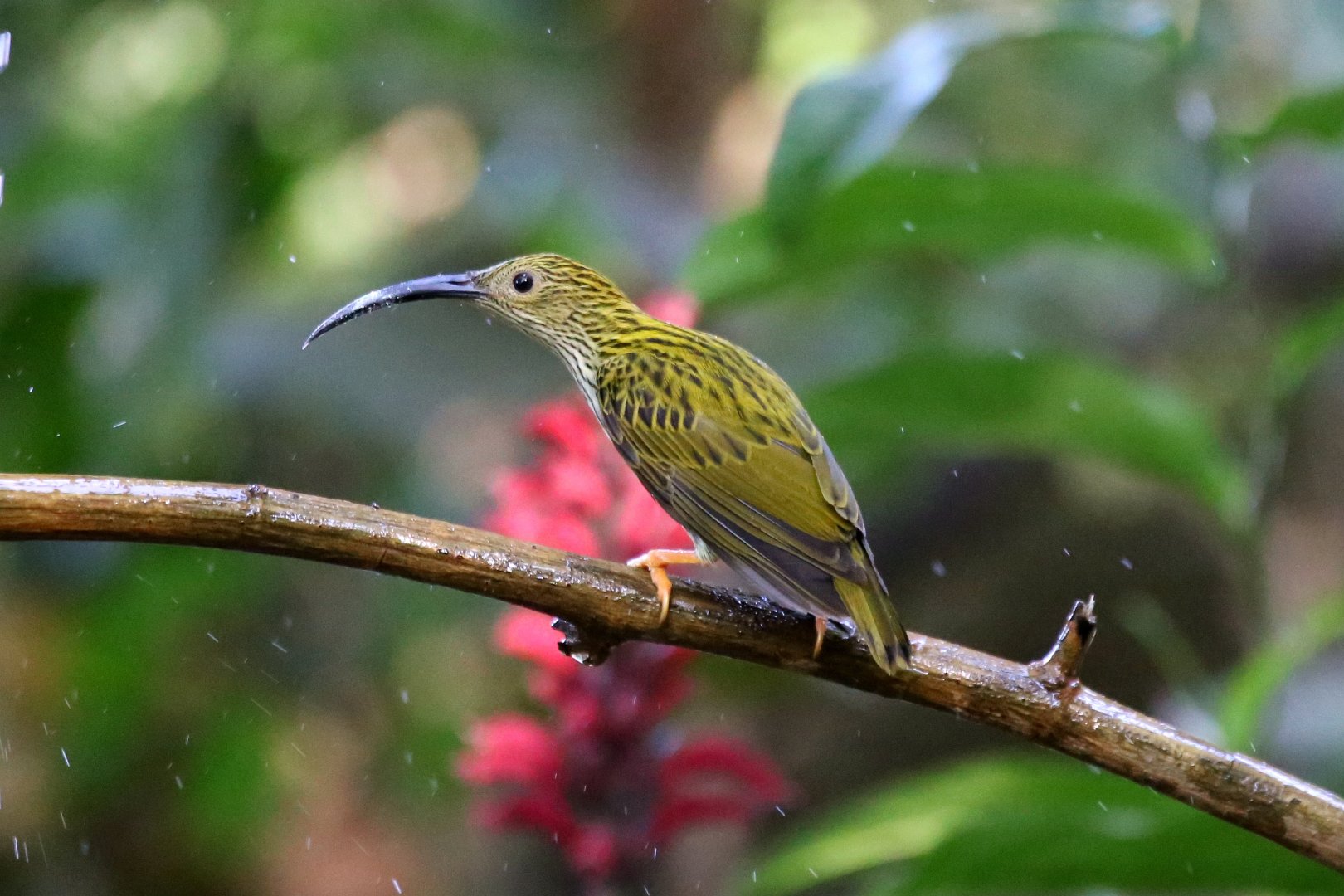
Having failed to find the bee-eater in Shiti, we moved to a lower elevation spot overlooking a valley where our guide knew of an active burrow. He checked and found it unchanged from the morning—meaning the birds had not yet returned—so we waited nearby. The area was lively with birds: mainly Ashy and Bronzed Drongos, along with Scarlet Minivets, Grey-backed Shrikes, Streaked Spiderhunters, two barbet species (Great and Blue-throated), and numerous bulbuls. After about 40 minutes, a bee-eater finally appeared—but only briefly. Just one of us managed a record shot before it vanished. Our guide asked if we wanted to try for hornbills at the Surge Shaft. We chose to wait another 20 minutes for the bee-eater (another misstep). It never returned, so we headed to the Surge Shaft, arriving after 5:30 p.m., only to learn that the hornbills had flown by just minutes earlier. We missed them again.


We then settled in to wait for the Great Slaty Woodpecker, which made another brief and unsatisfactory appearance, much like the previous day. Our guide offered to take us to a roost tree he knew, but it meant an hour's hike each way in the dark forest without lights. We declined. We later learned that those stunning online photos of the woodpecker from Hornbill Valley are mostly taken during the rainy season—the low season for tourism—by local Yunnan enthusiasts.

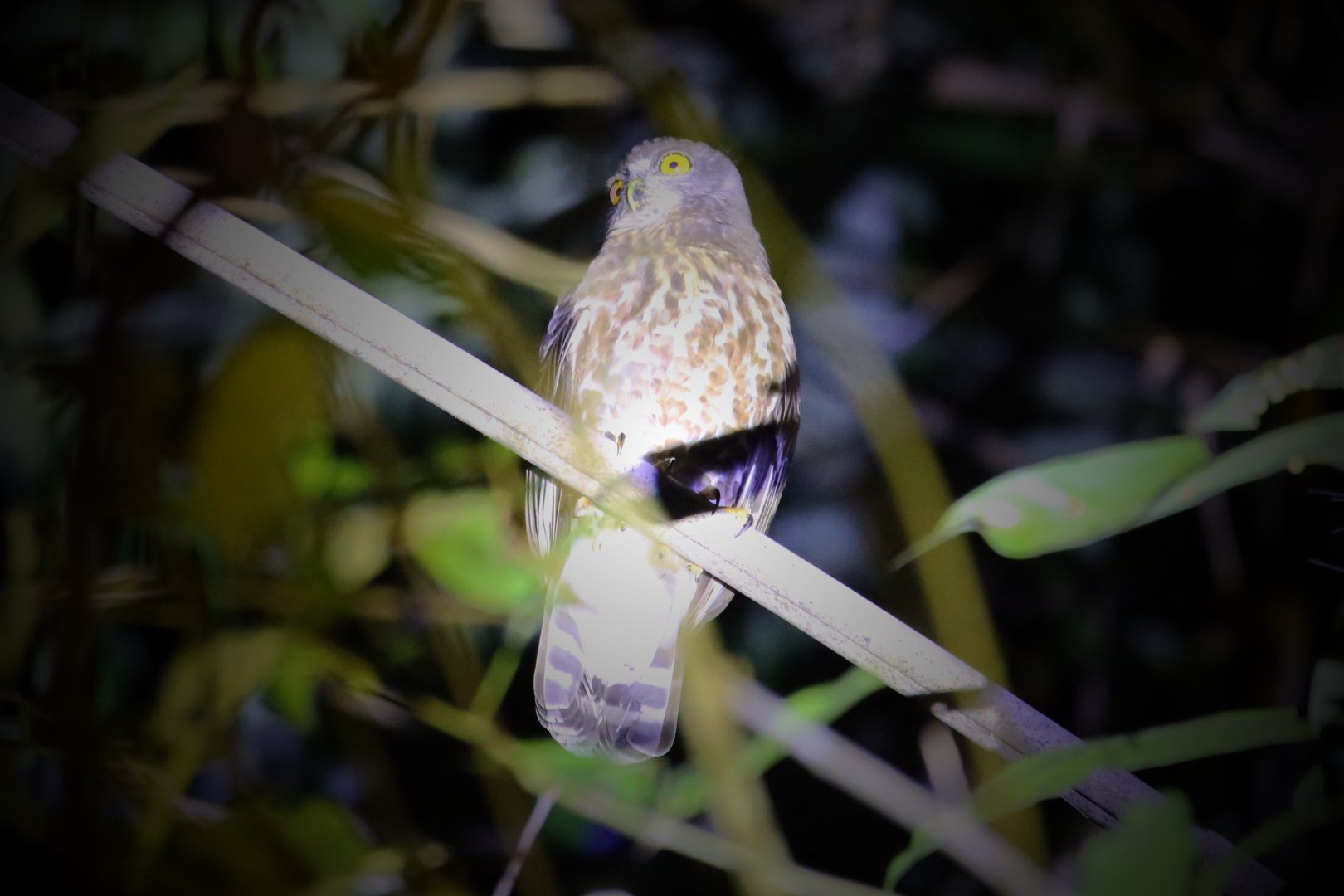
That night, we proceeded with our planned night drive. While the completely unpolluted starry sky was utterly breathtaking, the wildlife spotting proved disappointing. Our guide had explained that the night drive was an extra charge—100 CNY per person if owls were seen. We tried several locations but found none, except for a Brown Hawk-Owl, which we'd already seen behind our lodge earlier. As hopes for owls faded, our guide asked if we were interested in the Yunnan Giant Flying Squirrel. We were keen, but even at a usually reliable spot, we came up empty. We did spot a Common Palm Civet—the largest mammal of our trip—as it briefly peeked out from the roadside before darting back, startled by our headlights. According to other birders' records, this civet is nearly a guaranteed sighting here.


With little to show for our efforts, we returned before midnight. Our guide charged only 100 CNY total for the night drive, not per person. I later understood that the higher fee applied only for "good" owls like the Bay Owl or Spot-bellied Eagle-Owl. Ironically, the very next night, our guide led another drive for a different group and saw a mother pangolin with her pup—which I hope would finally earn him the full fee!
 
January 20, Hornbill Valley, Yingjiang

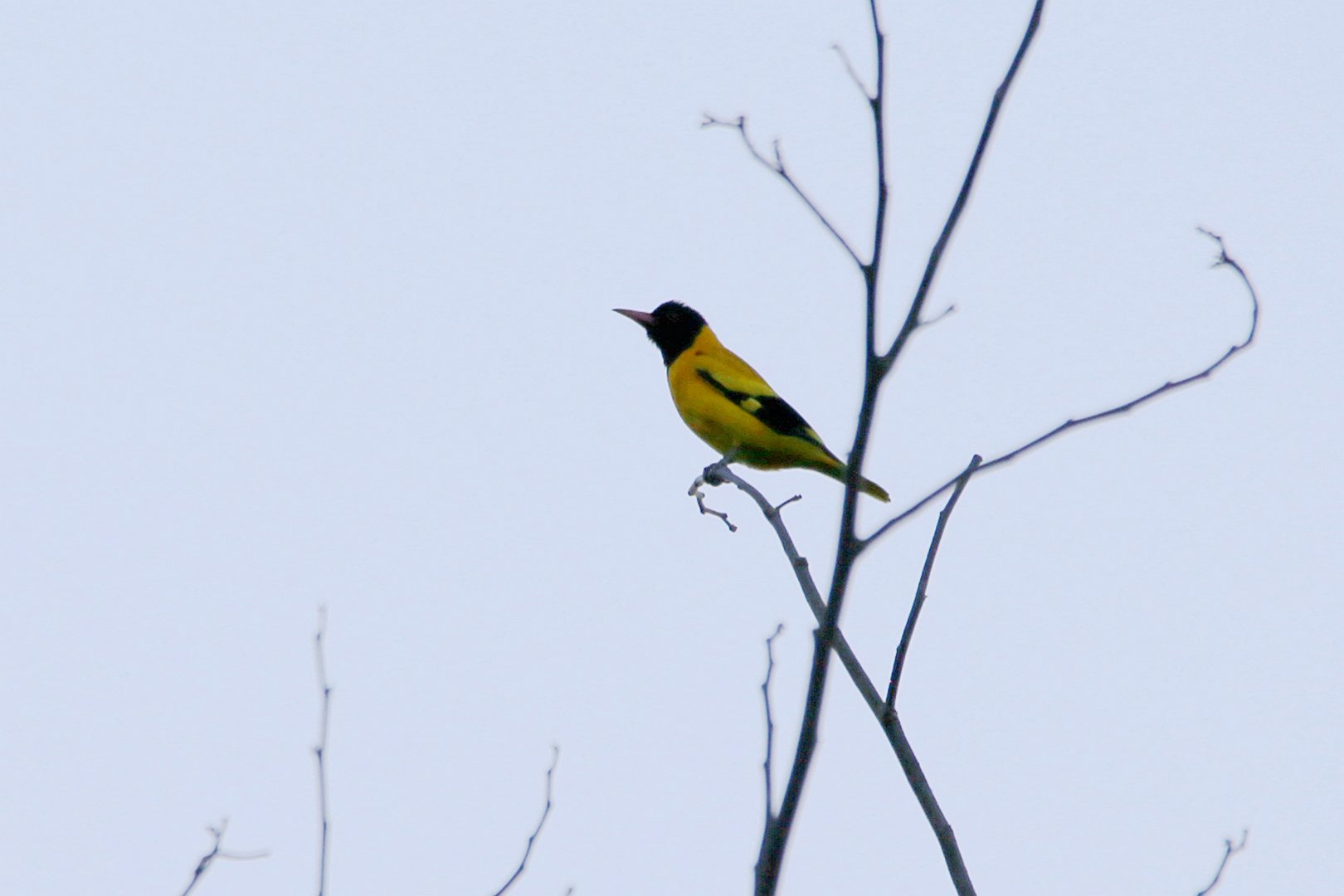
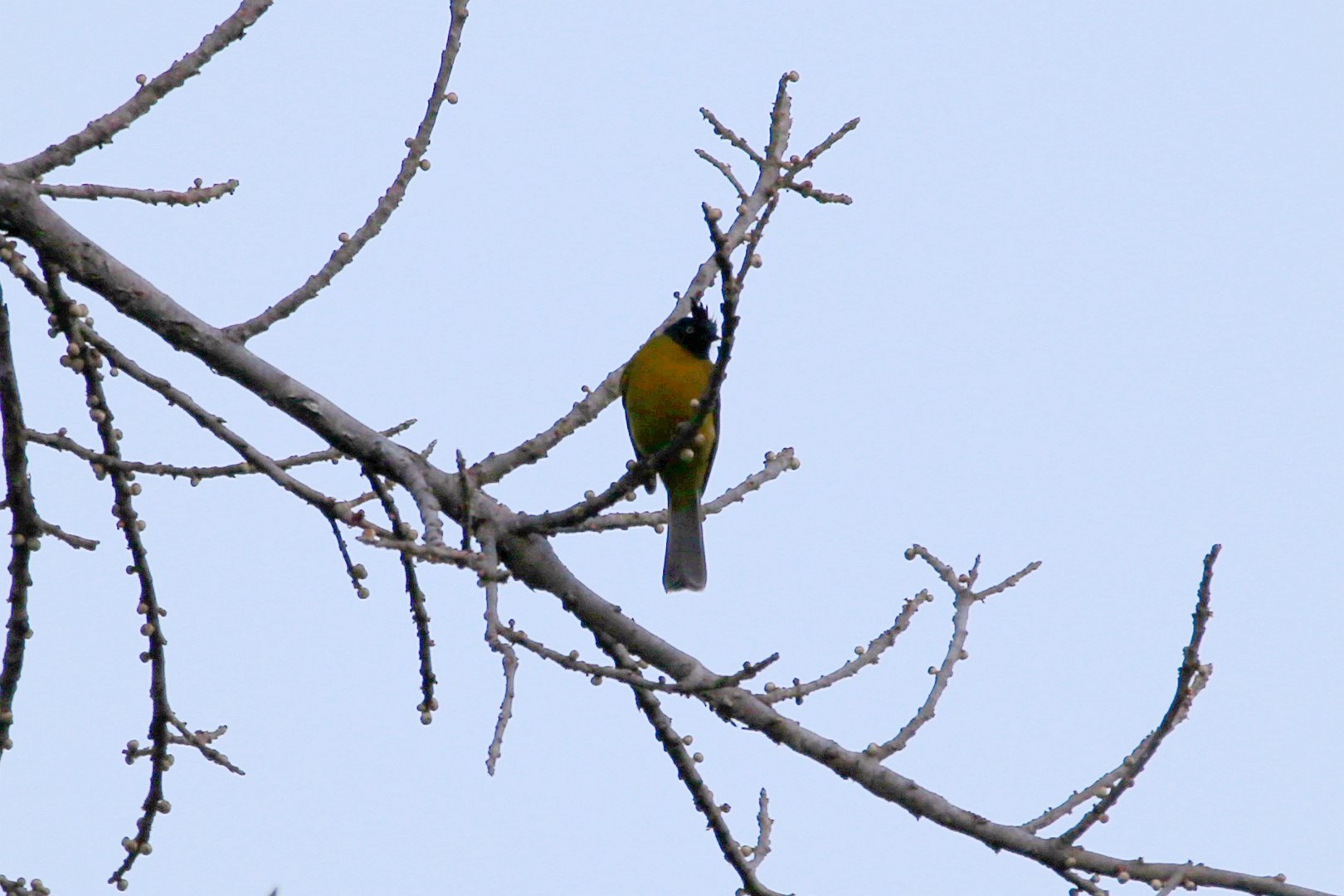
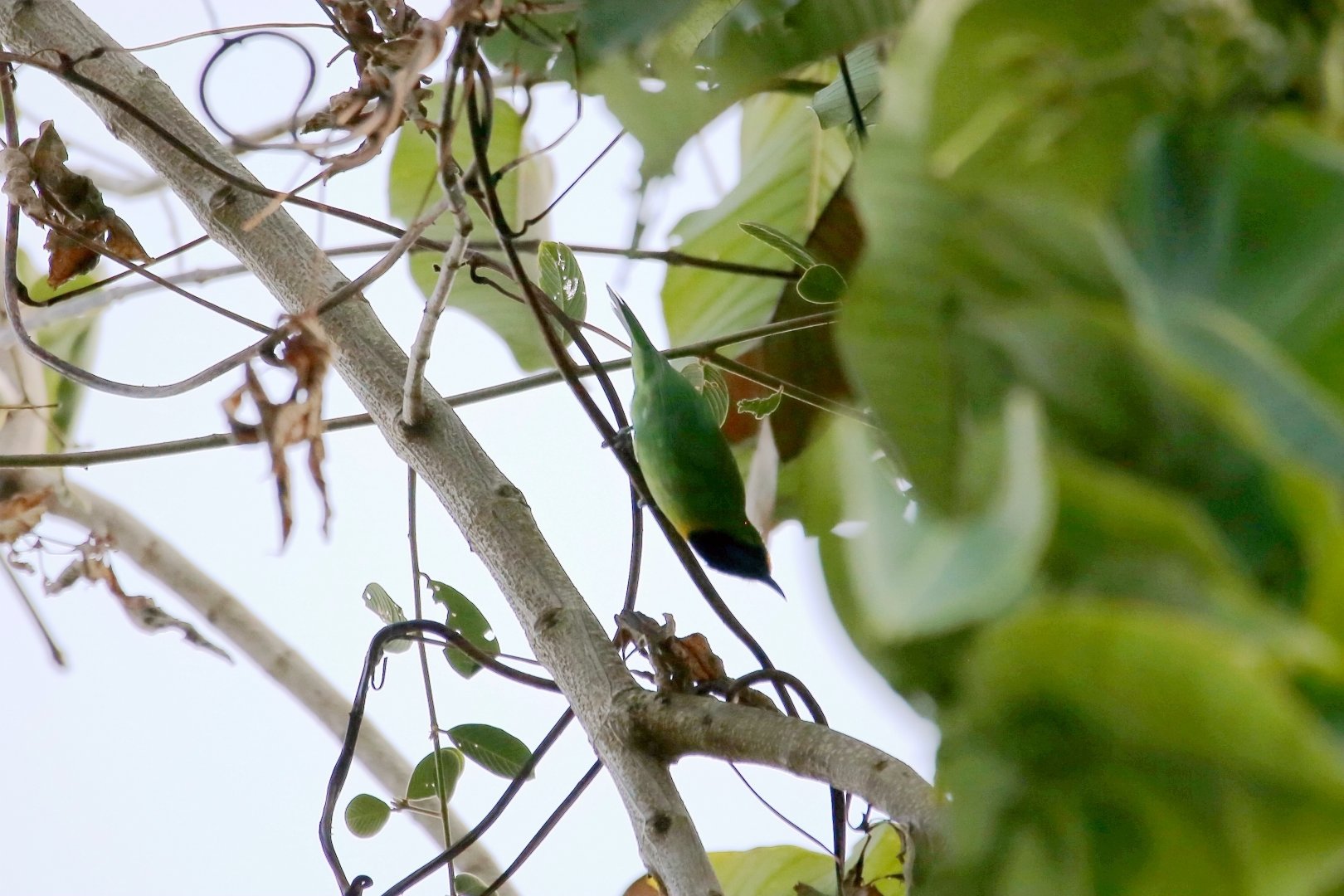
Our final morning in the Hornbill Valley was brief—just over two hours of birding before our afternoon flight from Tengchong. With time only for filling gaps in our list, we made one last attempt for the hornbills, the trip's most glaring absence. Other birders had reported Oriental Pied Hornbills feeding on a fruiting tree the previous day, so we began there under a veil of hope. While no hornbills appeared, the tree offered its own consolation prizes: three final lifers for our trip—Black-hooded Oriole, Black-crested Bulbul, and a stunning Golden-fronted Leafbird. We also enjoyed our closest-ever view of a Blue-throated Barbet, a species we'd seen daily, but never with such clarity.


Afterward, we revisited the bee-eater burrow and the Surge Shaft, but neither yielded anything new. With that, our time in this remarkable valley came to a close.

Reflecting on the journey, our biggest regrets were undoubtedly missing the hornbills and the fleeting, unsatisfying views of the Great Slaty Woodpecker. Yet, we had seen nearly everything else we had hoped for. Still, I felt we had only scratched the surface of the valley's potential. A birding friend who visited Yingjiang in February, relying solely on wild birding without entering any blinds, had excellent results—even spotting the exceedingly rare Naung Mung Scimitar Babbler. Our guide also mentioned that even star birds from Baihualing, like the Scarlet Finch, could be found at higher elevations here, though the reserve management discourages guides from taking tourists to find them, likely to avoid direct competition.

In fact, I believe the potential of Yingjiang as a whole for wildlife tourism is far from fully realized. For instance, its Zhina Township runs the only tourist-accessible tracking program for the Skywalker Hoolock Gibbon (though I noticed the report on MammalWatching.com seems to misidentify Zhina as a separate county; it is, in fact, in northern Yingjiang). It's worth noting that birding tourism here is a very recent development. Just a decade ago, hunting was commonplace in these villages. It was only after two waves of gun confiscations—in 2016 and 2018—that the culture began to shift. This very fact makes me hopeful. Should current trends continue, Yingjiang's future as a premier wildlife-watching destination seems not just promising, but destined for even greater brightness.

Below is the wildlife list of Hornbill Valley: Zoochat Big Year 2025
THE END
 
Back
Top