Types of dhole in zoos?

Davdhole

Well-Known Member
5+ year member
I've been kind of wondering about the appearances of dholes in zoos vs the wild for a bit of time. Every dhole in a zoo is like a large, fluffy fox, whereas ones in the wild are thinner and have little to no white on their coats (like my pfp). Are these different subspecies or just different features for dholes in different regions of Asia (or maybe both). I didn't really think of dholes having subspecies to be honest, even though they interest me quite a bit.
 
There are as many as seven subspecies of dhole found throughout Asia recognized by Mammals of the world 2005. The primary subspecies of dhole in captivity is the Chinese or Ussuri dhole (Coun alpinus alpinus), as this is the subspecies that is kept and bred in western zoos. Despite its name it’s also the subspecies that you’re most likely to see if you go to India and Mainland Southeast Asia. Other subspecies include the Tien Shan dhole found in Eastern Russia which has lighter colored fur, and the Sumatran dhole found only in Sumatra. I don’t know about the status of the other subspecies in captivity.
 
Did some more Dhole-research and came along some intresting facts about the keeping and breeding of another subspecies in Europe, the Indian or Burmese dhole ( Cuon alpinus adjustus ) - syn. Cuon alpinus dukhunensis - :
Only 3 European collections kept this subspecies but all 3 bred them:
- London Zoo should have bred them in 1833 but its not known if the young were raised
- Rotterdam Zoo got a captive-bred pair from the zoo of Mysore ( India ) at the beginning of 1964 and at the beginning of 1968 4 pups were born from which 2 were raised
- Duisburg recieved 1974 2 females direct from India and the same year a further 3 males came from Rotterdam. 1975 the first German breeding-result was archieved
 
The primary subspecies of dhole in captivity is the Chinese or Ussuri dhole (Coun alpinus alpinus), as this is the subspecies that is kept and bred in western zoos. Despite its name it’s also the subspecies that you’re most likely to see if you go to India and Mainland Southeast Asia.
The scientific name of the Chinese or Ussuri dhole is Cuon alpinus lepturus
This is a matter of how the subspecies are separated or combined. Up to eleven subspecies have been used (which is probably too many), but the C. a. alpinus as used in Loxodonta Cobra's reference is apparently combining multiple subspecies over a very wide area, including the Ussuri Dhole (C. a. alpinus) of the Russian Far East, the Chinese Dhole (C. a. lepturus) of southern China, the Indian Dhole (C. a. dukhunensis) of the Indian subcontinent, etc. If that is to be the treatment followed, then "Ussuri Dhole" is not exactly an apt name any longer.
 
I've seen both "Cuon alpinus alpinus / C. a. lepturus" ( large numbers at both Zie-Zoo and Beekse Bergen - both the Netherlands ) and "C. a. adjustus" ( at Duisburg and Rotterdam Zoo in the 1970s and 1980s ) and at least these 2 forms are quite different in appearance.
The Rotterdam and Duisburg animals were more greyish and the coat more shaggy then the animals I've seen at Zie-Zoo and Beekse Bergen which were / are much more redish and have a more smooth coat.
Of course this is not a scientific proof but evenso I would say that at least those 2 subspecies should be accepted as being valid.
 
Dholes as a whole are endangered.

~Thylo

And are far less studied than many other predator species. Tigers have a fair deal of information from yearly censuses and marge research expenditures, making it easier to understand trends in population and how vulnerable they really are. Dholes don’t have this going for them leading to a high level of uncertainty in understanding just how vulnerable to extinction the distinct populations are.
 
And are far less studied than many other predator species. Tigers have a fair deal of information from yearly censuses and marge research expenditures, making it easier to understand trends in population and how vulnerable they really are. Dholes don’t have this going for them leading to a high level of uncertainty in understanding just how vulnerable to extinction the distinct populations are.

For further reading, see : Saving the Dhole
 
I think some Dhole subspecies may be endangered just like tiger subspecies.
It's a little difficult to work out subspecies distribution limits because of the various opinions on which subspecies are valid, but the species seems likely to be entirely gone from the Russian Far East, Mongolia, northern China, etc, which would mean that the nominate Ussuri Dhole is probably extinct if restricted to the original subspecies designations.

Given the issues around recognition of the subspecies, it's probably also the case that the "Ussuri / Chinese Dholes" in zoos are mostly hybrid stock and not of any use for reintroductions (if that were to be something that happened) - especially if populations from as far apart as China and India are being treated as nominate. It would be as if Bengal, Malaysian and Siberian Tigers were all merged as hybrids and then the zoo-mix animals were released into wild ranges.
 
European and American zoos have always managed the captive Dhole population strictly as subspecies lepturus regardless of new taxonomic proposals. Wikipedia lists lepturus' range as being "south of the Yangtze River, China" and that's it. I would assume this suggests that this is the subspecies present in all of Indochina, however Wikipedia also lists everything from Mongolia south through Indochina to Java as fumosus. That subspecies almost certainly isn't valid, since it's range heavily overlaps with the previously described lepturus, sumatrensis, and javanicus. Either way, I know the founding population was pretty small (as per usual) and it's likely they were all imported from southern China, hence the continued use of the name lepturus. A deeper look into Dholes in captivity would need to be done to know for sure, though.

I do remember being told at SDZSP that their original animals came from Russian zoos, though considering many Russian zoos hold the "lepturus" population, I'd imagine these are indeed the same animals as those elsewhere in Europe.

~Thylo
 
European and American zoos have always managed the captive Dhole population strictly as subspecies lepturus regardless of new taxonomic proposals. Wikipedia lists lepturus' range as being "south of the Yangtze River, China" and that's it. I would assume this suggests that this is the subspecies present in all of Indochina, however Wikipedia also lists everything from Mongolia south through Indochina to Java as fumosus. That subspecies almost certainly isn't valid, since it's range heavily overlaps with the previously described lepturus, sumatrensis, and javanicus. Either way, I know the founding population was pretty small (as per usual) and it's likely they were all imported from southern China, hence the continued use of the name lepturus. A deeper look into Dholes in captivity would need to be done to know for sure, though.

I do remember being told at SDZSP that their original animals came from Russian zoos, though considering many Russian zoos hold the "lepturus" population, I'd imagine these are indeed the same animals as those elsewhere in Europe.

~Thylo
Quote from IUCN dhole page:

"As of August 2013, there were at least 223 Dholes in 38 zoos worldwide (International Species Information System [ISIS] unpubl.), including zoos in Europe (24 zoos), Asia (nine zoos), North America (four zoos), and Australia (one zoo). There also are captive Dholes in additional zoos and breeding farms which are not members of ISIS. The origin of most captive Dholes is unclear, and their subspecific classification is probably wrong. The most numerous subspecies in captivity is listed as C. a. lepturus, which occurs in at least 20 zoos worldwide and is the most common Dhole in European zoos. Firstly, inbreeding may be an issue because captive Dholes listed as lepturus trace their origin to only three founders: a single Dhole from a game farm in North America with an unknown origin (H. Maisch pers. comm.), and Dholes from the Moscow Zoo, which originated from only two individuals captured in Qinghai Province, China in 1957 (Sosnovskii 1967). Secondly, the Dholes captured in Qinghai Province should represent either C. a. hesperius or C. a. fumosus, from the putative northern Dhole group, rather than lepturus which historically occurred only south of the Yangtze River and is part of the southern Dhole group (Durbin et al. 2004). The putative southern Dholes are represented in several Indian zoos (probably C. alpinus dukhunensis), and in zoos in Phnom Penh, Cambodia, and Sydney, Australia (C. alpinus infuscus). Other zoos do not list subspecies, thus it is likely that putative subspecies from different origins have been interbred (M. Boeer pers. comm.), such as that done in Singapore Zoo. The European Endangered Species Programme (EEP) does not consider subspecies, but it does regard Dholes in European zoos as a Chinese ecotype, and prevents mixing this type with Dholes from other origins (e.g., India, Cambodia). Nevertheless, the value of any of captive Dholes for potential reintroduction efforts is uncertain, at least until genetic studies can confirm their origin and subspecific classification. Until that time, we recommend that captive Dholes from the putative northern and southern groups be managed separately, such as that done by the EEP."
 
Dhole, especially dhole in Northeast Asia that believed to be a ussuri subspecies is an animal that I am personally interested in that they lived in my country until only a century ago, but it is always a pity that not well researched. I think it is not even clear whether their pure individuals are extinct in the wild or kept in zoos.

I understand that wild dholes are still found in northwestern China, such as gansu province, and specimens of dholes captured from far east part of asia are also kept in some museums. So I hope that their genetic analysis will be carried out as soon as possible so that can clearly analyze whether or not the ussuri dholes are extinct in the wild.

KakaoTalk_20200718_213620315.jpg

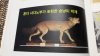
This stuffed dhole was hunted from the northern part of the Korean Peninsula, by Honda Sadanobu(本田貞信), a japanese hunter he hired when Japan's rich man Yamamoto Tadasaburo(山本唯三郎) came to Korea for tiger hunting at the last of 1917. It is kept at Doshisha High School in Kyoto, Japan now.

As far as I know, this stuffed is the only remaining of the dhole specimen that captured from korea. I hope that this specimen will contribute to the genetic analysis of Ussuri dhole.
 

Attachments

  • KakaoTalk_20200718_213620315.jpg
    KakaoTalk_20200718_213620315.jpg
    93.6 KB · Views: 74
Quote from IUCN dhole page:

"As of August 2013, there were at least 223 Dholes in 38 zoos worldwide (International Species Information System [ISIS] unpubl.), including zoos in Europe (24 zoos), Asia (nine zoos), North America (four zoos), and Australia (one zoo). There also are captive Dholes in additional zoos and breeding farms which are not members of ISIS. The origin of most captive Dholes is unclear, and their subspecific classification is probably wrong. The most numerous subspecies in captivity is listed as C. a. lepturus, which occurs in at least 20 zoos worldwide and is the most common Dhole in European zoos. Firstly, inbreeding may be an issue because captive Dholes listed as lepturus trace their origin to only three founders: a single Dhole from a game farm in North America with an unknown origin (H. Maisch pers. comm.), and Dholes from the Moscow Zoo, which originated from only two individuals captured in Qinghai Province, China in 1957 (Sosnovskii 1967). Secondly, the Dholes captured in Qinghai Province should represent either C. a. hesperius or C. a. fumosus, from the putative northern Dhole group, rather than lepturus which historically occurred only south of the Yangtze River and is part of the southern Dhole group (Durbin et al. 2004). The putative southern Dholes are represented in several Indian zoos (probably C. alpinus dukhunensis), and in zoos in Phnom Penh, Cambodia, and Sydney, Australia (C. alpinus infuscus). Other zoos do not list subspecies, thus it is likely that putative subspecies from different origins have been interbred (M. Boeer pers. comm.), such as that done in Singapore Zoo. The European Endangered Species Programme (EEP) does not consider subspecies, but it does regard Dholes in European zoos as a Chinese ecotype, and prevents mixing this type with Dholes from other origins (e.g., India, Cambodia). Nevertheless, the value of any of captive Dholes for potential reintroduction efforts is uncertain, at least until genetic studies can confirm their origin and subspecific classification. Until that time, we recommend that captive Dholes from the putative northern and southern groups be managed separately, such as that done by the EEP."

Just accidentally found something which suggests that Dholes in zoos are even more of a genetic mess! According to ZTL, Howletts Wild Animal Park--which has long held a large and very prolific breeding group of Dhole--formed their original pack from an import of 2.2 animals from the Alberta Game Farm in Canada in 1982 and then a further import 2.0 from the Taronga Zoo in 1984. Assuming the Alberta Game Farm is same "game farm in North America" noted as having contributed one of the founders of the "lepturus" stock, the original Howletts animals will have been of unknown subspecific designation. Additionally, the IUCN identifies the former Taronga stock as infuscus. What further complicates matters is the aforementioned taxonomic mess that is the Dhole. According to the IUCN, lepturus and infuscus are apart of the southern Dhole group, while fumosus is part of the northern Dhole group and is also what they believe the Dholes living in the Quinghai Province of China should represent (this being where the original 1.1 founders of Moscow's stock came from). However, Mammal Species of the World 3rd ed. lists infuscus as a synonym of fumosus and notes an insane range for the subspecies stretching across both the northern and southern portions of the species' historic range, including overlapping with their listed range for lepturus and heading all the down to Java (though oddly they claim the subspecies skips over Sumatra, which is home to a different subspecies).

Now it is, of course, possible that the current population does only descend from the previously identified three individuals, but Howletts is listed as having what is presumed to be the European first breeding of the species and have sent animals to multiple other European zoos listed as holding lepturus. It is clear now that the only thing that is clear about Dhole subspecies in captivity is that everything is unclear.

~Thylo
 
Just accidentally found something which suggests that Dholes in zoos are even more of a genetic mess! According to ZTL, Howletts Wild Animal Park--which has long held a large and very prolific breeding group of Dhole--formed their original pack from an import of 2.2 animals from the Alberta Game Farm in Canada in 1982 and then a further import 2.0 from the Taronga Zoo in 1984. Assuming the Alberta Game Farm is same "game farm in North America" noted as having contributed one of the founders of the "lepturus" stock, the original Howletts animals will have been of unknown subspecific designation. Additionally, the IUCN identifies the former Taronga stock as infuscus. What further complicates matters is the aforementioned taxonomic mess that is the Dhole. According to the IUCN, lepturus and infuscus are apart of the southern Dhole group, while fumosus is part of the northern Dhole group and is also what they believe the Dholes living in the Quinghai Province of China should represent (this being where the original 1.1 founders of Moscow's stock came from). However, Mammal Species of the World 3rd ed. lists infuscus as a synonym of fumosus and notes an insane range for the subspecies stretching across both the northern and southern portions of the species' historic range, including overlapping with their listed range for lepturus and heading all the down to Java (though oddly they claim the subspecies skips over Sumatra, which is home to a different subspecies).

Now it is, of course, possible that the current population does only descend from the previously identified three individuals, but Howletts is listed as having what is presumed to be the European first breeding of the species and have sent animals to multiple other European zoos listed as holding lepturus. It is clear now that the only thing that is clear about Dhole subspecies in captivity is that everything is unclear.

~Thylo

Surely the Aspinall parks would have already checked up on the genetics of their dhole packs by now ?

They don't seem to have stopped any breeding occurring which would seem to suggest that their animals are not in such a genetic mess?
 
Surely the Aspinall parks would have already checked up on the genetics of their dhole packs by now ?

They don't seem to have stopped any breeding occurring which would seem to suggest that their animals are not in such a genetic mess?

Well if the entire rest of the stock is already in a genetic mess (due to one of the three originally noted founders being of unknown origins) then I'm not sure why Howletts would have stopped their successful breeding, especially when the taxonomy of the species has changed so many times. It's possible that the 4.2 animals noted on ZTL as having been the original animals the zoo bred from never spread out and their genetics are no longer in the modern population, but if I had to bet on it I'd say they probably are.

As a side, in attempting to look into Alberta Game Farm's Dhole group, I found the interesting home video of the zoo which includes a significant section dedicated to their surprisingly large pack:

Clearly they did well breeding them. I do wonder if any of those animals ended up becoming US founders.

~Thylo
 
Well if the entire rest of the stock is already in a genetic mess (due to one of the three originally noted founders being of unknown origins) then I'm not sure why Howletts would have stopped their successful breeding, especially when the taxonomy of the species has changed so many times. It's possible that the 4.2 animals noted on ZTL as having been the original animals the zoo bred from never spread out and their genetics are no longer in the modern population, but if I had to bet on it I'd say they probably are.

Why not send them an email and ask for further information to clarify these points ? I'm sure they would be interested in replying
 
Just accidentally found something which suggests that Dholes in zoos are even more of a genetic mess! According to ZTL, Howletts Wild Animal Park--which has long held a large and very prolific breeding group of Dhole--formed their original pack from an import of 2.2 animals from the Alberta Game Farm in Canada in 1982 and then a further import 2.0 from the Taronga Zoo in 1984. Assuming the Alberta Game Farm is same "game farm in North America" noted as having contributed one of the founders of the "lepturus" stock, the original Howletts animals will have been of unknown subspecific designation. Additionally, the IUCN identifies the former Taronga stock as infuscus. What further complicates matters is the aforementioned taxonomic mess that is the Dhole. According to the IUCN, lepturus and infuscus are apart of the southern Dhole group, while fumosus is part of the northern Dhole group and is also what they believe the Dholes living in the Quinghai Province of China should represent (this being where the original 1.1 founders of Moscow's stock came from). However, Mammal Species of the World 3rd ed. lists infuscus as a synonym of fumosus and notes an insane range for the subspecies stretching across both the northern and southern portions of the species' historic range, including overlapping with their listed range for lepturus and heading all the down to Java (though oddly they claim the subspecies skips over Sumatra, which is home to a different subspecies).

Now it is, of course, possible that the current population does only descend from the previously identified three individuals, but Howletts is listed as having what is presumed to be the European first breeding of the species and have sent animals to multiple other European zoos listed as holding lepturus. It is clear now that the only thing that is clear about Dhole subspecies in captivity is that everything is unclear.

~Thylo
If only someone has access to the EEP studbook... Though it probably won't be too difficult to conduct a genetic analysis of the current captive population.
 
Back
Top