TZDugong Goes to Europe

TZDugong

Well-Known Member
5+ year member
Hi Zoochat,

This summer, I'm fortunate enough to be spending about a month in Europe - 3 weeks in the U.K. and then a week or so divided between Belgium and the Netherlands. I've already been in England for around 10 days, although my time here is primarily work-focused, which means zoo-visiting is limited to weekends only. Despite that, I've managed to visit two zoos so far, with one more to come before leaving the country. On the continent, I'll have much more free time and have plans to visit 4 more zoos - so 7 in total on the trip. I'll keep the places I'm visiting a secret for now but they're all very well-known. No surprises here!:D

For the last couple of days, I've been debating whether or not to start a thread on this trip because all the collections I'm visiting are already extremely well-documented on this site. However, I've always enjoyed reading reviews of zoos that I'm already familiar with, so I'm hoping my write-ups will have a similar effect for some of you. Or you may completely disagree with everything I wrote, which is fine too:p. I'd love to hear any feedback or additional things I may have missed that could generate a discussion or prove useful to others visiting after me.

My first review should be out in the next couple of days, and I'll try and post them fairly consistntly, although there will be significant gaps in the next couple of weeks before I visit a zoo every other day in the Low Countries.
 
ZSL London Zoo – 25/07

London is the only zoo on this trip that I’ve visited before, back in 2022. Because of this – and the fact that it’s extremely expensive – I almost gave it a miss, although in the end I was curious to see some of the zoo’s recent developments in the last 3 years.

The biggest change since my last visit is, of course, the new reptile/amphibian house. I couldn’t properly compare it to the old building, as by the time of my last visit, it was half-empty; however, the new exhibit is really nice. It doesn’t have the biggest collection, but the species list is very choice, with highlights such as Chinese Giant Salamander, Iberian Midwife Toad and Lake Oku Clawed Frog. The frog in particular was probably my overall species highlight at ZSL – fascinating species, and I believe London is the only zoo in Europe that holds them? I thought the exhibits were also quite large for the most part, along with being very well-planted. The only enclosures I didn’t like were for the Vietnamese and Big-Headed Turtles, which seemed kind of small for their inhabitants. This building is probably ZSL’s standout exhibit for me, and one of the better herp houses I’ve visited, which is a great sign for future developments at the zoo. The adjacent Giant Tortoise greenhouse is also well done, although extremely humid, so I didn’t spend too much time there.

High-quality buildings for smaller animals are a bit of a theme in London. Blackburn Pavilion is a delightful little birdhouse, retaining its Victorian Architecture without compromising space for the animals. If I saw correctly, every species either has indoor-outdoor access or is in the walk-through aviary, which isn’t particularly large but is very pleasant. I also love the bird clock by the house’s entrance. Tiny Giants is also a stand-out and among the best buildings for inverts I’ve seen, with only Cincinnati being definitively better. The orb weaver spider walk-through is the major highlight – a totally unique exhibit concept that you’d never see in North America and allows for great viewing. Definitely one of my favourite exhibits at the zoo. The rest of the house works really well, although with bigger crowds, it can be difficult to actually view some of the smaller exhibits. The coral reef tank is pretty nondescript as well and feels like a bit of an afterthought compared to the insects. The last major animal building is Rainforest/Night Life, which isn’t quite as good as some of London’s other houses, but is by no means bad. The rainforest hall is standard but still enjoyable, with the mixed-exhibit for Coppery Titi, White-Faced Saki, Rodrigues Flying Fox and Red-Footed Tortoise ensuring that there will be activity in the house. Night Life is of a similar standard, although with a very nice collection that includes Potto, Malagasy Giant Jumping Rats and two species of Slow Loris among other things (I do have some problems with this exhibit, but I’ll address that later). I didn’t manage to see the Aye-Ayes on this visit, but I’ve seen them in a few places, and I do like London’s exhibit for them.

There are also some other assorted exhibits scattered around the zoo that I like. The Penguin exhibit is great, with a large pool and land area, along with a huge colony of birds that makes for a great display. The Squirrel Monkey and Ring-Tailed walk-through exhibits are really nice for a (North) American, as primate walk-throughs are so rare over here. Additionally, the Komodo Dragon House and Bird Safari are right next to each other, and both exhibits are also quite good.

While the animal buildings at ZSL are consistently good to great, I find the areas for larger animals hit-or-miss. Land of the Lions and Tiger Territory both have decently large and well-designed exhibits for their titular species, but I found neither complex particularly exciting. The side exhibits for Langurs, Vultures (in LOTL), and Gibbons (in Tiger Territory) are similarly fine without making much of an impression on me. I know Land of the Lions is somewhat controversial in the UK for its excessive theming, and I can definitely see why, although I don’t think it compromises any of the exhibits themselves. I did manage to find the Indian Mongoose exhibit after missing it on my last visit, which was nice, although I failed to locate the Mongooses themselves, which was a bit of a disappointment.

Gorilla Kingdom is half-closed at the moment (does anyone know when it re-opens?), although the Gorillas are still viewable in their average exhibit. The zoo has a baby Gorilla at the moment, which had some really awesome interactions with the rest of the troop, although it meant that the crowds in this section were pretty overwhelming. I’m also not really a fan of Into Africa, as while it’s always nice to see Okapis and Pygmy Hippo, none of the exhibits are anything above decent. The Giraffe exhibit and house in particular are among the smallest I’ve seen, especially now that they’re no longer mixed in with Zebras, effectively cutting their space in half.

However, my biggest issue with London has nothing to do with their exhibits but with how they use their space. Despite the zoo’s limited site, with no possibility of expansion, there’s so much untapped potential on the grounds. The Mappins are pretty much a waste of space at the moment with the Outback, which is a shame, as something interesting could be done with this area. Perhaps net it over and add Snow Leopards? It would certainly have the vertical space to make it work. I feel similarly about the Snowden Aviary/Monkey Valley, which is a stunning structure but feels underutilized with its current inhabitants. I’ve been past this area 4 times over 2 visits and have yet to see the Colobus Monkeys in the walkthrough, with their side exhibit actually being fairly decent. If you have to make the aviary a monkey walk-through, then it makes more sense to put the Ring-Tailed Lemurs here, which you could keep in a big group and would make for a lively display. There are also quite a few lawns dotted around the zoo, which is fine, but when the site is only 30-ish acres, that’s space that could be used for expanding the collection or increasing current exhibits. I’d be interested to hear if regulars in London agree with these thoughts, although I don’t think I’ve said anything too outlandish.

Despite the ending to this review being a bit negative, I do like ZSL London quite a bit. Is it perfect? Absolutely not, but there’s still a lot to like, and it's certainly a good zoo. Exhibit quality is very consistent, and the collection - while not the largest - has some really nice species and a good mix of animal groups (apart from Fish). I also appreciate its focus on smaller species, which makes a lot of sense considering the limited space, and if the new reptile/amphibian house is anything to go by, then the zoo has a very bright future ahead of it.
 
Colchester Zoo – 03/08

Colchester wasn’t a zoo that was on my radar when I was initially planning this trip, but I had a free day, so I decided to make the - somewhat difficult, because I was getting there via public transit and it’s very clearly set up for cars – trip. I’m glad I did, though, because it’s an interesting place.

Due to the bus schedule, I had just over three hours to visit the zoo, which, looking back, probably wasn’t enough time, as the zoo is quite large both in terms of its collection and physical space. I managed to see everything, although I didn’t get the chance for any re-visits and rushed through some parts near the entrance. It also has a fairly confusing layout, with several dead ends or areas that require backtracking. Another hour at the zoo would’ve been my ideal time, but I could see this being a full-day collection for some people.

upload_2025-8-12_22-7-1.png
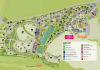
Zoo Map

The big standout at Colchester is the primates. The zoo has 20+ species of varying sizes, including a few rarities such as L’Hoest’s Monkey and Guianan Bearded Saki (only 6 holders in Europe according to ZTL). Their exhibits – for the most part – are also quite good. The Squirrel Monkey exhibit was my personal favourite, as it’s a lush, huge enclosure that still allowed me to get great views of the animals. Colchester has three separate exhibits for Tamarins, all of which are nice and one of which is a walk-through that includes Tamandua(!). Seeing an active Tamandua 3 feet away from me was one of the highlights of my visit to the zoo. Lemurs also do very well here, with a large Ring-Tailed/Crowned mixed-species habitat directly next to their drive-through (it’s only accessible by train but is easily seen from above) area. Also nearby are Geladas, in an exhibit that isn’t the prettiest, but it is big enough and with at least 20-25 individuals, making for an entertaining display. Not every primate enclosure is memorable – for instance, I didn’t love the Barbary Macaque area - but this is undoubtedly the strength of the zoo.

Exhibits for their two Great Ape species are more of a mixed bag. On the positive end, I liked the Chimpanzee exhibit quite a bit. It won’t win any awards for beauty, but it’s a good size, and the number of climbing opportunities is really impressive. The emphasis on function over flash reminds me quite a bit of Columbus’s Gorilla exhibit or a less extreme version of Howlett’s Gorilla cages. The Orangutan exhibit, on the other hand, was super underwhelming. I’m not sure I can think of any positives about this enclosure, other than that at least it isn’t all indoors. It makes no sense that the Chimp exhibit is covered with climbing platforms and structures, yet the most arboreal ape species gets two small climbing structures with almost no verticality. I only found out after visiting the zoo that this exhibit is only 15 years old – I assumed it was a product of the 1950s or 60s, which makes it even worse. My least favourite part of the zoo.

After that, Colchester is a bit of a hodgepodge of different areas without a strongly defined theme, so I’ll just touch on some of the other things I liked and disliked about the place.

I loved the central part of the zoo, which has the aforementioned Lemur exhibits, along with Smooth-Coated Otter, Chilean Flamingo, Binturong, Asian Small-Clawed Otter, Red Panda, Amur Leopard, Giant Anteater and more Tamarins. This is really a mix of several exhibit complexes, but I lump them together because all of them are great. Every exhibit here is extremely well-planted and aesthetically pleasing, although I still managed to see all these species, other than the Anteater. It was also here where I had the highlight of my visit, watching an extremely active Binturong climb down a full-sized tree and then wander around its huge, lush enclosure, where the Small-Clawed Otters are also found. My timing was excellent because after about 3 minutes of activity, the animal disappeared into a bush and was completely hidden in the sea of vegetation.

The Sea lion exhibit for the animals themselves is solid, but the underwater tunnel was the real highlight for me. I’ve been to one other zoo with a Sea lion tunnel (Columbus), although Colchester’s is way better, as the tunnel is actually cylindrical and the water is crystal clear, which gave me great views of the animals. This cuts into the usable underwater space for the pinnipeds, but for visitors, it’s an A+ display. I was also impressed with the two Tiger exhibits. Like several other parts of the zoo, they’re heavily planted, which is nice as it allows the cats some privacy and gives them a more “natural” feel. Bush Dogs are close by in a decent enclosure, but the two animals were super active, so I spent a while here. Unfortunately, it’s only viewable from the queue for the Madagascar train ride – which I did not go on – so if you want peace and quiet, probably skip this exhibit :p.

On the negative side, I wasn’t a big fan of the Pygmy Hippo exhibit, which is too small both inside and out. The outdoor exhibit has a puny pool and absolutely hideous mock rock. It’s also a bottleneck point for visitors, with limited viewing of the Hippos, which is accentuated when there’s even a slight crowd. Kingdom of the Wild just didn’t work for me in general. It’s primarily an indoor space for the African Savanna exhibit, which I thought was nice enough, but apart from that, it’s a bit of wasted space. It’s one of the largest indoor spaces at the zoo, but the current setup is uninspired, as is the nearby Aardvark exhibit.

Collection-wise, I also found the number of bird species at the zoo shockingly limited. Mammals are well represented, and the reptile collection – while not massive – is decent enough, with species spread throughout the zoo. Meanwhile, for birds, there are Penguins, Flamingos, Crowned Cranes, a few birds of prey … and that’s about it. You can count the number of smaller bird species on one finger. There is certainly space to add some more species or even a birdhouse, which would flesh out the collection quite a bit.

One final semi-random thing that stood out to me: while most zoos have large, colourful signs at the start of their major exhibit complexes, it feels like over half of Colchester’s enclosures have distinct exhibit signs. My personal favourites were “Mangabey Mangrove” and “Suricata Sands.” I’m fairly confident this is the only zoo in the world with an exhibit called Mangabey Mangrove, but I do appreciate this quirk.

Weirdly, Colchester kind of reminded me of London. Not in terms of their collection or size – the zoos are wildly different in both regards – but in how I feel about them looking back. I enjoyed my Colchester visit quite a bit. It has some great things, lots of parts that are solid to good and then a couple of bits I didn’t really like. What does that all add up to? For me, a good but not great zoo. I’m very happy I visited, though, and I’d recommend it as a (long) day trip for anyone staying in London.
 

Attachments

  • upload_2025-8-12_22-7-1.png
    upload_2025-8-12_22-7-1.png
    722.6 KB · Views: 155
This next post is slightly out of chronological order in terms of visits, but it’s just a short review, so I figured I’d just post it now while writing about a much larger collection.

Manchester Museum – 10/08

The Manchester Museum is a relatively small but well-curated collection that features exhibitions on taxidermized animals, archaeological finds, and fossils, among other things. However, the main reason why I, and I’m assuming most zoochatters who find themselves in Manchester, visited the place is that the museum has a vivarium with a small collection of reptiles and amphibians.

The vivarium has a dozen on-show exhibits, along with another 10 or so enclosures that are viewable but more “behind the scenes.” For what it is, it’s a nicely done place. All of the enclosures are well furnished and suitable for their inhabitants. They’re also well-planted, but I did manage to see every species signed here. The highlight of the collection is the mixed exhibit of Giant Green Anole and Variable Harlequin Frog, which looks really nice and is quite large. The Harlequin Frogs are also a serious rarity, with the museum being the only place to exhibit them in Europe. Other than that, seeing an active Rio Cauca Caecilian was great, because I missed them entirely at London and Chester (spoiler alert!). I also managed to see Lemur Leaf Frogs in their semi-off-display enclosure, which is another fascinating species. It would be nice if they could find a spot for them in the main collection.

That’s all I really have to say about the vivarium. It’s a lovely exhibit with some unique species, but you can be in and out in 20-30 minutes. Definitely worth a visit if you’re already in Manchester, though, even if you aren’t interested in the other parts, as the museum is free.

Along with visits to the Manchester Museum and Chester Zoo last weekend, I also technically saw a third collection … although this was a lot more surprising.

To get to Manchester, I first had to take the train from Norwich to London. About halfway through the trip, I was absentmindedly staring out the window, looking at nothing in particular, when the train passed a series of large pens, and for about three seconds, I saw a massive white bear sitting in the grass. This immediately startled me out of my daze, although at first, I assumed that I was just seeing things, because what are the odds of seeing a Polar Bear from a train in the Norfolk countryside? After a bit of googling, I discovered that the train passes right by Jimmy’s Farm and Wildlife Park, which does exhibit polar bears. I’m kind of glad I had no idea about this beforehand, because it’s one of the most unique animal experiences I’ve ever had. For what it’s worth, from my split-second viewing, the Bear’s exhibit seemed to be pretty large, with a nice pool. I wonder if anyone else on here has had the same experience seeing the Bears as me.

If you’re ever going to Norfolk and want to see them, make sure you sit on the right side of the train if you’re going from London to Norwich, and then obviously the left side going back to the capital. And make sure to keep your eyes peeled just before the train gets into Ipswich.
 
Chester Zoo – 09/08

What an amazing zoo!

Despite living across the pond from Chester, I was somewhat familiar with the zoo before visiting, mostly due to its status as the most-discussed zoo on this site. I expected it to easily be the best of the three English zoos that I went to on this trip, but I was more curious to see if it could match up with some of the great places I’ve visited in the US, like San Diego, Bronx and Omaha. Now that I’ve come home and had time to reflect on my visit, the answer to that question is a definitive yes.

I got to the zoo at opening and immediately made my way to Islands, trying to beat the inevitable crowds and assuming it would be a highlight of the collection. This proved to be a great idea, as I really loved this complex. It’s almost a “zoo within a zoo,” and I ended up spending almost 2 hours in this area alone. I know some people on this site find Islands theming excessive, but I found it pretty low-key and well done. Even if you dislike extra stuff like the boat ride or the Bali temple, this is still an area with a massive collection of very good exhibits. The enclosure for Sulawesi Crested Macaques was probably my favourite and set the tone for Chester’s almost uniformly excellent exhibits for primates. I also spent quite a bit of time in the Indonesian walk-through aviary, which felt a little empty but is really nice, along with the Sun Bear exhibit, which is among the best I’ve seen for the species. I haven’t even mentioned Monsoon Forest, which would be a highlight exhibit for most major zoos, which speaks to the quality of this area and Chester as a whole.

full

Part of the Sulawesi Crested Macaque Exhibit

Next up after Islands were two enclosures for Tamarins and Tamandua, which are massive and include several full-size trees. It’s an odd critique, but maybe these exhibits are too big for their inhabitants because I saw nothing in either one, although I did manage to spot some Tamarins in their indoor exhibit. This constitutes the start of a small South American zone, which also includes pleasant exhibits for Capybara/Giant Anteater and Lowland Tapirs, along with an excellent Spectacled Bear enclosure that is of a similar quality to the Sun Bear exhibit in Islands. The real highlight of this part of the zoo, however, is the bat house. Going into my visit, I knew this would be good, but it blew away my lofty expectations. There’s nothing complicated about it, but seeing hundreds of bats flying around a massive, darkened space was an amazing experience. The lighting in this exhibit is perfect – dim enough to ensure a nocturnal atmosphere, but just bright enough to watch the bats feed and glide over visitors. Despite the numerous highlights at Chester, three weeks on from my visit, this is my favourite part of the zoo.

full

Spectacled Bear Exhibit

As I moved to the left side of the zoo, the amazing exhibits kept coming. If the bat house didn’t exist, the Giant Otter enclosure would be my favourite thing at Chester. The outdoor space is massive and incredibly attractive, but I was slightly disappointed that it didn’t have any underwater viewing, which was immediately rectified when I found the indoor viewing area. Easily the best otter exhibit I’ve ever seen, and I was lucky enough to catch the inhabitants during feeding time. The nearby walk-through South American aviary with Flamingos is great, as is the Komodo Dragon house, which also includes additional Asian reptiles and birds. Lemurs are also a focus of this section, with an excellent walk-through exhibit that was immediately topped by several gorgeous island exhibits. I didn’t have the best luck at viewing the primates, although I did get great views of the Alaotran Gentle Lemur, which was a first for me.

full

South American Wetlands Aviary

It was at this point in the visit that I experienced the only real negative from my visit to Chester, the crowds. I could only visit the zoo on a Saturday, so I knew it would be busy, but the park is pretty large, so it was mostly manageable, apart from Spirit of the Jaguar and Realm of the Red Ape. Both of these exhibits are great for the animals, but for visitors, they’re poorly designed for large numbers of visitors. The series of Jaguar enclosures are excellent, and I really liked the large amount of indoor space for a warm-weather cat, but it was almost impossible to see the animals, and it just wasn’t an enjoyable viewing experience. The Orangutan house was similarly congested, although I did manage slightly better views of the animals. On a revisit to Chester, I’d definitely go to this area first, as I’d probably enjoy them a lot more.

After a couple of (very minor) disappointments, things quickly picked back up again. Tropical Realm isn’t one of the best rainforest houses I’ve visited, but for an older building, it still holds up well. The reptile and amphibian terrariums are great, as are the aviaries for Hornbills. I do wish the house had more free-flying birds in the central area, but I won’t be too harsh on an exhibit that displays Tuataras and Aye-Ayes. Nearby enclosures for Okapis, Congo Buffaloes, Camels and Lions are all simple, but well-done. The primate house was another highlight. Its species list is quite small (just Roloway Monkey, Mandrill, Colombian Black Spider Monkey and Lion-Tailed Macaque), but the indoor exhibits are packed with climbing opportunities, and the outdoor spaces are typically excellent, lush primate islands. The adjacent Indian Rhino exhibit is superb as well, and it was nice to see them in a mixed species exhibit with Eld’s Deer. I was thinking about skipping the Elephant area due to time, but managed to squeeze in a quick visit to the indoor area as the zoo was closing, which was nice as there are a few aviaries here, some very active Swinhoe’s Squirrels and Northern Luzon Cloud Rats (in a diurnal exhibit?). I believe the Elephant house is accessible for free outside the entrance, which is something I don’t think I’ve ever seen before.

I finished Chester by visiting its newest exhibit, the African grasslands area, which opened earlier this year. I didn’t love this complex as much as other parts of the zoo. Visiting so soon after opening may have worked against it, as many enclosures felt a bit barren by Chester standards. The main savannah is emblematic of this issue – it’s large and has the backbone of a good exhibit, but with obvious fencing and barriers, it’s currently a bit underwhelming. I could see myself liking it more in a few years when the plants have more time to grow. This is by no means a bad exhibit, however, and there were some highlights. The Hidden Savannah building is a gem, particularly the lovely open-topped mixed-species reptile exhibit. The wetland aviary is great as well, although it would benefit from being a walk-through. Black Rhinos have a series of enclosures that are probably the best I’ve seen for the species, although I believe these were existing spaces that weren’t part of the new development.

Before Chester, I’d been to around half a dozen zoos in Europe, but this was the first real heavy-hitter, and it absolutely delivered. Exhibit-wise, this is probably the most impressive zoo I’ve ever visited. There are world-class enclosures littered throughout the zoo, and I struggle to think of anything I’d consider below average, let alone bad. I’ve visited other places with this level of consistency, but they were all significantly smaller than Chester, which is a massive, full-day zoo with a diverse range of species (apart from insects, which are limited). I’ve yet to visit all of the collections generally seen as the world’s best, but after visiting Chester, it would be hard to imagine it not being at least a very strong contender. Among the places I’ve seen, it stacks up very favourably. Great place and a wonderful introduction to the upper tier of European zoos.
 
Only discovering this now, but I've enjoyed catching up on these reviews as they're excellent.
ZSL London Zoo – 25/07

London is the only zoo on this trip that I’ve visited before, back in 2022. Because of this – and the fact that it’s extremely expensive – I almost gave it a miss, although in the end I was curious to see some of the zoo’s recent developments in the last 3 years.

The biggest change since my last visit is, of course, the new reptile/amphibian house. I couldn’t properly compare it to the old building, as by the time of my last visit, it was half-empty; however, the new exhibit is really nice. It doesn’t have the biggest collection, but the species list is very choice, with highlights such as Chinese Giant Salamander, Iberian Midwife Toad and Lake Oku Clawed Frog. The frog in particular was probably my overall species highlight at ZSL – fascinating species, and I believe London is the only zoo in Europe that holds them? I thought the exhibits were also quite large for the most part, along with being very well-planted. The only enclosures I didn’t like were for the Vietnamese and Big-Headed Turtles, which seemed kind of small for their inhabitants. This building is probably ZSL’s standout exhibit for me, and one of the better herp houses I’ve visited, which is a great sign for future developments at the zoo. The adjacent Giant Tortoise greenhouse is also well done, although extremely humid, so I didn’t spend too much time there.

High-quality buildings for smaller animals are a bit of a theme in London. Blackburn Pavilion is a delightful little birdhouse, retaining its Victorian Architecture without compromising space for the animals. If I saw correctly, every species either has indoor-outdoor access or is in the walk-through aviary, which isn’t particularly large but is very pleasant. I also love the bird clock by the house’s entrance. Tiny Giants is also a stand-out and among the best buildings for inverts I’ve seen, with only Cincinnati being definitively better. The orb weaver spider walk-through is the major highlight – a totally unique exhibit concept that you’d never see in North America and allows for great viewing. Definitely one of my favourite exhibits at the zoo. The rest of the house works really well, although with bigger crowds, it can be difficult to actually view some of the smaller exhibits. The coral reef tank is pretty nondescript as well and feels like a bit of an afterthought compared to the insects. The last major animal building is Rainforest/Night Life, which isn’t quite as good as some of London’s other houses, but is by no means bad. The rainforest hall is standard but still enjoyable, with the mixed-exhibit for Coppery Titi, White-Faced Saki, Rodrigues Flying Fox and Red-Footed Tortoise ensuring that there will be activity in the house. Night Life is of a similar standard, although with a very nice collection that includes Potto, Malagasy Giant Jumping Rats and two species of Slow Loris among other things (I do have some problems with this exhibit, but I’ll address that later). I didn’t manage to see the Aye-Ayes on this visit, but I’ve seen them in a few places, and I do like London’s exhibit for them.

There are also some other assorted exhibits scattered around the zoo that I like. The Penguin exhibit is great, with a large pool and land area, along with a huge colony of birds that makes for a great display. The Squirrel Monkey and Ring-Tailed walk-through exhibits are really nice for a (North) American, as primate walk-throughs are so rare over here. Additionally, the Komodo Dragon House and Bird Safari are right next to each other, and both exhibits are also quite good.

While the animal buildings at ZSL are consistently good to great, I find the areas for larger animals hit-or-miss. Land of the Lions and Tiger Territory both have decently large and well-designed exhibits for their titular species, but I found neither complex particularly exciting. The side exhibits for Langurs, Vultures (in LOTL), and Gibbons (in Tiger Territory) are similarly fine without making much of an impression on me. I know Land of the Lions is somewhat controversial in the UK for its excessive theming, and I can definitely see why, although I don’t think it compromises any of the exhibits themselves. I did manage to find the Indian Mongoose exhibit after missing it on my last visit, which was nice, although I failed to locate the Mongooses themselves, which was a bit of a disappointment.

Gorilla Kingdom is half-closed at the moment (does anyone know when it re-opens?), although the Gorillas are still viewable in their average exhibit. The zoo has a baby Gorilla at the moment, which had some really awesome interactions with the rest of the troop, although it meant that the crowds in this section were pretty overwhelming. I’m also not really a fan of Into Africa, as while it’s always nice to see Okapis and Pygmy Hippo, none of the exhibits are anything above decent. The Giraffe exhibit and house in particular are among the smallest I’ve seen, especially now that they’re no longer mixed in with Zebras, effectively cutting their space in half.

However, my biggest issue with London has nothing to do with their exhibits but with how they use their space. Despite the zoo’s limited site, with no possibility of expansion, there’s so much untapped potential on the grounds. The Mappins are pretty much a waste of space at the moment with the Outback, which is a shame, as something interesting could be done with this area. Perhaps net it over and add Snow Leopards? It would certainly have the vertical space to make it work. I feel similarly about the Snowden Aviary/Monkey Valley, which is a stunning structure but feels underutilized with its current inhabitants. I’ve been past this area 4 times over 2 visits and have yet to see the Colobus Monkeys in the walkthrough, with their side exhibit actually being fairly decent. If you have to make the aviary a monkey walk-through, then it makes more sense to put the Ring-Tailed Lemurs here, which you could keep in a big group and would make for a lively display. There are also quite a few lawns dotted around the zoo, which is fine, but when the site is only 30-ish acres, that’s space that could be used for expanding the collection or increasing current exhibits. I’d be interested to hear if regulars in London agree with these thoughts, although I don’t think I’ve said anything too outlandish.

Despite the ending to this review being a bit negative, I do like ZSL London quite a bit. Is it perfect? Absolutely not, but there’s still a lot to like, and it's certainly a good zoo. Exhibit quality is very consistent, and the collection - while not the largest - has some really nice species and a good mix of animal groups (apart from Fish). I also appreciate its focus on smaller species, which makes a lot of sense considering the limited space, and if the new reptile/amphibian house is anything to go by, then the zoo has a very bright future ahead of it.
As a local, I agree with everything you say there. The frogs are indeed the only ones at a European zoo. A slight correction regarding Blackburn: the birds in aviaries in the main lobby, such as the lories, tanagers and mesias, only have indoor access.
Colchester Zoo – 03/08

Colchester wasn’t a zoo that was on my radar when I was initially planning this trip, but I had a free day, so I decided to make the - somewhat difficult, because I was getting there via public transit and it’s very clearly set up for cars – trip. I’m glad I did, though, because it’s an interesting place.

Due to the bus schedule, I had just over three hours to visit the zoo, which, looking back, probably wasn’t enough time, as the zoo is quite large both in terms of its collection and physical space. I managed to see everything, although I didn’t get the chance for any re-visits and rushed through some parts near the entrance. It also has a fairly confusing layout, with several dead ends or areas that require backtracking. Another hour at the zoo would’ve been my ideal time, but I could see this being a full-day collection for some people.

View attachment 815766
Zoo Map

The big standout at Colchester is the primates. The zoo has 20+ species of varying sizes, including a few rarities such as L’Hoest’s Monkey and Guianan Bearded Saki (only 6 holders in Europe according to ZTL). Their exhibits – for the most part – are also quite good. The Squirrel Monkey exhibit was my personal favourite, as it’s a lush, huge enclosure that still allowed me to get great views of the animals. Colchester has three separate exhibits for Tamarins, all of which are nice and one of which is a walk-through that includes Tamandua(!). Seeing an active Tamandua 3 feet away from me was one of the highlights of my visit to the zoo. Lemurs also do very well here, with a large Ring-Tailed/Crowned mixed-species habitat directly next to their drive-through (it’s only accessible by train but is easily seen from above) area. Also nearby are Geladas, in an exhibit that isn’t the prettiest, but it is big enough and with at least 20-25 individuals, making for an entertaining display. Not every primate enclosure is memorable – for instance, I didn’t love the Barbary Macaque area - but this is undoubtedly the strength of the zoo.

Exhibits for their two Great Ape species are more of a mixed bag. On the positive end, I liked the Chimpanzee exhibit quite a bit. It won’t win any awards for beauty, but it’s a good size, and the number of climbing opportunities is really impressive. The emphasis on function over flash reminds me quite a bit of Columbus’s Gorilla exhibit or a less extreme version of Howlett’s Gorilla cages. The Orangutan exhibit, on the other hand, was super underwhelming. I’m not sure I can think of any positives about this enclosure, other than that at least it isn’t all indoors. It makes no sense that the Chimp exhibit is covered with climbing platforms and structures, yet the most arboreal ape species gets two small climbing structures with almost no verticality. I only found out after visiting the zoo that this exhibit is only 15 years old – I assumed it was a product of the 1950s or 60s, which makes it even worse. My least favourite part of the zoo.

After that, Colchester is a bit of a hodgepodge of different areas without a strongly defined theme, so I’ll just touch on some of the other things I liked and disliked about the place.

I loved the central part of the zoo, which has the aforementioned Lemur exhibits, along with Smooth-Coated Otter, Chilean Flamingo, Binturong, Asian Small-Clawed Otter, Red Panda, Amur Leopard, Giant Anteater and more Tamarins. This is really a mix of several exhibit complexes, but I lump them together because all of them are great. Every exhibit here is extremely well-planted and aesthetically pleasing, although I still managed to see all these species, other than the Anteater. It was also here where I had the highlight of my visit, watching an extremely active Binturong climb down a full-sized tree and then wander around its huge, lush enclosure, where the Small-Clawed Otters are also found. My timing was excellent because after about 3 minutes of activity, the animal disappeared into a bush and was completely hidden in the sea of vegetation.

The Sea lion exhibit for the animals themselves is solid, but the underwater tunnel was the real highlight for me. I’ve been to one other zoo with a Sea lion tunnel (Columbus), although Colchester’s is way better, as the tunnel is actually cylindrical and the water is crystal clear, which gave me great views of the animals. This cuts into the usable underwater space for the pinnipeds, but for visitors, it’s an A+ display. I was also impressed with the two Tiger exhibits. Like several other parts of the zoo, they’re heavily planted, which is nice as it allows the cats some privacy and gives them a more “natural” feel. Bush Dogs are close by in a decent enclosure, but the two animals were super active, so I spent a while here. Unfortunately, it’s only viewable from the queue for the Madagascar train ride – which I did not go on – so if you want peace and quiet, probably skip this exhibit :p.

On the negative side, I wasn’t a big fan of the Pygmy Hippo exhibit, which is too small both inside and out. The outdoor exhibit has a puny pool and absolutely hideous mock rock. It’s also a bottleneck point for visitors, with limited viewing of the Hippos, which is accentuated when there’s even a slight crowd. Kingdom of the Wild just didn’t work for me in general. It’s primarily an indoor space for the African Savanna exhibit, which I thought was nice enough, but apart from that, it’s a bit of wasted space. It’s one of the largest indoor spaces at the zoo, but the current setup is uninspired, as is the nearby Aardvark exhibit.

Collection-wise, I also found the number of bird species at the zoo shockingly limited. Mammals are well represented, and the reptile collection – while not massive – is decent enough, with species spread throughout the zoo. Meanwhile, for birds, there are Penguins, Flamingos, Crowned Cranes, a few birds of prey … and that’s about it. You can count the number of smaller bird species on one finger. There is certainly space to add some more species or even a birdhouse, which would flesh out the collection quite a bit.

One final semi-random thing that stood out to me: while most zoos have large, colourful signs at the start of their major exhibit complexes, it feels like over half of Colchester’s enclosures have distinct exhibit signs. My personal favourites were “Mangabey Mangrove” and “Suricata Sands.” I’m fairly confident this is the only zoo in the world with an exhibit called Mangabey Mangrove, but I do appreciate this quirk.

Weirdly, Colchester kind of reminded me of London. Not in terms of their collection or size – the zoos are wildly different in both regards – but in how I feel about them looking back. I enjoyed my Colchester visit quite a bit. It has some great things, lots of parts that are solid to good and then a couple of bits I didn’t really like. What does that all add up to? For me, a good but not great zoo. I’m very happy I visited, though, and I’d recommend it as a (long) day trip for anyone staying in London.
Mostly agree here again, though I love 'Kingdom of the Wild.' I'm not sure if this is different in the USA, but the concept of it is really quite hard to find here; a big building, partially serving as the indoor area for hoofstock, that is also absolutely packed with displays for various smaller animals from the same corner of the globe to compliment them. The hippo enclosure is a letdown, but I love the lungfish, weavers and reptiles, and love being able to view them at one moment, and then walk out onto a balcony and see rhinos and elephants. I don't visit Colchester very often, but every time I have, I've spent more time here than anywhere else. Unless something has changed since I last went of course and it's emptier now.
Chester Zoo – 09/08

What an amazing zoo!

Despite living across the pond from Chester, I was somewhat familiar with the zoo before visiting, mostly due to its status as the most-discussed zoo on this site. I expected it to easily be the best of the three English zoos that I went to on this trip, but I was more curious to see if it could match up with some of the great places I’ve visited in the US, like San Diego, Bronx and Omaha. Now that I’ve come home and had time to reflect on my visit, the answer to that question is a definitive yes.

I got to the zoo at opening and immediately made my way to Islands, trying to beat the inevitable crowds and assuming it would be a highlight of the collection. This proved to be a great idea, as I really loved this complex. It’s almost a “zoo within a zoo,” and I ended up spending almost 2 hours in this area alone. I know some people on this site find Islands theming excessive, but I found it pretty low-key and well done. Even if you dislike extra stuff like the boat ride or the Bali temple, this is still an area with a massive collection of very good exhibits. The enclosure for Sulawesi Crested Macaques was probably my favourite and set the tone for Chester’s almost uniformly excellent exhibits for primates. I also spent quite a bit of time in the Indonesian walk-through aviary, which felt a little empty but is really nice, along with the Sun Bear exhibit, which is among the best I’ve seen for the species. I haven’t even mentioned Monsoon Forest, which would be a highlight exhibit for most major zoos, which speaks to the quality of this area and Chester as a whole.

full

Part of the Sulawesi Crested Macaque Exhibit

Next up after Islands were two enclosures for Tamarins and Tamandua, which are massive and include several full-size trees. It’s an odd critique, but maybe these exhibits are too big for their inhabitants because I saw nothing in either one, although I did manage to spot some Tamarins in their indoor exhibit. This constitutes the start of a small South American zone, which also includes pleasant exhibits for Capybara/Giant Anteater and Lowland Tapirs, along with an excellent Spectacled Bear enclosure that is of a similar quality to the Sun Bear exhibit in Islands. The real highlight of this part of the zoo, however, is the bat house. Going into my visit, I knew this would be good, but it blew away my lofty expectations. There’s nothing complicated about it, but seeing hundreds of bats flying around a massive, darkened space was an amazing experience. The lighting in this exhibit is perfect – dim enough to ensure a nocturnal atmosphere, but just bright enough to watch the bats feed and glide over visitors. Despite the numerous highlights at Chester, three weeks on from my visit, this is my favourite part of the zoo.

full

Spectacled Bear Exhibit

As I moved to the left side of the zoo, the amazing exhibits kept coming. If the bat house didn’t exist, the Giant Otter enclosure would be my favourite thing at Chester. The outdoor space is massive and incredibly attractive, but I was slightly disappointed that it didn’t have any underwater viewing, which was immediately rectified when I found the indoor viewing area. Easily the best otter exhibit I’ve ever seen, and I was lucky enough to catch the inhabitants during feeding time. The nearby walk-through South American aviary with Flamingos is great, as is the Komodo Dragon house, which also includes additional Asian reptiles and birds. Lemurs are also a focus of this section, with an excellent walk-through exhibit that was immediately topped by several gorgeous island exhibits. I didn’t have the best luck at viewing the primates, although I did get great views of the Alaotran Gentle Lemur, which was a first for me.

full

South American Wetlands Aviary

It was at this point in the visit that I experienced the only real negative from my visit to Chester, the crowds. I could only visit the zoo on a Saturday, so I knew it would be busy, but the park is pretty large, so it was mostly manageable, apart from Spirit of the Jaguar and Realm of the Red Ape. Both of these exhibits are great for the animals, but for visitors, they’re poorly designed for large numbers of visitors. The series of Jaguar enclosures are excellent, and I really liked the large amount of indoor space for a warm-weather cat, but it was almost impossible to see the animals, and it just wasn’t an enjoyable viewing experience. The Orangutan house was similarly congested, although I did manage slightly better views of the animals. On a revisit to Chester, I’d definitely go to this area first, as I’d probably enjoy them a lot more.

After a couple of (very minor) disappointments, things quickly picked back up again. Tropical Realm isn’t one of the best rainforest houses I’ve visited, but for an older building, it still holds up well. The reptile and amphibian terrariums are great, as are the aviaries for Hornbills. I do wish the house had more free-flying birds in the central area, but I won’t be too harsh on an exhibit that displays Tuataras and Aye-Ayes. Nearby enclosures for Okapis, Congo Buffaloes, Camels and Lions are all simple, but well-done. The primate house was another highlight. Its species list is quite small (just Roloway Monkey, Mandrill, Colombian Black Spider Monkey and Lion-Tailed Macaque), but the indoor exhibits are packed with climbing opportunities, and the outdoor spaces are typically excellent, lush primate islands. The adjacent Indian Rhino exhibit is superb as well, and it was nice to see them in a mixed species exhibit with Eld’s Deer. I was thinking about skipping the Elephant area due to time, but managed to squeeze in a quick visit to the indoor area as the zoo was closing, which was nice as there are a few aviaries here, some very active Swinhoe’s Squirrels and Northern Luzon Cloud Rats (in a diurnal exhibit?). I believe the Elephant house is accessible for free outside the entrance, which is something I don’t think I’ve ever seen before.

I finished Chester by visiting its newest exhibit, the African grasslands area, which opened earlier this year. I didn’t love this complex as much as other parts of the zoo. Visiting so soon after opening may have worked against it, as many enclosures felt a bit barren by Chester standards. The main savannah is emblematic of this issue – it’s large and has the backbone of a good exhibit, but with obvious fencing and barriers, it’s currently a bit underwhelming. I could see myself liking it more in a few years when the plants have more time to grow. This is by no means a bad exhibit, however, and there were some highlights. The Hidden Savannah building is a gem, particularly the lovely open-topped mixed-species reptile exhibit. The wetland aviary is great as well, although it would benefit from being a walk-through. Black Rhinos have a series of enclosures that are probably the best I’ve seen for the species, although I believe these were existing spaces that weren’t part of the new development.

Before Chester, I’d been to around half a dozen zoos in Europe, but this was the first real heavy-hitter, and it absolutely delivered. Exhibit-wise, this is probably the most impressive zoo I’ve ever visited. There are world-class enclosures littered throughout the zoo, and I struggle to think of anything I’d consider below average, let alone bad. I’ve visited other places with this level of consistency, but they were all significantly smaller than Chester, which is a massive, full-day zoo with a diverse range of species (apart from insects, which are limited). I’ve yet to visit all of the collections generally seen as the world’s best, but after visiting Chester, it would be hard to imagine it not being at least a very strong contender. Among the places I’ve seen, it stacks up very favourably. Great place and a wonderful introduction to the upper tier of European zoos.
Enjoyed this one too. I've got to say that I'm absolutely stunned that you (or anyone for that matter) managed to see it in one day. I needed two on my first visit, and that was with both tropical houses shut for avian influenza and the bat house shut for covid! :eek: I'm especially glad to hear that your favourite enclosure in 'Islands' was the macaque enclosure; it's mine too and I've always felt that it doesn't get enough credit compared to the orangutans and sun bears. I wasn't a particular fan of the complex as a whole though.

You say that Chester can match up to Bronx, San Diego and Omaha, but is it better than any of them to you? I'd be very interested to hear how you'd rank the elite zoos you see on this European excursion against each other or the big American zoos you've been to.
 
Mostly agree here again, though I love 'Kingdom of the Wild.' I'm not sure if this is different in the USA, but the concept of it is really quite hard to find here; a big building, partially serving as the indoor area for hoofstock, that is also absolutely packed with displays for various smaller animals from the same corner of the globe to compliment them. The hippo enclosure is a letdown, but I love the lungfish, weavers and reptiles, and love being able to view them at one moment, and then walk out onto a balcony and see rhinos and elephants. I don't visit Colchester very often, but every time I have, I've spent more time here than anywhere else. Unless something has changed since I last went of course and it's emptier now.
Indoor exhibits for hooftock in general are extremely uncommon in North America so the concept was unique for me as well:p.

I don't remember seeing any Lungfish. I might have missed an area of the house? You're right to point out the balcony view though, which is indeed very nice.

I do agree it's nice that there are additional animals, and bar the hippos, everything is solid enough. I just don't think it's particularly imaginative, and more could be done with it, as, bar the Elephant House, it's the only really large building at the zoo. Maybe I was a little harsh on it, but it could pretty easily be better.
Enjoyed this one too. I've got to say that I'm absolutely stunned that you (or anyone for that matter) managed to see it in one day. I needed two on my first visit, and that was with both tropical houses shut for avian influenza and the bat house shut for covid! :eek: I'm especially glad to hear that your favourite enclosure in 'Islands' was the macaque enclosure; it's mine too and I've always felt that it doesn't get enough credit compared to the orangutans and sun bears. I wasn't a particular fan of the complex as a whole though.
In general, I'm a fast zoo visitor - I rarely take photos and move pretty quickly through zoos. Because of my schedule, I had no opportunity for a second day, so I gave certain parts relatively shorter treatment than others, although I believe I saw everything. I did need all 8 of the zoo's opening hours to see everything, though, and even a little bit more as I stayed in the Elephant House slightly past closing.

Definitely one of the more difficult zoos to see in a day, although it wasn't even the hardest on this trip...
You say that Chester can match up to Bronx, San Diego and Omaha, but is it better than any of them to you? I'd be very interested to hear how you'd rank the elite zoos you see on this European excursion against each other or the big American zoos you've been to.
I liked Chester more than both Omaha and Bronx. San Diego is more difficult as I visited it a lot longer ago than the other two (2017) and have so much nostalgia for my visit, plus quite a bit has changed at the zoo since then. In terms of enjoyment, I'd rate San Diego very slightly higher, although I could imagine changing my mind over time.

I'll hold back on comparing the other two elite zoos I saw on this trip (Burgers and Pairi Daiza) to Chester and each other until I review them, but I feel similarly in preferring them to Omaha or Bronx.
 
I don't remember seeing any Lungfish. I might have missed an area of the house?
It's been three years since I visited Colchester, so they may well no longer be there, but ZTL still lists them. From memory, they were at the end of the house nearest to the hippos, though I can't remember if they were on the main platform or the lower level with said hippos. They shared an aquarium with one other species, maybe cichlids if that rings any bells? I think it's the only enclosure in that corner, so if you missed that you wouldn't have missed too much else. It was the first place I ever saw lungfish.

I definitely see what you're saying about it not being the most imaginative exhibit. I suppose really there isn't any running theme or any intricacies to the design, though of course that is partly the reason I like it so much; it's just a great big assortment of various African animals, where you're always surrounded by exhibits, and you'll always be able to find something interesting.

Also really nice to hear about your experience with Jimmy's Farm - I just visited myself for the first time last weekend and it was nice to be able to see them out my train window coming back, so I can only imagine how thrilling it would be if this were to take you completely by surpris. The fact that they can be seen from the train has helped the zoo with publicity a fair amount, with some viral videos of the bears out the window bringing a lot of well-deserved attention to the place. You're right to say the enclosure is large; in fact, it's the biggest in Europe. There is also a paddock next to the bears, equally visible from the train, which holds 'Arctic' wolves; did you have any sight of those?

Keep up the good work; really looking forward to hearing your thoughts on Burgers'! :)
 
It's been three years since I visited Colchester, so they may well no longer be there, but ZTL still lists them. From memory, they were at the end of the house nearest to the hippos, though I can't remember if they were on the main platform or the lower level with said hippos. They shared an aquarium with one other species, maybe cichlids if that rings any bells? I think it's the only enclosure in that corner, so if you missed that you wouldn't have missed too much else. It was the first place I ever saw lungfish.
I do remember seeing a cichlid tank so you’re probably right that there’s a lungfish in there and I just missed it.

You're right to say the enclosure is large; in fact, it's the biggest in Europe. There is also a paddock next to the bears, equally visible from the train, which holds 'Arctic' wolves; did you have any sight of those?
Wow, I had no idea it was that large. Maybe 3 seconds is all that’s needed to analyze a zoo exhibit:D.

I didn’t manage to see any wolves, but on a later trip I caught a glimpse of some zebras which was nice.
 
Artis – 18/08
Artis was the first of 4 major zoos I visited in a five-day span, split evenly between the Netherlands and Belgium. Amsterdam’s zoo seemed like a good collection to kick off this spurt of concentrated visits, as it had always appeared - to me at least - as a classic example of an urban European collection. I didn’t expect Artis to be one of the best facilities I’d see on this trip, but I was interested to see how it stacked up to London, which is of a comparable size and vintage.

My first impression of the collection was positive, as the exhibits near the entrance are all well done. The opening sandy enclosure for the Scimitar-Horned Oryx/Meerkat is attractive, featuring several large palm trees. The former Baboon “spaceship” exhibit is weird and not at all naturalistic, but I found it actually worked well for its current inhabitants, Small-Clawed Otters. These were also the most active otters I’ve ever seen, as I walked past this area a few times and on every occasion, they were engaging with visitors and running all over the exhibit. Red Pandas were also due to be added to this enclosure (they may have already moved in), which is an interesting combination of species. Also in the area are a trio of primate enclosures, for Red-Faced Spider Monkey, Yellow-Cheeked Gibbon, and Red-Ruffed Lemur (which is a walk-through), all of which are extremely lush and aesthetically pleasing. The highlight of this section, and one of the best parts of the zoo for me, is the European aviary. It’s not one of the largest aviaries I’ve seen, but it’s still a very good size, allowing some of the larger inhabitants like Spoonbills to fly around the enclosure. Most of the enclosure is thickly vegetated, to the point where many of the ground-dwelling birds can only be seen from a few vantage points, which gives the exhibit a really nice feel. It’s not the most physically impressive or innovative exhibit, but for whatever reason, I really enjoyed it and spent quite a while looking for the various birds held here.

I also really enjoyed the Rainforest/Bird house. Someone more familiar with Artis would know for sure, but I believe these two are in connected buildings, although they function as separate exhibits. The forest house is great; it functions as one large walk-through, and while it isn’t really “immersive” per se, it’s still large and has lots of climbing opportunities. I went through a couple of times and didn’t have the best luck spotting many of the species here, although I did see an active sloth, which was a highlight. The bird house follows right after and consists of three walk-through halls for coastal (mainly Inca Terns), rainforest (Wreathed Hornbill), and desert species. Seeing a Hornbill in a walk-through exhibit was amazing, but my favourite of the three was the desert hall, as it had by far the most bird activity. The series of outdoor bird exhibits are simple but quite good, and this whole part of the zoo is just very nice.

I wasn’t quite as big a fan of the Reptile House. Even after a month has passed since my visit, I’m still not quite sure why, as the species list is decent enough, and so are most of the exhibits. The pair of Gharial exhibits aren’t great, though, but Artis was unlucky in this respect, coming directly after Chester, which has the best enclosure I’ve seen for this species. This building just failed to make much of an impression on me.

Following the reptile house, I came to another highlight of Artis – the savannah area. This section only has 3 enclosures, but all of them are of good quality. Considering the zoo’s footprint, the Elephant and Giraffe/Zebra exhibits were never going to be the largest, but I felt that size-wise, they were decent enough and looked quite nice. Viewing opportunities for both areas are nice as well, with several different outlooks, including the stunning pathway that goes between the water features that divide the two exhibits. Really great stuff, although I wish I’d got the chance to see an Elephant swimming from this vantage point. The Lion exhibit is a recent development – opening in 2023 – so I was slightly surprised to see just how well-planted it was. A sign next to the enclosure said that the new exhibit is 10x the size of the old one, which was pretty shocking, as the current enclosure is a decent size but not immense. A new exhibit was definitely needed.

After passing through the insect house (decent) and the butterfly pavilion (not really my thing, but for what it is, it’s excellent), I was beginning to wonder if Artis was a bit underrated and whether it could compete with some of the continent’s best zoos. Unfortunately, the second half of my visit failed to live up to the standards of the first. There’s some good stuff here – a massive Griffon Vulture aviary, Red-Crowned Cranes surrounded by castle ruins, the pampas enclosure – but it’s mostly a mish-mash of different species and exhibit styles that fail to impress. Several things didn’t make much sense to me, from the mixing of Gorillas and Meerkats, the Jaguar exhibit that looked like it crash-landed on Earth, and the penguin enclosure, which has a substantial land area but probably the shallowest pool I’ve ever seen for the species. Other areas for Chimps, Mandrills, and Sea Lions are more straightforward, but below average for a good zoo. The small mammal house is pretty decent though, and I managed to see an extremely active Siberian Weasel, which was a life-tick.

That pretty much covers everything in the zoo, although there was one more attraction I visited in Artis’s grounds, which is technically separate. Micropia is great. As the world’s only museum dedicated to microbes, it’s certainly a unique experience, and the design is really nice and engaging, with plenty of opportunities to view these tiny creatures under microscopes. I also really enjoyed the ant display, with 4 different exhibits connected by a series of ropes, making for a hub of activity. I spent around an hour here and would definitely recommend a visit for anyone going to the zoo.

Artis is a really interesting facility. It’s by no means a perfect zoo, but I still came away from my visit loving the place. I think the zoo has done a great job maintaining its historical architecture while improving animal welfare, most notably with the forest/bird house. I unfortunately missed the Aquarium due to renovations, but I’m sure that will be a great project as well, and the building from the outside is stunning. There are still some poor exhibits here, but the zoo has been active in replacing these, most notably for Lions, with the old house now being turned into an expanded space for Lemurs. Artis also has a very unique feeling, with many exhibits designed in a totally atypical way, along with an interesting mix of historical elements and then more modern constructions. There’s an immense charm to Artis that won me over, and I think it’s a great example of what a zoo with limited space can do to still be a top-flight collection.
 
I love Artis and it was the first major zoo I visited on my huge 2019 European trek. Opened in 1838 and still full of fantastic exhibits all these years later is a testament to how the zoo has continued to flourish and attract around 1.4 million annual visitors on a consistent basis.

I spent 7 hours there (including Micropia) and that also includes the Aquarium that was then fully open, and it contains approximately 60 tanks. For sure, the zoo has some poor enclosures towards the back end, such as the California Sea Lions, Mandrills, Chimpanzees, etc., but overall, I was impressed and with 26 "nationally listed buildings" there's a ton of rich history. Thanks for your review!
 
Burgers Zoo – 19/08

While I visited a few zoos generally deemed among the best in Europe on this trip, Burgers stood out as the zoo I was most anticipating visiting. Several parts of this zoo are almost legendary on this site, with the Bush, Desert and Ocean being exhibits I’ve desperately wanted to see since I joined this site almost a decade ago (shock). Located only an hour outside of Amsterdam by train, this is a comfortable day trip from the Dutch capital, and there was no way I was going to the Netherlands without visiting this famous collection.

Because the zoo is so neatly divided into themed areas, I’ll just discuss each of them in the order I visited them.

Bush: I’ve been to most of the major rainforest houses in North America, but none of them come close to this exhibit. The star of Bush isn’t really the animal, but the rainforest itself. This is definitely a building that lends itself to several revisits, as there is so much to see. It’s a big hall, but filled to the brim with vegetation, which gave it much more of a “natural” feel than other exhibits of its ilk. Of course, the animals here are great too, with numerous species of free-flying birds along with a few reptiles (managed to spot a couple Guadeloupe Anoles, but no Iguanas) and Fruit Bats. I also loved the numerous small pathways throughout the exhibit, which allow far more exploration than the average house, and greatly reduce the amount of visitor congestion. Despite being a busy summer day, there were plenty of moments where I was alone on the path, which was great. I do sort of wish the house had just free-roaming animals, as the exhibits for Capybara, Aardvark and Small-Clawed Otters are only okay, with the Aardvarks especially feeling out of place. That’s only a minor criticism, though, as I loved this house and spent a good chunk of my time at Burgers looking for small birds in the dense jungle.

full

General View of Bush

Ocean: Without even having to go outside, I made my way to another incredible exhibit complex. I was surprised at how few tanks are in this section – only about 10, all focused on the Indo-Pacific – but there are several highlights. The opening beach exhibit is really well done, and a lot bigger than I initially thought, with several different vantage points. The large open ocean area is excellent as well; I’m a sucker for big tanks that obscure the boundaries of the exhibit using clever lighting. The Stingray tunnel is also quite nice, although more standard. However, the standout is Europe’s largest living coral reef tank – a jaw-dropping exhibit that I spent a long time looking at.

full

Massive Living Coral Reef Tank

full

Main Shark Tank

Desert: Following the best rainforest house and zoo-aquarium I’ve ever visited was my new favourite desert house. Ok, less competition but still :p. Like Bush, the building itself was the main highlight, with a great variety of North American desert vegetation mixed with considerable amounts of rockwork. I spent a while looking for the many species of free-flying birds and managed to see a good number of them, including a very active Gambel’s Quail, which was great. Compared to the Bush, the Desert has more traditional exhibits interspersed with the walk-through space. This includes a nocturnal area with the most active Ringtails I’ve ever seen, along with a few nice rodent species. I also really liked the largest exhibit in the building – for Collared Peccary/Prairie Dogs – which works well for these species but would’ve maybe been a bit cramped for Bighorn Sheep, its previous inhabitants. There are two Peccary exhibits in the building, and while I do like them, the smaller of the two exhibits (which is still good) could be used for another species.

full

Collared Peccary/Prarie Dog Exhibit (with Turkey Vultures in the background)

Mangrove: Opened in 2017, this is Burgers newest major complex. I’d heard good things about Mangrove on this site, but the exhibit exceeded all of my expectations. It’s roughly divided into three sections – a large aquatic exhibit for West Indian Manatees, a series of mudflats with Fiddler and Horseshoe Crabs, and then a forested area with free-ranging butterflies, birds and the recently added Coppery Titi Monkeys. The Manatee exhibit was my favourite part and is neck and neck with Columbus for the best exhibit I’ve seen for the species. It’s great. I’d give Burgers the slight edge, though, as aesthetically it looks a bit nicer, and for visitors it allows for some very up-close viewing of the Sirenians. The mudflat exhibit is exceptional as well. I’m not sure I’ve seen anything quite like it. Putting such an emphasis on Fiddler Crabs in a massive, multi-million dollar development is brilliant, and the exhibit itself is extremely large and naturalistic. The enclosure holds a large number of crabs, and I spent a while watching the various interactions between crustaceans. I’m not the biggest fan of butterfly walkthroughs, but as those things go, Mangrove is probably the best I’ve seen, with Artis a close second. I didn’t see many free-roaming birds, although this may be partially attributed to Mangrove’s lush vegetation, which has grown really well since its opening. The addition of Titi’s is great in this respect, as it adds some more activity to the forested part of the building. Overall, an absolutely brilliant building that was (somewhat surprisingly for me, at least going in) my favourite exhibit at Burgers, and one of the best I’ve seen anywhere.

Rimba: Of Burgers six major themed exhibit complexes, Rimba was probably my least favourite. However, that status owes more to the zoo’s immense quality than any shortcomings of this area, because Rimba is still very nice. I loved the Sun Bear/Binturong enclosure – which reminded me quite a bit of Chester’s exhibit for the species in Islands - along with the Yellow-Cheeked Gibbon exhibit, which is one of the best examples of caged primate exhibits I’ve ever seen. The primate/ungulate and Sumatran Tiger exhibits are great as well, although I had pretty bad luck at both of them, seeing no tigers and only viewing the Siamang’s and Pig-Tailed Macaques in their fairly small indoor exhibit.

Safari: In classic Burgers fashion, there are only a few enclosures in this area, but all of them are excellent. The Cheetah and Lion exhibits are simply fenced-in pieces of natural woodland, but they’re massive and work really well for both species. However, the main savannah is the big draw. It makes sense that this used to be a drive-through exhibit because it’s absolutely massive, with several viewpoints that allowed me to get a sense for the scale of this enclosure. Despite its size, the exhibit never felt empty, as I saw at least 4 White Rhinos, along with several Giraffes, Zebras, Beisa Oryx, Ellipsen Waterbuck and White-Breasted Wildebeest in a separate paddock. The enclosure looks great as well, with large amounts of trees surrounding the exhibit and several water features creating a great backdrop for the animals.

Park: This last section of the zoo is divided into two separate parts and is the only sections of Burgers that lack a distinct theme. The area near the entrance consists of mostly decent - but standard - enclosures for African Penguins, Asian Elephants, Leopards, Hog Deer and a Lemur Island. The one stand-out exhibit is an island for Coati and Squirrel Monkeys, which is large and has full-grown trees for both species to climb. The other Park region is notable for its historic exhibits for Chimpanzees and Gorillas. Despite being over 50 years old at this point, both hold up very well and are better than the vast majority of modern Ape enclosures. The Chimpanzee exhibit, in particular, is one of the largest I’ve seen for the species. My issue with these areas is that they feel pretty empty, with lots of unused space between enclosures and a limited number of exhibits. After visiting, I read some old reviews of the zoo, and it makes sense that there used to be a lot more species here, with the Park collection slowly dwindling over the past decade. I’m sure much of this space will be used for the next major themed development, but as of now, it’s underwhelming by Burgers standards.

Burgers is an extremely unique zoo. I was honestly shocked at how few exhibits there were, with only about 20 outdoor enclosures in the entire place, which would be small for a mid-sized facility, let alone one that is considered among the best in the world. Even the indoor areas aren’t exactly crammed with species. However, what is actually present at the zoo is exceptional. Burgers truly embodies “quality over quantity,” with no poor areas and several exhibits – Mangrove, Bush, Ocean, Desert – that are world-class in every respect. Even with a relatively small collection, I spent almost 7 hours in the facility, which truly rewards a slower pace and time spent looking for small species in their vast enclosures. Could Burgers add more species? Absolutely, and there is room to do so. But what’s already present is an amazing zoo that is one of the best I’ve ever seen. I’d love to go back to the zoo when they inevitably open another massive, ground-breaking themed concept in a few years.
 
Pairi Daiza – 21/08

Where to even begin?

Pairi Daiza is one of the most polarizing zoos on this site. Some people love it, some hate it, and I think everyone who visits is at least a little bit confused by it. It was an absolute must-visit for me to make the hour-long trip from Brussels to the Belgian countryside to see where I stood regarding this debate.

If I had to sum up Pairi Daiza in one word, it would be overwhelming. This starts with the animal collection, which is enormous. I’ve yet to visit all of the world’s major zoos, but I’m certain Pairi Daiza is one of, if not the, largest. When the Sanctuary – which might be the biggest zoo building I’ve ever seen – opens soon, I don’t think it will even be a debate. Even as a fast zoo visitor, I only just managed to see everything in 10 hours, with very minimal revisits. On the train back to Brussels, I spent a while thinking about the most popular species Pairi doesn’t exhibit. I landed on Chimpanzee, which speaks to how complete their list of ABC animals is. Every animal you expect to see in a zoo is here. For charismatic, rarer species, the zoo has Shoebills, Walruses, Koalas, Giant Pandas, Raccoon Dogs (mainly a North American rarity), Musk Ox and Tasmanian Devils. Of course, Pairi also has some ultra-rarities, which I’ll get to later. It’s not just a mammal-heavy zoo either, with a sizeable bird collection and large buildings for herps and fish.

One of the major controversial elements of Pairi Daiza is the theming. I knew what to expect before visiting, but reading about it and looking at photos cannot prepare you so much. American zoos often receive the “over-themed” label, but nothing on that side of the ocean comes close to Pairi’s level of theming, except for the Disney parks. The two most extravagant areas are “Kingdom of Ganesha,” which has what feels like a dozen Southeast Asian temples and an all-marble indoor Orangutan exhibit and “Middle Kingdom,” with its Buddhist temple and the largest Chinese gardens in Europe. Honourable mentions go to the Gorilla volcanoes (???) and Mesus Emergo, which is a full-sized ship and also the reptile house. Even after nearly 2 months since my visit, I’m still not really sure how I feel about this element of the zoo. The theming is undeniably well done and in general extremely impressive, but there are points where this restricts exhibit quality. I think I lean slightly towards the positive end of it, if only because it makes Pairi Daiza a unique zoo-visiting experience.

The zoo is far too large for a comprehensive breakdown of every exhibit, so I’ll just touch on some of the areas that stood out for good or bad reasons, starting with the positives. The main target species for me was, of course, the Qinling Snub-Nosed Monkeys, which had, by a major stroke of luck, gone on exhibit only a few months before my visit. I made a beeline to their enclosure right at opening and was fortunate enough to get great views of some very active monkeys, staying for around 30 minutes and then making a return visit to the exhibit at the end of the day. Their exhibit is only okay, although the mesh tunnel going over visitors’ heads is a nice touch (I did see them using it). Just a fantastic species, with the males in particular being much larger than I had expected from photos. In a zoo with many highlights, this stood out as my favourite of the day, and I’m glad to have seen such a rare and interesting animal at least once in my lifetime.

Some of Pairi’s newer themed areas really impressed me. I thought Last Frontier was quite good, and it was interesting to see a European interpretation of an exhibit complex based on my home country. The Brown Bear/Grey Wolf enclosure was a jaw-dropper, with 10+ (!) large bears sharing the same exhibit. It’s nicely designed and very large, but I do wonder how the dynamics work with so many territorial animals in an enclosed space. The Beaver exhibit is easily the largest I’ve ever seen for the species, with a massive water feature, although I unsurprisingly didn’t see any animals. Elsewhere, a walk-through area for Fallow Deer is unique for a North American, with an interesting predator-prey dynamic with the nearby Black Bears. Other enclosures in this section for Cougar, Steller’s Sea Lion and Moose are more standard, but in general, it’s a well put-together part of the zoo. Land of the Cold is nice as well. The Antarctic Penguin exhibit is great, it’s always nice to see Musk Ox, and the main underwater viewing panel for Polar Bears and Walrus is spectacular. The Walruses in particular made for an amazing exhibit, although from the above-ground viewing, their enclosure seemed kind of small? Someone who visits the zoo more often could correct me, but especially with the animals being split into two groups, the water area is somewhat limited. My only other critique of this section would be that the layout isn’t the best, with several dead ends and levels, as it seemed to have been designed with hotel guests in mind over normal visitors. Still a very nice exhibit with cool species in (mostly) good exhibits.

full

Last Frontier - Brown Bear/Wolf Exhibit

full

Land of the Cold - Antarctic Penguin Exhibit

The zoos’ smaller, more subtle exhibits had plenty of highlights as well, particularly for birds. The large walk-through aviary near the entrance is delightful, with a nice collection that includes American Flamingo, Grey Crowned Cranes and several other species of waterbirds. Pairi Daiza has several Birds of Prey in large, netted enclosures, including a walk-through section. Seeing a Secretary Bird and several massive Vultures just feet away with no barriers was an amazing experience. The other major walk-through aviary is in the Australian area and represents an arid landscape, which I thought it did quite well, and given that it’s a good size, it makes for a pleasant enclosure. The Australian complex is fairly small by Pairi’s standards, but I enjoyed it quite a bit, as all the enclosures are pretty solid and there’s a really nice rarity in the form of a Brown Dorcopsis, which I spent a while admiring. Adjacent to Australia is a walk-through African Penguin/Harbour Seal exhibit, with the water area simply being a fenced-in section of the lake that covers a good portion of the zoo's center, with a lighthouse in the middle. Very interesting concept that is executed quite well, particularly for the seals as they have a huge exhibit in comparison to most I’ve seen for the species. The Shoebill Aviary outside the reptile house is also a gem.

full

Large Walkthrough Aviary

Most of my negatives regarding Pairi Daiza focus on the indoor exhibits. I wasn’t a fan of any of them. The two largest houses are Mesus Emergo – the reptile house – and the Aquarium, and both of them have similar issues. Mesus Emergo is a big building with a large collection of herps, often to the detriment of exhibit quality. There are enclosures crammed into every corner of this fake ship, and while not all of them are bad, some of them are downright tiny. Larger lizards in particular suffer, with a few of the tanks for Iguanas and Monitors being barely large enough for the animals to turn around. Overstocking is also a big issue, with some of the turtle exhibits having animals literally stacked on top of each other, as there are literally hundreds of them on a small piece of land. Great collection, but not an enjoyable exhibit. Similarly, the Aquarium has lots of exhibits (around 50?), but most of them are small, nondescript and boring. The largest tank in the building has a tunnel and Sea Turtles, but even then, it’s far too small for them. Both houses clearly were designed in a prior era where the zoo wasn’t nearly as popular, as the narrow pathways can’t deal with the current crowds, and viewing is single-file at times. Finally, signage is pretty atrocious, particularly in the Aquarium, where they seemingly give up halfway through, leaving several exhibits with no signage at all, which is pretty inexcusable. So yeah, both of these houses are very outdated and should be next on the zoo's list for upgraded exhibits.

I had high expectations for the Crypt – a nocturnal house in the basement of a medieval abbey sounds like something you’d find on a fantasy zoo thread – but I left underwhelmed. The marquee enclosure is a walkthrough for Egyptian Fruit Bats, which is cool, but it suffered from having been seen just after Chester’s world-class exhibit. Apart from that, there really isn’t much to see, just Naked Mole Rats, Grey Mouse Lemurs and a few tanks for Amphibians, although it’s always nice to see Mountain Chickens. Maybe I just expected too much. Some of the non-animal stuff in this exhibit also rubbed me the wrong way, particularly the room with a Nazca mummy and a shrunken head from South America. Exhibiting these kinds of artifacts is a controversial subject, and I’m definitely no expert on the proper way to do so, but using them as essentially props in a nocturnal house – as Pairi does – felt pretty gross and distasteful. The zoo’s final building is the Oasis, which is a tropical house with a large restaurant. It has a nice collection, particularly of hornbills and parrots, although there are some monkeys and other small mammals as well, but the exhibitry is bland, with mainly small, meshed cages. Not a terrible building, but nothing too exciting. I’d imagine it will be gone not too long after the Sanctuary opens.

That leaves three of the zoo’s largest areas, the Middle Kingdom, Land of Origins and Kingdom of Ganesha. Representing the bulk of the zoo's African and Asian collection (for mammals), these complexes hold all the traditional megafauna and were the busiest areas of Pairi Daiza, while also containing the highest degree of theming. My overall feelings about these three exhibits are pretty similar. If you remove all the volcanoes, thatched huts and ornate temples, you’re left with exhibits that have a great collection in average exhibits. Is that a terrible thing? No, but for a zoo with the resources of Pairi Daiza, it’s frustrating, as they should be world-class. There are some definite highlights – the lemur walkthrough had some of the most active primates I’d ever seen, I quite liked the Giant Panda cave area, seeing Elephants swimming in a massive lake was extremely cool and Visayan Warty Pig/Water Buffalo is a nice mix and a good exhibit – but in general, most enclosures are much closer to “fine” than “great.”

full

Middle Kingdom - Japanese Macaque Exhibit

full

Kingdom of Ganesha - White Tiger Exhibit
full

View from the Main Temple in Kingdom of Ganesha

What to make of Pairi Daiza? It’s absolutely a must-see zoo, both for its amazing collection as well as its ridiculous theming. I had a great day at the zoo, soaking in the atmosphere and covering the entirety of this massive facility. At the same time, Pairi does have a significant number of warts, including some areas that are pretty inexcusable given the level of investment made into the facility. It’s a great zoo, but these issues stop me from putting it in the highest tier of facilities I’ve seen. I’d love to go back in a few years, though, both to see how well it fares on a revisit, and because they’ll have probably opened another 5 multi-million dollar exhibits with species you can’t find anywhere else on the continent.
 
Back
Top