Fascinating to see how this plays out in regions with another large native falcon species. Are there many urban pairs of sakers in CZ? Is there much niche overlap in other aspects of their ecology, such as preferred prey for example?
I realised I forgot to answer it. And I´m sorry to others that I´ll stay off-topic of UK pelegrines.
So. There are no real urban pairs of sakers in CZ (yet?). Meaning they dont nest within cities, they live strictly rural. And to my knowledge there are none urban-nesting pairs within this whole continuous saker subpopulation (that lives also in Austria, Slovakia, Hungary, NW Romania and Serbia).
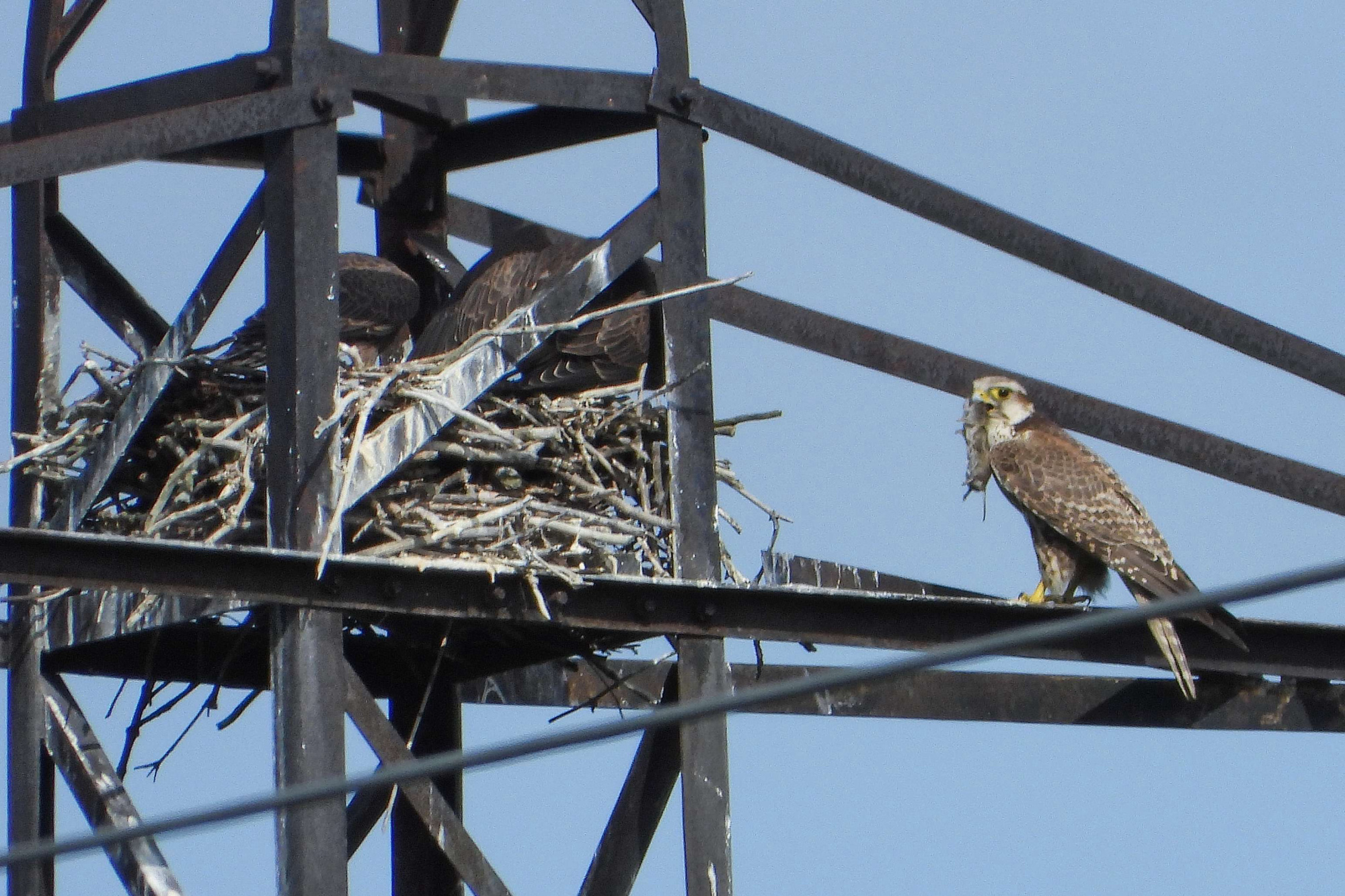
What happened to nesting habit of this subopulation instead is following - within last ca 10-25 years, almost all sakers abandoned their typical tree-nesting (using old nests of other bird species on trees) and moved to nests on high-voltage power pillons. In old times, few pairs occasionally used old raven nests on pillons and ornithologists found out that such saker chicks have much higher surviving rate than on tree nests, due to eliminated predation by marders. So in quest to help sakers that were close to dying out, they started to place large number of nest boxes on high-voltage pillons for them (in Hungary, Slovakia, Austria, Serbia and Romania). Their sakers took it willingly and all breeding pairs quickly moved to this luxurious real estate.
Only Czech sakers (5-15 pairs in good years) remained nesting on trees till last year, because our ornithologists hoped to conserve not only the species itself but also its human-independent way of life (old-fashioned cultural trait if you can speak so about animals). But with dangerously dwindling number of pairs - only 2 were detected last year in whole czechia - they threw towel in and installed artifical nesting structures on power pillons too. Only, they used open-toped platforms instead of boxes because peregrines seem to prefer boxes and take them over.
In distant past (before 1950), niches of both species almost didn´t overlap. Sakers nested on trees, hunted mostly sousliks and when sousliks went hibernating they migrated to Africa. On the other hand, peregrines nested on barred cliffs, hunted birds and were mostly non-migratory. This way both species could coexist.
Then, peregrines went completely extinct in central Europe with onset of DDT. Sakers survived - just barely. And they kept evolving, re-inventing their way of life to better utilise landscape where no similar competitor existed anymore. With intensified agriculture of late 20th century, populations of sousliks crashed and versatile sakers switched to hunting birds (mostly pigeons) and occasional small rodent instead. They also stopped to migrate to Africa - probably due to local availability of house pigeons year-round (increased pressure of falconers catching them in nothern Africa didn´t help too).
Now we move to present time. Peregrines victoriously return to Central Europe (coming from reintroductions in the west e.g. Germany) and once again come in contact with sakers. Some peregrines are used to nesting on man-made structures including chimneys and high-voltage power pillons, they hunt birds and are sedentary. While "modern" sakers all nest on power pillons, hunt mostly pigeons (especially in winter) and 95% of them don´t migrate to Africa anymore.
So currently, niche of both species overlap to large extend. And when both species start to fight over the same nest and territory here, peregrines always win. This is rather unexpected observation made in last few years. Sakers are slightly larger in bodymass so you would expect them to win, right. But nope. That is also outcome of the pic I posted previously - saker fought for few weeks valiantly but peregrines won and grew chicks in that box that year.
Here a recent pic of a saker mum with offspring (ca 50km NE from Prague).