Unbeleafable!: Notable gardens among our zoological gardens

iloveyourzoos

Well-Known Member
This thread is intended as a chance for people to highlight and discuss zoos and aquariums that are also doing interesting or notable things with plants.

I've intentionally used the word "notable" in the title to give us a wide range of possibilities. It could be a zoo doing amazing plant conservation work alongside its animal conservation. Or a zoo with a proud historical plant collection. Or one particularly focused on endangered plant species. Or one with particularly good signage or whose educational programs do a particularly good job of connecting animal, plant, and ecosystem awareness for visitors. Or it could be a zoo whose horticultural team deserves extra recognition for how "pretty" they keep things. Or maybe just your favorite that you want people to know about. Or the best from among the zoos that you've personally seen.

While I used the term "zoological garden" in the title, any zoo or aquarium is included, even if the word garden isn't formally part of its name. However, to keep things from getting completely unwieldy, I recommend that we don't expand this thread to non-zoological botanical gardens or nature preserves or parks. The focus is on zoos and aquariums doing notable botanical work, not to list notable botanical institutions that may happen to have a few animals. I realize that delineation is a little murky since many zoos are both zoos and botanical gardens, and they may have different levels of interaction or cooperation between those departments. But the idea is that as long as the institution is one that would normally be discussed on zoochat, then it can be included here.

For purposes of this thread, it is fine to include zoo gardens and plants in their broadest colloquial terms. So greenhouses, arboretums, or particularly impressive decorative or immersive elements that are within the zoo are fine even if they don't meet certain formal definitions of a "garden". And flowers, trees, grasses, and even fungi and kelp and algae and other "plantae sensu amplo" are fine, even though they may not be plants in a strict taxonomical sense.

I am very much a novice to this subject, so the success of this thread will depend on how many others are interested and contribute. But I'm hoping that if I get the stone rolling, it may gather bryophyta. (Even though the famous proverb says it won't gather any!)
 
As a way to start, I did a search of Botanical Gardens Conservation International (BGCI)'s website, and see that there are three zoo organizations that have been accredited by them. I understand there are many different garden accreditations out there, and I'm not familiar with the standards or politics of each (so I hope I'm not inadvertently stepping in it). But with only three zoos listed this seemed like a reasonable (and manageable) way to start.

Oklahoma City Zoo and Botanical Garden
Rotterdam Zoological and Botanical Garden (Diergaarde Blijdorp)
San Diego Zoo Global (San Diego Zoo and San Diego Zoo Safari Park)

A bit about each, from the BGCI website. (I invite those who have visited to join in with more personal observations!)

"The botanical garden at the Oklahoma City Zoo was established in 1998 through the American Association of Museums accreditation process creating the botanical garden and a living museum.The botanical collecting began in 1980 with over 6,000 permanent specimens from nearly 150 plant families, including over 2,000 species and 23 designated horticultural collections. The botanical garden at the Oklahoma City Zoo encompasses 140 acres of tree canopy, gardens, water bodies, and animal exhibits. This unique and distinctive environment is characterized by the ancient and historic Cross Timbers ecosystem. This ecotone is described as where the eastern Oklahoma deciduous forest meets the mixed grass prairie of western Oklahoma. Stands of Post Oak (Quercus stellata) and Blackjack Oak (Quercus marilandica) form a dense canopy across the gardens. Many fragments of the historic Cross Timber ecosystem can be seen in ancient pockets of Post Oak groves scattered throughout the gardens. Many champion Oak trees live in the gardens and several are well over 100 years old."

Rotterdam Zoo "houses a botanical garden and manages both the Dutch National Bromelia Collection and the Dutch National Primula Collection. The set up for a third Dutch National Collection for the genus Magnolia is ongoing and endangered species will be planted out in the Asiatic part of the zoo and the tropical greenhouse/butterflyhouse Amazonica for the endangered South-American species. Specific are the large tree collection divided and planted in so called ‘continents’ with many species form the Chino-Himalayan region and northern America. The Victoria greenhouse, build in 1942, is famous for the annual display of the giant waterlily (Victoria amazonica) and other waterlily species from around the world."

San Diego: "BGCI’s certification recognizes not only the beauty and diversity of the curated plant collections of the Zoo and Safari Park but also the tremendous effort that goes into conserving plant species. San Diego Zoo Global’s ongoing plant research programs work to preserve and understand the natural history and genetic diversity of rare plants. San Diego Zoo Global’s restoration of local habitats in San Diego County and seed banking of endangered native California species are a testament to its commitment to conserve critically endangered plant populations, like the torrey pine and San Diego thornmint. San Diego Zoo Global’s beautiful and unique gardens display collections of aloes, coral trees, bamboo, acacias, ficus, conifers, palms, cycads, orchids and California native plant species. The botanical collection not only augments the habitats of the animals but also provides an important nutritional resource for them. Additionally, the Zoo and Safari Park also act as “rescue centers” for rare and endangered plant species that have been confiscated from wildlife trafficking, receiving specimens from a variety of sources."
 
Last edited:
Chester Zoo hold UK National Plant Collections for Orchids, Nepenthes and Cacti, similar to many conservation botanic gardens. Plants & Gardens | Chester Zoo

Paignton Zoo have a dedicated gardens team, which shows in the grounds and the glasshouses, with plant labels visible as you would find in a botanic garden. Gardens • Paignton Zoo

The old Bristol Zoo had some lovely gardens along with the animals, but of course this is closed now. The proposed use of the old site includes publicly-accessible community gardens.

Cotswold Wildlife Park and Gardens is as much a country garden as it is a zoo, with dedicated gardening teams and beautiful grounds. They offer a gardening-query service and used to offer free entry during October to Royal Horticultural Society members (though not sure if this is still current) https://www.cotswoldwildlifepark.co.uk/animals-gardens/gardens/
 
The Los Angeles Zoo has been accredited as a botanic garden (or at least was, I think that it still is).

The Living Desert near Palm Springs is as much a botanical garden as it is a zoo, and it excels at both. The gardens represent desert habitats across North America and Africa and blend in seamlessly with the surrounding wild plant life.
 
The Phoenix zoo is next to a botanical garden I believe. The phoenix zoo has described around 2014 or 2015 in their “Wild times” article that they have planted an array of native flower species…
 
As far as I know from the US there’s also the Como Zoo and Conservatory along with Riverbanks Zoo and Gardens.

From Japan there’s the Higashiyama Zoo and Kumamoto Zoo also have sections dedicated to plants.

While the botanical gardens is not located in the zoo itself (it is 15 minutes away by foot), the Ichikawa Zoo also refers itself as a “Zoo and Botanical Garden” and sometimes features plants on its social media.
 
Stuttgart zoo in Germany has several big greenhouses and is full of flowers. I am not sure whether its plant collection is botanically very rare, but it is beautiful.

Budapest zoo also has a huge greenhouse, used also as a house for South American animals.

An opposite thread could be animals in botanical gardens. There are often small birds and fish in greenhouses. The latter are often former aquarium fish released by the public.
 
Stuttgart zoo in Germany has several big greenhouses and is full of flowers. I am not sure whether its plant collection is botanically very rare, but it is beautiful.

It is so huge with 8500 plant species that I cannot imagine they don't have some notable collections. At least the Magnolia collection is the largest north of the Alps and their orchid, carnivorous plant and succulent collections are very large indeed.

In the Netherlands Burgers' Zoo has a notable plant collection (educated guess 1500-2000 species) housing the Dutch national collections for Zingiberaceae, Dracaena, Costus, Ficus and Mangrove plants. Whereas Diergaarde Blijdorp has the national collections for Primula and Bromeliads.

Several other European zoos double as botanical gardens for which Zoo Plzen comes to mind first. Another one would be Zoo Mulhouse
 
I think that the fact Wilhelma in Stuttgart, Germany has not already been mentioned as the immediate first choice is a travesty :p perhaps one of (if not the) most beautiful zoological collections as far as botanical displays are concerned.
I love the fact that Stuttgart (Wilhelma) Zoo is a combined zoo and botanical garden; the horticultural displays are superb. In particular, when the waterlilies are in bloom, the outdoor, heated, tropical waterlily pool is spectacular; definitely my favourite botanical display in any zoo.
 
Some Brazilian zoos are either adjacent to their city's botanical gardens or share the same terrain with them. Many are run by what we call zoo botanical foundations. We call zoos in these situations "zoobotânicas". @David Matos Mendes works at Belo Horizonte zoo, which is adjacent to its botanical garden and used to be managed by a zoobotanical foundation.
 
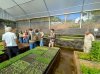
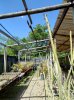
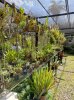
As well mentioned by friend @Enzo , Some of the major brazilian zoos are situated in the same phisical space as the municipal botanical gardens. It is the case with the Belo Horizonte zoo, which is the institution I work at, and whose botanical garden is composed by a set of modern looking greenhouses and some thematic flowerbeds, besides the horticultural sector which is punctually open to public displays. They once were in a more lush and inviting aspect, and some needed renovations might become reality soon, but here we have some pictures of the structures:

IMG_20230630_094127261_HDR.jpg IMG_20230630_100339085_HDR.jpg IMG_20231024_150419338_HDR.jpg IMG_20231024_151151030_HDR.jpg IMG_20231024_141336489_HDR.jpg IMG_20231024_152345736_HDR.jpg IMG_20231024_142423821_HDR.jpg View attachment 668243
 

Attachments

  • IMG_20230630_094127261_HDR.jpg
    IMG_20230630_094127261_HDR.jpg
    201.9 KB · Views: 107
  • IMG_20230630_100339085_HDR.jpg
    IMG_20230630_100339085_HDR.jpg
    209.4 KB · Views: 108
  • IMG_20231024_150419338_HDR.jpg
    IMG_20231024_150419338_HDR.jpg
    153.1 KB · Views: 108
  • IMG_20231024_151151030_HDR.jpg
    IMG_20231024_151151030_HDR.jpg
    208.8 KB · Views: 107
  • IMG_20231024_141336489_HDR.jpg
    IMG_20231024_141336489_HDR.jpg
    151 KB · Views: 109
  • IMG_20231024_142123993_HDR.jpg
    IMG_20231024_142123993_HDR.jpg
    134.3 KB · Views: 3
  • IMG_20231024_152345736_HDR.jpg
    IMG_20231024_152345736_HDR.jpg
    145.4 KB · Views: 105
  • IMG_20231024_142423821_HDR.jpg
    IMG_20231024_142423821_HDR.jpg
    196.5 KB · Views: 108
3 local zoos are regular members of local union of botanical gardens - namely zoo Plzen, zoo Ostrava and zoo Zlin. All 3 of them have skilled staff in their botanical sections. (On the other hand some traditional botanical gardens show a few animals species as an ad-on.)

Plzen zoo - an example of moorland vegetation collection with every plant meticulously labeled by name and origin:
vresovisteuvodarny-5-9-2017-km2.JPG


Plzen zoo - Japanese style garden:
03.07.06.Japonzahr.jpg


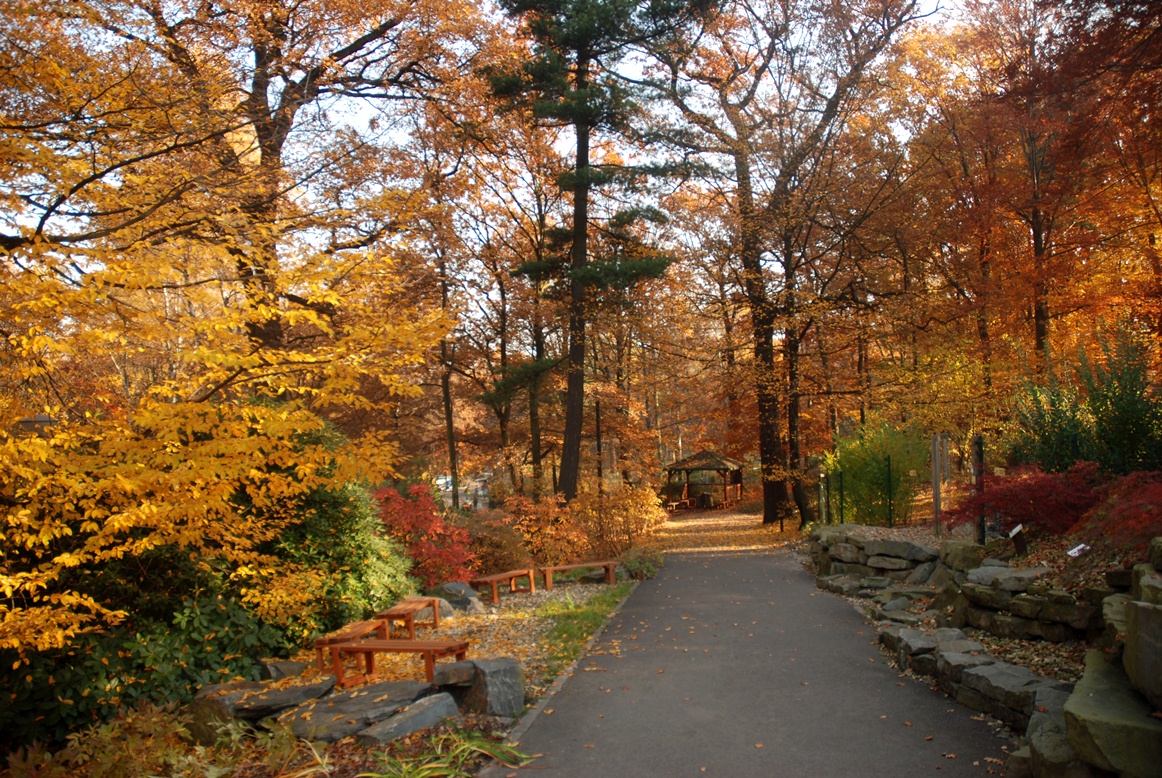
Ostrava zoo - its strenght lies in its natural areal with a lot of broadleaf trees that make for nice autumn colors while plant labels are kept low-key. Its rhododendron collection is sizable too (7500 plants in 400 taxons).
02740206.jpeg


Ostrava has several kilometers of paths that showcast delicate beauty of local forest, meadows and wetlands. They are called: Shadows Path, Sun Path and Marsh Path.
74842689_3067016726648046_5025112724162478080_n.jpg


Zlin has traditional aproach. Here, plants serve as a backround, their purpose is in their utility. They are a prop instead a focus. Maids instead of queens. Dont understand why it even considers itself a botanical garden. However, gardener staff pulls it off and the zoo is often considered by general public the nicest zoo areal in czechia. I have hard time to find any photo that would express what I want to say, maybe these 2 random internet pics.
tHBrRmIuQlw9QmsSZiCi.jpg


evt_image.php
 
I'm very surprised the Cincinnati Zoo & Botanical Garden has not been mentioned yet as it's the most visited botanical garden in the US! The zoo has some wonderful landscaping including a plethora of small gardens throughout the entire zoo. Some of my favorites are the Dinosaur Garden near the reptile house which has all sorts of ferns and conifers, the sprawling pollinator garden which is home to a wide variety of native species drawing in quite the variety of animals, and the Discovery Rainforest which is full of medicinal species along some unique plants like the corpse flower etc. Every spring the park celebrates Zoo Blooms with more than a million tulips on display which is quite the site to see. Behind the scenes, the zoo owns multiple off-site facilities where they participate in native flora restoration projects along with the Center for Conservation and Research of Endangered Wildlife. CREW has an expansive greenhouse along with the cryobiobank which they use to preserve extremely rare or endangered plant species like Autumn Buttercup and Cumberland Sandwort. I will attach some links for those interested in more of the zoo’s botanical conservation projects.

Exceptional Plant Signature Project - Cincinnati Zoo & Botanical Garden®
Exceptional Plant Conservation Network - Cincinnati Zoo & Botanical Garden®
Local Flora Project - Cincinnati Zoo & Botanical Garden®
CryoBioBank® - Plant Research - Cincinnati Zoo & Botanical Garden®
 
Chester Zoo hold UK National Plant Collections for Orchids, Nepenthes and Cacti, similar to many conservation botanic gardens. Plants & Gardens | Chester Zoo

Paignton Zoo have a dedicated gardens team, which shows in the grounds and the glasshouses, with plant labels visible as you would find in a botanic garden. Gardens • Paignton Zoo

The old Bristol Zoo had some lovely gardens along with the animals, but of course this is closed now. The proposed use of the old site includes publicly-accessible community gardens.

Cotswold Wildlife Park and Gardens is as much a country garden as it is a zoo, with dedicated gardening teams and beautiful grounds. They offer a gardening-query service and used to offer free entry during October to Royal Horticultural Society members (though not sure if this is still current) Gardens : Cotswold Wildlife Park and Gardens
You have jogged my memory, especially of Bristol Zoo herbaceous border absolutely beautiful. Also the borders in Chester zoo always stunning
 
Dont understand why it even considers itself a botanical garden.

I certainly wouldn't have guessed that this was the case :p but I definitely agree that Ostrava and Plzen merit the title - I'm very fond of the botanical exhibits and areas within both collections.
 
Kazan (Russia) has one of the oldest zoological and botanical gardens.

Saigon Zoo (Vietnam) started, like Kazan, als a botanical garden.

Gembira Loka Zoo in Yogyakarta (Indonesia) is also a botanical garden.

Artis Zoo Amsterdam is also a botanical garden.

Little known is the zoological and botanical garden Villa Pallavicino at Stresa (Italy). Apart from the beautiful old park with all its treasures one can also enjoy a breathtaking view over Lago Maggiore Lake till the Alps. :)
 
In addition to its fairly comprehensive animal collection, the Arizona-Sonora Desert Museum also features a botanical garden dedicated to many of the plants that call the Sonoran Desert home, including some pretty extensive collections of agaves and cacti
 
I’ve always loved Walsrode’s plants. If you visit early in the year, the park is full of huge flowerbeds and a little later, what I believe is the largest Rhodondendron collection in Europe flowers. Huge walls of towering rhodo’s in full bloom is an impressive sight.
 
Back
Top