Under served taxa

Daktari JG

Well-Known Member
10+ year member
The thread that has discussion about big cat/small cat conservation in zoos got me to pondering which taxa are most under served by zoos as far as conservation and display. I'd like to hear other opinions but here is my breakdown:

amphibians: salamanders (all types)
reptiles: iguanas (particularly Caribbean Island species)
birds: albatrosses and petrels (I'm not certain I have ever seen either in a zoo
albatrosses may be problematical due to their size -but if you can keep a condor....)
mammals: tarsiers
 
  • Like
Reactions: TNT
It's a shame about tarsiers... But I believe that have a tendency to "kill themselves" by jumping into walls and such in captivity... Hence so few collections having success with them.

If anyone knows any more about Tarsiers I'd love to hear what they have to say!
 
The thread that has discussion about big cat/small cat conservation in zoos got me to pondering which taxa are most under served by zoos as far as conservation and display. I'd like to hear other opinions but here is my breakdown:

amphibians: salamanders (all types)
reptiles: iguanas (particularly Caribbean Island species)
birds: albatrosses and petrels (I'm not certain I have ever seen either in a zoo
albatrosses may be problematical due to their size -but if you can keep a condor....)
mammals: tarsiers
The closest place to you that keeps albatrosses would be California's Monterey Bay Aquarium: they have two rescued Laysan albatrosses (Phoebastria immutabilis), Makana and Alika, that kept behind the scenes but are brought into public view from presentations. Here is a video:
Personally I think for amphibians, caecilian are under represented in captivity: the only exhibit I've ever seen was for Typhlonectes natans at the Sacramento Zoo.
 
The thread that has discussion about big cat/small cat conservation in zoos got me to pondering which taxa are most under served by zoos as far as conservation and display. I'd like to hear other opinions but here is my breakdown:

amphibians: salamanders (all types)
reptiles: iguanas (particularly Caribbean Island species)
birds: albatrosses and petrels (I'm not certain I have ever seen either in a zoo
albatrosses may be problematical due to their size -but if you can keep a condor....)
mammals: tarsiers

All amphibians are rather underrepresented in captivity when you consider how little space they take up and how many highly endangered species there are.

There are many captive breeding programs worldwide for iguanids and I do not find them underrepresented at all, it's just most species don't have very successful programs and as such aren't kept by too many collections. There are currently captive breeding programs outside of the Caribbeans for at least five of the Cyclura iguanas you mentioned, with more present within their native range.

Albatrosses and petrels are difficult to keep in captivity and they're impossible to breed. Condor have completely different lifestyles and as such completely different husbandry.

Tarsiers are also very hard to keep in captivity and there is very limited success. There is, however, a small captive population present in the Philippines which I believe are breeding them.

~Thylo
 
The thread that has discussion about big cat/small cat conservation in zoos got me to pondering which taxa are most under served by zoos as far as conservation and display. I'd like to hear other opinions but here is my breakdown:

amphibians: salamanders (all types)
reptiles: iguanas (particularly Caribbean Island species)
birds: albatrosses and petrels (I'm not certain I have ever seen either in a zoo
albatrosses may be problematical due to their size -but if you can keep a condor....)
mammals: tarsiers

As far as albatrosses and petrels go, the only long term captive birds recently that I'm aware of are MBA's two Laysans, as Hipporex explained. Both of these have wing injuries and are unable to fly, thus they do not require nearly so much flying room. I would guess the biggest drawbacks to albatross husbandry vs condor would be availability for one thing, and needing a large pool. Few injured albatrosses turn up in areas near rehabilitators due to their breeding on remote islands (generally). The need for a lot of water probably doesn't make it easy either. Being as albatrosses have a working salt gland, I don't know if they need salt water for that system to function properly? I understand fish and squid are typically more expensive than mice and rats for a condor.

Far as petrels, lack of interest and availability are probably the two biggest factors. Being as most of them spend most of their time in the air, that would be a difficult drawback to an uninjured bird.

Personally I think for amphibians, caecilian are under represented in captivity: the only exhibit I've ever seen was for Typhlonectes natans at the Sacramento Zoo.

Many of the caecilians are quite colorful, but I expect their subterranean nature makes them difficult to display. And to the general public, most just look like a giant earthworm... :rolleyes: Typhlonectes natans may be more common, really isn't much to look at. (I've seen Sac Zoo's as well.)
 
Albatrosses and petrels are difficult to keep in captivity and they're impossible to breed. Condor have completely different lifestyles and as such completely different husbandry.

Tarsiers are also very hard to keep in captivity and there is very limited success. There is, however, a small captive population present in the Philippines which I believe are breeding them.

Nothing is impossible. Impractical maybe.
As for tarsiers you might be thinking of

Philippine Tarsier Foundation, Inc.

I don't know if they are breeding them there, they at least don't mention it. They do have a little discussion about keeping them in captivity
 
Rodents are rarely kept, considering they make up 20% of all mammals and, like amphibians, are usually small and easy keepers. Other than the binturong, there's almost no viverrids at all in north america, especially in AZA institutions.
 
Many of the caecilians are quite colorful, but I expect their subterranean nature makes them difficult to display. And to the general public, most just look like a giant earthworm... :rolleyes: Typhlonectes natans may be more common, really isn't much to look at. (I've seen Sac Zoo's as well.)

London Zoo keeps a nice variety of caecilian species, of which I've managed to spot only two aquatic species over the course of three visits. As you mentioned, the subterranean species do not make good exhibit animals... Typhlonectes natans is the only species I've seen other than London's T. compressicauda one time.

~Thylo
 
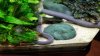
Fort Worth keeps natans. Smithsonian also has at least one species but it isn't labelled at that level, I've attached two photos.

I saw a LOT of amphibians last year, but I went to several places that have a bunch - Dallas, Fort Worth, and Smithsonian all have a focus on them.
 

Attachments

  • 20181125_144705.jpg
    20181125_144705.jpg
    58.1 KB · Views: 6
  • 20181125_144709.jpg
    20181125_144709.jpg
    120.4 KB · Views: 6
Nothing is impossible. Impractical maybe.

I would suggest that there are many, many species impossible to house in captivity realistically. While husbandry is always advancing and we've learned a lot about caring for species once thought impossible, I do not see most deep sea fishes and larger oceanic species like the Blue Whale as ever being possible to keep.

Rodents are rarely kept, considering they make up 20% of all mammals and, like amphibians, are usually small and easy keepers. Other than the binturong, there's almost no viverrids at all in north america, especially in AZA institutions.

I would disagree to an extent. Small rodents aren't the most popular of zoo animals, sure, but personally I have seen 134 rodent taxa in captivity and there are going to be at least as many more I've not seen. Of course, that number does only cover less than 1% of all known rodent species (which actually consist of 40% of all mammals, I think) and many of those are very rare in captivity, but it still shows that there are a good number of species being kept. I think the main problem here is that rodents will be much more popular with specialty collections and private keepers than mainstream zoos.

Viverrids I would agree with, though the issue is much less severe overseas. I have seen 14 Viverrid taxa during my travels, but only 5 of those are currently present in the United States. Of those five, three are subspecies of Binturong and the other two (Banded Civet and Cape Genet) are not AZA program species. I also only know of one other species present in North America, the Rusty-Spotted Genet, but this is also a non-AZA species.

For mammals, Herpestidae (not including meerkats) and Mustelidae (not including otters)

The problem with Herpestidae is that mongoose are seen as a potential aggressive invasive, I believe, and as such new species being brought in are generally frowned upon. To be fair, though, I'm struggling to think of more than a couple endangered mongoose species and both Common Dwarf Mongoose and Banded Mongoose are very common in captivity. I think Common Cusimanse is also present stateside, but if not at least is common in Europe along with Yellow Mongoose. One species I'd love to see brought into US zoos is the Bengal Mongoose, Herpestes javanicus/auropunctatus palustris, which is endangered in its native habitat but introduced to Hawaii and many Caribbean islands. To me, it's a good opportunity to kick-start a brand new breeding program while also removing problem introduced predators from fragile island ecosystems.

Non-otter mustelids are another group of animals that are more common in Europe, but are still pretty present in American collections I've found. I've seen 8 species in US zoo and I know there's bound to be a couple I've not seen as well. Meanwhile, I've seen 12 species in Europe but 4 of those overlap with US zoos.

~Thylo
 
The little things that run the world (i.e., the vast majority of the animal kingdom that aren't vertebrates) are grossly underrepresented in zoos. Many zoos have butterfly houses and maybe tarantulas and hissing cockroaches as education animals, but you can probably count on two or three hands the numbers of large non-butterfly invertebrate exhibits in American zoos.

Zoos could do an enormous service to biological diversity conservation and awareness by interpreting invertebrates a lot more than they do.
 
Last edited:
Fort Worth keeps natans. Smithsonian also has at least one species but it isn't labelled at that level, I've attached two photos.

I saw a LOT of amphibians last year, but I went to several places that have a bunch - Dallas, Fort Worth, and Smithsonian all have a focus on them.
Smithsonian also keeps natans. As far I can tell this is the only species kept in US zoos besides the occasional Kaup’s caecilians, which I’ve seen in Wichita and Miami.
 
It's a shame about tarsiers... But I believe that have a tendency to "kill themselves" by jumping into walls and such in captivity... Hence so few collections having success with them.

If anyone knows any more about Tarsiers I'd love to hear what they have to say!
Yep. Suicide is also a big problem due to tourists. The animals are sound sensitive.
 
I would disagree to an extent. Small rodents aren't the most popular of zoo animals, sure, but personally I have seen 134 rodent taxa in captivity and there are going to be at least as many more I've not seen. Of course, that number does only cover less than 1% of all known rodent species (which actually consist of 40% of all mammals, I think) and many of those are very rare in captivity, but it still shows that there are a good number of species being kept. I think the main problem here is that rodents will be much more popular with specialty collections and private keepers than mainstream zoos.

I think rodents are easy to overlook at most zoos since they're largely just thrown in with other species rather than being showcased like other taxa. That being said, rodent numbers and diversity have undergone a significant decline in American zoos in the past decade due to lack of management and institutional investment (the fact that most rodents have short generation times exacerbated this). The closure and downsizing of small mammal houses has also contributed to worse representation for rodents.

I'm not a huge rodent fan myself, but one species that I'm extremely frustrated about is the Malagasy giant rat. The fact that it is endangered, distinctive, representative of a highly touted geographical region, and available from European zoos yet has been left to wither away from American collections is ridiculously aggravating from a conservation and education perspective.
 
One group that is underrepresented in zoos are small passerines. Even though many of the estrildine finches of Africa/Asia are often fairly well represented in private hands, they are very rare in collections. For a lot of these a walk-through set up similar to a butterfly house might make a good exhibit I think. The only thing rarer are the small passerines of South America - I have never seen any of these in a European collection at least.
 
Back
Top