Kob
The Kob (
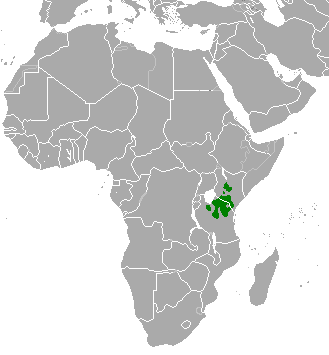
Kobus kob) is an antelope from west and central Africa and is the sister species to the Puku (
Kobus vardoni), with which it was sometimes considered conspecific, also based on Mtdna data (Birungi 1999).
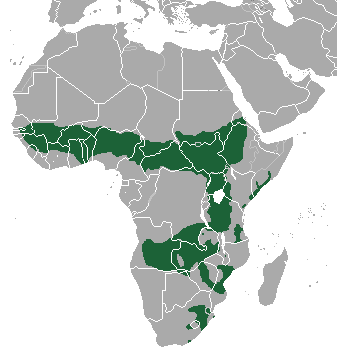
Normally three different subspecies are recognized, based on obvious differences in coat patterns and general size:
K.k. kob Senegal to CAR and DR Congo
K.k. thomasi Uganda, South Sudan west of the Nile, NE DR Congo
K.k. leucotis South Sudan east of the Nile and Gambella, Ethiopia
(source wikipedia, based on IUCN red list)
K.k. kob is a lot lighter than the 2 more eastern subspecies. Kingdon gives the weight of the males as 63 kg (58-67, n=3), whereas this is on average 96.9 kg (88.4-107.9) for
K.k. thomasi.
K.k. leucotis is different from the other subspecies in the fact that dominant males become almost black, but still with clear white markings on the head.
G&G split this species into 4, elevating all subspecies to species level and naming the the kob east from Lake Chad
loderi, just as the ones from Sudan west of the nile. According to them
thomasi is restricted to Uganda (and formerly also W Kenya & Tanzania). Interestingly in Castello's bovid field guide, the specimens from W Sudan belong to
thomasi, not to
loderi.
Sample size
No sample sizes are reported for the skins seen
Skulls (males/females)
kob (12-19/4)
loderi
Central Africa (29-32/1)
W Sudan (11-13/2)
thomasi (7-11/3)
leucotis (2-3/0)
Horns (males only)
kob (16-21)
loderi
Central Africa (30-33)
W Sudan (13)
thomasi (9)
leucotis (3)
Sample sizes for females are very small, sample sizes for males are quite good, except for
leucotis
Skins
kob skins are orange-fulvous to tawny, with a whitish ring arounds each eye and base of the ear. Ears are fulvous on the back, with indistinct black tips. Blackish stripe down the front legs is indistinct and thin, usually interrupted by a white band above the hoofs.
loderi is said to be tawny, with a black line down the front of the forelegs, thinner black line down the hind shank. White of the pasterns is separated in 2 by a thin black line. Leg lines are of varying thickness. Inside of the ears tends to be white.
thomasi is said to have deep black and distinctive markings, with the white area around the eye also much larger than
loderi, the back of the ears is also showing a tendency to whiteness.
leucotis males are said to be deep black, with large white patches around the eyes and ears and as a continum through the muzzle, chin, upper throat, chest and inner side of the upper portions of the limbs. Females and brown colored males have more white around the eye and the leg stripe is more light brown, reaching the shoulder.
Skulls
leucotis skulls overlap significantly with
thomasi skulls and often fall completely within the variation of
thomasi, though on average the 2-3 samples are slightly smaller, they cannot be distinguished from
thomasi.
thomasi skulls are significantly larger than
kob skulls, up to the point that for the 5 measurements listed, there is only real overlap in the nasal breadth between the two taxa. The
loderi samples from C Africa and W Sudan are indistinguishable and in size they are close to the
thomasi samples, though on average slightly smaller. For the few female skulls the same pattern is visible with the
loderi and
thomasi samples being practically the same, whereas the
kob sample is smaller and falls completely outside the (limited) variation of
loderi and
thomasi.
Horns
On average
leucotis has longer and wider, but thinner horns than
thomasi, but variation is large within the taxa and
leucotis sample size is very small, they could be well distinct though.
kob has the smallest and thinnest horns on average and given the available sample sizes they might well be significantly smaller than the other taxa, when tested statistically. Overall horns of
loderi and
thomasi are similar, though
thomasi may have slightly thicker horns (3 mm at the base...)
Additional data
There has been some genetic work on the different Kob taxa and it is quite confusing. The first study (Birungi & Arctander 2000) find evidence for 2 different lineages based on Mtdna, one predominant in northern populations, the other predominant in western and southern populations. Both lineages overlap in Semliki and Murchison Falls, Uganda. Lorenzen et al. (2007) took samples from all 3 subspecies recognized at that point (
leucotis, kob, thomasi), they find the the
thomasi in Murchison Falls are genetically very similar to
leucotis, though phenotypically they are indistinguishable from the
thomasi in nearby Queen Elizabeth NP. They propose that Kob were separated in 2 refuge areas, one in the west and one in the east of their distribution and that the Murchison Falls samples are a result of hybridisation between the western
kob+
thomasi and the eastern
leucotis populations. The authors also suggest that based on their results gene flow between
thomasi and
leucotis is still going on. G&G acknowledge this study but only highlight that there is some differentation between the 3 taxa based on the microsatellites. They do not integrate the other (for them unfavorable) results in their own morphological findings, except by proposing that the
leucotis phenotype is selected against in Murchison Falls (or selected in favor of the microsatellites).
Summarizing
Though at first glance the Kob represents a species with 3 very different subspecies, the western being very small and the eastern having a completely different coloration in dominant males, their evolutionary history is making things much more complicated. There is evidence of two refuges, with the eastern one corresponding to
leucotis and the western to
loderi+kob+thomasi, but there is also evidence for subsequent mixing between the refuges. Based on genetic and morphological work I see no reason to recognize the
loderi taxa, even as a subspecies, as it is almost completely similar to
thomasi. I also have my doubts about elevating any of the other taxa to species level either. Though morphologically distinct, there is hardly any genetic difference between
kob and
thomasi and though
leucotis is also morphologicall distinct, it has shown to probably still have active gene flow with
thomasi. So for now I see no reason not to continue threating all normally recognized subspecies as subspecies and retain
loderi within
thomasi. More genetic work might slightly change the picture and the
leucotis is well worth conserving as a seperate genetic lineage, but given the current data not worthy of species status in my opinion.
Kobus kob kob
@KevinVar, Mole NP, Ghana
@KevinVar , Mole NP, Ghana
Kobus kob thomasi
@Hix , Murchison Falls NP, Uganda
@Giant Eland , San Diego Safari Park, USA
References
Birungi, J. 1999. Phylogenetic relationships of Reduncine antelopes (subfamily: reduncinae) and population structure of the Kob (Kobus kob). PhD thesis Makerere University, Uganda
Birungi & Arctander 2000:
Large sequence divergence of mitochondrial DNA genotypes of the control region within populations of the African antelope, kob (Kobus kob)
Lorenzen et al. 2007:
https://www.researchgate.net/profil...ene-refugia-of-the-kob-antelope-Kobus-kob.pdf
Next stop: Lechwe


 .
.