Ungulate taxonomy revisited: the evidence for the splits of G&G

Respect for the huge amount of efforts and knowledge you put in this project @lintworm ! Refer to a lot of the new studies, appeared after Ungulate Taxonomy(2011) and HMWII(2011) and trying to put order in such a controversial scientific debate, deserves great recognition. Hopefully there will be more passionate figures as the late Colin Groves and Peter Grubb in the feature, brave enough to challenge people's understanding for the Nature .
 
Last edited:
Respect for the huge amount of efforts and knowledge you put in this project @lintworm ! Refer to a lot of the new studies, appeared after Ungulate Taxonomy(2011) and HMWII(2011) and trying to put order in such a controversial scientific debate, deserves great recognition. Hopefully there will be more passionate figures as the late Colin Groves and Peter Grubb in the feature, brave enough to challenge people's understanding for the Nature .

Thank you for your kind words.

What is the third Sumatran rhino subspecies called?

That is harrisoni, which I forgot to mention in the post, I have added it now.
 
In the attached pdf I have created an overview of the changes in Ungulate taxonomy since Groves & Grubb and others have started using a stricter PSC approach to th field.

The old taxonomy (predating any PSC splits) is used, which means e.g. Balabac chevrotain (Tragulus nigricans) is not split in the left part of the table. The second to last column shows the taxonomy used by G&G and in the final column is my proposed taxonomy which takes into account the extensive research done by G&G as well as all relevant studies that I could find. This proposed taxonomy is something of a compromise between different species concepts and is very much based on available evidence. You will see that this taxonomy is colour coded, which indicates the quality of the data behind the split:

green = when I think that the taxonomy is resolved and there is currently no indication a split would be warranted or a split is well supported.

light red = Additional research (mostly genetic) would be welcome, but is not a high priority

dark red = Additional research is of a high priority as there may be currently unrecognized species or the current situation is oversplit.

yellow = Evidence on splitting/lumping is available, disagreement between researchers will be on how to interpret this evidence whether it is strong enough. Main disagreement will be between phylogenetic and biological species concept.
 

Attachments

Last edited:
I have added a list on the first page on where each family & tribe can be found and finally I want to thank all the people whose photographs I have used apart from mine, without you it would be much less colourfull here :)

@molinea , @sebbe67 , @Maguari , @Tim May , @Tomek , @jbnbsn99 , @ro6ca66 , @logroll , @ThylacineAlive , @Hix , @snowleopard , @Newzooboy , @Patrick87 , @LaughingDove , @Sarus Crane , @Nick@Amsterdam , @taun , @KevinVar , @Giant Eland , @vogelcommando , @carlos55 , @TeaLovingDave , @devilfish , @Gust1 , @Kakapo , @Ituri , @geomorph , @Andrew_NZP , @GerbenElzinga , @alexkant , @keith8404 , @Dibatag , @Goura , @MagpieGoose, @Javan Rhino, @MeiLover , @KevinB, @gentle lemur , @zooboyabroad , @Jogy , @Joker1706 , @UngulateNerd92 , @Chlidonias , @Zebraduiker , @nikola , @Bele , @thor , @jayjds2 , @Great Argus , @Blackduiker , @AdrianW1963 , @Baldur , @Parrotsandrew , @Arizona Docent , @Morgan , @Deer Forest , @Himimomi , @J I N X , @Zaz , @bongowwf , @toto98 , @fofo , @Azubaa , @baboon , @Sun Wukong , @Oryx , @Michal Sloviak , @Shirokuma , @Tarsius , @Eagle , @YuanChang , @Dormitator , @NigeW , @itsallfaction , @Pedro , @GregOz , @Pleistohorse , @Mehdi , @Buckeye092 , @MagpieGoose , @Kudu21 , @Saro , @Middle Man , @Daniel Sörensen , @Swedish Zoo Fan , @Al , @mhale , @aardvark250 , @gulogulogulo , @Kibathewolf , @Dianamonkey , @Bwassa , @zoo_enthusiast , @Geoffrey , @savethelephant , @Dibatag , @Ding Lingwei , @m30t , @ZooGirlSD , @Hanjo, @Vision , @demonmoth, @twilighter , @Lemurs , @easytigger & @Gondwana

That's it, this is my final planned post of this thread, bar any new discoveries.
 
Whereas my work has stopped, the taxonomic community is off course not idle. Recently the first genetic study on Barbary Sheep (Ammotragus lervia) was published. This study by Derouiche et al. originally focused on Barbary Sheep in Algeria, but included samples from other parts of the range. They found a deep split between the Mediterranean (lervia (+ fassini?) and the Saharan populations (sahariensis, ornata, angusi (and presumably blainei), which were not differentiated, so could possibly be lumped), which dates back approx 1.3 million years ago and they found genetic divergence of a similar level as between different caprid species. So there is a strong indication we are dealing with 2 species, instead of one, of what is already an endangered species. More rangewide research would be necessary, as would a re-appraisal of the morphological material. It also highlights the importance of maintaining pure stock of these species in captivity and move away from the potential subspecies hybrids (or at least test whether they belong to one of the clades).

This is the original study:
Deep mitochondrial DNA phylogeographic divergence in the threatened aoudad Ammotragus lervia (Bovidae, Caprini) - ScienceDirect!
 

I was aware of this news, but the original study wans't available yet. It is now:
Genetic evidence for allopatric speciation of the Siberian ibex Capra sibirica in India

I haven't had time to have a good look at it, but the results seem a bit premature given the small amount of genetic data on which the results are based. Biogeographically it would make sense though and I wouldn't be surprised if follow-up research does confirm a split.
 
I can't seem to find Beira (Dorcatragus megalotis) anywhere? Unless this is a conscious ommision (there are no photos of it) it seems a bit jarring to left out.
 
Walia ibex

The Walia ibex (Capra walie) is a monotypic species that is currently restricted to the Simien Mountains in N Ethiopia.

No pictures of this species have been uploaded to the gallery.


Next: Wisent

....Until now! @lintworm Thanks so much again for your travel advice ahead of my Ethiopian trip!!

Also added photos of both Grysbok species, Lichtenstein's hartebeest, Puku and perhaps some other Zambia/South African subspecies not yet represented.
 
Last edited:
I can't seem to find Beira (Dorcatragus megalotis) anywhere? Unless this is a conscious ommision (there are no photos of it) it seems a bit jarring to left out.

That is indeed an accidental omission, we will get this rectified soon.

....Until now! @lintworm Thanks so much again for your travel advice ahead of my Ethiopian trip!!

Also added photos of both Grysbok species, Lichtenstein's hartebeest, Puku and perhaps some other Zambia/South African subspecies not yet represented.

I will have to kindly ask a moderator @Chlidonias or @TeaLovingDave to insert them, as I am no moderator anymore.


In other taxonomic news, a new genetic study on Gorals has confirmed than N. evansi should be treated as a separate species, this is one of the few splits by G&G with which I actually agreed. They find this species to be the sister to Red Goral, instead of Chinese Goral (of which it has traditionally been considered a subspecies). This study also gives more weight to the case to lump N. goral and N. griseus (Himalayan Goral and Chinese Goral respectively). Additionally they propose to split Red Goral in two (possibly sympatric) species: N. baileyi and N. cranbrooki.

Error - Cookies Turned Off
 
Aren't Burmese Banteng also more closely related to other Asian bovines than the other subspecies? :p It being a result of ancient hybridization with (Kouprey?) and all.

~Thylo
the do clade sister to Gaur, and split about 5 mya from them, it does not seem it was by any ancient hybridization, at least for the evidence I have seen
 
the do clade sister to Gaur, and split about 5 mya from them, it does not seem it was by any ancient hybridization, at least for the evidence I have seen

I'm talking about the Burmese Banteng, not the Bornean Banteng discussed in the paper you linked.

~Thylo
 
I'm talking about the Burmese Banteng, not the Bornean Banteng discussed in the paper you linked.

~Thylo
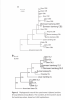
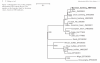
oh i apologise, misread that, but that seems about right for the Burmese Banteng, with potental crossbreeding with kouprey,https://royalsocietypublishing.org/doi/10.1098/rspb.2007.0830
2849fig1.jpg

that would make Banteng paraphyletic i believe, man thats so interesting
 
that would make Banteng paraphyletic i believe, man thats so interesting

Well, not particularly - a single subspecies of a larger taxon having ancient hybrid blood doesn't mean the taxon itself is paraphyletic and hence invalid. The Burmese and Sundaic banteng populations are still the closest kin to one another, the former merely contain hybrid blood too.

Banteng would only be paraphyletic if the two subspecies were not the closest kin to one another.

That tree also further suggests Bison is not a valid genus.

~Thylo

It isn't, but not for the reason the table suggests - the yak/bison relationship is another example of prehistoric hybridisation between a population of the precursor species to American Bison and Yak, before it moved into the Americas, and the Wisent/Aurochs relationship is a similar case; when one looks at other genetic evidence the Wisent and American Bison are still the closest relatives of one another, but nonetheless deeply nested within Bos.
 
Banteng would only be paraphyletic if the two subspecies were not the closest kin to one another.

The earlier tree i posted seems to suggest that the Bornean banteng (B. j. lowi) is genetically distinct from the other 2 subspecies, splitting from Gaur (Bos gaurus) about 5 mya, might form a purebreeding line and potentially their own distinct species
bos tree.PNG bos tree 2.PNG
 

Attachments

  • bos tree.PNG
    bos tree.PNG
    197.3 KB · Views: 99
  • bos tree 2.PNG
    bos tree 2.PNG
    186.8 KB · Views: 101
Back
Top