You are using an out of date browser. It may not display this or other websites correctly.
You should upgrade or use an alternative browser.
You should upgrade or use an alternative browser.
Ungulate taxonomy revisited: the evidence for the splits of G&G
- Thread starter lintworm
- Start date

agree 100%, will be cool to see thing develop in the futureSuch results can be result of ancient hybridization or incomplete lineage splitting. In short, a larger study not only on mtDNA is needed before claiming that Bantengs are multiple species.

Plains zebra
The Plains zebra (Equus quagga) is a widespread equid from savannahs in Southern and Eastern Africa. Six subspecies are generally recognized:
E.q. quagga Quagga, Cape province, South Africa, now extinct
E.q. burchellii Burchell's zebra, Namibia, S Botswana, Swaziland, parts of South Africa (includes antiquoroum)
E.q. chapmani Chapman's zebra, NE South Africa, Zimbabwe, N & E Botswana, Caprivi Strip (Namibia), S Angola
E.q. boehmi Grant's zebra, Zambia, W of Luangwa River, Tanzania, SE DR Congo, Kenya, Rwanda, SW Uganda, S, W & E Kenya, S Ethiopis
E.q. borensis Half-maned zebra, NW Kenya, Karamoja District (Uganda) and SE South Sudan
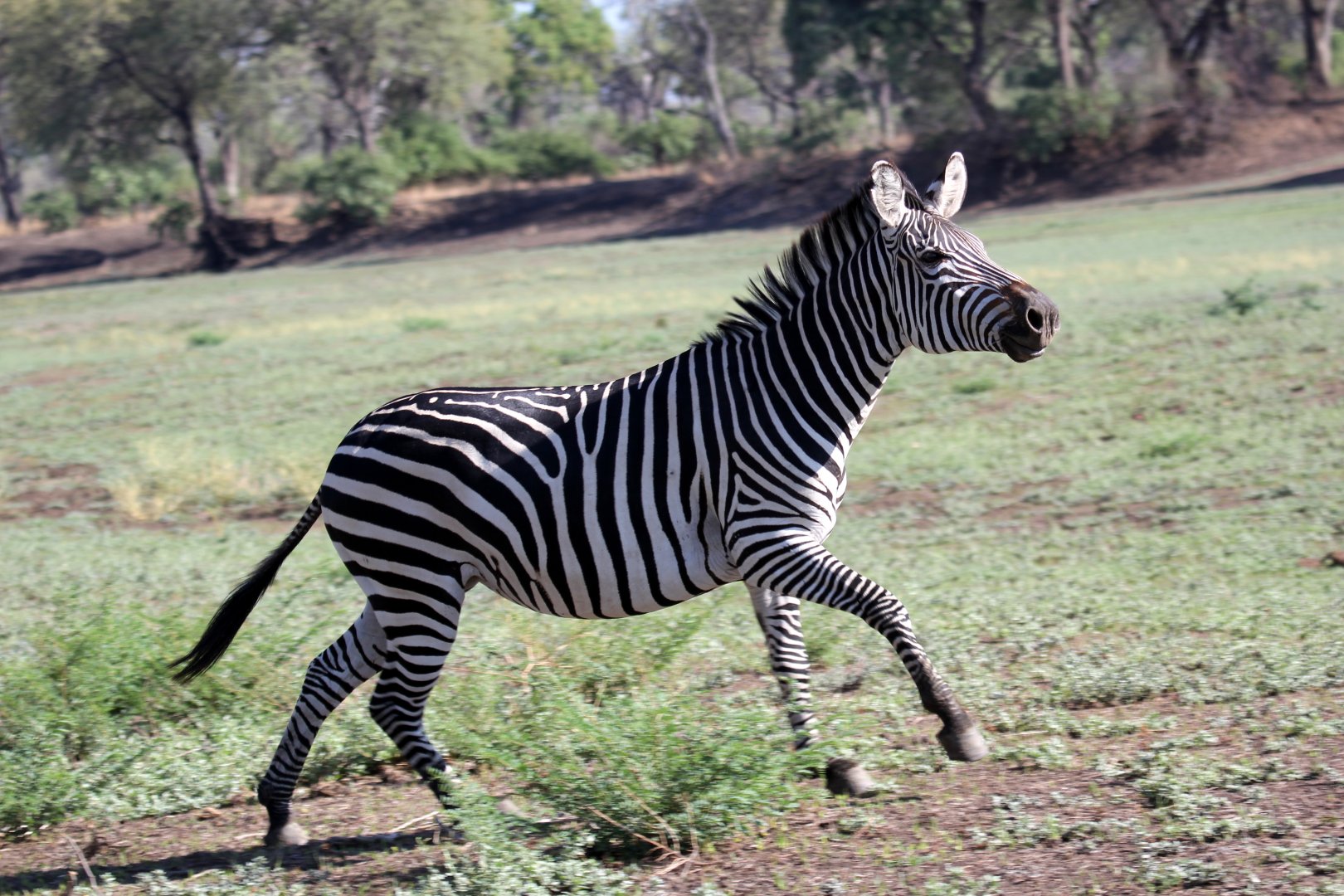
E.q. crawshaii Zambia, E of Luangwa River, SE Tanzania and parts of Mozambique
Of these 6 "official" subspecies 5 are pictured in this post, the 6th - being crawshaii - missing. In the meantime @Giant Eland has however uploaded 2 photos of the subspecies so maybe it can be added to this post :


Roan antelope
I suspect all animals in Europe are equinus.
While I've not yet been able to locate the paper online myself, I've recently been pointed to a study by Ogden et al, 2018 which evaluates the genetics of the captive stock of Roan Antelope and a few other antelope species for consideration for reintroduction programs. Their results found that no Roan Antelopes from the West African subspecies/population have made their way into western zoos (although a good deal of hybridization has occurred within South African ranches) confirming that all European animals are indeed equinus. The paper did note that animals from South, Central, and East Africa have all been mixed into the population, though.
~Thylo

You gave no title, so I just put "Ogden 2018 roan antelope" into Google and the paper was the first result which came up.While I've not yet been able to locate the paper online myself, I've recently been pointed to a study by Ogden et al, 2018 which evaluates the genetics of the captive stock of Roan Antelope and a few other antelope species for consideration for reintroduction programs.
View of Genetic assessments for antelope reintroduction planning in four European breeding programmes
You gave no title, so I just put "Ogden 2018 roan antelope" into Google and the paper was the first result which came up.
View of Genetic assessments for antelope reintroduction planning in four European breeding programmes
I wasn't provided a title, I used Google's academic search and used "Ogden et al 2018 roan antelope" and instead got nothing but papers about obesity in Americans... That does appear to be the paper that was reference to me, though, so thank you.
~Thylo

In the new Illustrated Checklist of the Mammals of the World, after a strong discussion, the editors decided to mirror the G&G taxonomy of the HMW Vol II . This is very unfortunate, since almost all other Families are updated and the new studies are quoted and listed in the reference section of the book. Very interestingly, the creators of the ASM Mammal Diversity Database (The main source behind ICMW) Nate Upham, Connor Burgin et al. in the newest 1.2 version largely reverting to the MSW3. They include some newly recognized splits, like 2 spices of Bushbuck, 8 species of Genus Madoqua, 5 species of Genus Nanger, reclassification of the Serows and Gorals, etc. and totaled the extant species of Bovidae of 152 (including domesticated forms).
ASM Mammal Diversity Database
ASM Mammal Diversity Database
I think that was mainly due to being consistent or just absence of data for some species, like the klipspringers, as they state in the checklist "It is emphasized, however that although this taxonomic arrangement is included in full, there is clearly a need for it to be fully vetted by future molecular, morphological and behavioral studies to elucidate which taxa arent and are not species"In the new Illustrated Checklist of the Mammals of the World, after a strong discussion, the editors decided to mirror the G&G taxonomy of the HMW Vol II . This is very unfortunate, since almost all other Families are updated and the new studies are quoted and listed in the reference section of the book. Very interestingly, the creators of the ASM Mammal Diversity Database (The main source behind ICMW) Nate Upham, Connor Burgin et al. in the newest 1.2 version largely reverting to the MSW3. They include some newly recognized splits, like 2 spices of Bushbuck, 8 species of Genus Madoqua, 5 species of Genus Nanger, reclassification of the Serows and Gorals, etc. and totaled the extant species of Bovidae of 152 (including domesticated forms).
ASM Mammal Diversity Database
tho i imagine that if they didn't, they would come to a list very similar to this one (which is pretty ture for everthing but bovide compared to this list), which honestly has about the same amount of species almost, just different splits in better places in my opinion, as always more research is needed

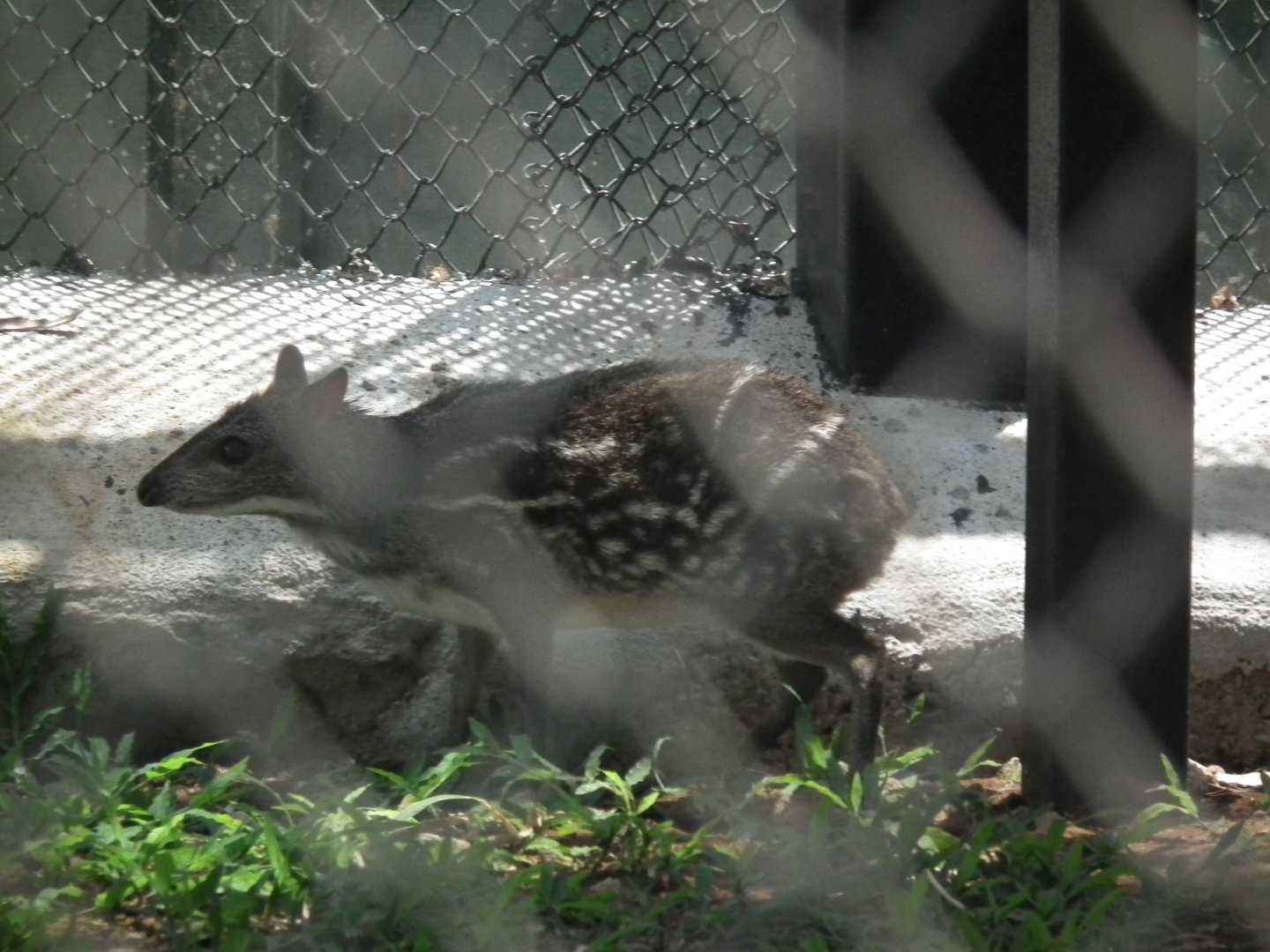
I have just uploaded this species.No pictures of this species have been uploaded to the gallery.
In the new book A Manual of the Mammalia An Homage to Lawlor's "Handbook to the Orders and Families of Living Mammals" the author Douglas A. Kelt (president of the American Society of Mammologists) follows the Groves and Grubb taxonomy, when it comes to Bovidae (279 species), but not for the others ungulate families. Genera Giraffa comprises of 3 species.

In the new book A Manual of the Mammalia An Homage to Lawlor's "Handbook to the Orders and Families of Living Mammals" the author Douglas A. Kelt (president of the American Society of Mammologists) follows the Groves and Grubb taxonomy, when it comes to Bovidae (279 species), but not for the others ungulate families. Genera Giraffa comprises of 3 species.
Interesting. The exact same approach used by Lynx in their Illustrated Checklist. Seems to be becoming the standard, slightly oddly.
''Interesting. The exact same approach used by Lynx in their Illustrated Checklist. Seems to be becoming the standard, slightly oddly.
It's a bit strange indeed, since the new ASM Mammal Diversity Database 1.2 abandoned the G&G approach for Bovidae.
''
It's a bit strange indeed, since the new ASM Mammal Diversity Database 1.2 abandoned the G&G approach for Bovidae.
I think most of us have abandoned the G&G approach for Bovidae

~Thylo

i have aded a photo of the mongolian sub. i now it is not a super good photo thoSaiga
The Saiga (Saiga tartarica) is a unique antelope from the steppes of Eurasia. Especially during the Ice Ages it was very widespread and even in historical times it occured from the Carpathian mountains to Mongolia. Currently its distribution is limited to remnants in Mongolia, Kazakhstan, Russia, Uzbekistan and Turkmenistan. Traditionally two subspecies have been recognized:
S.t. tartarica Kazakhstan, Russia, Uzbekistan & Turkmenistan
S.t. mongolica Mongolia
G&G elevate both subspecies to species status
Sample sizes
No sample sizes are given and G&G say that the characters of the two very distinctive taxa largely follow Bannikov (1963). Whether this means all the raw data is taken from Bannikov or whether the data from G&G gives the same results as Bannikov is unclear. I do however not have access to Bannikov (1963), so I cannot tell...
Skins
The tartarica summer coat is described as yellowish-red, paler on the flanks and with white undersides. Darker zones are present on the shoulders and the loins. The mongolica summer coat is described as sandy gray, with a dorsal region that is not darkened, but with a brown spot on the lumbar region that is large and sharply bordered. The difference in pelage color yellowish-red vs. sandy gray is however completely invisible in the pictures provided in Castello's field guide, though the belly of mongolica is less whitish. The winter coat of tartarica is described as very light gray coloured, the winter coat of mongolica is not described.
Skulls & horns
Skull length is 222-250 mm in tartarica males, 205-209 in tartarica females and 203-237 in mongolica (unspecified whether male or female). There is thus no clear difference in skull length. Horns of tartarica are longer (minimum length 280 mm) than mongolica (maximum length 220 mm). Thickness of the horns seems quite similar 25-33 mm in tartarica vs. up to 28 mm in mongolica, though G&G state that mongolica has thinner horns (but that is probably just based on averages). The rings on the horns are more strongly marked in tartarica than in mongolica. The nasal opening is described as more raised in tartarica than in mongolica.
Additional data
Kholodova et al. (2006) find a slight but clear genetic differentiation between the two taxa. The differences are however much smaller than in African buffalo, Grant's gazelle or Kob. The estimated time of divergence between the two populations is likely to have been in the late pleistocene or even the early holocene, so is very recent.
Summarizing
Though there are some differences in the horns, the rest of the described differences are rather minor and I do not know the sample sizes that were involved. Combined with the genetic data that indicate rather small differences and a very recent date of divergence, I do not see good reasons to elevate the subspecies to species status. If you would be a strict follower of the PSC concept both the morphological and genetic data would allow a split, but strictly following only 1 species concept never has been the smartest idea, especially as several populations of tartarica should then also be elevated to species status.
Saiga tartarica tartarica
Male in winter coat

@Zebraduiker, Cologne Zoo, Germany
Male in summer coat

@Parrotsandrew , Edinburgh Zoo, UK
Female in summer coat:

@Arizona Docent , San Diego Zoo, USA
no pictures of mongolica have been uploaded to the gallery yet.
References
Bannikov, A.G. 1963. Die Saiga-Antilope (Saiga tartarica L.). Die Neue Brehm-Buecherei No. 320. Wittenberg-Lutherstadt, Germany: A. Ziemsen.
Khodolova et al. (2006): https://www.iccs.org.uk/wp-content/papers/Kholodova2000.pdf
Next: Goitered gazelle


No pictures of bororo or nana seem to be present in the gallery.
No pictures of nemorivaga and chunyi have been uploaded. The status of Gray brocket in Faunia, Madrid, is unclear to me, I don't know whether they have been confirmed to be nemorivaga or gouazoubira.
3 out of these 4 species have now been uploaded! As I continue to attempt to keep a monopoly on Brockets lol.
Nucleo de Pesquisa e Conservação de Cervídeos (NUPECCE) - ZooChat
Last edited:
3 out of these 4 species have now been uploaded! As I continue to keep a monopoly on Brockets lol.
Nucleo de Pesquisa e Conservação de Cervídeos (NUPECCE) - ZooChat
Incredible photos @Giant Eland ! Thanks for sharing.

i have aded a photo of the mongolian sub. i now it is not a super good photo tho
Hey it's a start. Regardless, I am glad that we now have a photo of ssp. mongolica represented in the gallery here.
Last edited:
Marcus Burkhardt
Well-Known Member
Red duiker
The Natal red duiker (Cephalophus natalensis) and Harvey's duiker (Cephalophus harveyi) have either been treated as subspecies or separate species in the past, though currently they are often regarded as separate species (e.g. Kingdon). Both taxa are however similar and the validity of both species has been extensively discussed, also recently. I therefore chose to give them a bit more attention. Fortunately G&G cover both taxa extensively in their 2001 Duiker taxonomy review.
C. natalensis from SE Tanzania through Malawi and Mozambique to Swaziland and NE South Africa
C. harveyi NW Malawi through C Tanzania to coastal Kenya and extreme SW Somalia, with scattered populations in the Kenyan highlands and Ethiopian highlands.
Sample sizes
No sample sizes for skins are given
Skulls (males/females)
harveyi 12-16/6-10
natalensis 13-16/15-23
Skins
natalensis is a more pale orange brown than harveyi and natalensis legs are only slightly greyer, whereas in harveyi the legs are dark grey to brownish black. natalensis has a somewhat darker facial midline, but in harveyi this is much more pronounced also in the crest.
Skulls
Though harveyi is described as the larger taxon there is large variation within each taxon and wide overlap between harveyi and natalensis, especially the natalensis from S Tanzania are just as big as highlang harveyi and larger than harveyi from the coast.
Additional data
Multiple genetic studies have pointed at the fact that the difference in Mtdna is rather small between harveyi and natalensis (van Jansen van Vuuren & Robinson 2001; Hassanin et al. 2012). They argue that it would be better to treat them as subspecies rather than species. Additionally Foley et al. report that the characters of the red duikers of SE Tanzania are intermediates between harveyi and natalensis indicating a large hybrid zone.
Summarizing
The morphological differences are relatively small (though when comparing only natalensis from Transvaal with harveyi from the highlands, the conclusion would look rather different…). Adding the limited genetic differentiation between the taxa it seems better to lump harveyi back into natalensis, which is exactly how G&G treated harveyi back in 2001.
Cephalophus natalensis natalensis (Natal red duiker)

@AdrianW1963 , ZSL London Zoo, UK
Cephalophus natalensis harveyi

@Hix , Arusha NP, Tanzania
References
Hassanin et al. 2012: Pattern and timing of diversification of Cetartiodactyla (Mammalia, Laurasiatheria), as revealed by a comprehensive analysis of mitochondrial genomes - ScienceDirect
van Jansen van Vuuren & Robinson 2001: Retrieval of Four Adaptive Lineages in Duiker Antelope: Evidence from Mitochondrial DNA Sequences and Fluorescence in Situ Hybridization - ScienceDirect
Next: Black-fronted duiker
I think the picture uploadet for Cephalophus natalensis harveyi here shows a suni (I think it's Nesotragus moschatus).

White-spotted chevrotain
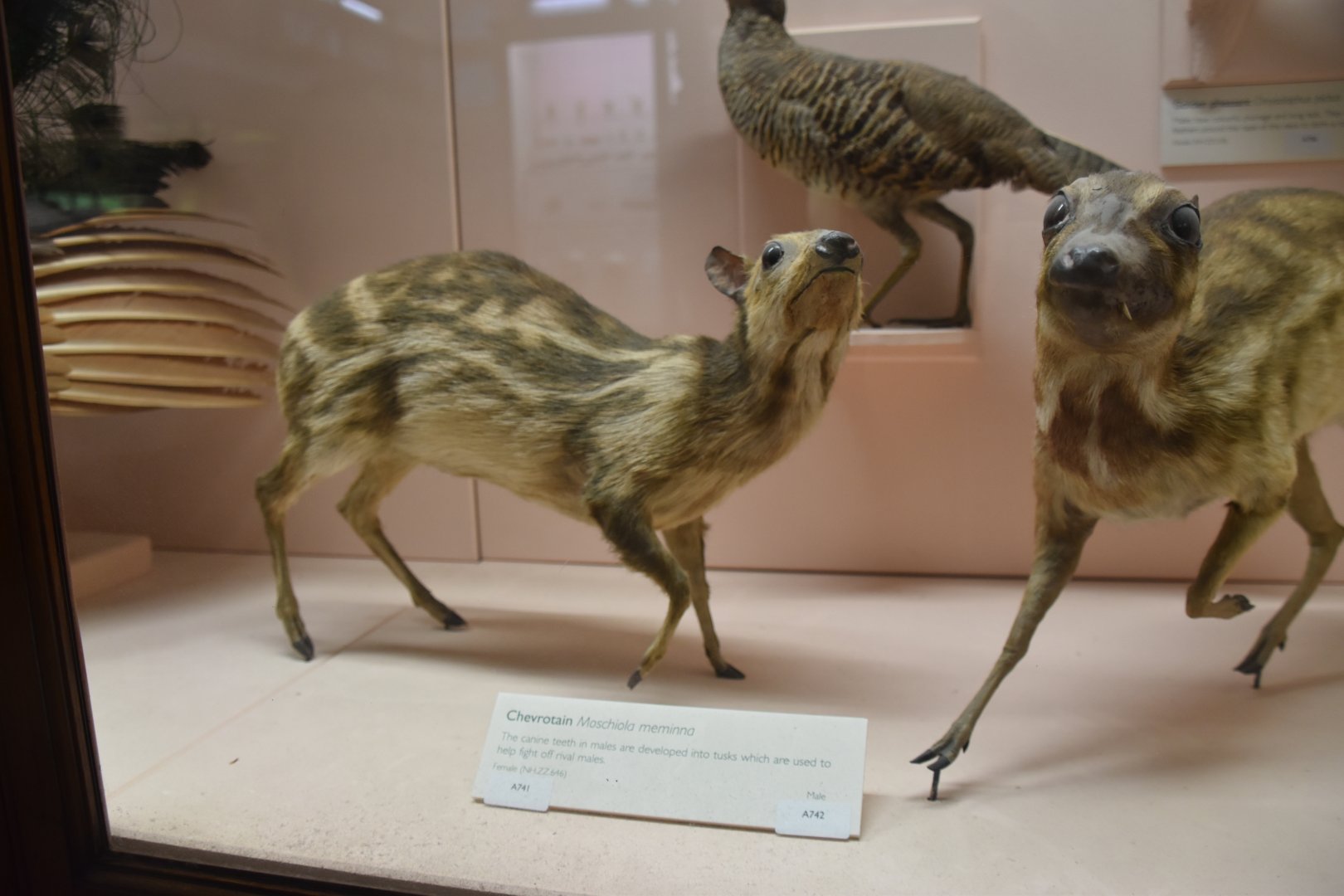
The White-spotted chevrotain (Moschiola meminna) is one of currently three recognized species in the genus Moschiola. Groves & Meijaard (2005) split the genus Moschiola in three species based on morphological analysis. They found clear differences in skull size and in color pattern between populations from India (indica) and between the Sri Lankan dry zone (meminna) and wet zone (kathygre) populations. Even though the sample size in this study was limited and no genetic data backing up this split are available, this split has been provisionally accepted by most recent authors. No new genetic evidence has been presented for this three-way split yet and this should be considered a high priority. Zurano et al. (2019) in their phylogeny for all Cetartiodactyla based on complete mitochondrial genomes included 1 sample of meminna and one of indica and their estimates give a time of divergence of roughly 5 million years ago, which is an indication that species status might be deserved.
No pictures of this species have been uploaded to the gallery
Uploaded a pic of this species:

I recently obtained a book on North American mammal taxonomy from 1902. The list of North American mammal species they list is very different compared to today's list - a lot's been lumped since then! This book recognizes no less than 34 ungulate species in North America (which includes what is now the US, Canada and Greenland) - many of these with multiple subspecies! Here's the list, I thought it would be interesting to show how ungulate taxonomy has changed over the last 120 years:
Texas Peccary Tayassu angulatum
American Elk Cervus canadensis
Roosevelt's Elk Cervus occidentalis
Merriam's Elk Cervus merriami
Virginia Deer Odocoileus virginianus
Florida Deer Odocoileus osceola
Texan or Fan-tailed Deer Odocoileus texensis
Arizona Deer Odocoileus couesi
White-tailed Deer Odocoileus leucurus
Mule Deer Odocoileus hemionus
Cerros Island Deer Odocoileus cerrosensis
Crook's Deer Odocoileus crooki
Columbian Black-tailed Deer Odocoileus columbianus
Moose Alces americanus
Alaskan Moose Alces gigas
Woodland Caribou Rangifer caribou
Mountain Caribou Rangifer montanus
Stone's Caribou Rangifer stonei
Newfoundland Caribou Rangifer terrae-novae
Barren Ground Caribou Rangifer arcticus
Greenland Caribou Rangifer graenlandicus
Grant's Caribou Rangifer granti
Pronghorn Antilocapra americana
Mountain Goat Oreamnos montanus
Kennedy's Mountain Goat Oreamnos kennedyi
Mountain Sheep Ovis cervina
Nelson's Sheep Ovis nelsoni
Mexican Sheep Ovis mexicanus
Stone's Sheep Ovis stonei
Dall's Sheep Ovis dalli
Fannin's Sheep Ovis fannini
Musk Ox Ovibos moschatus
Peary's Musk Ox Ovibos wardi
American Buffalo Bison bison
One of the stranger things that stood out to me is that they can split 7 species just in North American, yet recognize no Pronghorn subspecies .
.
Texas Peccary Tayassu angulatum
American Elk Cervus canadensis
Roosevelt's Elk Cervus occidentalis
Merriam's Elk Cervus merriami
Virginia Deer Odocoileus virginianus
Florida Deer Odocoileus osceola
Texan or Fan-tailed Deer Odocoileus texensis
Arizona Deer Odocoileus couesi
White-tailed Deer Odocoileus leucurus
Mule Deer Odocoileus hemionus
Cerros Island Deer Odocoileus cerrosensis
Crook's Deer Odocoileus crooki
Columbian Black-tailed Deer Odocoileus columbianus
Moose Alces americanus
Alaskan Moose Alces gigas
Woodland Caribou Rangifer caribou
Mountain Caribou Rangifer montanus
Stone's Caribou Rangifer stonei
Newfoundland Caribou Rangifer terrae-novae
Barren Ground Caribou Rangifer arcticus
Greenland Caribou Rangifer graenlandicus
Grant's Caribou Rangifer granti
Pronghorn Antilocapra americana
Mountain Goat Oreamnos montanus
Kennedy's Mountain Goat Oreamnos kennedyi
Mountain Sheep Ovis cervina
Nelson's Sheep Ovis nelsoni
Mexican Sheep Ovis mexicanus
Stone's Sheep Ovis stonei
Dall's Sheep Ovis dalli
Fannin's Sheep Ovis fannini
Musk Ox Ovibos moschatus
Peary's Musk Ox Ovibos wardi
American Buffalo Bison bison
One of the stranger things that stood out to me is that they can split 7 species just in North American, yet recognize no Pronghorn subspecies
.