First off, I just want to say that I have really enjoyed reading your reviews over the past month and a half. Thank you for taking the time to collect and share your thoughts with all of us!

As the Dallas Zoo is the zoo I'm most familiar with that you have reviewed thus far, I can provide a little more insight on a couple of things!

I understand the DeBrazza's Monkey exhibit used to be for a different species (Mandrill?), this exhibit size I feel could have been better used swapping the Clouded Leopards into. These exhibits all provide ample climbing opportunities in all of them, the wire mesh also adding to that climbing space for the primate inhabitants.
The current De Brazza's enclosure was previously home to the zoo's mandrills after they moved from the current cheetah yard and before they were all sent out. A second species will be joining the De Brazza's in that enclosure sometime this spring.

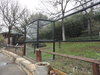
The one exhibit in this area that didn't do anything for me was the Kopje Aviary, as the glass was full of condensation, and it seems that was the only viewing window. There was also not a true sign stating the species, so I have no idea what we missed here. I looked for other viewing areas but it seems that window was it. Did I miss a different angle here?
This exhibit has had a lot of structural and technical issues over the past year, so it has been empty for renovations until just a couple of weeks ago. It is currently home to taveta golden weavers, white-headed buffalo weavers, snowy-crowned robin-chats, and blue-bellied rollers. It is, undeniably, an awkward exhibit as far as viewing goes. That single glass window is the only viewing for the exhibit.

...and the Forest Aviary, a good-sized walkthrough aviary that was seemingly short on species on my exhibit. Aside from four waterfowl species, the only other species on exhibit on my visit was Hooded Vulture.
This aviary is emptied of its more delicate species for the winter months. During the warmer months it is home to an assortment of other species including white-fronted bee-eaters, magpie shrikes, hamerkops, Madagascar crested ibis, Abdim's storks, spur-winged lapwings, violet turacos, amongst others.
 
First off, I just want to say that I have really enjoyed reading your reviews over the past month and a half. Thank you for taking the time to collect and share your thoughts with all of us!

As the Dallas Zoo is the zoo I'm most familiar with that you have reviewed thus far, I can provide a little more insight on a couple of things!

I have been really enjoying these reviews also. Thanks for taking us along with you, @MGolka.

@Kudu21 Do you have any insight into what Dallas Zoo is planning to do with the African animal exhibit space that is no longer accessible to zoo visitors now that the monorail is gone? Have they made any public announcements? It seems like that is a huge chunk of the zoo that they have an opportunity to do something interesting with.
 
Thanks @Kudu21 for the insights to some of the things I was wondering about. I’m glad they will be adding another species to the DeBrazza’s as that exhibit is huge for a pair of those monkeys.

That makes sense for the Forest Aviary for winter, I figured Avian Flu might have kept some off exhibit like the Lesser Flamingo, but it didn’t seem right with the main waterfowl pond being so full.
 
@Kudu21 Do you have any insight into what Dallas Zoo is planning to do with the African animal exhibit space that is no longer accessible to zoo visitors now that the monorail is gone? Have they made any public announcements? It seems like that is a huge chunk of the zoo that they have an opportunity to do something interesting with.
Unfortunately not. There have been a lot rumors since the closing of the monorail, but nothing concrete has been decided on. Between the revenue lost during the pandemic, continual turnover in management, and now the vandalism response, there has been a lot interfering with any progress towards a masterplan or many major capital projects.

That makes sense for the Forest Aviary for winter, I figured Avian Flu might have kept some off exhibit like the Lesser Flamingo, but it didn’t seem right with the main waterfowl pond being so full.
The lesser flamingos are also off-exhibit in the winter as they are more sensitive than other flamingo species.
 
Unfortunately not. There have been a lot rumors since the closing of the monorail, but nothing concrete has been decided on. Between the revenue lost during the pandemic, continual turnover in management, and now the vandalism response, there has been a lot interfering with any progress towards a masterplan or many major capital projects.


The lesser flamingos are also off-exhibit in the winter as they are more sensitive than other flamingo species.
What were some of the options considered for the monorail site?
 
What were some of the options considered for the monorail site?
Over the years I have heard rumors of a paid safari truck tour, a boardwalk over the old monorail track, as well as combining some of the existing habitats into two larger mixed species savannas, with viewing branching off of the existing pathways. None of the same factors are at play as they were when any of these plans were discussed, so it is hard to say if and when any finite plans are ever announced — especially following the sheer amount of money the zoo is now dishing out for the increased security measures following all of the recent vandalism events.
 
Stop Fourteen - Frank Buck Zoo

After a one-day break from going to a zoo due to one of my wife's cousins getting married on the Saturday of our Texas excursion, in which we stayed a couple of nights in Gainesville, north of the Dallas/Fort Worth Metro area, we decided to pay the small Frank Buck Zoo a visit. When I originally heard the wedding was near Dallas, I figured we would naturally hit all the zoos in the metro, but once I found out that the wedding was in Lake Kiowa, just a short jaunt from Gainesville, the Frank Buck Zoo made the cut to be a stop on our tour, especially since we had our own car along with us.

With it not being AZA, I wasn't too aware of this place, but digging into it and not finding a whole lot, what I did find greatly drew my attention; Geoffroy's Cat and Nubian Ibex. While I had seen Nubians at the San Diego Zoo as part of Africa Rocks after it opened, I didn't have any photographs from that time, and the few fleeting glimpses on my Asian Cart Safari this past year at SDZSP I got of the few remaining there didn't give me great photo ops. As far as Geoffroy's Cat goes, it was a new species seen for me, and there aren't a whole lot of places in the States that has this species in its collection. And while not part of AZA, the zoo is a member of ZAA, so it at least has that going for it, which is nice.

On the Sunday of our visit, the temperatures were in the mid-50s and it was cloudy and drizzling the entire visit. While that was enough to deter most locals, it did not dissuade us who were avoiding the low 20s up in Nebraska. Once again, we found that the two of us were one of maybe 5 or 6 people at the zoo during our visit that day. I did upload a bunch of photos to the zoo's gallery that can be found here: Frank Buck Zoo Gallery

Upon entering the facility, you are greeted by a newer building that houses the zoo's gift shop and a party room that overlooks the Alpaca and Greater Rhea exhibit that is shaped like a horseshoe and its perfectly fine for its inhabitants. This you will come to find out is essentially the norm for this zoo, some exhibits that are perfectly fine, but not necessarily the most visually appealing. And while most of the exhibits are fine, there are some remnants of a bygone era, multipurposed corn cribs that could use an upgrade. However, again, this being a smaller facility, funding seems to prevent massive overhauls, but it seems a more recent exhibit looks to start a trend of improvement.

201 Greater Rhea, Alpaca Exhibit plaza Area.JPG

The zoo itself is essentially a large loop, with species loosely grouped together by geography. I say this is loose, as going clockwise, it essentially boils down to North America, Africa, Australia, Asia, and South America. I will note the various species as we go around, but that is essentially how things are laid out here.

As you join the main loop from the entrance area, you could either go right towards the South America species, or left will take you towards the North American species to start with. We started going left and you are first greeted with a sloping hillside with a pond at the bottom that features Caribbean and Chilean Flamingoes, with Black Bellied Whistling Duck. All of these exhibits on this side of the zoo are essentially sloped, at least the open yards, as the visitor path is basically at the bottom of a small valley. This works pretty well for both the animals and guests, as it provides some nice elevation change for the animals, yet allowing visitors a nice look at a hillside that provides some decent viewing.

Immediately after the flamingoes is the first of four American Black Bear exhibits, and the first one is a vast upgrade over the next three. The old bear exhibits are still in use, and are definitely from the old school design that permeated the American zoo scene in the 50s and 60s. While the newer yard is a huge improvement, with a grassy yard, it is a little light on climbing structures. But a good sign that this zoo is at least acknowledging that some updates are needed. For instance here are the old bear exhibits that were still occupied on our visit as these seem to double as night quarters for the most part:

14 American Black Bear Exhibit 3.JPG

And here is the newer Black Bear exhibit:

12 American Black Bear Exhibit.JPG

Across the path from the Black Bear exhibits is a a pair of corncrib cages for a Red Fox that are connected by a chute, a cage for a Black Vulture, a larger corncrib that used to house a species of owl, and a couple of smaller cages for Blue Crowned Conure and Yellow Naped Amazon. These exhibits are pretty much the worst at the zoo, followed by a few later on that I will get to. Hopefully as time goes on and now that the zoo has updated some of their exhibits for their larger inhabitants, these are the next ones to get updated.

After this row of corncrib cages, you come across a gazebo that has a domestic rabbit exhibit in the middle, similar to what you would find for Black Tailed Prairie Dogs in a lot of Midwest zoos. Up the hill from this gazebo is a larger exhibit that was vacant on our visit as the zoo stated improvements were coming, but according to their map it looked like coyotes were the previous inhabitants. Honestly, these weren't bad looking exhibits, and could be really good bird of prey exhibits with little effort.

30 Empty Exhibits - Former Coyote or Wolf.JPG

As you continue along the bottom of this small canyon, the next couple of exhibits are quite large, a comically large American Alligator exhibit (for a single alligator) that looks like it was expanded from a small pool to a huge yard that probably was a former exhibit for something else, a Zebu and Miniature Pony yard, and two nice exhibits for Cheetah. The Cheetah yards are contoured into steppes and are quite long that one could envision the cheetahs getting up to a decent speed should they want to stretch the legs and get a good run in.

In between the alligator and zebu exhibits, the zoo has put in a pathway up to the seemingly newer Asian Small Clawed Otter 'exhibit'. I say exhibit since it is entirely inside of a building with only viewing windows to the inside. On our visit, with the colder temperatures, the windows were completely covered in condensation, to the point that I have no idea what the exhibit actually looks like.

52 Asian Small Clawed Otter Building.JPG

As you near the end of the pair of cheetah exhibits, there is a small petting zoo area that houses pygmy goats and a small yard for a Vietnamese Pot Bellied Pig. It's at this point you start to head up the hill out of the small valley. Before you reach the crest of the hill, you pass by an African Spurred Tortoise and Leopard Tortoise yard, and a Black Tailed Prairie Dog exhibit that has won a ZAA Award for best new exhibit a couple years ago I believe. It is a former African Crested Porcupine exhibit that looks to be simply netted over, so that its current inhabitants don't get pilfered by some of the flying predators in the area. I mean, it's a nice exhibit I guess, not the best prairie dog exhibit I've seen, I guess there isn't a lot of competition for exhibit design in ZAA zoos.

67 Black Tailed Prairie Dog Exhibit.JPG

Immediately after this exhibit you reach the top of the hill and find a pair of lemur exhibits, one each for Red Ruffed and Ring Tailed. This pair is connected by overhead chutes so the two species can rotate, and they are pretty standard metal wire cages, but an obvious improvement over corncribs. In addition to these two exhibits, there is a similar metal wire cage and overnight building for White Handed Gibbon.

After getting a sense of the exhibit design for the first half of the zoo from above, the next pair of exhibits does a complete 180 and are by far the two best exhibits in the entire zoo. Massive savannah style yards for giraffe, Nubian Ibex, Ostrich, and Dromedary. While the giraffes were not out on our visit due to the extremely wet conditions, the group of Nubians were, and provided me some great vistas of them roaming their enormous enclosure.

94 Reticulated Giraffe, Nubian Ibex, Ostrich, Helmeted Guineafowl Exhibit.JPG

You traverse these exhibits by an overhead boardwalk looking down into these yards, the Dromedary and Donkey exhibit would be on the other side of the boardwalk on the left in the picture above. While this exhibit had held zebra prior to my visit, this exhibit could use a couple more antelope species to liven it up just a tad. It is a truly humongous yard, and honestly, would make a great home for rhino. My one gripe about this exhibit is that there really is no foliage other than the grassed yard to be found in the exhibit, there is some foliage at the back of the exhibit for screening back of house, but it doesn't extend the full length of the rear of the exhibit. I understand that having trees in giraffe exhibits can be difficult, but it can be done, as evidenced by Omaha or Fort Worth.

This pair of exhibits is also really the only two exhibits in the entire zoo that has any sort of attempt at theming, which is not good or bad, just an observation. And even then, it is just a touch, nothing anything over the top or elaborate, just a slight nod.

118 Giraffe Viewing Shelter.JPG

We spent a great deal of time watching the Nubian Ibex traverse this exhibit and climbing the rocks surrounding a waterfall and pool near the viewing shelter above. But continuing on, you are still on the boardwalk for a pair of Australian exhibits featuring Red Necked Wallabies, and one other that completely surprised me. While I knew of the two rarities of the Nubian Ibex and the Geoffroy's Cat, I was not expecting to see a Swamp Wallaby here. While I know these are more common in non-AZA zoos, I haven't been to many outside of the AZA arc, so this was definitely a pleasant surprise. These two yards are fine, and we even caught the swamp wallaby bouncing around at full speed around its yard.

Right after the swamp wallaby yard, you are now off the boardwalk and back to ground level and come up on a Reeves' Muntjac exhibit that is a nice-sized sloping yard, but light on cover. The one muntjac we saw was hiding in the one spot of dense vegetation in the exhibit. Following this yard is a cyborg-type exhibit for a Clouded Leopard that is part corncrib, part wooden silo seeming. It is however a nice size and plenty of climbing opportunities, even if it isn't that appealing to the eye.

Directly on the other side of the path is a pair of corncribs that are also connected by chute for Guianan Squirrel Monkeys and a singular corncrib for the Geoffroy's Cat. If you are there to get good photos of the cat, good luck, the wire mesh on the cage is pretty tight, making it near impossible to get a good quality photo without an expensive camera, we were lucky enough to catch the cat taking a break from its running and climbing all over its exhibit, granted it took about 15 minutes for the cat to take a rest!

After the squirrel monkeys and Geoffroy's cat corncribs, you come across a corncrib converted into a sunroom (or a sauna), for a Burmese Python, and another corncrib for Military Macaw. A little side path near the Military Macaw will take you up to a good sized yard for a trio of Patagonian Mara. This path could be easily missed as this part of the zoo has dense foliage right next to the paths, which are also a little narrow. Rounding out the outside exhibits is a small building with a wire mesh roof for Ring Tailed Coati, which would be a great example for the rest of the corncribs to get converted into. If they rebuilt the corncribs to this style, it would make a world of difference in my opinion.

192 Ring Tailed Coati Exhibit.JPG

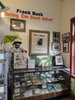
Rounding out the zoo, inside the gift shop is a small side room with a handful of terrariums with various geckos and invertebrates, and a Pueblan Milk Snake, but there really isn't anything noteworthy about these other than the quality is that of a small pet store. In this room however is a collection of various Frank Buck memorabilia that opened up 15 years ago that hits on various topics of the animal collector, actor, director, author that I found to probably be one of my favorite parts of visiting this zoo. I was vaguely familiar with who he was, but learned a great deal more about him from seeing the various artifacts here. I eventually ordered "Bring Em Back Alive" (the re-issue, not the original printing) and have since started reading it to get a glimpse into a bygone era. Below in the photo is one of the cabinets, there are a couple more in this room as well.

218 Frank Buck Museum Exhibit.JPG

Overall, this is a fairly quaint little zoo that has some potential to be a good "small zoo". It reminds me greatly of the old Heritage Zoo in Grand Island, except this zoo has a lot more acreage to work with, as evidenced by the huge giraffe enclosure. It is kind of an odd thing that it isn't AZA accredited, sure the old bear exhibits and the quality of others might be the reason, but let's not pretend that their aren't AZA facilities that don't have some of those corncribs still around. Again, this is a zoo that hopefully can continue to upgrade what they have, they at least have somewhat of a foundation to build upon. It certainly is a zoo that if you are in the area, maybe worth a visit, but if we hadn't stayed in Gainesville for a wedding, not sure we would have went out of our way to visit, especially if they lose some of their rarities.
 

Attachments

  • 201 Greater Rhea, Alpaca Exhibit plaza Area.JPG
    201 Greater Rhea, Alpaca Exhibit plaza Area.JPG
    237.1 KB · Views: 26
  • 14 American Black Bear Exhibit 3.JPG
    14 American Black Bear Exhibit 3.JPG
    297.2 KB · Views: 27
  • 12 American Black Bear Exhibit.JPG
    12 American Black Bear Exhibit.JPG
    270.9 KB · Views: 25
  • 30 Empty Exhibits - Former Coyote or Wolf.JPG
    30 Empty Exhibits - Former Coyote or Wolf.JPG
    214.3 KB · Views: 24
  • 52 Asian Small Clawed Otter Building.JPG
    52 Asian Small Clawed Otter Building.JPG
    166.9 KB · Views: 28
  • 67 Black Tailed Prairie Dog Exhibit.JPG
    67 Black Tailed Prairie Dog Exhibit.JPG
    207.7 KB · Views: 25
  • 94 Reticulated Giraffe, Nubian Ibex, Ostrich, Helmeted Guineafowl Exhibit.JPG
    94 Reticulated Giraffe, Nubian Ibex, Ostrich, Helmeted Guineafowl Exhibit.JPG
    144.4 KB · Views: 25
  • 118 Giraffe Viewing Shelter.JPG
    118 Giraffe Viewing Shelter.JPG
    148.5 KB · Views: 27
  • 192 Ring Tailed Coati Exhibit.JPG
    192 Ring Tailed Coati Exhibit.JPG
    202.2 KB · Views: 26
  • 218 Frank Buck Museum Exhibit.JPG
    218 Frank Buck Museum Exhibit.JPG
    100.9 KB · Views: 28
Stop Fifteen - Fort Worth Zoo

The final stop of our Texas swing was to one of the other so-called Up-and-Comers of the American zoo world at the moment, the Fort Worth Zoo. I'll be honest, before this zoo was voted #1 in the USA Today's annual popularity contest voting, I knew next to nothing about this zoo, so when it got the top spot, it certainly raised eyebrows of folks in Omaha, mine included.

As I researched the zoo in the years that followed, and then followed along once I joined this site, it certainly made sense how it could move up the ranks pretty quick, it looked like a lot of investment had been made as of late. But it wasn't until we visited, that absolutely I could see this zoo joining the upper echelon of zoos in our country. Between immersive exhibits, rare species, and a lot of modern facilities, this zoo has a lot for everyone, even though some on here might not like the extent that theming has been included throughout its newer exhibits. I for one massively enjoyed my time here, and I found the theming awesome, but understand that it isn't for everyone.

Very much like Nashville, entering the zoo felt very much like entering into a smaller version of Disney's Animal Kingdom, and certainly inside the zoo itself, it feels more akin to a theme park than most zoos. I will get into more detail a little later on this, but you become very aware of the different parts of the zoo as you move throughout, similar to many amusement parks, but very much like the newer exhibits Memphis, Omaha, and others have started to incorporate.

After crossing a bridge shortly after going through the gates of the zoo, you pass by a large netted over Flamingo exhibit featuring Caribbean Flamingo, but most guests I would guess focus more on the Western Lowland Gorilla exhibit that is seemingly front-and-center after the bridge crossing. I can't think of too many American zoos that have gorilla this close to the entrance of the zoo, and really only London comes to my mind right away. This gorilla exhibit is part of a larger complex called World of Primates, and includes outdoor grotto-style moated exhibits, but indoor viewing around a large indoor aviary. While some of the outdoor areas may seem smaller, we saw all the apes or monkeys that were outside interacting with their environments or climbing structures, with the Mandrill really the only exhibit that I myself thought could be a little larger. For the most part, I liked the visuals of this complex on the outside, with the mockrock backdrops (as opposed to flat concrete walls) and one that was very aware of visitor sightlines.

Inside, I equally enjoyed being able to see the animals that chose to not be outside, but also the large tropical aviary within. It looks like it was an indoor exhibit back in the day for gorilla, and I was thinking about what it would be like to see them in there with the deep moats surrounding the island and varied terrain. Now however it is only an area for the various bird species that wander freely in here.

22 World of Primates Interior.JPG

Following our journey through the indoor portion (we backtracked to where we entered instead of going out the back by the Orangutan just so we didn't miss any exhibits on the outside portion of Primate World), you pass by a large yard for Bongo and West Africa Crowned Crane opposite the Bonobo outdoor exhibit. After you get around the outside of the Primate World exhibits, you can start to enter the new Elephant Springs complex, or take a right toward the African Savanna exhibit.

We ended up going to the right to the African area and this was the first part where the theming was kicked up a notch on our visit. You enter this area into an African styled village that resembles Harambe from Disney's Animal Kingdom, and it very much looks like the Disney style of attention to detail took root here. While some may view this as over-the-top, I appreciate the willingness of a design team to research foreign places to get a feel right. What I really like is when the various structures include references to regions or places from the target setting. While probably not paid attention to by most zoo-goers, for me who loves geography and learning about places all over the world, I find it very educational, especially when it is a reference to a place I've not heard of before or uses "local" language into its presentation.

78 Savanna Theming.JPG

Just on the edge of this faux-African village is the large savanna exhibit with giraffe, springbok, Lesser Kudu, Abyssinian Ground Hornbill, Cape Vulture, and pink-backed pelican, and I found this exhibit to be fantastic. Since it is essentially surrounded by the guest path that circulates this complex, you would think cross-views would be distracting, but with all the activity in the exhibit, along with its undulating and well vegetated terrain, you don't really notice it. What it does do however is that since it is surrounded by the guest path, you can get tons of great views from many angles. It was also refreshing to see a giraffe yard with quite a few mature trees within it.

Continuing around the main exhibit, several other smaller exhibits dot the edges, a small aviary with various species including Blue Bellied Roller and Superb Starling, a small pond with both African species of flamingo and Old World Comb Duck, two straightforward yards for Eastern Black Rhino, a small Meerkat yard, and a hippo exhibit featuring massive underwater viewing windows similar to those at Saint Louis but with most of the land area set behind the main viewing areas. Overall, this African area of the zoo is pretty well done, and I really like that the complex is its own self-contained loop. Another thing that adds to the more theme-park like setting is that each new exhibit pretty much has its own gift shop. While this may seem more like a distraction, I like it when zoos have these satellite shops that have things you can only find at that spot, and not one catch-all at the entrance. While parents with small children certainly don't like them, as someone who likes collecting exhibit specific trinkets, I welcome them.

After spending some time in the African Savannah, we ventured into the couple year old Elephant Springs exhibit which is heavily styled after portions of Southeast Asia, yet the theming here is more muted than the savanna area. I liked the cultural touches added here, and while viewing for the north habitat is awkward, the main viewing for the south yard is fantastic. Brazos was extremely entertaining to watch on our visit, playing around in the massive pool with a branch he claimed.

177 Asian Elephant.JPG

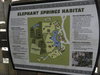
The complex as a whole is impressive from both a visitor perspective, and a husbandry perspective with the multiple offshow yards. While you are mainly only able to properly view whichever group is in the south habitat as the north habitat seems like you are looking through the brush to see the yard, you can see the other elephants occasionally through the back of the exhibit in the offshow yards. However, over time I can see that foliage growing more dense to completely block any view to these and the holding building behind. As far as the Indian Rhino exhibit goes, once the new carnivore complex is open, it will add a lot more viewing of the two yards, as right now you are pretty much limited to one viewing area.

155 Elephant Springs Habitat Map.JPG

Speaking of the upcoming Asian Predators and African Hunters exhibit complex, we certainly could see a lot of the construction going on, as well what has been completed, and it looks to be another great addition to the zoo. The standard set with the African Savanna and Elephant Springs looks to be continued with what we saw on our visit.

With another mega-complex joining this area near the front of the zoo, it definitely is going to have its fair share of heavy hitters in terms of "ABC" species right off the bat. It's not surprising that this zoo has a lot of support in that families that visit on a weekday can pop in, see all the general zoo draws for most folks, and then get out quick. In comparison, most of these crowd pleasers at Omaha are at the far reaches, in which most of the general public during the winter don't go and visit, thus the indoor portions at the front get most of the attention during the off-peak season.

Once you get out of the front portion and west portion of the zoo, you embark upon a narrow string of the zoo that features a number of exhibits that are older, and one major modern complex, Museum of Living Art (MOLA). I more or less consider the somewhat attached Crocodile Cafe the start of MOLA, as inside the restaurant you get some great views into the Saltwater Crocodile and Indian Gharial exhibits. These two exhibits I found quite attractive and certainly engaging as each crocodilian species certainly loved to show out on our visit.

208 Saltwater Crocodile (2).JPG
Really got to feel how immense Saltwater Crocodiles can be when they are this close.

227 Gharial.JPG
Getting up close and personal with an Indian Gharial is always a treat.

MOLA itself is an fascinating complex. While it is more or less a vast and modern herpetarium, it does have a fair amount of fish, a few bird species, and has one of the most underwhelming ring-tail lemur exhibits found in a zoo. The outdoor portion seems completely like an afterthought, and really doesn't feel like it is actually part of MOLA.

The indoor portion however is almost a fever dream for anyone who likes reptiles or amphibians. You take the museum-style classics like Dallas and Saint Louis, make it super modern and sleek, and you get MOLA. While the two houses mentioned are seemingly in a room where you can more or less see the extents of the building, MOLA is one long super hallway filled to the brim with stacked exhibits throughout, but also has its fair share of floor to ceiling exhibits, and of course massive terrarium/aquarium hybrid tanks that feature river dioramas really well, much like Nashville's Amazon exhibits in Unseen New World.

266 MOLA Interior.JPG

Something that overwhelmed me a little bit about this building, is just how many terrariums are in here. About halfway through, I felt like it had to be close to ending, but still had a long way to go. Granted, I was photographing each terrarium, which quickly turned into each pair for the stacked exhibits as shown in the photo above. Again, those of you who are big reptile or amphibian fans will love this place, but you really can get tired out of looking at similar-seeming terrariums after a bit! Don't get me wrong, I did love this building, but it could give you feelings on both ends of the spectrum. First, not seeing the end or extents of the building while in it can make you excited about what is around every turn. Second, you can feel dread that you have been in here for an extremely long time, and you see no end in sight.

After spending an inordinately amount of time in MOLA, the next several areas of the zoo feature various waterfowl ponds, many bird aviaries that feature some interesting species like Sunda Wrinkled Hornbill and Ocellated Turkey and some netted over larger aviaries with Abdim's Stork and Demoiselle Crane as well as Red Crowned Crane. There are also a couple macaw-on-a-stick exhibits scattered in here with various macaws and Galah. The absolute highlight of this area to me though is Raptor Canyon.

Raptor Canyon sits along the base of a cliff face and offers a tunnel through the wire-mesh exhibits that allow the impressive species list fly above you in spacious aviaries. Speaking of the species list, it has African Fish Eagle, Palm Nut Vulture, African Crowned Eagle, Cinereous Vulture, King Vulture, Andean Condor, and Harpy Eagle. I guess the Dallas/Fort Worth Metro area is the Harpy Eagle Capital of the USA with three facilities having them. This exhibit complex became quite interactive especially when an African Fish Eagle landed on top of the pathway area with its carrion prey (a white rat) and began to pick it apart as pieces of its meal fell through to the pedestrian path below.

711 Raptor Canyon Walk.JPG

Continuing down the upper portion of the narrow section of the zoo, you would pass through an Australian Outback section that surprisingly is not a walkabout, and I think that is a good thing here. The funny thing about this area is that the largest exhibit yard in this area is an expansive bamboo forested area for a single Australian Brush Turkey. Otherwise, the outdoor portions are fine, but I'm a little baffled at the Great Barrier Reef portion in the building inside this exhibit. It totally looks like a temporary stopgap, and not a permanent display. Was this originally a house for either Koala or Tree Kangaroo? Just near the east entrance of Australian Outback is a small aviary house built for Edwards' Pheasant and Lesser Bird-of-Paradise.

The next exhibit along this route is the Penguin House, with outdoor enclosures on either end, one for White-necked Raven, the other a pool for African Penguin. Inside you will find Rockhopper Penguin and some Common Eider. This area is beginning to show its age, as so many new African Penguin exhibits across the country that are getting built continue to pass this one by in terms of quality. This whole stretch of zoo in between the new exhibits at the west end and Texas Wild can easily be seen as the oldest parts of the zoo that are left, and I know there is a new rainforest area that is on the horizon, but looking at the website, it isn't clear what of this stretch is going to eventually be demolished. I can see the Australian area and hopefully Raptor Canyon staying, so if anyone who is more familiar with how that project fits in could elaborate, I would appreciate it.

This brings us to Texas Wild, which seeing it with my own eyes is quite possibly one of the most interesting themed areas in a zoo that I've ever seen. Interesting in that there is a lot of really good but some head scratchingly bad things set in an area that is the most theme-park like setting in any zoo I've visited (No, I haven't been to Columbus or Tampa, or any other zoo with rides other than Disney). While this area doesn't have huge rollercoasters or rides, it does have a highly stylized western town setting, full of corporate restaurant chains, and even has a sit-down attraction. I couldn't help but feel like I was in a zoo version of Main Street USA, set in the 1880s.

444 Texas Town Restaurant.JPG

I know I bring it up a lot, but there was something similar to this at the Grand Island Heritage Zoo, a small railroad town set in the 1800s, but this is on a much larger scale. This town features a jail, a barnyard complex, a pretty large gift shop, a dedicated candy store, a massive restaurant featuring Pizza Hut, among many other things, and their Hall of Wonders that features Texas history and information. Inside this Hall of Wonders is a sit-down attraction that we were told was almost like a weather simulator that shows how violent Texas storms could be, so I was naturally in, and expected something similar to the old Twister Experience at Universal Studios Orlando. It was not that, it was pretty tame comparatively speaking.

Aside from this Old West Town, there is a long trail that features North American wildlife of varying degrees of quality, mostly good. I've said it before in this thread, I don't get too excited for a lot of North American species in zoos, but the way you present them can greatly impact the way I view them. Well, the exhibits along the Wild Texas Tour pulled me in. We started just outside the restaurant at the small exhibits of Swift Fox, Black Tailed Prairie Dog, Burrowing Owl, and Green Jay. These small exhibits are fairly well done, the Swift Fox exhibit may seem on the small size, but the fox we saw only had three legs, so it felt appropriately sized, and the fox was super active. From this building, it also provides views into the adjacent White-Tailed Deer, Sandhill Crane, and Wild Turkey exhibit, a large yard that is a decent start to your trail.

I'll admit, the next two parts of the exhibit are what essentially sold this whole trail to me. Had we started on the other end, my feelings might be different, but I thought Piney Woods & Swamps and Texas Gulf Coast were excellent. Before I get too much into the rest of the trail, I really liked how they broke out each section more or less by the biome. I really enjoyed the change in scenery and architecture from one area to the next and added to the experience, to me at least.

Piney Woods & Swamps is seemingly set in a warehouse next to the bayou and features Red Wolf, Alligator, North American River Otter, and American Black Bears. I liked how the otter and gator exhibits seemed to be connected as a mixed species habitat. As you pass through to the Texas Gulf Coast building, a small shack that looks like it was a wharf picked up straight off the coast, you enter in a small room with some fish tanks, as well as a touch tank with various starfish as well as Horseshoe Crab. You can also find a tank for Texas Diamondback Terrapin in here as well. However, the showstopper here, and my favorite exhibit in the whole complex is the Gulf Coast Aviary, featuring a dock scene and tons of waterfowl including Roseate Spoonbill, Scarlet Ibis, Brown and White Pelican, Black-necked Stilt, and Laughing Gull. Being able to stand in here amongst all these birds was quite the experience.

526 Roseate Spoonbill, Scarlet Ibis, Brown Pelican, White Pelican Exhibit.JPG

Following Texas Gulf Coast is Brush Country that is an area that has some great species, but a couple of exhibits that I feel could be reworked. Some of the species highlights here are Ringtail, Plain Chachalaca, and Crested Caracara, even though the caracara seems like it is in an exhibit for rescues. I feel like the Mountain Lion exhibit, while decorated nicely, is a little cramped for a pair of cougars, and the pair of exhibits for Bobcat and Coyote might be better off combined into one larger exhibit for one of the two. The one truly abysmal exhibit was the tiny Ocelot 'room'. I really hope that they rotate the Ocelot outside in either the Bobcat or Coyote exhibit, but it was signed only for Ocelot, so I'm not sure they do. That being said, I really like the Southwestern Adobe architecture in the area. Rounding out the tour trail is Mountains and Desert, but it was closed for construction into a new learning area it seems.

I'd be remiss to note that if you take the train, you would see two exhibits that are only visible from the train, one each for Secretary Bird and Kori Bustard. We did not take the train, it might not have even been running on the random December Monday we were there. I was able to see a Secretary Bird from a path farther to the west, but albeit I had to zoom in quite a ways with my camera.

Overall, I would reiterate that after having now been to this zoo, I definitely can see why it continues to rise up the ranks of American Zoos. They have a decent number of rarities, but also have been investing a lot of money to improve the zoo as a whole. I definitely feels it is on the trajectory that Omaha was on in the 2000s and 2010s as massive chunks of the zoo have been getting facelifts.

As far as comparing Fort Worth to Dallas, I feel like the two are completely different experiences and your opinion will vary on what type you prefer. Dallas is very much more of a classical zoo experience in that there are some immersion or themed exhibits but relies more on some taxonomical grouping or minimal themed geographic areas. Fort Worth is way more of an immersion-based facility and highly themed areas akin to a Disney park, even down to some corporate based chain restaurant representation. I would hate to say that the two are running in opposite directions, with Fort Worth gaining tons of momentum due to a lot of new projects, and Dallas seemingly in a decline. I would rather say Dallas seems just a tad stagnant at the moment, as they haven't had a major project since Giants of the Savanna it feels like, but hard to argue that there isn't some decline with the monorail stopping operation. Just my personal preference, I would probably have to put Fort Worth slightly ahead, and I have no doubt if the new carnivores complex was open on my visit, it wouldn't be a competition. Sure, I really liked the classic feel of Dallas's Herpetarium, the large tiger exhibit, and I feel the great ape exhibits are better at Dallas, but just the overall quality and feel of Fort Worth is more of what I've been drawn to the last couple of decades. Again though, I enjoyed them both greatly.

That being said, I feel like if any of you are in the DFW metro, you almost should visit both and compare them on your own terms. To me, both are a great representation of the American Zoo landscape: you have an older and more historically known collection that shows off what zoos were with some newer style exhibits thrown in, and the other is a more modern and highly themed experience, which is seemingly the new trend at a lot of places. What preference you have is totally up to you, but these two have two completely different experiences in my opinion that makes them both well worth the visit.
 

Attachments

  • 22 World of Primates Interior.JPG
    22 World of Primates Interior.JPG
    207 KB · Views: 23
  • 78 Savanna Theming.JPG
    78 Savanna Theming.JPG
    147.6 KB · Views: 26
  • 177 Asian Elephant.JPG
    177 Asian Elephant.JPG
    185.3 KB · Views: 24
  • 155 Elephant Springs Habitat Map.JPG
    155 Elephant Springs Habitat Map.JPG
    159.3 KB · Views: 23
  • 208 Saltwater Crocodile (2).JPG
    208 Saltwater Crocodile (2).JPG
    151.1 KB · Views: 24
  • 227 Gharial.JPG
    227 Gharial.JPG
    166.5 KB · Views: 23
  • 266 MOLA Interior.JPG
    266 MOLA Interior.JPG
    117.5 KB · Views: 158
  • 711 Raptor Canyon Walk.JPG
    711 Raptor Canyon Walk.JPG
    280 KB · Views: 23
  • 444 Texas Town Restaurant.JPG
    444 Texas Town Restaurant.JPG
    134.2 KB · Views: 21
  • 526 Roseate Spoonbill, Scarlet Ibis, Brown Pelican, White Pelican Exhibit.JPG
    526 Roseate Spoonbill, Scarlet Ibis, Brown Pelican, White Pelican Exhibit.JPG
    274.9 KB · Views: 23
With that, I've completed my writeups for all of my non-Omaha area zoos for 2022. I appreciate the discussions from folks in here throughout! I apologize it took me longer to get through than I initially thought, but after the holidays, adulting and work took a lot of time away from me continuing the thread at a more regular rate. I greatly admire those of you on here who do road trip review threads quite regularly, or long continuous threads on various topics, or any reviews at all! It takes a lot of effort and willpower to continue at a decent rate!
 
Otherwise, the outdoor portions are fine, but I'm a little baffled at the Great Barrier Reef portion in the building inside this exhibit. It totally looks like a temporary stopgap, and not a permanent display. Was this originally a house for either Koala or Tree Kangaroo?

You are correct -- the Great Barrier Reef exhibit originally housed koalas. When the Australia section opened in 1998, it featured koala (on loan from San Deigo Zoo) plus red kangaroo and yellow-footed rock wallabies:
Fort Worth Zoo Home to Koalas

The last koala left the collection in early 2005 (note: newspaper story link within this Zoochat post no longer active)
G'bye mate: Zoo's last koala is leaving soon [Fort Worth Zoo]

The Great Barrier Reef exhibit opened in May later that year:
https://www.whozoo.org/fish/GBR_PressRelease.pdf
 
Back
Top