I know he was still alive in May. He is usually in one of the aviaries at The Roost (near the tigers) in case you aren't aware.Is it certain that Wellington Zoo still has their Tawny Frogmouth? If so, is it off-display?
I know he was still alive in May. He is usually in one of the aviaries at The Roost (near the tigers) in case you aren't aware.Is it certain that Wellington Zoo still has their Tawny Frogmouth? If so, is it off-display?

I know he was still alive in May. He is usually in one of the aviaries at The Roost (near the tigers) in case you aren't aware.
yeah, on one side is a row of four (I think) aviaries with kaka, kingfisher, etc. The frogmouth is usually in one of those aviaries but the birds get moved around between the aviaries from time to time. I've never seen kea in there though: the kea are normally in the aviary sort of round the corner from the marmoset doll-house, by the ruffed lemurs. On the other side of the Roost building are another couple of aviaries, one of which -- last time I was there -- had either morepork or little owl, and the other with budgies or cockatiels.Do you mean where there are North Island Kaka, Kea, Kingfishers and a Little Shag in small enclosures? I went there and saw no sign of him.
2.0 Cheetah cubs were moved from Orana Park to Wellington on Wednesday. Unfortunately one was found to be unconscious on arrival and died that evening..... hence an investigation is now underway
Cheetah dies mysteriously at NZ zoo | Mail Online
2 July 2014
An autopsy has found that a negative reaction to anaesthetic, which led to seizures and most likely brain death, caused the death of a cheetah at Wellington Zoo.
Five-year-old Shomari and her brother Cango were moved from Orana Wildlife Park in Christchurch to Wellington Zoo in May.
Unfortunately Shomari died soon after the move, and in a joint statement from Wellington Zoo and Orana Wildlife Park released today, details of the move and autopsy results were revealed.
The statement explained that Shomari was given a general anaesthetic at Orana Wildlife Park to allow staff to move him into a crate. The drug was then reversed, however the anaesthetic caused Shomari to suffer from a series of seizures that occurred periodically over the next hour.
After the seizures stopped a sedative was administered which improved Shomari's condition.
The decision was then made to continue with the transfer. Although heavily sedated, there was no concern for Shomari's outlook, the statement said.
On arrival in Wellington Shomari was still heavily sedated and only partially rousable. He was removed from the crate and given IV fluids.
Wellington Zoo consulted with a specialist Veterinary Anaesthetist from Massey University on how to treat the symptoms.
A decision was then made by veterinary staff to administer a drug to attempt to reverse the effects of the sedative used earlier in the day.
Although the treatment was reversed Shomari continued to suffer from more seizures, so more medication was administered.
At this point Shomari went into respiratory arrest, and veterinary staff aided his breathing by placing a tube in his throat.
Because of his seizures, he had a clamped jaw so he was given another general anaesthetic to relax his muscles and enable vets to place the tube.
Artificial ventilation continued for 90 minutes during which time Shomari's condition worsened and vets noted a loss of cranial nerve reflexes, corneal response.
This indicated very severe, irreversible brain damage, most likely brain death.
Cardiac arrest occurred at 10:26pm and given the small chance at recovery, no attempts at CPR were made.
The autopsy showed changes in the brain, liver, and kidneys which are all consistent with prolonged seizure activity and loss of oxygen.
There was also damage to the muscle, consistent with prolonged seizure activity.
Both zoo teams said they were devastated by Shomari's tragic death.
Cango, who was transferred to Wellington with Shomari, has been joined by his brother Kunjuka and both cats are doing well.

If you are the type who grumbles when the temperature plunges, spare a thought for the animals at Wellington Zoo.
For giraffes from the plains of Africa, or lizards from the Australian desert, a brisk Wellington winter can be a shock.
So how does the zoo guard its animals from the elements?
No, staff don't wrap the giraffes in enormous scarves, or wrestle the sun bears into onesies.
Sam the chimp wears a blanket as a cape, but he is an exception.
It involves a careful combination of measures, including bedding, diet and exercise, says zoo life science manager Dave French.
Giraffes have their own secret hideout away from the crowds and their habitat-mates.
Panel heaters - just like ones you have at home - cover the huge, giraffe-sized walls, and are constantly pumping, turning the room into a giraffe sauna.
Primates, including the chimpanzees and lemurs, have underfloor heating strategically placed around their habitat.
When the chimps are not swinging around or building straw nests up high, they can curl up in little heated caves hidden from the wind.
During August, the zoo's Winter Wednesday promotion allows guests to deliver porridge and blankets to the chimps, which they also use to stave off the cold.
This winter, in particular, has required special measures, French says. "This season just changed really quickly. It suddenly became very cold. The animals didn't really have that transition time to acclimatise to it."
For the otters, this has meant microwavable heat pads, which are hidden under slats in their enclosures. The ageing otters have not been swimming as much either. Like people, older animals are vulnerable to the weather.
They sometimes get special attention - Rokan, the zoo's oldest tiger, gets his own panel heater.
All animals receive bedding, usually made from materials such as shredded paper. Some species, particularly the ones that eat their bedding, such as lions, are given straw. It is less of a problem for social animals, such as kangaroos, who tend to huddle in groups.
For more natural protection from the cold, some animals are on calibrated winter diets.
"We definitely up the weight or the frequency of their feeds over winter so they carry more body weight," French says.
"The bigger animals burn a lot of energy keeping warm, so it's important to balance that out."
Not all the animals come from the sweltering desert or the humid rainforest. Red pandas, used to the icy Himalayas, are the zoo's most well-equipped occupants for the frigid conditions.
They mock our winters and turn up their snouts at bedding.
Lions are hardy and designed for the huge swings in temperature on the savannah. They often forgo their bedding to lounge on rocks - even snow in 2011 could not compel one lioness indoors, leaving her covered in snow.
The real challenge comes with the reptiles, who need to have a perfectly calibrated environment.
Each enclosure is equipped with a heat lamp and a UV light, creating a microclimate replicating their native habitat.
It’s an exciting day for us at Wellington Zoo!
Today we started construction on our next big development – Meet the Locals.
Meet The Locals is our love story to New Zealand, showcasing native and introduced locals from Wellington’s wild South Coast, through to farmland, and regenerating native bush.
Once complete, Meet the Locals will be home to our Little Blue Penguins (Kororā), Kune Kune Pigs, Kākā, and many more.


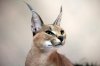
Visitors to Wellington Zoo will be able to see New Zealand’s first Caracals in the Zoo’s new Grassland Cats habitat, with a special visitor opening day on Saturday 27 September.
The Caracals will be joined by the Zoo’s popular Servals in their brand new home.
“Caracals are such striking and interesting animals; it’s fantastic to have them here at Wellington Zoo. We’re delighted to have developed this new space for our Servals too, that have been off visitor view for a while, in this amazing new exhibit which was designed and built by our Zoo team.” says Wellington Zoo Chief Executive, Karen Fifield
“Wellington Zoo is establishing a reputation for designing and building innovative exhibits in-house, and the Grassland Habitat continues this beautifully. Our interpretation gives visitors a chance to experience hunting like a Serval or Caracal.”
“Both Servals and Caracals have distinctive large ears, and are amazing athletic cats able to jump metres into the air from the ground. I’m sure our visitors will love getting the chance to meet our new cats and welcome back some favourites,” said Karen.
The visitor opening day will be full of cat based entertainment including animal talks, cat based games and activities, face-painting, and giveaways.
Construction of Grassland Cats was made possible thanks to the generous support of the Zoo’s principal funder Wellington City Council.
27 Sept 2014
They may look like big cats, but Wellington Zoo's newest creatures are really just kittens.
From today, visitors will get to glimpse two caracals - sisters aged just 10 months old.
If their long, tufted ears and distinctive red coats were not special enough, the unnamed pair are the only caracals in Australasia. They were born at Copenhagen Zoo and flown to their new home at just 6 months old, the zoo's life science manager Paul Horton said.
"They've got very, very cool personalities. They're just young and they're cheeky."
Caracals were found from the Middle East down to southern Africa in grasslands, wooded areas and deserts, he said.
"They've got a really short tail, because they don't spend a lot of time up trees . . . They live in many different environments so it makes them less at risk to human activities."
The meat-eating animals also have large hind legs, giving them the ability to leap an impressive three metres into the air to catch birds.
"It's early days, but we're sure the cats will be keen to chase a lure or jump after a fake bird."
Zoologists were still uncertain why caracals had such long tufts on their ears, but one theory was that they twitch them to communicate with other caracals, Horton said.
The sisters are part of the zoo's new "Grassland Cats" habitat, opening just in time for the school holidays. Just yesterday the caracals were a bit taken aback at their first glimpse of their next-door neighbours, the zoo's family of servals, Horton said.
"It's still a pretty new space and it'll take them a bit of time to get used to the whole area and visitors coming through is another thing to get used to. But they're quite confident young ladies."
The four servals, including zoo-born Tunde and Shanti, had their exhibition closed when it was damaged by a falling tree, but the large-eared cats are now back in the public eye.
Wellington Zoo will have animal talks, face-painting, games and giveaways as part of today's opening.
I'm not sure where they are located in the zoo (I just had a look on their current map: there are cheetahs in two locations now - one where the hunting dogs were - but no servals or caracals labelled).


Bashii the Sumatran Tiger has arrived at Wellington Zoo from Australia Zoo. Article is on page 9.
ISSUU - Cook Strait News 06-10-14 by Local Newspapers
there will be a male coming later.Why did they not import a breeding pair instead?