There's a few decent photos @Zoofan15 took of the construction that he posted in the gallery.Did you get to see much of the elephant complex?
There's a few decent photos @Zoofan15 took of the construction that he posted in the gallery.Did you get to see much of the elephant complex?

Did you get to see much of the elephant complex?
There's a few decent photos @Zoofan15 took of the construction that he posted in the gallery.

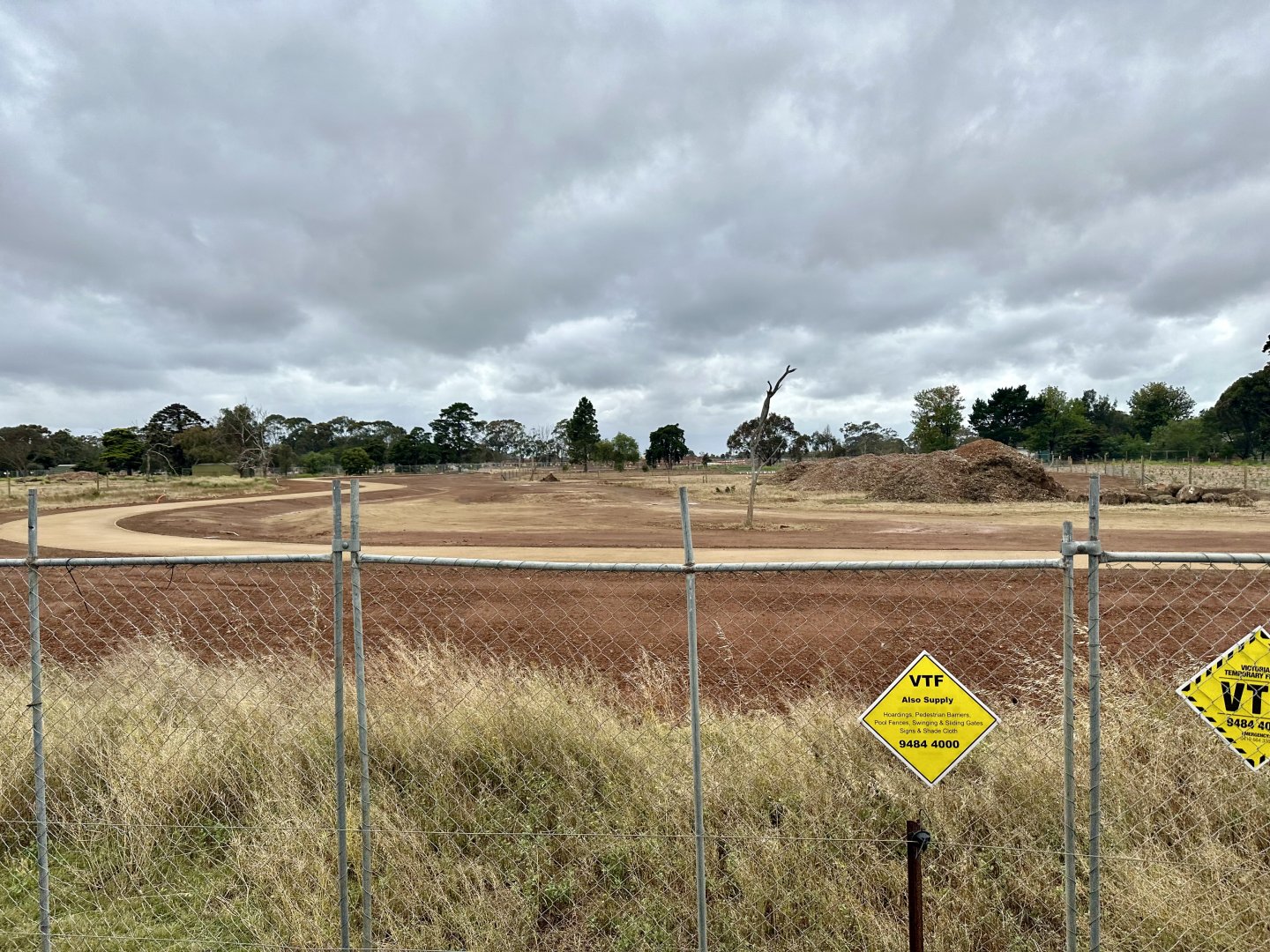

Interesting to see, I thought the progress would be a bit further along by now!
Agreed with you and Jambo. I really do not understand this without purpose knowingly genetically mix up your hybridised zebra with known pure-bred zebra. The goal should be to maintain a sustainable population of pure-breed Grant's zebra long term. It seems quite the non brainer.I too hope we don’t see hybridisation of the purebred Grant’s stock. Enough founders were imported to sustain the region for 30 years or so and by undertaking minor inbreeding, up to half a century.
Zebras aren’t difficult to breed and producing more hybrids is completely unnecessary when there’s surplus purebred Grant’s stock within the region (as well as the option to import).
Assuming the region’s Grant’s zebra are 100% verified purebreds, I wouldn’t actually mind seeing a moratorium on the production of hybrids. One of the open range zoos (ideally Monarto, who currently holds four herds) could produce large numbers if they were to obtain a handful of purebred Grant’s from DDZ/ZD and contribute to supplying the region’s zoos. In the meantime, they all have enough generics to sustain them for the next decade or so for display purposes.
I am looking forward to your full review.Elephant complex opening 2024/2025:
I’ll be doing a more comprehensive update in the elephant thread, but they’re aiming to open the elephant complex in late 2024/early 2025 now.
Other Werribee projects:
With regards to other Werribee projects e.g. the lion expansion, I was told when I asked that everything is on hold until the elephant complex is completed due to increasing construction costs.
They’re very much hopeful the lion expansion, hyena exhibits, cheetah exhibits will still happen (as well as the Sky Safari) long term; but the elephant complex is priority.
Agreed with you and Jambo. I really do not understand this without purpose knowingly genetically mix up your hybridised zebra with known pure-bred zebra. The goal should be to maintain a sustainable population of pure-breed Grant's zebra long term. It seems quite the non brainer.
With regards to imports, it would be beneficial to shore up the Grant's zebra population with fresh stock from Africa or from captive sources of known managed populations. I assume the IRA Equids is in order on this?
Some insight into the other projects and when management now plans on bringing those to fruition would be greatly appreciated.

What type of construction costs have increased beyond measure (cause we are talking here that the other projects are basically shelved on the back burner)?
Can you explain how these spiralling building costs came about between presentation of the masterplan and the now?
For good purposes I have added the ARM Architecture brief:
Werribee Open Range Zoo Expansion / ARM Architecture
Our responses partially overlapped. Sorry about that....According to multiple sources, residential construction projects in Victoria have risen by around 30% since the pandemic. It’s reasonable to assume the increase has been similar for construction projects within the zoo industry. Details of specific costs related to this project are not publicly available.
How is the white rhino calf for Kipenzi doing right now?Here’s an article on the calf’s birth:
Victorian zoo welcomes birth of rare rhino calf
~~~~~~~~~~~~
A southern white rhino calf has been born at the Werribee Open Range Zoo for the first time in almost a decade.
First-time mother Kipenzi gave birth to the female calf about 4am on Tuesday after a 16-month pregnancy.
Kipenzi and her newborn did not bond straight away, so the calf was brought to the zoo's vet clinic for medical checks and supplementary feeding.
The calf, who is yet to be named, is receiving round-the-clock feeds of his mother's colostrum.
"The calf's health has begun to improve and it is now in the process of being reintroduced to mum," zoo director Mark Pilgrim said in a statement.
However, it will continue to remain under veterinary care during these critical early days."
"The arrival of this precious calf is an important achievement in the fight to save the species from extinction," Dr Pilgrim said.
"We are excited that visitors will be able to view the pair once we have navigated these typically high-risk early days following the birth."
He said the calf will be named in coming weeks through a voting competition for Zoos Victoria members.
How is the white rhino calf for Kipenzi doing right now?
Which rhino are now left at Werribee ORZ?
If I look at the stats for breeding white rhino at Werribee the results are not quite that impressive (all the more surprising given the open range concept) nor sustainable in the long term.The calf was a female, but sadly passed away in the first week:
A necropsy conducted at the University of Melbourne Veterinarian School confirmed the calf sustained a broken scapula, attributable to interactions with her mother in the immediate hours post-birth. It is suspected that blood clots at the fracture site led to the neurological signs and cardiac arrest. Further test results are pending and due in two weeks.
Werribee Open Range Zoo currently have 2.4 white rhino:
1.0 Umgana (00/00/1988)
1.0 Kifaru (30/04/2009)
0.1 Make (00/00/1984)
0.1 Letaba (00/00/1992)
0.1 Sisi (19/01/1996)
0.1 Kipenzi (30/05/2013)
If I look at the stats for breeding white rhino at Werribee the results are not quite that impressive (all the more surprising given the open range concept) nor sustainable in the long term.
For the males: M Kifaru new breeding male, now proven. M Umgana (proven 2 surviving calves - see below, now probably retired as breeding male)
For the females: 1.1 surviving offspring, M Gianini current breeding male at Australia Zoo (5 surviving calves), F Kipenzi (without any surviving calves)
F Make, F Sisi 1996 - she never bred upon arrival after delivery of her own daughter
F Letaba - 2 calves (M Gianini 2002, M Tawali 2004, transfer to Beerwah and deceased 2009
F Sisi - F Make 1984, M U 2002 (died soon after birth), M U 2006 (died 4 days after birth), F Kipenzi May 2013, M U December 2014 (died from septicimia)
Unfortunately Werribee has sort of been neglected for quite a long time with little happening in the scheme of things, hopefully now with the construction of the new elephant exhibit/complex this will be a big positive turning point in the zoos history!If I look at the stats for breeding white rhino at Werribee the results are not quite that impressive (all the more surprising given the open range concept) nor sustainable in the long term.
For the males: M Kifaru new breeding male, now proven. M Umgana (proven 2 surviving calves - see below, now probably retired as breeding male)
For the females: 1.1 surviving offspring, M Gianini current breeding male at Australia Zoo (5 surviving calves), F Kipenzi (without any surviving calves)
F Make, F Sisi 1996 - she never bred upon arrival after delivery of her own daughter
F Letaba - 2 calves (M Gianini 2002, M Tawali 2004, transfer to Beerwah and deceased 2009
F Sisi - F Make 1984, M U 2002 (died soon after birth), M U 2006 (died 4 days after birth), F Kipenzi May 2013, M U December 2014 (died from septicimia)

Costs for construction Australia wide have spiraled. Materials and labor costs for all construction is up. This is due to inflation. This is due to massive pipelines of infrastructure projects nation wide. This is due to the population boom continuing which means thousands upon thousands of new homes are needed to be built nation wide.Some more tracation on the subject of elephant habitat and expansion:
1) Major Milestones For Werribee Open Range Zoo Expansion
2) Werribee Open Range Zoo Expansion
I would like to see project breakdown costs ..., and how the costings for this part project have spiralled way beyond the set budget for the elephant project vis a vis all the other projects within the expansion. Anyone with financials background information?
In financials, I would like to see consumption index numbers and similarly for project components.Costs for construction Australia wide have spiraled. Materials and labor costs for all construction is up. This is due to inflation. This is due to massive pipelines of infrastructure projects nation wide. This is due to the population boom continuing which means thousands upon thousands of new homes are needed to be built nation wide.
This isn't a zoo having been profligate scenario - this is a case of a dollar doesn't go anywhere near as far now as it did just a few years ago.
Considering the fact that Werribee are down to a single viable breeding pair (Kifaru and Kipenzi) and Kipenzi hasn't proven to be the best mother yet, Werribee are certainly in need of new individuals, at least a few more females. Taking advantage of the open range setting and space they have is crucial going forward imo. It's been disappointing to see the program be more a less of a failure so far.If I look at the stats for breeding white rhino at Werribee the results are not quite that impressive (all the more surprising given the open range concept) nor sustainable in the long term.
For the males: M Kifaru new breeding male, now proven. M Umgana (proven 2 surviving calves - see below, now probably retired as breeding male)
For the females: 1.1 surviving offspring, M Gianini current breeding male at Australia Zoo (5 surviving calves), F Kipenzi (without any surviving calves)
F Make, F Sisi 1996 - she never bred upon arrival after delivery of her own daughter
F Letaba - 2 calves (M Gianini 2002, M Tawali 2004, transfer to Beerwah and deceased 2009
F Sisi - F Make 1984, M U 2002 (died soon after birth), M U 2006 (died 4 days after birth), F Kipenzi May 2013, M U December 2014 (died from septicimia)