What pets/animals do you currently have?

took on an albino pac man frog and a nightmare ratsnake lol he's nothing compared to my afrocks but bite bite lol
 
IMG_7098.jpg
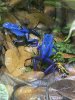
Male azureus carrying a tadpole today. These two species are different enough that they don't acknowledge each other and have gotten along without any issues at all (not always true for dart frogs - D. tinctorius is very territorial towards its own kind and closer relatives.)
IMG_7052.jpg

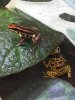
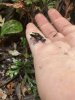
Ranitomeya uakarii "gold legged" and (juvenile) Dendrobates leucomelas "fine spot".
 

Attachments

  • IMG_7098.jpg
    IMG_7098.jpg
    130.2 KB · Views: 210
  • IMG_7052.jpg
    IMG_7052.jpg
    90.8 KB · Views: 214
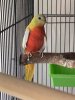
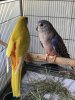
New to me recenly: a female yellow mutation turquoisine parakeet (Neophema pulchella) and a male wild-type bourke parakeet (Neopsephotus bourkii.) These two were raised together by the same breeder and will be kept together for now for company; they are behaviorally very similar, but cannot hybridize.

IMG_3257.jpg IMG_3251.jpg

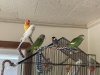
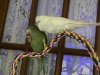
Some of my others; fischer's lovebird, budgie, plum-headed parakeet (subadult), java sparrow, white-winged parakeet, cockatiel. The bourke and turquoisine will not be housed with these, they're too different in behavior.

IMG_3145.jpg

These birds however get along exceedingly well with each other, but this was by design and in how they were raised. It's not recommended to throw together any random adult parrots and expect them to like each other. It also helps most of these are males of species where the females are socially dominant.

IMG_5509.jpg

IMG_6463.jpg

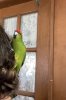
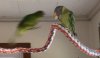
The kakariki gets along with the rest most of the time, but he has a temper the others don't and sometimes he's a bit much for them. I watch his interactions a bit more closely.

IMG_8903.jpg

Because if I don't he'll do this!

IMG_8295.jpg
The lovebird only has to look his way and he stops in his tracks though. He knows the lovebird doesn't take any of his nonsense and isn't afraid of him.

And a lake urmia newt, just for something else. I have this one with a few kaiser newts, they get on well, but I'll have to separate if I ever try to breed them.

IMG_1614.jpg
 

Attachments

  • IMG_3251.jpg
    IMG_3251.jpg
    94.6 KB · Views: 160
  • IMG_3257.jpg
    IMG_3257.jpg
    106.4 KB · Views: 156
  • IMG_3145.jpg
    IMG_3145.jpg
    155.4 KB · Views: 187
  • IMG_5509.jpg
    IMG_5509.jpg
    63.2 KB · Views: 157
  • IMG_6463.jpg
    IMG_6463.jpg
    149.8 KB · Views: 175
  • IMG_8903.jpg
    IMG_8903.jpg
    62 KB · Views: 179
  • IMG_8295.jpg
    IMG_8295.jpg
    71.7 KB · Views: 167
  • IMG_1614.jpg
    IMG_1614.jpg
    100.2 KB · Views: 167
Last edited:
after my nana past last year at the age of 96 she left me some money so added 5 new royals

1.0.0 leopard enchi fire het pied
0.1.0 pied 66% het amel
0.1.0 pied het lavender
0.1.0 lesser
0.1.0 albino
 
Last edited:
I ended up going back and getting the bourke a mate. She is an opaline mutation, or a "rosy" in the pet trade lingo.

IMG_4792.jpg

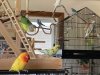
The bird room is always full of life, color, and NOISE. Almost all of my birds get along, the couple who don't get let out of their flights alternately. Though some of these cages are relatively small - like for the cockatiel, who is an older rescue who didn't grow up with other birds and does not want to be housed directly with others - the birds are only confined for a few hours a day.

IMG_4775.jpg

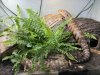
northern blue tongue skink Ajax admires a new fern in his habitat. Will it survive or be smushed? He hasn't decided.

IMG_4786.jpg

Giant Madagascar day gecko Max has just celebrated his 6th birthday! He lives with a tomato frog named Beefsteak, and they are very good roommates who use different levels of the habitat.

8887.jpg
IMG_0763.jpg

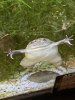
Plip the african clawed frog is always giving out free hugs.

IMG_4837.jpg

And Atlas the 5 year old Colorado River Toad, who I raised from a froglet as big as a pinky finger nail, is now a resident of the Washington Park Zoo in Michigan City, Indiana. He kept outgrowing his tank until I had no room for anything larger!

IMG_3811.jpg IMG_3812.jpg
 

Attachments

  • IMG_4792.jpg
    IMG_4792.jpg
    155.9 KB · Views: 126
  • IMG_4786.jpg
    IMG_4786.jpg
    231.6 KB · Views: 129
  • 8887.jpg
    8887.jpg
    92.3 KB · Views: 129
  • IMG_0763.jpg
    IMG_0763.jpg
    93.5 KB · Views: 150
  • IMG_4837.jpg
    IMG_4837.jpg
    98.8 KB · Views: 128
  • IMG_4775.jpg
    IMG_4775.jpg
    173 KB · Views: 126
  • IMG_3812.jpg
    IMG_3812.jpg
    172.8 KB · Views: 121
  • IMG_3811.jpg
    IMG_3811.jpg
    131.6 KB · Views: 156
Poison dart frog pics:

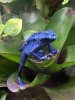
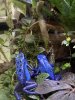
Dendrobates tinctorius "azureus". This pair are my most prolific breeders. I am always giving babies away.

IMG_5696.jpg IMG_5699.jpg IMG_5321.jpg IMG_5728.jpg

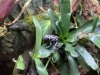
The little yellow frog is a Ranitomeya sirenis "highland." A very bold, very little frog.

I'm not really a fan of calling all the color forms of these frogs by their pet trade names, because in reality the many color forms of a single species are more of a cline where many of them intergrade, and they don't distinguish by color when mating, and it just contributes to inbreeding and line breeding in captivity (I notice these frogs have gotten smaller and smaller over years, compared to the first imported frogs). But this pair is a "green sipawilini" and "citronella". They are both Dendrobates tinctorius. This is a non-breeding pair (no eggs allowed to mature) because while I think they are genetically healthier, there isn't really a market for "impure" frogs that don't match confirmed wild phenotypes. (Even though in the wild, most D. tinctorius in any given site are a lot more diverse in pattern than in captivity.)


IMG_5720.jpg

I have bred one cross, for my own enjoyment. It is half "yellowback" and half "powder blue" and one of my favorite colored D. tinctorius. His name is "Lil guy."

IMG_5697.jpg

These being his parents:

IMG_4967.jpg

This unique one is a Dendrobates auratus "Rio Cascajal". I'm not convinced it is any genetically different from another identical morph imported around the same time called "Pena Blanca", but the two are being bred now as separate lines by hobbyists. I have it paired with an albino female, but they have never had fertile eggs.

IMG_5701.jpg

These are a "pair" of Ranitomeya variabilis "Southern." A little shy, but one of my favorites for pattern. They are both male, and I am seeking a female to join them.

IMG_5723.jpg

I have only one bumblebee dart frog, Dendrobates leucomelas "Fine Spot." He lives with "Lil Guy" and another D. auratus in a non-breeding group. Though members of this genus can hybridize, they don't really succeed in raising offspring without access to water.

IMG_5694.jpg
 

Attachments

  • IMG_5321.jpg
    IMG_5321.jpg
    84.2 KB · Views: 100
  • IMG_5701.jpg
    IMG_5701.jpg
    174.5 KB · Views: 99
  • IMG_5699.jpg
    IMG_5699.jpg
    131.9 KB · Views: 94
  • IMG_5720.jpg
    IMG_5720.jpg
    68.9 KB · Views: 93
  • IMG_5723.jpg
    IMG_5723.jpg
    165.1 KB · Views: 91
  • IMG_5728.jpg
    IMG_5728.jpg
    122.7 KB · Views: 97
  • IMG_5694.jpg
    IMG_5694.jpg
    96 KB · Views: 99
  • IMG_5696.jpg
    IMG_5696.jpg
    154.9 KB · Views: 125
  • IMG_5697.jpg
    IMG_5697.jpg
    70.7 KB · Views: 102
  • IMG_4967.jpg
    IMG_4967.jpg
    206.8 KB · Views: 100
Poison dart frog pics:

Dendrobates tinctorius "azureus". This pair are my most prolific breeders. I am always giving babies away.

View attachment 827633 View attachment 827627 View attachment 827623 View attachment 827631

The little yellow frog is a Ranitomeya sirenis "highland." A very bold, very little frog.

I'm not really a fan of calling all the color forms of these frogs by their pet trade names, because in reality the many color forms of a single species are more of a cline where many of them intergrade, and they don't distinguish by color when mating, and it just contributes to inbreeding and line breeding in captivity (I notice these frogs have gotten smaller and smaller over years, compared to the first imported frogs). But this pair is a "green sipawilini" and "citronella". They are both Dendrobates tinctorius. This is a non-breeding pair (no eggs allowed to mature) because while I think they are genetically healthier, there isn't really a market for "impure" frogs that don't match confirmed wild phenotypes. (Even though in the wild, most D. tinctorius in any given site are a lot more diverse in pattern than in captivity.)


View attachment 827629

I have bred one cross, for my own enjoyment. It is half "yellowback" and half "powder blue" and one of my favorite colored D. tinctorius. His name is "Lil guy."

View attachment 827634

These being his parents:

View attachment 827635

This unique one is a Dendrobates auratus "Rio Cascajal". I'm not convinced it is any genetically different from another identical morph imported around the same time called "Pena Blanca", but the two are being bred now as separate lines by hobbyists. I have it paired with an albino female, but they have never had fertile eggs.

View attachment 827625

These are a "pair" of Ranitomeya variabilis "Southern." A little shy, but one of my favorites for pattern. They are both male, and I am seeking a female to join them.

View attachment 827630

I have only one bumblebee dart frog, Dendrobates leucomelas "Fine Spot." He lives with "Lil Guy" and another D. auratus in a non-breeding group. Though members of this genus can hybridize, they don't really succeed in raising offspring without access to water.

View attachment 827632
Gorgeous frogs!
 
Back
Top