Wisp O' Mist
Well-Known Member


I'm thinking Grant's myself.

View attachment 662796 View attachment 662797
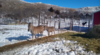
Not my zebras, these guys are part of a private herd in Nebraska. I know they're Plains Zebra, just curious to see what specific subspecies the membership on here think that they are.
I'm thinking Grant's myself.
They’re not purebred Grant’s as I can see shadow stripes (a feature of the Burchell’s and Chapman’s subspecies). Their stripes are clearly defined (unbroken) and they lack the spidery stripes commonly seen in Chapman’s, so my guess would be either Burchell’s or Burchell’s hybrids.
There are likely very few purebred plains zebras of any subspecies left in the United States, and certainly not in the private sector — these will be to some degree Grant’s x Burchell’s hybrids.

I'm reasonably certain that all Plains Zebra in the US (Animals in zoos and the private trade alike) are hybrids between the various subspecies, I was just curious to see what specific mixture people here would suggest.
I definitely agree with your suggestion of these guys being of Grant's x Burchell's breeding.
(For those curious, the majority of zebra in the US private pet trade seem to be advertised as Grant's zebras.)
Then why did you ask what subspecies they are and say you thought Grant's, if you're reasonably certain they're all hybrids?
I was not aware that all plains zebra in the US were hybrids, here in Europe there is 4 subspecies managed: Burchell's, Chapman's, Grant's and Maneless.

Point of order, plains zebras are not being phased out by AZA (they’ve got an SSP and everything) - the Equid TAG is just trying to ensure space for the other zebra species as well to make sure their numbers stay sustainable.

“Urged to replace” does not equate to “phase out entirely”. The Equid TAG only wishes to decrease the holding size and population of plains zebra in order to increase the holding size and population of the other two more conservation-dependent species. The plains zebra population is still managed for a healthy population, but they are being managed in a way to decrease that population. It’s a similar situation to that of generic giraffe, where the population is still a managed, breeding population, but it is being managed with the intent of decreasing the population in favor of Masai. It would be unreasonable to expect a full phase-out of either populations when they’re large, genetically robust, and crowd-pleasing. They’re just being managed to now fill the gaps instead of be the main focus.Interesting, because the zebra species profiles from azaungulates.org suggest otherwise.
Plains Zebra - https://www.azaungulates.org/s/Plains-zebra-bnnk.pdf
"TAG Recommendation: The equid spaces
occupied by plains zebras are needed for the
conservation-concern Grevy’s zebra and mountain
zebra programs. Zoos are urged to switch away
from plains zebras where possible."
Mountain Zebra - https://www.azaungulates.org/s/Mountain-zebra.pdf
"TAG Recommendation: Zoos with plains zebras in
mixed species exhibits are urged to replace them
with mountain zebras."
Grevy’s Zebra - https://www.azaungulates.org/s/Grevys-zebra.pdf
"TAG Recommendation: Zoos with common
(plains) zebras in single-species exhibits are urged
to replace them with Grevy’s zebras."
Are the profiles out of date then?
“Urged to replace” does not equate to “phase out entirely”. The Equid TAG only wishes to decrease the holding size and population of plains zebra in order to increase the holding size and population of the other two more conservation-dependent species. The plains zebra population is still managed for a healthy population, but they are being managed in a way to decrease that population. It’s a similar situation to that of generic giraffe, where the population is still a managed, breeding population, but it is being managed with the intent of decreasing the population in favor of Masai. It would be unreasonable to expect a full phase-out of either populations when they’re large, genetically robust, and crowd-pleasing. They’re just being managed to now fill the gaps instead of be the main focus.

I was not aware that all plains zebra in the US were hybrids, here in Europe there is 4 subspecies managed: Burchell's, Chapman's, Grant's and Maneless.