What would you like to see in the UK?

Until a few years ago we *did* have hummingbirds in the UK...... :(
 
I suddenly feel terribly old having seen:

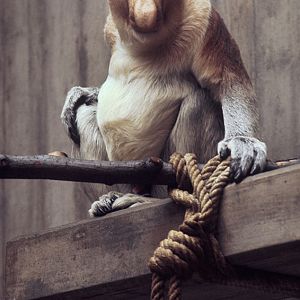
Proboscis Monkey
Sumatran Rhino
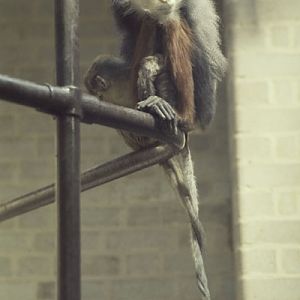
Douc Langur

and ... Hummingbirds (spectacular!).

I remember the old walk through Hummingbird house at ZSL. It seemed so simple and was spectacular. I don't know why no one does it now, is it difficult or is it fashion?

Where and when did you see the first two?
 
I remember the old walk through Hummingbird house at ZSL. It seemed so simple and was spectacular.

I used to like the old Humming Bird House at London Zoo very much too.

It was originally built in 1897 as the Tortoise House; Lord Walter Rothschild, founder of the Tring Zoological Museum, donated some money towards building this.

The Humming Bird House was demolished in 1985.
 
Where and when did you see the first two?

Although I may be incorrect, the odds are that @SHAVINGTONZOO saw Sumatran Rhinoceros at Port Lympne, which held the species until 1998.

As for the Proboscis Monkey, there are several possibilities: Twycross held the species from 1969 until 1985 and briefly in 1997, several German collections held the species in the 1970's through to the 1990's, and Apenheul in the Netherlands held the species from 2011 until 2015.
 
As for the Proboscis Monkey, there are several possibilities: Twycross held the species from 1969 until 1985 and briefly in 1997

I saw proboscis monkeys several times at Twycross Zoo in the 1980s; however, I am very surprised to learn that the species returned to Twycross in 1997. That wasn’t well publicised otherwise I would have made a visit to Twycross especially to see them.

Do you have any further details about the 1997 animals? Where did they come from? How many were there? What happened to it/them?

Incidentally, I went to Stuttgart Zoo on two consecutive days in the mid 1990s. On the first day I spent a long while watching the proboscis monkey; on the second day there was no sign of the species and a keeper informed me it had just been sent to New York earlier that day,

I always thought that this was the last proboscis monkey in Europe (until the recent animals at Apenheul) so really am surprised to learn the species was at Twycross in 1997.
 
I saw proboscis monkeys several times at Twycross Zoo in the 1980s; however, I am very surprised to learn that the species returned to Twycross in 1997. That wasn’t well publicised otherwise I would have made a visit to Twycross especially to see them.

Do you have any further details about the 1997 animals? Where did they come from? How many were there? What happened to it/them?]


This is news to me too, i'm sure i have one the annual reports from that era, will need to check.
 
I don't know anything about it myself; the edit on ZTL appears to have listed the following as a source:

Agoramoorthy, G., Alagappasamy, C., & Hsu, M. (2004). Can proboscis monkeys be successfully maintained in captivity? A case of swings and roundabouts. Zoo Biology, 23(6), 533-544.

Unfortunately I don't have access to this paper to double-check the information within.
 
I can't remember hearing that Twycross had proboscis monkeys in 1997. I saw them in 1973 and 1984.
 
Although I may be incorrect, the odds are that @SHAVINGTONZOO saw Sumatran Rhinoceros at Port Lympne, which held the species until 1998.

As for the Proboscis Monkey, there are several possibilities: Twycross held the species from 1969 until 1985 and briefly in 1997, several German collections held the species in the 1970's through to the 1990's, and Apenheul in the Netherlands held the species from 2011 until 2015.

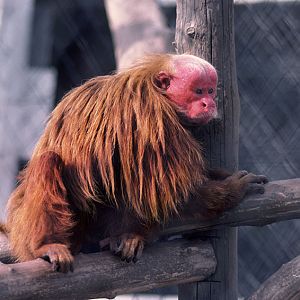
Indeed. Port Lympne and Twycross. At the time the latter also had Uakari (fabuloso!) and Cuscus.
 
@TLD
"NTRODUCTION Proboscis monkeys (Nasalis larvatus) are large and sexually dimorphic
Colobines that are endemic to the island of Borneo [Bennett and Gombek, 1993;
Rowe, 1996]. The natural habitat of proboscis monkeys includes lowland coastal
rainforests that contain mangroves and peat swamps [Salter et al., 1985]. These
animals are classified by the IUCN [1996] as endangered, and are listed in the CITES
Appendix I. A recent report indicated that proboscis monkeys are widely distributed
in Kalimantan [Meijaard and Nijman, 2000a]. However, in the Malaysian states of
Sarawak and Sabah, this species is threatened by a restricted habitat [Bennett et al.,
1987; Agoramoorthy, 2003]. The ongoing destruction of coastal forests, occasional
forest fires, and relentless hunting may cause the numbers of these animals to decline
at an alarming rate. Therefore, it may become increasingly important in the near
future to breed these rare leaf-eating monkeys in zoos to preserve a viable captive
population.
For many years, zoos have experienced difficulties in sustaining proboscis
monkeys. In 1975, zoos in Basel, Berlin, Cologne, Colorado Springs, Dallas,
Frankfurt, Milwaukee, San Diego, and Stuttgart reported having proboscis monkeys
in their collections, ranging from one to six individuals [Anonymous, 1999]; however,
none of these zoos have proboscis monkeys today. In 1997, Twycross Zoo
maintained four individuals, but have had none since then. The Bronx Zoo had eight
individuals in 1975 [Anonymous, 1999], but has only two today. Insufficient
knowledge regarding the natural history of these animals, as well as inappropriate
husbandry and nutritional methods may have contributed to the failure or partial
failure of these zoos in keeping proboscis monkeys alive in captivity [Griner, 1977;
Albert, 1983; Anonymous, 1999]."

I think that the entry re:Twycross is an error.
 
@TLD
"NTRODUCTION Proboscis monkeys (Nasalis larvatus) are large and sexually dimorphic
Colobines that are endemic .....

I think that the entry re:Twycross is an error.

I agree with Bongorob that the date is wrong in this article . I saw the proboscis monkeys at Twycross on several occasions . They imported 1.2 , both females produced and reared a male offspring , but the breeding male died . I think they later received a second unrelated male , possibly from the Bronx , but then the group died out , I do not think there was any further breeding . They were housed in a wooden shed , with typical Twycross outside enclosure . Lovely animals , as were the uakaris .
 
A single 9 in the printed date given could explain the error- so 1977 instead of 97?

Like Bele I remember them at Twycross during that period, was also fortunate to see them at Frankfurt and elsewhere on the Continent- without realising they would later become a thing of the past, as with Douc Langurs also.
 
I agree with Bongorob that the date is wrong in this article . I saw the proboscis monkeys at Twycross on several occasions . They imported 1.2 , both females produced and reared a male offspring , but the breeding male died . I think they later received a second unrelated male , possibly from the Bronx , but then the group died out , I do not think there was any further breeding . They were housed in a wooden shed , with typical Twycross outside enclosure . Lovely animals , as were the uakaris .

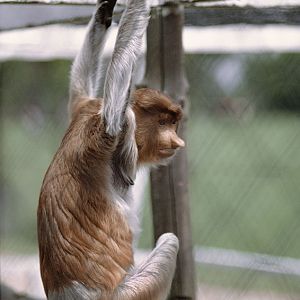
I agree with Bongorob, Bele and Pertinax. It seemed that proboscis would become established in Europe in the '70s, but it didn't quite happen - and I think Apenheul's more recent experience may show that there is still a problem. I was never as confident about the doucs, which always appeared more delicate. Perhaps uakaris could be successful now, as zoos have much more experience with sakis than they had before.
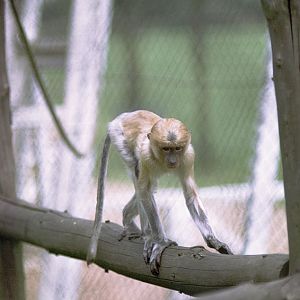
Newer ZooChatters may not know that I have put several of my old images of these species in the Media Gallery.


I am sorry that I missed the Sumatran rhino at Port Lympne.
 
I am sorry that I missed the Sumatran rhino at Port Lympne.

By far my biggest zoo regret, as well. I did see Twycross' last uakari, though, and Apenheul's Proboscis.
 
I think the fact there is a photograph of you in existence is the bigger rarity :P
 
I had the chance of visiting either Howletts or Port Lympne on Saturday, I chose Howletts for two reasons

1. there were more species that I needed to see

and

2. I thought the Sumatran rhino had already left PortLympne. (it was pre Zoochat days.)

I was disappointed when I found out after my Howletts visit that the rhino was still at Port Lympne, when I did visit the park the year later, he had gone. :(
 
I was disappointed when I found out after my Howletts visit that the rhino was still at Port Lympne, when I did visit the park the year later, he had gone. :(

You have mentioned this before Rob. IMO its the worst zoo blunder I can imagine...:eek:
 
Back
Top