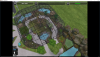
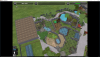
Although I thought I posted my intentions for this zoo a few days back, I seem to have forgotten to press the 'post' button. I designed a 4000 m^2 exhibit on Zoo Tycoon 2, just as a fun challenge to myself as I have nothing to do during the summer

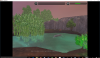
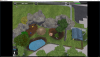
. I decided to make it an Asian zoo, for no particular reason. I will attach photos to this post and to the next of the exhibits. Please note that as I designed them in a game, they are nowhere near as realistic as they could be. I used downloadable content to attempt to make the quality better, but most of the exhibits I designed would have more foliage, detail, and (in the case of arboreal or semi-arboreal animals) climbing opportunities.
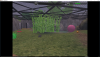
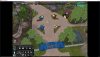
As visitors enter, they encounter the only food court. There are stands where they can buy soda, water, hamburgers, hot dogs, and pretzels. Off to the side is a bathroom complex. Benches and trash cans are spread around the zoo. The main path takes visitors past a gift shop, and then to the first exhibit: a netted over, mixed-species exhibit for Chinese Water Deer and Sarus Crane. The exhibit is 82m^2. The pool (included in this space) is 20m^2, and there is 20m^2 of off exhibit space, including a barn. Currently in residence is 1.0 Chinese Water Deer and a breeding pair of 1.1 Saurus Crane. A log is used for enrichment; food is often stored in it. Many wetland plants are spread through the exhibit. The sarus cranes are able to fly, and this increases breeding capabilities drastically.
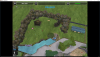
The path continues into an Asian Aviary. It is split into three parts: Central Asia, New Guinea, and The Philippines. The Central Asia exhibit is 82m^2. It is home to a variety of species, all of which are pairs unless otherwise specified: 1.0 Siberian Musk Deer, Golden Pheasant, Bar-Headed Goose, Cabot's Tragopan, 0.1 Red Panda, Baer's Pochard, Mandarin Duck, Chinese Softshell Turtle, Chinese Hwamei, White Rumped Shama, and Blue Crowned Laughingthrush. A large climbing structure provides adequate space for the red panda, and perching opportunities for many of the birds. Brush throughout the low area of the exhibit allows the musk deer to take shelter if it wishes. A small pond is included, mainly for the turtles, ducks, and geese, but can be used by every species.
The New Guinea section of the aviary is 78m^2. Similar to the Central Asian exhibit, there are perching and climbing opportunities for the many species: Ornate Fruit Dove, Mastchie's Tree Kangaroo, Victoria Crowned Pigeon, Radjah Shelduck, Wandering Whistling Duck, 1.0 Raggiana Bird of Paradise, 1.0 Red Bird of Paradise, Jambu Fruit Dove, Pig-Nosed Turtle. As before, enrichment can be hidden through the many habitat elements, and a small pond is in one corner of the exhibit.
The Philippines section, a mirror of the New Guinea section, is also 78m^2. It is less accurate geographically than the other sections. Space for climbing and perching is only in the lush foliage. The species are Greater Malayan Chevrotain, Prevost's Squirrel, Cinnamon Ground Dove, Luzon Bleeding Heart, Mindanao Bleeding Heart, Philippine Duck, and Palawan Peacock-Pheasant.
Once visitors exit the aviary, they are met with the first real predator of the zoo: a Chinese Alligator in a (regrettably) small exhibit of 22m^2. The land and water areas each take half the space.
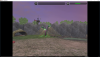
The largest exhibit in the zoo is next: a 228m^2 hillside exhibit for 1.3 Tadjik Markhor and 1.2 Cinerous Vulture. A 38m^2 pool, a section of bush, and a low fence separate visitors from these magnificent animals. The backdrop is made of mock-rock and gives the illusion of being high in the mountains. 84m^2 of off exhibit space is taken up by a large barn and small yard, which the animals have access to at all times. A shade structure rests at the top of the hill, along with food troughs for the markhor. Two structures made to resemble fallen trees are used by all of the animals for perching and climbing. The vultures cannot fly.
The next exhibit visitors come to is the second of Asian Rocks. It holds a flexible amount of Komodo Dragons, and at 66m^2 (of which 15m^2 is off exhibit holding), it is usually a magnificent habitat for one dragon. Foliage dots the landscape, providing hiding places if the dragon desires it.
The last exhibit I will cover in this post is the Asia House. It is best descriped as a herpaquarium. There are two reptile exhibits and three fish tanks. The entire building is 140m^2, and one tenth of that space is off exhibit, consisting of keeper access to 3 tanks and 1 exhibit. The three tanks contain creatures of the Indian Ocean: One has Chambered Nautilus, another has Lionfish, and the third is home to colorful reef fish and coral. A 24m^2 exhibit provides both climbing and bathing opportunities to a single Burmese Python, while a 34m^2 exhibit for some Indian Star Tortoises.
To be continued!
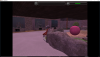
Edit: the pink balls are toys, just for clarification





 Just put a room with small mammal terrariums, some bird enclosures for small finches and softbills, a building as reptilarium, an insectarium and another building as an small aquarium... and voila! you will have a very small zoo that for me would be much more complete and interesting that most safari-parks with large hoofstock and big carnivores