Which type of giraffe would you like to see more often in zoos?

Which type of giraffe would you like to see more often in zoos?


  • Total voters
    35

Sarus Crane

Well-Known Member
5+ year member
I'm leaving out Reticulated because they're at so many zoos so I'm going to focus on the other subspecies that aren't commonly seen.
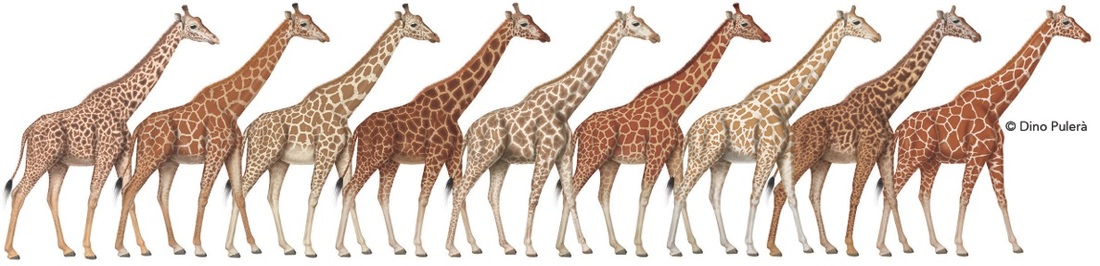
723978719.jpg


Here's a map from Giraffe Conservation depicting where all subspecies are found:

giraffe-distribution-map_eng2.jpg
 
Last edited:
I picked Angolan because they have that unique, light colored coat. They're also known as the "Smoky Giraffe" and live in the dry, arid regions of Angola and Namibia.
 
Worth noting that if you're in North America, the only subspecies you're *actually* seeing would be Masai, as the Reticulated population is a generic hybrid population. This is explained on page 2 of this thread (Why Reticulated Giraffe instead of other subspecies?).

I voted for Kordofan, given their critically endangered status and the fact that a small captive population already exists, but could be expanded.
 
Rothschild and Reticulated are both relatively common over here. However, Kordofan and I think Nubian? are Critically endangered, which is why I chose Kordofan.
 
Giraffes are my favorite animals, but I am worried that their general popularity is deceiving and there is not much attention on their alarming decline in the past few decades. I will choose Angolan, because they are already present in a very few zoos in Europe and definitely need more animals for a sustainable population. Holding a rare subspecies like Angolan or even West African giraffe could educate and emphasize more on their Endangered status.
 
I chose Nubian, because in zoos' ancient epoch this was the most common subspecies. The Budapest Zoo's first giraffe(1868-1876) was a Nubian giraffe, too.
 
Any pure Giraffe! :p
Worth noting that if you're in North America, the only subspecies you're *actually* seeing would be Masai, as the Reticulated population is a generic hybrid population. This is explained on page 2 of this thread (Why Reticulated Giraffe instead of other subspecies?).

I voted for Kordofan, given their critically endangered status and the fact that a small captive population already exists, but could be expanded.
Lincoln Park Zoo should have Kordofan (?) Giraffe. Or, if not that, I know it's a pure subspecies other than Masai.
 
Lincoln Park Zoo should have Kordofan (?) Giraffe. Or, if not that, I know it's a pure subspecies other than Masai.

Rothschild's, IIRC. Are they pure though? They are included in the same generic hybrid breeding program, and the "Rothschild's" population here is not genetically distinct from the "Reticulated" population.
 
Rothschild's, IIRC. Are they pure though? They are included in the same generic hybrid breeding program, and the "Rothschild's" population here is not genetically distinct from the "Reticulated" population.
I know the animals aren't signed as Reticulated or Rothschild's.
 
I think around 21 collections in Europe hold Kordofan. Paris Vincennes holds 2.13, so they have a substantial population at present. According to ZTL these are the collections with Kordofans and their numbers:

Dresden 1.2
Bouillon 2.0
Planckandael 0.3
Auvergne 1.0
Doue 4.5
CERZA 1.0
La Fleche 1.3
Branfere 1.0
Reynou 1.0
Sables d'Olonne 2.4
Lyon 2.3
Maubeuge 1.0
Paris Vincennes 2.13
La Barben 2.6
Touropark Romaneche 3.2
Sigean 5.8
Thoiry 1.0 (can confirm this one)
Torino 2.0
Beekse Bergen 1.0
Basel 3.2
South Lakes 1.4

That makes 92 individuals in total, 37.55.
 
Any pure Giraffe! :p

Lincoln Park Zoo should have Kordofan (?) Giraffe. Or, if not that, I know it's a pure subspecies other than Masai.
Forget it: they are hybrids like all of the reticulated/Rothschildt's in US/AZA zoos. To be fair, there really is no point in even maintaining a breeding program for this mixed lot. It is a no-brainer unfortunately.
 
I would hope the policy in Europe with EEP/EAZA will stick with Nubian, Kordofan and reticulated only. And it would be nice if the breeding program would move on from the current no breeding and separating the sexes. Over time and already now it is starting to have negative consequences for population management in the near future.

The Angolan and southern giraffe are too few in numbers. Lately, there has been a switch in Northern European zoos to slowly go out of Angolan and sent those south (south France and Spain/Portugal). This is fine and will leave a corner of Europe to manage Angolans separately.

Southern giraffe are mainly in (new) Russian and Middle Eastern collections (due to the contacts with South Africa/Zimbabwe traders). PR China also imports loads from South Africa.
 
I know the animals aren't signed as Reticulated or Rothschild's.

They are listed online as Rothschild's and were signed as such when I visited years ago; I don't know what the signage is now, but unless there was some recent development they are not purebred.

Edit: Perhaps they were signed as Baringo? That is another name for Rothschild's.
 
They are listed online as Rothschild's and were signed as such when I visited years ago; I don't know what the signage is now, but unless there was some recent development they are not purebred.

Edit: Perhaps they were signed as Baringo? That is another name for Rothschild's.
That might be it.
 
Does the okapi count in this ?

Sure the genus differs but it is technically / taxonomically of the giraffidae family.

Other than that species I'm really rather bored with giraffes in zoos and the inordinate emphasis on keeping them (that is without denying their worsening conservation status and need for ex-situ conservation which of course I recognize).
 
Last edited:
Well, Rotschilds is the one I would hope to see less actually. Both the Kordofan and reticulated could use more holders, the first more than the second. Would love to see one of the two southern subspecies kept as well in Europe, the other could be a fine addition to the American collections if they would be able to import a nice founder population.
 
I went with Masai, because that is the only one at species level I have never seen, given it is no longer kept in European zoos ;) :p
 
Back
Top