Which Ungulates Are Rideable?

Sarus Crane

Well-Known Member
5+ year member
Several years ago, I did some research on ungulates and found out that some of them are either semi-domesticated or are listed as good candidates for domestication. In the process of my research I found out that there has been attempts at riding various ungulates including zebras, eland, elk, reindeer, etc. I did some research and found out that you can keep exotic hoofstock through breeders and ranches in the southern US. As someone who used to ride horses when I was younger, it struck me "Why not try to ride a large ungulate like a spiral horned antelope or large cervid one day?" I think it'd be pretty cool! The only thing really I'm concerned about is how much weight can these animals handle (would be using an English saddle and tack)? I have heard that the common rule for horses is no more than 25% of weight (via tack and rider) on its back. As wild animals are stronger than those that are domesticated what would the weight limit be? I know that various ungulates have horns of long length and could impale you but I have thought of species that have shorter horns/ antlers and would probably be ok to ride. If anybody on ZooChat who works with ungulates, could give me some details I would greatly appeciate it. It's a goal of mine and I think it'd be really cool. I'd try to acquire it as a juvenile and then train it to be ridden. Here is a list of species I am considering:

Common Eland (Taurotragus oryx)
Africa's largest antelope. Males have shorter horns and are the slowest antelope. I see this species as a good candidate for trail riding and also possibly for doing work like plowing and pulling (like modern oxen)
3355_riding%20eland.jpg


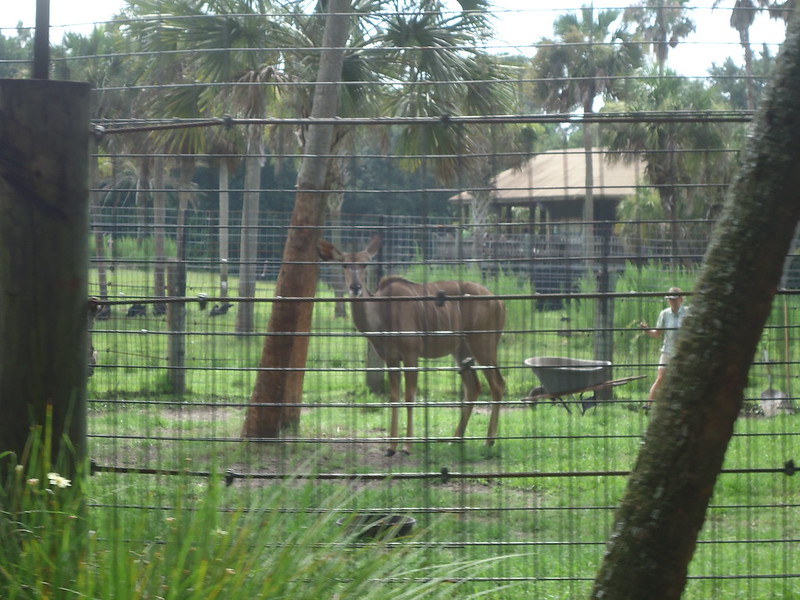
Greater Kudu (Tragelaphus strepsiceros)
Africa's 3rd tallest antelope and the 4th heaviest after the Bongo. I see this species as a good candidate for pleasure riding and it is faster than the elands. A Lesser Kudu named Garrett at the National Zoo in Washington DC has been trained to do foot procedures like a horse so I'm pretty sure that it's larger cousin could do the same. Females also get pretty big.
14518381699_95ba171583_c.jpg


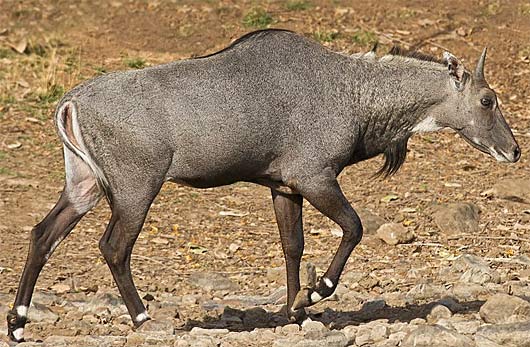
Nilgai (Bosephalus tragocamelus)
The Nilgai is about the same size as the Greater Kudu but has shorter horns. It has a nice bluish/roan color.
iXEtjQG.png

nilgai-hike.jpg


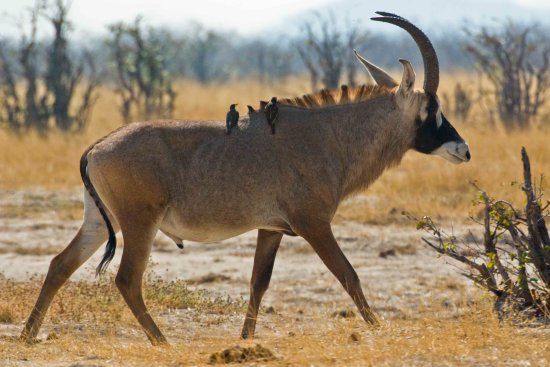
Roan (Hippotragus equinus)
They're larger than the Sable antelope and have shorter horns. This one is a juvenile and looks to be about the size of a large pony.
wildliferanching.com-roan%20antelope-comparison%20to%20man.jpg

e713c5cfea301e0bb3beee171eba9911.jpg


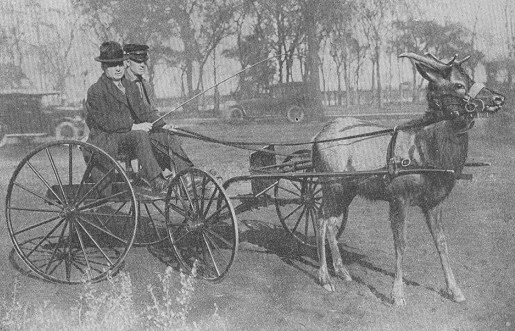
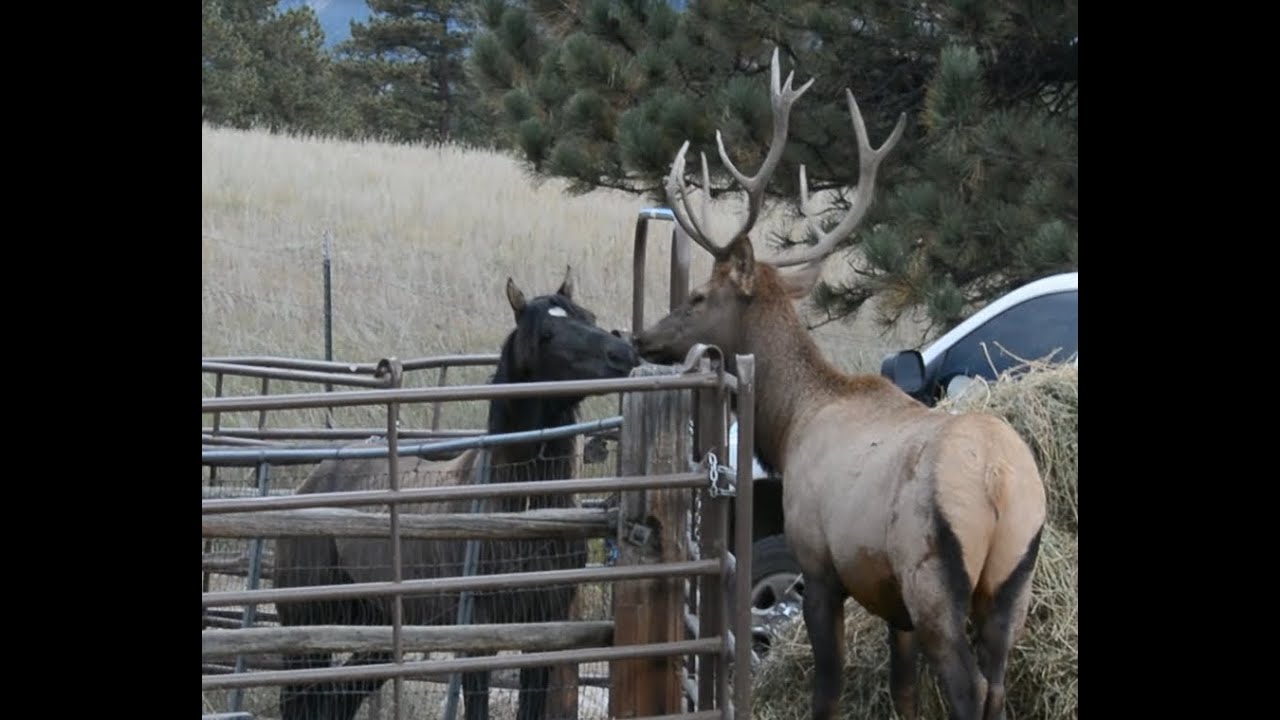
Elk (Cervus canadensis)
The elk is the largest American deer after the Moose and they can get to be as large as a standard horse and sometimes larger.
cowboy-riding-an-elk-in-the-high-street-sheridan-wyoming-usa-date-G3AWDG.jpg

5688777.jpg

1929-elkriding1.jpg

maxresdefault.jpg


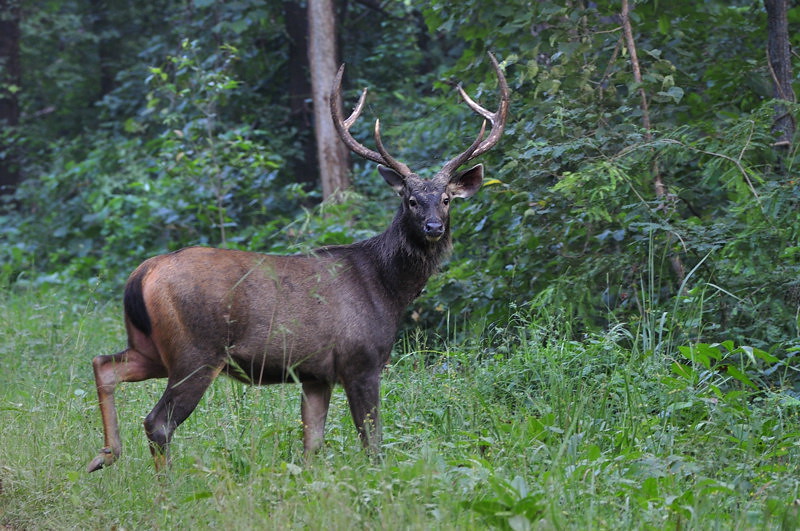
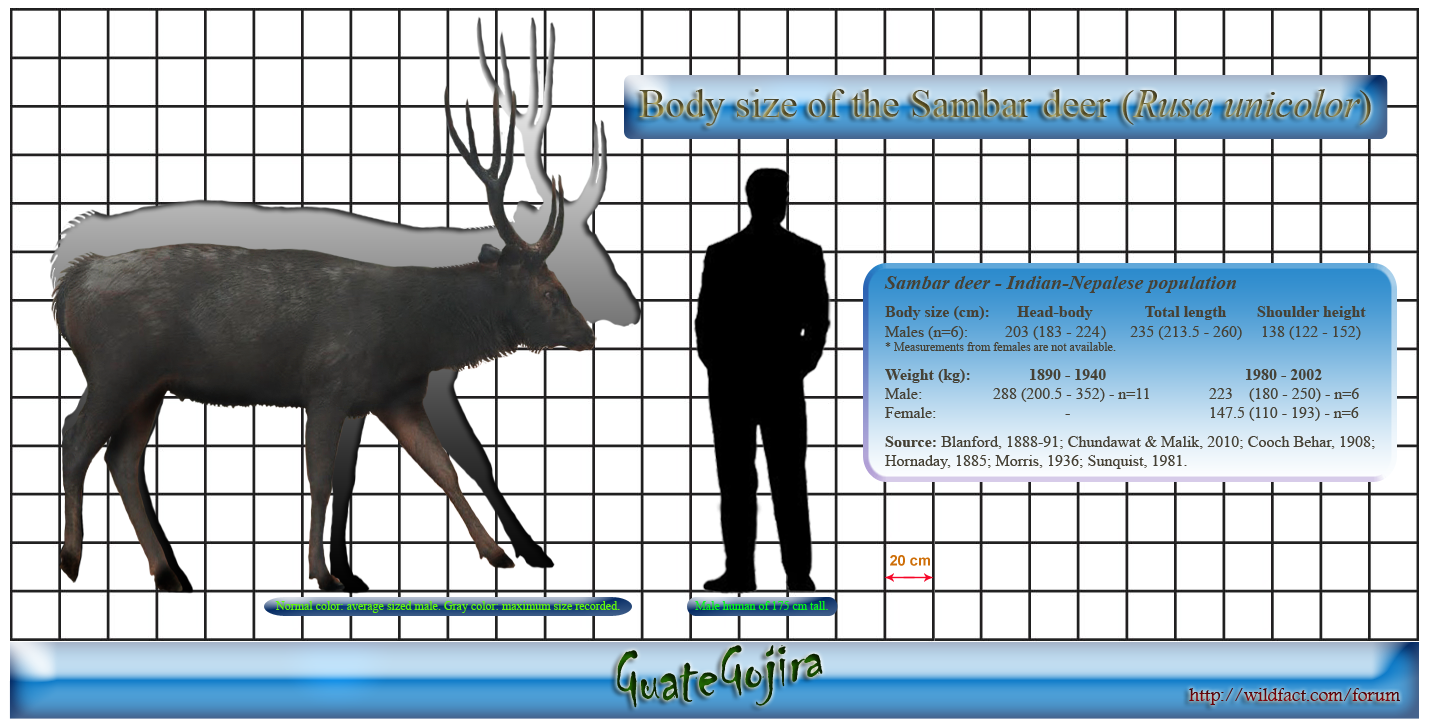
Indian Sambar (Rusa unicolor)
These large Indian Deer grow about the same size as Elk and have straighter antlers than their American relatives.
IdSge8C.png

6353602873_8b2e7bbcf5_b.jpg
 
No but Darren Naish said so once. There is lots of lit on this subject (which herbivores are aggressive, not riding them like horses).

Eland I have heard of being ridden but they have a nastry streak sometimes, charging giraffes etc. Though something like this would be wonderful to illustrate domestication in a domestic animal collection, I'm unsure how safe it would be.

Roan antelope seem pretty gentle all round from what I've seen - none of the horror stories and tales of trouble come with waterbucks, eland, zebra and the like. But I doubt anyone here will have ridden one!
 
No but Darren Naish said so once. There is lots of lit on this subject (which herbivores are aggressive, not riding them like horses).

Eland I have heard of being ridden but they have a nastry streak sometimes, charging giraffes etc. Though something like this would be wonderful to illustrate domestication in a domestic animal collection, I'm unsure how safe it would be.

Roan antelope seem pretty gentle all round from what I've seen - none of the horror stories and tales of trouble come with waterbucks, eland, zebra and the like. But I doubt anyone here will have ridden one!
Several years ago, I did some research on ungulates and found out that some of them are either semi-domesticated or are listed as good candidates for domestication. In the process of my research I found out that there has been attempts at riding various ungulates including zebras, eland, elk, reindeer, etc. I did some research and found out that you can keep exotic hoofstock through breeders and ranches in the southern US. As someone who used to ride horses when I was younger, it struck me "Why not try to ride a large ungulate like a spiral horned antelope or large cervid one day?" I think it'd be pretty cool! The only thing really I'm concerned about is how much weight can these animals handle (would be using an English saddle and tack)? I have heard that the common rule for horses is no more than 25% of weight (via tack and rider) on its back. As wild animals are stronger than those that are domesticated what would the weight limit be? I know that various ungulates have horns of long length and could impale you but I have thought of species that have shorter horns/ antlers and would probably be ok to ride. If anybody on ZooChat who works with ungulates, could give me some details I would greatly appeciate it. It's a goal of mine and I think it'd be really cool. I'd try to acquire it as a juvenile and then train it to be ridden. Here is a list of species I am considering:

Common Eland (Taurotragus oryx)
Africa's largest antelope. Males have shorter horns and are the slowest antelope. I see this species as a good candidate for trail riding and also possibly for doing work like plowing and pulling (like modern oxen)
3355_riding%20eland.jpg


Greater Kudu (Tragelaphus strepsiceros)
Africa's 3rd tallest antelope and the 4th heaviest after the Bongo. I see this species as a good candidate for pleasure riding and it is faster than the elands. A Lesser Kudu named Garrett at the National Zoo in Washington DC has been trained to do foot procedures like a horse so I'm pretty sure that it's larger cousin could do the same. Females also get pretty big.
14518381699_95ba171583_c.jpg


Nilgai (Bosephalus tragocamelus)
The Nilgai is about the same size as the Greater Kudu but has shorter horns. It has a nice bluish/roan color.
iXEtjQG.png

nilgai-hike.jpg


Roan (Hippotragus equinus)
They're larger than the Sable antelope and have shorter horns. This one is a juvenile and looks to be about the size of a large pony.
wildliferanching.com-roan%20antelope-comparison%20to%20man.jpg

e713c5cfea301e0bb3beee171eba9911.jpg


Elk (Cervus canadensis)
The elk is the largest American deer after the Moose and they can get to be as large as a standard horse and sometimes larger.
cowboy-riding-an-elk-in-the-high-street-sheridan-wyoming-usa-date-G3AWDG.jpg

5688777.jpg

1929-elkriding1.jpg

maxresdefault.jpg


Indian Sambar (Rusa unicolor)
These large Indian Deer grow about the same size as Elk and have straighter antlers than their American relatives.
IdSge8C.png

6353602873_8b2e7bbcf5_b.jpg
American Bison, usually castrated bulls, have been ridden successfully. Google the spoof video 'Guy on a Buffalo'.
 
Even wild members of the horse family (zebras and takis) cannot be ridden. As for antelope and wild cattle (bovids) I think it is pointless. Domestic horses are amazing for this purpose and nothing else will come close.
 
Even wild members of the horse family (zebras and takis) cannot be ridden. As for antelope and wild cattle (bovids) I think it is pointless. Domestic horses are amazing for this purpose and nothing else will come close.
Leaving aside whether it's a good idea, London Zoo historically had at least one wild ass that could be ridden. As far as bovids are concerned, what about Yak, or even Gayal (both domestic of course).
There was a private zoo in the UK many years ago (can't remember any detail) where the owner insisted all his animals could be ridden.
As I think has been suggested, you can ride most things. The question is, how long for?
 
In Guns, Germs and Steel, the author makes the case that essentially all domestication, particularly of ungulates, has already happened. Some species are more predisposed to it and others probably can't be. The fact that humans originated in Africa, and yet the donkey is the only domesticated ungulate to come from there is evidence that the others are simply nowhere near as suitable.
 
Diamond was repeating Clutton-Brocks argument that a tight set of criteria preadapt animals to domestication.
 
I think there are several factors that come into play here

1) Domestication/docility. In general most domestic stock used for work/riding tends to be bred to be calmer and easier to train. You get exceptions and certain areas where its not a primary concern; but by and large they are more tractable than fully wild/unmanaged species.
This might give argument that a species isn't as good now for riding or working, however there's no reason that a prolonged breeding program couldn't start the process of domestication. Of course you're looking at a fairly long term project there. Go back to the pre-car/engine era and you'd have some potential, esp if domesticating species in different climates; however in today's world there just isn't the real world demand in most nations. Even current domestic breeds are having trouble remaining in good numbers for healthy stock.

2) People forget that the horse isn't or wasn't the most common. We've an idealistic idea that the horse did it all, but in fact go back far enough and the cow was more prized over the horse. In the west we might not use cattle for more than meat and milk; but many other nations still use them for farmwork and other work in harness.

3) Physical structure; this is a grey area and even within horses there's no generally agreed point of, for example, what is too heavy to ride (20% of the horses body weight is the rough limit, but that's mostly based on just US Military guidelines and like all guidelines is just a guiedline). Within other species there would be concerns as to the health of the animal when ridden for prolonged periods over a large part of its working life.
This isn't just extreme situations, but also the general change in wear and tear on the body that it would undergo as a result of this nature of exercise. Thus leading to problems developing that the medical world might not be prepared or experienced at dealing with.
Without doing it you wouldn't know if the animals can keep up long term as they are.

4) Medical/vet care. The more exotic a species the less common its going to be to find a vet experienced to deal with them. If the animal is then being put under work it again complicates matters.


In general I think there is a lot more potential to work with animals than most people realise. There are dangers attached and also there's a level of trust and understanding that most people don't have. Furthermore, unlike domestic current stock, you don't have the same network of knowledge to tap into. Start trying to ride your cow and you've got far less material and far fewer current people to swap ideas with than if you start riding a horse.
I think this is why its rare and thus not popularist. Plus we are going through an age where there's a lot of bad feeling against working with wild animals. Zoos and Circuses no longer put on the shows that they once did (and I'm not saying all those shows were healthy/safe); the attitude of people has changed/
 
I didn't know that. Do you think it's a reasonable argument?
Cases have been cited counterargument, including the domesticability of the quagga and the white rhinoceros, though the latter species cannot be mounted in the manner of an elephant. Both cases have been cited in reference to GGAS and Diamond's evocative image of Bantus leading a rhino charge against Europeans: as it happens black Africans in Sahel where sleeping sickness was not a problem readily adopted the horse and the dromedary much as people with no indigenous domesticates adopted them elsewhere ie. pigs in PNG and the Maglemose culture area of Europe. The latter example is important because people try to bring race into this: though I am open to "racist" interpretations and huge areas of the world lack native domesticates, all human populations are able to adopt them from outside, and adoption by diffusion applies to all races. (People forget reindeer herding spread through Siberia relatively late.) This is not primarily a cognitive thing about human races but it is still an open question as to why certain cultures lacked domestication - even after being surrounded by pastoralist neighbours - or why opportunities were left unexploited. An example of the latter is wild reindeer in the Americas were never domesticated.

Horse domestication used technologies of neolithic farming type but only could horse culture emerge in nomadic hunting populations, and hunter gatherers become "man the hunter" (like early steppe Europeans) only in cool climates. So economic, diffusionist and climatic factors might be why click speakers had no quagga cavalry. Diffusionism explains reindeer herding as the technology used derives from that used for cattle and explains the absence of domesticated New World caribou. New World herding was limited to South America's Andes region, although Mesoamericans experimented with indigenous lagomorphs.
 
I can think of one photograph - oft-posted to this site - which would bely this statement :p
I think the argument related specifically to war elephants and hypothetical war rhinoceroses ie. an armoured platform for carrying warriors. There has never been a war rhino as they are too hostile to train or skittish. Though an old image of a rhinoceros by Durer was famously collared leading to somewhat fringe-ish speculations of war rhinos.

Similar to rhinos, moose are tameable and ridwar is socialistic activity requiring socialistic-minded participants (harem style herds or matriarchial herds). able but useless in battle. And they are the quintessential experimental domesticates. Whereas horses are preadapted by their social behaviours to cooperate as a heard.

I even heard it said Przewalskis horse cannot be domesticated but there is anatomical evidence of introgression documented in English wild ponies and those elsewhere: so they at least contributed to the modern horse gene pool.

Finally look at dogs: it has been suggested that dogs cannot be wolves because wolves are untameable, and ancestry was sought in one or more living canid species - usually C. aureus - or a Pleistocene "wolf" (or jackal) called Canis chihlensis or C. variablis that may have been closer to the dire wolf C. dirus. Anatomical evidence and an early divergence from living C. lupus suggests the "small wolf" hypothesis though tamability of extinct Pleistocene fauna cannot be known. Though some dog breeds such as the boxer do have admixture from C. lupus wolves, so wolves can be tamed and brought into domestic gene pools if it is necessary and this has been known in the far north.
 
Last edited:
Rides on zebu, yak and gayal could be a good addition to a modern children zoo. I am missing that modern zoos limit visitors from interacting with animals.

Moose/European Elk were regularly tamed and ridden in rural Russia until 19. century. This was banned because locals on moose-back could avoid tzar cavalry on Russian swamps. There is still one small moose farm in Russia as a tourist attraction. It was discussed some years ago on the blog Tetrapod Zoology.

Onager were regularly tamed, pulled chariots and were apparently ridden in ancient Assyria. They were very bad tempered and were supplanted by horses.

I do not buy the Clutton-Brock and Diamond theories that all species suitable for domestication were already domesticated. Among the counter-examples are animals domesticated in the past but abandoned, like onager, fallow deer and scimiar-horned oryx; upcoming new domestics like buffalo, red deer/elk or cane rat, the fact that wild aurochs were famously dangerous and untameable, the fact that some animals were domesticated in some regions but not others, e.g. ducks. I think it was more a historical accident combined with lucky finding few especially suitable individuals. Almost all domestic animals stem from only one or two local domestication events followed by spread of domestic stock across the range of wild species (cattle, pigs, sheep, camel etc.).
 
Rides on zebu, yak and gayal could be a good addition to a modern children zoo. I am missing that modern zoos limit visitors from interacting with animals.

Sadly even without the attitude changes as to what's suitable at a zoo (small wildlife centre would probably be fine with such); the main problem is insurance.

Even just riding horses likely comes at a steep cost; riding something that isn't a horse likely ramps those costs up and if you put exotic onto it the costs and risk likely go higher than most places can risk going for. And that's without any media backlash.

Remember if a single tiger kills a single person/keeper in a zoo it becomes headline news and potentially international news. If a horse kills someone its only headline news if the someone is someone famous or competing in an event.
 
In fairness JCB and JD do claim the wild progenitors were already preadapted to domestication in ways their more distant relatives are not. When wild progenitors such as aurochsen are extinct this creates fallacious circular reasoning. But they surely do not claim it is an either or matter, as domesticability clearly comes in degrees, and JCB cited the cat as an outlier concluding it is not really domesticated, but semidomesticated. And past domesticates including Myotragus, the Fuegian "dog" and Dusicyon avus maybe failed for a reason, whilst recent experiments remain just that.

Domesticates such as pigs and reindeer were loosely managed and domestication involved gene flow everywhere with local wild forms: I would call this a noncenter rather than a center of domestication, and Bos taurus were domesticated at least twice, once from the zebu with its forked spines that support a hump and once from the true aurochs further west.
 
Last edited:
Back
Top