Why have great apes no acces to trees ?

GiratinaIsGod

Well-Known Member
5+ year member
In pretty much every Zoo I visited, even modern and big exhibits, great apes have no acces to trees, they are either weired, to stop the apes to climb on them, or are not even present. My question is why. (With few exeptions like the Gorilas exhibit in Apenheul) Zoos don't give them acces. Espically for Chimpanzees,Bonobos, and Orang Utans would it a great idea, since this species keep a huge part of their life in the trees, and could use it better than arteficial structures to hide and show natural behavior, like the searching for food(behavioral enrichment). Are there safty concerns (animals could escape, or be hurt), or is it more of a problem with the lack of old trees in the aviable zoo area (with planting trees being an extra expens and the fact that espically young trees could be easly demaged by the apes).
And why in contrast Gibbons and other primates in big natural enclosers usally haveing acces to them ? Or is it more of a bias of the region I live in (central europe)
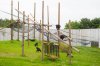
 

Attachments

  • Chimp-Eden-Outside6-300x200.jpg
    Chimp-Eden-Outside6-300x200.jpg
    16.4 KB · Views: 9
In pretty much every Zoo I visited, even modern and big exhibits, great apes have no acces to trees, they are either weired, to stop the apes to climb on them, or are not even present. My question is why. (With few exeptions like the Gorilas exhibit in Apenheul) Zoos don't give them acces. Espically for Chimpanzees,Bonobos, and Orang Utans would it a great idea, since this species keep a huge part of their life in the trees, and could use it better than arteficial structures to hide and show natural behavior, like the searching for food(behavioral enrichment). Are there safty concerns (animals could escape, or be hurt), or is it more of a problem with the lack of old trees in the aviable zoo area (with planting trees being an extra expens and the fact that espically young trees could be easly demaged by the apes).
And why in contrast Gibbons and other primates in big natural enclosers usally haveing acces to them ? Or is it more of a bias of the region I live in (central europe)
The smaller primates are much less destructive to vegetation. Trees would only survive in an enormous enclosure. Even then, access might have to be rotated to allow trees to recover
 
This is a very interesting question, something that I have also been asking myself. I honestly don't know the 'real' answer to this but it would probaly be a combination of safety concerns and lack of old trees. Some zoos just lack the space to give the great apes a larger outdoor area with the right trees. Having large climable trees in an enclosure also means that there shouldn't be any trees etc surrounding them in order to prevent the great apes from escaping. This could result in either cutting down a lot of trees or making a higher wall around the enclosure.

Does anyone have examples of zoos that do have climable trees for great apes?
 
This is a very interesting question, something that I have also been asking myself. I honestly don't know the 'real' answer to this but it would probaly be a combination of safety concerns and lack of old trees. Some zoos just lack the space to give the great apes a larger outdoor area with the right trees. Having large climable trees in an enclosure also means that there shouldn't be any trees etc surrounding them in order to prevent the great apes from escaping. This could result in either cutting down a lot of trees or making a higher wall around the enclosure.

Does anyone have examples of zoos that do have climable trees for great apes?
Congo Gorilla Forest at the Bronx???
 
The big trees at Congo Gorilla Forest are not climbable for the most part. They have artificial trees for climbing.

The large chimpanzee exhibit at Kansas City has trees that can be climbed, and the outdoor orangutan exhibit at Philadelphia used to have two or three big sycamore trees that could be climbed, although I don't know if that is still the case.

Others have mentioned the biggest issues already. In a nutshell, great apes are large, intelligent, and strong. That means they will eventually kill the trees in pretty much any exhibit, and dying trees are a safety and escape hazard. For example, the chimps at Kansas City once used a large branch as a ladder to escape the exhibit.
 
So would we agree that artificial trees/constructions using logs are the best alternatives opposed to real trees in terms of giving the great apes climbing opportunities?
 
The big trees at Congo Gorilla Forest are not climbable for the most part. They have artificial trees for climbing.

The large chimpanzee exhibit at Kansas City has trees that can be climbed, and the outdoor orangutan exhibit at Philadelphia used to have two or three big sycamore trees that could be climbed, although I don't know if that is still the case.

Others have mentioned the biggest issues already. In a nutshell, great apes are large, intelligent, and strong. That means they will eventually kill the trees in pretty much any exhibit, and dying trees are a safety and escape hazard. For example, the chimps at Kansas City once used a large branch as a ladder to escape the exhibit.
The gorilla exhibit at Philadelphia doesn't have trees anymore.
 
However, several zoos do give apes access to live trees and they seem to last. One is Paington zoo for orangutans. Another is Kansas zoo for chimps.

It would be interesting if zoos checked actually if there are some trees which can withstand destruction of apes. Among European trees, willows and poplars grow very fast, and even when broken, will live as bushes. Maybe they could be an answer?

Your second question - logs are not the best alternative. A combination of logs, protected ropes, platforms, old fire hoses and other things gives more different shapes and thickness and movement opportunities, e.g. swinging. Orangutans for example especially like swinging poles which mimic how they move small trees like a pendulum to swing from one to another. Some zoos provide expensive fake trees. However, many of those are too few to make sufficient climbing. Very few zoos actually provide important functions of trees - visual screen between individuals and shade from the sun.
 
The smaller primates are much less destructive to vegetation. Trees would only survive in an enormous enclosure. Even then, access might have to be rotated to allow trees to recover
I agree with you
Congo Gorilla Forest at the Bronx???
like I said, I never saw a Zoo outside of europe, a reason why I started the thred is because I wanted t oknew if it was universal.
 
The chimpanzee exhibit at Kansas City Zoo is 3 acres (1.2 hectares) in size and it's the best chimp enclosure I've ever seen. Here are some photos that show live trees in the exhibit:

full


full


full


full


full
 
Another great example is at the zoo known as 'Apenheul' in the Netherlands, where there is a vast enclosure (2.5 acres/1 hectare) for gorillas and small monkeys with live trees. Here are some photos:
well, I used the gorilla exhibit of Apenheul in the theat as the example of an exhibit with trees
 
Is the lack of trees in great ape exhibits somewhat analogous to the lack of rock formations or landscaping in cetacean tanks? I imagine dolphins can use rocks to break the tanks.
 
I would assume they don't want to risk the trees falling down and allowing the animals to escape. Artificial climbing structures are a much safer option. It eliminates the risk of escaped apes, as well as wasting time cleaning up fallen trees.

Chimpanzees will also chase other individuals up into trees when skirmishing. There have been cases where individuals have been trapped in trees for long periods of time while their pursuers wait at the bottom. (Note that the trees were completely vertical with no other branches for the chimpanzee to sit on, it was only the base. It had hot wire placed a few feet below where the branches had formed.) I wonder if the lack of trees discourages some of these behaviors in chimpanzees?
 
well, I used the gorilla exhibit of Apenheul in the theat as the example of an exhibit with trees

It has trees, but they cannot be climbed by the Gorilla (allthough once in a while they work their way around the electric fences). Originally the trees at Apenheul were not protected, but it became clear that all trees would be destroyed within months if nothing was done...

The only zoos I have seen with climbable trees for their great apes are Vallee des Singes (Gorilla, Bonobo, Chimpanzee) and Rostock (Gorilla, Orangutan).
 
However, several zoos do give apes access to live trees and they seem to last. One is Paington zoo for orangutans.

Not anymore- those big trees have been killed(or nearly so) by the animals' use, and all the unsafe dead branches lopped off. The former lush 'forest' look is just tall open trunks now.

The reason they lasted so long was the original Orangutans rarely used them, being overweight and having lived in traditional cages too long. But the younger orangs that replaced them used them far more and eventually destroyed them.
 
Last edited:
It has trees, but they cannot be climbed by the Gorilla (allthough once in a while they work their way around the electric fences). Originally the trees at Apenheul were not protected, but it became clear that all trees would be destroyed within months if nothing was done...

The only zoos I have seen with climbable trees for their great apes are Vallee des Singes (Gorilla, Bonobo, Chimpanzee) and Rostock (Gorilla, Orangutan).

Yes, apart from climbing into the trees, stripping foliage and breaking the branches, gorillas will also strip the bark of the lower trunk- that kills the tree very quickly I believe. Some places protect most of the trees in the exhibit and leave just a few for the apes to climb, that become skeletons over time from the apes' use.
 
Back
Top