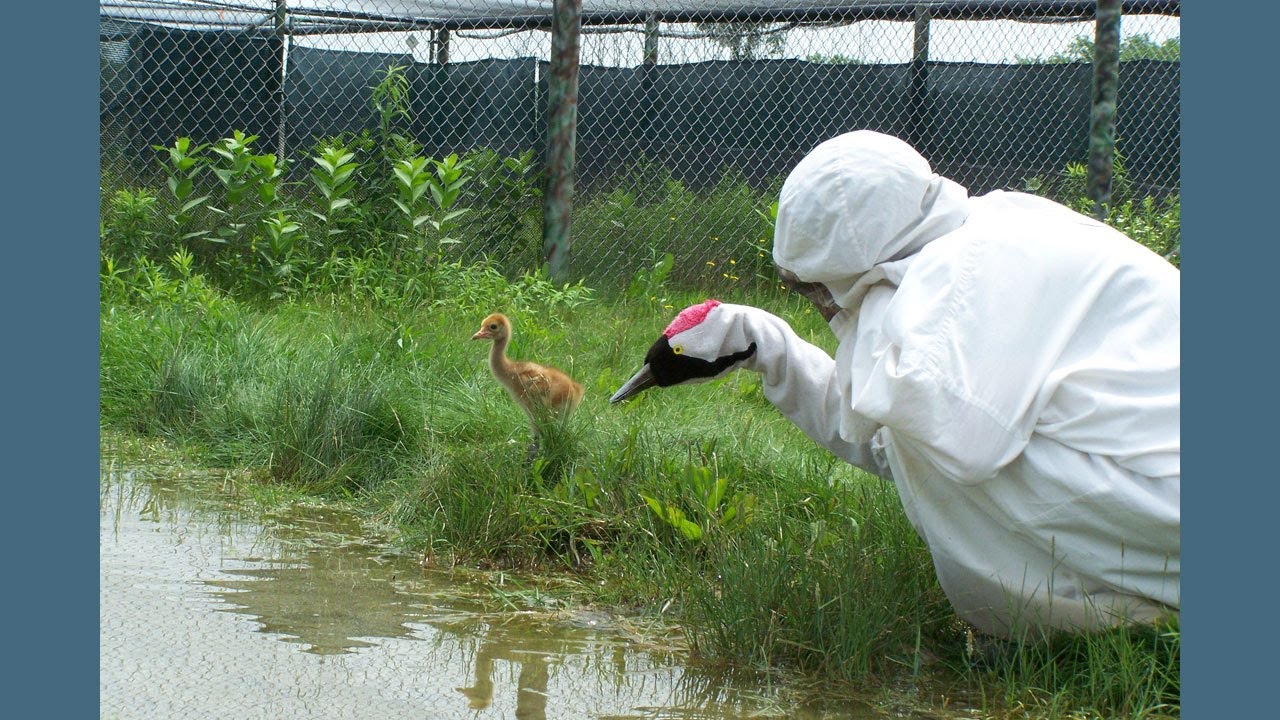
Why zookeepers wear KHAKI

Tiffany Saunders

Active Member
So I've been involved in the American Zoo industry for almost 20 years and I've always got a huge kick out of the notion that zookeepers should wear khaki.


Clearly this is purely based on tradition because khaki is one of the worst colors imaginable for someone who works in the zoo industry.

I have noticed that in larger municipal parks certain divisions are allowed to wear "smart" colors for their assignments (horticulture and maintenance)

However animal keepers are almost universally required to wear Khaki, and not dark British Khaki but light beige cream colored khaki.


As the industry evolved we have seen attitudes about tattoos, jewellery and hair relax however the curse of khaki remains.


People who work indoors are mostly immune but for those of us who have chosen a career working outside with large herbivores, horticulture and maintenance we have to spend more money on replacing uniforms and put more harsh chemicals in the wash to keep our khakis clean

(torture for the environmentalists)

After 20 years I have literally hundreds of pairs of khakis that have been stained and are impossible to clean.

(Just think of all that Wal-Mart Chinese polyester)...(more torture for the environmentalists)


Another major factor management fails to realize is that when someone has to worry about getting dirty they will be inclined to avoid certain tasks and positions plus often times cannot use proper lifting techniques because they have to keep that light colored fabric clean.

It's 2019 people...we choose all kinds of colors for the park bassed on efficiency and blending

Why not our pants....LOL?!?!
 
After a few minutes research...

Khaki first came into use in the British Indian Army in 1868 for its superior practicality in tropical climes, camouflage and hard-wearing properties (its name comes from a Hindi-Urdu word meaning 'soil-coloured').

These favourable properties may have also made it appeal to Victorian explorers as well as early conservationists and animal researchers whilst engaged in their outdoor pursuits. This possibly became further engrained in the public psyche by many subsequent early adventure films and later TV wildlife presenters adopting, and inevitably exaggerating, the same style.

I guess when zoos and zookeepers switched to being more about research and conservation they realised they had to look the part to the public. That and the bonus of the improved practicality over the old fashioned military style uniforms that zookeepers used to wear.


It's sad that your Chinese-made Walmart version in America is now dragging the name of khaki through the mud.


There is a nice article here about early uniforms seen at London zoo:
https://www.zsl.org/blogs/artefact-of-the-month/uniform-through-the-ages-at-zsl
 
For some reason, in the UK every one dressed like a prison guard up until the early 1980s. Be it bus conductor, zoo keeper, ambulance driver, milkman or museum attendant, a peak cap and military tunic was essential and had to be navy blue (except milkmen who wore white) sorry, no Khaki

Here is a picture of a 1970s bus conductor who can be seen stuffed in the London Transport Museum.

from this website http://bvbg.co.uk/wp-content/uploads/2016/11/Photo.ashx-2B.jpg
Photo.ashx-2B.jpg
 
Well here we are

a) supplied with quality clothing companies.

b) not really required to look completely clean 100% of time

Also the trend in many zoos here is now to switch from khaki to dark brown trousers + brightly coloured t-shirt
 
Khaki is odd (and perpetuated in popular media by the likes of Jack Hanna and the late Steve Irwin). I think black or dark brown or dark blue pants would be a better choice. Of course this is in large mainstream zoos. If you go to small private zoos or sanctuaries they don't supply uniforms and workers just wears jeans (and maybe or maybe not a t-shirt with the facility name).
 
(Just think of all that Wal-Mart Chinese polyester)...(more torture for the environmentalists)

Don't buy Wal-Mart polyester?

Off topic: I get most of my kit through www.filson.com and www.orvis.com

I haven't noticed a lot of khaki locally anymore; there's been a lot of grey coveralls and green shirts/jackets. Paris Zoo was rocking a lot of grey too. Oakland might still be in khaki, but only for front facing roles.

It's rather fascinating that your organization isn't providing uniforms and/or laundry services.
 
I've worked at 3 major zoos, 2 small private zoos and an aquarium.

they all provided shirts but only the municipal parks provided anything else.

most clothing was still wildly inappropriate for the job as they were light colored and the fabric choices were a total fail.

for instance: a cotton knit Polo when you're throwing hay bales is RIDICULOUS because the hay will stick through it like needles and get attached like Velcro.

Khaki slacks are wildly inappropriate for the horticulture team as they stain easy and have no extra button down pockets.

I remember a short lived wildly misguided attempt to have all employees wear pendulous ID badges that attached to their neck...the primate people instantly voiced their concerns but not untill several problematic instances occurred was the idea abandoned.

Most Municipal parks that have to provide a uniform learn quickly that appropriate color choices will save them a lot of money.

after your mechanic destroys several pair of khaki pants working with oily tractors you provide dark blue pretty quick

The real disconnect seems to occur in parks that don't provide the uniform but demand a certain cut, color and style.

when the employee is entirely responsible for the replacement costs management can get pretty detached...

if upper management ever got a grip on how things work in the field they would let the employee pick their own style of uniform from a variety of pre approved choices, just look at the professionals in each field.

(Ems, police, rangers, military, game wardens, vets)

The biggest problem in the modern park is that upper management doesn't come from the field anymore whereas as in the old days more upper management got their start working at the park and understood the field.

In my current job the two post powerful characters in the park are a former educator and a former resort manager.

Another park was run entirely by a maintenance director and HR.
 
Khaki also isn't as commonly worn by the general public, so it helps keepers stand out more as employees.
 
Honesty we shouldn't be calling the color KHAKI,

The color of military khaki used in the desert combat of north Africa would ACTUALLY be appropriate for outdoor labor jobs

the modern AZA park wants it employees to wear BEIGE.

I would really love to know when beige became a thing in the animal world.

Probably some hack on TV from acting school
 
Last edited:
Out of interest don't you get your uniform supplied or any contribution to laundry bills?

At the municipal jobs yes but in American private parks you have to buy your own.

In fact many charge you for the mandatory shirt.

They are still all RIDICULOUS colours

BEIGE pants all around and usually a logo shirt that of course...gets stained quickly
 
After a few minutes research...

Khaki first came into use in the British Indian Army in 1868 for its superior practicality in tropical climes, camouflage and hard-wearing properties (its name comes from a Hindi-Urdu word meaning 'soil-coloured').

These favourable properties may have also made it appeal to Victorian explorers as well as early conservationists and animal researchers whilst engaged in their outdoor pursuits. This possibly became further engrained in the public psyche by many subsequent early adventure films and later TV wildlife presenters adopting, and inevitably exaggerating, the same style.

I guess when zoos and zookeepers switched to being more about research and conservation they realised they had to look the part to the public. That and the bonus of the improved practicality over the old fashioned military style uniforms that zookeepers used to wear.


It's sad that your Chinese-made Walmart version in America is now dragging the name of khaki through the mud.


There is a nice article here about early uniforms seen at London zoo:
https://www.zsl.org/blogs/artefact-of-the-month/uniform-through-the-ages-at-zsl

Nice post, great info.

"British" Khaki is far darker than BEIGE and was more about reflecting heat I wager.

Modern zoo beige is extremely light colored and gets stained by practally any organic matter.

British Khaki was more of a light brown.
It's was a very good choice for north Africa but foolish in the jungle.

The military has a long history of getting people killed with foolish color choices

IE: redcoats

Your post sums it up pretty well as it is traditionally associated with animals and explorers.

Dr Livingston I presume?
 
For some reason, in the UK every one dressed like a prison guard up until the early 1980s. Be it bus conductor, zoo keeper, ambulance driver, milkman or museum attendant, a peak cap and military tunic was essential and had to be navy blue (except milkmen who wore white) sorry, no Khaki

Here is a picture of a 1970s bus conductor who can be seen stuffed in the London Transport Museum.

from this website http://bvbg.co.uk/wp-content/uploads/2016/11/Photo.ashx-2B.jpg
Photo.ashx-2B.jpg

You would be face down in about 30 min with that getup in the tropics.

I bet it was about efficiency for the people maintaining the stocks rather than the wearer.
 
I think there was a subliminal message of authority going on. In the past British society was more tiered, the class system more distinct, children had to respect their elders for being...well, older. Everyone loved rules, we all knew where we stood in society, posh men at the top working little class tykes at the bottom. London Zoo embraced rules, they used to have a lot of authoritarian signs threatening fines for crossing safety barriers and explosion from the grounds for any serial rule breakers. Then everything changed, these days, in line with society in general, zoos like to foster a more approachable attitude. They like to engage with visitors in positive ways, uniforms are softer in appearance and you're less likely to get frowned at for walking on the grass.
 
Don't buy Wal-Mart polyester?

Off topic: I get most of my kit through www.filson.com and www.orvis.com

I haven't noticed a lot of khaki locally anymore; there's been a lot of grey coveralls and green shirts/jackets. Paris Zoo was rocking a lot of grey too. Oakland might still be in khaki, but only for front facing roles.

It's rather fascinating that your organization isn't providing uniforms and/or laundry services.

Most American Zoo parks are getting away from providing laundry services in fact employment quality has gone down greatly primarily through the phenomena of privatization whereas these people used to have good jobs with the city county or state now they work for a small group of directors who run the park like a private for-profit business even though it enjoys the status of non-profit.

So naturally they cut and Slash and hack away at all the benefits and perks and turn a full-time job into two part-time jobs and take a part time job and turn it into an internship so laundry services were some of the first to go

despite the recent bump in the economy America is on a clear downward trajectory

I guess you could order your Chinese polyester khakis online instead of buying them from Walmart

Most zookeepers make just above poverty wages anyway so they can't afford much else

In America it's not much of a career anymore more of a job most zookeepers have a significant other that brings home the bacon
 
I think there was a subliminal message of authority going on. In the past British society was more tiered, the class system more distinct, children had to respect their elders for being...well, older. Everyone loved rules, we all knew where we stood in society, posh men at the top working little class tykes at the bottom. London Zoo embraced rules, they used to have a lot of authoritarian signs threatening fines for crossing safety barriers and explosion from the grounds for any serial rule breakers. Then everything changed, these days, in line with society in general, zoos like to foster a more approachable attitude. They like to engage with visitors in positive ways, uniforms are softer in appearance and you're less likely to get frowned at for walking on the grass.

Ned I think you just hit a homerun on that one

In colonial societies khakis is seen as the color of authority and unfortunately oppression

I spent my childhood in the tropical Pacific and spent some time in the Caribbean

I can tell you without a doubt that khaki is the classic color of the Colonial oppressor who didn't do any work but cracked the whip over the head of the servant class

Much like the classic "Colonel Sanders" white suit is a example of wealth privilege and Power

It is an incredibly poor choice for the modern Zoological Garden
 
  • Like
Reactions: Ned
Khaki is odd (and perpetuated in popular media by the likes of Jack Hanna and the late Steve Irwin). I think black or dark brown or dark blue pants would be a better choice. Of course this is in large mainstream zoos. If you go to small private zoos or sanctuaries they don't supply uniforms and workers just wears jeans (and maybe or maybe not a t-shirt with the facility name).

great post I couldn't agree more.

Khaki is the traditional color of the great white Explorer and thus through popular culture and television is inextricably linked with the animal "industry"

of course the punchline is the great white Explorer didn't do much labor

it is a very poor color choice for the labor class
 
Back
Top