For all their prominence in woodland ecosystems woodpeckers are very uncommon in captivity. I doubt that for most species their diet is a reason for their scarcity, although they may be predators of other nesting birds so I expect they would require an aviary of their own. Have any species been bred in captivity at all? I would think at least some would be quite interesting display animals.
You are using an out of date browser. It may not display this or other websites correctly.
You should upgrade or use an alternative browser.
You should upgrade or use an alternative browser.
Woodpeckers in zoos
- Thread starter Zoovolunteer
- Start date
-
- Tags
- birds

devilfish
Well-Known Member
You might find this discussion of interest, although it's a little out-of-date now: Knock on wood: woodpeckers in zoos

I've seen a handful of species in captivity:
Greater Yellow-naped Woodpecker (Chrysophlegma flavinucha mystacalis) at Zoo Berlin
Black Woodpecker (Dryocopus martius) at Innsbruck Alpenzoo
Eurasian Wryneck (Jynx torquilla) at Vogelpark Olching and Innsbruck Alpenzoo
White Woodpecker (Melanerpes candidus) at Weltvogelpark Walsrode
All four of these species have bred in both public and private collections in the past, I believe.
Greater Yellow-naped Woodpecker (Chrysophlegma flavinucha mystacalis) at Zoo Berlin
Black Woodpecker (Dryocopus martius) at Innsbruck Alpenzoo
Eurasian Wryneck (Jynx torquilla) at Vogelpark Olching and Innsbruck Alpenzoo
White Woodpecker (Melanerpes candidus) at Weltvogelpark Walsrode
All four of these species have bred in both public and private collections in the past, I believe.

.... Have any species been bred in captivity at all?......
The link below provides useful information about bird species that have bred in captivity in the UK.
Woodpeckers are featured at the bottom of page 27.
http://www.avisoc.co.uk/wp-content/uploads/2012/01/UK-First-Breeding-Register.pdf


All four of these species have bred in both public and private collections in the past, I believe.
Furtheremore, (nearly) all native woodpeckers have bred in private collections. They require special care so they are less attractive for most zoos.

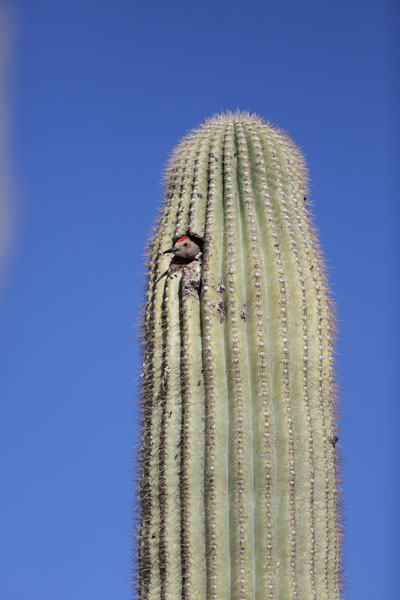
Are there any USA zoos that keep Gila woodpeckers?
Utah's Hogle Zoo has a couple of 'rehab' birds. I don't think any zoo has a breeding group.Are there any USA zoos that keep Gila woodpeckers?

If you had gone to Alpenzoo Innsbruck whilst in Austria you would have seen two species 


Are there any USA zoos that keep Gila woodpeckers?
And what zoos??
Gila woodpecker at North carolina zoo 2015-1-19 | ZooChat
A picture of a Gila Woodpecker taken by a zoochatter in North Carolina Zoo in 2015. I am guessing it is captive due to the unnatural background
Ituri has also seen captive Gila Woodpeckers
'I have seen greater yellow-naped and Gila woodpeckers personally in zoos, but neither were in exhibits that highlighted them specifically apart from any other exhibit birds.'
And there is also proof that Gila woodpeckers have been/are in Arizona Sonora Desert Museum:
siamang27
'ASDM has Gila Woodpeckers in their aviary as well as wild throughout the park.'
And according to Zootierliste, London zoo kept Gila Woodpeckers.
'I have seen greater yellow-naped and Gila woodpeckers personally in zoos, but neither were in exhibits that highlighted them specifically apart from any other exhibit birds.'
And there is also proof that Gila woodpeckers have been/are in Arizona Sonora Desert Museum:
siamang27
'ASDM has Gila Woodpeckers in their aviary as well as wild throughout the park.'
And according to Zootierliste, London zoo kept Gila Woodpeckers.
Hogle Zoo and Reid Park, Pima County, Arizona have also kept Gila Woodpeckers
And also, a lot of Asian Woodpeckers are often seen in the Illegal Wildlife Trade, usually in bird markets.


Realy strange that this large family of birds from which many species are real colorfull birds are so rarely kept and bred in captivity because their close relatives, for example Toucans and Barbets are regulary kept !
I myself have taken care for 5 species and had breeding-results with 2 of them :
- Hispaniolan woodpecker - took care for it at Walsrode ( bred there after I left ) - see Hispaniolan woodpecker | ZooChat
- Black-cheeked woodpecker - took care for it and bred it very succesfully at both a privat collection in the Netherlands and at Walsrode.
- White woodpecker - also taken care for and bred succesfully at Walsrode. See White woodpecker | ZooChat
- Great spotted woodpecker - took care for several injured ( wild ) bird which were brought to Walsrode and after recovery, they were released again into the wild.
- European green woodpecker - the same as for the Great spotted woodpecker.
Next to these 5 species I guess I've seen maybe 5 to 7 other species in captivity
I myself have taken care for 5 species and had breeding-results with 2 of them :
- Hispaniolan woodpecker - took care for it at Walsrode ( bred there after I left ) - see Hispaniolan woodpecker | ZooChat
- Black-cheeked woodpecker - took care for it and bred it very succesfully at both a privat collection in the Netherlands and at Walsrode.
- White woodpecker - also taken care for and bred succesfully at Walsrode. See White woodpecker | ZooChat
- Great spotted woodpecker - took care for several injured ( wild ) bird which were brought to Walsrode and after recovery, they were released again into the wild.
- European green woodpecker - the same as for the Great spotted woodpecker.
Next to these 5 species I guess I've seen maybe 5 to 7 other species in captivity
I have lived in Tucson over 20 years and been a Reid Park Zoo member the entire time and I do not ever remember gila woodpeckers. It must have been A LONG time ago when they had them (or they had them in the old aviary when I first moved here and I just do not remember it specifically). Or perhaps the source of the information is confusing Reid Park Zoo with Arizona Sonora Desert Museum, as both are in Pima County (which the post specifically mentions).Hogle Zoo and Reid Park, Pima County, Arizona have also kept Gila Woodpeckers
Found this intresting note on breeding the Black-cheeked by Raymond Sawyer at Chestut Lodge :
Not many woodpeckers were imported and few have been bred in captivity here in the UK, but one which was bred successfully at Cobham is the Black-cheeked Woodpecker Melanerpes pucherani from Central and northern South America. The male and female look similar to each other, except that the male's cap is a stronger shade of red. This species was first bred there in 1992. The pair nested in the trunk of a Silver Birch Betula pendula, cut into three sections for ease of handling and moveability. Once the pair had excavated the nest hole, there was nothing further to do but wait and hope until they saw lots offood being taken into the nest and then knew the pair had young. Eventually four emerged. Raymond believed they remained in the nest for about three weeks. The pair went on to breed successfully on numerous other occasions, including in 1996. Over the years Raymond found that woodpeckers enjoy nectar and always ensured that it was available for them. He added, that as well as nectar, the Black-cheeked Woodpeckers liked softbill food, fruit and livefood. At the time, the pair shared the flight with a Scarlet-chested Sunbird Nectarinia senegalensis and Raymond got pleasure from watching the sunbird and woodpeckers drinking from the same dish of nectar. He found it is not a particularly aggressive species. When the pair first bred, it was sharing the flight with a pair of Black-naped Fruit Doves Ptilinopus melanospila.
Not many woodpeckers were imported and few have been bred in captivity here in the UK, but one which was bred successfully at Cobham is the Black-cheeked Woodpecker Melanerpes pucherani from Central and northern South America. The male and female look similar to each other, except that the male's cap is a stronger shade of red. This species was first bred there in 1992. The pair nested in the trunk of a Silver Birch Betula pendula, cut into three sections for ease of handling and moveability. Once the pair had excavated the nest hole, there was nothing further to do but wait and hope until they saw lots offood being taken into the nest and then knew the pair had young. Eventually four emerged. Raymond believed they remained in the nest for about three weeks. The pair went on to breed successfully on numerous other occasions, including in 1996. Over the years Raymond found that woodpeckers enjoy nectar and always ensured that it was available for them. He added, that as well as nectar, the Black-cheeked Woodpeckers liked softbill food, fruit and livefood. At the time, the pair shared the flight with a Scarlet-chested Sunbird Nectarinia senegalensis and Raymond got pleasure from watching the sunbird and woodpeckers drinking from the same dish of nectar. He found it is not a particularly aggressive species. When the pair first bred, it was sharing the flight with a pair of Black-naped Fruit Doves Ptilinopus melanospila.