You are using an out of date browser. It may not display this or other websites correctly.
You should upgrade or use an alternative browser.
You should upgrade or use an alternative browser.
Bronx Zoo World of Darkness reopening
- Thread starter nczoofan
- Start date


Does anyone know how to get tickets for the member preview?
Get a members admission ticket for Tuesday July 8 or Thursday July 10 and head to the World of Darkness building (which will probably have someone check your membership ID at the entrance).
RaptorFan9000
Active Member
I just went to the Bronx Zoo today, and I visited the reopened World of Darkness!
New Animals Revealed:
Nine-banded Armadillo
Gray Mouse Lemur
Red-rumped Agouti
Guatemalan Beaded Lizard
New Caledonian Giant Gecko
Texas Blind Salamander
Blind Cave Fish
New Animals Revealed:
Nine-banded Armadillo
Gray Mouse Lemur
Red-rumped Agouti
Guatemalan Beaded Lizard
New Caledonian Giant Gecko
Texas Blind Salamander
Blind Cave Fish
AnActualFan
Well-Known Member
Pretty solid list, what do you think in general about the exhibit? Anything standout?I just went to the Bronx Zoo today, and I visited the reopened World of Darkness!
New Animals Revealed:
Nine-banded Armadillo
Gray Mouse Lemur
Red-rumped Agouti
Guatemalan Beaded Lizard
New Caledonian Giant Gecko
Texas Blind Salamander
Blind Cave Fish
RaptorFan9000
Active Member
Former Species:Pretty solid list, what do you think in general about the exhibit? Anything standout?
Leopard Cat
Bay Duiker
Spotted Skunk
Rock Cavy
Brush-tailed Porcupine
Genet
Rodrigues Flying Fox
Pallas’s Long-tongued Bat
Jamaican Fruit Bat
New Zealand Short-tailed Bat
Sand Boa
Marine Toad
Returning Species:
Hoffmann’s Two-toed Sloth
Naked Mole-rat
Sand Cat
Gray Mouse Lemur
Fat-tailed Dwarf Lemur
Pygmy Slow Loris
Mohol Bushbaby
Northern Luzon Giant Cloud Rat
Douroucouli
Broad-snouted Caiman
Blood Python
Emperor Scorpion
New Species:
Aye-aye
Ringtail
Nine-banded Armadillo
Vampire Bat
Egyptian Fruit Bat
Seba’s Short-tailed Bat
Red-rumped Agouti
Timor Python
Guatemalan Beaded Lizard
New Caledonian Giant Gecko
Texas Blind Salamander
Blind Cave Fish
Pinktoe Tarantula

USZOOfan42
Well-Known Member
Could also be Detroit, they recently transferred theirs. @RaptorFan9000 do you plan to post media / pictures?I wonder if those are the Texas blind cave salamanders that fornerly were on display at Brookfield?
I may have it slighted out of order. Some exhibits are across the hall from others.I think I also missed taking a photo of the name tag for a couple of the species.
Exhibit 1: Red-rumped agouti, Hoffmann's two toed sloth, and Nancy Ma's douroucouli.
Exhibit 2: Emperor scorpion.
Exhibit 3: Gray mouse lemur.
Exhibit 4: Southern lesser galapo exhibit
Exhibit 5: Northern Luzon giant cloud rat exhibit.
Exhibit 6: Pygmy slow loris
Exhibit 7: blind cave fish.
Exhibit 8: broad-snouted caiman
Exhibit 9: South American pinktoe tarantula
Exhibit 10: Northern cacomiste
Exhibit 11: Timor python and Blood python
Exhibit 12: Texas blind salamander
Exhibit 13: Egyptian fruit bat
Exhibit 14: Aye-aye
Exhibit 15: Sand cat
Exhibit 16: Naked mole rat
Exhibit 17: Guatemalan beaded lizard
Exhibit 18: Nine-banded armadillo
Exhibit 19: Vampire bat
Exhibit 20: Seba's short-tailed bat
Exhibit 21: New Caledonian giant gecko
I haven't seen enough nocturnal houses to rate this one. I would say the exhibits are mostly average size for its inhabitants. I was told I was the first zoo member to visit the exhibit today, although there were people ahead of me in the building (maybe special invitees?)
Exhibit 1: Red-rumped agouti, Hoffmann's two toed sloth, and Nancy Ma's douroucouli.
Exhibit 2: Emperor scorpion.
Exhibit 3: Gray mouse lemur.
Exhibit 4: Southern lesser galapo exhibit
Exhibit 5: Northern Luzon giant cloud rat exhibit.
Exhibit 6: Pygmy slow loris
Exhibit 7: blind cave fish.
Exhibit 8: broad-snouted caiman
Exhibit 9: South American pinktoe tarantula
Exhibit 10: Northern cacomiste
Exhibit 11: Timor python and Blood python
Exhibit 12: Texas blind salamander
Exhibit 13: Egyptian fruit bat
Exhibit 14: Aye-aye
Exhibit 15: Sand cat
Exhibit 16: Naked mole rat
Exhibit 17: Guatemalan beaded lizard
Exhibit 18: Nine-banded armadillo
Exhibit 19: Vampire bat
Exhibit 20: Seba's short-tailed bat
Exhibit 21: New Caledonian giant gecko
I haven't seen enough nocturnal houses to rate this one. I would say the exhibits are mostly average size for its inhabitants. I was told I was the first zoo member to visit the exhibit today, although there were people ahead of me in the building (maybe special invitees?)
Last edited:

Were you able to take any photos of WOD?I may have it slighted out of order. Some exhibits are across the hall from others.I think I also missed taking a photo of the name tag for a couple of the species.
Exhibit 1: Red-rumped agouti, Hoffmann's two toed sloth, and Nancy Ma's douroucouli.
Exhibit 2: Emperor scorpion.
Exhibit 3: Gray mouse lemur.
Exhibit 4: Southern lesser galapo exhibit
Exhibit 5: Northern Luzon giant cloud rat exhibit.
Exhibit 6: Pygmy slow loris
Exhibit 7: blind cave fish.
Exhibit 8: broad-snouted caiman
Exhibit 9: South American pinktoe tarantula
Exhibit 10: Northern cacomiste
Exhibit 11: Timor python and Blood python
Exhibit 12: Texas blind salamander
Exhibit 13: Egyptian fruit bat
Exhibit 14: Aye-aye
Exhibit 15: Sand cat
Exhibit 16: Naked mole rat
Exhibit 17: Guatemalan beaded lizard
Exhibit 18: Nine-banded armadillo
Exhibit 19: Vampire bat
Exhibit 20: Seba's short-tailed bat
Exhibit 21: New Caledonian giant gecko
I haven't seen enough nocturnal houses to rate this one. I would say the exhibits are mostly average size for its inhabitants. I was told I was the first zoo member to visit the exhibit today, although there were people ahead of me in the building (maybe special invitees?)

I popped into the World of Darkness from about 2:30 to 3:30pm today. Overall, I think it is a nice addition to the Zoo with an interesting collection of species, as @RaptorFan9000 detailed above. I don't know that any particular exhibit absolutely blew me away—in my opinion, they're not terribly dissimilar to those seen in the Mouse and Monkey Houses—but, as I mentioned earlier in this thread, I'm just happy to have a part of the "old" Bronx Zoo back. It'll surely be on the itinerary of every Bronx trip I make in the foreseeable future, and I look forward to getting more familiar with the space and its residents.
Unfortunately, I do not have photos to share. I opted to use my camcorder to take videos instead, which might not have been the best idea; it has a "Night Shot" mode, but I'm afraid this feature pales in comparison to even an older iPhone's abilities in low-light. Maybe I can stitch together a highlight reel, but I don’t know how much of my footage would make the cut or how helpful it would be in painting a better picture of WoD.
General notes: I'm not sure how much this matters to others, but I like WoD's signage, although I acknowledge it isn't radically different from any of the Bronx's other exhibits. All signs have bilingual text. The species information signs are minimalistic (image highlighting a few anatomical features, diets represented pictorially, brief paragraph on ecology, etc.), and some boards have a “conservation spotlight” and/or take a closer look at species of interest. These latter signs are larger and feature an illustrated image (similar to those seen in the WoD’s promotional materials) and an interactive element (usually a button to press). For instance, the signage at the aye-aye exhibit talks about percussive foraging and cleverly asks you to tap to reveal what it hears as it looks for food, while the cave fish signage mentions their lateral line system and has you feel around to reveal its surroundings. Nothing at all groundbreaking, but I appreciated it. Also, I'm not sure if this function serves to save energy or just to reduce the light "pollution," but some of the signs darken once you step away and brighten as you approach. I hadn't seen this before and thought it was a cool feature.
I compared WoD to the Mouse House and Monkey House at the start of my post. If you are familiar with these, then you know that, being essentially halls lined with glass boxes, they are not strongly themed or terribly immersive. WoD isn’t either. And that isn’t inherently a bad thing, but I do wish a bit more care would have been taken to improve the atmosphere somehow. It’s dark, there’s a track playing sounds of nighttime insects and other critters, aaaaaand that’s about it. The guest walkway is pretty barren. There are stalactites above the vampire bat exhibit, which is themed like the interior of a cave, and the naked mole rat “ant farm” display is adorned with some model tubers (a detail I liked), but other than that, I don’t really recall anything else. Maybe this is simply a matter of practicality—What if someone trips over or runs into something? Who’s going to notice these details in the dark anyway?—but surely other nocturnal houses do a little bit more with theming?
I don’t know that I’ve seen any other nocturnal houses, so I don’t know whether these opinions hold any weight, but I heard a few different guests complaining about just how dark it was, and how difficult it made seeing the barriers (or… their children). Personally, I didn’t think it was problematically dark, but I did find myself bumping into barriers at times. As for the exhibits, @Birdlover, I thought the visibility was pretty good. I don’t think darkness prevented me from seeing an animal; if anything, it was the density of foliage that usually did so, or the spaces that allowed them to escape from view.
I'd spent some time drafting an exhibit-by-exhibit walkthrough, but I agree with @blospz in that most of the exhibits are average. So, rather than writing about every single one, I may just modify what I typed up and share only [what I feel were] the highlights.
Unfortunately, I do not have photos to share. I opted to use my camcorder to take videos instead, which might not have been the best idea; it has a "Night Shot" mode, but I'm afraid this feature pales in comparison to even an older iPhone's abilities in low-light. Maybe I can stitch together a highlight reel, but I don’t know how much of my footage would make the cut or how helpful it would be in painting a better picture of WoD.
General notes: I'm not sure how much this matters to others, but I like WoD's signage, although I acknowledge it isn't radically different from any of the Bronx's other exhibits. All signs have bilingual text. The species information signs are minimalistic (image highlighting a few anatomical features, diets represented pictorially, brief paragraph on ecology, etc.), and some boards have a “conservation spotlight” and/or take a closer look at species of interest. These latter signs are larger and feature an illustrated image (similar to those seen in the WoD’s promotional materials) and an interactive element (usually a button to press). For instance, the signage at the aye-aye exhibit talks about percussive foraging and cleverly asks you to tap to reveal what it hears as it looks for food, while the cave fish signage mentions their lateral line system and has you feel around to reveal its surroundings. Nothing at all groundbreaking, but I appreciated it. Also, I'm not sure if this function serves to save energy or just to reduce the light "pollution," but some of the signs darken once you step away and brighten as you approach. I hadn't seen this before and thought it was a cool feature.
I compared WoD to the Mouse House and Monkey House at the start of my post. If you are familiar with these, then you know that, being essentially halls lined with glass boxes, they are not strongly themed or terribly immersive. WoD isn’t either. And that isn’t inherently a bad thing, but I do wish a bit more care would have been taken to improve the atmosphere somehow. It’s dark, there’s a track playing sounds of nighttime insects and other critters, aaaaaand that’s about it. The guest walkway is pretty barren. There are stalactites above the vampire bat exhibit, which is themed like the interior of a cave, and the naked mole rat “ant farm” display is adorned with some model tubers (a detail I liked), but other than that, I don’t really recall anything else. Maybe this is simply a matter of practicality—What if someone trips over or runs into something? Who’s going to notice these details in the dark anyway?—but surely other nocturnal houses do a little bit more with theming?
I don’t know that I’ve seen any other nocturnal houses, so I don’t know whether these opinions hold any weight, but I heard a few different guests complaining about just how dark it was, and how difficult it made seeing the barriers (or… their children). Personally, I didn’t think it was problematically dark, but I did find myself bumping into barriers at times. As for the exhibits, @Birdlover, I thought the visibility was pretty good. I don’t think darkness prevented me from seeing an animal; if anything, it was the density of foliage that usually did so, or the spaces that allowed them to escape from view.
I'd spent some time drafting an exhibit-by-exhibit walkthrough, but I agree with @blospz in that most of the exhibits are average. So, rather than writing about every single one, I may just modify what I typed up and share only [what I feel were] the highlights.

Does anybody who knew the pre-closure World of Darkness know if the building was significantly remodeled at all? Do the exhibits look pretty much as they did before?

As someone that has been in a number of nocturnal houses and have something to compare it to, World of Darkness is fairly good. It is definitely not on Omaha's Kingdoms of the Night level and I would say Brookfield's The Swamp is better than it as well (been a while since I've been there though), but in terms of exhibitry I'd say it is better than Memphis' Animals of the Night as the exhibits are better suit to the inhabitants size wise in my opinion. Overall, in contrast with the other comments here about exhibit size, I was fairly impressed with the size of the exhibits for their inhabitants in comparison to other nocturnal houses. Yes, nothing here is by any means outstanding in terms of exhibitry, but it is all well done. I have not been to Cincinnati's so can't compare. Are there any other big nocturnal houses in the US that I'm missing? Lake Superior's is fairly small in comparison to the other's, same with Cameron Park's. It's a very good nocturnal house overall, but really there isn't a ton out there to compare it to.
Alright, now onto what everyone has been asking for, pictures! Apologies the photos aren't better (I have a pretty nice, high-end bridge camera, but it's major flaw is that it doesn't do well in low-light situations and adjusting settings doesn't really help. My phone wasn't any better.), but this is what I have.
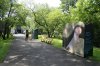
Walk-up/entrance area
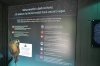
There are two main walk ups to the area, both lined with some teaser signs/information. The path in the first image sets the tone better in my opinion as they begin to introduce you to the animals with a saying on the side, an illustration of an animal, a quote like the one seen here of the guest doing something with the animal, and a quick fact about the animal/that activity. These signs featured a naked-mole rat, an aye-aye, a sloth, and a bat. The other walk up features two signs, that are the side panels of the bigger signs seen in the first image.


Exhibit #1: Mixed Exhibit
The first exhibit visitors see once they have entered the building is for the following three species:

Exhibit #2: Emperor Scorpion (Pandinus imperator)

Exhibit #3: Gray Mouse Lemur (Microcebus murinus)
The dark part in the middle of the glass is designed to look like a hollowed out tree and give you a view of lemur's while they are in a hiding spot.

Exhibit #4: Southern Lesser Galago (Galago moholi)

Exhibit #5: Northern Luzon Giant Cloud Rat (Phloeomys pallidus)
To answer everyone's question, yes this is now in fact exhibit #4 in the zoo with Cloud Rats as there is still the two in the mouse house in addition to the one in Jungleworld. I'm annoyed by it as others, but what can you do?

Exhibit #6: Pygmy Slow Loris (Nycticebus pygmaeus)

Exhibit #7: Blind Cave Fish (Astyanax mexicanus)
I don't think these are actually on exhibit yet. My first time through the exhibit around noon the tank did not have any lights on and the second time through about three hours later I did not see any of the fish. Perhaps someone will spot one in the photo and I just missed it.

Exhibit #8: Broad-snouted Caiman (Caiman latirostris)
There is a mist/fog machine in this exhibit.

To be continued (as I have reached the photo limit for this post)...
Alright, now onto what everyone has been asking for, pictures! Apologies the photos aren't better (I have a pretty nice, high-end bridge camera, but it's major flaw is that it doesn't do well in low-light situations and adjusting settings doesn't really help. My phone wasn't any better.), but this is what I have.
Walk-up/entrance area
There are two main walk ups to the area, both lined with some teaser signs/information. The path in the first image sets the tone better in my opinion as they begin to introduce you to the animals with a saying on the side, an illustration of an animal, a quote like the one seen here of the guest doing something with the animal, and a quick fact about the animal/that activity. These signs featured a naked-mole rat, an aye-aye, a sloth, and a bat. The other walk up features two signs, that are the side panels of the bigger signs seen in the first image.
Exhibit #1: Mixed Exhibit
The first exhibit visitors see once they have entered the building is for the following three species:
- Red-rumped Agouti (Dasyprocta leporina)
- Hoffman's Two-toed Sloth (Choloepus hoffmanni)
- Nancy Ma's Douroucouli (Aotus nancymaae)
Exhibit #2: Emperor Scorpion (Pandinus imperator)
Exhibit #3: Gray Mouse Lemur (Microcebus murinus)
The dark part in the middle of the glass is designed to look like a hollowed out tree and give you a view of lemur's while they are in a hiding spot.
Exhibit #4: Southern Lesser Galago (Galago moholi)
Exhibit #5: Northern Luzon Giant Cloud Rat (Phloeomys pallidus)
To answer everyone's question, yes this is now in fact exhibit #4 in the zoo with Cloud Rats as there is still the two in the mouse house in addition to the one in Jungleworld. I'm annoyed by it as others, but what can you do?
Exhibit #6: Pygmy Slow Loris (Nycticebus pygmaeus)
Exhibit #7: Blind Cave Fish (Astyanax mexicanus)
I don't think these are actually on exhibit yet. My first time through the exhibit around noon the tank did not have any lights on and the second time through about three hours later I did not see any of the fish. Perhaps someone will spot one in the photo and I just missed it.
Exhibit #8: Broad-snouted Caiman (Caiman latirostris)
There is a mist/fog machine in this exhibit.
To be continued (as I have reached the photo limit for this post)...
Attachments
-
 P1155632.JPG228.8 KB · Views: 104
 -
 P1155750.JPG188.6 KB · Views: 95
 -
 P1155644.JPG81.2 KB · Views: 106
 -
 P1155647.JPG65.4 KB · Views: 100
 -
 P1155652.JPG30.4 KB · Views: 106
 -
 P1155655.JPG44.6 KB · Views: 95
 -
 P1155658.JPG61.4 KB · Views: 104
 -
 P1155661.JPG42.7 KB · Views: 95
 -
 P1155833.JPG40.7 KB · Views: 104
 -
 P1155673.JPG74.1 KB · Views: 93
Last edited:

Nile Hippo Expert
Well-Known Member
Absolutely hyped for this new exhibit, love the photos!As someone that has been in a number of nocturnal houses and have something to compare it to, World of Darkness is fairly good. It is definitely not on Omaha's Kingdoms of the Night level and I would say Brookfield's The Swamp is better than it as well (been a while since I've been there though), but in terms of exhibitry I'd say it is better than Memphis' Animals of the Night as the exhibits are better suit to the inhabitants size wise in my opinion. Overall, in contrast with the other comments here about exhibit size, I was fairly impressed with the size of the exhibits for their inhabitants in comparison to other nocturnal houses. Yes, nothing here is by any means outstanding in terms of exhibitry, but it is all well done. I have not been to Cincinnati's so can't compare. Are there any other big nocturnal houses in the US that I'm missing? Lake Superior's is fairly small in comparison to the other's, same with Cameron Park's. It's a very good nocturnal house overall, but really there isn't a ton out there to compare it to.
Alright, now onto what everyone has been asking for, pictures! Apologies the photos aren't better (I have a pretty nice, high-end bridge camera, but it's major flaw is that it doesn't do well in low-light situations and adjusting settings doesn't really help. My phone wasn't any better.), but this is what I have.
Walk-up/entrance area
There are two main walk ups to the area, both lined with some teaser signs/information. The path in the first image sets the tone better in my opinion as they begin to introduce you to the animals with a saying on the side, an illustration of an animal, a quote like the one seen here of the guest doing something with the animal, and a quick fact about the animal/that activity. These signs featured a naked-mole rat, an aye-aye, a sloth, and a bat. The other walk up features two signs, that are the side panels of the bigger signs seen in the first image.
View attachment 806864
View attachment 806865
Exhibit #1: Mixed Exhibit
The first exhibit visitors see once they have entered the building is for the following three species:
I did not see the sloth.
- Red-rumped Agouti (Dasyprocta leporina)
- Hoffman's Two-toed Sloth (Choloepus hoffmanni)
- Nancy Ma's Douroucouli (Aotus nancymaae)
View attachment 806867
Exhibit #2: Emperor Scorpion (Pandinus imperator)
View attachment 806868
Exhibit #3: Gray Mouse Lemur (Microcebus murinus)
The dark part in the middle of the glass is designed to look like a hollowed out tree and give you a view of lemur's while they are in a hiding spot.
View attachment 806869
Exhibit #4: Southern Lesser Galago (Galago moholi)
View attachment 806870
Exhibit #5: Northern Luzon Giant Cloud Rat (Phloeomys pallidus)
To answer everyone's question, yes this is now in fact exhibit #4 in the zoo with Cloud Rats as there is still the two in the mouse house in addition to the one in Jungleworld. I'm annoyed by it as others, but what can you do?
View attachment 806871
Exhibit #6: Pygmy Slow Loris (Nycticebus pygmaeus)
View attachment 806872
Exhibit #7: Blind Cave Fish (Astyanax mexicanus)
I don't think these are actually on exhibit yet. My first time through the exhibit around noon the tank did not have any lights on and the second time through about three hours later I did not see any of the fish. Perhaps someone will spot one in the photo and I just missed it.
View attachment 806876
Exhibit #8: Broad-snouted Caiman (Caiman latirostris)
There is a mist/fog machine in this exhibit.
View attachment 806877
To be continued (as I have reached the photo limit for this post)...
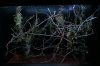
Exhibit #9: South American Pinktoe Tarantula (Avicularia avicularia)
Another animal I did not see, but this is likely the biggest tarantula habitat I have ever seen.

Exhibit #10: Northern Cacomistle (Bassariscus astutus)
This guy was quite active on both of my trips through the exhibit.

Exhibit #11: Python Exhibit
Holds these two species of python:

Exhibit #12: Texas Blind Salamander (Eurycea rathbuni)
I know there are a number of people in the thread wondering where these came from and unfortunately I am unable to answer that. However, there was a zoo executive walking around the exhibit at this time. One of the employees/colleagues he was talking to asked, "how hard were they to acquire?" To which the he responded, "Much harder than you would think. We thought we had a reliable source for them and it fell through pretty late into the process." Additionally, he said there were 5 of them in the tank currently (I spotted 3, but didn't look that hard), that they had one more behind the scenes in holding that will eventually be put on exhibit, and they are trying to acquire more. The ones on exhibit look quite small, so they likely aren't adult transfers from a zoo that recently went out of them.

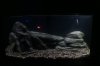
Exhibit #13: Egyptian Fruit Bat (Rousettus aegyptiacus)

Exhibit #14: Madagascar Mixed Species Exhibit
Exhibit for two lemur species from Madagascar, which includes:

Exhibit #15: Naked Mole Rat (Heterocephalus glaber)
One thing I like about this exhibit that you can not see in the photo is there is an area above it that is designed to look like it is the "outside" above ground. I personally found it to be a nice touch. The Damaraland Mole-rats are still in the Mouse House and have been given access to the part left vacant by these guys to expand their exhibit.

Exhibit #16: Sand Cat (Felis margarita)
This exhibit has a third window to the right that I did not get a photo of. I also had a brain lapse and didn't get any photos up closer to the exhibit to better show the exhibit. Perhaps someone else can supplement my photo. I saw two Sand Cats.

Exhibit #17: Guatemalan Beaded Lizard (Heloderma charlesbogerti)

Exhibit #18: Nine-banded Armadillo (Dasypus novemcinctus)

To be continued...
Another animal I did not see, but this is likely the biggest tarantula habitat I have ever seen.
Exhibit #10: Northern Cacomistle (Bassariscus astutus)
This guy was quite active on both of my trips through the exhibit.
Exhibit #11: Python Exhibit
Holds these two species of python:
- Blood Python (Python brongersmai)
- Timor Python (Malayopython timoriensis)
Exhibit #12: Texas Blind Salamander (Eurycea rathbuni)
I know there are a number of people in the thread wondering where these came from and unfortunately I am unable to answer that. However, there was a zoo executive walking around the exhibit at this time. One of the employees/colleagues he was talking to asked, "how hard were they to acquire?" To which the he responded, "Much harder than you would think. We thought we had a reliable source for them and it fell through pretty late into the process." Additionally, he said there were 5 of them in the tank currently (I spotted 3, but didn't look that hard), that they had one more behind the scenes in holding that will eventually be put on exhibit, and they are trying to acquire more. The ones on exhibit look quite small, so they likely aren't adult transfers from a zoo that recently went out of them.
Exhibit #13: Egyptian Fruit Bat (Rousettus aegyptiacus)
Exhibit #14: Madagascar Mixed Species Exhibit
Exhibit for two lemur species from Madagascar, which includes:
- Aye-aye (Daubentonia madagascariensis)
- Fat-tailed Dwarf Lemur (Cheirogaleus medius)
Exhibit #15: Naked Mole Rat (Heterocephalus glaber)
One thing I like about this exhibit that you can not see in the photo is there is an area above it that is designed to look like it is the "outside" above ground. I personally found it to be a nice touch. The Damaraland Mole-rats are still in the Mouse House and have been given access to the part left vacant by these guys to expand their exhibit.
Exhibit #16: Sand Cat (Felis margarita)
This exhibit has a third window to the right that I did not get a photo of. I also had a brain lapse and didn't get any photos up closer to the exhibit to better show the exhibit. Perhaps someone else can supplement my photo. I saw two Sand Cats.
Exhibit #17: Guatemalan Beaded Lizard (Heloderma charlesbogerti)
Exhibit #18: Nine-banded Armadillo (Dasypus novemcinctus)
To be continued...
Attachments
-
 P1155678.JPG115.1 KB · Views: 101
 -
 P1155683.JPG51.3 KB · Views: 103
 -
 P1155687.JPG30.1 KB · Views: 102
 -
 P1155692.JPG58.8 KB · Views: 107
 -
 P1155695.JPG28.7 KB · Views: 104
 -
 P1155700.JPG37.3 KB · Views: 97
 -
 P1155708.JPG26.6 KB · Views: 101
 -
 P1155716.JPG39.3 KB · Views: 107
 -
 P1155721.JPG45.1 KB · Views: 99
 -
 P1155724.JPG44.4 KB · Views: 99
Thank you very much for the photos, @NSU42!
With no images to refer to initially, I wasn't sure how helpful it would be to go into a certain level of detail on my write-up. But now that you’ve provided these (and will be showing more shortly), I’ll go ahead and tack on my thoughts.
To elaborate on my answer to the question about visibility: Other than the 2 species that weren’t on exhibit (dwarf lemurs and cave fish), there weren’t any no-shows as far as I could tell (I didn't see the sloth but didn't look very hard for it). Provided you have the time to hang around, you shouldn’t have any problems seeing any species. As NSU42’s photos show, several of the exhibits are pretty spacious, most notably the aye-aye and Seba’s short-tailed bat exhibits. The loris, sand cats, armadillos, cloud rats, and douroucoulis also have good-sized enclosures. (My “average” assessment was more so about their quality.) They’re also reasonably well-lit (relatively speaking, of course). Most of the arboreal species have what seems to be a solid amount of climbing opportunities, many of which pass under lights or span large areas of the glass viewing. Several exhibits have some good verticality and are fairly densely planted.
Miscellaneous notes:
- The gray mouse lemurs were nowhere to be found the first time I passed by, but were highly active and fun to watch when I circled back around. They appear to have at least two areas to retreat into: There is a hollow tree right up against the left side of the glass that is cut down its midline—allowing you to see into the trunk—and a tree with a hole in it on the right side of the exhibit. I did not see the lemurs use the former, but they were in and out of the latter pretty frequently. They seem to have a good bit of vertical space, too; they disappeared out of view for several stretches, but shaking branches above revealed their presence.
- NSU42, I did not see any cave fish during my walkthrough either. The lights had been turned on at this point, though.
- For what it’s worth, I think the Cloud Rats in WoD have a better setup than they do in either the Mouse House or Jungleworld. Their exhibit is fairly deep, nicely planted, and has much more verticality. There are several thick bamboo poles posted throughout, and I watched one of the two rats climb to the very top of one and perch itself there for a while; I assume a food or water dish might have been up there.
- The slow loris exhibit stands out to me as being particularly lush and spacious relative to the animal’s size. The individual I saw was surprisingly active, too.
- The aye-ayes are in a mixed exhibit with fat-tailed dwarf lemurs. This is one of the largest exhibits in the WoD, is well-planted, and has what appear to be nests situated in the upper branches. There was a keeper walking a colleague through the exhibit and I did some eavesdropping on their conversation before asking him a few questions. They have 1.1 aye-ayes, which came from the Duke Lemur Center (apologies if that’s already been reported). The female apparently prefers to stay in the branches while the male is “more terrestrial”; the individual I saw on exhibit did a fair bit of both climbing and walking, so it’s tough to tell which it was. The fat-tailed dwarf lemurs were not on exhibit yet, although the keeper did not cite a reason why or say when they would be. I was a bit surprised and disappointed to see the aye-aye pacing the second time I came around to its exhibit, in a triangular shape on the ground to the left of the exhibit.
- The sand cats have a decently sized but sparse exhibit (fitting for a desert animal, I suppose, but not much of a looker). There’s rockwork along the back walls and a couple of branches fixed between the rocks and the ground. There are two adjacent glass panes looking into the exhibit. Both cats also paced, one in a straight line along the right pane of glass, the other in a broader loop around the rockwork and back down to the ground.
With no images to refer to initially, I wasn't sure how helpful it would be to go into a certain level of detail on my write-up. But now that you’ve provided these (and will be showing more shortly), I’ll go ahead and tack on my thoughts.
To elaborate on my answer to the question about visibility: Other than the 2 species that weren’t on exhibit (dwarf lemurs and cave fish), there weren’t any no-shows as far as I could tell (I didn't see the sloth but didn't look very hard for it). Provided you have the time to hang around, you shouldn’t have any problems seeing any species. As NSU42’s photos show, several of the exhibits are pretty spacious, most notably the aye-aye and Seba’s short-tailed bat exhibits. The loris, sand cats, armadillos, cloud rats, and douroucoulis also have good-sized enclosures. (My “average” assessment was more so about their quality.) They’re also reasonably well-lit (relatively speaking, of course). Most of the arboreal species have what seems to be a solid amount of climbing opportunities, many of which pass under lights or span large areas of the glass viewing. Several exhibits have some good verticality and are fairly densely planted.
Miscellaneous notes:
- The gray mouse lemurs were nowhere to be found the first time I passed by, but were highly active and fun to watch when I circled back around. They appear to have at least two areas to retreat into: There is a hollow tree right up against the left side of the glass that is cut down its midline—allowing you to see into the trunk—and a tree with a hole in it on the right side of the exhibit. I did not see the lemurs use the former, but they were in and out of the latter pretty frequently. They seem to have a good bit of vertical space, too; they disappeared out of view for several stretches, but shaking branches above revealed their presence.
- NSU42, I did not see any cave fish during my walkthrough either. The lights had been turned on at this point, though.
- For what it’s worth, I think the Cloud Rats in WoD have a better setup than they do in either the Mouse House or Jungleworld. Their exhibit is fairly deep, nicely planted, and has much more verticality. There are several thick bamboo poles posted throughout, and I watched one of the two rats climb to the very top of one and perch itself there for a while; I assume a food or water dish might have been up there.
- The slow loris exhibit stands out to me as being particularly lush and spacious relative to the animal’s size. The individual I saw was surprisingly active, too.
- The aye-ayes are in a mixed exhibit with fat-tailed dwarf lemurs. This is one of the largest exhibits in the WoD, is well-planted, and has what appear to be nests situated in the upper branches. There was a keeper walking a colleague through the exhibit and I did some eavesdropping on their conversation before asking him a few questions. They have 1.1 aye-ayes, which came from the Duke Lemur Center (apologies if that’s already been reported). The female apparently prefers to stay in the branches while the male is “more terrestrial”; the individual I saw on exhibit did a fair bit of both climbing and walking, so it’s tough to tell which it was. The fat-tailed dwarf lemurs were not on exhibit yet, although the keeper did not cite a reason why or say when they would be. I was a bit surprised and disappointed to see the aye-aye pacing the second time I came around to its exhibit, in a triangular shape on the ground to the left of the exhibit.
- The sand cats have a decently sized but sparse exhibit (fitting for a desert animal, I suppose, but not much of a looker). There’s rockwork along the back walls and a couple of branches fixed between the rocks and the ground. There are two adjacent glass panes looking into the exhibit. Both cats also paced, one in a straight line along the right pane of glass, the other in a broader loop around the rockwork and back down to the ground.
Exhibit #9: South American Pinktoe Tarantula (Avicularia avicularia)
Another animal I did not see, but this is likely the biggest tarantula habitat I have ever seen.
I was able to spot 2 of these, one on the glass and the other on the back wall. I believe the keeper I mentioned in my post said there were currently 5 on display.
I was able to spot 2 of these, one on the glass and the other on the back wall. I believe the keeper I mentioned in my post said there were currently 5 on display.
I'm clearly blind if there is 5 of them in there. As more evidence, I went back to look at the photo and there is one in the top right on the back wall clearly visible. That number in one exhibit is quite unusual as I don't know if I've ever seen more than one.
Last edited:
I'm clearly blind if there is 5 of them in there. As more evidence, I went back to look at the photo and there is one in the top right on the back wall clearly visible. That number in one exhibit is quite unusual as I don't know if I've ever seen more than one
It stood out to me because I'd seen the keeper scanning their terrarium with a red light when he said it, and then I relayed the number to my friend shortly after. But it is entirely possible that I could be misremembering or conflating different moments! Heat stroke was a very real risk yesterday.
 I have 2 on video, that much I know for sure, haha.
Exhibit #19: Common Vampire Bat (Desmodus rotundus)

Exhibit #20: Seba's Short-tailed Bat (Carollia perspicillata)

Exhibit #21: New Caledonian Giant Gecko (Rhacodactylus leachianus)
This exhibit was the least well lit and led to the worst photo I got of any of the exhibits. My phone was useless as well here.

Other Exhibit Notes/Thoughts
All of the exhibits/viewing are similar to those in other buildings throughout the zoo and give animals good ability to get out of view of guests. All of the exhibits extend upwards from what the glass shows and also off to at least one of the sides.
Animal Signage
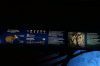
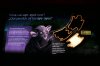
All of the animals had signage like the one seen here for the agoutis. Each sign featured an image that points out some of the adaptations the animal has to survive at night, some basic information, and then a conservation spotlight. Although it is not all that dissimilar to other signage seen throughout the zoo, I really wish the zoo would update its other signage to look like this as elsewhere in the zoo it is often even more information sparse and has a much more homemade feel. This looks clean and fresh.
One great thing about all the signage here is that they really only give off light if you are standing directly in front of it and it does not spread to other parts of the exhibit.

Guest Experience
Others have commented on the darkness of the exhibit and that other guests commented it was to dark. While I did not hear anyone say this, there was a mother that absolutely freaked out when she lost track of her daughter in the darkness. Her daughter was literally less than 5 feet in front of her in a darker area of the hallway. Overall, I did not think it was all that dark in there and it was easy to navigate and spot the animals for the most part.
In terms of theming, while it is not overly themed, the cutouts on the ceiling (and walls at times) are meant to make it feel as if you are walking through a forest at night. In places there are cutouts made to look like eyes. Again, its simplistic, but nice enough. I heard the exec mention the "fireflies" that were made using LED lights, although I didn't notice these and looked around trying to figure out what he was talking about. There is other signage throughout the exhibit as well to provide guests with some additional information and the touch panels were a cool touch.


Exhibit #20: Seba's Short-tailed Bat (Carollia perspicillata)
Exhibit #21: New Caledonian Giant Gecko (Rhacodactylus leachianus)
This exhibit was the least well lit and led to the worst photo I got of any of the exhibits. My phone was useless as well here.
Other Exhibit Notes/Thoughts
All of the exhibits/viewing are similar to those in other buildings throughout the zoo and give animals good ability to get out of view of guests. All of the exhibits extend upwards from what the glass shows and also off to at least one of the sides.
Animal Signage
All of the animals had signage like the one seen here for the agoutis. Each sign featured an image that points out some of the adaptations the animal has to survive at night, some basic information, and then a conservation spotlight. Although it is not all that dissimilar to other signage seen throughout the zoo, I really wish the zoo would update its other signage to look like this as elsewhere in the zoo it is often even more information sparse and has a much more homemade feel. This looks clean and fresh.
One great thing about all the signage here is that they really only give off light if you are standing directly in front of it and it does not spread to other parts of the exhibit.
Guest Experience
Others have commented on the darkness of the exhibit and that other guests commented it was to dark. While I did not hear anyone say this, there was a mother that absolutely freaked out when she lost track of her daughter in the darkness. Her daughter was literally less than 5 feet in front of her in a darker area of the hallway. Overall, I did not think it was all that dark in there and it was easy to navigate and spot the animals for the most part.
In terms of theming, while it is not overly themed, the cutouts on the ceiling (and walls at times) are meant to make it feel as if you are walking through a forest at night. In places there are cutouts made to look like eyes. Again, its simplistic, but nice enough. I heard the exec mention the "fireflies" that were made using LED lights, although I didn't notice these and looked around trying to figure out what he was talking about. There is other signage throughout the exhibit as well to provide guests with some additional information and the touch panels were a cool touch.
Attachments
-
 P1155729.JPG86.3 KB · Views: 109
 -
 P1155734.JPG49.4 KB · Views: 105
 -
 P1155741.JPG16.5 KB · Views: 12
 -
 P1155741.JPG16.5 KB · Views: 103
 -
 P1155640.JPG54.4 KB · Views: 101
 -
 P1155636.JPG108.5 KB · Views: 100
 -
 P1155637.JPG71.4 KB · Views: 102
 -
 P1155639.JPG69.5 KB · Views: 93
 -
 P1155698.JPG53.9 KB · Views: 95
 -
 P1155703.JPG81.4 KB · Views: 101
Last edited: