Worst Enclosures You Have Ever Seen

You have to realize that much of what I've been doing on this thread is acting as a teacher. I'm asking the younglings to back up their reasoning. The vast majority of my comments were directed at people who have no direct knowledge of zoos outside of getting to visit occasionally with their family. In doing so, a lot of times I've been playing devil's advocate.

In reality, yes, we can make judgment calls, but out calls will be more faulty with less knowledge, which is where Dunning-Kruger comes into play.

One of the main points of ZooChat, and one we moderators strive to achieve, is to keep this a positive environment. At the end of the day, we know that keepers will actively look at this forum. They look at a lot of members on here like people who play fantasy sports. By including such threads as "worst ever" we end up being no better than the animal rights activists whose goal is to close down all zoos.

I think we're better than that.

This is a deeply patronising post. I would really appreciate it if you interact with me with a little more respect.
I love argument and debate and indeed playing devil's advocate, but I think you need to announce you are doing so beforehand. Otherwise people may simply assume you are 'walking back' viewpoints that you yourself have no evidence for.
 
Nothing I said towards you was disrespectful whatsoever.

And no, you do not need to announce devil's advocate beforehand. Sometimes, it makes more of an impact when that is not clear.
 
I think the first thing to say is that calling an exhibit bad and leveling a charge of animal cruelty at a zoo are not the same at all. The same with criticising the husbandry. Possibly we disagree on this point, if so that might be an interesting tangent discussion.

I think that we do disagree on that. From my perspective, calling an exhibit bad puts the welfare of the animals inhabiting it into question. If the exhibit is indeed unfit or substandard for the animals dwelling in it, that implies that their welfare is being compromised in at least one aspect, that being where they live during the day.

That being said, I do believe that there are good and bad exhibits, and that there are people on here who can identify them. I'd like to think that I can, but I will honestly say that I don't know enough about animal husbandry to claim that an exhibit is unfit for its inhabitants. For example, I would say that the African wild dog exhibit at Saint Louis (a zoo that I am very fond and supportive of) looks too small for its inhabitants, but that's not really a logical argument since I don't know how much space wild dogs need, and I have to assume that the people in charge of building it know more about that than I do. I see your point with the Chinese turtle bathtub, however, and I do think that there are extremes for which criticism is valid and credentials are less necessary.
 
I think that we do disagree on that. From my perspective, calling an exhibit bad puts the welfare of the animals inhabiting it into question. If the exhibit is indeed unfit or substandard for the animals dwelling in it, that implies that their welfare is being compromised in at least one aspect, that being where they live during the day.

Yeah, I take your point. It's a logical extrapolation. However if you follow that logic then you quickly arrive at the situation Giant Panda critiqued which is that it becomes impossible to ever criticise a zoo. I think it's better to view criticism as a scale or continuum. The key is to be precise (and accurate!) in your language. Even so one may end up totally condemning an exhibit.

As we all know sometimes zoos don't really have agency in these situations. Especially with larger, potentially dangerous animals they may not be able to afford a new enclosure. It may also be impossible to find a new home in a different collection, either because of a lack of space or perhaps legal issues. So zoos are left with the choice to either do nothing or euthanise. In this situation I think it's possible to talk negatively about an exhibit with an understanding that the zoo itself is somewhat shielded from this criticism.

For example, I would say that the African wild dog exhibit at Saint Louis (a zoo that I am very fond and supportive of) looks too small for its inhabitants, but that's not really a logical argument since I don't know how much space wild dogs need, and I have to assume that the people in charge of building it know more about that than I do.

Size is definitely an area I also try and stay away from. It's a minefield and as you say requires specific knowledge. In Gerald Durrell's The Stationary Ark there is a great chapter about the idea of enclosures as territories, and territories are usually defined by the things in them, rather than the acres.
 
Reading through these great arguments, I find myself agreeing with both sides. While yes you can't really truly judge an exhibit and its husbandry until you have all the inside facts, at the same time it's still fair to criticize it on what you can see as long as you do so logically. If something clearly looks off with the way a collection keeps an animal, it's completely fine and I'd argue our right as animal enthusiasts to call them out on it. Of course, this might not always be fair because the zoos themselves can't always respond to this, however there are plenty of publicly available exhibit records (ZooLex for instance) and publications (YouTube videos, news articles, ect.) that give some of these facts that can prove things are not as bad as they might appear. It's certainly a slippery slope, and jbnbsn99 is perfectly right to call out several of the younger and/or less knowledgeably members on leaning too far to one side or the other, but that doesn't mean we can't still criticize. This is especially true when we do know a bit more on the welfare.

But on the note of welfare, it seems to me you're all arguing that zoos can either have great welfare or terrible welfare. In most collections it's more likely to be more in the middle. An enclosure can be too small for a species, but they could still receive excellent care.

~Thylo
 
You have to realize that much of what I've been doing on this thread is acting as a teacher. I'm asking the younglings to back up their reasoning. The vast majority of my comments were directed at people who have no direct knowledge of zoos outside of getting to visit occasionally with their family. In doing so, a lot of times I've been playing devil's advocate.

Got to say this looks a little bit like retrospective "ass-covering", especially after the thread was temporarily locked then unlocked without explanation (I'd be interested to hear the explanation). Whilst the thread was a smidgen off track I was enjoying the robust debate which reminded me of the ZooChat of old where, sometimes heated, long but intelligent debates seemed more common.

In reality, yes, we can make judgment calls, but out calls will be more faulty with less knowledge, which is where Dunning-Kruger comes into play.

Sorry, this just seems like a way of backing up an argument by quoting a scientific "proof " stating the obvious (that uninformed people can be strident*). Sadly nowadays, everyone can find "proof" to support their view. Ironically, it seems Dunning -Kruger could possibly be used to back up an uninformed view itself in some circumstances. That's not to say I disagree with your point, just that laying science on it doesn't really make much difference.

*Originally mis-typed that as "uniformed people can be strident" which amused me a little.

One of the main points of ZooChat, and one we moderators strive to achieve, is to keep this a positive environment. At the end of the day, we know that keepers will actively look at this forum. They look at a lot of members on here like people who play fantasy sports. By including such threads as "worst ever" we end up being no better than the animal rights activists whose goal is to close down all zoos.
I think we're better than that.

Two points:

1. If keepers look on this forum and see criticism of enclosures it's likely that any criticism will be no worse than Joe Public's thoughts. The difference being a member here will still, most likely, continue to visit that zoo and zoos in general. It's entirely possible that Joe Public might be upset by a poor enclosure (perceived or otherwise) which may result in no return visits (and loss of revenue) and bad word of mouth for specific zoos and zoos in general. Surely it's best keepers/zoos know how people perceive their zoos so they can change them and improve the public's perceptions? To be honest I think keepers are most likely to be aware of short-comings in any case but are restricted by funding. Basically, they're unlikely to be reading anything they don't already know and may even agree with points made;

2. Talking about "worst enclosures" doesn't make us no better than animal rights activists, but not talking about them would. In theory, there's no problem with being concerned about animal rights -the problem comes when the people involved are dogmatic, zealous, see the world in black and white/good and bad terms and refuse to accept zoos do any good. By ignoring that there are poor enclosures out there and refusing to acknowledge zoos have faults, we would become similar to them and our arguments would weaken as a result
 
Thank you @FunkyGibbon and @jbnbsn99 for the entertaining discussion.

I think that to judge an exhibit fairly and as objectively as possible, one should have a deeper factual knowledge (as well at best actual husbandry experience and possibilities to compare) about the husbandry needs of a species based on what is known about its biology, anatomy and physiology as well as its natural habitat.
Add to this the requirements posed by the people operating the enclosure on a daily basis (safety for both the animals and staff, hygiene / technical requirements etc.), the people in charge of finances, security and maintenance, the education department,...and last but not least the paying visitors, and you might be aware how ambitious a fair evaluation of a zoo exhibit can be. Which shouldn't be interpreted that obvious inadequate husbandry and its consequences cannot be apparent to even the untrained eye...

Furthermore, one should not forget how much your cultural and social background influences your perception. Even the grand zoo directors of old were products of their ages. Just look at some of the enclosures Conway, Durrell, Grzimek, Hediger, Veselovsky etc. etc....deemed suitable for housing animals back in their days - and which most visitors back then were OK with.

And it's not just 1st vs. 2nd/3rd world zoos. Among others, reptile enclosures in the US vs. different European states are a good example of different cultural perception of adequate husbandry. What one side considers chaotic, insanitary and a waste of space, the other deems naturalistic and the opposite as bare, unnatural and cramped.
 
It's been interesting to read about the Dunning-Kruger Effect, but is there a reason for 'No nothing' rather than 'Know nothing' on the graph shown in message #30?
 
I have a small list of worst exhibits. The Cat Complex in Omaha is a series of cells for the most part and Bear Canyon is a concrete slab. The mountain lion and snow leopard enclosures at Como Zoo are tiny (while the lion and tiger ones are good). The Great Ape House in the Hogle Zoo has cells inside although it's not too bad on the outside, and the Small Animal House there is also a series of cells.
 
As I have said in this Forum before, the orang enclosure in the Ape House at Cologne in 1973. A small tiled cell with no outdoor space. I think it was the same enclosure that Gerald Durrell excoriated in The Stationary Ark, although he not did name the zoo. It was demolished many years ago, I'm glad to say.
 
As I have said in this Forum before, the orang enclosure in the Ape House at Cologne in 1973. A small tiled cell with no outdoor space. I think it was the same enclosure that Gerald Durrell excoriated in The Stationary Ark, although he not did name the zoo. It was demolished many years ago, I'm glad to say.

I've often wondered what zoo he was referring to. I can remember he was equally damning about what I later realised was the Casson Pavilion. Any thoughts as to where the camel enclosure with the 'step down' was?
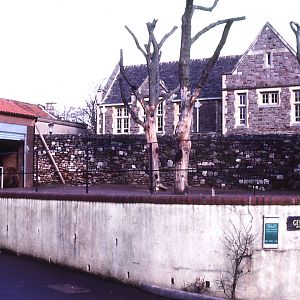
 
I've often wondered what zoo he was referring to. I can remember he was equally damning about what I later realised was the Casson Pavilion. Any thoughts as to where the camel enclosure with the 'step down' was?

I had to find my copy of the book to refresh my memory. I think the camel enclosure might be the one at Bristol, which was in use from about the mid 1970s until early 90s. It was sited between the rock garden and the boundary wall, on the north side the Clock Restaurant and the site was raised above the level of the rest of the zoo. There is a photo from 1984 by Hix in our Bristol Gallery. I think it that the fence in the photo was a later addition to prevent the problem that GD foresaw. There is a photo of the enclosure without the fence on p158 of An Illustrated History of Bristol Zoo Gardens (Brown, Ashby & Schwitzer, IZES, 2011). In 1992, this site was built over when the restaurant was enlarged, and the first floor of this building eventually became Bug World.


Incidentally, the other enclosure that GD mentioned was the gibbon cage containing concrete slabs with holes in them. This was the old enclosure for lar gibbons at Regent's Park, as you may have worked out already. This was a good size, but very stark, just wire mesh, metal struts and cement. It must be added that the gibbons did have a shelter for sleeping and they bred well over the years. These photos are by Nanook from 1999 and 1990. I think it was demolished at least 10 years ago.


A lot of people in this thread have cited context in terms of zookeeping and background, but I think another type of context is important: history. Buildings labeled as historical structures can only go through so much construction. This is a big reason for the problems with Lincoln Park Zoo's Kovler Lion House, though I note LPZ has recently announced plans to work on that exhibit.
 
I had to find my copy of the book to refresh my memory. I think the camel enclosure might be the one at Bristol, which was in use from about the mid 1970s until early 90s. It was sited between the rock garden and the boundary wall, on the north side the Clock Restaurant and the site was raised above the level of the rest of the zoo. There is a photo from 1984 by Hix in our Bristol Gallery. I think it that the fence in the photo was a later addition to prevent the problem that GD foresaw. There is a photo of the enclosure without the fence on p158 of An Illustrated History of Bristol Zoo Gardens (Brown, Ashby & Schwitzer, IZES, 2011). In 1992, this site was built over when the restaurant was enlarged, and the first floor of this building eventually became Bug World.


Incidentally, the other enclosure that GD mentioned was the gibbon cage containing concrete slabs with holes in them. This was the old enclosure for lar gibbons at Regent's Park, as you may have worked out already. This was a good size, but very stark, just wire mesh, metal struts and cement. It must be added that the gibbons did have a shelter for sleeping and they bred well over the years. These photos are by Nanook from 1999 and 1990. I think it was demolished at least 10 years ago.


Thanks :) That drop looks a lot more than the foot described in the book.
Actually I never saw the gibbon enclosure at London, but it looks like it was pretty good despite the concrete. Enough room to brachiate is the key. Where was that in the zoo?
 
Thanks :) That drop looks a lot more than the foot described in the book.
Actually I never saw the gibbon enclosure at London, but it looks like it was pretty good despite the concrete. Enough room to brachiate is the key. Where was that in the zoo?

GD actually wrote 18 inches, and at the left hand edge of the photo the step down can't be much more than that.
The old gibbon cage was more or less in the centre of the Zoo; if you came out of the Casson building on the Children's Zoo side and turned left towards Barclay Court, you would be on the footpath that ran alongside it.
 
The ZSL Gibbon cage was one of two similar ones- the other housed Macaws or Cockatoos if I remember.
 
Back
Top