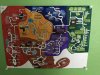
Here is my idea for a zoo, located in a temperate region of North America. Here I will describe the exhibit areas and their species. My zoo currently has the following exhibits:
Children's Zoo
When you enter the zoo, you arrive in what is known as the entrance plaza. It features a restaurant called the Zoo Grill, a WWF center (you can donate money to protect a certain endangered species), a Gift Shop, and a Starbucks Coffee.
Moving on, you will enter the Children's Zoo, featuring the Sky Safari (Similar to San Diego Zoo's Skyfari East), a Lorikeet Feeding Aviary, a Playground, a Conservation Carousel, and a Petting Farm. It also features the Zoo Studio, a space where anyone can make art to raise money for protecting species.
Animals and Exhibits of This Area:
Small Pond Next to Sky Safari: Black Necked Swan
Lorikeet Feeding Aviary: Rainbow Lorikeet
Small Pond with Shore: Chilean Flamingo, Crested Screamer
Waterfowl Lake:Black Crowned Night Heron, Northern Pintail, Common Shelduck, Red Breasted Pochard, African Darter, Coscobra Swan, Bar Headed Goose, Local Waterfowl.
North America After going through the Children's Zoo, you will arrive in the zoo's North American section. Featuring several forested yards and small exhibits, this area displays species that you will find roaming North America. It also features the River House, a building that displays 3 species of aquatic animals.
Animals and Exhibits of This Area:
Small Forested Habitat: Bobcat
Small Forested Habitat: North American Porcupine
Large Grassy Plain: Turkey Vulture, American Bison, Texas Longhorn
Small Aviary: Barn Owl
Large Forested Yard: American Black Bear
Small Yard with Large Pool: American Beaver
Small Yard with Large Pool:North American River Otter
Rhino Reserve If you turn right at the entrance to the North American area, you will arrive in the Rhino Reserve, an area that displays large African pachyderms. Here you will find the Hippo House (Indoor Space for the Hippos), the two species of African Rhino, and viewing into the Elephant exhibit (Will be described later).
Animals and Exhibits of This Area:
Large Yard: Southern White Rhino
Large Yard with Pool: River Hippo
Large Yard with Pool: Sacred Ibis, Marabou Stork, Eastern Black Rhino
Elephants of Tanzania This extremely large exhibit space replaces the old Elephant paddocks which were a part of the Rhino Reserve. It has two main viewing opportunities: The Rhino Reserve viewing space (this area features the elephant's pool) and the Tanzania viewing space (this area features the elephant's enrichment areas).
African Savanna This exhibit displays large African mammals (and some large birds) that roam the great savannas of Africa. It features an elevated walkway overlooking giraffes, zebras, and ostriches, and with the elephant exhibit directly behind these, it feels as if you are in the real savannas of Africa.
South America (and Field Habitats) After going through Elephants of Tanzania, the first left will lead you to the South American section of the zoo. This trail is a loop, and features some of South America's most amazing species. The trail loops around the Spectacled Bear exhibit, and ends on the same path that you began on.
This area also features two older field habitats near the Sky Safari (Similar to San Diego Zoo's Skyfari West). One holds Maned Wolves, and the other holds South African Cheetahs (While not from South America, this large habitat is perfect for Cheetahs, and isn't really a part of the main South American loop).
Animals and Exhibits of This Area:
Large Field Habitat: South African Cheetah
Large Field Habitat: Maned Wolf
Large Forested Habitat with Running Stream: Jaguar
Small Forested Habitat: White Nosed Coatimundi
Small Forested Habitat: Colombian Brown Spider Monkey
Small Forested Habitat: Red Uakari
Large Forested Habitat: Greater Rhea, Baird's Tapir
Large Forested Habitat: Bush Dog, Capybara, Giant Anteater (The exhibit is split in half with a short wall; Bush Dogs in one side, Anteaters and Capybaras in the other.)
Predator Passage This exhibit area is in the Historical section of the zoo, displaying older exhibits and buildings that have been slightly renovated over the years, adding more vegetation and expanding the exhibits. This area consists of five large, grassy exhibits with water filled moats, an expanded habitat for Polar Bears, and an otter exhibit.
Not quite yet, but I'm open to suggestions on a location in North America that has temperate weather and a lot of space. The name of that city will become the name of the zoo.
Not quite yet, but I'm open to suggestions on a location in North America that has temperate weather and a lot of space. The name of that city will become the name of the zoo.
Reptiles This exhibit area is located in the Historical section of the zoo, like Predator Passage. It features the Reptile House and three outdoor reptile exhibits. The reptile house has been drastically renovated over the years, going from rows of small terrariums housing many species of snakes, to larger terrariums holding many kinds of reptiles. The interior now resembles that of the San Diego Zoo and the Sacramento Zoo.
In the three outdoor reptile exhibits, the largest once held Alligators, but since their move to the River House, the exhibit now holds Snapping Turtles.
Himalayan Highland This exhibit is fairly new (built in 2017), and replaced an older area called the Feline House. It was home to animals like Ocelots, Fishing Cats, and Snow Leopards. The exhibit area was quite simple, but slightly poor for the animals, with mesh enclosures and indoor habitats with viewing. The Ocelots are now Animal Ambassadors, and the Fishing Cats live off exhibit.
The new exhibit features three mesh enclosures for Snow Leopards, a small yard for red pandas, and the Himalayas Café.
Hoofstock This exhibit is another Historical area of the zoo. It features eleven large yards for mainly hoofstock and a few birds. This area is slightly based off of the Saint Louis Zoo's Red Rocks exhibit. It also features a small garden.
Animals and Exhibits of This Area:
Medium Yard: Red Kangaroo
Medium Yard: Nubian Sommerring's Gazelle
Large Rocky Yard: Tadjik Markhor
Medium Rocky Yard: Sichuan Takin
Large Rocky Yard: Central Chinese Goral
Medium Yard: Visayan Warty Pig
Medium Yard: North Sulawesi Babirusa
Medium Yard: Okapi
Medium Yard: Lesser Kudu
Large Yard: Javan Banteng, Sarus Crane
Large Yard: Wattled Crane, Addra Gazelle, Helmeted Guineafowl
Apes This exhibit area is another Historic zoo landmark. It has been renovated multiple times, and now consists of a large habitat for Orangutans and two enclosures for gibbons.
African Rainforest This exhibit is a large building across from the South American section of the zoo. When you walk through the doors, you are instantly hit with a wave of humid air and the smell of a rainforest. Featuring a crocodile marsh, african primate exhibits, a fruit bat forest, an african fish tank, and more. This building is about half the size of the elephant exhibit.
Animals and Exhibits in This Area:
Large Pool Habitat: African Slender Snouted Crocodile
Small Enclosure: Egyptian Fruit Bat, Straw Colored Fruit Bat
Large Fish Tank: Zebra Mbuna, Electric Yellow Cichlid, Humphead Cichlid, Golden Mbuna, White Spotted Cichlid, Demanson's Cichlid, Livingston's Cichlid, Electric Blue Hap, African Jewelfish, Redfin Hap, Lionhead Cichlid
African Woods This exhibit is located on the African Forest trail, in between Gorilla Forest and African Rainforest. It features an elevated walkway overlooking grassy exhibits with trees and water features. It is slightly based off of the San Diego Zoo Safari Park's African Woods.
Animals and Exhibits in This Area:
Small Yard:East African Crowned Crane
Very Large Yard: Eastern Giant Eland, Sudan Red Fronted Gazelle
Large Yard with Pool: East African Sitatunga, Southern Steenbok, Yellow Billed Stork, White Faced Whistling Duck, Egyptian Goose
Large Yard: Okapi, Southern Gerenuk, Stanley Crane, Red Flanked Duiker, Kori Bustard