Zoo of the Future: A Photographic Gallery of Innovation in Zoological Gardens of the World

22. Lewa savanna, Zürich Zoo
Naturalistic indoor exhibits for big mammals

full

Photo: @German Zoo World

Tropical animals in a colder climate normally must have outdoor and indoor accommodations. For larger mammals, the indoor accommodation is too often technical stalls, dens or stables. At other times, indoor accommodation is entirely made of concrete and similar materials.

full

Photo: @twilighter

Zürich zoo opened its Lewa complex in 2020. It includes an over 2 ha mixed savanna enclosure for giraffe, white rhinos, scimitar-horned oryx, impala, ostriches and guineafowl. Side exhibits are inhabited by spotted hyenas, grey parrots, porcupines, meerkats, pancake tortoises and giant plated lizards. There are fake rock kopje formations and baobabs which hide feeders for animals. Theming showing in-situ conservation is prominently displayed, indeed the Lewa Wildlife Conservacy in Kenya has currently the largest surviving population of Grevy's zebras in the wild.

full

Photo: @twilighter

Part of this complex is a 2400 m2 building with indoor viewing for giraffe and white rhinos. The indoor exhibit, unusually, is naturalistic with live trees, dead tree trunks and soft ground. The building is (mostly ) hidden behind rocks from the outside, has transparent plastic cushion roof and viewing for visitors on two levels. Behind the scenes are the normal stalls for rhinos and giraffe. Therefore what visitors see can be called indoor paddocks. There is also an exhibit for naked mole rats.

full

Photo: @Philipine eagle
full

Photo: @German Zoo World

Similar exhibits:
Magdeburg Zoo is a mid-sized zoo which is forced to compete hard with larger Berlin and Leipzig nearby. It manages well, and has buildings with naturalistic indoor viewing for black rhinos and Brazilian tapirs. Like in Zürich, both species have more technical stalls behind the scenes. The tapirs share the indoor space with titi monkeys and several birds.

I like that this is a smaller zoo, and both buildings probably cost several times less than Zürich. Also, the design did not take away too much space available for the animals. The zoo, much more than Zürich, resisted the temptation to overuse electrified fences to protect the design, which can easily make limited space uncomfortable for animals.

full

Photo: @Toddy
full

Photo: @Kalaw

Lincoln Zoo made an attempt to remodel its giraffe house with aardvarks and meerkats. Note that I am not sure how much space the animals really have, and whether the smaller animals can go outdoors.

full

Photo: @pachyderm pro
full

Photo: @Milwaukee Man

There seems to be a cultural tradition among zoos which animals have naturalistic indoor exhibits and which not. Great apes often have greenhouse-like buildings, but cats or bears do not, even if they are similar in size, popularity and destructive potential to their surroundings. Hippos often get vegetation inside, but elephants and pigs do not. Grandiose indoor elephant exhibits exist at Zürich zoo and at the Wildlands Emmen zoo.

full

Wildlands Emmen zoo Photo: @RonBurrgundy

full

A grandiose new indoor exhibit for sun bears and binturongs in Berlin Tierpark. Even more remarkable is that until the late 2010s it was an exhibit for Asian lions, which featured a water moat indoors! @RonBurrgundy

full

Chimps at Osnabrück apparently do not constantly have access to this hall. This gives the vegetation time to recover. So it would be an example of a part-time extension, like in the post 4. The hall is apparently remodeled now and may no longer look like this. @twilighter

This topic gravitates towards huge and very expensive exhibits found only in handful of zoos. But I especially like this example of a much modest, cheaper but very good design.

Frankfurt Zoo in the 2010s remodelled its old Cat House with natural substrate, branches, rocks and potted plants. They are all essentially remodelled old cages, but incredibly improved visually.

full

Photos: @lintworm

The best enclosure once held clouded leopards and currently fossas. There are fabulous artificial branches with specks of painted lichen. They curve so that they accentuate the depth of the exhibit. Lots of living vegetation, hiding places for animals and a two-story view for visitors - both indoors and outdoors.

full

Photo: @Paul Kalisch
full

Photo: @nikola
full


full

Photos: @lintworm
 
Last edited:
22. Lewa savanna, Zürich Zoo
Naturalistic indoor exhibits for big mammals

full

Photo: @German Zoo World

Tropical animals in a colder climate normally must have outdoor and indoor accommodations. For larger mammals, the indoor accommodation is too often technical stalls, dens or stables. At other times, indoor accommodation is entirely made of concrete and similar materials.

full

Photo: @twilighter

Zürich zoo opened its Lewa complex in 2020. It includes an over 2 ha mixed savanna enclosure for giraffe, white rhinos, scimitar-horned oryx, impala, ostriches and guineafowl. Side exhibits are inhabited by spotted hyenas, grey parrots, porcupines, meerkats, pancake tortoises and giant plated lizards. There are fake rock kopje formations and baobabs which hide feeders for animals. Theming showing in-situ conservation is prominently displayed, indeed the Lewa Wildlife Conservacy in Kenya has currently the largest surviving population of Grevy's zebras in the wild.

full

Photo: @twilighter

Part of this complex is a 2400 m2 building with indoor viewing for giraffe and white rhinos. The indoor exhibit, unusually, is naturalistic with live trees, dead tree trunks and soft ground. The building is (mostly ) hidden behind rocks from the outside, has transparent plastic cushion roof and viewing for visitors on two levels. Behind the scenes are the normal stalls for rhinos and giraffe. Therefore what visitors see can be called indoor paddocks. There is also an exhibit for naked mole rats.

full

Photo: @Philipine eagle
full

Photo: @German Zoo World

Similar exhibits:
Magdeburg Zoo is a mid-sized zoo which is forced to compete hard with larger Berlin and Leipzig nearby. It manages well, and has buildings with naturalistic indoor viewing for black rhinos and Brazilian tapirs. Like in Zürich, both species have more technical stalls behind the scenes. The tapirs share the indoor space with titi monkeys and several birds.

I like that this is a smaller zoo, and both buildings probably cost several times less than Zürich. Also, the design did not take away too much space available for the animals. The zoo, much more than Zürich, resisted the temptation to overuse electrified fences to protect the design, which can easily make limited space uncomfortable for animals.

full

Photo: @Toddy
full

Photo: @Kalaw

Lincoln Zoo made an attempt to remodel its giraffe house with aardvarks and meerkats. Note that I am not sure how much space the animals really have, and whether the smaller animals can go outdoors.

full

Photo: @pachyderm pro
full

Photo: @Milwaukee Man

There seems to be a cultural tradition among zoos which animals have naturalistic indoor exhibits and which not. Great apes often have greenhouse-like buildings, but cats or bears do not, even if they are similar in size, popularity and destructive potential to their surroundings. Hippos often get vegetation inside, but elephants and pigs do not. Grandiose indoor elephant exhibits exist at Zürich zoo and at the Wildlands Emmen zoo.

full

Wildlands Emmen zoo Photo: @RonBurrgundy

full

A grandiose new indoor exhibit for sun bears and binturongs in Berlin Tierpark. Even more remarkable is that until the late 2010s it was an exhibit for Asian lions, which featured a water moat indoors! @RonBurrgundy

full

Chimps at Osnabrück apparently do not constantly have access to this hall. This gives the vegetation time to recover. So it would be an example of a part-time extension, like in the post 4. The hall is apparently remodeled now and may no longer look like this. @twilighter

This topic gravitates towards huge and very expensive exhibits found only in handful of zoos. But I especially like this example of a much modest, cheaper but very good design.

Frankfurt Zoo in the 2010s remodelled its old Cat House with natural substrate, branches, rocks and potted plants. They are all essentially remodelled old cages, but incredibly improved visually.

full

Photos: @lintworm

The best enclosure once held clouded leopards and currently fossas. There are fabulous artificial branches with specks of painted lichen. They curve so that they accentuate the depth of the exhibit. Lots of living vegetation, hiding places for animals and a two-story view for visitors - both indoors and outdoors.

full

Photo: @Paul Kalisch
full

Photo: @nikola
full


full

Photos: @lintworm
The indoor giraffe space at Lincoln Park seems pretty small, but it may just be an illusion and it's also likely they have additional offshow space. The Aardvarks and Meerkats have no outdoor access, but I honestly don't really see that as a problem.
 
23. Lion indoor and outdoor exhibit, Wuppertal Zoo
Continuous indoor and outdoor landscaping

full

Photo: @Eagle

full

Photo: @Malayan Tapir

This lion enclosure is remarkable not only because it is one of the biggest in a city zoo (about 1 hectare). Here, indoor and outdoor exhibits fluidly merge into each other. Visitors pass between some artificial rocks with openings. First, they look at the lions outdoor through the glass, and then at the indoor exhibit. Then they go out and again look at the lions across a water moat. Few zoos make such a connected experience.

full

Photo: @snowleopard
full

Photo: @Maguari
full

Photo: @Eagle

Interestingly, the lions and adjacent Siberian tigers can be also seen from a cycling path on a bridge passing over the extension of the zoo.

Similar exhibits:
In a much smaller scale, another successful united indoor and outdoor landscape is the Congo Peafowl aviary in the giraffe house at Wilhelma Zoo. It is not easy to choose big-leaved plants resembling rainforest species which survive snowy German winters!

full

Photo: @Tomek
full

Photo: @lintworm
 
24. Undescribed comb jelly, Monterey Bay Aquarium
Education - science in zoos 1.

full

Photo: @SwampDonkey

Zoos do much valuable science research, but they usually struggle to show it properly. Historically, practically all knowledge about the biology of wild animals was gathered by zoos and enthusiasts keeping animals in captivity. Today, most zoos which do valuable research don't publicize it well.

An especially strong science institution is the Monterey Bay Aquarium, which is facing a 3600 m deep undersea canyon. It regularly shows its science projects, including on deep sea animals. One offshoot of this research was the exhibition of deep sea animals, including this comb jelly or ctenophore Cydippida sp. nov. not yet described by science. It is informally called Red X. More about research at the aquarium can be found here.

full

Few scifi movies invented extraterrestrial creatures as strange as this Pom Pom Anemone Liponema brevicorne. @Northwest_FIsh_Keeping

Similar research:
There is lots of valuable research done by zoos or by scientists affiliated with zoos. However, it is difficult to reach precisely because zoos are not good in publicizing it.

I chosen Cologne Zoo and its program of reptile research in Vietnam. Vietnam is an extremely rich region of biodiversity, with tropical and temperate species and ones confined to local habitats like karst mountains and offshore islets. It is also very endangered - like Kouprey and Saola, likely both extinct, turtles and lizards are intensively hunted for food and trade.

full

@Maguari

Scientists from Cologne, together with Vietnamese scientists, described several species new to science. Two of them can be seen in the zoo. Vietnam gecko Gekko scientiadventura was named after the popular German science TV program Abenteuer Science where it was first shown.

full

Photo: @wstefan

Psychedelic rock gecko Cnemaspis psychedelica has unusual coloration and is already threatened by the pet trade.

Alwetterzoo Munster immortalized itself by the Munster yellow-toothed cavy Galea musteloides monasteriensis, a subspecies or a small species described in Bolivia in 2004 by scientists affiliated with the zoo. It can be seen in a number of European zoos.

full

Photo: @Animal
 
25. Budongo Trail, Edinburgh Zoo
Education - science in zoos 2

full

Photo @Tunanta

Many aspects of animal life are practically impossible to study in the wild. One example is intelligence and mental capabilities of great apes. In 2008, Edinburgh zoo opened a big chimpanzee exhibit which gives excellent living place for the apes. It also allows visitors to watch behavioral research done in collaboration with St Andrews University. Visitors can look into the research room and watch scientists and chimps which voluntarily enter the study area to participate in different puzzles and tests. There is also an information about the conservation field work in Uganda funded by the Royal Zoological Society of Scotland.

full

Photo @felis silvestris

In the Budongo exhibit, especially good is the possibility for apes to disperse into sub-groups in multiple rooms connected by overhead tunnels. Worth copying for other zoos is also the dense bamboo vegetation outdoors. It gives apes chance to disappear from each other outdoors, and seems to survive the destruction from the chimps. There is also a lot of climbing opportunities, especially thin ropes. The building will not, however, win any prizes for its beauty. It reminds me of a cross between a business office and a collapsed construction scaffolding.

full

Photo @epickoala123

Similar exhibits:

At the Leipzig Zoo, the ape hall Pongoland also gives visitors a chance to look into a behavioral study room. It is linked to the Wolfgang Köhler Primate Research Center. And Duke Lemur Center is open to visitor tours, but is not really a zoo but a world class primate research facility dedicated to lemurs and other prosimians.

Minnesota Zoo, Bronx Zoo, Cincinnati Zoo and Leipzig Zoo all show field research and conservation of tigers. Minnesota and Leipzig have mock research camps, and in Bronx and Cincinnati you can see how a camera trap operates - by photographing yourself. The first two tiger exhibits also have webpages at Zoolex here and here.

full

If you dream of studying wild animals, think again. Field conditions are not pleasant and job security is non-existing. Mock tiger research camp at Minnesota Zoo @Milwaukee Man

full


full

Cincinnati Zoo, photos: @Moebelle
 
Last edited:
One example is intelligence and mental capabilities of great apes. In 2008, Edinburgh zoo opened a big chimpanzee exhibit which gives excellent living place for the apes. It also allows visitors to watch behavioral research done in collaboration with St Andrews University.
If you are looking for zoos that are excellent at great ape research, Lincoln Park Zoo is arguably the leading zoo to look towards in the United States, although research also happens at a number of other facilities with varying qualities of exhibits.
 
25. Budongo Trail, Edinburgh Zoo
Education - science in zoos 2

full

Photo @Tunanta

Many aspects of animal life are practically impossible to study in the wild. One example is intelligence and mental capabilities of great apes. In 2008, Edinburgh zoo opened a big chimpanzee exhibit which gives excellent living place for the apes. It also allows visitors to watch behavioral research done in collaboration with St Andrews University. Visitors can look into the research room and watch scientists and chimps which voluntarily enter the study area to participate in different puzzles and tests. There is also an information about the conservation field work in Uganda funded by the Royal Zoological Society of Scotland.

full

Photo @felis silvestris

In the Budongo exhibit, especially good is the possibility for apes to disperse into sub-groups in multiple rooms connected by overhead tunnels. Worth copying for other zoos is also the dense bamboo vegetation outdoors. It gives apes chance to disappear from each other outdoors, and seems to survive the destruction from the chimps. There is also a lot of climbing opportunities, especially thin ropes. The building will not, however, win any prizes for its beauty. It reminds me of a cross between a business office and a collapsed construction scaffolding.

full

Photo @epickoala123

Similar exhibits:

At the Leipzig Zoo, the ape hall Pongoland also gives visitors a chance to look into a behavioral study room. It is linked to the Wolfgang Köhler Primate Research Center. And Duke Lemur Center is open to visitor tours, but is not really a zoo but a world class primate research facility dedicated to lemurs and other prosimians.

Minnesota Zoo, Bronx Zoo, Cincinnati Zoo and Leipzig Zoo all show field research and conservation of tigers. Minnesota and Leipzig have mock research camps, and in Bronx and Cincinnati you can see how a camera trap operates - by photographing yourself. The first two tiger exhibits also have webpages at Zoolex here and here.

full

If you dream of studying wild animals, think again. Field conditions are not pleasant and job security is non-existing. Mock tiger research camp at Minnesota Zoo @Milwaukee Man

full


full

Cincinnati Zoo, photos: @Moebelle
A similarly wonderful example that is also within Edinburgh Zoo is Living Links with squirrel monkeys and capuchins. This one even has both control and experimental groups, which is something I have never seen done at any other zoo, although I don’t know enough about exactly how it works to explain in any further detail.
 
Just a note: the photo from epickoala123 is outdated, that whole climbing frame has been removed since that photo was taken about a decade ago but there is still another huge climbing frame behind it.
 
26. Pointers in exhibit, Madagascar, Bronx Zoo

full

Photo: @Zebraduiker
full

Photo: @zebedee101

A good innovation is often not expensive nor complicated. The Madagascar building in Bronx Zoo contains lots of interesting things. There are diverse Madagascar animals and carefully replicated diorama-like habitats. However, many Zoochatters note that animals have no outdoor access and most exhibits are rather small, especially for the crocodiles. But the educational message is very well done.

In particular, there are small circles pointing at special spots inside exhibits. They point gadgets and educational theming inside exhibits. For example there are lemur bones inside the fossa exhibit. They are probably illustrated somewhere in the Zoochat gallery, but I could not find them in over 300 pages of photos!

I am surprised why similar pointers are not standard in zoos. A perennial problem of zoos is that visitors cannot find a hidden animal and go away disappointed. Similar pointers could highlight usual sleeping or hiding places of animals. Small arrows inside the exhibit would be equally useful. It would be best if these pointers were easy to move around, too.

full

Photo: @AnaheimZoo
full

Photo: @fkalltheway

Similar concepts:
I remember only small metal outdoor tubes in Apenheul, which looked like tiny telescopes and pointed at animal statues hidden between trees.
 
Last edited:
A few zoos I’ve been too here include little signs about where the animals might be - Shepreth has some in its reptile area with arrows on the glass of the vivariums pointing to the favourite spots the animals like to sleep in - handy as a few of the animals like to be around the corners. Whipsnade has some about the pandas and their favourite spots in the trees. In outdoor enclosures signs work well vs stationary / stick ons I think.

Some zoos also have good signage about animals who sleep in particular ways (Hamerton’s Seriema isn’t dead!) or rest in a manner that people might worry about or report.

All the ‘where are we’ signs are a good idea, helps visitors learn about the animals and stand a better chance of seeing them.

Educational and helpful signs add so much to a visit (for those of us who enjoy reading them of course!).
 
27. Borrowed backgrounds, several zoos

full

Photo: @snowleopard

Zoo designers often forget that visitors can see beyond the zoo enclosure and often beyond the zoo. Here are several examples of zoos which made good use of the so-called borrowed landscape from outside the zoo.

Especially famous is the classic coyote exhibit in the Arizona-Sonora Desert Museum. The collared peccary / javelina exhibit has its own page on Zoolex. It describes, among other, how the zoo developed and uses the little visible mesh called Invisinet to hide barriers of its exhibits.

The zoo uses the same principle for smaller exhibits, too. This outdoor enclosure for chuckwalla lizards has hidden barriers behind, which makes it blend with the desert behind.

full

Photo: @snowleopard

The American West is said to have most magnificent landscapes of the world, and more than one zoo benefited from this. All the way to the north, there is Alaska Wildlife Conservation Center.

full

Photo: @Pleistohorse

However, no zoo could give such a fantastic backdrop of a rolling boreal forest to Siberian tigers and polar bears as the Orsa Bear Park in Sweden. Sadly, this zoo closed after the Covid lockdown. It is a sad reminder how even the greatest zoos in the countryside are vulnerable to a drop in numbers of traveling visitors. The last bears and tigers moved to other zoos in 2023.

full

Photo: @Jodea

Plains and hills... I have seen wildlife books and films which shown Przewalski Horses at Highland Wildlife Park as wild ones. No wonder why:

full

Photo: @Captain Callum
full

Photo: @Jackwow

On a much smaller scale, San Diego Zoo opened its orangutan and siamang exhibit in 1982. It is oldish and apes have artificial metal poles. However, note how the view was carefully designed. The apes are seen on the borrowed background of palms and other trees, which grow far behind on another slope of a steep canyon.

full

Photo: @zankara

Such views are not automatic. Some designers tried to make naturalistic panoramas and put much money and effort into theming. However, the effect was ruined by a tower, a whole row of historic houses or a noisy railway bridge behind the exhibit.

Also San Diego Zoo opened the Elephant Odyssey with California condor aviary in 2009. It was one of first attempts to display these critically endangered birds to the public, outside the off-show breeding centers, and of course, the wild. The zoo visibly tried to make a good theming. It made artificial rocks, a tree and bones of a prehistoric mammoth and bison. But the effect was spoiled by a visible mesh, a building and a white water tank behind. It appears that few years later, bushes in the background grew taller, hiding the unfortunate water tank.

full

Photo: @mstickmanp

Then in the same San Diego Zoo, the Africa Rocks exhibits opened in 2017. In this set of exhibits, views are again designed. Paths and viewpoints were planned so that, wherever possible, visitors will look in a direction away from any distractions in the background. Bushes, trees, rocks and mounds of earth were strategically positioned to hide anything undesirable sticking out behind.

full

Photo: @mweb08

So, we have exhibits with the background of a real desert, forest, mountains, plains... what about the sea?

A zoo exhibit can also borrow background from another exhibit. This is the case in the Steller Cove in the Oregon Zoo. Looking at rockfish and sea urchins, one can see a sea otter swimming in the background. The illusion is good, even if sometimes a sea star crawls up the separating glass panel and appears suspended in mid-water. Similar effect was used, among others, in no longer existing exhibits of piranhas and giant otters at Dortmund and fish and penguins at the old Bristol Zoo.

full

Photo: @snowleopard

A memorable background is not always naturalistic. Taronga Zoo has been famous for many decades for the views of giraffe in front of the Sydney harbour and the Opera House.

full

Photo: @Jabiru96
 
Last edited:
28. Changing styles of zoo design in the West
Three indoor jungles and one Antarctica

full
Photo @TinoPup

Large indoor exhibits are among the most interesting and also expensive features of modern zoos. Much can be said about every one of them. However, I wanted to concentrate on the style of exhibiting.

World of Birds at Bronx Zoo (1972) is an example of the preferred style of zoo design for much of the last 100 years: naturalism. Zoo designers faithfully copied trees and rocks from a real rainforest. This created fascinating landscapes, which have been compared to the famous dioramas at the American Museum of Natural History in New York.

One of the reasons for naturalism was the desire to create the best living conditions for animals possible. Another reason was the idea that a zoo should educate about whole ecosystems, not only animals but also plants, inanimate landscapes, and their interrelationships. Such a zoo would link zoology with botany, ecology, geology, and ethnography.

It is difficult to believe that the aviaries are over 50 years old because they are among the very best of their kind. I hope they survive the current restoration and raise fascination with nature among next generations of visitors. The same principles of naturalism were used in further exhibits at the Bronx Zoo, including Jungle World (1985) and Congo Gorilla Forest (1999), for South Asian and African rainforest animals, respectively.

full


full

Photos: @TinoPup

Later, exhibits in Western zoos often departed from naturalism. In the 1980s-2010s, entertainment and cultural or pseudo-cultural theming became very popular. Most common and notorious are probably ruined temples, which are often inspired by the Indiana Jones movie franchise.

The most over-the-top examples of this style include an Alaskan mine tunnel with an animated ghost in Erlebniswelt Gelsenkirchen, Germany, an orangutan exhibit built as a Thai temple from real marble in Pairi Daiza, and a railway station and tracks in the lion enclosure in the London Zoo. Somehow, I decided not to put photos.

Usually, the function of such cultural theming is simple visual entertainment. It educates nothing about animals, does not serve as behavioural enrichment, does not educate about foreign cultures portrayed. Most often, such theming is not even accurate. It can be described as how people in Europe imagine themselves Mayan ruined temples which they know only from Hollywood movies.

full

Photo: @NigeW

Islands in Chester Zoo, opened in phases between 2015 and 2017, imported literally tons of exotic-looking artifacts from Indonesia, including these Balinese boats. At least they are authentic. Although a similarly authentic artifact would be a skyscraper. Java has a higher population density than England, and Jakarta has more citizens than London.

Islands as a whole have different styles of exhibitry. There is a naturalistic indoor hall, a themed outdoor aviary and paddocks, a boat ride and purely functional ape enclosures. Animals as diverse as bantengs, orangutans, tigers, cassowaries and vampire crabs generally have lots of space, which is often not the case in American exhibits. Congratulations for the choice of both endangered megafauna and unusually displayed invertebrates.

full

Photo: @twilighter

Later the zoo design often changed towards the utilitarian or technical. Here is the Orientarium, a 7.5 ha complex of buildings and enclosures for South Asian animals opened in Łódź Zoo in 2022. It consists of four parts and shows Asian elephants, orangutans, lion-tailed macaques, gibbons, Javan langurs, sun bears, malayan gharials, zebra, and black-tipped reef sharks together with sea fish and many other species.

Note the lack of theming. The building could just as well be a modern mall or a business office. The underwater view of elephants is impressive - one of probably only three existing in the world's zoos, together with Leipzig and Zürich. But little attempt was made to hide man-made elements. Walls, visitor paths, and the roof are clearly visible. There are plants, but they don't attempt to recreate any feeling of a rainforest. Elephants have enrichment, soft ground, and lots of space; indeed, this is apparently the largest indoor space for elephants in the world. But no attempt was made to create an illusion of a natural habitat. Orientarium, nevertheless, became extremely popular.

full

Photo: @Miss Gulch

And there is one more type of theming: completely artificial or modernistic. An example is the Polk Penguin Conservation Center (2016) at Detroit Zoo. This type is most often found in aquaria, which can hardly be completely naturalistic, with the visitors unable to submerge underwater.

The centerpiece is a large cooled and air-filtered area for king, gentoo, chinstrap, macaroni, and southern rockhopper penguins. In the entrance area, there is a theater-like show with giant screens, blasts of cold air, and water spray. It shows the epic ship voyage of the Antarctic explorer Ernest Shackleton.

So, we have four styles of exhibits: naturalistic, (pseudo)cultural, technical/utilitarian, and modernist/futuristic. I suspect that other people, especially with more knowledge of architecture and zoos, could describe styles of zoo exhibits differently. Any ideas? And which is the best style? I will write about it in the next post.

full

A hint: modern times are not the first wave of pseudo-cultural theming in zoos. In the 19th to the early 20th century, zoos were full of mud huts, temples, teepees, pagodas, and totem poles. Most were demolished long before the present time. The few surviving ones include the Egyptian temple in Antwerp and these bison stables in Berlin Zoo. To the left - a Native American theming for American bison, to the right: Russian theming for European bison. @FunkyGibbon
 
And there is one more type of theming: completely artificial or modernistic. An example is the Polk Penguin Conservation Center (2016) at Detroit Zoo. This type is most often found in aquaria, which can hardly be completely naturalistic, with the visitors unable to submerge underwater.
I'm not sure "completely artificial or modernistic" is an apt description of this phenomenal exhibit. While the building itself is certainly modern architecture, the exhibit itself includes a massive water feature and rockwork designed to be as naturalistic as possible. While it is an awesome and innovative exhibit (one of the best I've ever seen for any animals), I certainly wouldn't describe it as artificial:
full
 
Yes, I mean that the outside is completely artificial. I actually plan a whole post about crazy artificial theming in Asian aquaria.
 
Later, exhibits in Western zoos often departed from naturalism. In the 1980s-2010s, entertainment and cultural or pseudo-cultural theming became very popular. Most common and notorious are probably ruined temples, which are often inspired by the Indiana Jones movie franchise.

...

Usually, the function of such cultural theming is simple visual entertainment. It educates nothing about animals, does not serve as behavioural enrichment, does not educate about foreign cultures portrayed. Most often, such theming is not even accurate. It can be described as how people in Europe imagine themselves Mayan ruined temples which they know only from Hollywood movies.

It would be interesting to see what the upcoming generations will think about this era of zoological garden in 50 or 100 years. Especially as it seems right now that cultural appropriation will get a bigger thing than it is now.
 
It would be interesting to see what the upcoming generations will think about this era of zoological garden in 50 or 100 years. Especially as it seems right now that cultural appropriation will get a bigger thing than it is now.

My guess is that over the next years, almost all today cultural theming will be rebuilt or disintegrate with age. People will not know that it existed, except few fans of zoo history.
 
It would be interesting to see what the upcoming generations will think about this era of zoological garden in 50 or 100 years. Especially as it seems right now that cultural appropriation will get a bigger thing than it is now.

I hope that with more awareness zoos will at least somewhat rethink their cultural theming. Most of the cultural theming can be described as tasteless but harmless in my opinion and I am not aware of any major backlash yet (but I haven't searched for it either). So I am not afraid that it will be rebuild or desintegrate in a few years or even decades. But I think it is likely we will see more of "authentic" cultural theming that looks somewhat more realistic and is done with the origin in mind.
 
Most of the cultural theming can be described as tasteless but harmless in my opinion and I am not aware of any major backlash yet (but I haven't searched for it either).

I have registered some backlash to cultural theming around elephant enclosure at Prague zoo. I saw some twitter accounts of Indian tourists being angry about something in their pics but I never understood what exactly is the problem.

It would be interesting to see what the upcoming generations will think about this era of zoological garden in 50 or 100 years. Especially as it seems right now that cultural appropriation will get a bigger thing than it is now.

Cultural appropriation has been popular in european "entertainment" architecture for at least half a millenium. Zoos only follow trend. Not much cultural theming in zoos is built to last. But whatever will survive next 50-100 years I guess will be regarded with nostalgia?

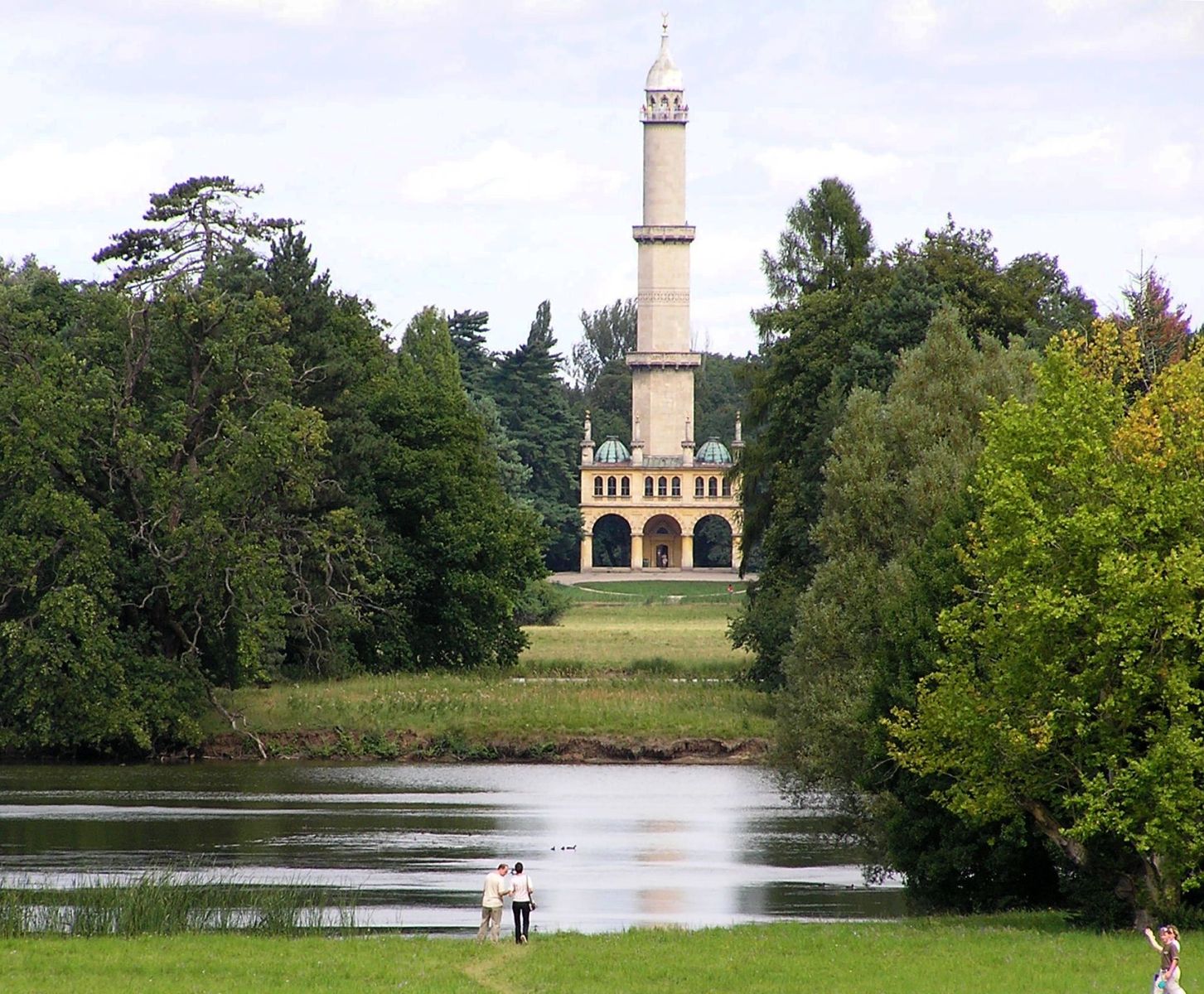
How do we feel about local (Central European) historical noble estates with their gardens littered with more or less badly done copies of Chinese pavilions, Swiss mountain cottages, Italian grottos, Dutch houses, Roman aquaducts, Greek temples, kolibas, Turkish minarets, or fake gothic castle ruins?

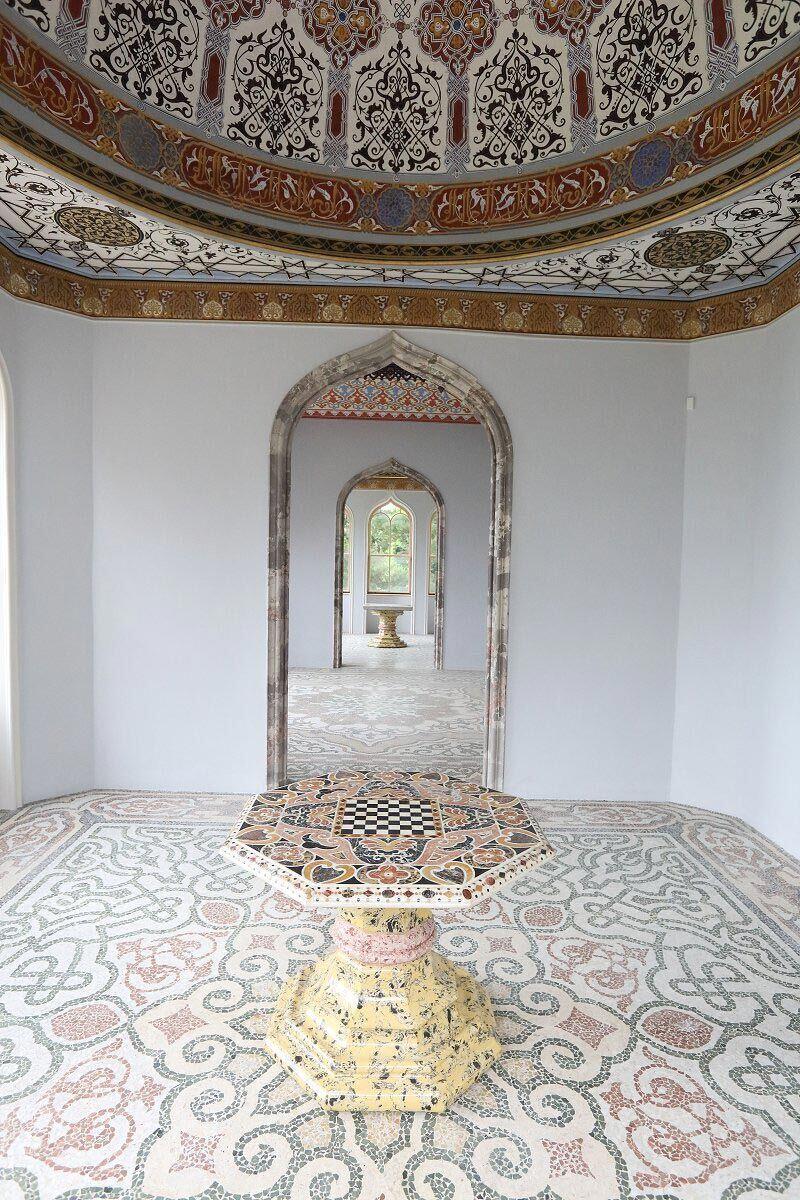
The 60 meters tall Minaret built in late 18th century within noble estate park Lednice by the owner (devout catholic) to entertain his guests to nice views from the top of the tower. 1 hour north of Vienna. With renovated pseudo-muslim ornaments inside. A kitchy and stupid cultural appropriation. Due to its age and popularity with locals, it´s today under state protection as part of national heritage and integral part of an UNESCO site (400k attendance). Will Indian pagoda at Berlin zoo or Flower Temple at Pairi Daiza fare similarly?

images-600-1-0-0.41421300+1435470958Kobyl%C3%AD+181.jpg


img00184.jpg
 
Last edited:
But whatever will survive next 50-100 years I guess will be regarded with nostalgia?
...
Will Indian pagoda at Berlin zoo or Flower Temple at Pairi Daiza fare similarly?

Probably the best example therefor is the Egyptian temple at Antwerpen. If such remarkable buildings like Berlins pagoda will survive the time, it is iMo possible, that it will be similar remarkable as Antwerps most outstanding zoo building.
 
29. What makes a timeless zoo exhibit?
Everlasting exhibits which remained good for decades

full

Photo: @Animal

When making this thread, I noticed that some exhibits are already decades old but remained good. Others did not age well. Here are some perennially good exhibits which have been popular among generations of visitors

The African panorama at Tierpark Hagenbeck is actually the first ever exhibit built in modern times with naturalism in mind. It is 117 years old. It opened in 1907 and in 1997 has been declared a monument by the Hamburg city council. It combines four different exhibits - a flamingo pond, a hoofstock paddock which recently holds plains zebra and ostrich, an exhibit of lions and tall rocky pinnacles. They are separated by hidden fences. There is also a concealed path to watch the lions up close.

By modern standards of animal care, the lion exhibit is much too small and flamingos should not be kept flightless. But the panorama is still attractive, still makes a good impression. I wonder how the zoo will solve the problem of space for the lions.

These exhibits ostensibly only replicate a nature for an amusement attraction, but I would argue it is art, and often a high quality one. At least one zoo historian claims the same. Why art? They evoke a sense of beauty. They are not random pieces of habitat, but ones chosen and distilled to create a tiny landscape, using many of the classic art principles of perspective, composition and so on. And their non-triviality and high quality is proven by that tens of zoos and city parks tried the same, but failed to achieve a similar effect.

full

Photo: @AnaheimZoo
full

Photo: @Gomphothere

African Plains at Bronx Zoo are 84 years old, having opened on May 1, 1941. Like in Hamburg, they show savanna animals separated by hidden moats. But it is a much larger area of meadows, clumps of trees and some low rocks, with several enclosures for lions, African ungulates and birds. The interest of the zoo director Osborn was to show relationships in nature. So lions and nyala appear to share the same space to illustrate the ecological relations between predators and prey, not only because it looks cool.

In the following decades, Bronx Zoo employed a team of architects and used similar principles. The result is a whole palette of very good exhibits - World of Birds, Asian plains, African highlands for gelada and Nubian ibex, Himalayan highlands, Jungle World and Congo Gorilla Forest. Although some individual enclosures are too small or lack outdoor access, they remain interesting and attractive decades later. And will likely be enjoyed in future by new generations of zoo visitors, until their structural material physically breaks down.

Good zoo landscaping uses the same principles as good landscape architecture. They have been known for centuries. Designers of English country residences developed panoramic views in a similar way as modern zoos, including the use of hidden moats, which in Britain are called haha.

full

Photo: @Philipine eagle

Classical Gardens of Suzhou created in the 11th-19th centuries in China and this otter exhibit in Zürich Zoo both use the same methods to construct a little self-contained landscape in a small space, and to restrict and direct the view of a visitor.

This enclosure for Eurasian otters in is about 54 years old, having been built about 1969 / 1970.* But if not for the rather heavy concrete front wall, one might not notice its age. There is sufficient space, an underwater view, a look into the otters sleeping den, and the landscaping of boulders and native plants resembling a Swiss river. Wild otters sadly disappeared in Switzerland decades ago and did not come back until now.

full
Photo: @Maguari

Grzimek House in Frankfurt Zoo is 45 years old. It opened in 1978 and remains one of the best buildings for small mammals worldwide. While few exhibits had to change from larger to smaller mammals, they hold remarkably well.

Much of the charm are well constructed small indoor landscapes. In the night section, they include a bat cave with stalactites and a night savanna for aardvarks. In the day section, there is, among others, a rocky landscape for hyrax and a jungle enclosure for agoutis and marmosets. A visitor sees it immediately after entering, and when leaving the building, one realizes he looks at it again but at the treetop level.

full

Photo: @geomorph

Penguin Encounter at the SeaWorld San Diego
is 40 years old, having opened in 1983. It is completely artificial and in a commercial theme park. But it remains very interesting, penguins breed there, and one might not notice its age if not for the style of short educational films played on the TV screens.

There are the only emperor penguins in the Western world, a moving walkway in front of the 30 m viewing window and a gallery to sit and watch penguins for a longer time. There is a split underwater and above water view, real ice spread daily on the floor, a backdrop of rocks and a painted mural and an Antarctic light cycle which makes the exhibit appear gloomy on photos taken in summer. Plus a smaller but similar exhibit of Northern puffins, murres and ducks.

full

Photo: @snowleopard

Woodland Park Zoo in Seattle, together with Bronx, Minnesota, Zürich and Frankfurt zoos is known for having several perennially good exhibits. One is this grizzly exhibit in the Living Northwest Trail, which contains a stream and an underwater view. The composition is as carefully done as in Hagenbeck, but the center of the visitors view is a lowered stream, not the higher rocks. It opened in 1994, so is only 30 years old, but will likely stand the test of time. Other good exhibits at the Woodland Park Zoo include the gorilla habitat and the jaguar habitat.

So what it takes to make an timeless zoo exhibit, which will remain good for tens of years? I suggest the following characteristics:

1. Space. Expectations how much space should be dedicated to animals grow and grow. Good exhibits were always spacious for their time.

2. Theming is kept subtle. Rocks, if they are appropriate for the animals, are very realistic and not too overdone. Good exhibits contain much greenery, unless they represent a naturally barren habitat.

3. Using the classic principles of landscape architecture, especially composition - from the sides to the center showpiece. If there is something in the background behind the exhibit, it is hidden from view by rocks, trees or similar.

4. Buildings and man-made elements are hidden or maximally discreet and unobtrusive. Fashions in architecture change over time. At best, visitors will simply recognize 'it is so 2020s' and at worse they simply say it is obsolete. A creation which today is most fashionable and cutting edge will be outdated in 20 years.

5. There should be no cultural theming. Hundreds of zoos for over a hundred years built hundreds of cultural artifacts: exotic temples, huts, pagodas, ruins, totem poles and whatever. Most of them have been demolished long ago already, and virtually none was remarkable. There is a saying natura artis magistra or nature is the master of arts, and it seems to be at work. Time mercilessly eliminates cultural theming from zoos.

full

Photo: @twilighter

And for the contrast - Lubetkin Penguin Pool at the London Zoo. It opened in 1934 and is 25 years younger than the panorama at Hamburg. It managed something exceptional - zoologists at ZSL could not find an animal which could live in it comfortably. Currently it stands empty, and worse, it is a Grade I listed historical building. It seems that London historians and architects care about the unusual but not about aesthetics nor utility.

*It was difficult to track the precise age of old zoo exhibits from the pre-internet era, and the age is approximate.
 
Last edited:
Back
Top