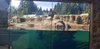
AH, yeah, I see it now, It was hard for me to tell.Yes, that is an anaconda, but those are giant otters, not sea lions.
AH, yeah, I see it now, It was hard for me to tell.Yes, that is an anaconda, but those are giant otters, not sea lions.

Funnily enough, I think those same sea lions were temporarily at Zoo Tampa in 2014.I believe the same people own them, they just do the traveling show (Sea Lion Splash) now and do not operate the place you can actually go to, IIRC. It was always two businesses with the same animals operating out of the same base location.
That is correct, I actually missed the show, which I was kind of disappointed about, but they also show up at the state fair, and I have seen them there. I would not be surprised if they were back at the FL State Fair this February.Funnily enough, I think those same sea lions were temporarily at Zoo Tampa in 2014.

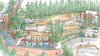
Very good points. Everything is in the infancy of planning at this point. They have, at least, reached out and done survey panels in the community.I'd keep in mind that these renderings, as pretty as they are to look at, are very conceptional and won't be a completely accurate representation of the final product, especially with some of these projects up to two decades away from completion. I think it's telling that no site plans have been released yet.


An issue I see is that bottlenose dolphins and botos have very different husbandry needs that would make them difficult to be integrated into a South American exhibit. Botos don't need the same depths as bottlenose which would make bottlenose dolphins far more expensive and, like you said, are a AR nightmare. Plus, the nearby Clearwater Marine Aquarium already has a very extensive dolphin complex that's designed for this purpose, so I can't see the zoo investing in dolphins as a part of this project.Though I agree that Cali SL need rescue holding another more local species need it as well.....dolphin. And having "freshwater dolphin" in FL I would like to see bottlenose as boto replacements. I know the purists won't like it (let alone the ARs) but it makes sense if that's the path Lowry chooses to go
I'd keep in mind that these renderings, as pretty as they are to look at, are very conceptional and won't be a completely accurate representation of the final product, especially with some of these projects up to two decades away from completion. I think it's telling that no site plans have been released yet.

This. I have a stack of five or so masterplans from my zoo from over the past 100 years. It's good to get excited and have some optimism... but there's a long, long road between the first sketched and press releases and what actually greets the public on opening day.

The value-engineering fairy at work, folks.


These are valid points, but the realities of importing a new species of pinniped into an AZA zoo are difficult to overcome, if not impossible. Using stand in species is pretty common, especially with visually similar - and in this case probably 95% of visiting guests would not be able to tell the difference side by side. It does weaken the theme to purists, and I am closer to the "purist" side than the other, but it is what it is.I am personally hoping for South American sea lions for several reasons.
- California sea lions aren't endangered, and if the practice of encouraging breeding in captivity was abandoned, this species would still be stable in captivity. For the zoos that would no longer hold sea lions from California, because the population would decrease somewhat before becoming stable, they could instead house breeding groups of South American sea lions. A new species of pinniped would be greatly appreciated by zoo fanatics like me, but also to the general visitor who pays at least a little bit of attention to the differences between zoos.
- The theme of this expansion would be weakened by introducing a species not native to South America.
Honestly, I don't think a coastal North America and coastal South America habitat are going to be appreciably different at all. The animals may be to some degree, but the zoo built environment will be nearly identical. As far as stand in animals go, this is akin to Amur leopards in African areas of AZA zoos, it is a stand in because it is what they can get and pretty much no one outside of the zoo world is going to be able to tell the difference, or really even care.- Keeping sea lions in complexes themed with anything but North American complexes is almost unheard of in the United States, but for good reason. The sea lions currently in captivity aren't from South America, but with this species present in North American collections, whole new zoo themes focused on coastal South American wildlife could be executed.
I think this one crosses the line for a stand in. The husbandry and animal are not close enough to work well as a stand in, IMO. Not to mention they have bottlenose dolphin in costal South America, so if you want to use them then they fit the area as themselves, no need for using them as a stand in animal. But dolphins aren't really part of the plan as far as I know, so it is kind of a moot point.Though I agree that Cali SL need rescue holding another more local species need it as well.....dolphin. And having "freshwater dolphin" in FL I would like to see bottlenose as boto replacements. I know the purists won't like it (let alone the ARs) but it makes sense if that's the path Lowry chooses to go
I mentioned that South American sea lions are what I am hoping for, not what I expect or think likely. I understand your point about importing a new species of pinniped being somewhere close to impossible.Yes, but it only works to establish a captive breeding population if a substantial number are imported to create a sustainable population. That would require let's say a few dozen animals, which is going to cost a fortune, to say nothing of the NOAA permits. Otherwise, you import a small number, they may breed, but will eventually die off and have to be replaced. And to what end, really? A species that few people will really have much interest in versus the readily available Californias.
Zebras represent three species which have already been established in AZA and in the private sector and do not require extremely expensive infrastructure to maintain. A northern tree shrew is an animal which can be maintained in a small enclosure with inexpensive husbandry. Neither is really a comparison to a situation that would be the importation of dozens of wild-born, IUCN LC animals that would require pools, filtration systems, expensive fish-based diets, etc. If we were looking for new species to import into AZA to start an ex situ population from scratch, I could think of many, many candidates I'd opt for first.I mentioned that South American sea lions are what I am hoping for, not what I expect or think likely. I understand your point about importing a new species of pinniped being somewhere close to impossible.
However, AZA accredited facilities should attempt to house as many species as possible, in case a time ever comes when a given species is facing increasing threats that could impact its continuation, at least in my opinion. This is not to say that importing South American sea lions is somewhat possible or not, but that there is more to a species being kept than its differences from others or its popularity. There are managed populations of three zebra species, a very popular group of animals, and the northern tree shrew, an animal that very few people have any interest in seeing.
Right? I was just stating my thinking that animals being similar or not popular doesn't necessarily mean that they shouldn't be kept. I did not intend to compare sea lions with zebras.Zebras represent three species which have already been established in AZA and in the private sector and do not require extremely expensive infrastructure to maintain. A northern tree shrew is an animal which can be maintained in a small enclosure with inexpensive husbandry. Neither is really a comparison to a situation that would be the importation of dozens of wild-born, IUCN LC animals that would require pools, filtration systems, expensive fish-based diets, etc.
Hopefully some of those are more endangered species than these sea lions.If we were looking for new species to import into AZA to start an ex situ population from scratch, I could think of many, many candidates I'd opt for first.

I understand your point and I agree with it. This is just my hope (however unrealistic it may be) because of what had been mentioned in that media.A major responsibility that comes with the job is the realization that, just because we could potentially do an import, doesn't mean it would necessarily be wise to do so.