You are using an out of date browser. It may not display this or other websites correctly.
You should upgrade or use an alternative browser.
You should upgrade or use an alternative browser.
Zooboy28 in America
- Thread starter zooboy28
- Start date

zooboy28
Well-Known Member
Day Seventeen
This was the first night we had stayed at a hotel on the trip, with the rest of the trip spent at AirBnb properties. Which are great, but didn’t have hotel breakfasts. So we were very excited to join the throng at the small buffet area for our first big American brekkie. And big it was! Lots of pastries, eggs, bacon and sausages, fake juice and coffee, and waffle machines next to cups of batter mixture and jugs of syrup. After filling up big time, and stashing some pastries for the road, we drove south-east on a variety of back roads and highways for almost 280 km, mostly through dry, rolling farmland.
After a few hours we reached the coast. We had initially planned (rather too optimistically) to head down to Point Lobos, to look for Elephant Seals, but there wasn’t enough time, so we headed out to Monterey Bay, a small coastal city that holds one world-class aquarium. Which, despite being the major attraction in the town, was rather difficult to find. We followed signs to the parking for the aquarium, but struggled to find it on foot thereafter, although we did make it down to the shore. The rocky shoreline featured a number of old wharves, many of which were derelict but covered with seabirds, including cormorants, guillemots and gulls. Eventually we figured out which way to go, and wandered down Cannery Row, a tourist precinct built in an area that used to house a thriving sardine industry.
Monterey Bay Aquarium (MBA) opened in 1984, at the end of Cannery Row, and is designed to look like an old sardine canning factory from the outside. The theme carries through the inside, which is stark and functional, unlike the exhibits. Upon entering the building, we walked through a long maze of rope to the ticket desk – with 1.8 million visitors a year the aquarium definitely needs this queuing system, although there was no one waiting when we arrived (it was a Monday). Entry is expensive, at $40 for an adult ($35 for students), but comparable to my local SeaLife. We got a map (well, several), and entered the aquarium.
Unlike many aquariums I have visited, there is no “route” at MBA, it is spread across two levels and can be explored in any number of ways. It also consists of two buildings, the largest (containing the entrance) called “The Ocean’s Edge”, while the second is “The Open Sea”, these are connected by an indoor walkway on the upper floor. We started with the lower floor of The Ocean’s Edge. The first exhibit we came to was for Sea Otters, a brilliant exhibit, with a deep underwater viewing area, and land at eye level. While the terrestrial portion of the exhibit was rather barren, the aquatic portion featured kelps, mossy cliffs and jumbled rocks. Very impressive. Like all the tanks at MBA, the water in here was filtered sea water, pumped in from the adjacent Bay. At night, the water is apparently unfiltered (as clarity is not required), allowing food (plankton) and nutrients in.
This design also allows the cultivation of kelp, which is rarely possible to grow in aquariums. The next exhibit, Kelp Forest, is a brilliant demonstration of this, in a 1.26 million litre tank that reaches 8.5m tall. This exhibit also features a large number of local fishes, including Leopard Sharks and a stunning school of Pacific Sardines. Behind this tank is the 30m long Monterey Bay Habitats tank, which features local fish species in five different habitats, including some sharks and sturgeon. Surrounding this are small tanks for more specialised species, including Giant Pacific Octopus, while a display at the end teaches visitors about seafood, where it comes from and what is sustainable.
The next part of the MBA is particularly exciting, the Coastal Wetland Aviary, which is a walkthrough, with a rocky pool on one side and a sandy wetland on the other. And tonnes of local shorebirds, most of which are rescues. I saw 14 bird species in here, including many species represented by single individuals, most foraging in the sand and scurrying around each other. Most impressive were the Red-necked Phalaropes, which were demonstrating an unusual food-catching behaviour involving swimming in circles to create whirlpools that suck invertebrates to the surface. Fascinating! There was also a particularly photogenic American Avocet, which was my favourite species. The volunteer in here was very knowledgeable and helpful with my many queries.
Most aquariums are totally disconnected from their surroundings, even those in prominent coastal locations, where the same species could be seen in water just a few metres away. But MBA makes full use of its position, and the aviary was no exception, with views across the aviary revealing the same beach habitat just outside. After exiting the aviary, we passed some touch pools containing Bat Rays, and then walked through a tunnel that looked out across an outdoor rocky shore exhibit tank that was drenched with a powerful wave on a regular basis. Outside, we had a look at a freshwater stream exhibit with Pond Turtles and trout, which also has an indoor section, with the same fish, and another exhibit for amphibians. We then went to check out the viewing deck.
This is where MBA most obviously utilises its location (and local wildlife), with a lookout post staffed by volunteers who hand out binoculars to visitors and tell them where to look for what. And there is plenty to see here! Rocky outcrops are located around the deck, and these were dotted with cormorants, guillemots, gulls and Harbour Seals. And there were more seals in the water, as well as several Sea Otters, which are just the most ridiculously cute wild animals I have ever seen. Unfortunately, we missed seeing any cetaceans, although Risso’s Dolphins were spotted about an hour earlier. New wild species included Black Oystercatcher and Barn Swallows, as well as the otters.
We then headed up to the second level of The Ocean’s Edge, which was smaller and somewhat average. The first part of this was Coral Reef Kingdom, which was gaudy and tacky, not like the more polished exhibits downstairs, and clearly designed for children. This did nothing for me, and neither did the next exhibit, which I think was the worst at MBA. This was for African Penguins, and like at the California Academy of Sciences, was a totally indoor exhibit. I’m not a fan of indoor penguin exhibits, although I understand there is a need for them when displaying Antarctic species. But to have this species indoors in California is unnecessary, and a negative for the birds. Also upstairs was an above tank view of the Monterey Bay Habitats tank, and views into the upper portion of the Kelp Forest, which was great. The stand-out exhibit here however was a circular tank for a massive school of Northern Anchovies, which swam around in an amazingly dizzying fashion.
Leaving these exhibits, we headed across to the upper level of The Open Sea, passing several life size models of local cetaceans hanging above the lower concourse. The first exhibit here was an elevated donut-shaped tank, which visitors stood inside and looked up at. This contained more schooling sardines, and was an extremely impressive exhibit. This was followed by the Jellies gallery, with a large variety of Jellyfish on display. And then there was the Open Sea tank itself, which is by far the largest at the aquarium, with a 30m wide viewing window and a very clever design that makes the sides and bottom almost invisible, so appearing to be in the “open sea”. The species in here were also very exciting, and included Ocean Sunfish, Dolphinfish, Pacific Bluefin Tuna, Scalloped Hammerhead Shark, and Green Sea Turtle, as well as a schooling ball of baitfish – another amazing spectacle.
The other exhibits on this level were a barren tank for a juvenile Loggerhead Sea Turtle, and a Seabird Exhibit, again needlessly inside. This contained five species, all of which were exciting to me, although two I had already seen outside that day (guillemot and oystercatcher). The other species were Tufted Puffin, Horned Puffin and Common Murre, and their underwater abilities were very nicely showcased in their glass-fronted pool.
Downstairs was the final part of the aquarium, which featured three galleries. The first was “The Jellies Experience”, a psychedelic, pop-culture themed exhibit of jellyfish, as well as several video displays of these creatures. This was very well done, and the theming quite forgivable, although there was significant duplication with the upstairs display. The next gallery was “Vanishing Wildlife”, an exhibit based around the lower level viewing of the Open Sea tank, and focusing on the threats to Tuna, Sharks and Sea Turtles. This was an older gallery, but still excellent and one of the best conservation exhibits I have seen – lots of interactive displays and very informative and educational – and lots of people seemed to be taking in the messages. This was tied together by the Open Sea tank, which I could have stared at for hours.
In stark contrast was the next (and final) exhibit, the Tentacles gallery. The theming here did nothing for me, and little for the species displayed within – a range of octopus, squid and cuttlefish species. There were also many displays here that were not of living animals, it was quite “museum-y”. Although I do very much enjoy these taxa, especially the Nautiluses, this exhibit failed to impress, and was a disappointing end to a largely brilliant collection.
Well, the end of the collection on display anyway. The final animal we saw was brought out for a special daily feeding session in front of the Kelp Forest. I did a bit of a double-take when I saw this encounter listed on the back of the map, but it was explained by the information desk and so we made sure we didn’t miss it. In front of the gathered crowd, and held back by some over-zealous volunteers, a keeper wheeled out a cart, upon which sat a Laysan Albatross! A most beautiful bird (young female), which was deemed non-releasable after undergoing treatment in Hawaii. This is the only one of its species in captivity, and I don’t know of any other captive albatrosses on display worldwide (there are none in the ZooChat galleries). A very impressive bird, that was worth the price of entry alone!
Overall, Monterey Bay Aquarium is definitely a world-class facility, which (despite its lack of cetaceans and pinnipeds) ranks as my second-most impressive aquarium (after Valencia). It has many amazing features, but the standouts for me were the kelp, albatross and anchovies, they were all captivating. The lowlights were the indoor penguin and puffin exhibits – underwhelming to bad. It would have been amazing to see the puffins in a cliffside aviary adjacent to one of the aquarium’s outdoor two-level walls, with a dive pool and underwater viewing at the bottom. So, some room for improvement, but a world-class facility (that does amazing research and conservation work too), that I would very highly recommend visiting!
We left the aquarium after about four hours, and walked along Cannery Row, checking out the shops and attractions, before heading north along the coast. In the end we had some spare time, so stopped at the Santa Cruz Beach Boardwalk, a small seaside theme park with a roller coaster and other rides, as well as game and food stalls. We continued north, got lost a bit on the freeways (GPS got confused!), and eventually found our way back to San Francisco Airport. We had a spot of dinner and then boarded a flight down to San Diego, where we got a taxi to our Airbnb accommodation.
New Species:
California Red-legged Frog, Semipalmated Sandpiper, Black Oystercatcher, Sanderling, American Avocet, Red Phalarope, Western Snowy Plover, Killdeer, Long-billed Curlew, Red-necked Phalarope, Willet, Dunlin, Common Murre, Pigeon Guillemot, Tufted Puffin, Horned Puffin, Laysan Albatross.
This was the first night we had stayed at a hotel on the trip, with the rest of the trip spent at AirBnb properties. Which are great, but didn’t have hotel breakfasts. So we were very excited to join the throng at the small buffet area for our first big American brekkie. And big it was! Lots of pastries, eggs, bacon and sausages, fake juice and coffee, and waffle machines next to cups of batter mixture and jugs of syrup. After filling up big time, and stashing some pastries for the road, we drove south-east on a variety of back roads and highways for almost 280 km, mostly through dry, rolling farmland.
After a few hours we reached the coast. We had initially planned (rather too optimistically) to head down to Point Lobos, to look for Elephant Seals, but there wasn’t enough time, so we headed out to Monterey Bay, a small coastal city that holds one world-class aquarium. Which, despite being the major attraction in the town, was rather difficult to find. We followed signs to the parking for the aquarium, but struggled to find it on foot thereafter, although we did make it down to the shore. The rocky shoreline featured a number of old wharves, many of which were derelict but covered with seabirds, including cormorants, guillemots and gulls. Eventually we figured out which way to go, and wandered down Cannery Row, a tourist precinct built in an area that used to house a thriving sardine industry.
Monterey Bay Aquarium (MBA) opened in 1984, at the end of Cannery Row, and is designed to look like an old sardine canning factory from the outside. The theme carries through the inside, which is stark and functional, unlike the exhibits. Upon entering the building, we walked through a long maze of rope to the ticket desk – with 1.8 million visitors a year the aquarium definitely needs this queuing system, although there was no one waiting when we arrived (it was a Monday). Entry is expensive, at $40 for an adult ($35 for students), but comparable to my local SeaLife. We got a map (well, several), and entered the aquarium.
Unlike many aquariums I have visited, there is no “route” at MBA, it is spread across two levels and can be explored in any number of ways. It also consists of two buildings, the largest (containing the entrance) called “The Ocean’s Edge”, while the second is “The Open Sea”, these are connected by an indoor walkway on the upper floor. We started with the lower floor of The Ocean’s Edge. The first exhibit we came to was for Sea Otters, a brilliant exhibit, with a deep underwater viewing area, and land at eye level. While the terrestrial portion of the exhibit was rather barren, the aquatic portion featured kelps, mossy cliffs and jumbled rocks. Very impressive. Like all the tanks at MBA, the water in here was filtered sea water, pumped in from the adjacent Bay. At night, the water is apparently unfiltered (as clarity is not required), allowing food (plankton) and nutrients in.
This design also allows the cultivation of kelp, which is rarely possible to grow in aquariums. The next exhibit, Kelp Forest, is a brilliant demonstration of this, in a 1.26 million litre tank that reaches 8.5m tall. This exhibit also features a large number of local fishes, including Leopard Sharks and a stunning school of Pacific Sardines. Behind this tank is the 30m long Monterey Bay Habitats tank, which features local fish species in five different habitats, including some sharks and sturgeon. Surrounding this are small tanks for more specialised species, including Giant Pacific Octopus, while a display at the end teaches visitors about seafood, where it comes from and what is sustainable.
The next part of the MBA is particularly exciting, the Coastal Wetland Aviary, which is a walkthrough, with a rocky pool on one side and a sandy wetland on the other. And tonnes of local shorebirds, most of which are rescues. I saw 14 bird species in here, including many species represented by single individuals, most foraging in the sand and scurrying around each other. Most impressive were the Red-necked Phalaropes, which were demonstrating an unusual food-catching behaviour involving swimming in circles to create whirlpools that suck invertebrates to the surface. Fascinating! There was also a particularly photogenic American Avocet, which was my favourite species. The volunteer in here was very knowledgeable and helpful with my many queries.
Most aquariums are totally disconnected from their surroundings, even those in prominent coastal locations, where the same species could be seen in water just a few metres away. But MBA makes full use of its position, and the aviary was no exception, with views across the aviary revealing the same beach habitat just outside. After exiting the aviary, we passed some touch pools containing Bat Rays, and then walked through a tunnel that looked out across an outdoor rocky shore exhibit tank that was drenched with a powerful wave on a regular basis. Outside, we had a look at a freshwater stream exhibit with Pond Turtles and trout, which also has an indoor section, with the same fish, and another exhibit for amphibians. We then went to check out the viewing deck.
This is where MBA most obviously utilises its location (and local wildlife), with a lookout post staffed by volunteers who hand out binoculars to visitors and tell them where to look for what. And there is plenty to see here! Rocky outcrops are located around the deck, and these were dotted with cormorants, guillemots, gulls and Harbour Seals. And there were more seals in the water, as well as several Sea Otters, which are just the most ridiculously cute wild animals I have ever seen. Unfortunately, we missed seeing any cetaceans, although Risso’s Dolphins were spotted about an hour earlier. New wild species included Black Oystercatcher and Barn Swallows, as well as the otters.
We then headed up to the second level of The Ocean’s Edge, which was smaller and somewhat average. The first part of this was Coral Reef Kingdom, which was gaudy and tacky, not like the more polished exhibits downstairs, and clearly designed for children. This did nothing for me, and neither did the next exhibit, which I think was the worst at MBA. This was for African Penguins, and like at the California Academy of Sciences, was a totally indoor exhibit. I’m not a fan of indoor penguin exhibits, although I understand there is a need for them when displaying Antarctic species. But to have this species indoors in California is unnecessary, and a negative for the birds. Also upstairs was an above tank view of the Monterey Bay Habitats tank, and views into the upper portion of the Kelp Forest, which was great. The stand-out exhibit here however was a circular tank for a massive school of Northern Anchovies, which swam around in an amazingly dizzying fashion.
Leaving these exhibits, we headed across to the upper level of The Open Sea, passing several life size models of local cetaceans hanging above the lower concourse. The first exhibit here was an elevated donut-shaped tank, which visitors stood inside and looked up at. This contained more schooling sardines, and was an extremely impressive exhibit. This was followed by the Jellies gallery, with a large variety of Jellyfish on display. And then there was the Open Sea tank itself, which is by far the largest at the aquarium, with a 30m wide viewing window and a very clever design that makes the sides and bottom almost invisible, so appearing to be in the “open sea”. The species in here were also very exciting, and included Ocean Sunfish, Dolphinfish, Pacific Bluefin Tuna, Scalloped Hammerhead Shark, and Green Sea Turtle, as well as a schooling ball of baitfish – another amazing spectacle.
The other exhibits on this level were a barren tank for a juvenile Loggerhead Sea Turtle, and a Seabird Exhibit, again needlessly inside. This contained five species, all of which were exciting to me, although two I had already seen outside that day (guillemot and oystercatcher). The other species were Tufted Puffin, Horned Puffin and Common Murre, and their underwater abilities were very nicely showcased in their glass-fronted pool.
Downstairs was the final part of the aquarium, which featured three galleries. The first was “The Jellies Experience”, a psychedelic, pop-culture themed exhibit of jellyfish, as well as several video displays of these creatures. This was very well done, and the theming quite forgivable, although there was significant duplication with the upstairs display. The next gallery was “Vanishing Wildlife”, an exhibit based around the lower level viewing of the Open Sea tank, and focusing on the threats to Tuna, Sharks and Sea Turtles. This was an older gallery, but still excellent and one of the best conservation exhibits I have seen – lots of interactive displays and very informative and educational – and lots of people seemed to be taking in the messages. This was tied together by the Open Sea tank, which I could have stared at for hours.
In stark contrast was the next (and final) exhibit, the Tentacles gallery. The theming here did nothing for me, and little for the species displayed within – a range of octopus, squid and cuttlefish species. There were also many displays here that were not of living animals, it was quite “museum-y”. Although I do very much enjoy these taxa, especially the Nautiluses, this exhibit failed to impress, and was a disappointing end to a largely brilliant collection.
Well, the end of the collection on display anyway. The final animal we saw was brought out for a special daily feeding session in front of the Kelp Forest. I did a bit of a double-take when I saw this encounter listed on the back of the map, but it was explained by the information desk and so we made sure we didn’t miss it. In front of the gathered crowd, and held back by some over-zealous volunteers, a keeper wheeled out a cart, upon which sat a Laysan Albatross! A most beautiful bird (young female), which was deemed non-releasable after undergoing treatment in Hawaii. This is the only one of its species in captivity, and I don’t know of any other captive albatrosses on display worldwide (there are none in the ZooChat galleries). A very impressive bird, that was worth the price of entry alone!
Overall, Monterey Bay Aquarium is definitely a world-class facility, which (despite its lack of cetaceans and pinnipeds) ranks as my second-most impressive aquarium (after Valencia). It has many amazing features, but the standouts for me were the kelp, albatross and anchovies, they were all captivating. The lowlights were the indoor penguin and puffin exhibits – underwhelming to bad. It would have been amazing to see the puffins in a cliffside aviary adjacent to one of the aquarium’s outdoor two-level walls, with a dive pool and underwater viewing at the bottom. So, some room for improvement, but a world-class facility (that does amazing research and conservation work too), that I would very highly recommend visiting!
We left the aquarium after about four hours, and walked along Cannery Row, checking out the shops and attractions, before heading north along the coast. In the end we had some spare time, so stopped at the Santa Cruz Beach Boardwalk, a small seaside theme park with a roller coaster and other rides, as well as game and food stalls. We continued north, got lost a bit on the freeways (GPS got confused!), and eventually found our way back to San Francisco Airport. We had a spot of dinner and then boarded a flight down to San Diego, where we got a taxi to our Airbnb accommodation.
New Species:
California Red-legged Frog, Semipalmated Sandpiper, Black Oystercatcher, Sanderling, American Avocet, Red Phalarope, Western Snowy Plover, Killdeer, Long-billed Curlew, Red-necked Phalarope, Willet, Dunlin, Common Murre, Pigeon Guillemot, Tufted Puffin, Horned Puffin, Laysan Albatross.

Monterey Bay Aquarium (MBA) opened in 1984, at the end of Cannery Row, and is designed to look like an old sardine canning factory from the outside.
It is actually on the site of an old sardine canning factory and incorporates some of its features like the old whistle. The old boiler is also on display.
Nice review. The Tentacles exhibit has had a vampire squid and flapjack octopus on display, unfortunately for limited times.
zooboy28
Well-Known Member
It is actually on the site of an old sardine canning factory and incorporates some of its features like the old whistle. The old boiler is also on display.
Nice review. The Tentacles exhibit has had a vampire squid and flapjack octopus on display, unfortunately for limited times.
Yes, I read about the whistle, don't think I heard it though.
And yes, I missed both those species, their website says they will rotate species through the exhibition regularly, among the latest additions are Broadclub Cuttlefish and a Wunderpus!

A detailed review of a wonderful aquarium. I've visited Monterey Bay on 3 occasions and it is truly superb and regarded by many as one of the world's great aquatic facilities. The scenic setting, the top-class exhibits and the almost universal brilliance of the entire establishment is something to cherish. There aren't many flaws, although the last couple of temporary galleries appear to have left something to be desired (Hot Pink Flamingos and the current Tentacles) but those are just quibbles.
It is always fun for me to debate the merits of Monterey Bay over Georgia (as the immense Ocean Voyager tank in Atlanta is just sublime) but my personal favourite facility is Shedd. It is an aquarium steeped in rich architecture and it is much larger than Monterey Bay (480,500 sq. ft to 322,000 sq. ft.); more exhibits; for better or worse there are cetaceans (dolphins and beluga whales); and with 1,500 species it appears that nowhere on Earth has the variety that can be found at Shedd. Rumored to have the greatest concentration of species in a single establishment, all in outstanding exhibits, on the Chicago waterfront...wow. A quibble there could be that the sea lion pool is very disappointing and it is a nightmare in the summer in terms of ticket prices, parking and attempting to gain access to the building.
It is always fun for me to debate the merits of Monterey Bay over Georgia (as the immense Ocean Voyager tank in Atlanta is just sublime) but my personal favourite facility is Shedd. It is an aquarium steeped in rich architecture and it is much larger than Monterey Bay (480,500 sq. ft to 322,000 sq. ft.); more exhibits; for better or worse there are cetaceans (dolphins and beluga whales); and with 1,500 species it appears that nowhere on Earth has the variety that can be found at Shedd. Rumored to have the greatest concentration of species in a single establishment, all in outstanding exhibits, on the Chicago waterfront...wow. A quibble there could be that the sea lion pool is very disappointing and it is a nightmare in the summer in terms of ticket prices, parking and attempting to gain access to the building.
zooboy28
Well-Known Member
A detailed review of a wonderful aquarium. I've visited Monterey Bay on 3 occasions and it is truly superb and regarded by many as one of the world's great aquatic facilities. The scenic setting, the top-class exhibits and the almost universal brilliance of the entire establishment is something to cherish. There aren't many flaws, although the last couple of temporary galleries appear to have left something to be desired (Hot Pink Flamingos and the current Tentacles) but those are just quibbles.
It is always fun for me to debate the merits of Monterey Bay over Georgia (as the immense Ocean Voyager tank in Atlanta is just sublime) but my personal favourite facility is Shedd. It is an aquarium steeped in rich architecture and it is much larger than Monterey Bay (480,500 sq. ft to 322,000 sq. ft.); more exhibits; for better or worse there are cetaceans (dolphins and beluga whales); and with 1,500 species it appears that nowhere on Earth has the variety that can be found at Shedd. Rumored to have the greatest concentration of species in a single establishment, all in outstanding exhibits, on the Chicago waterfront...wow. A quibble there could be that the sea lion pool is very disappointing and it is a nightmare in the summer in terms of ticket prices, parking and attempting to gain access to the building.
Yes, perhaps my review was a bit too long and detailed, but hopefully that hasn't put too many people off reading it! The Aquarium certainly left an impression and I'm very glad I visited. I saw the photos of the Hot Pink Flamingoes exhibition, and while the concept was sound, obviously the execution wasn't.
I would definitely love to see Shedd and Georgia, but neither of these are imminently likely. I'll be comparing San Diego Sea World with Vancouver and Monterey Bay soon, which should spark some discussion too.


I don't think it was to long at all ZB28, I enjoyed it all, I once walked past the Shedd aquarium on my way to dinner once in Chicago, I had persuaded the people I was with to go to Brooke field zoo the next day so had to do what they wanted that particular day. Which was the architectural river tour and dinner in a mash potato restaurant
zooboy28
Well-Known Member
I don't think it was to long at all ZB28, I enjoyed it all, I once walked past the Shedd aquarium on my way to dinner once in Chicago, I had persuaded the people I was with to go to Brooke field zoo the next day so had to do what they wanted that particular day. Which was the architectural river tour and dinner in a mash potato restaurant
Compromises are always tricky aren't they, especially when you are somewhere that is not easy to get too, and a zoo is involved!

Brookfield would have been brilliant though.

are you just new to Zoochat?Yes, perhaps my review was a bit too long and detailed, but hopefully that hasn't put too many people off reading it!

zooboy28
Well-Known Member
are you just new to Zoochat?
I know I don't always read long posts straight away, if I'm busy, I try to come back to them if I remember. I think the next two days might be longer still...
zooboy28
Well-Known Member
Day Eighteen (Part One)
This was super exciting. I had a bit of trouble sleeping, I was that excited. We got out of the house after a quick snack, and hustled down to a downtown bus stop, where we waited impatiently. We were the first people on the #7 Bus, which costs $2.25 for a one way trip, although we seemed to know more about this fact than the driver! After a fairly short trip, at 9am exactly, we arrived at our stop – just outside the San Diego Zoo!
There is no point in writing too much about the “world famous” San Diego Zoo, although obviously I will, as it is extremely well known. It lies on 100 acres of surprisingly steep terrain in the city’s Balboa Park, and opened in 1916. Possibly one of the most interesting features from its early history was its first long-term director, Belle Benchley, who ran the zoo from 1925 to 1953 and was one of the world’s only female zoo directors during that time. During this time, the zoo created many “cage-less” enclosures, with moats most commonly used. Today, the zoo is extremely well-regarded, and often referred to as the best zoo in the world – a reputation I was keen to see if it lived up to!
The entrance was a slight distance from the bus stop, we had to walk past all the carparks to get there, and this was just the start of all the walking! The entrance featured of course its famous elephant topiaries, and no queue, so we stepped up and handed over slightly more than $300. This was for two 3-park passes, which would also admit us to the Safari Park and Sea World. Certainly the most I’ve ever spent at an entry booth! The entry area seems rather dated, and could probably do with a decent renovation. Inside the zoo, we collected a handful of A3 zoo maps (if you want to follwo along - the map is available here: Map | San Diego Zoo) and purchased a coffee and cinnamon bun each at the Jungle Java kiosk, and then sat down in the shade to do some planning (and apply liberal amounts of sunblock). Here we saw our first species – a wild squirrel!
We spent the first few hours exploring what would be my favourite section of the zoo, which features a number of rainforest-themed areas and a heap of exciting exhibits holding many exciting species. First up along the Monkey Trail was a waterfowl pond, with a dozen species from South America, two of them new, including the stunning Ashy-headed Goose. The trail lead through a leafy forest, and then past a number of excellent aviary-style exhibits for seven primate species, viewed from an elevated boardwalk. The first aviary was next, with various African bird species (including my first new family of the day, with Egyptian Plover).
The next aviary however, was just stunning, the walkthrough Scripps Aviary, which dates from 1923, with an impressive diversity of African birds, and could easily soak up a couple of hours of a ZooChatter’s time. As it was I didn’t spend that long here, and missed a number of the smaller species, although even the larger ones were hard to spot in the vast area. Past this were further aviaries for larger African birds, and then an excellent Bonobo enclosure, which held an active and very watchable troop. Beyond this was another small aviary for savannah birds (including the Chestnut-bellied Sandgrouse, which represented a new order of birds for me!), and a stunning tree-top viewed aviary for Crowned Eagles. The path then doubled back, and we went through the bottom portion of the Scripps Aviary, where I picked up another couple of species, although there was less to see from down here.
The next section, Tiger Trail, mostly featured Asian species, with the first aviary throwing up a few of the usual suspects, as well as a wild Yellow Warbler flitting around the bamboo nearby. Next up was a large enclosure for Malayan Tigers, which weren’t visible (although the back fence stood out and rather ruined the exhibit). Nearby was the poorest exhibit so far, with Pygmy Marmosets in a dark box. However, things soon improved again, with a series of superb aviaries with several new species, and another new family courtesy of the brilliant Lesser Green Broadbill. There was also an exhibit for Gharial and various turtles, a cage for Fishing Cat, and yards for Malayan Tapir, Barbirusa and Yellow-backed Duiker. Overall, this section was mixed, with mature plantings and beautiful aviaries, but rather underwhelming mammal exhibits.
The next part of our visit took us down the Fern Canyon Trail, which, like the other sections of the zoo we had seen, was quiet and peaceful, with very few visitors around. We had already been at the zoo for an hour and a half, and seen only a tiny area of the map! Next up was another massive walkthrough aviary – Owens Aviary, which housed an impressive array of Asian birds among beautiful trees, and was superior to the Scripps, although I only saw three new species. Signage throughout the Zoo had been excellent so far, although generally fairly minimal, but fell down slightly here, with a few species missing. Outside was a series of small aviaries for Australasian birds, although much of this was closed off sadly, with just a few accessible, luckily including a couple of new Bird-of-Paradise species (Raggiana and Superb).
Nearby was the Parker Aviary, the “third” big walkthrough aviary of the zoo, this focuses on South American species. While much smaller than Owens and Scripps, this was also a beautiful exhibit, and had a minimal focus on parrots, with passerines like Andean Cock-of-the-Rocks and Capuchinbirds among the highlights (and new species). While a smaller aviary, it still featured a number of large trees and was a stunning experience. Near the exit to this aviary was the Orang-Utan trail, which led past the mixed Siamang and Bornean & Sumatran Orang exhibit. This was viewed from ground level, with climbing structures, located near the back. This was not particularly innovative or impressive for these primates, a tree-top viewing experience would have improved things greatly, although it wasn’t inadequate. Adjacent was an exhibit that was awaiting Silvered Leaf Monkeys, which I was disappointed to miss.
We finished off the rainforest part of the zoo by exploring the Hippo Trail, with featured African fauna. I hope you are following this review by utilising the map, as the layout is extremely complex, with no “one-route” possible – there were a number of complicated intersections, but we managed to minimise the number of trails we had to double back on. This trail took us past a pair of glass-fronted exhibits, with underwater and land viewing behind. The first housed Pygmy Hippos and Wolf’s Guenons in rather barren surrounds, while the second had Slender-snouted Crocodile in lush environs. The adjacent small reptile house held some very nice species, but some of the terrariums were too small for their inhabitants and the signage was a bit hit and miss.
The Gorilla exhibit was next, adjacent to the Bonobos and sharing a similar design of high rock walls, although with more mature trees – although not enough to provide the full canopy. Viewing was excellent, and we watched keepers feeding the gorillas from a rooftop platform above some large windows, the people there had a perfect view. Gorilla exhibits of the naturalistic style fall into two camps, the islands and the rock walls, and San Diego tried to do both (as do others, e.g. Melbourne), with rock walls surrounding a dry-moated island. If they had constructed the walls such that they could not be climbed, and removed the moat, the exhibit space would have been larger, with more shading possible from vegetation above the rock walls. With a decent canopy, this exhibit would be world-class.
After passing some previously viewed exhibits, we reached the lower portion of the zoo, where the path wound past a nicely wooded paddock for Okapi and Black Duiker, and down to the Common Hippo pool. This was of an impressive size, with very nice underwater viewing – I think the first time I have seen this in an outdoor hippo enclosure. As usual, there was no grazing area, and the exhibit had a slightly dilapidated air about it, not the best air for a hippo exhibit! A small plaza was next, with a final African aviary, and then a large mammal exhibit rounded out this part of the zoo. The first part of this was a rather barren paddock for Congo Buffalo and Red River Hog, with a large pool for Spot-necked Otters. Opposite was an island for monkeys, which the otters also had access to. While the species here were great, and the mix exciting, the exhibit was not well designed to show the interconnected nature of these animals or their habitat.
This part of the zoo had taken just over three hours to tour, and we had been rushing around in the heat, so took a breather in the plaza, and purchased a souvenir sipper cup, which we were able to refill at cafes throughout the zoo. Sadly they had run out of Panda themed cups, so we were left with the Koala cups, hardly the species we were going to remember San Diego for! This is a good place to end this first post, I’ll post the new species list at the end of the review, but so far we’d seen some 140 species, of which 45 were new, comprising one new order and two new families. And there was still two-thirds of the zoo to explore!
This was super exciting. I had a bit of trouble sleeping, I was that excited. We got out of the house after a quick snack, and hustled down to a downtown bus stop, where we waited impatiently. We were the first people on the #7 Bus, which costs $2.25 for a one way trip, although we seemed to know more about this fact than the driver! After a fairly short trip, at 9am exactly, we arrived at our stop – just outside the San Diego Zoo!
There is no point in writing too much about the “world famous” San Diego Zoo, although obviously I will, as it is extremely well known. It lies on 100 acres of surprisingly steep terrain in the city’s Balboa Park, and opened in 1916. Possibly one of the most interesting features from its early history was its first long-term director, Belle Benchley, who ran the zoo from 1925 to 1953 and was one of the world’s only female zoo directors during that time. During this time, the zoo created many “cage-less” enclosures, with moats most commonly used. Today, the zoo is extremely well-regarded, and often referred to as the best zoo in the world – a reputation I was keen to see if it lived up to!
The entrance was a slight distance from the bus stop, we had to walk past all the carparks to get there, and this was just the start of all the walking! The entrance featured of course its famous elephant topiaries, and no queue, so we stepped up and handed over slightly more than $300. This was for two 3-park passes, which would also admit us to the Safari Park and Sea World. Certainly the most I’ve ever spent at an entry booth! The entry area seems rather dated, and could probably do with a decent renovation. Inside the zoo, we collected a handful of A3 zoo maps (if you want to follwo along - the map is available here: Map | San Diego Zoo) and purchased a coffee and cinnamon bun each at the Jungle Java kiosk, and then sat down in the shade to do some planning (and apply liberal amounts of sunblock). Here we saw our first species – a wild squirrel!
We spent the first few hours exploring what would be my favourite section of the zoo, which features a number of rainforest-themed areas and a heap of exciting exhibits holding many exciting species. First up along the Monkey Trail was a waterfowl pond, with a dozen species from South America, two of them new, including the stunning Ashy-headed Goose. The trail lead through a leafy forest, and then past a number of excellent aviary-style exhibits for seven primate species, viewed from an elevated boardwalk. The first aviary was next, with various African bird species (including my first new family of the day, with Egyptian Plover).
The next aviary however, was just stunning, the walkthrough Scripps Aviary, which dates from 1923, with an impressive diversity of African birds, and could easily soak up a couple of hours of a ZooChatter’s time. As it was I didn’t spend that long here, and missed a number of the smaller species, although even the larger ones were hard to spot in the vast area. Past this were further aviaries for larger African birds, and then an excellent Bonobo enclosure, which held an active and very watchable troop. Beyond this was another small aviary for savannah birds (including the Chestnut-bellied Sandgrouse, which represented a new order of birds for me!), and a stunning tree-top viewed aviary for Crowned Eagles. The path then doubled back, and we went through the bottom portion of the Scripps Aviary, where I picked up another couple of species, although there was less to see from down here.
The next section, Tiger Trail, mostly featured Asian species, with the first aviary throwing up a few of the usual suspects, as well as a wild Yellow Warbler flitting around the bamboo nearby. Next up was a large enclosure for Malayan Tigers, which weren’t visible (although the back fence stood out and rather ruined the exhibit). Nearby was the poorest exhibit so far, with Pygmy Marmosets in a dark box. However, things soon improved again, with a series of superb aviaries with several new species, and another new family courtesy of the brilliant Lesser Green Broadbill. There was also an exhibit for Gharial and various turtles, a cage for Fishing Cat, and yards for Malayan Tapir, Barbirusa and Yellow-backed Duiker. Overall, this section was mixed, with mature plantings and beautiful aviaries, but rather underwhelming mammal exhibits.
The next part of our visit took us down the Fern Canyon Trail, which, like the other sections of the zoo we had seen, was quiet and peaceful, with very few visitors around. We had already been at the zoo for an hour and a half, and seen only a tiny area of the map! Next up was another massive walkthrough aviary – Owens Aviary, which housed an impressive array of Asian birds among beautiful trees, and was superior to the Scripps, although I only saw three new species. Signage throughout the Zoo had been excellent so far, although generally fairly minimal, but fell down slightly here, with a few species missing. Outside was a series of small aviaries for Australasian birds, although much of this was closed off sadly, with just a few accessible, luckily including a couple of new Bird-of-Paradise species (Raggiana and Superb).
Nearby was the Parker Aviary, the “third” big walkthrough aviary of the zoo, this focuses on South American species. While much smaller than Owens and Scripps, this was also a beautiful exhibit, and had a minimal focus on parrots, with passerines like Andean Cock-of-the-Rocks and Capuchinbirds among the highlights (and new species). While a smaller aviary, it still featured a number of large trees and was a stunning experience. Near the exit to this aviary was the Orang-Utan trail, which led past the mixed Siamang and Bornean & Sumatran Orang exhibit. This was viewed from ground level, with climbing structures, located near the back. This was not particularly innovative or impressive for these primates, a tree-top viewing experience would have improved things greatly, although it wasn’t inadequate. Adjacent was an exhibit that was awaiting Silvered Leaf Monkeys, which I was disappointed to miss.
We finished off the rainforest part of the zoo by exploring the Hippo Trail, with featured African fauna. I hope you are following this review by utilising the map, as the layout is extremely complex, with no “one-route” possible – there were a number of complicated intersections, but we managed to minimise the number of trails we had to double back on. This trail took us past a pair of glass-fronted exhibits, with underwater and land viewing behind. The first housed Pygmy Hippos and Wolf’s Guenons in rather barren surrounds, while the second had Slender-snouted Crocodile in lush environs. The adjacent small reptile house held some very nice species, but some of the terrariums were too small for their inhabitants and the signage was a bit hit and miss.
The Gorilla exhibit was next, adjacent to the Bonobos and sharing a similar design of high rock walls, although with more mature trees – although not enough to provide the full canopy. Viewing was excellent, and we watched keepers feeding the gorillas from a rooftop platform above some large windows, the people there had a perfect view. Gorilla exhibits of the naturalistic style fall into two camps, the islands and the rock walls, and San Diego tried to do both (as do others, e.g. Melbourne), with rock walls surrounding a dry-moated island. If they had constructed the walls such that they could not be climbed, and removed the moat, the exhibit space would have been larger, with more shading possible from vegetation above the rock walls. With a decent canopy, this exhibit would be world-class.
After passing some previously viewed exhibits, we reached the lower portion of the zoo, where the path wound past a nicely wooded paddock for Okapi and Black Duiker, and down to the Common Hippo pool. This was of an impressive size, with very nice underwater viewing – I think the first time I have seen this in an outdoor hippo enclosure. As usual, there was no grazing area, and the exhibit had a slightly dilapidated air about it, not the best air for a hippo exhibit! A small plaza was next, with a final African aviary, and then a large mammal exhibit rounded out this part of the zoo. The first part of this was a rather barren paddock for Congo Buffalo and Red River Hog, with a large pool for Spot-necked Otters. Opposite was an island for monkeys, which the otters also had access to. While the species here were great, and the mix exciting, the exhibit was not well designed to show the interconnected nature of these animals or their habitat.
This part of the zoo had taken just over three hours to tour, and we had been rushing around in the heat, so took a breather in the plaza, and purchased a souvenir sipper cup, which we were able to refill at cafes throughout the zoo. Sadly they had run out of Panda themed cups, so we were left with the Koala cups, hardly the species we were going to remember San Diego for! This is a good place to end this first post, I’ll post the new species list at the end of the review, but so far we’d seen some 140 species, of which 45 were new, comprising one new order and two new families. And there was still two-thirds of the zoo to explore!
A very enjoyable review (or at least the first part of an epic review). Everyone seems to love San Diego Zoo to some extent but I often believe that when analyzing the zoo map the left-hand side is very strong. There is Lost Forest, loads of significant aviaries, the Reptile House and myriad outdoor reptile exhibits, tons of top-notch primate habitats for great apes and monkeys; and many more delights squished into every corner. The right-hand side of the map has Elephant Odyssey, Urban Jungle and several older canyon zones that don't quite live up to our collective high expectations. I'm intrigued to read what you have to say next...
zooboy28
Well-Known Member
A very enjoyable review (or at least the first part of an epic review). Everyone seems to love San Diego Zoo to some extent but I often believe that when analyzing the zoo map the left-hand side is very strong. There is Lost Forest, loads of significant aviaries, the Reptile House and myriad outdoor reptile exhibits, tons of top-notch primate habitats for great apes and monkeys; and many more delights squished into every corner. The right-hand side of the map has Elephant Odyssey, Urban Jungle and several older canyon zones that don't quite live up to our collective high expectations. I'm intrigued to read what you have to say next...
Thanks SL! The left-hand side (especially the jungle areas reviewed above) is the best half of the zoo, but that's not to say the right-hand side has no excellent exhibits. And obviously Africa Rocks will see massive improvements over there. The next part of my review will focus on the rest of the left-hand side, with exhibits ranging from world-class to faintly embarrassing for such a renowned zoo. Although, I am definitely reviewing the zoo from very high expectations, so "faintly embarrassing" might get a "superb" at a lesser institution.
zooboy28
Well-Known Member
Day Eighteen (Part Two)
The next area of the zoo felt rather historic, and the first couple of exhibits were low-walled yards for small ungulates – Visayan Warty Pig and Lowland Anoa. It was nice to see older exhibits, and these would easily be perfect for a number of species, but they were very barren and open for these jungle dwellers. We continued down Park Way, the main route that bisects the zoo. On the opposite side was a pair of shallow lagoons, also older exhibits although these had aged well, with well-grown vegetation creating a beautiful backdrop for the (mostly) large African waterfowl displayed. Nestled on a forested bank to one side of the lagoons was another pond exhibit – this one more tranquil, and holding Red-crowned Crane.
We were now at the lowest point of Park Way, and continued to follow it as it began to head uphill. On our left was another bird exhibit, Eagle Trail, an elevated boardwalk that led past four large aviaries viewed from quite a height. These held Steller’s Sea Eagle, Ornate Hawk-Eagle, Andean Condor and Harpy Eagle. Three of these were extremely showy, but the Hawk-Eagle was well camouflaged in a tree. As this stunning species was the only one I hadn’t seen before I was disappointed to not get a good photo, but I was able to get good views as it was very close to the front. We then doubled back, and continued on Park Way.
As we headed up the steep hill, we reached the first of a series of dry yards with rock walls for African hoofstock. These are the remnants of the much-missed Horn & Hoof Mesa and were relatively large, but still dated. These held Grevy’s Zebra, Speke’s Gazelle, Lesser Kudu and Southern Gerenuk, as well as Bontebok and Cuvier’s Gazelle, which were both new species. It was nice to see these exhibits, although it would have been amazing to see the diversity in the Mesa’s heyday. These exhibits in this part of the zoo seem to very much be remnants, and I expect these yards, and the ones below Eagle Trail don’t have a long future.
Opposite these exhibits was Northern Frontier, the zoo’s Arctic exhibit, which was rather an abrupt change from the (almost exclusively) tropical species we had seen so far. This was a small loop trail, with heavy theming of buildings and lots of conifers. The anchor exhibit is Polar Bear Plunge, a relatively large exhibit with a large pool (with underwater viewing), and a variety of substrates for the bears. It’s probably one of the best Polar Bear enclosures I’ve seen, although still far from perfect, with many unattractive sightlines. Adjacent is a meshed over Arctic Fox enclosure, which has views through to the bears. On a slope overlooking this is a steep and rocky-looking Reindeer exhibit, with a small Raccoon cage nearby. This was followed by a fantastic pond exhibit and then an aviary for northern birds, principally ducks, where I saw a dozen species, three of them new. Obviously two aviaries with non-pinioned birds would have been preferred, but these were both very nice exhibits and the highlight of this area.
Adjacent to Northern Frontier is the West Skyfari Station, where you can take a four-seat gondola/cable car type thing, very similar to that at Taronga Zoo, from this far corner of the Zoo down to the East Station, very close to the main entrance. It was now past noon, so we boarded the Skyfari, which gave amazing views over the zoo, including some off-display holding and much of the previously explored rainforest exhibits, especially the Gorillas. The main difference between this ride and that at Taronga is that at Taronga you are looking out at the harbour view, whereas here you are just looking at the zoo (and the ride is at least twice as long). The East Station features a lagoon exhibit with a pair of Black-necked Swans, and next to this was the Front Street Café, where we had lunch.
I spent the whole of lunch staring at the building opposite, which looked extremely enticing! The Reptile House! Or should that be Reptile Verandah, as all exhibits are glass-fronted and viewed from outside the building, in a covered walkway that doesn’t quite prevent the glass from being rather glary in places. And quite dirty. I think this was the second-most speciose reptile house I have seen, after Wroclaw, although the exhibit style is fairly basic and some are a bit small for the larger individuals. In total there were 49 species seen here, of which 16 were new. The majority of species here were snakes, with a large number of venomous species, and the rest were lizards and turtles. The Green Crested Lizard was probably my favourite (new) species though.
After passing half the House’s exhibits, we explored the exhibits behind it, which included two low-walled exhibits with rocks and trees for desert-dwelling tortoises and lizards – one housing European species and the other North American. Beyond this was Reptile Walk, which began with a small building holding tropical species (mostly amphibians) on one side and Californian herps on the other, notably a two-headed California Kingsnake. The path led past a nice Chinese Alligator pool and then into a smaller building housing a nice mix of tropical turtles, although signage here was particularly patchy. Outside again was a large exhibit for Freshwater Crocodiles and more turtles, and shaded yard for Brown and Leopard Tortoises. The final exhibits in the walk were desert-themed yards, two for iguanas (Cuban and Exuma Island) and two for Galapagos Giant Tortoises. The signage for the tortoises included individual signs for all the (sub-) species (including extinct ones...), so I don’t actually know what were present – if anyone could help with that it would be much appreciated. These exhibits were of a particularly good size, and well-furnished, and I was able to pat one of the tortoises on its shell. And was then offered hand-sanitiser by an over-zealous volunteer worried about me catching salmonella.
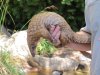
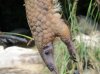
We then hustled back past the Reptile House (and the Komodo Dragon exhibit), and entered Discovery Outpost – essentially the children’s zoo. Here we had to find a presentation space “near the Petting Paddock” for a 1.30pm presentation. Which was surprisingly tricky! And stressful, as 1.30pm passed and we couldn’t find the presentation. We circled the area for a bit, watching some very active Brazilian and North American Tree Porcupines, before eventually finding a small, secluded waterfowl exhibit, in which the presentation was taking place. Phew! As a rule I don’t go to animal presentations, shows, feedings or keeper talks, as these rarely provide new information, and often have way too many people (which, on the plus side, means there are fewer throughout the rest of the zoo). But this was a special case, as (having missed them in both Singapore and Leipzig) I was finally going to see a pangolin! Specifically a male Tree Pangolin called Baba, the only pangolin in the Americas (officially). And he put on a very impressive show, demonstrating his long tongue, strong prehensile tail, and surprisingly fast gait as he left the exhibit after the short talk. Definitely an amazing animal and I’m so happy I got to see him so active!
We then followed the small loop around the remainder of Discovery Outpost, which had a mix of poor and good exhibits. Another Spot-necked Otter enclosure, a couple of Macaw “sticks” and cages for Fossa, Ocelot and Peruvian Squirrel Monkeys were definitely poor, while the Meerkats and Fennec Fox fared better, and a few aviaries for South American birds were much better (although the cage for Thick-billed Parrots was awful). This area could really benefit from having a cohesive collection displayed in a way that connects with kids. It’d be great to turn this into a dedicated South American area, with a range of active species (primates, coati, etc) that appeal to kids, while maintaining the play aspect with themed playgrounds. This was probably the worst part of the zoo, and both animal and visitor areas need to be rejuvenated soon.
At the end of the Discovery Outpost loop was a small trail that passed a pair of toucan aviaries and led to the Hummingbird Aviary. This was thickly planted, and displayed a variety of small birds, including White-necked Jacobin (the only hummingbirds on display). This was a very nice aviary, and very peaceful. After a few minutes resting in here, we completed our tour of the Reptile House. We had now seen over half of the zoo, but it was already 2.30pm, and we had lots left to see, so we took the Skyfari back up to the top corner of the zoo.
Here are a couple of pangolin pics to make some members jealous!
The next area of the zoo felt rather historic, and the first couple of exhibits were low-walled yards for small ungulates – Visayan Warty Pig and Lowland Anoa. It was nice to see older exhibits, and these would easily be perfect for a number of species, but they were very barren and open for these jungle dwellers. We continued down Park Way, the main route that bisects the zoo. On the opposite side was a pair of shallow lagoons, also older exhibits although these had aged well, with well-grown vegetation creating a beautiful backdrop for the (mostly) large African waterfowl displayed. Nestled on a forested bank to one side of the lagoons was another pond exhibit – this one more tranquil, and holding Red-crowned Crane.
We were now at the lowest point of Park Way, and continued to follow it as it began to head uphill. On our left was another bird exhibit, Eagle Trail, an elevated boardwalk that led past four large aviaries viewed from quite a height. These held Steller’s Sea Eagle, Ornate Hawk-Eagle, Andean Condor and Harpy Eagle. Three of these were extremely showy, but the Hawk-Eagle was well camouflaged in a tree. As this stunning species was the only one I hadn’t seen before I was disappointed to not get a good photo, but I was able to get good views as it was very close to the front. We then doubled back, and continued on Park Way.
As we headed up the steep hill, we reached the first of a series of dry yards with rock walls for African hoofstock. These are the remnants of the much-missed Horn & Hoof Mesa and were relatively large, but still dated. These held Grevy’s Zebra, Speke’s Gazelle, Lesser Kudu and Southern Gerenuk, as well as Bontebok and Cuvier’s Gazelle, which were both new species. It was nice to see these exhibits, although it would have been amazing to see the diversity in the Mesa’s heyday. These exhibits in this part of the zoo seem to very much be remnants, and I expect these yards, and the ones below Eagle Trail don’t have a long future.
Opposite these exhibits was Northern Frontier, the zoo’s Arctic exhibit, which was rather an abrupt change from the (almost exclusively) tropical species we had seen so far. This was a small loop trail, with heavy theming of buildings and lots of conifers. The anchor exhibit is Polar Bear Plunge, a relatively large exhibit with a large pool (with underwater viewing), and a variety of substrates for the bears. It’s probably one of the best Polar Bear enclosures I’ve seen, although still far from perfect, with many unattractive sightlines. Adjacent is a meshed over Arctic Fox enclosure, which has views through to the bears. On a slope overlooking this is a steep and rocky-looking Reindeer exhibit, with a small Raccoon cage nearby. This was followed by a fantastic pond exhibit and then an aviary for northern birds, principally ducks, where I saw a dozen species, three of them new. Obviously two aviaries with non-pinioned birds would have been preferred, but these were both very nice exhibits and the highlight of this area.
Adjacent to Northern Frontier is the West Skyfari Station, where you can take a four-seat gondola/cable car type thing, very similar to that at Taronga Zoo, from this far corner of the Zoo down to the East Station, very close to the main entrance. It was now past noon, so we boarded the Skyfari, which gave amazing views over the zoo, including some off-display holding and much of the previously explored rainforest exhibits, especially the Gorillas. The main difference between this ride and that at Taronga is that at Taronga you are looking out at the harbour view, whereas here you are just looking at the zoo (and the ride is at least twice as long). The East Station features a lagoon exhibit with a pair of Black-necked Swans, and next to this was the Front Street Café, where we had lunch.
I spent the whole of lunch staring at the building opposite, which looked extremely enticing! The Reptile House! Or should that be Reptile Verandah, as all exhibits are glass-fronted and viewed from outside the building, in a covered walkway that doesn’t quite prevent the glass from being rather glary in places. And quite dirty. I think this was the second-most speciose reptile house I have seen, after Wroclaw, although the exhibit style is fairly basic and some are a bit small for the larger individuals. In total there were 49 species seen here, of which 16 were new. The majority of species here were snakes, with a large number of venomous species, and the rest were lizards and turtles. The Green Crested Lizard was probably my favourite (new) species though.
After passing half the House’s exhibits, we explored the exhibits behind it, which included two low-walled exhibits with rocks and trees for desert-dwelling tortoises and lizards – one housing European species and the other North American. Beyond this was Reptile Walk, which began with a small building holding tropical species (mostly amphibians) on one side and Californian herps on the other, notably a two-headed California Kingsnake. The path led past a nice Chinese Alligator pool and then into a smaller building housing a nice mix of tropical turtles, although signage here was particularly patchy. Outside again was a large exhibit for Freshwater Crocodiles and more turtles, and shaded yard for Brown and Leopard Tortoises. The final exhibits in the walk were desert-themed yards, two for iguanas (Cuban and Exuma Island) and two for Galapagos Giant Tortoises. The signage for the tortoises included individual signs for all the (sub-) species (including extinct ones...), so I don’t actually know what were present – if anyone could help with that it would be much appreciated. These exhibits were of a particularly good size, and well-furnished, and I was able to pat one of the tortoises on its shell. And was then offered hand-sanitiser by an over-zealous volunteer worried about me catching salmonella.
We then hustled back past the Reptile House (and the Komodo Dragon exhibit), and entered Discovery Outpost – essentially the children’s zoo. Here we had to find a presentation space “near the Petting Paddock” for a 1.30pm presentation. Which was surprisingly tricky! And stressful, as 1.30pm passed and we couldn’t find the presentation. We circled the area for a bit, watching some very active Brazilian and North American Tree Porcupines, before eventually finding a small, secluded waterfowl exhibit, in which the presentation was taking place. Phew! As a rule I don’t go to animal presentations, shows, feedings or keeper talks, as these rarely provide new information, and often have way too many people (which, on the plus side, means there are fewer throughout the rest of the zoo). But this was a special case, as (having missed them in both Singapore and Leipzig) I was finally going to see a pangolin! Specifically a male Tree Pangolin called Baba, the only pangolin in the Americas (officially). And he put on a very impressive show, demonstrating his long tongue, strong prehensile tail, and surprisingly fast gait as he left the exhibit after the short talk. Definitely an amazing animal and I’m so happy I got to see him so active!
We then followed the small loop around the remainder of Discovery Outpost, which had a mix of poor and good exhibits. Another Spot-necked Otter enclosure, a couple of Macaw “sticks” and cages for Fossa, Ocelot and Peruvian Squirrel Monkeys were definitely poor, while the Meerkats and Fennec Fox fared better, and a few aviaries for South American birds were much better (although the cage for Thick-billed Parrots was awful). This area could really benefit from having a cohesive collection displayed in a way that connects with kids. It’d be great to turn this into a dedicated South American area, with a range of active species (primates, coati, etc) that appeal to kids, while maintaining the play aspect with themed playgrounds. This was probably the worst part of the zoo, and both animal and visitor areas need to be rejuvenated soon.
At the end of the Discovery Outpost loop was a small trail that passed a pair of toucan aviaries and led to the Hummingbird Aviary. This was thickly planted, and displayed a variety of small birds, including White-necked Jacobin (the only hummingbirds on display). This was a very nice aviary, and very peaceful. After a few minutes resting in here, we completed our tour of the Reptile House. We had now seen over half of the zoo, but it was already 2.30pm, and we had lots left to see, so we took the Skyfari back up to the top corner of the zoo.
Here are a couple of pangolin pics to make some members jealous!
Attachments
zooboy28
Well-Known Member
Day Eighteen (Part 3)
We disembarked the Skyfari at the West Station, and followed Park Way along the top ridge of the Zoo. The first exhibit was actually a newly constructed meshed enclosure for Cougars, but this was empty and not yet on display – it looked like a very nice design but slightly on the small side. Opposite was an older exhibit, a grassy yard for Maned Wolves and Giant Anteater, which was the final remnant of Horn & Hoof Mesa. Most of this chain of exhibits had been demolished to make way for the much-anticipated, but widely-panned Elephant Odyssey, which opened in 2009. Elephant Odyssey (EO), is rather oddly named, given its theme is “animals that lived in southern California during the Pleistocene or their close relatives”. But EO is less wordy than that. It’s certainly a novel theme, but its execution has been criticised on here, and I was excited to see what it actually looked like.
The entry plaza begins with the Fossil Portal, a covered boardwalk around a pit of bones, with small displays around the edge – this is really nice and an excellent introduction to the ideas EO is based on. Outside are some statues of extinct megafauna, and a pair of mesh fenced yards. These hold the first two species – African Lion and Jaguar. These were totally not what you would expect at San Diego – the ugly fences were probably the most obvious and artificial barrier we has so far seen, and the back of the exhibits were similarly open to allow viewing by the bus passengers, so the sightlines were shocking as well. And while they were well-furnished, the size was pretty minimal, so all in all not a good first impression. The (very disappointingly basic) species signs on all exhibits included a plaque for the displayed taxa and one for the extinct relative, for example American Lion or Pleistocene Jaguar...
Opposite these enclosures was a low-walled exhibit, with bushes and a large tree, holding Two-toed Sloth and Kirk’s Dik-dik, which was a much more suitable for its inhabitants, although obviously an extremely odd mix. Past this was the first view of the main enclosure in EO, the 2.5 acre elephant habitat. This end featured a large pool, with a sandy substrate throughout the rest of the enclosure, interrupted by some rocky outcrops, a few scattered logs and some very utilitarian shade structures (that are supposed to resemble trees, but look eerily like hovering UFOs). The next corner of the elephant exhibit has been partitioned off for Baird’s Tapir, Capybara, Guanaco and Black Spur-winged Goose, in a horribly barren rock-walled dust-bowl. The only shade was a small cave, a few scattered trees and the shadows of the walls, and these shadows were where all the animals were huddled. The worst enclosure in the zoo, and doubly so because it was only 5 years old!
The trail then led past the Elephant Care Centre (= House), which was accessible to visitors and showed the animals indoor accommodation – this seemed small but was probably adequate given the animals would be outside year round. On the other side of the trail was a very nice aviary, housing another unusual mix – Secretary Bird and Black-billed Magpie. After this the path actually went underneath the elephant enclosure, and continued along on the opposite side, with viewing now through wire cable fences, which looked very functional. I should point out that the elephant exhibit held both Asian and African Elephants, and one of these was Mila, a female African Elephant I had seen in New Zealand, both at a circus and at Franklin Zoo, where she spent a few years before being moved to San Diego, so it was very cool to see her again.
On the other side of the trail was a small stream exhibit nearby held a variety of local native herps, this was another nice exhibit and searching for the animals was an enjoyable challenge. After passing the final stretch of the elephant enclosure, we reached the last cluster of exhibits, the first of which held the representative of another new family – Pronghorns! As far as I know there are none of these outside of North America, so it was very exciting to see these animals, which were surprisingly un-graceful looking, and somehow full of odd angles. Two of the young bucks were fighting each other, and this was easily the most active exhibit in EO, if still a very barren yard. Apparently it used to also hold Dromedaries and Llama, but I didn’t see either on my visit. Next up was the Burro pen, which could be summed up with one word – appalling. Quite why horses need maximum security style fencing is beyond me, as is why EO needed horses.
Nearby was a stunning exhibit of floor-to-ceiling glass walls, behind which were a mix of Rattlesnake species. This was perhaps the best exhibit in EO, and one of the best reptile exhibits I have ever seen. Its clever design included rocks either side of the glass, and it was well furnished, although as ever the glass was very glary. Behind this was EO’s final exhibit, a large netted aviary for California Condors, a good size but very barren, and with a disturbingly green pool. Overall, EO was a bit of a disaster, although it really wouldn’t take much to make it world-class. First step – ditch the theme! Make it an African exhibit linked up to the new Africa Rocks, and provide a heck of a lot more shade and exhibit furnishing. Move out the American species and replace with African critters, although the Lions if they stay will need a larger enclosure. The main exhibit, for the elephants is brilliant, but the supporting exhibits let down EO. It was a good idea in theory, but not a good look in reality.
Just past EO was the small African Kopje exhibit, which is one of the zoo’s older themed exhibits, opened in 1986, but one that has stood up extremely well, with a range of exhibits for small mammals and birds. First was an aviary for African Yellow-spotted Rock Hyrax, which were adorably huddled in an elevated basket, followed by a large, low-walled Meerkat exhibit. The first bird exhibit was an aviary for Trumpeter Hornbill and Reichenow’s Helmeted Guineafowl, and then the path lead down, into the centre of a rocky outcrop, with a large netted enclosure for Caracal (which I couldn’t see) and a tall aviary with six species of African birds. Further down the path was another low-walled yard, this one filled with large rocks, and with rocky cliffs on either side. It held an exciting mix of South African Rock Hyrax, Dwarf Mongoose and Klipspringer. The final exhibit here was another large aviary, this one extending across a forested slope and holding the impressive Bateleur Eagle. Overall, this compact zone is one of the best parts of the zoo, and the upcoming Africa Rocks will hopefully link nicely into this (and hopefully doesn’t involve the loss of the eagle aviary).
Leaving the Kopje, we followed a very steep section of Park Way down the Dog & Cat Canyon, which had paths either side for close viewing of exhibits. This section is now all blocked up and under construction for Africa Rocks, but at the time it was still open, albeit with a number of old grottos blocked off. I am very glad I got to see it, the exhibit style was very classic San Diegan, and while no longer suitable for the original species it was still an important piece of zoo history. The first two open grottoes, with rocky walls and mesh netting at the front, and plenty of vegetation within were still very nice enclosures, and housed New Guinea Singing Dogs and Giant Anteater, I saw neither, and NGSD remain a taxon that has thwarted me for some time. The next few grottos were narrower and steeper, and deeper with no natural substrates, and these were all empty.
On the opposite side of Park Way was Big Cat Trail, a short walk that led past some older aviary-style cat cages, which were very well furnished and many overgrown with vegetation, ideal for most cats, if a little small. It was also rather difficult to see some of the inhabitants, but they were all spotted (some in both senses!) in the end: Siberian Lynx, Snow Leopard, Jaguar, Mountain Lion and Amur Leopard. Back on the other side of Park Way, an open desert-themed yard was the last grotto exhibit in this canyon, and held a group of Chacoan Peccary. The lower portion of this Canyon was flatter, and had a number of older cages, the first four being very traditional cages, holding South African Bat-eared Fox, Buerger’s Tree Kangaroo, Fossa and Southern Ratel. I will end this part of the review here, as the last few cages are thematically part of the zoo’s next zone.
We disembarked the Skyfari at the West Station, and followed Park Way along the top ridge of the Zoo. The first exhibit was actually a newly constructed meshed enclosure for Cougars, but this was empty and not yet on display – it looked like a very nice design but slightly on the small side. Opposite was an older exhibit, a grassy yard for Maned Wolves and Giant Anteater, which was the final remnant of Horn & Hoof Mesa. Most of this chain of exhibits had been demolished to make way for the much-anticipated, but widely-panned Elephant Odyssey, which opened in 2009. Elephant Odyssey (EO), is rather oddly named, given its theme is “animals that lived in southern California during the Pleistocene or their close relatives”. But EO is less wordy than that. It’s certainly a novel theme, but its execution has been criticised on here, and I was excited to see what it actually looked like.
The entry plaza begins with the Fossil Portal, a covered boardwalk around a pit of bones, with small displays around the edge – this is really nice and an excellent introduction to the ideas EO is based on. Outside are some statues of extinct megafauna, and a pair of mesh fenced yards. These hold the first two species – African Lion and Jaguar. These were totally not what you would expect at San Diego – the ugly fences were probably the most obvious and artificial barrier we has so far seen, and the back of the exhibits were similarly open to allow viewing by the bus passengers, so the sightlines were shocking as well. And while they were well-furnished, the size was pretty minimal, so all in all not a good first impression. The (very disappointingly basic) species signs on all exhibits included a plaque for the displayed taxa and one for the extinct relative, for example American Lion or Pleistocene Jaguar...
Opposite these enclosures was a low-walled exhibit, with bushes and a large tree, holding Two-toed Sloth and Kirk’s Dik-dik, which was a much more suitable for its inhabitants, although obviously an extremely odd mix. Past this was the first view of the main enclosure in EO, the 2.5 acre elephant habitat. This end featured a large pool, with a sandy substrate throughout the rest of the enclosure, interrupted by some rocky outcrops, a few scattered logs and some very utilitarian shade structures (that are supposed to resemble trees, but look eerily like hovering UFOs). The next corner of the elephant exhibit has been partitioned off for Baird’s Tapir, Capybara, Guanaco and Black Spur-winged Goose, in a horribly barren rock-walled dust-bowl. The only shade was a small cave, a few scattered trees and the shadows of the walls, and these shadows were where all the animals were huddled. The worst enclosure in the zoo, and doubly so because it was only 5 years old!
The trail then led past the Elephant Care Centre (= House), which was accessible to visitors and showed the animals indoor accommodation – this seemed small but was probably adequate given the animals would be outside year round. On the other side of the trail was a very nice aviary, housing another unusual mix – Secretary Bird and Black-billed Magpie. After this the path actually went underneath the elephant enclosure, and continued along on the opposite side, with viewing now through wire cable fences, which looked very functional. I should point out that the elephant exhibit held both Asian and African Elephants, and one of these was Mila, a female African Elephant I had seen in New Zealand, both at a circus and at Franklin Zoo, where she spent a few years before being moved to San Diego, so it was very cool to see her again.
On the other side of the trail was a small stream exhibit nearby held a variety of local native herps, this was another nice exhibit and searching for the animals was an enjoyable challenge. After passing the final stretch of the elephant enclosure, we reached the last cluster of exhibits, the first of which held the representative of another new family – Pronghorns! As far as I know there are none of these outside of North America, so it was very exciting to see these animals, which were surprisingly un-graceful looking, and somehow full of odd angles. Two of the young bucks were fighting each other, and this was easily the most active exhibit in EO, if still a very barren yard. Apparently it used to also hold Dromedaries and Llama, but I didn’t see either on my visit. Next up was the Burro pen, which could be summed up with one word – appalling. Quite why horses need maximum security style fencing is beyond me, as is why EO needed horses.
Nearby was a stunning exhibit of floor-to-ceiling glass walls, behind which were a mix of Rattlesnake species. This was perhaps the best exhibit in EO, and one of the best reptile exhibits I have ever seen. Its clever design included rocks either side of the glass, and it was well furnished, although as ever the glass was very glary. Behind this was EO’s final exhibit, a large netted aviary for California Condors, a good size but very barren, and with a disturbingly green pool. Overall, EO was a bit of a disaster, although it really wouldn’t take much to make it world-class. First step – ditch the theme! Make it an African exhibit linked up to the new Africa Rocks, and provide a heck of a lot more shade and exhibit furnishing. Move out the American species and replace with African critters, although the Lions if they stay will need a larger enclosure. The main exhibit, for the elephants is brilliant, but the supporting exhibits let down EO. It was a good idea in theory, but not a good look in reality.
Just past EO was the small African Kopje exhibit, which is one of the zoo’s older themed exhibits, opened in 1986, but one that has stood up extremely well, with a range of exhibits for small mammals and birds. First was an aviary for African Yellow-spotted Rock Hyrax, which were adorably huddled in an elevated basket, followed by a large, low-walled Meerkat exhibit. The first bird exhibit was an aviary for Trumpeter Hornbill and Reichenow’s Helmeted Guineafowl, and then the path lead down, into the centre of a rocky outcrop, with a large netted enclosure for Caracal (which I couldn’t see) and a tall aviary with six species of African birds. Further down the path was another low-walled yard, this one filled with large rocks, and with rocky cliffs on either side. It held an exciting mix of South African Rock Hyrax, Dwarf Mongoose and Klipspringer. The final exhibit here was another large aviary, this one extending across a forested slope and holding the impressive Bateleur Eagle. Overall, this compact zone is one of the best parts of the zoo, and the upcoming Africa Rocks will hopefully link nicely into this (and hopefully doesn’t involve the loss of the eagle aviary).
Leaving the Kopje, we followed a very steep section of Park Way down the Dog & Cat Canyon, which had paths either side for close viewing of exhibits. This section is now all blocked up and under construction for Africa Rocks, but at the time it was still open, albeit with a number of old grottos blocked off. I am very glad I got to see it, the exhibit style was very classic San Diegan, and while no longer suitable for the original species it was still an important piece of zoo history. The first two open grottoes, with rocky walls and mesh netting at the front, and plenty of vegetation within were still very nice enclosures, and housed New Guinea Singing Dogs and Giant Anteater, I saw neither, and NGSD remain a taxon that has thwarted me for some time. The next few grottos were narrower and steeper, and deeper with no natural substrates, and these were all empty.
On the opposite side of Park Way was Big Cat Trail, a short walk that led past some older aviary-style cat cages, which were very well furnished and many overgrown with vegetation, ideal for most cats, if a little small. It was also rather difficult to see some of the inhabitants, but they were all spotted (some in both senses!) in the end: Siberian Lynx, Snow Leopard, Jaguar, Mountain Lion and Amur Leopard. Back on the other side of Park Way, an open desert-themed yard was the last grotto exhibit in this canyon, and held a group of Chacoan Peccary. The lower portion of this Canyon was flatter, and had a number of older cages, the first four being very traditional cages, holding South African Bat-eared Fox, Buerger’s Tree Kangaroo, Fossa and Southern Ratel. I will end this part of the review here, as the last few cages are thematically part of the zoo’s next zone.
I'm excited to read the last part of your epic review and to find out whether San Diego is truly your favourite zoo of all-time. While reading I've been nodding my head in agreement as you have praised much of the zoo while also being extremely critical of Elephant Odyssey and several older sections. Overall I'd have to say that you are being very accurate in your assessment and I'm sure that lots of fellow zoo nerds would agree with your statements. In a couple of years when the 8-acre Africa Rocks opens it will be intriguing to see if it is a vast improvement on the Elephant Odyssey project.
zooboy28
Well-Known Member
I'm excited to read the last part of your epic review and to find out whether San Diego is truly your favourite zoo of all-time. While reading I've been nodding my head in agreement as you have praised much of the zoo while also being extremely critical of Elephant Odyssey and several older sections. Overall I'd have to say that you are being very accurate in your assessment and I'm sure that lots of fellow zoo nerds would agree with your statements. In a couple of years when the 8-acre Africa Rocks opens it will be intriguing to see if it is a vast improvement on the Elephant Odyssey project.
Thanks again SL, possibly I should have made some more controversial comments to get some discussion going. The concept drawings and plans for Africa Rocks look very exciting, I'll have to get back there to check it out once it opens. Stay tuned for the final part of the review!

Did you visit the Outback and the Sun bear trail?

LA zoo says they have red uakaris... Is that true?
They do have uakaris in their Rainforest of the Americas exhibit. But you cannot get close to them.