ZooChat Big Year 2021

Great - another local force power trip! I trust they apply the same logic to people stopping to take family photos or pictures of frosty fields on their walk to put on Facebook..? Or to play with their dog, rather than just walk it? Of course they don't. Carrying a camera phone is normal - playing with a dog is normal - carrying binoculars is perceived as not - so let's pick on folk just trying to take a little joy in their lives within the restrictions. Giving me memories of the first lockdown and people being told they couldn't rest on a bench because then they'd stopped exercising so weren't allowed to be out - you have to be in constant movement to be legal...

The famously active pursuit of angling is exercise, though, apparently... someone has friends in government..! (Covid-19: Praise as angling given lockdown go-ahead - BBC News)

Anywho, rant ends...
Actually what I find most difficult to understand about the 'exercise' restrictions this time is why they are that much stricter again than they were in the November lockdown, more like in the first one. Given its now known transmission is far less likely outdoors, why have they clamped down this time around on outdoor access/usage again? Doesn't quite make sense to me. Curbs on meeting other people -yes, but rules or concern on what activity an individual is actually doing while outdoors, be it standing still birdwatching, sitting on a bench, eating a picnic etc, doesn't make any sense to me at all now.
 
Last edited:
A nice outing yesterday morning to Massa, particularly green after the recent rainfalls. 61 species on the day including 57 at the spot, some decent pictures of nice species (Little owl and Barbary ground squirrel notably) and a few additions to the year list made for it to be a very pleasant day:

17/01/2021 (Estuaire de l'Oued Massa, Morocco)
BIRDS:
86 - Eurasian hoopoe, Upupa epops
87 - Common house martin, Delichon urbicum
88 - Common crane, Grus grus
89 - Black-crowned tchagra, Tchagra senegalus
90 - Ruddy shelduck, Tadorna ferruginea
91 - Eurasian wigeon, Mareca penelope
92 - Barbary partridge, Alectoris barbara
93 - Little ringed plover, Charadrius dubius

Seeing cranes is always a delight, especially when they're as vocal as they were yesterday. Same can be said for the tchagra and the partridge, both common species that I always enjoy getting looks at. The duck diversity was neat with no less than 7 species including my second time ever seeing wigeons.

Forgot to list these last time:

17/01/2021 (Estuaire de l'Oued Massa, Morocco)
INVERTS:
1 - False batton blue, Pseudophilotes abencerragus
2 - Clouded yellow, Colias croceus
3 - Painted lady, Vanessa cardui

MAMMALS:
1 - Barbary ground squirrel, Atlantoxerus getulus

The blue is not that often seen in lower elevations (though Massa is known to boast a population of them) so I'm particularly happy about that one. It also marked my first time getting a decent shot of Barbary ground squirrel, by far the most common mammal here.

----

23/01/2021 (Embouchure de l'Oued Souss, Morocco)
BIRDS:
94 - Little stint, Calidris minuta
 
Actually what I find most difficult to understand about the 'exercise' restrictions this time is why they are that much stricter again than they were in the November lockdown, more like in the first one. Given its now known transmission is far less likely outdoors, why have they clamped down this time around on outdoor access/usage again? Doesn't quite make sense to me. Curbs on meeting other people -yes, but rules or concern on what activity an individual is actually doing while outdoors, be it standing still birdwatching, sitting on a bench, eating a picnic etc, doesn't make any sense to me at all now.

Honestly? I think just because it's easier to police.

The 'hot drink = a picnic' incident was my own local force of course and they were forced to back down pretty strongly and very publicly, so I think my lot are on best behaviour now (at least for a time!).
 
A slightly more modestly-numbered tally from me as always :D

Birds:

2. Common woodpigeon (Columba palumbus)
3. Eurasian magpie (Pica pica)
4. Rock pigeon (Columba livia)
5. Canada goose (Branta canadensis)
6. Greylag goose (Anser anser)
7. Mute swan (Cygnus olor)
8. Egyptian goose
9. Mallard
10. Common pochard
11. Greater scaup
12. Tufted duck
13. Little grebe
14. Eurasian moorhen
15. Eurasian coot
16. Black-headed gull
17. Mew gull
18. Herring gull
19. Rose-ringed parakeet
20. Gadwall
21. Great cormorant
22. Grey heron
23. Great tit
24. Eurasian wigeon
25. Common shelduck
26. Garganey

Mammals:

1. Brown rat

A decent start...

Just wondering - would a Red-crested pochard seen in St James's Park be wild or exotic? I assumed exotic but on the eBird hotspot it counts them.
 
Some miscellaneous birds from today and yesterday. Highlights include a vagrant Green-tailed Towhee, Great Black-backed Gull, and Little Gull.

Birds

100. Loggerhead Shrike - Lanius ludovicianus
101. Pine Warbler - Setophaga pinus
102. Green-tailed Towhee - Pipilo chlorurus
103. Osprey - Pandion haliaetus
104. Great Black-backed Gull - Larus marinus
105. Lesser Yellowlegs - Tringa flavipes
106. Green-winged Teal - Anas crecca
107. Little Gull - Hydrocoloeus minutus

The weather the past several days has been rather poor for birding however that has not stopped me from finding several of the species I have been looking for. The highlights include my first bird lifer of the year, a Henslow's Sparrow, which happens to be a very rare and difficult bird to find within Texas. Unfortunately I was unable to photograph this sparrow due to its skulky and skittish nature. Other highlights include a continuing local rarity Couch's Kingbird, a vagrant from the west Brewer's Sparrow, and a very uncommon for where I found it Great Kiskadee. Also worth mentioning is an American Woodcock which flew over my head this morning, given I was unable to find any American Woodcocks last year despite that being one of the easier targets I could have gotten for my year list especially towards the end of the year.

Birds

108. Cooper's Hawk - Accipiter cooperii
109. Couch's Kingbird - Tyrannus couchii
110. Ruddy Duck - Oxyura jamaicensis
111. Brown-headed Cowbird - Molothrus ater
112. Eastern Meadowlark - Sturnella magna
113. Henslow's Sparrow - Centronyx henslowii
114. Vesper Sparrow - Pooecetes gramineus
115. Brewer's Sparrow - Spizella breweri
116. Sedge Wren - Cistothorus platensis
117. Great Kiskadee - Pitangus sulphuratus
118. Crested Caracara - Caracara cheriway
119. Greater Yellowlegs - Tringa melanoleuca
120. White Ibis - Eudocimus albus
121. Long-billed Curlew - Numenius americanus
122. Black-bellied Whistling-Duck - Dendrocygna autumnalis
123. Roseate Spoonbill - Platalea ajaja
124. Monk Parakeet - Myiopsitta monachus
125. Little Blue Heron - Egretta caerulea
126. Brown Pelican - Pelecanus occidentalis
127. Laughing Gull - Leucophaeus atricilla
128. Mottled Duck - Anas fulvigula
129. Blue-winged Teal - Spatula discors
130. Common Loon - Gavia immer
131. Royal Tern - Thalasseus maximus
132. Common Tern - Sterna hirundo
133. Caspian Tern - Hydroprogne caspia
134. Willet - Tringa semipalmata
135. Sanderling - Calidris alba
136. Ruddy Turnstone - Arenaria interpres
137. Black-bellied Plover - Pluvialis squatarola
138. American Oystercatcher - Haematopus palliatus
139. Eared Grebe - Podiceps nigricollis
140. Red-breasted Merganser - Mergus serrator
141. Common Goldeneye - Bucephala clangula
142. Sora - Porzana carolina
143. Clapper Rail - Rallus crepitans
144. White-tailed Kite - Elanus leucurus
145. Swamp Sparrow - Melospiza georgiana
146. Chipping Sparrow - Spizella passerina
147. Pileated Woodpecker - Dryocopus pileatus
148. American Woodcock - Scolopax minor

5. Evening Bat - Nycticeius humeralis

I also added a few mammals seen incidentally while birding.

Mammals

6. Atlantic Bottlenose Dolphin- Tursiops truncatus
7. Eastern Cottontail- Sylvilagus floridanus
 
Within the Netherlands, there's no restriction on travel distance or time spend outside yet, given that you keep distance to others and travel alone or with one other person at most, so I took the opportunity to try some seabirding again. Divers were unreasonably absent (only saw one I could ID) but the salt-water ducks (eiders, scoters, mergansers) were present in large numbers. The highlight of the day was undoubtedly the group of five Long-tailed ducks, including a male in gorgeous breeding plumage. The birds were very active, chasing each other and jumping through the waves like dolphins. Other highlights were my first lifer of the year, great sightings of Horned Grebes, a group of godwits and a flock of guillemots. The Thick-billed Murre that has been staying in the area for a few weeks unfortunately didn't show, but we had a great day nonetheless.

Birds
77. Hawfinch, Coccothraustes coccothraustes
78. Eurasian Oystercatcher, Heamatopus ostralegus
79. Ruddy Turnstone, Arenaria interpres
80. Brant, Branta bernicla
81. Common Eider, Somateria mollissima
82. Red-breasted merganser, Mergus serrator
83. Great Black-backed Gull, Larus marinus
84. Black-necked Grebe, Podiceps nigricollis
85. Sanderling, Calidris alba
86. Sandwich Tern, Thalasseus sandvicensis
87. Horned Grebe, Podiceps auritus
88. Red-throated Diver, Gavia stellata
89. Long-tailed Duck, Clangula hyemalis
90. Common Scoter, Melanitta nigra
91. Lesser Black-backed Gull, Larus fuscus
92. Purple Sandpiper, Calidris maritima
93. Common Pheasant, Phasianus colchicus
94. Little Egret, Egretta garzetta
95. European Shag, Phalacrocorax aristoletelis
96. Common Guillemot, Uria aalge
97. Redwing, Turdus iliacus
98. Common Redshank, Tringa totanus
99. Spotted Redshank, Tringa erythropus
100. Bar-tailed Godwit, Limosa lapponica
101. Northern Shoveler, Spatula clypeata

Mammals
2. European Rabbit, Oryctolagus cunniculus
3. Grey Seal, Halichoerus grypus
4. Brown Hare, Lepus europaeus
 
Just wondering - would a Red-crested pochard seen in St James's Park be wild or exotic? I assumed exotic but on the eBird hotspot it counts them.
Being in London it is perhaps more likely to be an escapee, though I've seen them in Kew Gardens too. Without rings it is difficult to prove either way.
 
Saw my first Buff-breasted Sandpiper in Lake Modewarre yesterday! Very rare vagrant to Australia :)

BIRDS

208 - Hooded Plover (Thinornis rubricollis)
--- Pacific Koel (Eudynamys orientalis) [heard]
209 - Buff-breasted Sandpiper (Calidris subruficollis)
210 - Banded Stilt (Cladorhynchus leucocephalus)
211 - Great Knot (Calidris tenuirostris)

MAMMALS
13 - Red Fox (Vulpes vulpes)*
14 - Brown Hare (Lepus europaeus)*

Nah I'm not trying for a record or anything. I just spend a lot of time birding and always like year-listing. :p
Reef Island, Victoria

BIRDS
212 - Ruddy Turnstone (Arenaria interpres)
213 - Grey-tailed Tattler (Tringa brevipes)
214 - Pacific Golden Plover (Pluvialis fulva)
215 - Grey Plover (Pluvialis squatarola)
216 - Pectoral Sandpiper (Calidris melanotos)
 
Within the Netherlands, there's no restriction on travel distance or time spend outside yet, given that you keep distance to others and travel alone or with one other person at most, so I took the opportunity to try some seabirding again. Divers were unreasonably absent (only saw one I could ID) but the salt-water ducks (eiders, scoters, mergansers) were present in large numbers. The highlight of the day was undoubtedly the group of five Long-tailed ducks, including a male in gorgeous breeding plumage. The birds were very active, chasing each other and jumping through the waves like dolphins. Other highlights were my first lifer of the year, great sightings of Horned Grebes, a group of godwits and a flock of guillemots. The Thick-billed Murre that has been staying in the area for a few weeks unfortunately didn't show, but we had a great day nonetheless.

Birds
77. Hawfinch, Coccothraustes coccothraustes
78. Eurasian Oystercatcher, Heamatopus ostralegus
79. Ruddy Turnstone, Arenaria interpres
80. Brant, Branta bernicla
81. Common Eider, Somateria mollissima
82. Red-breasted merganser, Mergus serrator
83. Great Black-backed Gull, Larus marinus
84. Black-necked Grebe, Podiceps nigricollis
85. Sanderling, Calidris alba
86. Sandwich Tern, Thalasseus sandvicensis
87. Horned Grebe, Podiceps auritus
88. Red-throated Diver, Gavia stellata
89. Long-tailed Duck, Clangula hyemalis
90. Common Scoter, Melanitta nigra
91. Lesser Black-backed Gull, Larus fuscus
92. Purple Sandpiper, Calidris maritima
93. Common Pheasant, Phasianus colchicus
94. Little Egret, Egretta garzetta
95. European Shag, Phalacrocorax aristoletelis
96. Common Guillemot, Uria aalge
97. Redwing, Turdus iliacus
98. Common Redshank, Tringa totanus
99. Spotted Redshank, Tringa erythropus
100. Bar-tailed Godwit, Limosa lapponica
101. Northern Shoveler, Spatula clypeata

Mammals
2. European Rabbit, Oryctolagus cunniculus
3. Grey Seal, Halichoerus grypus
4. Brown Hare, Lepus europaeus
Super lucky with the male Long-tails. I've seen this species lots of times but it's always females or juvenile males, so I've never seen the gorgeous plumage.
 
The walk today was a longer tramp out across the fields and got me a few more of the locals ticked off safely:

Birds:
69. Mistle Thrush - Turdus viscivorus
70. Northern Raven - Corvus corax
71. Fieldfare - Turdus pilaris

:)
 
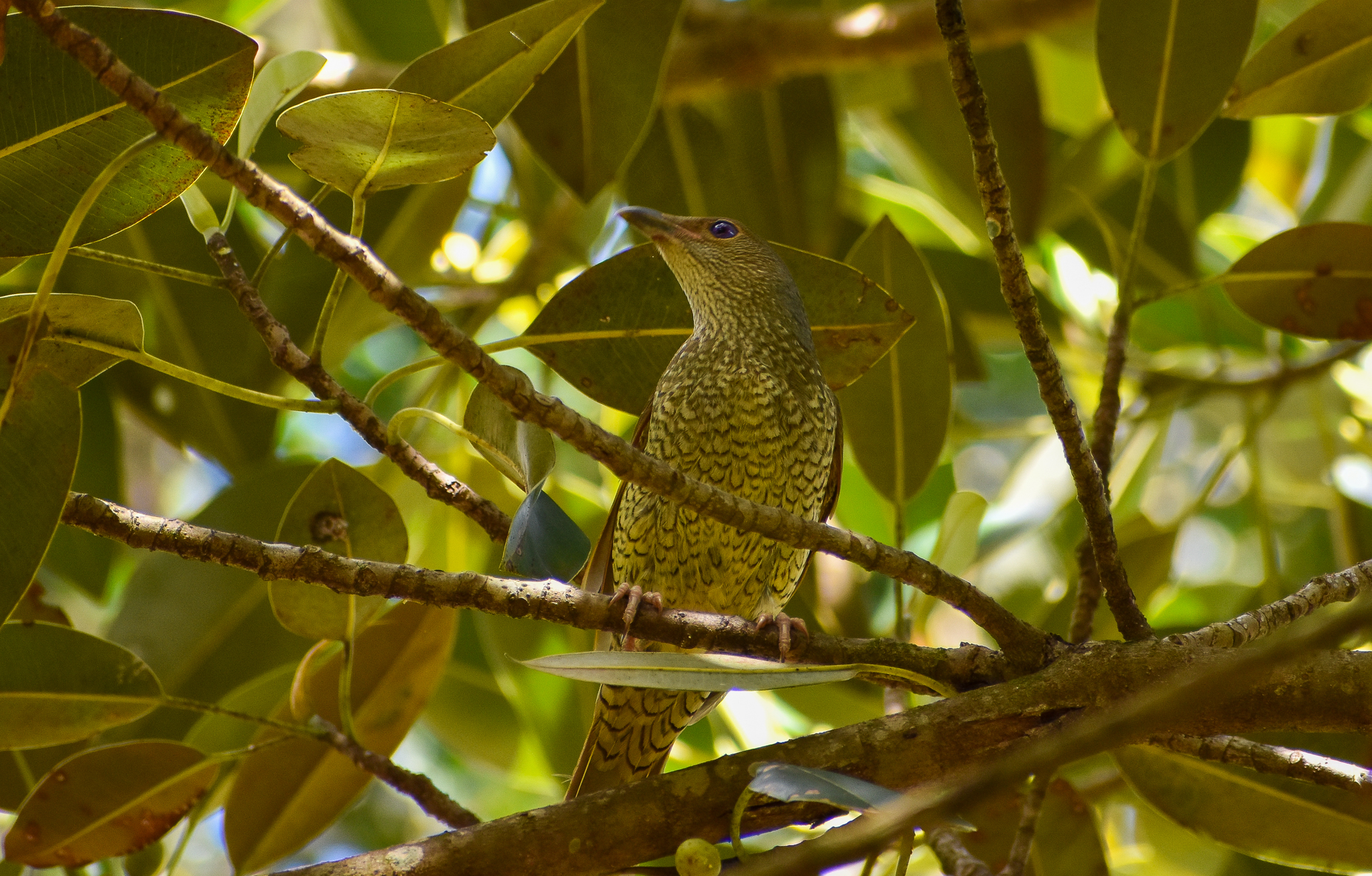
I recently spent two mornings birdwatching at two very different spots; Aracaunia Track, Enogerra Reservoir and a place I hadn’t been to before, Maiala Picnic Grounds at Mt Glorious. I picked up two lifers at Aracuania – a Black-faced Monarch (loved the orange and grey colouration) and a pair of Restless Flycatchers. I seem to be having some unexpected luck with flycatchers now going from seeing 0 species in 2020 to now having ticked off two species in under a month! Other notable sightings included a noisy pair of Dollarbirds, heaps of shrike-thrushes along with a bonus male Rufous Whistler and a pair of Black-faced Cuckoo-shrikes feeding a koel. Birds listed from numbers 62-79 were all see along this track. The second location, Maiala at Mt. Glorious is a subtropical rainforest with several trails that all begin from a main picnic ground. A really nice area; Satin Bowerbirds were everywhere across the trees near the picnic tables and White-headed Pigeon was easily ticked off as a nice lifer. Notably, three species of scrubwren were also present there. I think I went at the wrong time of day for some of the more elusive species like the pitta, russet-tailed thrush and riflebird so I hope to return soon. I also talked to a few birdwatchers along the rainforest trail and we helped each other tick off a few species for the year list which was nice (e.g. I spotted a pair of whipbirds whilst they pointed me in the right direction for the pale-yellow robin).

Mammals
5) Red-legged Pademelon Thylogale stigmatica

Birds
62) Bush Stone-curlew Burhinus grallarius
63) Australian King Parrot Alisterus scapularis
64) Little Black Cormorant Phalacrocorax sulcirostris
65) Black-faced Monarch Monarcha melanopsis
66) Rufous Shrike-thrush Colluricincla rufogaster
67) White-browed Scrubwren Sericornis frontalis
68) Bell Miner Manorina melanophrys
69) Hardhead Aythya australis
70) Brown Thornbill Acanthiza pusilla
71) Grey Shrike-thrush Colluricincla harmonica
72) Red-browed Finch Neochmia temporalis
73) Oriental Dollarbird Eurystomus orientalis
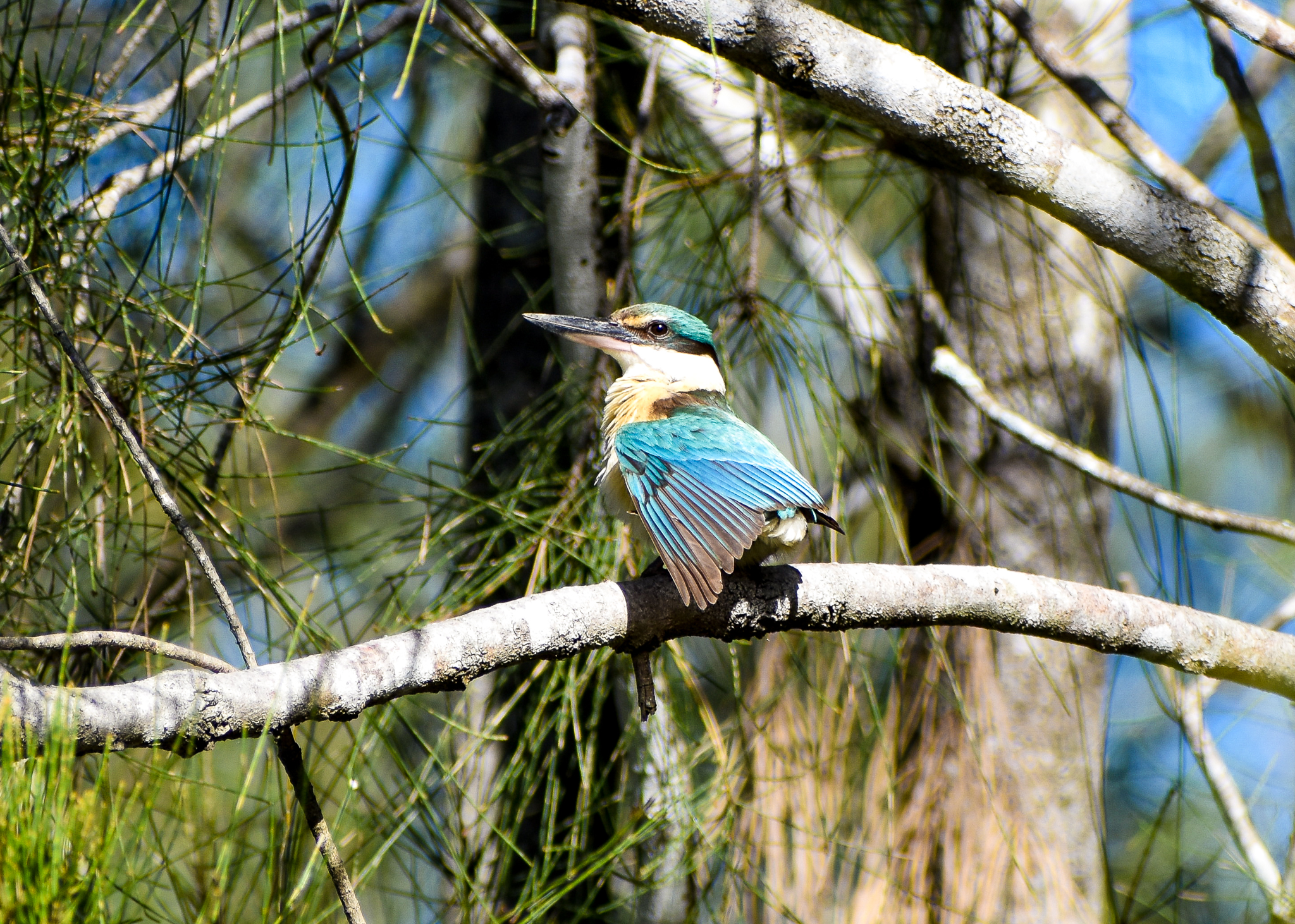
74) Sacred Kingfisher Todiramphus sanctus
75) Rufous Whistler Pachycephala rufiventris
76) White-throated Gerygone Gerygone olivacea
77) Spangled Drongo Dicrurus bracteatus
78) Variegated Fairy-wren Malurus lamberti
79) White-breasted Woodswallow Artamus leucorynchus
80) Restless Flycatcher Myiagra inquieta
81) Satin Bowerbird Ptilonorhynchus violaceus
82) White-headed Pigeon Columba leucomela

83) Wompoo Fruit-Dove Ptilinopus magnificus
84) Large-billed Scrubwren Sericornis magnirostra
85) Rufous Fantail Rhipidura rufifrons
86) Brown Gerygone Gerygone mouki
87) Yellow-throated Scrubwren Sericornis citreogularis
88) Eastern Whipbird Psophodes olivaceus
89) Pale-yellow Robin Tregellasia capito
90) Pale-headed Rosella Platycercus adscitus

Herptiles
6) Garden Skink Lampropholis delicata
7) Brisbane River Turtle Emydura krefftii signata

Invertebrates
18) Common Eggfly Hypolimnas bolina
19) Yellow Albatross Appias paulina
20) Tailed Emperor Polyura sempronius
21) Mistletoe Moth Comocrus behri
22) Purple Crow Euploea tulliolus


Success! I saw my first wild Black-necked Stork today!! I visited the Tinchi Tamba Wetlands Reserve which is nestled in Brisbane’s northern suburbs. I saw the stork from a distance but managed to get a good look at it. What a magnificent bird and nice to see one in the Brisbane area. The Far-eastern Curlew was another brilliant surprise to see. I didn't manage to get decent photos of the stork nor the curlew so the photo of the day is a sunbathing kingfisher.

Mammals
6) Eastern Grey Kangaroo Macropus giganteus

Birds
91) Black-necked Stork Ephippiorhynchus asiaticus

92) Superb Fairy-wren Malurus cyaneus
93) Whistling Kite Haliastur sphenurus
94) Crested Tern Thalasseus bergii
95) Far Eastern Curlew Numenius madagascariensis

 
At Moonlit

Birds
51. Brown thornbill Acanthiza pusilla

Invertebrates
14. Blue skimmer Orthetrum caledonicum (new Family)
 
Here in south-central Alaska, we are experiencing the freeze/thaw cycle typical of midwinter along the coast. I live at the edge of the forest (mixed broadleaf and evergreen) that covers the lowlands between the Chugach Mountains and the Alaska Range. I have a couple of seed feeders in my backyard and they are often visited by the forest birds which overwinter here. Between the feeders and the dogs needing walking I have the opportunity to expand my list. The dogs and I have detected track and sign of four mammals in the vicinity, but have yet to spot them. Snowshoe Hare, Feral European Rabbit, American Red Squirrel, and Moose. It is only a matter of time before we can add them to the list. We have also heard and seen the forest birds flitting among the bare branches against the bright grey sky. In my patch of the woods a dozen species might be found...so far we have confirmed three:

Birds:

7. Black-capped Chickadee - Parus Atricapillus
8. Red-breasted Nuthatch - Sitta Canadensis
9. Common Redpoll - Acanthis Flammea.
 
Happened to go to a random park whilst I was out with friends where I saw a grebe for the first time, which was cool. Also saw some common birds when I was on the bus, which I probably should've seen much earlier on in the year.

Birds

16. Common Starling (Sturnus vulgaris)
17. New Zealand Dabchick (Poliocephalus rufopectus)
18. White-faced heron (Egretta novaehollandiae)

Invertebrates

4. Long-bodied Cellar Spider (Pholcus phalangioides)
5. Lancer Dragonfly (Adversaeschna brevistyla)

Birds

19. Silvereye (Zosterops lateralis)
20. Barbary dove (Streptopelia risoria)

Hit 20 birds :^D, I'll hopefully try and get 60 birds for this year.
 
During these days, I was able to spot some species from my window.
I also bought some feeders, but with the bad wheather I couldn't put them outside for an entire day.

Birds

13. Blue Tit, Cyanistes caeruleus
14. Common Wood-Pigeon, Columba palumbus

Other sightings I need to certify are tree sparrow, common kestrel and buzzard (I'll wait for better and closer views).

Today I had some free time, so I went to my local patch.
There wasn't much to look out for, but I still saw two new species (unfortunately, neither of them were the kingfisher I "spotted" some weeks ago).

Birds

15. European Robin, Erithacus rubecula
16. Common Chaffinch, Phylloscopus collybita

 
Back
Top