Zoochat Big Year 2022

Birds
253. Muscovy Duck
254. Leaden Flycatcher
255. Tawny-crowned Honeyeater

Mammals
14: Grey-headed Fruit Bat

:p

Hix
Birds
256. Satin Flycatcher
257. Mallard (domestic type)
258. White-browed Woodswallow
259. Masked Woodswallow
260. Grey-crowned Babbler

Mammals
15. Echidna
16. Australian Water Rat
17. Brown Rat

Reptiles
8. Eastern Bearded Dragon

Fish
1. Common Toadfish

:p

Hix
 
A bit of birding in the South of France, helped by some recent downpours in the area:

111. Greater flamingo, Phoenicopterus roseus
112. Slender billed gull, Chroicocephalus genei
113. Spotted flycatcher, Muscicapa striata
114. Common nightingale, Luscinia megarhynchos
115. Rock sparrow, Petronia petronia

116. Little egret, Egretta garzetta
117. Great egret, Arden alba

Mammals.

7. Coypu, Myocastor coypus

It's been a while but I'm back in the South of France, and have a few additions to make over the span of a couple of visits to a nature reserve.

First though is a lifer that I am rather hesitant to post as it seems almost a shame to count such a beautiful bird from such a fleeting sighting, but, as seen out of a train window:

118. Short-eared owl, Asio flammeus

Then over a couple of visits to L'Etang Mejean in the South of France:

119. Hen harrier, Circus cyaneus
120. Common kingfisher, Alcedo atthis
121. Lesser spotted woodpecker, Dryobates minor
122. Short-toed treecreeper, Certhia brachydactyla

123. Black redstart, Phoenicurus ochrurus
124. Meadow pipit, Anthus pratensis
125. European serin, Serinus serinus


So a really productive couple of visits, plus a marsh harrier sighting, a whole load of flamingos in lovely lighting...

Particularly happy with the Hen harrier.
 
More IDs I've finally gotten to

Fish:
28. Striped shiner (Luxilus chrysocephalus) (Lifer)


Insects/Invertebrates:
294. Peatland sheetweb weaver (Hypselistes florens) (Lifer)
295. Diamondback spittlebug (Lepyronia quadrangularis)
296. Scorpionfly (Panorpa anomala) (Lifer)
297. Typical treehopper (Acutalis tartarea) (Lifer)
298. Buttercup oil beetle (Meloe americanus) (Lifer)
299. Pink-edged sulphur (Colias interior) (Lifer)
300. Grape plume moth (Geina periscelidactylus) (Lifer)
301. Honeysuckle moth (Ypsolopha dentella) (Lifer)
302. White-spotted leafroller moth (Argyrotaenia alisellana) (Lifer)
303. European alder spittlebug (Aphrophora alni) (Lifer)
304. Snowy urola moth (Urola nivalis) (Lifer)
305. Striped deer fly (Chrysops vittatus) (Lifer)
306. Sooty-winged chalocoela moth (Chaloela iphitalis) (Lifer)

307. Stream bluet (Enallagma exsulans)

This is probably it for me this year, closing out with a set of interesting Odonates that I've managed to ID using Paulson's book for Eastern NA (And INaturalist)

308. Familiar bluet (Enallagma civile) (Lifer)
309. Tule bluet (Enallagma carunculatum) (LIfer)

310. Slaty skimmer (Libellula incesta)
311. Autumn meadowhawk (Sympetrum vicinum)
312. Blue-tipped dancer (Argia tibialis)
313. Honeylocust treehopper (Micrutalis calva)
314. White-faced meadowhawk (Sympetrum obtrusum) (Lifer)
 
  • Like
Reactions: MRJ
Progress is gradually being made with several longstanding gaps among my bird list – waterfowl and shorebirds especially. A trip to Bribie Island today filled in some of the ‘sandy’ species including one of my most wanted birds to see in the wild – Beach Stone-Curlew. A morning at Gatton further west ticked off two species of uncommon ducks that had long been on my wish list as well. A good assortment of inverts of course as well as summer is well and truly here.

Mammals
15) Brown Hare Lepus europaeus

Birds
156) Whimbrel Numenius phaeopus
157) Bar-tailed Godwit Limosa lapponica
158) Grey-tailed Tattler Tringa brevipes
159) Pink-eared Duck Malacorhynchus membranaceus
160) Blue-billed Duck Oxyura australis

161) Australian Reed-Warbler Acrocephalus australis
162) Beach Stone-Curlew Esacus magnirostris
163) Red-capped Plover Charadrius ruficapillus
164) Lesser Sand-Plover Charadrius mongolus
165) Great Knot Calidris tenuirostris
166) Red Knot Calidris canutus

167) Caspian Tern Hydroprogne caspia

Fish
06) Sea Mullet Mugil cephalus

07) Longfin Eel Anguilla reinhardtii

Invertebrates
105) Yellow-striped Flutterer Rhyothemis phyllis
106) Yellow Solider Beetle Chauliognathus flavipennis
107) Australian Magpie Moth Nyctemera amicus
108) Spotted Lichen Moth Asura cervicalis
109) Crotalaria Moth Utetheisa lotrix
110) Tree Lucerne Moth Uresiphita ornithopteralis

111) Common Grass Yellow Eurema hecabe
112) Green and Mottled Planthopper Desudaba aulica
113) Anthomyia medialis

114) Black Soldier Fly Hermetia illucens
115) Fat-bellied Emerald Hemicordulia continentalis
116) Yellow Albatross Appias paulina
117) Toxorhynchites speciosus [elephant mosquito]
118) Apochrysa lutea [green lacewing]

119) Surinam Cockroach Pycnoscelus surinamensis
120) Golden-tailed Sugar Ant Camponotus aeneopilosus
121) Poiciana Looper Pericyma cruegeri
122) Pale Hunter Austrogomphus amphiclitus
123) Australian Cockroach Periplaneta australasiae
124) Steelblue Ladybird Halmus chalybeus
125) Saint Andrew's Cross Spider Argiope keyserlingi
126) Fire-tailed Resin Bee Megachile mystaceana
127) Cosmophasis baehrae [jumping spider]

128) Common Flatwing Austroargiolestes icteromelas
129) Striped Ladybird Micraspis frenata
130) Pale Cotton Stainer Dysdercus sidae
131) Small Grass-Yellow Eurema smilax
132) Orange Palm Dart Cephrenes augiades

133) Ornate Spiny Ant Polyrhachis ornata
134) Figleaf Beetle Poneridia semipullata
135) Green-and-gold Nomia Bee Lipotriches australica
136) Yellow Palm Dart Cephrenes trichopepla
137) Wattle Blue Theclinesthes miskini
138) Punctate Flower Chafer Neorrhina punctata
139) Chlorophorus curtisi [longicorn beetle]

140) Brown Flower Beetle Glycyphana stolata
Final report of the year most likely. Not much to say recently besides a few species seen around Sydney and that I’ve had to postpone more birding daytrips due to consistent rain. I wanted to finish the year with a few more waders (stints and sandpipers especially) and species found further west but these will be targets for 2023 anyway. A nice little surprise has been a trio of Buff-banded Rails [Buff-banded Rail - ZooChat] that have popped up at a local park. They have been good fun to follow around over the past week. Looking forward to what the new year will bring!

Mammals
16) European Rabbit Oryctolagus cuniculus

Birds
168) Eurasian Coot Fulica atra
169) Australian Raven Corvus coronoides
170) Common Blackbird Turdus merula
171) Red Wattlebird Anthochaera carunculata

Invertebrates
141) Daemel's Spiny Ant Polyrhachis daemeli
142) Cycad Blue Theclinesthes onycha
143) Aurora Bluetail Ischnura aurora
144) Horned Ghost Crab Ocypode ceratophthalmus

145) Bronze Orange Bug Musgraveia sulciventris
146) Orchid Dupe Wasp Lissopimpla excelsa
147) Tailless Lineblue Prosotas dubiosa
148) Tiny Grass Blue Zizula hylax
149) Black Tree-Ticker Birrima varians

150) Common Gum Tree Shield Bug Poecilometis patruelis
151) Lamprolina aeneipennis [leaf beetle]
152) Ommatius mackayi [robber fly]

153) Neon Cuckoo Bee Thyreus nitidulus
154) Camptorhinus dorsalis [weevil]
 
Time to roll up the year, with just five additional invertebrates recorded recently at Moonlit listed below. Overall I saw and identified 36 mammals, 361 birds, 13 reptiles, 2 amphibians, 13 fish and 84 invertebrates, not so bad. My total animal count of species observed and identified in the wild since 2017 has grown to 1508.

Back at the start of the year I set a personal target of identifying 1000 new bird species and 100 new mammal species over the following two years. At the halfway point I stand at 115 new bird species and 16 new mammal species, obviously a long way to go. I did mention that I would have to go overseas to make this target. While I did get to the United States, Britain and France, they are obviously not the bio-diverse countries I was referring to. Don't get me wrong, I was grateful for the opportunity and saw some nice animals. But otherwise, life got in the way as it so often does.

The good news is that at the end of January I am off to Uganda for a 25 day safari. To say I am looking forward to it is an understatement. I've started a travel blog in the Uganda section and if interested you can find it here.

To help me keep my lists straight while travelling, I will not be adding anything to the 2023 Big Year until I reach Uganda.

80. Australian painted lady Vanessa kershawi
81. Wandering ringtail Austrolestes leda
82. Tau emerald Hemicordullia tau
83. Common pill woodlice Armadillidium vulgare (new Order and Family)
84..Milky slug Deroceras reticulatum (new Family)

Two-year new species targets
Mammals 16/100
Birds 115/1000
Bonus ectotherms 93
 
Last edited:
Birds
176. Mountain Chickadee (Poecile gambeli)
177. Wilson's Warbler (Cardellina pusilla)
178. Pygmy Nuthatch (Sitta pygmaea)
179. Chipping Sparrow (Spizella passerina)
180. Pacific-slope Flycatcher (Empidonax difficilis)

Reptiles

9. Zebra-tailed Lizard (Callisaurus draconoides)
10. California Whipsnake (Masticophis lateralis)

Really let this fall off the radar...

I didn't add a whole lot in the last few months, though I did collect a few key species that I'd missed earlier in the year like the peregrine, grebe and creeper. Next year I plan to hit the ground running with some new personal Big Year targets.

Birds
181. Western Wood-Pewee (Contopus sordidulus)
182. Hermit Thrush (Catharus guttatus)
183. Black-throated Gray Warbler (Setophaga nigrescens)
184. Brown Creeper (Certhia americana)
185. Bell's Sparrow (Artemisiospiza belli)
186. Redhead (Aythya americana)
187. Common Goldeneye (Bucephala clangula)
188. Western Grebe (Aechmophorus occidentalis)
189. Peregrine Falcon (Falco peregrinus)
190. Mountain Bluebird (Sialia currucoides)
191. Burrowing Owl (Athene cunicularia)

Reptiles
11. Desert Spiny Lizard (Sceloporus magister) - actually from April, didn't ID until recently
 
168 brent Branta bernicla
169 lesser white fronted gosse Anser erythropus
170 greater scaup Aythya marila
171 king ejder Somateria spectabilis ( rare
172 Willow ptarmigan Lagopus lagopus
173 Rock ptarmigan Lagopus muta
174 capercaillie Tetrao urogallus
175 Common loon Gavia immer
176 sooty shearwater Ardenna grisea
177 manx shearwater Puffinus puffinus
178 Leach's storm petrel Oceanodroma leucorhoa
179 northen gannet Morus bassanus (swedish lifer
180 european shag Phalacrocorax aristotelis (swedish lifer
181 black stork Ciconia nigra (swedish lifer
182 hen harrier Circus cyaneus
183 paild harrier Circus macrourus
184 Montagu's harrier Circus pygargus
185 merlin Falco columbarius
186 gyrfalcon Falco rusticolus
187 peregrine falcon Falco peregrinus
188 pied avocet Recurvirostra avosetta
189 Eurasian dotterel Charadrius morinellus
190 eurasian golden plover Pluvialis apricaria
191 grey plover Pluvialis squatarola
192 red knot Calidris canutus
193 sanderling Calidris alba
194 little stint Calidris minuta
195 Temminck's stint Calidris temminckii
196 pectoral sandpiper Calidris melanotos
197 curlew sandpiper Calidris ferruginea
198 purple sandpiper Calidris maritima
199 dunlin Calidris alpina
200 Broad-billed sandpiper Limicola falcinellus
201 great snipe Gallinago media
202 jack snipe Lymnocryptes minimus
203 Bar-tailed godwit Limosa lapponica
204 black-tailed godwit Limosa limosa
205 ruddy turnstone Arenaria interpres
206 red necked phalarope Phalaropus lobatus
207 red phalarope Phalaropus fulicarius
208 Pomarine jaeger Stercorarius pomarinus
209 long tailed skua Stercorarius longicaudus
210 great skua Stercorarius skua swedish lifer
211 mediterranean gull Ichthyaetus melanocephalus
212 caspian gull Larus cachinnans
213 black footed kittiwake Rissa tridactyla swedish lifer
214 little tern Sternula albifrons
215 sandwich tern Thalasseus sandvicensis
216 european puffin Fratercula arctica swedish lifer
217 little auk Alle alle
218 collared dove Streptopelia decaocto
219 long eared owl Asio otus
220 eurasian nightjar Caprimulgus europaeus
221 common cuckoo Cuculus canorus
222 richard's pipit Anthus richardi
223 water pipit Anthus spinoletta
224 grey wagtail Motacilla cinerea
225 dunnock Prunella modularis
226 blue throat Luscinia svecica
227 savi's warbler Locustella luscinioides
228 marsh wabler Acrocephalus palustris
229 great reed warbler Acrocephalus arundinaceus
230 greater whitethroat Sylvia communis
231 wood warbler Phylloscopus sibilatrix
232 firecrest Regulus ignicapilla
233 bearded reedling Panurus biarmicus
234 red backed shrike Lanius collurio
235 spotted nutcracker Nucifraga caryocatactes swedish lifer
236 parrot crosbill Loxia pytyopsittacus
237 common rossy finch Carpodacus erythrinus
238 lapland longspur Calcarius lapponicus
239 corn bunting Emberiza calandra
240 Black-winged stilt Himantopus himantopus swedih lifer
241 Siberian stonechat Saxicola maurus hemprichii sub spec lifer
242 white rumped sandpiper Calidris fuscicollis
243 short toed treecreeper Certhia brachydactyla
244 humes leaf warbler Phylloscopus humei sweidsh lifer
245 blue winged teal Anas discors
246 baltimore oriole Icterus galbula first record for sweden and my 300 bird in sweden
247 Icterine warbler Hippolais icterina
248 black redstart Phoenicurus ochruros
249 northen hawk owl Surnia ulula
250 tawny owl Strix aluco
251 spotted flycatcher Muscicapa striata
252garden warbler Sylvia borin
253 horned lark Eremophila alpestris

254 european honey buzzard Pernis apivorus
my sweidsh year list stands at 269 but 10 of those are herd only so 4 are mising from this list but i cant for the life of me fiugut out what birds are missing
 
12/10/22

93. Snow Goose (Anser caerulescens)
94. Forster’s Tern (Sterna forsteri)

12/30/22

95. Downy Woodpecker (Dryobates pubescens)


As this is the second to last day before the new year, this is probably my last report for this 2022’s Big Year. It’s disappointing how I never made it to 100 birds, which was my personal goal, but I’m still glad I was so close to achieving it. However, I will be attending a two full day birdwatching tour in mid-January, so I hope I can kick off the new year to a great start!


Total:

Mammals:
9
Birds: 94
Reptiles: 6
Amphibians: 4
Fish: 25
Invertebrates: 56
 
Some birds from Belgium/Netherlands, that got me over the milestone that I was sure I wasn't going to get without a more dedicated international trip :D

1499) Richard's pipit
1500) Glaucous gull
1501) Horned grebe

And then here's the list from aforementioned trip!

1502) Iberian green woodpecker
1503) Sardinian warbler
1504) Spotless starling
1505) Eurasian crag martin
1506) Black wheatear
1507) Spanish sparrow
1508) Booted eagle
1509) Bonelli's eagle
1510) Iberian grey shrike
1511) Crested lark
1512) Calandra lark
1513) Great bustard
1514) Black-bellied sandgrouse
1515) Pin-tailed sandgrouse
1516) Thekla's lark
1517) Red-legged partridge
1518) Little bustard
1519) Dartford warbler
1520) Azure-winged magpie
1521) Griffon vulture
1522) Spanish imperial eagle
1523) Cinereous vulture
1524) Audouin's gull
1525) Lesser kestrel
1526) Mediterranean short-toed lark
1527) Marbled duck
1528) Great spotted cuckoo
1529) Laughing dove
1530) Long-legged buzzard
1531) Collared pratincole
1532) Black-headed weaver
1533) Yellow-crowned bishop

1534) Red-billed chough
1535) Golden eagle
1536) Blue rock thrush

128) Iberian hare
129) Iberian ibex
130) Eurasian otter
131) Common genet
132) Iberian lynx


The past five days have been incredible, with three really good rarities for Europe (Laughing dove, Long-legged buzzard and unlisted earlier but also a ship-assisted Great-tailed grackle, which is only the 4th for Europe) and of course the main target we spent most of our time on, which was lynx.

Probably my last additions of the year, but I have to sort through some herps still!
 
My final days of the year were spend in the very north of the Netherlands, right next to the Wadden Sea. The weather was frankly terrible at times and as such the list of additions is less than I hoped for. Nonetheless all new birds are species I seldom see and I am happy to have encountered them again. And who knows, it might be years before I see another bittern or twite again.

Also, while checking through the pictures of the Lesvos trip from earlier in the year, we were able to identify another butterfly and another mammal!

Birds
280. Eurasian Bittern, Botaurus stellaris
281. Twite, Linaria flavirostris
282. Snow Bunting, Plectrophenax nivalis
283. Horned Lark, Eremophila alpestris

Butterflies
46. Geranium Bronze, Cacyreus marshalli

Mammals
22. Mediterranean Vole, Microtus guentheri
 
It's been a while but I'm back in the South of France, and have a few additions to make over the span of a couple of visits to a nature reserve.

First though is a lifer that I am rather hesitant to post as it seems almost a shame to count such a beautiful bird from such a fleeting sighting, but, as seen out of a train window:

118. Short-eared owl, Asio flammeus

Then over a couple of visits to L'Etang Mejean in the South of France:

119. Hen harrier, Circus cyaneus
120. Common kingfisher, Alcedo atthis
121. Lesser spotted woodpecker, Dryobates minor
122. Short-toed treecreeper, Certhia brachydactyla

123. Black redstart, Phoenicurus ochrurus
124. Meadow pipit, Anthus pratensis
125. European serin, Serinus serinus


So a really productive couple of visits, plus a marsh harrier sighting, a whole load of flamingos in lovely lighting...

Particularly happy with the Hen harrier.

Last addition of the year - just a quick sighting that I forgot to put down here a few days ago in France while on a walk:

126. Barn owl, Tyto alba

And that's it - 26 species over my target, so really happy with this year's haul and hoping for an even better one next year - maybe 150 if I do get to the places I have lined up!
 
Birds
86. Cactus Wren Campylorhynchus brunneicapillus

Went south for a few days. Basically not much new, excluding a cactus wren I saw in Joshua Tree. This is it, the final bird.
 
  • Like
Reactions: MRJ
Well, a fun year of wildlife ends not with a bang, but with a whimper as a combination of work, weather, and wellness (or lack of) left me with very few days to play with in December and despite a few excursions I have literally nothing added all month..!

Barring a massive surprise on my way to the pub later my end of year totals are:

Mammals: 33 (of which UK: 29 - best ever!)
Birds: 231 (of which UK: 202 - solid but not exceptional)
Reptiles: 8
Amphibians: 6
Fishes: 7
Invertebrates: 60

Vertebrate lifers were:

5 mammals: Yellow-necked Mouse (UK), Spanish Ibex (Spain), Common Minke Whale (UK), Güldenstädt's White-toothed Shrew (Czechia), Risso's Dolphin (UK)

11 birds:
Spain - Spanish Imperial Eagle, Red-rumped Swallow, Rock Bunting, Ortolan Bunting, European Black Vulture, Common Rock Thrush
UK - European Honey-buzzard, Spotted Crake, Red-tailed Shrike, Red-breasted Flycatcher, Barred Warbler

4 reptiles: (all Spain) Large Psammodromus, Schreiber's Green Lizard, Cyren's Rock Lizard, Guadarrama Wall Lizard

2 fishes: Brook Lamprey (UK), Pumpkinseed (Spain)

A much higher-quality year than the numbers suggest, in truth, to say I was once again mostly UK based with only one full wildlife day outside these islands and the rest being in and around and before and after zoo visits. :)
 
Went out on a 2 day field trip to Rotorua for my Geography class, sadly got hardly any new species with the only 2 I can add that I'm certain of being absolute piss garbage, but I'm putting them on as most likely won't get another chance of seeing them again. Tomtit was confirmed through a blurry black and white blob in the valley that was created a few centuries ago by Mt. Tawawera eruption, (quite interesting how quick nature bounces back after a mere century!), with yellowhammer being confirmed by a sudden flash of yellow seen from the bus. Speaking of which, was really quite pissed that I dipped on pheasant, wallaby and hare considering I probably spent about 7 hours simply staring out of my bus window scanning the countryside/scenery for them, although the harriers were nice. Another one I'm pissed about is great cormorant, being fairly certain of seeing one (although I didn't have my glasses on), seeing what may've been a pair through my binocs, but not being able to get a proper focus on a speeding boat, and then upon returning to the spot finding only little shags! So will just have to try for them later probably at Mangere to complete the 'freshwater' nz cormorant set. Although the wildlifing was definitely subpar and could've been much better, I got to skip 2 days of school, see some geysers and went luging, so overall an enjoyable trip I'd say.

Birds
54. Tomtit (Petroica macrocephala)
55. Yellowhammer (Emberiza citrinella)

Inverts
31. Ring-legged Earwig (Euborellia annulipes)
(id from few months ago)
Sorry for no updates in the six months, I procrasinate way too hard lmfao, but finally! finished writing six months worth of write-ups! There's quite a lot so I've decided to attach each write-up as a spoiler, for the write up and the day list. Final list from the six months is included at the bottom. As they're mostly quite lengthy blocks of text, lifers/new for the list are highlighted in bold.

Been trying to get out these write-ups for a bit, (6 months now!-[been procrastinating this so much, that in my first draft this read 4 weeks..]) so thought the night before me hopefully going out to try and find more species would be the opportune time to get these finished(I did not). In essence even though I never really thought of it, the two trips I went to were basically just me playing catch-up for the lifers I saw (or didn’t!) in my last trip, Rangitoto for tomtits & Mangere for yellowhammers and great cormorants (although of course those were not the main targets). I had decided on Rangitoto (an island volcano right off the coast of Auckland, covered in coastal forest) after some querying on BirdingNZforum, as well as it was the closest and the easiest pest-free place for me to reach, simply requiring 2-3 buses, followed by a bit of a panicked search for the ticket booth and finally boarding the ferry to the island.

Arriving on the small jetty, I had quickly made way up following the summit track, trudging along the expanse of black rocks, broken up by forest fragments, increasing in frequency and density as one made their way up along the path. It was in one of more bushy fragments of the path where I encountered my first tieke of the trip, a black blur zoomed out of the brush, flashing its red wattle and disappearing back into the forest. A good omen for the day. I kept hiking up to the summit, nearing the top, passing through an absolutely amazing looking stretch of forest. A wide open mulchy road indent, the tops lined with moss and ferns, closed in by a wall of beech forest, as if one was following a trail stomped by the sauropods of old. Reaching the summit in about an hour, I started trekking the loop around the summit, mainly yearning for better looks at tieke, (Maori name for saddlebacks), quite pretty birds, with their namesake maroon back ‘saddling’ the otherwise wholly black bird and small fleshy wattles hanging to the sides their bill. Walking around, I quickly noticed one of these birds zooming out of the undergrowth and right off, into a small alcove to the side of the track. Intending on getting better views I headed in, where I saw a trio of tieke, displaying and foraging in the undergrowth, hopping from one tree to the next, before ultimately settling in the canopy, right above my head. Here I sat, and simply observed as they appeared to be feeding from the flowers of a rewarewa? tree (unsure), it was during this where I found another lifer. From directly ahead, I saw what almost appeared like a slushy snowball. A rotund shape dropping from the canopy, white with a few splotches, followed by a brown body, a popokotea! (Also known as the whitehead). A small slightly rounded bird, belonging to an ancient radiation of passerines, that spends its days flitting amongst the undergrowth/canopy looking for insects and it like the tieke is restricted to pest-free areas, (well at least up here in Auckland, I believe they still survive in some areas in the Central North Island). Unfortunately the small object quickly flitted back into the undergrowth, as suddenly as it had arrived. Also spotted my first red-fronted kakariki (red-fronted parakeet), which too silently made an appearance before vanishing. Happy with these sightings, I decided to make my way out. Walking along the red and rocky trail, I trained my binocs on a fantail, sitting further up on the trail, as I quite like them, as I panned upwards I suddenly caught a shape, a small rotund one clearly fitting a ground bird rather than any of the passerines I’d have expected to see, a cute little brown quail, which sulked quite quickly back into the bracken surrounding the track. Getting a rather poor view, I was still happy as I was under the impression that they were sulkers, and this was my fourth lifer for the day, a new record for my forest-birding at the time. It would be on later trips I learn just how confiding and frankly, how dumb the things really are.

As I was running low on time to catch the ferry, I made my way down. On my way to the wharf, I passed by a slope, with quite a few red rocks at the base, intent on finding an endemic Oligosoma skink(ie. the only native skinks in NZ), thought it wouldn’t hurt to flip a few, which is where I struck gold, netting myself a very attractive copper skink. Although the dorsal view shows a slightly attractive albeit bland skink, its underside reveals a different story, its head and throat a beautiful peachy white, with dappled brown speckles, a golden stomach, terminating in a dull salmon pink on the legs and tail. Afterwards I released it back underneath the rocks, and made my way back home uneventfully.

[Went to Mangere as well after this but nothing eventful happened, saw quite a few NZ dotterels, in their breeding plumage where they’re near entirely rufous which was neat.]

Birds
56. North Island Tieke (Philesturnus rufusater)
57. Popokotea (Mohoua albicilla)
58. Red-fronted Kakariki (Cyanoramphus novaezelandiae)
59. Brown Quail (Coturnix ypsilophora)

Herps
2. Copper Skink (Oligosoma aeneum)


Went back to Rangitoto in August, where nothing much eventful happened, no new year birds, but saw quite a few things better, as well as getting a few more inverts on my list.

Walked back up the summit again, where on the way after lifting a few rocks, found a really nice worm, one with a good amount of girth and around the length of my hand, which makes me believe that it’s a native species but still haven’t gotten an id on it. And after making my way up to the forest leading up to the summit, I found a male tomtit. Where I got much better views of the fella than last time, in his stark black and white plumage as he sped between the skinny trees which lined this particular clearing. Also refound brown quail again, or to put it more accurately, they found me, as a pair literally walked up and past me, which was a bit shocking to say the least. Nothing else much occurred although, saw common wasp and whilst searching for egg-laying skinks, found a few crabs instead. Although I did go swimming off the wharf (to confirm I still can actually swim as I haven’t done it in around 5 or so years, and pretty sure I can still swim ‘semi-competently’), yet in doing so scraped up my left foot pretty badly on some hidden oysters. And it’s so weird, I haven’t found anything about this phenomenon on google but both me and a friend have experienced it, and somehow oyster cuts will bleed ungodly amounts yet hardly hurt??? Anyways, I got some antiseptic on it and it healed up completely fine after a month or so.

Inverts
32. Common Wasp (Vespula vulgaris)
33. Smooth Shore Crab (Cyclograpsus lavauxi)


Around September, a friend alerted me they heard a possum whilst they were walking their dog, so having nothing else better to do, I headed out to look for it. Of course I didn’t find the bugger, so I walked down to the beach instead, and had much better luck. Night started out great, with my first ever sea slaters! (Or wharf roaches, which is what I call them due to Animal Crossing), I found quite a few of them, attractive creatures, a nice orange with two prominent black spots in the middle section. Also apparently they’re most closely related to woodlouse, which I find a bit shocking, as these elongated big eyed speedsters appear so far removed from the tiny squat tanks of the undergrowth. Later on I came across a few more bits and bobs, a leathery sea slug which I initially thought was just a soft chiton (id from inaturalist), and a whole colony of green sea anemones! Which I had no idea they were, as the entire rock formation was above water, thus all I saw were small rounded blobs embedded in the rock (leading me to originally hypothesise they were tunicates or something), sadly the anemones are an invasive species. Found a cat’s eye snail, (glad there’s only one species of these, an easy id with the aquamarine inside) and waded out into the tide. Where I found quite a few nice crabs, my favourite being 2 estuarine pillbox crabs (which I had mistakenly believed were decorator crabs), as well as there being quite a lot of silvery fish dashing around me, but way too skittery for a photo/identification. So, although I’d failed on my target of possum, I still enjoyed myself quite well that night. (Incidentally found a bronze hopper [jumping spider] a few weeks later at home).

Inverts
34. NZ Sea Slater (Ligia novizealandiae)
35. Striped Green Sea Anemone (Diadumene lineata)
36. Leathery Sea Slug (Onchidella nigricans)
37. Cat’s Eye Snail (Lunella smaragda)
38. Hairy-handed Crab (Hemigrapsus crenulatus)
39. Estuarine Pillbox Crab (Halicarcinus whitei)
40. Bronze Hopper (Helpis minitabunda)


This is another trip report without that much substance, I decided to simply try and get to the Rangitoto/Motutapu wharf as soon as possible to try and look for banded rail, and thus skipped going to the summit (a decision I regret), as I’m not sure if I really have the patience nor skill for these long wait-offs, as you wait for the shy skulker to show for, at most a few seconds before scurrying off. So I decided to wander around Motutapu a bit, yet still not that much. Finding a shaded gully in the middle of a field underneath an old eucalypt/paperbark?(don’t remember by now), and had a look around as there were some logs to flip. The only highlight being three or so blue garden flatworms, which I won’t lie, weren’t even that attractive and happen to be an invasive species from, of course, Australia. So after finding them, I waited a bit longer for the banded rail(of course still a no show), and then made my way back to the wharf uneventfully.

Inverts
41. Blue Garden Flatworm (Caenoplana coerulea)


Around early November, I had nothing much to do, as exam season was finally over, so I decided to head to Mangere to try for some shorebirds again. Whilst I was there I surprisingly ran into a pair of birders, who kindly pointed out a smattering of wrybills, on the shell island. Unfortunately all I could see were a couple grey blobs, but one of the birders had a camera, and it showed very clearly a wrybill on the image, so I’m not too peeved with adding it. Later on doing some more scanning, I noticed another highlight bird, a caspian tern, around the size of a kelp gull (which is honestly quite massive!), and sporting a huge traffic-cone orange heavy bill. Saw quite a lot of tunnelling mud crabs, as the tide started going out, as they’d tentatively poke their heads out of their burrows and start foraging.

Birds
60. Wrybill (Anarhynchus frontalis)
61. Caspian Tern (Hydroprogne caspia)

Inverts
42. Claybank Cicada (Notopsalta sericea)
43. Tunnelling Mud Crab (Austrohelice crassa)


A bit before the school year ended(around the end of November) I decided to freshen up the way I was walking home, as I knew that down at the local creek I’d be able to find red damselflies to add to my year list. Which, after only 2 walks I found one, a nice red male (the colour being the only real id trait you need to focus on, [for the males at least]), so that was nice.

Also did some other wandering around locally after the holidays started and I had no real direction where to go and the first few weeks were basically entirely rained out, not netting any lifers or year birds but seeing some of the nice birds that I don’t find too often, including flushing and startling a pair of Californian quails at the local bush reserve (only my 2nd sighting ever so far), and coming across the local white-fornted tern flock roosting whilst scanning for jaegers(I didn’t find any of course).

Inverts
44. Red Damselfly (Xanthocnemis zealandica)


This was around when the rains that we’d been having finally started to die down, at around early December (Auckland weather amirite). I had come across a recent report on ebird, that claimed to have seen banded rail, spotless crake and ring-necked pheasant at a regional park on the island of Waiheke [decently sized island,and around a 30 min ferry ride from Auckland Central]. All, in my eyes anyways, elusive sulkers as well as lifers, which I haven’t yet came across this year, and deciding that I had been planning on visiting there for a while (possibly a site for velvet worms), as well as the wet weather probably being quite good for finding rails and the like, headed out. Arriving at the reserve, I thought I’d been doomed for failure, with the rain picking up and me having no real idea about where to go I simply walked down the beach, seeing quite a few dotterel and stumbling across a yellowhammer. Quite happy about seeing the small, quite attractive looking bunting, especially considering it previously sat on my life/year list as a yellow blur out a bus window. But after not netting basically anything else after trudging down the beach for an hour or more, I decided I’d retry a few grassy paths which I thought looked a bit promising for sulkers.
Upon entering one of these I instantly saw a pheasant silhouette, although the problem was that it was at the end of a straight forested path, thus only enabling me to see a silhouette before it flushed out of view, thus not satisfactory and not on any of my lists. My luck finally turned around a bit around the end of my trip, walking up to a flooded grassy patch, and coming across a pair of banded rail! Unfortunately again due to the terrain, it was nigh impossible to get good views before the rails would instantly flush, which led to quite the bit of frustration. But, at the very least they do it in style, sprinting and swerving into the undergrowth surrounding the clearing. Tried a second time for them, but they flushed faster than the first time, and having to get home early, decided to head out after the encounter.

Birds
62. Buff-Banded Rail (Gallirallus philippensis)


This trip is tied (with the other Tiritiri trip lol), as my favourite experience of this entire year. It was mid December and by now the rains had finally cleared, and so I decided it was the opportune time to head to Tiritiri. Whilst on the ferry to the island had my first run-in with a birder, a guy that had came from the States, we barely talked, and soon after a jaeger quickly appeared, mobbing a pair of terns before vanishing into the ocean blue. The guy (and at least one other) claimed it was an arctic jaeger, but because I hardly got a view before it zoomed off, and since I’m not clear with jaeger identification, I won’t place it on my list.

Arriving on the island, I headed my way up, with no real direction except to just follow the path. Walking past the pond at the wharf I saw a pair of pateke (brown teals), an adult and their young, netting my first lifer already and only a minute in. I enthusiastically made my way up, onto the Wattle Track, where not even a few minutes in I was hearing this ear-piercing screech in my ears, getting quite annoyed, I stopped and looked up, only to witness a male hihi(stitchbird), singing its heart out right above me, before I believe flying down and getting mobbed by two females. Although, I felt that in the moment I somehow didn’t ‘appreciate’ the sighting, (fixed when I revisited the island). It was here where I also met another birder, another guy from the States, who I birded with for the rest of the day. Walking up to him, I casually asked what he was photographing, where he pointed out a korimako(bellbird), my 3rd lifer in such a short timespan! After this we headed up along the wattle track, encountering nothing much, although a cute toutouwai (North Island robin), was a nice lifer and an overall nice bird, a clean slaty colour with a muddled cream underbelly. It sat directly on the path, before fluttering on a branch, and then once again disappearing into the undergrowth. After this, we headed up to the lighthouse, seeing another person with their camera up, we asked what they were photographing, and they showed a pair of takahe! A parent and their chick, casually sitting right outside one of the houses, although for some reason we quickly rushed on, due to a perceived time scarcity “only 4 hours”, but I made up for the viewings on my next trip. We backtracked back into the Wattle Track, as we were trying to find the 2 ‘best’ landbirds we still hadn’t seen, the kokako and the titipounamu (rifleman). After some wandering up to the entrance of the Wattle Track, the other birder alerted me to a call, a sonorous, ‘mournful’ song, the song of a kokako. As he seemed used to birding by ear, he quickly led the way, going down to the wharf pond. Where lo and behold, he pointed out to me the kokako, calling out from a perch right on top of a large tree, only its upper half poking out of the crown of green. Its body, a sleek slate grey, with a silly back eye mask and two blue wattles jutting out the side. Funnily enough every time the bird called, you could see its body reverberate, the two folded up wings would rise and quiver with each note. In awe, I said “That has to be the highlight of today”, only for the other guy to say, “No, that’d be the riflemen we find”, and so with a chuckle we went on our way. He said that the Hobbs Beach track was purported to be good, so we walked there, and not even a few steps in I see a dark blur dash into the undergrowth on a side path. Thinking it was nothing more than a robin, but still wanting to see more of them, I casually made my way in only to find a pair of titipounamu!! Sprinting my way back to tell the other birder, we ran back to the spot where thankfully they had remained, although they remained quite hidden in the undergrowth, dashing from spot to spot.

After this, I asked the birder if he wanted to make the way back up the island, to try the ponds for spotless crake (this and fernbird were the last native landbirds we hadn’t found), he agreed so we made our way up. Unfortunately they never made their appearance. As we were heading our way back through one of the link tracks, we passed by a thick wall of bracken/fern, where all of a sudden the birder said he heard a fernbird. I, stunned, rushed to try and see if I could find it, and I spotted it, a small bird perched, brown and white streaking allowed it to stay hidden. By far the funniest thing to witness, was when a second one revealed itself, and off these clumsy birds flew, in probably the most undignified flight I’ve seen. Their dumpy bodies seemingly sagged its relatively small wings, as they skittered off to another patch of bracken. Hardly any walking later the birder stopped us in our tracks, as right off the path, sat a stunning kokako! This bird gave us very prolonged views, with no fear as we inched closer, nibbling on grass and moving up a bit more to feed on the leaves of a nearby bush. Making our way back down to the wharf pond, the guy once again said he heard a fernbird, and as he had shown me the call, I rushed off to try find it. What a blessing that the diminutive bird sat, right atop the tree leading to the Wattle Track (Which wasn’t that out of place, as the tree had been completely engulfed by one of those creeper/bush plants, which is what I’ve seen these guys mostly on). I gazed at it, marvelling at its fine streaks, and scruffed up, fern like tail, before almost like a rat, it scurried down and hopped back into the undergrowth.

This had by far been my best day all year, 8 lifers! And all of very nice endemic birds, of course scanned for penguins on the way back, but no dice.

Birds
63. Pateke (Anas chlorotis)
64. Hihi (Notiomystis cincta)
65. Korimako (Anthornis melanura)
66. Toutouwai [North Island] (Petroica longipes)
67. Takahe (Porphyrio hochstetteri)
68. Kokako (Callaeas wilsoni)
69. Titipounamu (Acanthisitta chloris)
70. NZ Fernbird (Poodytes punctatus)


Was bored one night so decided to see if I could find a ruru/morepork(a small boobook owl), in my local reserve, which I’ve been trying for every now and again. Unfortunately this night was another dip, but I did find quite the bit of cool stuff on the invert front. I first headed down to the local ‘pond’, (the dirty water spot which I mentioned i found a few bully type fish last time), unfortunately it’s been completely renovated/”prettified”, with much of the water drained and rocks lining the bottom, which I believe meant no bullies as I couldn’t find any. Although it seems new life has replaced them(for the better or worse? I’m not sure), with what I believe were quite a number of kokopu fry, as well as a damselfly larvae and quite a few small glassy shrimp.
Moving on, I didn’t come across much else, although I assume maybe because it was summer/I was being more attentive did find a couple more nice things, such as a ground weta, which I really was not expecting. Alas no tree weta, (I found a winged weta later in the night as well, but still hopeful I can find one as one showed up in my house this year). Came across a knobbled orbweaver later on, but after searching for ruru for a few hours I decided to call it a night.

Inverts
45. Ground Weta (Hemiandrus pallitarsis)
46. Two-Spined Spider (Poecilopachys australasia)
47. Knobbled Orbweaver (Socca pustulosa)


My second trip to this island and I’d fully prepped my bag, as I was planning on staying overnight in the hopes of finding a kiwi. First saw fanworm on the jetty as we departed, and then again, on the ferry, scanned for penguins and may’ve? Seen them, but those memories are such a blur that they won’t go on my lists, although I think? I saw a flock almost instantaneously dive, as well as a baby one that the ferry sped over…

Arriving again on the island, I won’t lie, the first day wasn’t all too eventful. Immediately heading south and staking out the crake pond where Chlidonias had seen his, and of course not getting any luck, though I did see a blue damselfly(Can be confident of the id as they’re the only NZ damselflies which are blue). Although I still did see some nice things during the day, whilst walking one of the East Track/Lighthouse paths, I came upon the takahe again! And this time it was a trio, two parents, and a fuzzy baby. I watched them for as long as they let me, which wasn’t all too long before the parents slinked off into the bushes, with the baby following soon after. Then walking another link-track I came upon my first new bird, a skylark, high up in the air flashing its two white outer tail feathers as it let out a metallic trilling chorus, which rang out over the field. I’m happy with this experience, as this entire year I’ve been seeing what are almost definitely skylarks, yet I never see their face close, only a bird with two white tail feathers, before the fecker flies off. So seeing its distinctive display, as it soars high above, sunlight glistening off the silhouette makes me finally happy with adding it. Later on in the day, I decided to head up north, as apparently those ponds also had a good chance for spotless crake, which I regret doing. As not only was it a really annoying trek, with me accidentally walking in a circle, and just crossing quite boring terran, the ponds weren’t even that good! All the edges were way too far off to view, and no sign of crake. The only upsides were a few fernbirds, and whilst walking in a circle, coming across a few people doing titipounamu banding! Thankfully I caught them just as they were ending, and so got to see the last one, a juvenile male as it was weighed and released back into the forest. (Will definitely revisit this spot next time!) Had probably my best encounter of the day as I was walking back through the Kawerau Track, where the sun was literally blotted out by the huge stands of trees, I glanced a different sort of yellow. A pair of male hihi! The two were I believe having a territorial spat, chasing each other around, and giving their signature electric jolt of a call. Like lightning bolts, zooming through the forest in blurs of yellow, screeching at the top of their lungs, as if proclaiming their vigour Zeus himself.

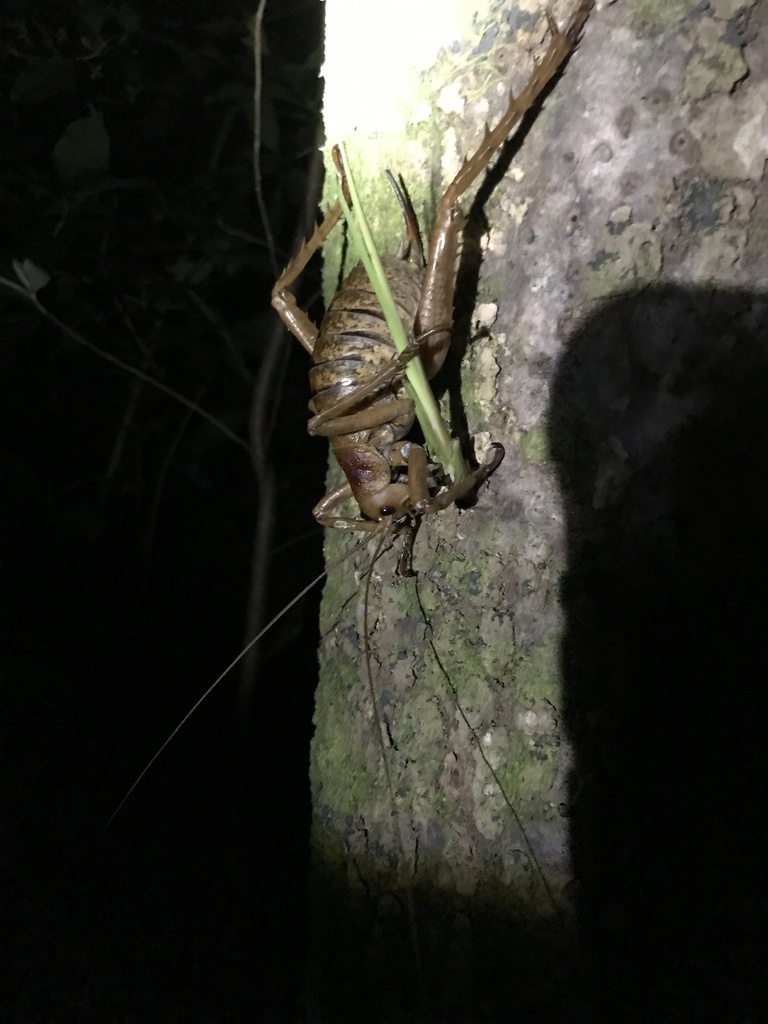
Finally as the day started to draw to a close, it was time to hunt for the elusive kiwi, the hooting of ruru signalled the end of the day. But I was tired and I won’t lie quite pessimistic from how the day had gone, so I decided instead to walk on the road to try and get to the main area sooner and take a break. As I walked I heard loud rustling in the shrubbery beside me, thinking it’ll be nothing much, I shine my torch-light and find a goddamn LITTLE SPOTTED KIWI!!! It had been probably only 10 minutes into the night, and already my target was sitting a mere metre away from me! I observed the bird, a small bundle of grey feathers with soft black speckling, before it eventually turned and scuttled off (very loudly!) back into the undergrowth. Returning to the lighthouse at a high, I refilled my water bottle and headed back out, netting my second lifer walking on one of the link tracks to the lighthouse (incidentally right next to where I saw my first skylark), a distinct owl silhouette, coming right for me! I was a bit concerned about what the ruru was doing, but it seemed to be just a bit blind, realising I was walking on the path as well, it made a frenzied U-turn back into the trees. Where I tracked it back down, seeing its barred wings as it took off into the night sky. Already finding both birds, I went back down to the wattle track entrance, hoping to track down herps(tuatara and the 2 geckos that reside on the island) or the magnificent, wetapunga(giant weta). On the way I saw a few pateke foraging on the forest floor, which made me happy, as seeing and hearing so much about pateke being able to be found commonly in ponds and the like, shattered the fantasy I had of them being shy and elusive forest sulkers, like a kiwi but in duck form. So seeing at least a few of them rooting around in the leaf-litter made me quite happy. It took only around 10 minutes or so of searching, before coming across a massive female WETAPUNGA! It was feasting on the shoot of a cabbage tree, and these insects truly are a sight to behold, a bit longer than your hand and many times heftier, with overlapping plates of exoskeleton, resembling that of a woodlouse or ancient roman armour.
I heard some loud rustling again, so thinking it could be another kiwi, I checked it out, to which it was. Unfortunately they only give you so much time before stomping off into the undergrowth, but I managed to with it forage for a bit, flipping an old nikau palm frond, and tentatively raising and lowering its bill. So finding my second! kiwi for the night, I retired to sleep, although if I didn’t waste time on the northern ponds earlier in the day, I felt I would’ve still had more energy and would’ve been able to find at least a tuatara as well, but thats just another reason to come back :p

The next day was quite nice, a morning walk back down to the crake pond netted me a nice weevil which I rescued from a spider's cobweb (only to later find out it’s invasive..), as well as another takahe. Don’t remember exactly what happened, but didn’t find crake on my first visit, it was only my second (at around 8am?) where I finally found the bugger. I was simply scanning the pond, when to my left I suddenly saw it, the spotless crake’s slaty ass and pink legs as it fled, which was of course not that good of a view. Thankfully after waiting 20 mins or so, my patience was rewarded with a marginally better view… I at least definitively saw the crake's silhouette/shape, but didn’t get to see its bright red eye, which is one of my favourite features on that bird. Eventually after a bit more waiting, I thought it re-emerged, yet it looked a bit smaller.. Zooming in with my binocs, it revealed a fernbird, strangely enough scampering on open ground, as it was a nice bird I decided to end on an alright note, seeing a second one as I made my way out. Nothing much else happened over the day, tried for titipounamu along the wattle track, yet no dice. It was later on in the day, as it was getting closer to the ferry’s departure time, that I decided to sit at one of the water-troughs on the wattle track, already not having had the best of luck with these (only seeing the occasional tui show up), I sat down. And within seconds a goddamn kokako comes, barrelling through the canopy, jumping onto the platform and hopping over to the trough. It seemingly lost all its dignity, like, imagine a disgruntled skrunkly jerboa, with a rat’s body, now transform it into an avian, and that’s what the kokako resembled. Regaining its normal elegant self after flying back into the canopy, I followed it as it had brought along a mate. For a glorious 5 minutes I watched these large bodied birds crash and hop around the canopy, feasting on the numerous fruiting trees and giving their soft ‘took’ calls to each other. As I made my way back to the ferry, I conversed with a few people there, who once again happened to be birders from the states! They’d reported they’d seen tuatara on the Hobb’s track, a mere 15 minutes away, but unfortunately the ferry was pulling in, so couldn’t try for them. Another couple also told me they saw two spotless crakes well directly at the wharf pond… But the ups and downs make for a fun story to tell, and I’m already itching for a re-visit.

Birds
71. Eurasian Skylark (Alauda arvensis)
72. LITTLE SPOTTED KIWI !!! (Apteryx owenii)
73. Ruru (Ninox novaeseelandiae)
74. Spotless Crake (Porzana tabuensis)

Inverts
48. Mediterranean Fanworm (Sabella spallanzanii)
49. Blue Damselfly (Austrolestes colensonis)
50. WETAPUNGA !! (Deinacrida heteracantha)
51. White-fringed Weevil (Naupactus leucoloma)


I SWEAR TO GOD INTERCITy GRAAAAAAAAAAAAAAAAA

29th December

So I was planning on basically taking the exact same route as Chlidonias had, (take the intercity bus, then ferry to Russell, find kiwi, weka, barbary dove and maybe pheasant at Orongo, then return home). I’d decided to book one of the later intercity buses, which would’ve made my arrival into Russell a bit dicey but still definitely feasible, …Until the bus suffered a TWO HOUR delay, costing me my night ferry ride, as well as my accommodation which I’d booked for Orongo previously ($100 that I’m not getting back..), leading to me sleeping right outside the backpackers that night [at least, it was indoors].

Wasn’t all doom and gloom although, as deciding that I had nothing better to do, I took the earliest ferry to Russell anyways, netting myself a few nice birds (although still no little penguin on either ride). Arriving in Russell, was walking down a street, when I realised a strange silhouette on a powerline, long tailed and a slim head, which somehow my brain didn’t recognise until I walked up to it, a barbary dove(actually quite a bit of a problem, as my brain always tries to turn any dove into a cuckoo out of sheer desperation…). It was probably just the morning sun/the nice weather, but the doves did somehow feel prettier to me than the spotted ones I see commonly. A smooth uniform creamy grey with a neat black stripe on the back of its neck and black doughy eyes. Continued heading south, as I was trying to down to Orongo as I assumed I’d only have a shot at weka at the campgrounds, but I was very happily proven wrong. As I’d only gone probably a few hundred metres outside Russell, there was a small ‘valley’, to the side of the road, and in the grassy driveway of a home on the other side, I saw two brownish blobs foraging. Sitting down and focusing my binocs on these blobs, I picked out the signature shape, almost like a football with a short spike jetting out, thus adding weka to my year list. I sat around for about half an hour, just watching as the pair continued to root around, and I’m quite happy with these sightings, rather see them like this than at a campground.

After this took the ferry back to Paihia and the bus back down to Auckland, where I saw a pair of turkeys, which I believe flushed into flight as the bus sped past, and given that they seem to be common as ferals up north, I’ll count them on my list as feral domestics.

Birds
75. Barbary Collared Dove (Streptopelia risoria)
76. Weka (Gallirallus australis)
77. Feral Turkey (Meleagris gallopavo)


Birds
56. North Island Tieke (Philesturnus rufusater)
57. Popokotea (Mohoua albicilla)
58. Red-fronted Kakariki (Cyanoramphus novaezelandiae)
59. Brown Quail (Coturnix ypsilophora)
60. Wrybill (Anarhynchus frontalis)
61. Caspian Tern (Hydroprogne caspia)
62. Buff-Banded Rail (Gallirallus philippensis)
63. Pateke (Anas chlorotis)
64. Hihi (Notiomystis cincta)
65. Korimako (Anthornis melanura)
66. Toutouwai [North Island] (Petroica longipes)
67. Takahe (Porphyrio hochstetteri)
68. Kokako (Callaeas wilsoni)
69. Titipounamu (Acanthisitta chloris)
70. NZ Fernbird (Poodytes punctatus)
71. Eurasian Skylark (Alauda arvensis)
72. LITTLE SPOTTED KIWI !!! (Apteryx owenii)
73. Ruru (Ninox novaeseelandiae)
74. Spotless Crake (Porzana tabuensis)
75. Barbary Collared Dove (Streptopelia risoria)
76. Weka (Gallirallus australis)
77. Feral Turkey (Meleagris gallopavo)

Herps
2. Copper skink (Oligosoma aeneum)

Inverts
32. Common Wasp (Vespula vulgaris)
33. Smooth Shore Crab (Cyclograpsus lavauxi)
34. NZ Sea Slater (Ligia novizealandiae)
35. Striped Green Sea Anemone (Diadumene lineata)
36. Leathery Sea Slug (Onchidella nigricans)
37. Cat’s Eye Snail (Lunella smaragda)
38. Hairy-handed Crab (Hemigrapsus crenulatus)
39. Estuarine Pillbox Crab (Halicarcinus whitei)
40. Bronze Hopper (Helpis minitabunda)
41. Blue Garden Flatworm (Caenoplana coerulea)
42. Claybank Cicada (Notopsalta sericea)
43. Tunnelling Mud Crab (Austrohelice crassa)
44. Red Damselfly (Xanthocnemis zealandica)
45. Ground Weta (Hemiandrus pallitarsis)
46. Two-Spined Spider (Poecilopachys australasia)
47. Knobbled Orbweaver (Socca pustulosa)
48. Mediterranean Fanworm (Sabella spallanzanii)
49. Blue Damselfly (Austrolestes colensonis)
50. WETAPUNGA !! (Deinacrida heteracantha)
51. White-fringed Weevil (Naupactus leucoloma)
Wasted quite a bit of my new years doing this, so heading off for some birding now.
 
Here is my final list for this year, which includes 5 additional species seen since October. I unfortunately came down with a terrible stomach flu while in Dallas, and I missed the opportunity to both visit the Dallas Zoo and go birding, and extra schoolwork + family issues making it harder for me to go birding these past few months. I hope to pick up more steam at the start of the new year, though my total likely won't be as impresive as last year due to the lack of vacations. Anyhow, here is this years list!

Mammals:

1.Eastern Grey Squirrel (Sciurus carolinensis)

2. Eastern Cottontail (Sylvilagus floridanus)

3. American Red Squirrel (Tamiasciurus hudsonicus)

4. Domestic Cat (Felis Catus)

5. White-Tailed Deer (Odocoileus virginianus)

6. Muskrat (Ondatra zibethicus)

7. Vervet Monkey (Chlorocebus pygerythrus)

8. Common Impala (Aepyceros melampus)

9. Cape Buffalo (Syncerus caffer)

10. Common Warthog (Phacochoerus africanus )

11. Lowland Nyala (Tragelaphus angasii)

12. South African Giraffe (Giraffa camelopardalis giraffa)

13. Burchell's Zebra (Equus quagga burchellii)

14. Blue Wildebeest (Connochaetes taurinus)

15. Southern White Rhinoceros (Ceratotherium simum simum)

16. South African Lion (Panthera leo melanochaita)

17. Greater Kudu (Tragelaphus strepsiceros)

18. African Bush Elephant (Loxodonta africana)

19. Southeast African Cheetah (Acinonyx jubatus jubatus)

20. Cape Fur Seal (Arctocephalus pusillus)


21. Norway Rat (Rattus norvegicus)

22. Rock Hyrax (Procavia capensis)

23. Chacma Baboon (Papio ursinus)

24. Bontebok (Damaliscus pygargus)


25. House Mouse (Mus musculus)

26. Eastern Chipmunk (Tamias striatus)

27. American Beaver (Castor canadensis)

28. Thirteen-Lined Ground Squirrel (Ictidomys tridecemlineatus)

29. Coyote (Canis latrans)

30. Northern Raccoon (Procyon lotor)

31. Least Chipmunk (Neotamias minimus)

32. North American River Otter (Lontra canadensis)

33. Fox Squirrel


Birds:

1 .Black-Capped Chickadee (Poecile atricapillus)

2. Dark-Eyed Junco (Junco hyemalis)

3. House Sparrow (Passer domesticus)

4. Bald Eagle (Haliaeetus leucocephalus)

5. Red-Tailed Hawk (Buteo jamaicensis)

6. White-Breasted Nuthatch (Sitta carolinensis)

7. Northern Cardinal (Cardinalis cardinalis)

8. Red-Bellied Woodpecker (Melanerpes carolinus)

9. Rusty Blackbird (Euphagus carolinus)

10. Great Blue Heron (Ardea herodias)

11. Great Egret (Ardea alba)

12. American White Ibis (Eudocimus albus)

13. Yellow-Crowned Night Heron (Nyctanassa violacea)

14. Little Blue Heron (Egretta caerulea)

15. Pied-Billed Grebe (Podilymbus podiceps)

16. Tri-Colored Heron (Egretta tricolor)


17. American White Pelican (Pelecanus erythrorhynchos)

18. Double-Crested Cormorant (Phalacrocorax auritus)

19. Herring Gull (Larus argentatus)

20. American Bittern (Botaurus lentiginosus)

21. Least Sandpiper (Calidris minutilla)

22. Reddish Egret (Egretta rufescens)

23. Glossy Ibis (Plegadis falcinellus)


24. Turkey Vulture (Cathartes aura),

25. Osprey (Pandion haliaetus)

26. Green Heron (Butorides virescens)

27. Black-Crowned Night Heron (Nycticorax nycticorax)

28. Belted Kingfisher (Megaceryle alcyon)

29. Black-Bellied Plover (Pluvialis squatarola)

30. Semipalmated Plover (Charadrius semipalmatus)


31. Laughing Gull (Leucophaeus atricilla)

32. Spotted Sandpiper (Actitis macularius)

33. Willet (Tringa semipalmata)

34. Ruddy Turnstone (Arenaria interpres)

35. Cattle Egret (Bubulcus ibis)

36. Sanderling (Calidris alba)


37. American Crow (Corvus brachyrhynchos)

38. Snowy Egret (Egretta thula)

39. Anhinga (Anhinga anhinga)

40. Red-Breasted Merganser (Mergus serrator)

41. Boat-Tailed Grackle (Quiscalus major)

42. Royal Tern (Thalasseus maximus)

43. Forster's Tern (Sterna forsteri)

44. Sandwich Tern (Thalasseus sandvicensis)


45. Ring-Billed Gull (Larus delawarensis)

46. Brown Pelican (Pelecanus occidentalis)

47. Mangrove Cuckoo (Coccyzus minor)

48. Wood Stork (Mycteria americana)

49. Ring-Necked Dove (Streptopelia capicola)

50. Peregrine Falcon (Falco peregrinus)

51. Red-Shouldered Hawk (Buteo lineatus)


52. Trumpeter Swan (Cygnus buccinator)

53. Ring-Necked Pheasant (Phasianus colchicus)

54. Rock Dove (Columba livia)

55. Pileated Woodpecker (Dryocopus pileatus)

56. Canada Goose (Branta canadensis)

57. Mallard (Anas platyrhynchos)

58. House Finch (Carpodacus mexicanus)

59. American Robin (Turdus migratorius)

60. Blue Jay (Cyanocitta cristata)

61. Dusky Sunbird (Cinnyris fuscus)

62. Golden-Tailed Woodpecker (Campethera abingoni)


63. Barn Swallow (Hirundo rustica)

64. Red-Headed Finch (Amadina erythrocephala)

65. Magpie Mannikin (Spermestes fringilloides)

66. Cape Canary (Serinus canicollis)

67. Yellow-Fronted Canary (Crithagra mozambica)

68. Black-Headed Canary (Serinus alario)

69. European Roller (Coracias garrulus)

70. Cape Turtle Dove (Streptopelia capicola)

71. Speckled Mousebird (Colius striatus)

72. Black Saw-Wing (Psalidoprocne pristoptera)

73. Hadada Ibis (Bostrychia hagedash)

74. Spur-Winged Goose (Plectropterus gambensis)

75. Cape Crow (Corvus capensis)

76. African Paradise Flycatcher (Terpsiphone viridis)

77. Red-Winged Starling (Onychognathus morio)

78. Booted Eagle (Aquila pennata)

79. Jackal Buzzard (Buteo rufofuscus)

80. Dark-Capped Bulbul (Pycnonotus tricolor)

81. Blue-Mantled Crested Flycatcher (Trochocercus cyanomelas)

82. White-Browed Scrub Robin (Cerotrichas leucophrys)

83. Common Mynah (Acridotheres tristis)

84. Pied Crow (Corvus albus)

85. Cape Sparrow (Passer melanurus)

86. Egyptian Goose (Alopochen aegyptiaca)

87. Denham's Bustard (Neotis denhami)

88. Blue Waxwing (Uraeginthus angolensis)

89. Violet-Backed Starling (Cinnyricinclus leucogaster)

90. Senegal Lapwing (Vanellus lugubris)

91. Crowned Lapwing (Vanellus coronatus)

92. African Wattled Lapwing (Vanellus senegallus)

93. Crested Francolin (Ortygornis sephaena)

94. Fiery-Necked Nightjar (Caprimulgus pectoralis)

95. Spotted Eagle Owl (Bubo africanus)

96. Burchell's Coucal (Centropus burchellii)

97. Brown-Hooded Kingfisher (Halcyon albiventris)

98. White-Necked Raven (Corvus albicollis)

99. Marico Sunbird (Cinnyris mariquensis)

100. Red-Faced Mousebird (Urocolius indicus)

101. Rufous-Winged Cisticola (Cisticola galactotes)

102. Emerald-Spotted Wood Dove (Turtur chalcospilos)

103. Black-Shouldered Kite (Elanus axillaris)

104. Crested Guineafowl (Guttera pucherani)

105. Three-Banded Plover (Charadrius tricollaris)

106. Bateleur (Terathopius ecaudatus)

107. Red-Billed Oxpecker (Buphagus erythrorynchus)

108. Fork-Tailed Drongo (Dicrurus adsimilis)

109. Red-Backed Shrike (Lanius collurio)

110. White-Backed Vulture (Gyps africanus)

111. Yellow-Throated Longclaw (Macronyx croceus)

112. Yellow-Billed Hornbill (Tockus leucomelas)

113. Wire-Tailed Swallow (Hirundo smithii)

114. White-Throated Swallow (Hirundo albigularis)

115. Lesser Masked Weaver (Ploceus intermedius)

116. Natal Spurfowl (Pternistis natalensis)

117. European Bee-Eater (Merops apiaster)

118. Crested Barbet (Trachyphonus vaillantii)

119. Green Wood Hoopoe (Phoeniculus purpureus)

120. Chinspot Batis (Batis molitor)

121. Green-Winged Pytilia (Pytilia melba)

122. Black-Headed Heron (Ardea melanocephala)

123. Grey Heron (Ardea cinerea)

124. African Wooly-Necked Stork (Ciconia episcopus microscelis/ Ciconia microscelis)

125. Black-Crowned Tchagra (Tchagra senegala)

126. Water Thick-Knee (Burhinus vermiculatus)

127. Lilac-Breasted Roller (Coracias caudatus)

128. Brown Snake-Eagle (Circaetus cinereus)

129. Martial Eagle (Polemaetus bellicosus)

130. Red-Breasted Swallow (Cecropis semirufa)

131. Long-Crested Eagle (Lophaetus occipitalis)

132. Red-Billed Firefinch (Lagonosticta senegala)

133. Cape Cormorant (Phalacrocorax capensis)

134. Bank Cormorant (Phalacrocorax neglectus)

135. Hartlaub's Gull (Chroicocephalus hartlaubii)

136. Kelp Gull (Larus dominicanus)

137. African Penguin (Spheniscus demersus)

138. Pied Avocet (Recurvirostra avosetta)

139. Caspian Tern (Hydroprogne caspia)

140. Grey-Headed Gull (Larus cirrocephalus)

141. Cape Wagtail (Motacilla capensis)

142. Common Ostrich (Struthio camelus)

143. Speckled Pigeon (Columba guinea)

144. African Darter (Anhinga rufa)

145. African Sacred Ibis (Threskiornis aethiopicus)

146. Common Tern (Sterna hirundo)

147. House Crow (Corvus splendens)

145. African Sacred Ibis (Threskiornis aethiopicus)

146. Common Tern (Sterna hirundo)

147. House Crow (Corvus splendens)

148. Little Egret (Egretta garzetta)

149. Swift Tern (Thalasseus bergi)

150. Red-Eyed Dove (Streptopelia semitorquata)


151. American Goldfinch (Spinus tristis)

152. Bufflehead (Bucephala albeola)

153. Hooded Merganser (Lophodytes cucullatus)

154. Red-Winged Blackbird (Agelaius phoeniceus)

155. Yellow Warbler (Dendroica petechia)

156. House Wren (Troglodytes aedon)

157. Cedar Waxwing (Bombycilla cedrorum)

158. Cooper's Hawk (Accipiter cooperii)

159. Brown-Headed Cowbird (Molothrus ater)

160. Song Sparrow (Melospiza melodia)

161. Chipping Sparrow (Spizella passerina)

162. Grey Catbird (Dumetella carolinensis)

163. Blackpol Warbler (Dendroica striata)

164. American Black Duck (Anas rubripes)

165. Palm Warbler (Setophaga palmarum)

166. Common Yellowthroat (Geothlypis trichas)

167. Wilson’s Warbler (Cardellina pusilla)

168. Purple Finch (Carpodacus purpureus)


169. Common Grackle (Quiscalus quiscula)

170. Broad-Winged Hawk (Buteo platypterus)

171. Hairy Woodpecker (Leuconotopicus villosus)

172. Barrow's Goldeneye (Bucephala islandica)

173. Common Merganser (Mergus merganser)


174. Common Loon (Gavia immer)

175. Northern Goshawk (Accipiter gentilis)

176. Ruby-Throated Hummingbird (Archilochus colubris)

177. Baltimore Oriole (Icterus galbula)

178. Barred Owl (Strix varia)

179. Sandhill Crane (Antigone canadensis)

180. Northern Shoveler (Spatula clypeata)

181. American Kestrel (Falco sparverius)

182. Ovenbird (Seiurus aurocapilla)


183. Wild Turkey (Meleagris gallopavo)

184. Sora (Porzana carolina)

185. Scarlet Tanager (Piranga oliviacea)

186. American Redstart (Setophaga ruticilla)

187. Red-Breasted Nuthatch (Sitta canadensis)


188. Common Raven (Corvus corax)

189. Blue-Winged Teal (Spatula discors)

190. Chimney Swift (Chaetura pelagica)

191. Red-Eyed Vireo (Vireo olivaceus)

192. Northern Flicker (Colaptes auratus)

193. Great-Crested Flycatcher (Myiarchus crinitus)

194. Eastern Bluebird (Sialia sialis)

195. Least Bittern (Ixobrychus exilis)

196. Rose Breasted Grosbeak (Pheucticus ludovicianus)


197. Field Sparrow (Spizella pusilla)

198. Savannah Sparrow (Passerculus sandwichensis)

199. Blue-Gray Gnatcatcher (Polioptila caerulea)

200. Tufted Titmouse (Baeolophus bicolor)

201. Red-Headed Woodpecker (Melanerpes erythrocephalus)

202. Purple Martin (Progne subis)

203. Killdeer (Charadrius vociferus)

204. Blue Grosbeak

205. Broad-Winged Hawk

206. Great-tailed Grackle (Quiscalus mexicanus)


Reptiles:

1. Brown Anole (Anolis sagrei)

2. Saltmarsh Snake (Nerodia clarkii)

3. American Alligator (Alligator mississippiensis)

4. Brown Basilisk (Basiliscus vittatus)

5. Florida Redbelly Cooter (Pseudemys nelsoni)

6. Pond Slider (Trachemys scripta)

7. Florida Softshell Turtle (Apalone ferox)

8. Tropical House Gecko (Hemidactylus mabouia)

9. African Helmeted Turtle (Pelomedusa subrufa)

10. Puff Adder (Bitis arietans)

11. Rainbow Skink (Trachylepis margaritifera)
12. Variable Skink (Mabuya varia)


14. Painted Turtle (Chrysemys picta)

15. False Map Turtle (Graptemys pseudogeographica)

16. Wood Turtle (Glyptemys insculpta)

17. Common Snapping Turtle (Chelydra serpentina)


Amphibians:

1. African Red Frog (Schismaderma carens)

2. Wood Frog (Rana sylvatica)

3. American Toad (Anaxyrus americanus)


Fish:

1. Channel Catfish (Ictalurus punctatus)

2. Florida Gar (Lepisosteus platyrhincus)

3. American Eel (Anguilla rostrata)


4. Black Bullhead (Ameiurus melas)

5. Bluegill (Lepomis macrochirus)

6. Orangespotted Sunfish (Lepomis humilis)


Invertebrates:

1. Mangrove Tree Crab (Aratus pisonii)

2. Giant Golden Orb-Weaver Spider (Trichonephila komaci)


(There were plenty of other invert Species I saw this year that I didn’t bother writing down, since I am awful at identifying insects.)
 
Last edited:
This is probably it for me this year, closing out with a set of interesting Odonates that I've managed to ID using Paulson's book for Eastern NA (And INaturalist)

308. Familiar bluet (Enallagma civile) (Lifer)
309. Tule bluet (Enallagma carunculatum) (LIfer)

310. Slaty skimmer (Libellula incesta)
311. Autumn meadowhawk (Sympetrum vicinum)
312. Blue-tipped dancer (Argia tibialis)
313. Honeylocust treehopper (Micrutalis calva)
314. White-faced meadowhawk (Sympetrum obtrusum) (Lifer)
Well, one last insect!

315. Four-spotted clover leafhopper (Agallia quadripunctata)

Totals for the year:
Mammals: 16, 4 lifers
Birds: 180, 81 lifers
Reptiles: 13, 8 lifers
Amphibians: 10, 6 lifers
Fish: 28, 24 lifers
Insect/inverts: 315, 177 lifers

Maybe next year, I'll finally pass 200 birds (And I'll hopefully surpass 300 if everything pans out) and some other milestones for the other classes/taxa, but overall, this has been a fun year of exploring wildlife, even if it mostly stopped in the last 3 months.
 
Here are my final results of this year:

Names in bold are lifers.


Big Year 2022:


Mammals (1 lifer):

1. Eastern Gray Squirrel (Sciurus carolinensis)- January 3
2. White-Tailed Deer (Odocoileus virginianus)- January 5
3. Eastern Cottontail (Sylvilagus floridanus)- April 19
4. Red Fox (Vulpes vulpes)- June 22
5. Fox Squirrel (Sciurus niger)- July 22
6. Mule Deer (Odocoileus hemionus)- July 23
7. Striped Skunk (Mephitis mephitis)- July 23

8. Brown Rat (Rattus norvegicus)- July 23
9. Small Indian Mongoose (Urva auropunctata)- July 30


Birds (24 lifers):

1. Northern Mockingbird (Mimus polyglottos)- January 2
2. Mourning Dove (Zenaida macroura)- January 3
3. Canada Goose (Branta canadensis)- January 5
4. Red-Bellied Woodpecker (Melanerpes carolinus)- January 5
5. Song Sparrow (Melospiza melodia)- January 5
6. Tufted Titmouse (Baeolophus bicolor)- January 5
7. Eastern Bluebird (Sialia sialis)- January 6
8. Carolina Chickadee (Poecile carolinensis)- January 6
9. Yellow-Rumped Warbler (Setophaga coronata)- January 6
10. Pine Warbler (Setophaga pinus)- January 6
11. Red-Winged Blackbird (Agelaius phoeniceus)- January 6
12. European Starling (Sturnus vulgaris) - January 6
13. American Robin (Turdus migratorius)- January 6
14. American Crow (Corvus brachyrhynchos)- January 7
15. Turkey Vulture (Cathartes aura)- January 7
16. Rock Dove (Columba livia)- January 18
17. Dark-Eyed Junco (Junco hyemalis)- January 19
18. Brown Pelican (Pelecanus occidentalis)- January 20
19. Brown Thrasher (Toxostoma rufum)- January 20
20. Chipping Sparrow (Spizella passerina)- January 26
21. Double-Crested Cormorant (Nannopterum auritum)- January 30
22. Willet (Tringa semipalmata)- January 30
23. Great Blue Heron (Ardea herodias)- January 30
24. Great Egret (Ardea alba)- January 30
25. American Herring Gull (Larus smithsonianus) - February 13
26. Common Grackle (Quiscalus quiscula)- February 21
27. Blue Jay (Cyanocitta cristata)- February 21
28. Northern Flicker (Colaptes auratus)- February 21
29. Northern Cardinal (Cardinalis cardinalis)- February 21
30. Ring-Billed Gull (Larus delawarensis)- February 21
31. Lesser Scaup (Aythya affinis)- February 21
32. Common Loon (Gavia immer)- February 21
33. Killdeer (Charadrius vociferus)- February 21
34. House Sparrow (Passer domesticus)- February 21
35. Pileated Woodpecker (Dryocopus pileatus)- February 27
36. Wild Turkey (Meleagris gallopavo)- February 27
37. Pied-Billed Grebe (Podilymbus podiceps)- February 27
38. Carolina Wren (Thryothorus ludovicianus)- March 2
39. Fish Crow (Corvus ossifragus)- March 9
40. American White Ibis (Eudocimus albus)- March 13
41. Laughing Gull (Leucophaeus atricilla)- March 13
42. Red-Shouldered Hawk (Buteo lineatus)- March 13
43. Boat-Tailed Grackle (Quiscalus major)- March 13
44. Tricolored Heron (Egretta tricolor)- March 13
45. White-Breasted Nuthatch (Sitta carolinensis)- March 23
46. Brown-Headed Cowbird (Molothrus ater)- March 23
47. Barn Swallow (Hirundo rustica)- April 8
48. House Finch (Haemorhous mexicanus)- April 19
49. Red-Headed Woodpecker (Melanerpes erythrocephalus)- May 10
50. Great-Crested Flycatcher (Myiarchus crinitus)- June 4
51. Eastern Kingbird (Tyrannus tyrannus)- June 19
52. Osprey (Pandion haliaetus)- June 25
53. Green Heron (Butorides virescens)- July 13
54. Chimney Swift (Chaetura pelagica)- July 15
55. Snowy Egret (Egretta thula)- July 16
56. Great-Tailed Grackle (Quiscalus mexicanus)- July 21
57. Western Gull (Larus occidentalis)- July 22
58. Black Phoebe (Sayornis nigricans)- July 22
59. Red-Masked Parakeet (Psittacara erythrogenys)- July 22
60. Anna’s Hummingbird (Calypte anna)- July 22
61. Mallard (Anas platyrhynchos)- July 22
62. Allen’s Hummingbird (Selasphorus sasin)- July 22
63. Common Raven (Corvus corax)- July 23
64. American Coot (Fulica americana)- July 23
65. Common Gallinule (Gallinula galeata)- July 23
66. Wood Duck (Aix sponsa)- July 23
67. Black-Crowned Night Heron (Nycticorax nycticorax)- July 23
68. White-Faced Ibis (Plegadis chihi)- July 23
69. Greater Roadrunner (Geococcyx californianus)- July 23
70. Wrentit (Chamaea fasciata)- July 23
71. Common Myna (Acridotheres tristis)- July 24
72. Domestic Chicken (Gallus gallus domesticus)- July 24
73. Western Cattle Egret (Bubulcus ibis)- July 24
74. Zebra Dove (Geopelia striata)- July 24
75. Spotted Dove (Spilopelia chinensis)- July 24
76. Chestnut Munia (Lonchura atricapilla)- July 24
77. Java Sparrow (Padda oryzivora)- July 24
78. Wedge-Tailed Shearwater (Ardenna pacifica)- July 27
79. Black-Necked Stilt (Hawaiian subspecies) (Himantopus mexicanus knudseni)- July 28
80. Hawaiian Coot (Fulica alai)- July 30
81. Red-Crested Cardinal (Paroaria coronata)- July 30
82. Pacific Golden Plover (Pluvialis fulva)- August 3
83. Gray Francolin (Dryobates pubescens)- August 4
84. Wandering Tattler (Tringa incana)- August 4
85. Cooper’s Hawk (Accipiter cooperii)- October 22
86. Royal Tern (Thalasseus maximus)- October 22
87. Red-Tailed Hawk (Buteo jamaicensis)- October 22
88. Gray Catbird (Dumetella carolinensis)- October 29
89. Belted Kingfisher (Megaceryle alcyon)- November 19
90. Bald Eagle (Haliaeetus leucocephalus)- November 19
91. Domestic Muscovy Duck (Cairina moschata domestica)- November 27
92. Ruby-Crowned Kinglet (Corthylio calendula)- November 27
93. Snow Goose (Anser caerulescens)- December 10
94. Forster’s Tern (Sterna forsteri)- December 10
95. Downy Woodpecker (Dryobates pubescens)- December 30


Reptiles (2 lifers):

1. Green Anole (Anolis carolinensis)- February 28
2. Western Fence Lizard (Sceloporus occidentalis)- July 23
3. Brown Anole (Anolis sagrei)- July 25
4. Mourning Gecko (Lepidodactylus lugubris)- July 26
5. Green Sea Turtle (Chelonia mydas)- August 3
6. Common House Gecko (Hemidactylus frenatus)- August 23


Amphibians (3 lifers):

1. Southern Toad (Anaxyrus terrestris)- May 14
2. Squirrel Tree Frog (Dryophytes squirellus)- May 22
3. American Bullfrog (Lithobates catesbeianus)- September 2
4. American Green Tree Frog (Dryophytes cinereus)- September 21


Fish (3 lifers):


1. Wahoo (Acanthocybium solandri)- July 27
2. Blue-Lined Snapper (Lutjanus kasmira)- July 27
3. Manybar Goatfish (Parupeneus multifasciatus)- July 27
4. Bluespotted Cornetfish (Fistularia commersonii)- July 27
5. Moorish Idol (Zanclus cornutus)- July 27
6. Convict Tang (Acanthurus triostegus)- July 27
7. Mozambique Tilapia (Oreochromis mossambicus)- July 30
8. Reef Triggerfish (Rhinecanthus rectangulus)- August 3
9. Belted Wrasse (Stethojulis balteata)- August 3
10. Saddle Wrasse (Thalassoma duperrey)- August 3
11. Raccoon Butterflyfish (Chaetodon lunula)- August 3
12. Indo-Pacific Sergeant (Abudefduf vaigiensis)- August 3
13. Christmas Wrasse (Thalassoma trilobatum)- August 3
14. Spotted Boxfish (Ostracion meleagris)- August 3
15. Ringtail Surgeonfish (Acanthurus blochii)- August 3
16. Orangebar Surgeonfish (Acanthurus olivaceus)- August 3
17. Yellowfin Surgeonfish (Acanthurus xanthopterus)- August 3
18. Orangespine Unicornfish (Naso lituratus)- August 3
19. Brown Surgeonfish (Acanthurus nigrofuscus)- August 3
20. Bluespine Unicornfish (Naso unicornis)- August 3
21. Ornate Butterflyfish (Chaetodon ornatissimus)- August 3
22. Ambon Toby (Canthigaster amboinensis)- August 5
23. Bright-Eye Damselfish (Plectroglyphidodon imparipennis)- August 5
24. Yellow Tang (Zebrasoma flavescens)- August 5
25. Threadfin Butterflyfish (Chaetodon auriga)- August 5


Invertebrates (36 lifers):


1. Bent-Line Carpet Moth (Costaconvexa centrostrigaria)- February 22
2. European Crane Fly (Tipula paludosa)- March 24
3. Three-Band Garden Slug (Ambigolimax valentianus)- March 30

4. Housefly (Musca domestica)- March 31
5. Rabid Wolf Spider (Rabidosa rabida)- April 4
6. Eastern Carpenter Bee (Xylocopa virginica)- April 7
7. Metricus Paper Wasp (Polistes metricus)- April 7

8. Palamedes Swallowtail (Papilio palamedes)- April 8
9. Red Imported Fire Ant (Solenopsis invicta)- April 19
10. Two-Spotted Bumblebee (Bombus bimaculatus)- April 19
11. Clover Mite (Bryobia praetiosa)- April 27

12. Triangulate Cobweb Spider (Steatoda triangulosa)- May 1
13. Eastern Parson Spider (Herpyllus ecclesiasticus)- May 18
14. Southern Masked Chafer (Cyclocephala lurida)- May 25
15. Asiatic Garden Beetle (Maladera formosae)- May 25
16. Eastern Pondhawk (Erythemis simplicicollis)- May 26
17. Carolina Ground Cricket (Eunemobius carolinus)- May 27
18. Australian Sheep Blowfly (Lucilia cuprina)- May 27
19. German Cockroach (Blattella germanica)- May 31

20. Two-Lined Spittlebug (Prosapia bicincta)- June 4
21. Black-Tailed Red Sheetweaver (Florinda coccinea)- June 19
22. American Cockroach (Periplaneta americana)- June 19
23. Kyoto Moth (Autosticha kyotensis)- June 19
24. Zarucco Duskywing (Erynnis zarucco)- June 19
25. Short-Winged Green Grasshopper (Dichromorpha viridis)- June 19
26. Tiger Bee Fly (Xenox tigrinus)- June 24
27. Lesser Angle-Winged Katydid (Microcentrum retinerve)- July 13
28. Florida Predatory Stinkbug (Euthyrhynchus floridanus)- July 13
29. Pasture Wireworm (Monocrepidius exsul)- July 19

30. Western Honeybee (Apis mellifera)- July 22
31. Monarch Butterfly (Danaus plexippus)- July 23

32. California Carpenter Bee (Xylocopa californica)- July 23
33. Red-Shouldered Bug (Jadera haematoloma)- July 24

34. Thin-Shelled Rock Crab (Grapsus tenuicrustatus)- July 27
35. Asian Swallowtail (Papilio xuthus)- July 29
36. Giant Daddy-Long-Legs (Artema atlanta)- July 29

37. Yellow Crazy Ant (Anoplolepis gracilipes)- July 29
38. Black Nerite (Nerita picea)- August 3
39. Pale Rock-Boring Urchin (Echinometra mathaei)- August 3

40. Yellow-Spotted Guard Crab (Trapezia flavopunctata)- August 3
41. Black Sea Cucumber (Holothuria atra)- August 3
42. White-Spotted Sea Cucumber (Actinopyga varians)- August 3
43. Slate Pencil Urchin (Heterocentrotus mamillatus)- August 3
44. Collector Urchin (Tripneustes gratilla)- August 3

45. Gray Wall Jumping Spider (Menemersu bivittatus)- August 4
46. Horned Ghost Crab (Ocypode ceratophthalmus)- August 5
47. Ring-Legged Earwig (Euborellia annulipes)- August 10
48. Milkweed Assassin Bug (Zelus longipes)- August 29
49. Obscure Bird Grasshopper (Schistocerca obscura)- August 29
50. Luna Moth (Actias luna)- August 29

51. Asian Tiger Mosquito (Stegomyia albopicta)- August 29
52. Gulf Fritillary (Dione vanillae)- September 16

53. Wolf Spider (no English name) (Tigrosa annexa)- September 24
54. Yellow Garden Spider (Argiope aurantia)- October 1
55. Black Soldier Fly (Hermetia illucens)- October 1
56. Asian Lady Beetle (Harmonia axyridis)- November 28


Overall, I think this has been a successful Big Year. The number of lifers and overall species I have seen this year has been higher than 2021, and I am very happy with my final results. I hope 2023 brings even more new species to see, and I hope I am finally able to exceed 100 birds, which is something I've always wanted to achieve. Here's to another spectacular year!


Last edited:
Back
Top