Zoochat Big Year 2023

Insane vagrant seen in Milwaukee yesterday!!!!!!!!!:

Birds
159. Flame-colored Tanager Piranga bidentata


This is a Central American species with only a handful of US records - all previous records were from far southern Arizona and Texas. And now one from Wisconsin! Crazy!
Birds
160. Iceland Gull Larus glaucoides
161. Blue-headed Vireo Vireo solitarius
162. Sora Porzana carolina
 
Insane vagrant seen in Milwaukee yesterday!!!!!!!!!:

Birds
159. Flame-colored Tanager Piranga bidentata


This is a Central American species with only a handful of US records - all previous records were from far southern Arizona and Texas. And now one from Wisconsin! Crazy!
How many other birders were there? I can assume there would be quite some numbers for such a bird.
 
How many other birders were there? I can assume there would be quite some numbers for such a bird.
I was in the park where it was seen for about an hour and probably saw around 30 other birders. The bird had been there all day so I assume many others had come and gone.

This bird is also still being seen.
 
Two more birds from a trip to Brest to see the arctic seal species there. Am 99% sure that I saw a hen harrier from the train but a fleeting 3 second glimpse isn't enough to fully convince me.

136. European shag
137. Common swift


Some more from the bank holiday weekend and a walk to Waddesdon Manor today.

Mammals
12. Muntjac

Birds
138. Common reed warbler
139. Common whitethroat
140. Northern wheatear
141. Western yellow wagtail
142. Common linnet
 
Last week I attempted a Big Day with two friends. Our goal was to break our own record (104 birds in one day) within our local region, and only count visual sightings. Let's see how that went!

The day started with a slight drizzle as we entered a forested area just before the break of day. Everything was clouded in a faint grey mist. Birding started very slow - so slow in fact that we were quite tempted to give up at the very start, for without the forest birds it would be a long stretch indeed to reach 105 species. However, we did not give up, and slowly but surely one after another common forest bird appeared, though usually only one or two individuals per species. The only real stand-out so far was a black woodpecker. Soon we approached more open terrain and the tempo started to pick up a bit. After just over two hours of birding the drizzle finally gave way and we had reached the first 40 species. Almost all of them very common birds, but in a big day every species counts and without the blue tits and wood pigeons and dunnocks we would certainly not reach our goal.

By this time the first unusual species started to appear. First was a calling common cuckoo, which, despite its name, is anything but common in this area. Soon it was followed by a pair of very late fieldfares and a ring ouzel, which is even scarcer than usual this year. Soon we made our way back to the car, netting another handful of forest birds before a short drive through a stretch of farmland. We checked four little owl nest boxed but to no avail. After adding roughly a dozen common farmland birds we stopped at a newly dug waterway, still surrounded by a stretch of bare sand. Along the water's edge there was a tiny wader walking around. A plover. Thinking it would be 'just' a little ringed plover, we put our spotting scopes on it, only to find out it was in fact a Kentish plover! And extreme rarity this far in land, with less than a handful of records in the last 30 years. Now it had really started!

On our way towards an area of marshland we stopped briefly at an old estate surrounding a castle, hopeful to pick up three typical species of that area. We missed the middle spotted woodpecker, but nightingale and lesser whitethroat could be added to the list. With about 65 species on the counter we were finally approaching a series of artificial lakes. Just before reaching them, I noticed an odd goose, which turned out to be a tundra bean goose, which is very rare this time of year. Quickly afterwards we reached the artificial lakes along with some marshland surrounding it. After seeing the most common waterbirds, it was a set of rather scarce songbirds that stole the show. Grasshopper warbler, Cetti's warbler, sedge warbler, bluethroat and whinchat are too common to be considered rare, but each one can be considered a very good bird in our area, so finding several was quite a treat. Almost 90 species on the counter, only 15 to go. But with every species seen it becomes harder to find the next one.

After a good while we find ourselves at a series of small islands in one of the lakes that hosts a breeding colony of gulls. Feeling pretty confident in ourselves now - having just netted a Eurasian hobby, another not-rare-but-still-good bird - we started scanning through the flock. We find a grand total of seven species of gull - including the scarce Mediterranean gull and the downright rare little gull - and a bunch of waders, but the terns really soak up our attention. Besides the appropriately named common tern and the rare migrant black tern, there is one really special individual in the group: a gull-billed tern! Another extreme rarity in the area, just as rare as the Kentish plover from earlier! It takes us some time to get a solid ID, but given how extremely rare the species is in this area it was worth our while. With 99 species on the counter, and several hours of sunlight left, we are confident we will reach our goal.

Our road takes us to a water storage area, a stretch of semi-natural grassland which is inundated if the water in the river gets too high. Such places tend to be great for wildlife, and this time is no exception. Common shelduck is the 100th species, but here too we find a few usual ones, including the scarce Temminck's stint and spotted redshank, and a very late Eurasian wigeon. The final stop is a classic meadowbird area - the only one in our region - where we naturally find our national bird, the black-tailed godwit, alongside other typical meadowbirds. Highlights here include red knot (again very rare inland!), whimbrel and a locally scarce Eurasian spoonbill. But two ruffs, a rather common migrant, in full breeding plumage are at least as spectacular as all the rare species we find. Soon the light starts to fade in a golden sunset. As we drive for our last stretch, a small raptor seems to be hunting over the fields. It turns out to be a majestic short-eared owl, a species I have only seen twice in my life before and one that I certainly did not expect to see on the big day! We watch it for a while before it disappears in the fading light. And just before we reach the house of one of my friends for dinner, we find in the last light of day a grey partridge. That brings the total to 126 species in a single day. It was probably the most bizarre birding trip I ever experienced in the Netherlands, and I can stil hardly believe what happened. What a day!

The list also contains a few birds seen earlier, so that's why it seems a little out of order.

Birds
173. Garganey, Spatula querquedula
174. Common Swift, Apus apus
175. Common Tern, Sterna hirundo
176. Lesser Spotted Woodpecker, Dryobates minor
177. Sedge Warbler, Acrocephalus schoenobaenus
178. Common Greenshank, Tringa nebularia
179. Eurasian Spoonbill, Platalea leucorodia
180. Garden Warbler, Sylvia borin
181. Common Cuckoo, Cuculus canorus
182. Ring Ouzel, Turdus torquatus
183. Kentish Plover, Charadrius alexandrinus
184. Common Nightingale, Luscinia megarhynchos
185. Lesser Whitethroat, Curruca curruca
186. Black Tern, Chlidonias niger
187. Common Reed Warbler, Acrocephalus scirpaceus
188. Common Grasshopper Warbler, Locustella naevia
189. Whinchat, Saxicola rubetra
190. Eurasian Hobby, Falco subbuteo
191. Little Ringed Plover, Charadrius dubius
192. Gull-billed Tern, Gelocheliodon nilotica
193. Temminck's Stint, Calidris temmincki
194. Spotted Redshank, Tringa ochropus
195. Whimbrel, Numenius phaeopus
196. Red Knot, Calidris canutus
197. Short-eared Owl, Asio flammeus
198. Grey Partridge, Perdix perdix

Butterflies
12. Queen of Spain Fritillary, Issoria lathonia
13. Small White, Pieris rapae
14. Small Copper, Lycaena phlaeas
 
143 Red-shouldered Hawk Buteo lineatus
144 Warbling Vireo Vireo gilvus
145 Great Crested Flycatcher Myiarchus crinitus
146 House Wren Troglodytes aedon
147 Gray Catbird Dumetella carolinensis
148 Swainson's Thrush Catharus ustulatus
149 Orange-crowned Warbler Leiothlypis celata
150 Greater Roadrunner Geococcyx californianus
151 Ruby-throated Hummingbird Archilochus colubris
152 Snowy Plover Charadrius nivosus
153 Semipalmated Sandpiper Calidris pusilla
154 Wilson's Phalarope Phalaropus tricolor
155 Greater Yellowlegs Tringa melanoleuca
156 Baltimore Oriole Icterus galbula
157 Eastern Towhee Pipilo erythrophthalmus
158 Savannah Sparrow Passerculus sandwichensis
159 Great Egret Ardea alba

160 Eastern Kingbird Tyrannus tyrannus
161 Red-eyed Vireo Vireo olivaceus
 
Back from a great trip to the High Atlas!

BIRDS:
24/04/2023
(Au Rocher, Morocco)
416 - Great spotted woodpecker, Dendrocopos major
417 - Garden warbler, Sylvia borin
418 - Eurasian sparrowhawk, Accipiter nisus
419 - Maghreb owl, Strix mauritanica
---
25/04/2023 (Asni [#420], Champs semi-desertiques de Oulad Mansour [#421-422], Au Rocher [#423-426], Morocco)
420 - Levaillant's woodpecker, Picus vaillantii
421 - Northern wheatear, Oenanthe oenanthe
422 - Thekla's lark, Galerida theklae
423 - Northern goshawk, Accipiter gentilis
424 - Common firecrest, Regulus ignicapilla
425 - Coal tit, Periparus ater
426 - Red crossbill, Loxia curvirostra
---
26/04/2023 (Oualmas [#427], Ourika [#428], Jardin Bio-Aromatique de l'Ourika [#429], Vallée de l'Ourika [#430], Morocco)
427 - Eurasian chaffinch, Fringilla coelebs
428 - Booted eagle, Hieraaetus pennatus
429 - Eurasian golden oriole, Oriolus oriolus
430 - Long-legged buzzard, Buteo rufinus
---
27/04/2023 (Igunane [#431], Vallée de l'Oukaïmeden [#432-443], Au Rocher [#444], Morocco)
431 - Rock bunting, Emberiza cia
432 - Rock sparrow, Petronia petronia
433 - Red-billed chough, Pyrrhocorax pyrrhocorax (MOROCCAN LIFER)
434 - Yellow-billed chough, Pyrrhocorax graculus
435 - Black redstart, Phoenicurus ochruros
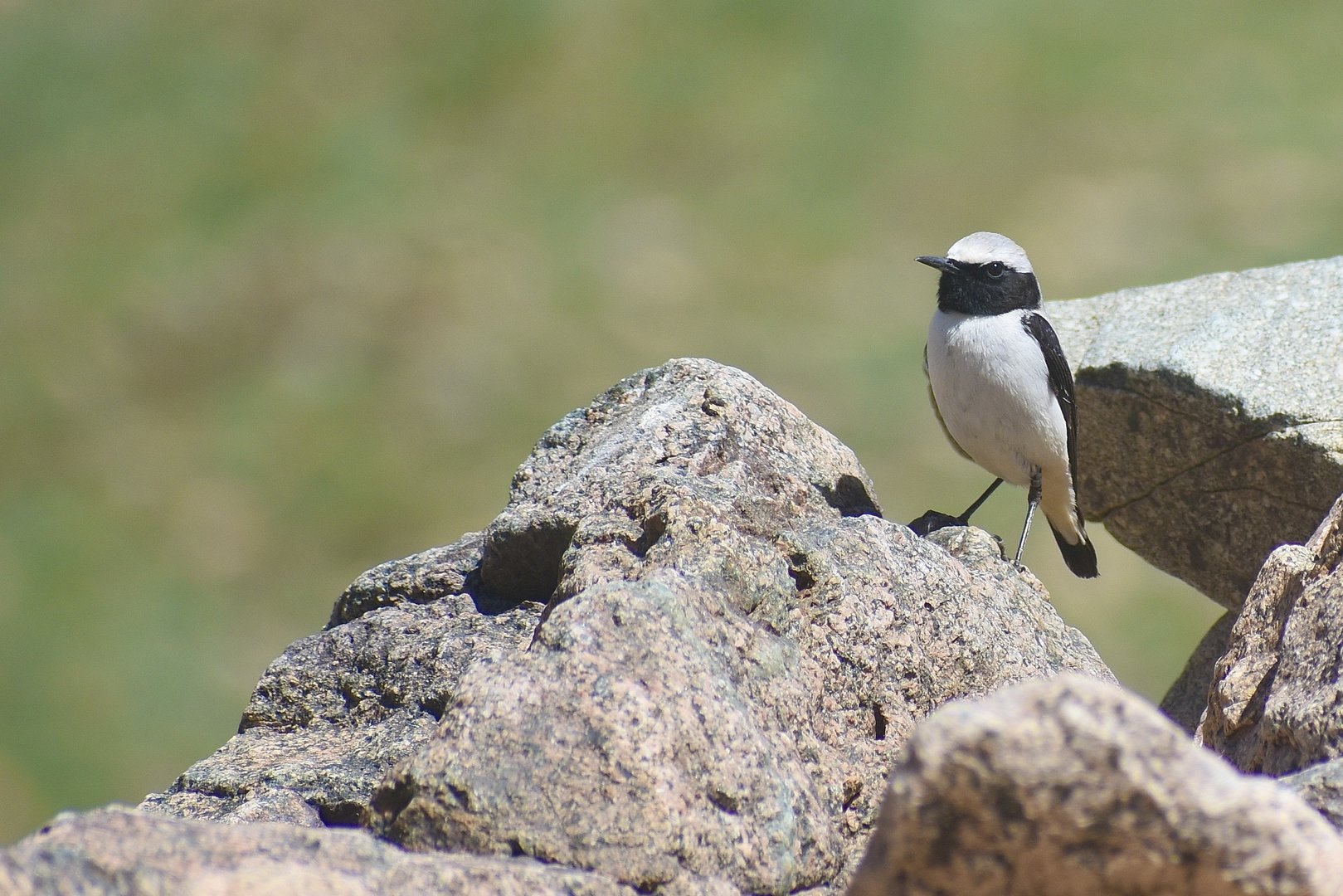
436 - Atlas wheatear, Oenanthe seebohmi
437 - Common whitethroat, Curruca communis
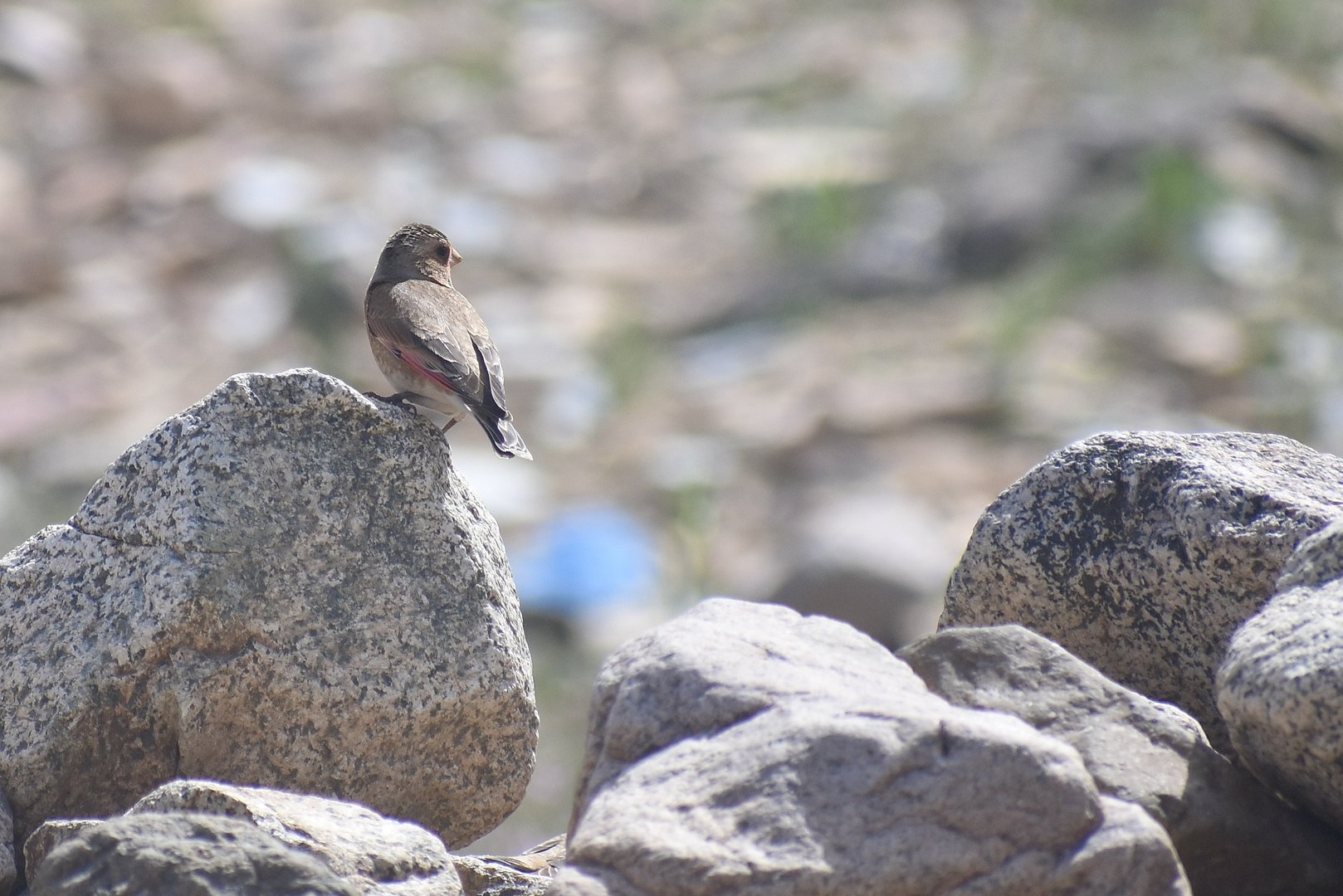
438 - African crimson-winged finch, Rhodopechys alienus
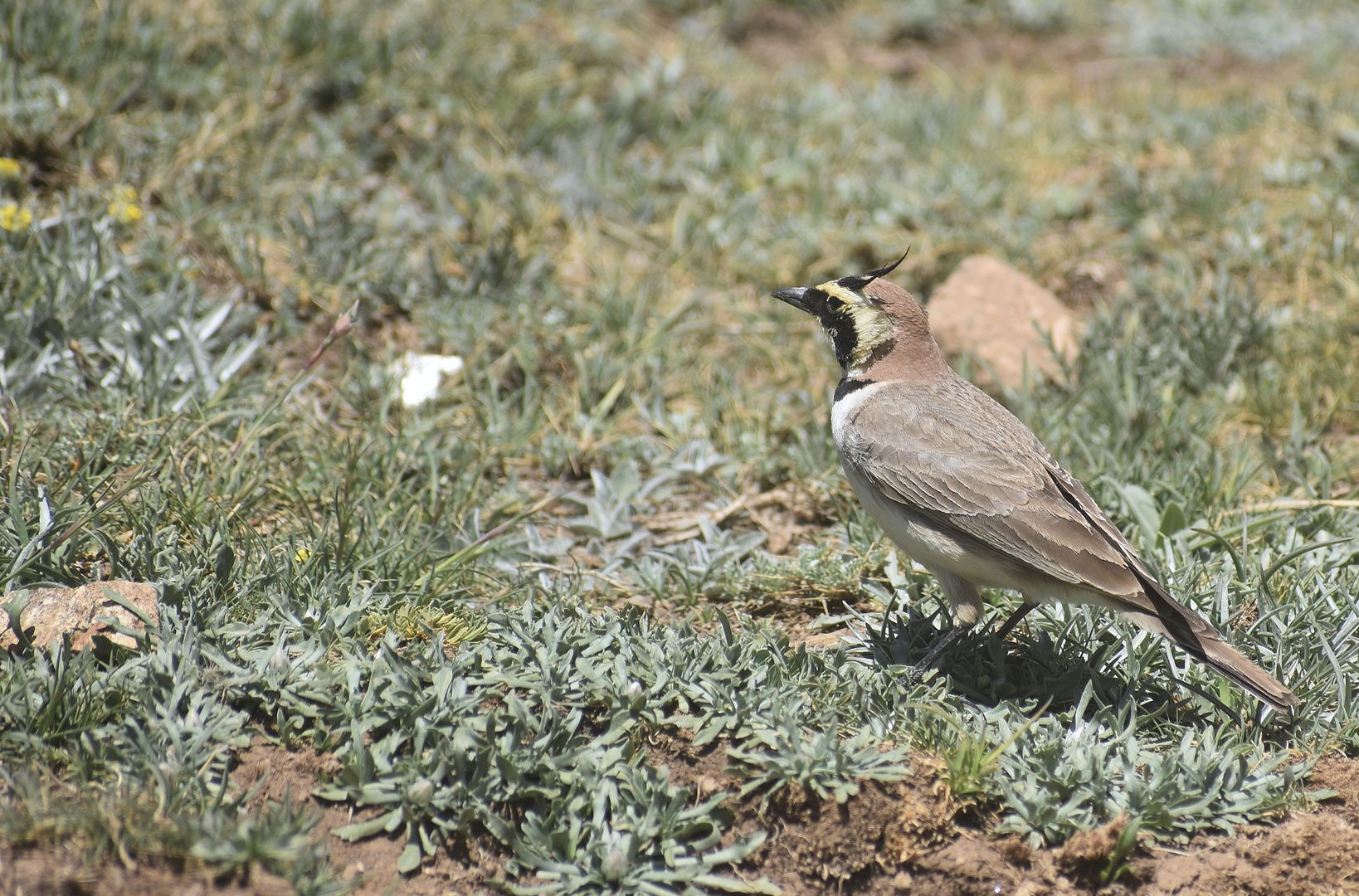
439 - Horned lark, Eremophila alpestris
440 - Wood lark, Lullula arborea

441 - Blue rock thrush, Monticola solitarius
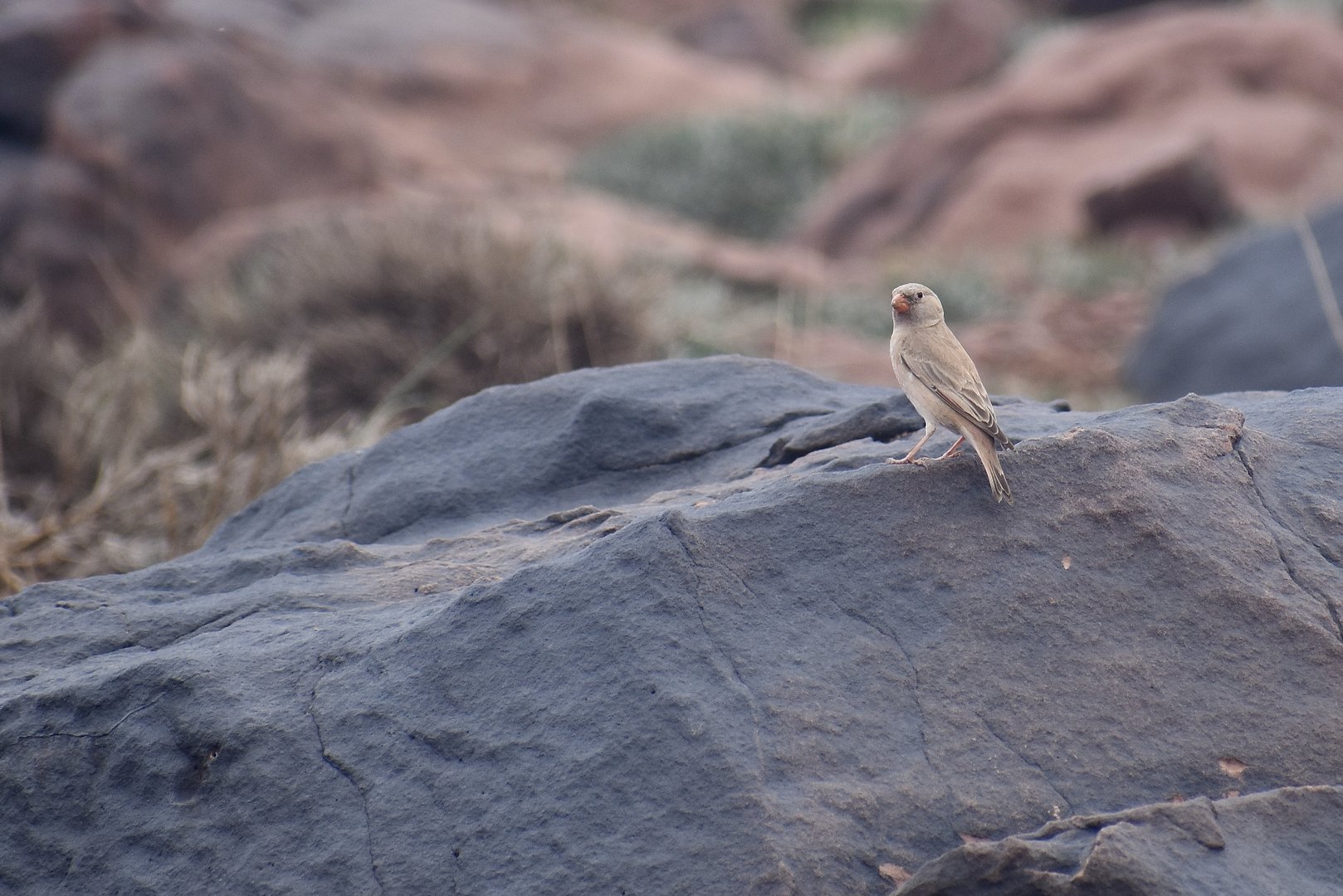
442 - Trumpeter finch, Bucanetes githagineus
443 - White-throated dipper, Cinclus cinclus (MOROCCAN LIFER)
444 - Eurasian siskin, Spinus spinus
---
28/04/2023 (Vallée d'Imlil, Morocco)
445 - Eurasian roller, Coracias garrulus
446 - Short-toed treecreeper, Certhia brachydactyla


Back in Leeds and my first time using a bat detector!

BIRDS:
04/05/2023
(Leeds, England)
447 - Common starling, Sturnus vulgaris
448 - Red kite, Milvus milvus

MAMMALS:
03/05/2023
(Leeds, England)
26 - Common pipistrelle, Pipistrellus pipistrellus
27 - Common noctule, Nyctalus noctula
 
Haven't been able to go birding the past few days due to finals this week but I still managed to add one bird to the list. There's a good chance I've already seen them multiple times but I'm still learning my sparrows.

4/30/23
Birds:
47. Chipping sparrow Spizella passerina

Total Species: 61
Birds: 47
Mammals: 9
Herptiles: 5
Today was my last day on campus until August, so I decided to take a little walk around campus to enjoy the nice weather (and take a break from packing and cleaning). Birding was not my main intent, but I did enjoy what I saw today. Only one new bird for the year, but it was a nice surprise seeing a great blue heron along the river as it's mainly mallards and/or Canada geese. Another nice sighting, from yesterday not today, was a Cooper's hawk eating a mouse or a small bird.

5/4/23
Birds:
48. Eastern Towhee Pipilo erythrophthalmus

Total Species: 62
Birds: 48
Mammals: 9
Herptiles: 5
 
  • Like
Reactions: MRJ
I embarked on my second birdwatching trip of the year so far, this time to Banner Elk, a small mountain town located in the Blue Ridge Mountains in western North Carolina. This mountain range is a major pitstop for migrating songbirds, such as several species of warblers, finches, and vireos. It also hosts an array of salamanders and other amphibians that thrive in the region, some of which are endemic only to this specific area. The entirety of my trip lasted two days, including two-full days of birdwatching, as well as a night trip in search for the salamanders. Highlights of my trip include a Blackburnian Warbler, a beautiful species I have long been desiring to see, as well as Chestnut-Sided Warblers, a Sharp-Shinned Hawk, and a few native salamander species. It’s also worth mentioning that I have reached over 100 species of bird species seen in one Big Year, an accomplishment I am very proud of achieving, as I have never been able to do it in the past.


Mammals:

4/28/23

10. American Red Squirrel (Tamiasciurus hudsonicus)
11. Eastern Chipmunk (Tamias striatus)


4/29/23

12. Muskrat (Ondatra zibethicus)


Birds:

4/28/23

88. Golden-Crowned Kinglet (Regulus satrapa)
89. Blue-Headed Vireo (Vireo solitarius)

90. Common Raven (Corvus corax)
91. Pine Siskin (Spinus pinus)
92. Red-Breasted Nuthatch (Sitta canadensis)
93. Northern Parula (Setophaga americana)
94. American Redstart (Setophaga ruticilla)


4/29/23

95. American Goldfinch (Spinus tristis)
96. Hooded Warbler (Setophaga citrina)
97. Chestnut-Sided Warbler (Setophaga pensylvanica)

98. Wood Duck (Aix sponsa)
99. Northern Rough-Winged Swallow (Stelgidopteryx serripennis)
100. Black-And-White Warbler (Mniotilta varia)
101. Spotted Sandpiper (Actitis macularius)
102. Canada Warbler (Cardellina canadensis)
103. Hairy Woodpecker (Leuconotopicus villosus)
104. Black-Throated Blue Warbler (Setophaga caerulescens)
105. Sharp-Shinned Hawk (Accipiter striatus)
106. Blackburnian Warbler (Setophaga fusca)
107. Blue-Gray Gnatcatcher (Polioptila caerulea)
108. Blue-Winged Teal (Spatula discors)
109. Common Yellowthroat (Geothlypis trichas)


I’m not counting them on the list, but I believe it is at least worth mentioning that I heard but (not saw) the following species:

Black-Throated Green Warbler (Setophaga virens)
Red-Eyed Vireo (Vireo olivaceus)
Winter Wren (Troglodytes hiemalis)
Yellow-Bellied Sapsucker (Sphyrapicus varius)


Reptiles:

4/28/23

6. Northern Watersnake (Nerodia sipedon)
7. Common Garter Snake (Thamnophis sirtalis)


Amphibians:

4/28/23

2. Blue Ridge Dusky Salamander (Desmognathus orestes)
3. Blue Ridge Two-Lined Salamander (Eurycea wilderae)
4. Northern Gray-Cheeked Salamander (Plethodon montanus)
5. Red-Backed Salamander (Plethodon cinereus)
6. Spring Salamander (Gyrinophilus porphyriticus)


Total:

Mammals: 12
Birds: 109
Reptiles: 7
Amphibians: 6
Invertebrates: 5
Whenever travelling in the northern hemisphere I try to watch out for salamanders (we have none in Australia) without any success, You get five! Well done.
 
I've spent the last week at a tourism trade event on the Gold Coast, a place devoted to hedonistic pleasures but with a totally inadequate bird population. However I did see one new species for the year.

628. Pied currawong Strepera graculina
 
Whenever travelling in the northern hemisphere I try to watch out for salamanders (we have none in Australia) without any success, You get five! Well done.

Thank you! All five salamanders as well as the garter snake were seen in Pisgah National Forest. Apparently, the Blue Ridge Mountains (especially this particular region I visited) hosts an ecosystem that is perfect for salamanders during this time of the year due to the frequent rainfall and overall moist conditions. This makes them much more abundant in this area than in other parts of North Carolina. Before going out, I expected to only see a few them here and there, but I was quite surprised by how much I underestimated the sheer number of them. I didn't even need to flip over stones or branches during the entirety of my trip; most of the time they were just sitting out in the open or crawling on the gravel pathway. I was very impressed with just how many there were, and I would definitely recommend this location to anyone who happens to be in the area.
 
6) European Hedgehog Erinaceus europaeus

Not much of a story to tell, just a hedgehog unexpectedly wandering along the side of the road in broad daylight.
Didn't know there was were hedgehogs in New Zealand! Y'all seem to have many strange invasive species.And why did they get there even? I can't imagine any direct use human could have of hedgehogs.
 
Birds
104. Least sandpiper (Calidris minutilla)
105. Semipalmated sandpiper (Calidris pusilla)
106. Baltimore oriole (Icterus galbula)
107. Warbling vireo (Vireo gilvus)
108. Common nighthawk (Chordeiles minor)
109. Prothonotary warbler (Protonotaria citrea)
110. Summer tanager (Piranga rubra)

Invertebrates
18. Silver-spotted skipper (Epargyreus clarus)
19. Tennessee thread-waisted ant (Aphaenogaster tennesseensis)
20. Eastern comma (Polygonia comma)
21. Narrow-headed marsh fly (Helophilus fasciatus)

Herps
12. Plains leopard frog (Lithobates blairi)
13. Common snapping turtle (Chelydra serpentina)
14. Common box turtle (Terrapene carolina)
Birds
April
111. Lark sparrow (Chondestes grammacus)
112. Solitary sandpiper (Tringa solitaria)
113. House wren (Troglodytes aedon)
May
114. Long-billed dowitcher (Limnodromus scolopaceus)
115. Black-necked stilt (Himantopus mexicanus)
116. Wilson’s phalarope (Phalaropus tricolor)
117. White-faced ibis (Plegadis chihi)
118. Green heron (Butorides virescens)

Invertebrates
April
22. Pearl crescent (Phyciodes tharos)
23. Six-spotted tiger beetle (Cicindela sexguttata)

Fish
April
5. Red shiner (Cyprinella lutrensis)
6. Central stoneroller (Campostoma anomalum)
May
7. Shortnose gar (Lepisosteus platostomus)
 
Today was my last day on campus until August, so I decided to take a little walk around campus to enjoy the nice weather (and take a break from packing and cleaning). Birding was not my main intent, but I did enjoy what I saw today. Only one new bird for the year, but it was a nice surprise seeing a great blue heron along the river as it's mainly mallards and/or Canada geese. Another nice sighting, from yesterday not today, was a Cooper's hawk eating a mouse or a small bird.

5/4/23
Birds:
48. Eastern Towhee Pipilo erythrophthalmus

Total Species: 62
Birds: 48
Mammals: 9
Herptiles: 5
5/5/23
Birds:
49. Mute swan Cygnus olor

Total Species: 63
Birds: 49
Mammals: 9
Herptiles: 5
 
  • Like
Reactions: MRJ
Didn't know there was were hedgehogs in New Zealand! Y'all seem to have many strange invasive species.And why did they get there even? I can't imagine any direct use human could have of hedgehogs.
They are probably all descended from twelve animals imported in 1894 by a British man in Christchurch, likely just for sentimental reasons although once established they were welcomed as eaters of garden pests like slugs and snails (exotic invertebrate pests were rapidly going out of control). In the 19th and early 20th Centuries there were official Acclimatisation Societies in NZ and Australia which were tasked with introducing useful species to the colonies, but it was also perfectly legal for any regular person to import almost any animals they wanted and release them to enhance the new countryside - some of the more unusual species which failed to survive in NZ included zebras, emus, monkeys, and kangaroos.

In the case of his twelve hedgehogs, Mr Cunningham put them into a pigeon house in his garden but they all escaped on their first night. They soon spread all around the South Island, partly on their own and partly through deliberate releases, and from around 1906 onwards were deliberately introduced to the North Island from the South Island.

Interesting little side-fact is that about half of NZ's hedgehogs have misshapen or missing teeth, whereas this is rare in Europe - it is thought that one or more of the original twelve animals brought to NZ happened to have a genetic defect causing this and the trait became dominant in the new population.
 
Back
Top