Zoochat Big Year 2023

A pair of Red crested pochards,which are a rarity,were reported near me.Unfortunately,my time was limited and I didn't find them.Saw some other birds while searching for the pochards,some of which I could add to my year list.


108 Common redstart (Phoenicurus phoenicurus)
109 Sedge warbler (Acrocephalus schoenobaenus)
Didn't get to bird much this week beacause lot's of schoolwork and other suff in my way.
Had the chance to get out this afternoon,and so I did.The outing to my local patch proved to be pretty fruitless,but being out in nature is always a blast.

110 Common cuckoo (Cuculus canorus)
111 Thrush nightingale (Luscinia luscinia)
4 Ruffe (Gymnocephalus cernua)
5 Common rudd (Scardinius erythrophtalmus)
6 Common roach (Rutilus rutilus)
 
Inching my way to 200 :p I also heard vireos and Chimney Swift but sadly no sightings.

196) Great Crested Flycatcher Myiarchus crinitus

~Thylo

Finally, my early spring slump has been overcome! Easily one of the best weekends of birding I've had, with 32 species across five different sites in four days. Definitely in agreement that May is probably the best month there is for those of us north of 30°N.

Mammals
33) White-Footed Mouse Peromyscus leucopus
34) Northern Short-Tailed Shrew Blarina brevicauda

Birds
197) Common Yellowthroat Geothlypis trichas
198) Yellow Warbler Setophaga petechia
199) Northern Parula Setophaga americana
200) American Redstart Setophaga ruticilla
201) Magnolia Warbler Setophaga magnolia
202) Worm-Eating Warbler Helmitheros vermivorum
203) Ovenbird Seiurus aurocapilla

204) Wood Thrush Hylocichla mustelina
205) Swainson's Thrush Catharus ustulatus
206) Wilson's Warbler Cardellina pusilla
207) Black-Throated Blue Warbler Setophaga caerulescens
208) Rose-Breasted Grosbeak Pheucticus ludovicianus
209) Green Heron Butorides virescens
210) Black-Throated Green Warbler Setophaga virens
211) Scarlet Tanager Piranga olivacea
212) Eastern Kingbird Tyrannus tyrannus
213) Blackpoll Warbler Setophaga striata
214) Least Sandpiper Calidris minutilla
215) Clapper Rail Rallus crepitans
216) Lapland Longspur Calcarius lapponicus
217) Red-Eyed Vireo Vireo olivaceus
218) Veery Catharus fuscescens
219) Chimney Swift Chaetura pelagica
220) Barred Owl Strix varia
221) Eastern Wood-Pewee Contopus virens
222) Blackburnian Warbler Setophaga fusca
223) Hooded Warbler Setophaga citrina
224) Indigo Bunting Passerina cyanea
225) Bay-Breasted Warbler Setophaga castanea
226) Northern Waterthrush Parkesia noveboracensis

227) Semipalmated Sandpiper Calidris pusilla
228) Least Tern Sternula antillarum

~Thylo
 
175 Orchard Oriole Icterus spurius
176 Chimney Swift Chaetura pelagica

177 Indigo Bunting Passerina cyanea
178 Painted Bunting Passerina ciris
179 White-rumped Sandpiper Calidris fuscicollis
180 Red-headed Woodpecker Melanerpes erythrocephalus
181 Stilt Sandpiper Calidris himantopus
 
May has to be the best month of the year

Birds
Busey Woods, May 5
170. Rose-breasted Grosbeak (Pheucticus ludovicianus)
171. Grey Catbird (Dumetella carolinensis)
172. Blue-winged Warbler (Vermivora cyanoptera) (Lifer)
173. Nashville Warbler (Leiothlypis ruficapilla)
174. Black-throated Green Warbler (Setophaga virens)
175. Swainson’s Thrush (Catharus ustulatus)
176. Wood Thrush (Hylocichla mustelina)
177. Gray-cheeked Thrush (Catharus minimus) (Lifer)
Crystal Lake Park, May 5
178. Green Heron (Butorides virescens)
Crystal Lake Park, May 9
179. Baltimore Oriole (Icterus galbula)
180. Yellow Warbler (Setophaga petechia)
181. Red-Headed Woodpecker (Melanerpes erythrocephalus)
182. Prothonotary Warbler (Prothonotaria citrea)
183. Indigo Bunting (Passerina cyanea)
184. American redstart (Setophaga ruticilla)
185. Magnolia Warbler (Setophaga magnolia)
186. Ovenbird (Seiurus aurocapilla)
187. Black-and-white Warbler (Mniotilta varia)
188. Northern Waterthrush (Parkesia noveboracensis)
189. Yellow-throated Warbler (Setophaga dominica) (Lifer)
190. Great Crested Flycatcher (Myiarchus crinitus)
191. Yellow-throated Vireo (Vireo flavifrons)
192. Warbling Vireo (Vireo gilvus)
193. Eastern Kingbird (Tyrannus tyrannus)​

Reptiles
Some turtles, finally, including a silver-dollar-sized softshell that I handled briefly, a highlight, at Crystal Lake Park, May 9
2. Common Slider (Trachemys scripta) (Ssp. Red eared slider (T.s. elegans)
3. Spiny Softshell Turtle (Apalone spinifera)
4. Painted Turtle (Chrysemys picta)​
Amphibians
Also at Crystal Lake, same day
2. Blanchard’s Cricket Frog (Acris blanchardi)
3. American Bullfrog (Lithobates catesbeianus)​
Herptiles
3. Common Slider (Trachemys scripta) (Ssp. Red eared slider (T.s. elegans)
4. Spiny Softshell Turtle (Apalone spinifera)
5. Blanchard’s Cricket Frog (Acris blanchardi)
6. Painted Turtle (Chrysemys picta)
7. American Bullfrog (Lithobates catesbeianus)​

Insect/Inverts
60. Blue oat mite (Penthaleus major) (Lifer)
61. Pink volcano barnacle (Tetraclita rubescens) (Lifer)

62. Eastern forktail (Ischnura verticalis)
63. Monarch (Danaus plexippus)
64. Question mark (Polygonia interrogationis)
65. White-jawed jumping spider (Hentzia mitrata) (Lifer)

This has been a bit of a slower migration season than last year, when there were tons of rare warblers and sandpipers everywhere. The best day so far was last week at Crystal lake, right after my last AP test. Its been a little slower since, even though I've been out almost every day, although I've still managed a couple nice newer birds. Especially the Kite, it was a surprise rarity flying over and around a neighborhood park.

Birds
Busey Woods, May 10
194. Red-eyed Vireo (Vireo olivaceus)
195. Veery (Catharus fuscescens)
Mattis Lake, May 12
196. Tennessee Warbler (Leiothlypis peregrina)
197. Cape May Warbler (Setophaga tigrina)
198. Mississippi Kite (Ictinia mississippiensis)​


Insect/Inverts
66. March fly (Bibio articulatus) (Lifer)
67. True weevil (Lechriops oculatus) (Lifer)

68. Six-spotted green tiger beetle (Cicindela sexguttata)
69. Fragile forktail (Ischnura posita)
70. Margined calligrapher (Toxomerus marginatus)
71. Metric paper wasp (Polistes metricus)
72. Bold jumping spider (Phidippus audax)
73. Zabulon skipper (Lon zabulon)
74. Common whitetail (Plathemis lydia)​
 
Yesterday I saw a new MAMMAL for the year! A rat runned away at the river shore while I and my boyfriend were contemplating the sunset. There were also little egrets. The river level is at minimum.

MAMMALS:

5. Brown rat (Rattus norvegicus)

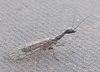
The snakefly that I've seen in this message, has been identified today. It resulted to be the same species I saw alive in other two occasions in my lifetime, but still a rare and spectacular insect for my taste.

INVERTEBRATES:

159. Atlantoraphidia maculicollis

Here a pic of said individual:

Raphidiidae2 (12-5-23 Zaragoza).jpg
 

Attachments

  • Raphidiidae2 (12-5-23 Zaragoza).jpg
    Raphidiidae2 (12-5-23 Zaragoza).jpg
    153.5 KB · Views: 30
110 Common cuckoo (Cuculus canorus)
111 Thrush nightingale (Luscinia luscinia)
While observing a pair of jay's nesting in my garden,two woodcock's flew over me.I heard the classic woodcock call,that with the warbler-like "pitz" followed by a croaking,frog-like "ourk".
And in typical woodcock fashion,they later came back for a second round,announcing their presence with their peculiar calls.
112 Eurasian woodcock (Scolopax rusticola)
 
Finally, my early spring slump has been overcome! Easily one of the best weekends of birding I've had, with 32 species across five different sites in four days. Definitely in agreement that May is probably the best month there is for those of us north of 30°N.

Mammals
33) White-Footed Mouse Peromyscus leucopus
34) Northern Short-Tailed Shrew Blarina brevicauda

Birds
197) Common Yellowthroat Geothlypis trichas
198) Yellow Warbler Setophaga petechia
199) Northern Parula Setophaga americana
200) American Redstart Setophaga ruticilla
201) Magnolia Warbler Setophaga magnolia
202) Worm-Eating Warbler Helmitheros vermivorum
203) Ovenbird Seiurus aurocapilla

204) Wood Thrush Hylocichla mustelina
205) Swainson's Thrush Catharus ustulatus
206) Wilson's Warbler Cardellina pusilla
207) Black-Throated Blue Warbler Setophaga caerulescens
208) Rose-Breasted Grosbeak Pheucticus ludovicianus
209) Green Heron Butorides virescens
210) Black-Throated Green Warbler Setophaga virens
211) Scarlet Tanager Piranga olivacea
212) Eastern Kingbird Tyrannus tyrannus
213) Blackpoll Warbler Setophaga striata
214) Least Sandpiper Calidris minutilla
215) Clapper Rail Rallus crepitans
216) Lapland Longspur Calcarius lapponicus
217) Red-Eyed Vireo Vireo olivaceus
218) Veery Catharus fuscescens
219) Chimney Swift Chaetura pelagica
220) Barred Owl Strix varia
221) Eastern Wood-Pewee Contopus virens
222) Blackburnian Warbler Setophaga fusca
223) Hooded Warbler Setophaga citrina
224) Indigo Bunting Passerina cyanea
225) Bay-Breasted Warbler Setophaga castanea
226) Northern Waterthrush Parkesia noveboracensis

227) Semipalmated Sandpiper Calidris pusilla
228) Least Tern Sternula antillarum

~Thylo

One more addition from yesterday, following a visit to a meadow near my office after work:

229) Bobolink Dolichonyx oryzivorus

~Thylo
 
Yesterday,me and my friend went out for some evening birding at our local patch.While walking home from a pretty quiet outing,we heard a couple of magpie's going crazy in some bushes.We hoped it to be the Short-eared owl that has been reported in the area.But it was something completelt different.While me and my friend were looking for the owl,she noticed something furry and brown in the undergrowth.Suddenly,a marten dashes out of the bushes with the magpies attcking ftom above.It was carrying a adult magpie in it's jaws.It ran across a field and into the forest, where it climbed up a tree,and continued to retreat deeper and deeper untill we lost sight of it.A very nice sighting of a such a shy animal,which I only have seen one time very breifly before.
7 Bank vole (Myodes glareolus)
8 Eurasian pine marten (Martes martes)
112 Eurasian woodcock (Scolopax rusticola)
113 Common swift (Apus apus)
114 Garden warbler (Sylvia borin)
 
Last edited:
177 Indigo Bunting Passerina cyanea
178 Painted Bunting Passerina ciris
179 White-rumped Sandpiper Calidris fuscicollis
180 Red-headed Woodpecker Melanerpes erythrocephalus
181 Stilt Sandpiper Calidris himantopus

Two more from early morning birding before work.

182 Yellow-billed Cuckoo Coccyzus americanus
183 Barred Owl Strix varia
 
This has been a bit of a slower migration season than last year, when there were tons of rare warblers and sandpipers everywhere. The best day so far was last week at Crystal lake, right after my last AP test. Its been a little slower since, even though I've been out almost every day, although I've still managed a couple nice newer birds. Especially the Kite, it was a surprise rarity flying over and around a neighborhood park.

Birds
Busey Woods, May 10
194. Red-eyed Vireo (Vireo olivaceus)
195. Veery (Catharus fuscescens)
Mattis Lake, May 12
196. Tennessee Warbler (Leiothlypis peregrina)
197. Cape May Warbler (Setophaga tigrina)
198. Mississippi Kite (Ictinia mississippiensis)​


Insect/Inverts
66. March fly (Bibio articulatus) (Lifer)
67. True weevil (Lechriops oculatus) (Lifer)

68. Six-spotted green tiger beetle (Cicindela sexguttata)
69. Fragile forktail (Ischnura posita)
70. Margined calligrapher (Toxomerus marginatus)
71. Metric paper wasp (Polistes metricus)
72. Bold jumping spider (Phidippus audax)
73. Zabulon skipper (Lon zabulon)
74. Common whitetail (Plathemis lydia)​
Some more nice May additions. I'm finally past 200 birds for the first time ever!

Mammal
May 11, a spot I've found is reliable for this species just outside of Champaign
17. Thirteen-lined Ground Squirrel (Ictidomys tridecemlineatus)​

Birds
Kickapoo state park in Vermilion County Illinois was quite pleasant this past Sunday, May 14
199. Eastern Wood-Pewee (Contopus virens)
200. Yellow-billed Cuckoo (Coccyzus americanus)
201. Chestnut-sided Warbler (Setophaga pensylvanica)
Birding the Moorman swine ponds was productive on May 17
202. Cedar Waxwing (Bombycilla cedrorum)
203. Least Sandpiper (Calidris minutilla)
204. Solitary Sandpiper (Tringa solitaria)
205. Dickcissel (Spiza americana)
I went back to Moorman yesterday after seeing an alert for a really nice Phalarope sp. lifer
206. Wilson’s Phalarope (Phalaropus tricolor) (Lifer)

Fish
Kickapoo state park has a very nice fish species list. These are some I was able to spot in one of the lakes.
3. Western mosquitofish (Gambusia affinis)
4. Largemouth bass (Micropterus salmoides)
5. Bluegill (Lepomis macrochirus)
6. Redear sunfish (Lepomis microlophus)​

Insect/Inverts
Nice selection of inverts
75. Pearl crescent (Phyciodes tharos)
76. Bronzed cutworm moth (Nephelodes minians) (Wild)
77. Double-striped bluet (Enallagma basidens)
78. Black saddlebags (Tramea lacerata)
79. Yellow-legged mud-dauber wasp (Sceliphron caementarium)
80. Black swallowtail (Papilio polyxenes)​
 
So with the idea that it is never too late to begin I’ll start posting my list here again. This year there will be no trip to a tropical country, so I will not be going over last year’s total. Nevertheless, the year has been way more productive so far on home turf than last year. I’m already way over my European count from last year. This is helped a little by the fact that I’m currently in Norway for an internship, and that I’ve had quite some time to go out here. I will not be posting a story-like overview of everything like I did last year, but I will do that here for the Big Day that we did with our friend group.

Big Day (Nijmegen area, 7th of April)

So I and the one other serious birder in our friend group thought it would be nice to organize a little Big Day competition with our friends. We would be going in two teams, one of them led by him and the other by me. We determined the rules as follows: start-time would be any time after midnight we wanted and end-time would be 18:00 (as we wanted to have dinner together afterwards, and we wanted a bit of a reasonable day to not make things all too serious for the non-birders). In order to make it a fair competition, we decided that we would have to actually see the bird to be able to count it, so hearing only would not count. As I’m severely hearing impaired (especially at the higher frequencies where most birds sing), hearing any bird sound at all is nearly impossible for me, let alone recognize any. As I was the only serious birder in my group, permitting heard-only birds would have given the other team a huge advantage. In addition to this, we decided that the only allowed means of transportation would be by bike or on foot. This meant that we would have to restrict our searching area to the area directly around Nijmegen (where we live). We also set up a little point system based on the species classifications on the Dutch birding observation website waarneming.nl: Common species would be 1 point, species classified as relatively common would be 2 points, rare species would give you 10 points and a very rare species would bring the total up with 20 points. In the ended we ended up not seeing any rare species (there were none reported that day that we would realistically have been able to get to as well, otherwise we would probably have twitched it). I would use this points system again, as it could mean that it could be rewarding to throw all your plans overboard if something rare is sighted, which gives a nice element of surprise.

Spring was already underway at that time in the Netherlands, but a lot of species had not arrived back yet. So I was not very optimistic about our chances to get high species counts, especially as most shorebirds/meadowbirds are not easy around Nijmegen in this time of the year. I considered biking all the way to Waterrijk (about 30 km round trip) to get some of these species (ie black-tailed godwit, sandpipers…) , but given the rather short time interval we had, I decided this was too much of a push, so very little shorebirds for us in the end.

We started before sunrise, as we would have to be at our spot for little owl at sunrise. We had scouted the owl in the week before twice, and we saw it easily both times, so I was optimistic that we could get it today as well. The owl, however, of course had other plans and decided that today would be a good time not to show up. After 20 minutes of waiting, my friend could see a little shape through his binos sitting on one of the fences (of course the only one that it had not been one in the other days we were there). I managed to focus my camera in the complete darkness just in time and got a proof shot of it before it flew away. Huge relief, and 2 points in the bag.

(species in bold I never saw before in previous years)

1. Little owl (Athene noctua)

Next stop was the reed field at Tiengeboden in the Ooijpolder. On our way we picked up some super-common species

2. Western jackdaw (Corvus monedula)

3. Blackbird (Turdus merula)

4. Carrion crow (Corvus corone)

5. Blue tit (Cyanistes caeruleus)

6. Greylag goose (Answer answer)

7. Grey heron (Ardea cinerea)

8. White stork (Ciconia Ciconia)

9. Eurasian coot (Fulica atra)

We listened (well one of my friends did, who is also a bit of a casual birder and she had learned some bird sounds as preparation for this day, the others used Merlin sound ID) for a while at the reed fields but it was very quiet so we decided to move on to the Oude Waal. The reed at the Oude Waal was more active, and we spotted the usual reed bunting and a lovely bonus bluethroat. While we had breakfast, I scanned the Oude Waal lake in and the surrounding fields and picked up some more common (water)birds.

10. Bluethroat (Luscinia svecica)

11. Common reed bunting (Emberiza schoeniclus)

12. Common buzzard (Buteo Buteo)

13. Great cormorant (Phalacrocorax carbo)

14. Gadwall (Anas strepera)

15. Tufted duck (Aythya fuligula)

16. Mallard (Anas platyrhynchos)

17. Great crested grebe (Podiceps cristatus)

18. Common shelduck (Tadorna tadorna)

19. Mute swan (Cygnus olor)

20. White wagtail (Motacilla alba)

21. Egyptian goose (Alopochen aegyptiaca)

22. Wood pigeon (Columba palumbus)

23. Common pheasant (Phasianus colchicus)

Next stop was the pumping station close to the bridge over the Waal river. The target here was grey wagtail. We were well behind schedule in time right now, so we were in a hurry. It must have looked There was some other stuff however, and the Eurasian blackcap was something I had only expected at other locations, but it was a nice surprise nevertheless. We had to cycle through the center of Nijmegen next to get to our next location, which was a good opportunity for the common city stuff you might miss if you’re only out in the field.

24. Mute swan (Cygnus olor)

25. Rock pigeon (Columba livia)

26. Common chiffchaff (Phylloscopus collybita)

27. Eurasian blackcap (Sylvia atricapilla)

28. Common magpie (Pica Pica)

29. Eurasian collared dove (Streptopelia decaocto)

30. Dunnock (Prunella modularis)

31. Common starling (Sturnus vulgaris)


Our next location was the forest at Heumensoord to the south of Nijmegen. As the area has a mixed conifer and deciduous forest there is always a wide range of birds to be seen. It made for a bit of strange route as we went Ooijpolder-Heumensoord-Ooijpolder, but we had figured that this would be the best way to go as we had to be in the Ooijpolder at sunrise for the little owl and the reed birds. Being at Heumensoord while it was still rather early in the morning would also improve our chances there obviously, more so than for the water birds in the Ooijpolder that would still be findeable later in the day. Today we did not really see anything special at Heumensoord. We had hoped for a black woodpecker, lesser spotted woodpecker or hawfinch that are pretty common here but no such luck. The day before I had also seen mistle trush here but again no luck. We did pick up a good number of other common forest birds, of which the marsh tit was probably the most notable one.

32. Eurasian jay (Garrulus glandarius)

33. Great tit (Parus major)

34. Robin (Erithacus rubecula)

35. Nuthatch (Sitta Europaea)

36. Long-tailed tit (Aegithalos caudatus)

37. Short-toed treecreeper (Certhia brachydactyla)

38. Goldcrest (Regulus regulus)

39. Great spotted woodpecker (Dendrocopos major)

40. Common chaffinch (Fringilla coelebs)

41. Tree pipit (Anthus trivialis)

42. Song trush (Turdus philomelos)

43. Marsh tit (Poecile palustric)

44. Coal tit (Periparus ater)

45. European stonechat (Saxicola rubicola)

46. Stock dove (Columba oenas)

47. Eurasian wren (Troglodytes Troglodytes)

Then it was back through Nijmegen to the Ooijpolder again. A second stop at the pumping station at the Waal was more successful this time as we got a brief view of a grey wagtail. De Oude Waal was up next again. This time Eurasian teal were also around, next to some swallows and the surrounding meadows delivered greater canada goose and Eurasian lapwing.

48. House sparrow (Passer domesticus)

49. Grey wagtail (Motacilla cinerea)

50. Greater Canada goose (Branta canadensis)

51. Eurasian teal (Anas crecca)

52. Barn swallow (Hirundo rustica)

53. Eurasian lapwing (Vanellus vanellus)

54. Goldfinch (Carduelis carduelis)

55. Black-headed gull (Chroicocephalus ridibundus)

Around Ooij we visited several spots to pick up green woodpecker and black redstar which we knew would most likely be at that specific spot. After that we met up for a 2-hour lunch break with the other team (this was a fun friend group activity after all).

56. European green woodpecker (Picus viridis)

57. Greenfinch (Chloris chloris)

58. Black redstart (Phoenicurus ochruros)

59. Meadow pipit (Anthus pratensis)

After lunch, our next destination was the always delivering Millingerwaard. And today, this fantastic area delivered as it just about always does. Upon arrival, we were greeted by a family of beavers that was resting on the roof of their beaver lodge, most likely because the lodge itself was flooded because of the extremely high waters in the Waal river. I had never seen beavers before in The Netherlands so I was obviously very thrilled by this, and so were my friends who were very happy to finally see something cute that had no feathers. The next thing we saw was another public favorite, a common kingfisher that for once did not just show itself as a blue flash. Instead, it posed perfectly a couple of meters from us. The crowd pleasers were not over after that with a white-tailed eagle (who have just started breeding in the area) flying over right afterwards. Another nice sighting was the raven that gave us a real flight show just above our heads.

After the Millingerwaard it was already 17:00 and as we had to be back at 18:00 in Nijmegen we started the long bike home through the Ooijpolder. We only had time for one quick stop at the Oude Waal which delivered some obvious stuff we had missed before but not the smew that had been sighted (and which the other team did manage to find).

60. Common kingfisher (Alcedo atthis)

61. White tailed eagle (Haliaeetus albicilla)

62. Willow warbler (Phylloscopus trochillus)

63. Eurasian oystercatcher (Haematopus ostralegus)

64. Greater black-backed gull (Larus marinus)

65. Lesser black-backed gull (Larus fuscus)

66. Common raven (Corvus corax)

67. Little ringed plover (Charadrius dubius)

68. Eurasian skylark (Alauda arvensis)

69. Common pochard (Aythya ferina)

70. Common kestrel (Falco tinnunculus)

71. Common moorhen (Gallinula chloropus)

Mammals

1. Eurasian beaver (Castor fiber)

2 points in our ranking system for: black redstart, bluethroat, white-tailed eagle, little owl, raven and kingfisher because they are less common in The Netherlands.

So that rounded out our total to 71! Not nearly as well as @Mr Zootycoon did on his Dutch big day that is in this thread as well but given the time of the year, the fact we did this only by bike with a group of mostly casual/non-birders+1 near-deaf birder, our rather limited timespan, the fact that only seen birds were permitted and our relaxed pace I was very happy with that score. And of course the beavers were a fantastic bonus as well. The other team finished with a couple of species less. They got some species we didn’t get: smew (2 points, we tried for them at Oude Waal, but there are many water areas you can’t see from the road so it might very well have hidden there), woodlark (2 points), little grebe, common linnet (which we really should have been able to find), sand martin (another horrible miss), sparrowhawk (just a matter of luck, they’re common but not localized), hawfinch (2 points, which we likely also saw fly over but could not really be certain about as I can’t hear their sound and the others didn’t know it) and firecrest (probably in the same group of goldcrest we saw). On the other hand, they missed raven, kingfisher, both black-backed gulls (I was baffled about that as they were everywhere in the Millingerwaard that day, but apparently my friends gull ID skills are non-existent), the marsh tit, little owl, bluethroat, grey wagtail, little ringed plover and skylark. That meant we had won both in the absolute number of species and the point system. A fantastic day, and everybody agreed that we should do this again soon.

The rest of the species I saw this year will be posted in a separate post.
 
Last edited:
The snakefly that I've seen in this message, has been identified today. It resulted to be the same species I saw alive in other two occasions in my lifetime, but still a rare and spectacular insect for my taste.

INVERTEBRATES:

159. Atlantoraphidia maculicollis

Here a pic of said individual:

View attachment 622805

Today I pruned my fig tree in my parents garden and found some new species of insects for the year.

INVERTEBRATES:

160. Opsius stactogalus
161. Homotoma ficus (just two nymphs, but still unmistakable)
162. Noctua comes
163. Cacoecimorpha pronubana

Also, a large cabbage white and several Ficocyba ficaria. I almost was sure I heard a bee-eater in the sky over the city, but was so brief that I can't include it for sure.
 
Mammals:

7. Raccoon (Procyon lotor)
8. Marsh Rabbit (Sylvilagus palustris)

Birds:

59. Swallow-tailed Kite (Elanoides forficatus)
60. Common Grackle (Quiscalus quiscula)
61. Tricolored Heron (Egretta tricolor)
62. Black-bellied Whistling-Duck (Dendrocygna autumnalis)
63. Blue-winged Teal (Spatula discors)
64. Killdeer (Charadrius vociferus)
65. Mottled Duck (Anas fulvigula)
66. Little Blue Heron (Egretta caerulea)
67. Common Gallinule (Gallinula galeata)
68. Fish Crow (Corvus ossifragus)
69. Osprey (Pandion haliaetus)
70. Boat-tailed Grackle (Quiscalus major)
71. Black-necked Stilt (Himantopus mexicanus)
72. Muscovy Duck (Cairina moschata)
73. Blue Jay (Cyanocitta cristata)
74. Ring-necked Parakeet (Psittacula krameri)
75. Black-crowned Night-Heron (Nycticorax nycticorax)
76. Loggerhead Shrike (Lanius ludovicianus)
77. Cattle Egret (Bubulcus ibis)
78. Blue-gray Gnatcatcher (Polioptila caerulea)
79. Louisiana Waterthrush (Parkesia motacilla)
80. Painted Bunting (Passerina ciris)

81. Spotted Sandpiper (Actitis macularius)
82. Black-and-white Warbler (Mniotilta varia)
83. American Coot (Fulica americana)
84. Burrowing Owl (Athene cunicularia)

Herptiles:

6. Florida Red-bellied Cooter (Pseudemys nelsoni)
7. Florida Softshell Turtle (Apalone ferox)
8. North American Racer (Coluber constrictor)
9. Brown Basilisk (Basiliscus vitattus)

Fishes:

11. European Carp (Cyprinus carpio)
12. Mayan Cichlid (Mayaheros urophthalmus)
13. Blue Tilapia (Oreochromis aureus)

14. Hardhead Catfish (Ariopsis felis)

Invertebrates:

11. Cloudless Sulphur (Phoebis sennae)
12. Halloween Pennant (Celithemis eponina)
13. Zebra Longwing (Heliconius charithonia)
14. Monarch (Danaus plexippus)
15. Wandering Glider (Pantala flavescens)
16. Mangrove Tree Crab (Aranus pisonii)
17. Black Swallowtail (Papilio polyxenes)
18. Atala (Eumaeus atala)
19. Blue Dasher (Pachydiplax longipennis)
19. Eastern Lubber Grasshopper (Romalea microptera)
20. Gulf Fritillary (Dione vanillae)
21. Regal Darner (Coryphaeschna ingens)
22. Barred Yellow (Eurema daira)
23. Eastern Giant Swallowtail (Heraclides cresphontes)
24. Needham's Skimmer (Libellula needhami)
25. Atlantic Black Seahare (Aplysia morio)
26. Great Black Wasp (Sphex pennsylvanicus)
27. Chestnut Carpenter Ant (Camponotus castaneus)

Mammals: 8
Birds: 84
Herptiles: 9
Fishes: 14
Invertebrates: 27
Total: 142
Mammals:

9. House Mouse (Mus musculus)

Birds:

85. Song Sparrow (Melospiza melodica)
86. White-throated Sparrow (Zonotrichia albicollis)
87. Hermit Thrush (Catharus guttatus)
88. Great Black-backed Gull (Larus marinus)
89. Brown-headed Cowbird (Molothrus ater)
90. Ruby-throated Hummingbird (Archilochus colubris)
91. Chimney Swift (Chaetura pelagica)

Fishes:

15. Eastern Blacknose Dace (Rhinichthys atratulus)
16. Creek Chub (Semotilus atromaculatus)
17. Redbreast Sunfish (Lepomis auritus)

Invertebrates:

28. Common Eastern Bumblebee (Bombus impatiens)
29. Sachem (Atalopedes campestris)
30. Six-spotted Tiger Beetle (Cicindela sexguttata)

Mammals: 9
Birds: 91
Herptiles: 9
Fishes: 17
Invertebrates: 30
Total: 156
 
Birds
May
122. Eastern kingbird (Tyrannus tyrannus)
123. Dunlin (Calidris alpina)
124. Franklin’s gull (Leucophaeus pipixcan)
125. Marbled godwit (Limosa fedoa)
126. Western kingbird (Tyrannus verticalis)
127. Gray catbird (Dumetella carolinensis)
128. Red-eyed vireo (Vireo olivaceus)
129. Indigo bunting (Passerina cyanea)
130. Great crested flycatcher (Myiarchus crinitus)
131. Common yellowthroat (Geothlypis trichas)
132. Wilson’s warbler (Cardellina pusilla)
133. Ruby-throated hummingbird (Archilochus colubris)

Invertebrates
May
24. American lady (Vanessa virginiensis)

Fish
April
8. Bigmouth shiner (Notropis dorsalis)
9. Sand shiner (Notropis stramineus)
May
10. Suckermouth minnow (Phenacobius mirabilis)
11. Creek chub (Semotilus atromaculatus)
12. European carp (Cyprinus carpio)
13. Yellow bullhead (Ameiurus natalis)
Birds
May
134. Tennessee warbler (Leiothlypis peregrina)
135. Louisiana waterthrush (Parkesia motacilla)
136. Magnolia warbler (Setophaga magnolia)
137. Least flycatcher (Empidonax minimus)
138. Lincoln’s sparrow (Melospiza lincolnii)
139. Yellow-throated vireo (Vireo flavifrons)
140. Chestnut-sided warbler (Setophaga pensylvanica)
141. Cliff swallow (Petrochelidon pyrrhonota)
142. Swainson’s thrush (Catharus ustulatus)
143. Dickcissel (Spiza americana)

Mammals
May
8. Franklin’s ground squirrel (Poliocitellus franklinii)

Invertebrates
May
25. Giant water scavenger beetle (Hydrophilus triangularis)
26. Green stink bug (Chinavia hilaris)
27. Salt marsh moth (Estigmene acrea)
28. Red-spotted admiral (Limenitis arthemis)
29. Unexpected cycnia moth (Cycnia collaris)
30. Isabella tiger moth (Pyrrharctia isabella)

Herps
May
15. Western narrow-mouthed toad (Gastrophryne olivacea)
16. Common watersnake (Nerodia sipedon)

Fish
May
14. Green sunfish (Lepomis cyanellus)
 
Back
Top