Zoochat Big Year 2023

Given I live on the other side of the world, I'd always imagined that shrews were almost impossible to see. Nice sighting.
They are pretty difficult to spot and i rarley see them.It's not that they are rare,beacause i see dead ones very often.If you stand still for some time,you can hear something rustling among the leaves,and if you look closley,you can see some little furball running around.
 
Birds
203. Black-billed Cuckoo Coccyzus erythropthalmus
204. Canada Warbler Cardellina canadensis
205. Olive-sided Flycatcher Contopus cooperi
206. Willow Flycatcher Empidonax traillii
207. Yellow-bellied Flycatcher Empidonax flaviventris
208. Philadelphia Vireo Vireo philadelphicus
209. Black Tern Chlidonias niger
210. Marsh Wren Cistothorus palustris
211. Alder Flycatcher Empidonax alnorum
212. Mourning Warbler Geothlypis philadelphia
Birds
213. Common Nighthawk Chordeiles minor
 
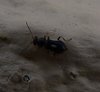
Yesterday I saw a small black click beetle in my parents garden. It's funny because I had to go home for a thing and came back with the camera for photograph it, and meanwhile it rained heavily if briefly. I saved the beetle under a bottle cap in situ, for avoid escape until I can photograph it. As a result, all the garden was soaky but the beetle remained comfortably dry :D

If I get an ID, it will be new species for the year, and possibly a lifer.

And today I had a lifer. Yesterday coming back home I saw a seven-spot ladybug in the wall of my own house. Today just minutes ago I was stranged to see the ladybug again in the same spot. So I wanted to check if it's alive. I pulled it and... oh well, it seems just stuck in a tiny hard spider web. Wait, that's not an spider web. It's a silk cocoon. And the ladybug is alive but paralyzed. I saved the cocoon (with ladybug) at home for evolve the parasite and take pics of it.

INVERTEBRATES:

172. Dinocampus coccinellae

The click beetle has been not identified yet - it belongs to Cardiophorus genus but I sent it to an expert that still didn't replied. However, yesterday (I had no time for doing internet activities until now, at night of the next day) I did a fabulous field trip that gave me fantastic rewards. I went with a friend that also have entomological passion like me, and we found that the day could not be more magnific. Just the absolutely perfect weather, not the torrid hot day that is usual in this place, but with a refreshing slight breeze and some clouds but not wind nor rain. As a result, we saw plenty of insects, many of them new for this year, and even one very interesting (a wished one) new for my lifetime. Still I must pass the photos from my camera card to the computer. The zone is mainly a forest repopulation of Aleppo pines - what I call a green desert, as they're basically completely devoided of life - but there are also some dry pseudosteppe, shrub and rural zones that gave me nice sights. Some remarks about species already seen before in the year includes: an enormous wall gecko, a Cetti's warbler in the reeds of a ditch, sounds of hoopoes (none seen) and of bee-eaters (seen from far), an very high density of chaffinches (heard lots of times, but only 2 was actually seen), many rabbits, a scarce swallowtail resting in a broom, and in the village, one of the spotless starlings gave an absolutely perfect imitation of an oriole song various times, I never heard a starling using this tune of flute.

BIRDS:
53. Common raven (Corvus corax) various of them in flight
54. Crested lark (Galerida cristata) or at least that's what I assume by the habitat
55. European turtle dove (Streptopelia turtur) - unlike collared doves, these birds are extremely elusive and never appear in urban areas. I've heard their sounds and later I've seen - quickly and briefly - various individuals along the day, always flying from pines.
56. Red-billed chough (Pyrrhocorax pyrrhocorax) one took off from the roof of a farrowing

HERPTILES:
3. Large sand racer (Psammodromus algirus) - one individual with tail cut to the middle
4. Spiny-footed lizard (Acanthodactylus erythrurus) - a big one with tail cut to the base

INVERTEBRATES:
174. Acmaeoderella adspersula - third sight in my life, not seen since 2013, two individuals seen
175. Acmaeoderella lanuginosa - fourth sight in my life, various in thistle blooms, not seen since 2014
177. Acrotylus insubricus
178. Aculepeira armida - a female in the center of the web, that went defensive (raising legs) when I approached
179. Agalmatium flavescens - various attended by ants in Eryngium
180. Agapanthia dahli - one in the stem of a thistle
181. ALBARRACINA WARIONIS - a rare and very interesting moth, first time in life that I see an adult in the wild - I've seen previously only caterpillars and reared one for get the adult pics.
182. Alopecosa cuneata, under a stone
183. Amegilla quadrifasciata - very calmed for what is usual in this nervous species. At scabious flower
184. Ameles assoi - an adult slim female, bright green, in a broom
185. Anisoplia baetica - several
186. Anogcodes seladonius - one female
187. Anthaxia godeti - doubty ID but most probably. Tons of individuals in Helianthemum flowers, and never in other kind of flowers. I've took photos for posterior confirmation of ID
188. Anthaxia hypomelaena - just one individual, of course in its host plant
189. Anthrax anthrax - two, one of them carefully investigating a dead pine trunk for ovipositing
190. Aporodes floralis - one
191. Auchenocrepis minutissima - several by shaking salt cedar branchlets, second sight in my life
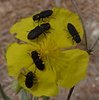
192. Brachycoleus triangularis - three in Eryngium, fourth sight in life, not seen since 2012
193. Bruchidius meleagrinus - one in broom flowers, third sight in life, not seen since 2009
194. Calliptamus barbarus - I can't ensure ID since none let me catch it for discard C. wattenwylianus, but C. barbarus is much more common here
195. Callipteroma sexguttata - spectacular!!! second sight in my life
196. Calomicrus circumfusus - in brooms as always
197. Carcharodus alceae - at least two
198. Cataglyphis iberica - I never saw so many! There was a lot of alate ones running quickly at the sunny path along the whole zone
199. Centrocoris variegatus - one in beet
200. Cercopis intermedia - one in fennel
201. Certallum ebulinum - including a mating couple covered in pollen in a mallow flower
202. Chorthippus apicalis - one of them was a male singing
203. Chrysolina americana - just one in rosemary
204. Corizus hyoscyami - one in mallow
205. Creoleon lugdunensis - three individuals, first one in the village I caught in flight
206. Crioceris asparagi - third sight in my life, not seen since 2009
207. Crocistethus waltlianus - various, including one at my shoulder and another at the shoulder of my friend. Not seen since 2015
208. Deraeocoris cordiger - in various colours, always in brooms
209. Deraeocoris ruber - including one very red
210. Diplazon laetatorius - one in broom
211. Dixus capito - no less than 4 individuals!
212. Duilius seticulosus - several by shaking salt cedar branchlets
213. Empusa pennata - an adult female of this alien-like beast in a broom, looking at me upside-down
214. Enolmis userai - several
215. Eristalinus aeneus - near the water of a small and dirty trough
216. Eristalis tenax - same than previous
217. Euchloe crameri
218. Evergestis marionalis - second sight in life, first was in 2007 (at same place)
219. Exosoma lusitanicum - only one, at broom flowers
220. Geocoris lineola - running below herbs, fourth sight in life
221. Gonioctena variabilis - this was extremely common years ago, no broom without them. It turned rare and I didn't saw since 2017. But this year is being quite good for them, I saw dozens of individuals in all color forms - plain olive, marbled tan&black, and red with black dots!
222. HARMONIA QUADRIPUNCTATA spectacular LIFER!!!!!!!!!!!!!!!!!!!!!!!!! in a broom, and was my friend who discovered it - otherwise I would have missed it!
223. Hemipenthes velutina - at least one in the village
224. Hipparchia semele
225. Hippodamia variegata - lots of them
226. Hysteropterum reticulatum - second sight in life, not seen since 2008, but unsure ID
227. Idaea ochrata - several
228. Idaea sericeata - also several
229. Lachnaia tristigma
230. Larinus cynarae - fourth sight in my life, not seen since 2014, two together in a thistle bloom
231. Lasiocampa trifolii - a mature caterpillar in a broom, just above a caterpillar of Uresiphita
232. Lepidargyrus ancorifer - common in scabious and Eryngium. Maybe lifer, I don't have previously photos of the species nor registers in life list
233. Leptogaster cylindrica - one resting at an Ephedra, fourth sight in life, not seen since 2012
234. Loboptera canariensis - under a stone
235. Loxostege sticticalis - one near a wheat field
236. Lycosa tarantula - a quite small female, I guess inmature
237. Macaria aestimaria - several inmature caterpillars by shaking salt cedar branchlets
238. Malvaevora timida - just one, fourth sight in my life despite being common
239. Mangora acalypha
240. Nabis viridulus - one by shaking salt cedar branchelts. Not seen since 2014
241. Nomioides minutissimus
242. Oecobius navus - in the walls of houses of the village
243. Oedemera lurida - at least two
244. Oedemera simplex - at scabious flower
245. Oedipoda caerulescens - just one
246. Oxycarenus lavaterae - several at mallows
247. Oxyopes heterophthalmus
248. Palepicorsia ustrinalis - second sight in life, first was in 2011
249. Piezodorus lituratus - one in broom, green form
250. Platycleis sabulosa - several nymphs of what probably is this species but one adult well seen
251. Polistes nimpha - arrived here with identification keys, but not sure. Maybe it's P. gallicus or semenowi instead, but some things don't match - either case would be new for the year. I've took photo so I will ask a social wasp expert friend of mine
252. Pontia daplidice
253. Prionyx kirbii - extremely brief sight, it didn't even landed, but enough to ID
254. Protaetia morio - one, in broom flowers
255. Pseudovadonia livida - one, in broom flowers, not seen since 2014
256. Pyronia bathseba
257. Rhynocoris cuspidatus - one in juniper
258. Salticus propinquus - obtained by shaking branches
259. Scolia hirta - at broom
260. Spermophagus sericeus - in blindweed flower
261. Sphingonotus coerulans - several
262. Stenopterus ater - caught one by hand in full flight, plus a couple mating in a broom
263. Stotzia ephedrae - covering one Ephedra in very big quantity, while all other Ephedra in the zone were totally clean. Strange. Second sight in my life, first was in 2008
264. Stylotomus tamarisci - shaking salt cedar branchlets, two individuals
265. Tentyria peirolei - one under a stone and a couple mating waking quickly over the path
266. Trepanes duvali - under a stone, second sight in my life, not seen since 2007
267. Trichodes leucopsideus - many, but all were very small
268. Trichodes octopunctatus - two individuals, casually in the very same branch of a broom, one larger with small dots and other small with larger dots
269. Trioza alacris - shaking a cultivated laurel. Second sight in my life, first was in 2009
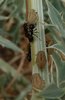
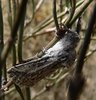
270. Tropidopola cylindrica - I went for it breaking through reed beds until I finally found my objective. What a superb camouflage. Various times I saw exactly in what reed stem it landed but I was unable to see the grasshopper, and had to frighten it again for see it.
271. Truxalis nasuta - the insect that my friend liked more
272. Tuponia brevirostris - tons of them by shaking branchlets of salt cedar. Third sight in my life
273. Uloborus walckenaerius - in the wall of houses of the village
274. Uresiphita gilvata - caterpillars at brooms
275. Xanthochilus saturnius - second sight in my life, at the village

There are some pending to ID ones and I hope to get one or two more. Especially interesting was a Gonatopus sp. But I don't know experts in Dryinidae...
 
Birds
May
134. Tennessee warbler (Leiothlypis peregrina)
135. Louisiana waterthrush (Parkesia motacilla)
136. Magnolia warbler (Setophaga magnolia)
137. Least flycatcher (Empidonax minimus)
138. Lincoln’s sparrow (Melospiza lincolnii)
139. Yellow-throated vireo (Vireo flavifrons)
140. Chestnut-sided warbler (Setophaga pensylvanica)
141. Cliff swallow (Petrochelidon pyrrhonota)
142. Swainson’s thrush (Catharus ustulatus)
143. Dickcissel (Spiza americana)

Mammals
May
8. Franklin’s ground squirrel (Poliocitellus franklinii)

Invertebrates
May
25. Giant water scavenger beetle (Hydrophilus triangularis)
26. Green stink bug (Chinavia hilaris)
27. Salt marsh moth (Estigmene acrea)
28. Red-spotted admiral (Limenitis arthemis)
29. Unexpected cycnia moth (Cycnia collaris)
30. Isabella tiger moth (Pyrrharctia isabella)

Herps
May
15. Western narrow-mouthed toad (Gastrophryne olivacea)
16. Common watersnake (Nerodia sipedon)

Fish
May
14. Green sunfish (Lepomis cyanellus)
Birds
144. Eurasian-collared dove (Streptopelia decaocto)
145. Black tern (Chlidonias niger)
146. Whimbrel (Numenius phaeopus)
147. Hudsonian godwit (Limosa haemastica)
148. Sandhill crane (Antigone canadensis)
149. Yellow-billed cuckoo (Coccyzus americanus)

Invertebrates
31. Blue-tipped dancer (Argia tibialis)
32. Large lace-border moth (Scopula limboundata)
 
Catch-up post alert!

The earliest addition is the first of the flycatchers, from an evening stroll at Padley Gorge last week after work. Not really the best time for birding (this was more just to get some outside time) but with Spotted seen and Pied heard not a bad evening.

Next after that was a day out on Sunday, mainly at Bempton Cliffs where the seabirds put on their usual display and gannets, guillemots, razorbills, kittiwakes, and fulmars were all plentiful - as were porpoises in the sea below. Only one seabird species was actually new for the year after a particularly successful Anglesey trip earlier this year, but it's a stunner. Being a sunny bank holiday weekend we opted to leave the traditional second course of going into Bridlington for Purple Sandpiper to a quieter day, and instead came closer to home and dropped in to twitch a lovely Broad-billed Sandpiper at Hatfield Moors - a lifer, which came with a side of stint.

The final chunk of birds is from a longer trip to Padley Gorge this morning, where I was able to catch up with all the classic site regulars eventually (though the redstart gave me a real runaround - heard multiple birds in multiple locations but none showing before turning up in plain view in the first tree I passed after committing myself to giving up for the day, in traditional fashion).

Birds:
168. Spotted Flycatcher - Muscicapa striata
169. Atlantic Puffin - Fratercula arctica
170. Broad-billed Sandpiper - Calidris falcinellus
171. Little Stint - Calidris minuta
172. European Pied Flycatcher - Ficedula hypoleuca
173. Tree Pipit - Anthus trivialis
174. Wood Warbler - Phylloscopus sibilatrix
175. Common Redstart - Phoenicurus phoenicurus

Invertebrates:
22. Common Green Shieldbug - Palomena prasina
23. Wall Brown - Lasiommata megara
24. Large White - Pieris brassicae
25. Common Blue - Polyommatus icarus
26. Black Clock Beetle - Pterostichus madidus
27. Broad-bodied Chaser - Libellula depressa
28. Black-headed Cardinal Beetle - Pyrochroa coccinea
29. Brown Silver-line - Petrophota chlorosata
30. Green Hairstreak - Callophrys rubi

:)
 
They are pretty difficult to spot and i rarley see them.It's not that they are rare,beacause i see dead ones very often.If you stand still for some time,you can hear something rustling among the leaves,and if you look closley,you can see some little furball running around.

Yep, that's my experience exactly. You've usually the best chance of seeing one when you're on your own and not in a hurry, because mostly you need to hear the rustle first, then stake it out. Checking my numbers I've seen them in the UK about once every two years on average (for all three of our species combined) - so definitely rare, but also very much possible. Someone locally found a dry stone wall that a Water Shrew was living in recently, and got loads of really good views - I'm going near it later so might set off a bit early and give it a try on the way now you've mentioned it. :D
 
Well, I failed to set off early to check the wall but nevertheless a sunset excursion has given me mammals to add. Decent numbers of Soprano Pips ; the Daubies were concentrated a little further along the river than where I usually find them, and two Common Pips were a late bonus.

Mammals:
19. Daubenton's Bat - Myotis daubentonii
20. Common Pipistrelle - Pipistrellus pipistrellus

:)
 
The click beetle has been not identified yet - it belongs to Cardiophorus genus but I sent it to an expert that still didn't replied. However, yesterday (I had no time for doing internet activities until now, at night of the next day) I did a fabulous field trip that gave me fantastic rewards. I went with a friend that also have entomological passion like me, and we found that the day could not be more magnific. Just the absolutely perfect weather, not the torrid hot day that is usual in this place, but with a refreshing slight breeze and some clouds but not wind nor rain. As a result, we saw plenty of insects, many of them new for this year, and even one very interesting (a wished one) new for my lifetime. Still I must pass the photos from my camera card to the computer. The zone is mainly a forest repopulation of Aleppo pines - what I call a green desert, as they're basically completely devoided of life - but there are also some dry pseudosteppe, shrub and rural zones that gave me nice sights. Some remarks about species already seen before in the year includes: an enormous wall gecko, a Cetti's warbler in the reeds of a ditch, sounds of hoopoes (none seen) and of bee-eaters (seen from far), an very high density of chaffinches (heard lots of times, but only 2 was actually seen), many rabbits, a scarce swallowtail resting in a broom, and in the village, one of the spotless starlings gave an absolutely perfect imitation of an oriole song various times, I never heard a starling using this tune of flute.

BIRDS:
53. Common raven (Corvus corax) various of them in flight
54. Crested lark (Galerida cristata) or at least that's what I assume by the habitat
55. European turtle dove (Streptopelia turtur) - unlike collared doves, these birds are extremely elusive and never appear in urban areas. I've heard their sounds and later I've seen - quickly and briefly - various individuals along the day, always flying from pines.
56. Red-billed chough (Pyrrhocorax pyrrhocorax) one took off from the roof of a farrowing

HERPTILES:
3. Large sand racer (Psammodromus algirus) - one individual with tail cut to the middle
4. Spiny-footed lizard (Acanthodactylus erythrurus) - a big one with tail cut to the base

INVERTEBRATES:
174. Acmaeoderella adspersula - third sight in my life, not seen since 2013, two individuals seen
175. Acmaeoderella lanuginosa - fourth sight in my life, various in thistle blooms, not seen since 2014
177. Acrotylus insubricus
178. Aculepeira armida - a female in the center of the web, that went defensive (raising legs) when I approached
179. Agalmatium flavescens - various attended by ants in Eryngium
180. Agapanthia dahli - one in the stem of a thistle
181. ALBARRACINA WARIONIS - a rare and very interesting moth, first time in life that I see an adult in the wild - I've seen previously only caterpillars and reared one for get the adult pics.
182. Alopecosa cuneata, under a stone
183. Amegilla quadrifasciata - very calmed for what is usual in this nervous species. At scabious flower
184. Ameles assoi - an adult slim female, bright green, in a broom
185. Anisoplia baetica - several
186. Anogcodes seladonius - one female
187. Anthaxia godeti - doubty ID but most probably. Tons of individuals in Helianthemum flowers, and never in other kind of flowers. I've took photos for posterior confirmation of ID
188. Anthaxia hypomelaena - just one individual, of course in its host plant
189. Anthrax anthrax - two, one of them carefully investigating a dead pine trunk for ovipositing
190. Aporodes floralis - one
191. Auchenocrepis minutissima - several by shaking salt cedar branchlets, second sight in my life
192. Brachycoleus triangularis - three in Eryngium, fourth sight in life, not seen since 2012
193. Bruchidius meleagrinus - one in broom flowers, third sight in life, not seen since 2009
194. Calliptamus barbarus - I can't ensure ID since none let me catch it for discard C. wattenwylianus, but C. barbarus is much more common here
195. Callipteroma sexguttata - spectacular!!! second sight in my life
196. Calomicrus circumfusus - in brooms as always
197. Carcharodus alceae - at least two
198. Cataglyphis iberica - I never saw so many! There was a lot of alate ones running quickly at the sunny path along the whole zone
199. Centrocoris variegatus - one in beet
200. Cercopis intermedia - one in fennel
201. Certallum ebulinum - including a mating couple covered in pollen in a mallow flower
202. Chorthippus apicalis - one of them was a male singing
203. Chrysolina americana - just one in rosemary
204. Corizus hyoscyami - one in mallow
205. Creoleon lugdunensis - three individuals, first one in the village I caught in flight
206. Crioceris asparagi - third sight in my life, not seen since 2009
207. Crocistethus waltlianus - various, including one at my shoulder and another at the shoulder of my friend. Not seen since 2015
208. Deraeocoris cordiger - in various colours, always in brooms
209. Deraeocoris ruber - including one very red
210. Diplazon laetatorius - one in broom
211. Dixus capito - no less than 4 individuals!
212. Duilius seticulosus - several by shaking salt cedar branchlets
213. Empusa pennata - an adult female of this alien-like beast in a broom, looking at me upside-down
214. Enolmis userai - several
215. Eristalinus aeneus - near the water of a small and dirty trough
216. Eristalis tenax - same than previous
217. Euchloe crameri
218. Evergestis marionalis - second sight in life, first was in 2007 (at same place)
219. Exosoma lusitanicum - only one, at broom flowers
220. Geocoris lineola - running below herbs, fourth sight in life
221. Gonioctena variabilis - this was extremely common years ago, no broom without them. It turned rare and I didn't saw since 2017. But this year is being quite good for them, I saw dozens of individuals in all color forms - plain olive, marbled tan&black, and red with black dots!
222. HARMONIA QUADRIPUNCTATA spectacular LIFER!!!!!!!!!!!!!!!!!!!!!!!!! in a broom, and was my friend who discovered it - otherwise I would have missed it!
223. Hemipenthes velutina - at least one in the village
224. Hipparchia semele
225. Hippodamia variegata - lots of them
226. Hysteropterum reticulatum - second sight in life, not seen since 2008, but unsure ID
227. Idaea ochrata - several
228. Idaea sericeata - also several
229. Lachnaia tristigma
230. Larinus cynarae - fourth sight in my life, not seen since 2014, two together in a thistle bloom
231. Lasiocampa trifolii - a mature caterpillar in a broom, just above a caterpillar of Uresiphita
232. Lepidargyrus ancorifer - common in scabious and Eryngium. Maybe lifer, I don't have previously photos of the species nor registers in life list
233. Leptogaster cylindrica - one resting at an Ephedra, fourth sight in life, not seen since 2012
234. Loboptera canariensis - under a stone
235. Loxostege sticticalis - one near a wheat field
236. Lycosa tarantula - a quite small female, I guess inmature
237. Macaria aestimaria - several inmature caterpillars by shaking salt cedar branchlets
238. Malvaevora timida - just one, fourth sight in my life despite being common
239. Mangora acalypha
240. Nabis viridulus - one by shaking salt cedar branchelts. Not seen since 2014
241. Nomioides minutissimus
242. Oecobius navus - in the walls of houses of the village
243. Oedemera lurida - at least two
244. Oedemera simplex - at scabious flower
245. Oedipoda caerulescens - just one
246. Oxycarenus lavaterae - several at mallows
247. Oxyopes heterophthalmus
248. Palepicorsia ustrinalis - second sight in life, first was in 2011
249. Piezodorus lituratus - one in broom, green form
250. Platycleis sabulosa - several nymphs of what probably is this species but one adult well seen
251. Polistes nimpha - arrived here with identification keys, but not sure. Maybe it's P. gallicus or semenowi instead, but some things don't match - either case would be new for the year. I've took photo so I will ask a social wasp expert friend of mine
252. Pontia daplidice
253. Prionyx kirbii - extremely brief sight, it didn't even landed, but enough to ID
254. Protaetia morio - one, in broom flowers
255. Pseudovadonia livida - one, in broom flowers, not seen since 2014
256. Pyronia bathseba
257. Rhynocoris cuspidatus - one in juniper
258. Salticus propinquus - obtained by shaking branches
259. Scolia hirta - at broom
260. Spermophagus sericeus - in blindweed flower
261. Sphingonotus coerulans - several
262. Stenopterus ater - caught one by hand in full flight, plus a couple mating in a broom
263. Stotzia ephedrae - covering one Ephedra in very big quantity, while all other Ephedra in the zone were totally clean. Strange. Second sight in my life, first was in 2008
264. Stylotomus tamarisci - shaking salt cedar branchlets, two individuals
265. Tentyria peirolei - one under a stone and a couple mating waking quickly over the path
266. Trepanes duvali - under a stone, second sight in my life, not seen since 2007
267. Trichodes leucopsideus - many, but all were very small
268. Trichodes octopunctatus - two individuals, casually in the very same branch of a broom, one larger with small dots and other small with larger dots
269. Trioza alacris - shaking a cultivated laurel. Second sight in my life, first was in 2009
270. Tropidopola cylindrica - I went for it breaking through reed beds until I finally found my objective. What a superb camouflage. Various times I saw exactly in what reed stem it landed but I was unable to see the grasshopper, and had to frighten it again for see it.
271. Truxalis nasuta - the insect that my friend liked more
272. Tuponia brevirostris - tons of them by shaking branchlets of salt cedar. Third sight in my life
273. Uloborus walckenaerius - in the wall of houses of the village
274. Uresiphita gilvata - caterpillars at brooms
275. Xanthochilus saturnius - second sight in my life, at the village

There are some pending to ID ones and I hope to get one or two more. Especially interesting was a Gonatopus sp. But I don't know experts in Dryinidae...


Some insects that have been identified since, from this field trip:

276. Aulonogyrus striatus. I believed that they were unidentifiable Gyrinus but at home I saw a thin yellow margin in the individuals, despite the bad quality of the photo:
P1450946.JPG

277: Colotes maculatus. Lifer for me! In the village. Identified by myself.
Colotes maculatus (27-5-23 Peñaflor, det yo).jpg

278: Coenosia tigrina. Identified by Juergen Peters
Coenosia tigrina 1 (27-5-23 Peñaflor).jpg

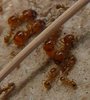
279: Pheidole pallidula. That's what I tought at first sight but later I decided that they're too clear and bright, honey coloured, even translucent. But ant expert Bartleby ensured the species and said that the color is variable.
Pheidole pallidula 1 (27-5-23 Peñaflor).jpg
 

Attachments

  • P1450946.JPG
    P1450946.JPG
    51.5 KB · Views: 35
  • Colotes maculatus (27-5-23 Peñaflor, det yo).jpg
    Colotes maculatus (27-5-23 Peñaflor, det yo).jpg
    104.7 KB · Views: 38
  • Coenosia tigrina 1 (27-5-23 Peñaflor).jpg
    Coenosia tigrina 1 (27-5-23 Peñaflor).jpg
    23.5 KB · Views: 31
  • Pheidole pallidula 1 (27-5-23 Peñaflor).jpg
    Pheidole pallidula 1 (27-5-23 Peñaflor).jpg
    35.1 KB · Views: 31
  • Agalmatium y hormigas (27-5-23 Peñaflor).jpg
    Agalmatium y hormigas (27-5-23 Peñaflor).jpg
    34.1 KB · Views: 2
  • Albarracina warionis (27-5-23 Peñaflor).jpg
    Albarracina warionis (27-5-23 Peñaflor).jpg
    36.8 KB · Views: 2
Some insects that have been identified since, from this field trip:

276. Aulonogyrus striatus. I believed that they were unidentifiable Gyrinus but at home I saw a thin yellow margin in the individuals, despite the bad quality of the photo:
View attachment 625732

277: Colotes maculatus. Lifer for me! In the village. Identified by myself.
View attachment 625733

278: Coenosia tigrina. Identified by Juergen Peters
View attachment 625734

279: Pheidole pallidula. That's what I tought at first sight but later I decided that they're too clear and bright, honey coloured, even translucent. But ant expert Bartleby ensured the species and said that the color is variable.
View attachment 625735

And some photos more of the stars of that day:
Agalmatium y hormigas (27-5-23 Peñaflor).jpg
Agalmatium flavescens tended and "milked" by ants (Crematogaster auberti) in Eryngium campestre. (number 179 in my Big Year list)

Albarracina warionis (27-5-23 Peñaflor).jpg
The very rare Albarracina warionis in its host plant, Ephedra nebrodensis. Number 181 in my Big Year list.

Anthaxia 1 (27-5-23 Peñaflor).jpg
Anthaxia godeti (for confirmation) in Helianthemum flower. Number 187 in my Big Year list.

Callipteroma sexguttata 2 (27-5-23 Peñaflor).jpg
Spectacular Callipteroma sexguttata. Number 195 in my Big Year list.

Gonatopus 3 (27-5-23 Peñaflor).jpg
The Gonatopus mentioned at the end of the message. I die for a Dryinidae expert to consult!

Harmonia quadripunctata 1 (27-5-23 Peñaflor, det yo) (1).jpg
The lifer Harmonia quadripunctata!!! Number 222 in my Big Year list.

Lepidargyrus ancorifer 1 (27-5-23 Peñaflor, det yo).jpg
Lepidargyrus ancorifer - finally not a lifer, I already had a photo of it but I don't have place and date for it. Number 232 in my Big Year list.

Polistes (27-5-23 Peñaflor).jpg
Polistes nimpha, for confirmation. Rescued from water. Number 251 in my Big Year list.

Tentyria peirolei mating (27-5-23 Peñaflor).jpg
Tentyria peirolei mating in the path. Number 265 in my Big Year list.
 

Attachments

  • Agalmatium y hormigas (27-5-23 Peñaflor).jpg
    Agalmatium y hormigas (27-5-23 Peñaflor).jpg
    34.1 KB · Views: 1
  • Albarracina warionis (27-5-23 Peñaflor).jpg
    Albarracina warionis (27-5-23 Peñaflor).jpg
    36.8 KB · Views: 1
  • Anthaxia 1 (27-5-23 Peñaflor).jpg
    Anthaxia 1 (27-5-23 Peñaflor).jpg
    28.4 KB · Views: 1
  • Callipteroma sexguttata 2 (27-5-23 Peñaflor).jpg
    Callipteroma sexguttata 2 (27-5-23 Peñaflor).jpg
    38.6 KB · Views: 1
  • Gonatopus 3 (27-5-23 Peñaflor).jpg
    Gonatopus 3 (27-5-23 Peñaflor).jpg
    20.8 KB · Views: 2
  • Harmonia quadripunctata 1 (27-5-23 Peñaflor, det yo) (1).jpg
    Harmonia quadripunctata 1 (27-5-23 Peñaflor, det yo) (1).jpg
    260 KB · Views: 2
  • Lepidargyrus ancorifer 1 (27-5-23 Peñaflor, det yo).jpg
    Lepidargyrus ancorifer 1 (27-5-23 Peñaflor, det yo).jpg
    126.2 KB · Views: 1
  • Polistes (27-5-23 Peñaflor).jpg
    Polistes (27-5-23 Peñaflor).jpg
    44.4 KB · Views: 1
  • Polistes (27-5-23 Peñaflor).jpg
    Polistes (27-5-23 Peñaflor).jpg
    44.4 KB · Views: 1
  • Tentyria peirolei mating (27-5-23 Peñaflor).jpg
    Tentyria peirolei mating (27-5-23 Peñaflor).jpg
    47.4 KB · Views: 1
Time for another much-belated update! Here goes:

91. Green Heron (Butorides virescens)
92. Common Yellowthroat (Geothlypis trichas)
93. Common Raven (Corvus corax)
94. Least Flycatcher (Empidonax minimus)
95. Chuck-will's-widow (Antrostomus carolinensis)
96. Northern Waterthrush (Parkesia noveboracensis)
97. Red-eyed Vireo (Vireo olivaceus)
98. Red-tailed Hawk (Buteo jamaicensis)
99. Nashville Warbler (Leiothlypis ruficapilla)
100. Painted Bunting (Passerina ciris)
101. Indigo Bunting (Passerina cyanea)
102. Bullock's Oriole (Icterus bullockii)
103. Brown-crested Flycatcher (Myiarchus tyrannulus)
104. Greater Roadrunner (Geococcyx californianus)
105. Common Ground Dove (Columbina passerina)
106. Rose-breasted Grosbeak (Pheucticus ludovicianus)
107. Yellow Warbler (Setophaga petechia)
108. Eastern Kingbird (Tyrannus tyrannus)
109. Gray-cheeked Thrush (Catharus minimus)
110. Dickcissel (Spiza americana)
111. Blue Grosbeak (Passerina caerulea)
112. Wilson's Warbler (Cardellina pusilla)
113. Tennessee Warbler (Leiothlypis peregrina)
114. Olive-sided Flycatcher (Contopus cooperi)

All in all a very productive few weeks; I found a nice little clearing to watch warblers in and reached my 100th species!

It's been a busy month! No shortage of birds, either... being a new birder, I'm still getting lifers everywhere I go, and I finally got my first field guide! The Sibley second edition; I love it. Now for binoculars...

115. Hutton's Vireo (Vireo huttoni)
116. Eastern Wood-Pewee (Contopus virens)
117. American Redstart (Setophaga ruticilla)
118. Common Grackle (Quiscalus quiscula)
119. Warbling Vireo (Vireo gilvus)
120. Bay-breasted Warbler (Setophaga castanea)
121. Magnolia Warbler (Setophaga magnolia)
122. Blackburnian Warbler (Setophaga fusca)
123. Philadelphia Vireo (Vireo philadelphicus)
124. Ash-throated Flycatcher (Myiarchus cinerascens)
125. Chestnut-sided Warbler (Setophaga pensylvanica)
126. Alder Flycatcher (Empidonax alnorum)
127. Yellow-bellied Flycatcher (Empidonax flaviventris)
128. Canada Warbler (Cardellina canadensis)
129. Cliff Swallow (Petrochelidon pyrrhonota)
130. Red-bellied Woodpecker (Melanerpes carolinus)
131. Willow Flycatcher (Empidonax traillii)
 
5/21/23
Birds:
71. Swainson's thrush Catharus ustulatus
72. Field sparrow Spizella pusilla
73. American redstart Setophaga ruticilla

Total Species: 88
Birds: 73
Mammals: 9
Herptiles: 6
I've been dealing with a lot so I haven't been able to go birding.

5/30/23
Mammals:
10. Eastern deer mouse Peromyscus maniculatus

Total Species: 89
Birds: 73
Mammals: 10
Herptiles: 6
 
One more addition from yesterday, following a visit to a meadow near my office after work:

229) Bobolink Dolichonyx oryzivorus

~Thylo

And just as quickly as it started, the warbler migration has really powered down. I was able to get ears on Canada Warbler, but despite my best efforts, I never got eyes on the bird. I also attempted to twitch a Red-Necked Phalarope that landed nearby, but I arrived about 40 minutes too late. Still, caught up on some seasonal shorebirds which is always nice.

230) Black-Bellied Plover Pluvialis squatarola
231) Common Tern Sterna hirundo
233) Semipalmated Sandpiper Calidris pusilla
234) Semipalmated Plover Charadrius semipalmatus
235) Short-Billed Dowitcher Limnodromus griseus

~Thylo
 
Birds
158. Yellow-faced Honeyeater
159. White-naped Honeyeater
160. Brown-headed Honeyeater
161. Grey Currawong
162. Gang-Gang Cockatoo
163. Red Wattlebird
164. Scarlet Robin
165. Wedgetail Eagle
166. Australian Hobby
167. Diamond Firetail
168. Double-barred Finch
169. Yellow-billed Spoonbill
170. Horsfield's Bronze Cuckoo
171. Blue-faced Honeyeater
172. Little Raven
173. Black-shouldered Kite
174. Whistling Kite
175. Brown Honeyeater
176. Common Blackbird
177. Australian Owlet-Nightjar
178. Barn Owl
179. Zebra Finch
180. Common Bronzewing
181. Cattle Egret

Mammals
6. Platypus
7. Australian Water Rat
8. Red-necked Wallaby
9. Red Fox

Reptiles
4. Central Bearded Dragon

:p

Hix


Birds
182. Little Friarbird
183. Red-necked Avocet
184. Gull-billed Tern
185. Little Egret
186. White-bellied Sea Egle
187. Ruddy Turnstone
188. Red-necked Stint
189. Grey-tailed Tattler
190. Pied Cormorant
191. Osprey
192. Australian Brush-turkey
193. Swift Parrot
194. Lewin's Honeyeater
195. Brown Quail
196. Green Catbird
197. Olive-backed Oriole
198. Azure Kingfisher

Mammals
10. Wallaroo
11. Rusa Deer

Herptiles
5. Sudell's Frog

:p

Hix
 
Last edited:
Well, I failed to set off early to check the wall but nevertheless a sunset excursion has given me mammals to add. Decent numbers of Soprano Pips ; the Daubies were concentrated a little further along the river than where I usually find them, and two Common Pips were a late bonus.

Mammals:
19. Daubenton's Bat - Myotis daubentonii
20. Common Pipistrelle - Pipistrellus pipistrellus

:)
I assume you use a bat detector?
 
I went out for an evening around my local patch in this unusually cold weather (6°). My plan was to get some easy birds that I have missed, like lesser whitethroat,greater whitethroat,red-backed shrike, and winchat. Unfortunately,the wind picked up on my walk to the patch, and I decided to take a shortcut back home since I was freezing like an animal. This wasn't too bad; however,the shortcut actually landed me a mammal lifer in the form of a water vole!


13 Common shrew (Sorex araneus)

14 Northern water vole (Arvicola amphibius)

119 Common house martin (Delichon urbicum)
120 Spotted flycatcher) (Muscicapa striata
121 Wood warbler (Phylloscopus sibilatrix)
 
I assume you use a bat detector?

Yes, the only way to tell the pips apart if not in the hand. I only have a basic heterodyne detector but it can tell a pip from a Myotis and can split the pips as the UK ones are very different frequency peaks. With that and observing behaviour I can basically identify about half a dozen of the UK bats on the wing, the rest are not possible to confirm with my skills/equipment!
 
I've been dealing with a lot so I haven't been able to go birding.

5/30/23
Mammals:
10. Eastern deer mouse Peromyscus maniculatus

Total Species: 89
Birds: 73
Mammals: 10
Herptiles: 6
I had some nice incidental sightings today at work. It made up for the plethora of robins, common grackles, and house sparrows I've been seeing.

5/31/23
Birds:
74. Ruby-throated hummingbird Archilochus colubris
75. Common loon Gavia immer

Total Species: 91
Birds: 75
Mammals: 10
Herptiles: 6
 
Back
Top