Zoochat Big Year 2025

For quite some time I have wanted to go and stay on Tiritiri Matangi Island, one of a number of refuge islands that have been stocked with native New Zealand birds to protect them from the ravages of introduced predators. It is quite easy to take a ferry from Auckland to visit the island for a few hours during the middle of the day, however whenever I have tried to book the limited accommodation for an overnight visit it has been booked out. A few months ago, I finally managed to book beds for me and my friend Graeme for this Wednesday night.

We arrived last night after a 3.5-hour flight from Melbourne on Saturday night. First bird seen was a silver gull. We are based in Auckland, with Sunday and Monday visiting some birding spots, Tuesday a whale watching trip, and Wednesday and Thursday for Tiritiri Matangi Island. I hired a car for the first two days.

I have only been to New Zealand twice before. The first trip to a zoo conference in Christchurch, I hardly left the CBD and don't remember any birds. The second to another zoo conference in Wellington, after which I toured around part of the North Island looking at wildlife parks and picking up a few birds on the way. I hope to fill a few gaps as well as see representatives of the four endemic New Zealand families I have not seen.

First stop on Sunday was Muriwai Beach for the gannet and tern colonies.

357. Californian quail Callipepla californica (introduced)
358. Australasian gannet Morus serrator
359. Kelp gull Larus dominicanus
360. White-fronted tern Sterna striata
361. Sacred kingfisher Todiramphus sanctus
362. New Zealand bellbird Anthornis melanura
363. Tui Prosthemadera novaeseelandiae
364. Grey warbler (gerygone) Gerygone igata
365. Common mynah Acridotheres tristis (introduced)
366. Song thrush Turdus philomelos (introduced)

We then drove north to Tutukaka where we birded the Ngunguru Estuary from the foreshore. It took an age to get there, as the main highway was closed for repairs, and we had to take a long and winding detour. We also stopped at the Old Mill Lane boardwalk, where we met its owner as well as seeing some fernbirds. Hilton brought a degraded wetland back to natural condition and then built a boardwalk so anybody could enjoy it.

367. Variable oystercatcher Haematopus unicolor
368. Ruddy turnstone Arenaria interpres
369 Bar-tailed godwit Limosa lapponica
370. Black-billed gull Chroicocephalus bulleri
371. Yellowhammer Emberiza citrinella (introduced)
372. Fernbird Poodytes punctatus

We also stopped at a small lake in Whangarei on the way through, hoping to find a couple of NZ endemic ducks. However they were all typical Australian species including black swans, as well as some mallards.

373. Australasian shoveller Spatula rhynchotis

There are always birds you see from the car on road trips, in this case the shelducks and pigeons were seen multiple times.

374. Paradise shelduck Tadorna variegata
375. Turkey Meleagris gallopavo (introduced)
376. New Zealand pigeon Hemiphaga novaeseelandiae
Monday, we headed south to an exclosure called Sanctuary Mountain Maungatautari, about a two and a half hours drive. I am used to exclosures in Australia, where the feral predators being excluded are cats and foxes. New Zealanders take it to another level, aiming to exclude Australian brushtail possums, stoats, weasels, rats and mice.

The forest contained was stunningly beautiful, and a delight to walk through. What was noticeable was that as soon as we entered the forest, the birdlife changed from the usual mix of ferals and tui's, to all native birds. The exception was a chaffinch that made its living begging for food on top of the observation tower. That is not to say the birds were easy to see, we heard plenty of hihi's, for instance, but did not see any. We had fantastic views of kaka, though.

377. Kaka Nestor meridionalis
378. North Island saddleback Philesturnus rufusater (new Family)
379. New Zealand fantail Rhipidura fuliginosa
380. North Island robin Petroica longipes
381, European goldfinch Carduelis carduelis (introduced)
382. European chaffinch Fringilla coelebs (introduced)

When we got back to Auckland we still had a little time before having to return the car, so we visited Western Springs Park, located next to the Zoo, which has a big lake with a good reputation for waterfowl.

383. New Zealand scaup Aythya novaeseelandiae
384. Royal spoonbill Platalea regia
 
Last edited:
Monday, we headed south to an exclosure called Sanctuary Mountain Maungatautari, about a two and a half hours drive. I am used to exclosures in Australia, where the feral predators being excluded are cats and foxes. New Zealanders take it to another level, aiming to exclude Australian brushtail possums, stoats, weasels, rats and mice.

The forest contained was stunningly beautiful, and a delight to walk through. What was noticeable was that as soon as we entered the forest, the birdlife changed from the usual mix of ferals and tui's, to all native birds. The exception was a chaffinch that made its living begging for food on top of the observation tower. That is not to say the birds were easy to see, we heard plenty of hihi's, for instance, but did not see any. We had fantastic views of kaka, though.

377. Kaka Nestor meridionalis
378. North Island saddleback Philesturnus rufusater (new Family)
379. New Zealand fantail Rhipidura fuliginosa
380. North Island robin Petroica longipes
381, European goldfinch Carduelis carduelis (introduced)
382. European chaffinch Fringilla coelebs (introduced)

When we got back to Auckland we still had a little time before having to return the car, so we visited Western Springs Park, located next to the Zoo, which has a big lake with a good reputation for waterfowl.

383. New Zealand scaup Aythya novaeseelandiae
384. Royal spoonbill Platalea regia
Tuesday, we headed out into the Hauraki Gulf for a whale watching tour with Auckland Whale and Dolphin Safari. First stop was off an island where staff collected plankton as part of a continuing study. A little while later we encountered a feeding aggregation of gannets and dolphins, with a couple of species of shearwaters hanging around. This made for great viewing, but unfortunately as we moved away from this rain set in making further observations impossible.

The flesh-footed shearwater is the 2000th bird species I have observed and recorded.

Mammals
36. Common dolphin Delphinus delphis

Birds
383. Flesh-footed shearwater Ardenna carneipes NT
384. Fluttering shearwater Puffinus gavia
 
The one in New Zealand is the southern novaehollandiae, so whether splitting the Masked Lapwing or not you already have this one, as below:
How frequently do people split novaehollandiae? I've never seen any field guide do so. Personally I am unconvinced by the split as the differences between miles and novaehollandiae seem minimal to me, and there is a large intergrade zone where the two taxa hybridise frequently. I consider them to be subspecies.
 
How frequently do people split novaehollandiae? I've never seen any field guide do so. Personally I am unconvinced by the split as the differences between miles and novaehollandiae seem minimal to me, and there is a large intergrade zone where the two taxa hybridise frequently. I consider them to be subspecies.
I have just been looking at Avilist, which if the hype is to be believed, will become the ultimate authority. It argues the pro and con for splitting and comes down in favour of lumping "pending further research". I guess that does allow for some personal leeway, however it definitely is trending towards your point of view.
 
How frequently do people split novaehollandiae? I've never seen any field guide do so. Personally I am unconvinced by the split as the differences between miles and novaehollandiae seem minimal to me, and there is a large intergrade zone where the two taxa hybridise frequently. I consider them to be subspecies.
I have just been looking at Avilist, which if the hype is to be believed, will become the ultimate authority. It argues the pro and con for splitting and comes down in favour of lumping "pending further research". I guess that does allow for some personal leeway, however it definitely is trending towards your point of view.
They were split by the HBW about ten years ago using the (in my opinion, awful) "Tobias Criteria" which in very simple terms was "looks different, is different". I have never split them myself but many people did and some still do - but probably not many because eBird has lumped them again.

There was small discussion in the 2016 Big Year thread here:
ZooChat Big Year 2016 (it goes onto the next page as well)
 
Last edited:
There was small discussion in the 2106 Big Year thread here:
ZooChat Big Year 2016 (it goes onto the next page as well)
Interesting. That was two years before I even started my list, and five years before I saw and recorded a northern bird. Wonder how I came to split them? Mind you, once I first enter a species on my list, it is more or less luck that I come across further splits or lumps.
 
Kumbum Monastery, Xining, August 14, 2025

Birds:
121. Red-billed Chough (Pyrrhocorax pyrrhocorax)

Qinghai-Tibet Plateau Wildlife Zoo, Xining, August 14, 2025

122. Eurasian Collared Dove (Streptopelia decaocto)
123. Chestnut Thrush (Turdus rubrocanus)

Hongdao Fishing Port, Qingdao, September 13, 2025

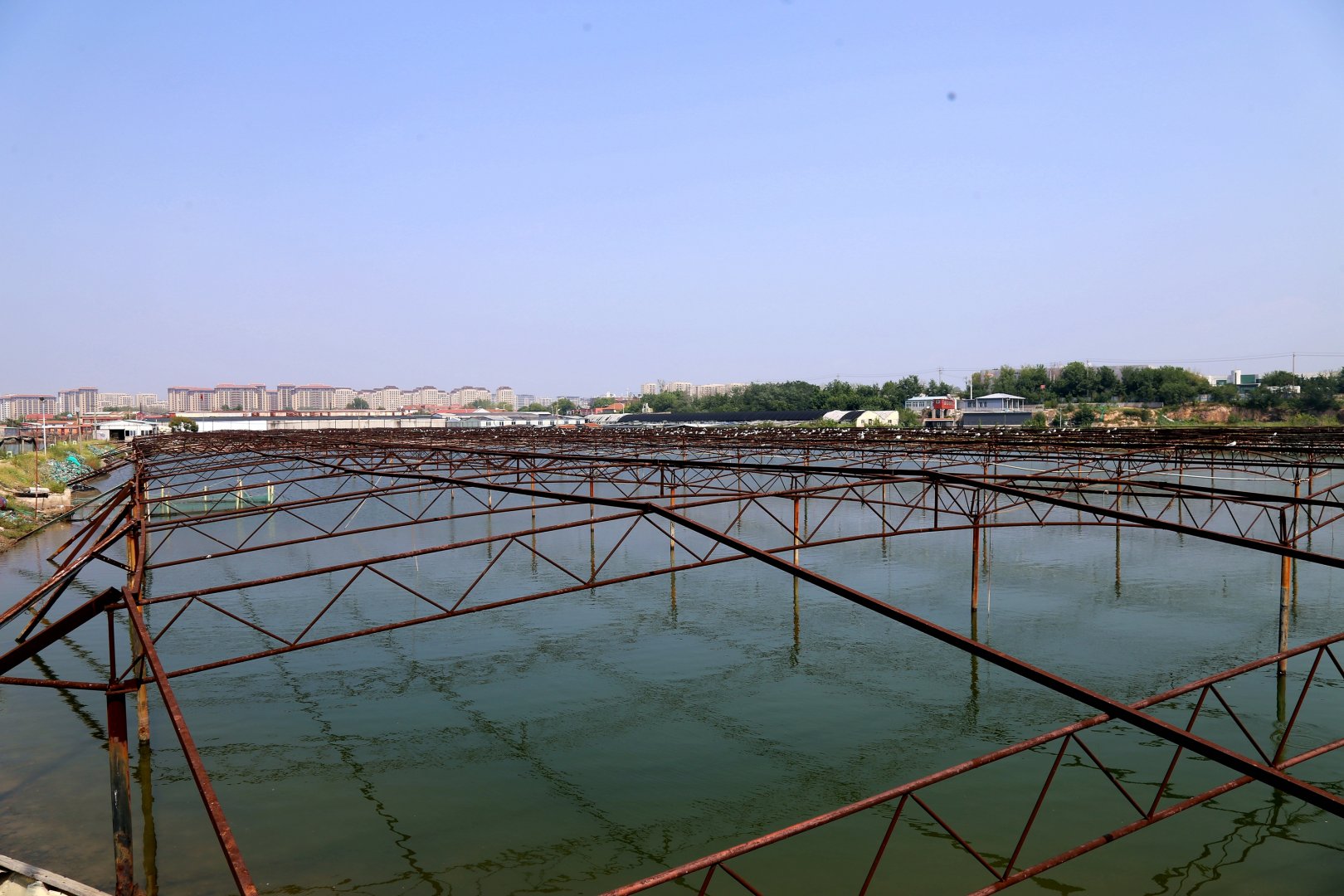
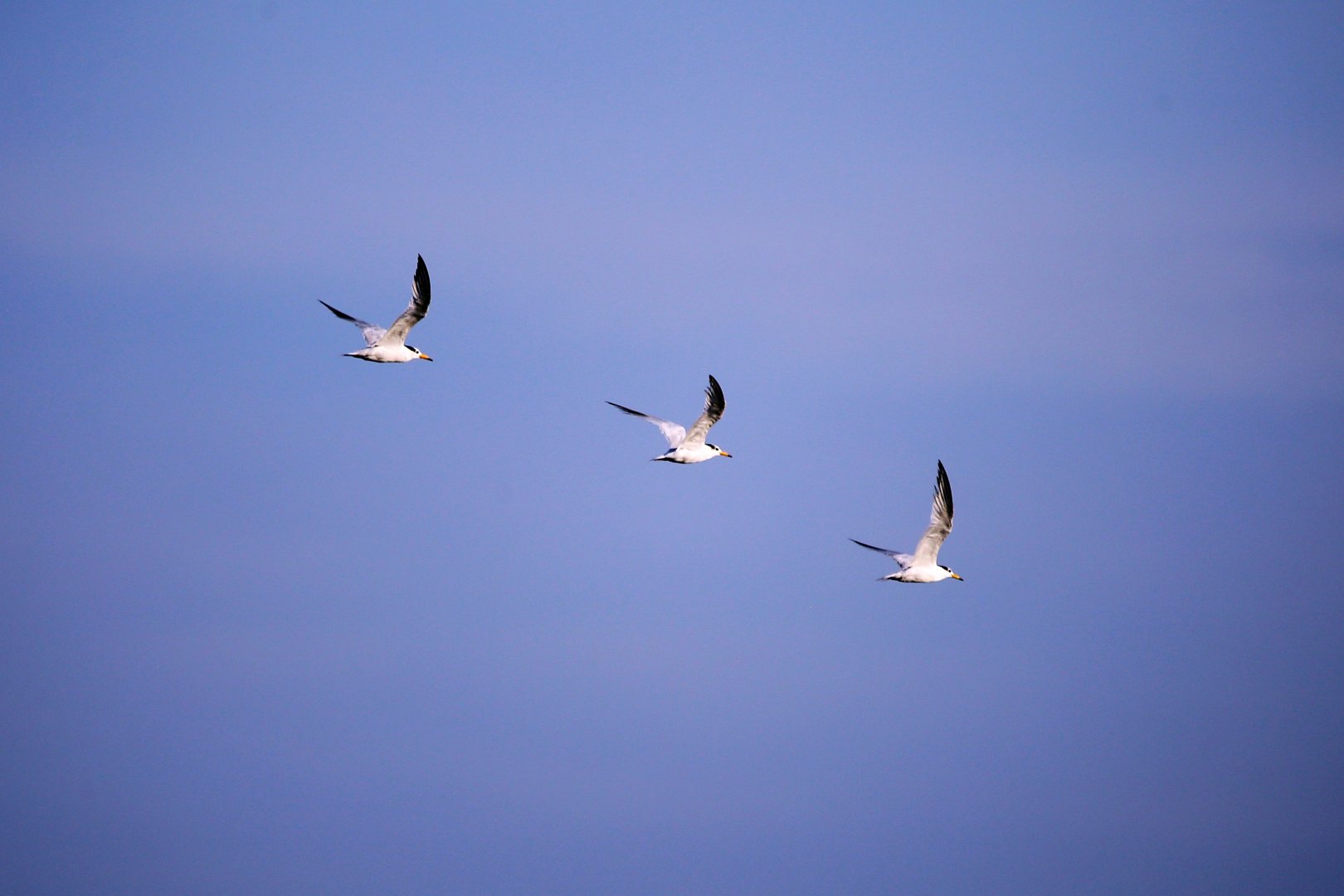
Not exactly the kind of place where you would expect to see a critically endangered species, the Chinese crested tern site in Qingdao is actually a functioning private sea cucumber farm, located in the Hongdao Fishing Port on the outskirts of Qingdao City. Access to the inner ponds requires a 100 yuan "entrance fee" paid to the farm owner, though patient observers on the surrounding shoreline might still spot the terns in flight.


A tall earthen embankment separates the aquaculture ponds from the sea. Outside the embankment is a small, sheltered bay that attracts various shorebirds at low tide. Inside, the farm is dominated by hundreds of Black-headed Gulls, with a smaller number of Black-tailed Gulls, and Chinese Crested Terns forage and rest amongst these larger gull flocks. Their daily routine typically involves foraging in the nearby bay during the day and returning to perch on metal structures within the farm in the evening.

The site was discovered in 2021 when researchers tracking a tern fitted with a transmitter—coded ZB0—followed its signal here. To their surprise, they uncovered this previously unknown gathering spot, a veritable treasure trove for the critically endangered species. According to the farm owner, gulls have frequented this area since the farm was established, though nobody had realized the significance of the visitors.


Now designated as a key monitoring site, the location hosts the terns from late June, when they arrive from their breeding grounds, until early November. Their stay coincides with the fishing moratorium in Jiaozhou Bay, a period when fish spawn and grow to an ideal 5-15 cm size—perfect for the terns' feeding habits. During their time in Qingdao, the birds also complete their annual molt before embarking on their journey to wintering grounds in Southeast Asia. Guardians count the birds twice daily, with this year's peak reaching 119 individuals, which is 60% of the entire global population, including a record-high 16 juveniles. On the day of my visit, 60-70 were officially recorded, and I personally observed 40-50.


Qingdao holds deep historical significance for the Chinese Crested Tern. In 1937, Chinese zoologists documented a breeding colony on Muguan Island, collecting 21 specimens. This remained the last confirmed record until the species' dramatic rediscovery on the Matsu Islands in 2000. The terns returned to Jiaozhou Bay in 2016, after an absence of nearly eight decades. Now, their annual presence offers a glimmer of hope and a precious opportunity to witness one of Asia's rarest birds.

Birds:
124. Little Ringed Plover (Charadrius dubius)
125. Eurasian Whimbrel (Numenius phaeopus)
126. Eurasian Curlew (Numenius arquata)
127. Far Eastern Curlew (Numenius madagascariensis)
128. Black-headed Gull (Chroicocephalus ridibundus)
129. Black-tailed Gull (Larus crassirostris)
130. Chinese Crested Tern (Thalasseus bernsteini)
131. Common Kestrel (Falco tinnunculus)
132. Barn Swallow (Hirundo rustica)
 
Latest update. Took a road trip to Quebec with the main goal of seeing a representative of the Beluga family wild for the first time. Happy to report I had sucess along with my first ever NA Porcupine, despite already having seen maybe 10 other wild porcupine species abroad.

Long Island:
67. Virginia Opossum (Didelphis virginiana) (Aug 8)
68. brown rat (Rattus norvegicus) (Aug 23)

Quebec, Canada:
69. house mouse (Mus musculus) (Sep 1)
70. Eastern Deermouse (Peromyscus maniculatus) (Sep 2)
71. North American porcupine (Erethizon dorsatum) FINALLY!
72. snowshoe hare (Lepus americanus) (Sep 3)
73. fin whale (Balaenoptera physalus) (Sep 4)
74. Beluga whale (Delphinapterus leucas) Wild Family Lifer!!
75. grey seal (Halichoerus grypus)
76. northern minke whale (Balaenoptera acutorostrata)

A Long Island Lifer for me. Despite spending most of my 42 years on Long Island, NY, I had never seen a wild flying squirrel here before. In fact, I didn't even know they were found here. Until yesterday at 5:30pm coming out of a tree hole in a gated community in Syosset. Next it climbed up the tree and glided over to the next tree. For a split second I thought/dreamed it was a Pen-tailed Tree Shrew, until my rational brain caught up with the rest of my thoughts.

Long Island:
77. Southern flying squirrel (Glaucomys volans) (Nov 19)
 
Tuesday, we headed out into the Hauraki Gulf for a whale watching tour with Auckland Whale and Dolphin Safari. First stop was off an island where staff collected plankton as part of a continuing study. A little while later we encountered a feeding aggregation of gannets and dolphins, with a couple of species of shearwaters hanging around. This made for great viewing, but unfortunately as we moved away from this rain set in making further observations impossible.

The flesh-footed shearwater is the 2000th bird species I have observed and recorded.

Mammals
36. Common dolphin Delphinus delphis

Birds
383. Flesh-footed shearwater Ardenna carneipes NT
384. Fluttering shearwater Puffinus gavia
Wednesday is Tiritiri day, and what a day it was. I now have all the endemic New Zealand bird and reptile families, and a bag of new species.

On the way over, we stopped at Gulf Harbour to pick up passengers. As luck would have it New Zealand dotterels were nesting on the fore shore, and a rope fence had been erected around them, making them easy to find from the boat.

385. New Zealand dotterel Anarhynchus obscurus CR
386. Double-banded plover Charadrius bicinctus

Tiritiri Matanga Island is a government reserve, but volunteers have a huge role, larger than most supporters' groups.

The island was a sheep farm but had a little remnant vegetation. Starting in 1982, a massive revegetation program commenced, and now most of the island is covered with native trees and other plants. Because the forest is so young, the trees are not very high, which means birds are more easily seen. I'm guessing trees will never match mountain forest height, give the location off the coast.

We took a 2.5-hour tour which cost $10 per person and was conducted by a volunteer. Most of my objectives were met on this tour. After that it was time to settle into the bunkhouse and have lunch. Afternoon was spent on some of the tracks we did not use on the tour, searching out a pond for brown teal, and generally hanging around.

Some hints for visitors staying overnight.
  • We packed on the assumption we would have to drag our luggage up the hill to the accommodation. Rangers supply a transfer service.
  • Cooking facilities are great, with oven, microwave and gas BBQ, even coffee plungers. We packed instant noodles. Not necessary, pack to eat as you would at home.
  • With five people in our room, it was hot overnight. Think lightweight sleeping bag.
387. Brown teal Anas chlorotis NT
388. Brown quail Synoicus ypsilophorus (introduced)
389. South Island takahe Porphyrio hochstetteri EN
390. Red-fronted kakariki Cyanoramphus novaezelandiae
391. Rifleman Acanthisitta chloris
392. North Island kokako Callaeas wilsoni
393. Hihi (stitchbird) Notiomystis cincta EN (new Family)
394. Whitehead Mohoua albicilla (new Family)

We had an early dinner, heading out at dusk. A morepork was heard but not seen, while we returned to the bunkhouse at 11pm without seeing a kiwi. Other than one guy who saw two (how greedy), nobody else saw one. There was a private birding tour there that night, and a hard core from that group turned right around and went out again, and we found out the next day only got a glance.

We were in bed at 11.30 or so when a male was heard as if right under the window. Four of us went out again and eventually found our bird just twenty metres from the bunkhouse, and we had excellent views at only a metre away.

Birds
395. Little spotted kiwi Apteryx owenii NT (new Order and Family)
396. Common (smaller) diving petrel Pelecanoides urinatrix
397. Little penguin Eudyptula minor

Reptiles
20. Tuatara Sphenodon punctatus (new Order and Family)

And yes, we saw a giant weka. More on inverts later.
 
Last edited:
386. Black-fronted dotterel Thinornis melanops
Don't want to be too nosy but are you sure about this? Black-Fronted Dotterels are honestly quite rare/uncommon around Auckland and whilst you still get the odd random dispersing bird at places like Mangere I'd be a bit surprised at Whangaparoa, not impossible but just want to hear a bit more about this haha


Were the diving petrels still vocalising when you were out? I was there for 3 nights with a friend in September and hearing the colonies purring every night was magical :3
 
  • Like
Reactions: MRJ
A very productive session at Cranbourne Botanic Gardens. In addition to the new year list animals, two echidnas were also seen.

Mammals

15. Southern Brown Bandicoot (Isodon obesulus)

Birds

31. Glossy Black Cockatoo (Calyptorhynchus lathami)

Glossy Black Cockatoos are normally not found in Greater Melbourne with the closest sustainable populations in East Gippsland but since the Black Summer bushfires, there have been a small flock of cockatoos that have been alternating between Cranbourne Botanic Gardens and the Pines in Frankston as well as other reserves in the area. I only saw one individual, I have the exact pin if anyone here is interested in chasing them but they do not hang around for very long.


From two seperate trips, the dragon out in North Central Victoria and the Owl is a rare sighting that was reported on ebird west of Melbourne.

Birds

32. Barking Owl (Ninox connivens)

Herptiles

17. Eastern Bearded Dragon (Pogona barbata)
 
Don't want to be too nosy but are you sure about this? Black-Fronted Dotterels are honestly quite rare/uncommon around Auckland and whilst you still get the odd random dispersing bird at places like Mangere I'd be a bit surprised at Whangaparoa, not impossible but just want to hear a bit more about this haha


Were the diving petrels still vocalising when you were out? I was there for 3 nights with a friend in September and hearing the colonies purring every night was magical :3
Please feel free to be as nosy as you want to be. Indeed, I made an error in transcribing to my list, consulting Graeme's notes we actually had it down as a double-banded plover Charadrius bicinctus. Hopefully that will teach me to not enter from memory and in future check notes for everything. Having said that, there was only one bird, it was sitting on top of the breakwater and did not seem to be present the next day on our return trip. I have edited my post.

Did not notice the purring sound. The petrels were like missiles over our heads crashing into the bush behind us.
 
Last edited:
Wednesday is Tiritiri day, and what a day it was. I now have all the endemic New Zealand bird and reptile families, and a bag of new species.

On the way over, we stopped at Gulf Harbour to pick up passengers. As luck would have it New Zealand dotterels were nesting on the fore shore, and a rope fence had been erected around them, making them easy to find from the boat.

385. New Zealand dotterel Anarhynchus obscurus CR
386. Double-banded plover Charadrius bicinctus

Tiritiri Matanga Island is a government reserve, but volunteers have a huge role, larger than most supporters' groups.

The island was a sheep farm but had a little remnant vegetation. Starting in 1982, a massive revegetation program commenced, and now most of the island is covered with native trees and other plants. Because the forest is so young, the trees are not very high, which means birds are more easily seen. I'm guessing trees will never match mountain forest height, give the location off the coast.

We took a 2.5-hour tour which cost $10 per person and was conducted by a volunteer. Most of my objectives were met on this tour. After that it was time to settle into the bunkhouse and have lunch. Afternoon was spent on some of the tracks we did not use on the tour, searching out a pond for brown teal, and generally hanging around.

Some hints for visitors staying overnight.
  • We packed on the assumption we would have to drag our luggage up the hill to the accommodation. Rangers supply a transfer service.
  • Cooking facilities are great, with oven, microwave and gas BBQ, even coffee plungers. We packed instant noodles. Not necessary, pack to eat as you would at home.
  • With five people in our room, it was hot overnight. Think lightweight sleeping bag.
387. Brown teal Anas chlorotis NT
388. Brown quail Synoicus ypsilophorus (introduced)
389. South Island takahe Porphyrio hochstetteri EN
390. Red-fronted kakariki Cyanoramphus novaezelandiae
391. Rifleman Acanthisitta chloris
392. North Island kokako Callaeas wilsoni
393. Hihi (stitchbird) Notiomystis cincta EN (new Family)
394. Whitehead Mohoua albicilla (new Family)

We had an early dinner, heading out at dusk. A morepork was heard but not seen, while we returned to the bunkhouse at 11pm without seeing a kiwi. Other than one guy who saw two (how greedy), nobody else saw one. There was a private birding tour there that night, and a hard core from that group turned right around and went out again, and we found out the next day only got a glance.

We were in bed at 11.30 or so when a male was heard as if right under the window. Four of us went out again and eventually found our bird just twenty metres from the bunkhouse, and we had excellent views at only a metre away.

Birds
395. Little spotted kiwi Apteryx owenii NT (new Order and Family)
396. Common (smaller) diving petrel Pelecanoides urinatrix
397. Little penguin Eudyptula minor

Reptiles
20. Tuatara Sphenodon punctatus (new Order and Family)

And yes, we saw a giant weka. More on inverts later.
Thursday, we got up at dawn to walk the Wattle Track to listen to the dawn chorus. It really was something, and an experience to be savored. Strangely, we noted a number of European blackbirds in the forest. We had seen none the day before. Otherwise, no new species.

Then it was back to the bunkhouse for breakfast. Following that there was some cleaning to be done. The bunkhouse operates on a list of chores to be completed, in much the same way as the Youth Hostels used to. (maybe they still do).

After depositing our bags at the pickup point for the transfer to the ferry, we walked up the hill to the information centre. Most of the day was spent around there, or on short walks, as we had already seen everything we wanted to see. At one point a kokako appeared, giving excellent views of this usually difficult to see bird.

The return ferry offered nothing new besides a better view of the New Zealand dotterel. Then it was back to the hotel for a good night's sleep.
 
Friday was the final day in New Zealand and offered up one final endemic New Zealand bird. When visiting Western Springs Park Graeme thought he had seen a dabchick (NZ grebe). Our enquiries indicated this was likely. As our flight was not until the afternoon, we caught an Uber out to Western Springs first thing.

Our first circuit of the lake failed to see any grebes, so we visited a local cafe for breakfast. Coming back we resumed our search when I noted a pair of grebes in the middle of the lake. They were indeed our dabchicks.

398. Dabchick Poliocephalus rufopectus

Tiritiri Matangi invertebrates
31. Plantain moth Scopula rubraria
32. sp. cockroach Celatoblatta undulivitta
33. Little Barrier giant weta Deinacrida heteracantha VU
34. Auckland tree weta Hemideina thoracica
 
May as well start this thread off with a bang, powernapped in some dingy hut till 2 and hear a Ruru and Little Spotted Kiwi going off at exactly the same time!! And im still on the mainland!

Birds:
1. Little Spotted Kiwi (Apteryx owenii) !!!


Invertebrates TALLY: 2
Insects:
1. Cabbage Tree Moth (Epiphryne verriculata)
Molluscs:
1. Leopard Slug (Limas maximus)
Well I leave for Indonesia in just over a day and only now getting my second update in.. I have been meaning to get better with updates and write ups but can clearly see how that turned out haha, going out for another attempt at Leadbeater's Possum soon so trying to get this report out fast, here's just a brief recap of what else I did in NZ before moving to Australia on the 14th (I'll post an Aus recap before I leave for Indo), I did a write up the rest of my lil public transit Big Day on the BirdingNZ forum here, so I'm unsure if I'd do another (I intend on making a seperate thread for these posts at well, some point..), seeing a chaffinch that late is quite embarrassing but oh well.
Spotted Shags were a very nice little pick up as they're part of the critically endangered Hauraki Gulf population/ssp and just a 20 minute walk from my place in NZ! Also a throwback to here where I had an 'unidentified' shag which I did end up identifying later as a Spotted Shag so I was quite plussed to get it again at the same spot.
Other taxa would be on my iNaturalist I just don't have the time to make a list right now haha
Hopefully another post will come soon and I'll be able to keep better track in Indonesia !


Mammals:
1. Common Brushtail (Trichosurus vulpecula) -13/1/25


Birds:
2. Ruru (Ninox novaeseelandiae)
3. Pateke [Brown Teal] (Anas chlorotis)
4. Tui (Prosthemadera novaeseelandiae)
5. Eurasian Blackbird (Turdus merula)
6. Swamp Harrier (Circus approximans)
7. Kereru (Hemiphaga novaeseelandiae)
8. Common Mynah (Acridotheres tristis)
9. Eastern Rosella (Platycercus eximius)
10. Hihi (Notiomystis cincta)
11. Korimako [Bellbird] (Anthornis melanura)
12. NZ Fernbird (Poodytes punctatus)
13. NZ Fantail (Rhipidura fuliginosa)
14. Popokotea [Whitehead] (Mohoua albicilla)
15. California Quail (Callipepla californica)
16. Australasian Swamphen [Pukeko] (Porphyrio melanotus)
17. Toutouwai [NI Robin] (Petroica longipes)
18. Welcome Swallow (Hirundo neoxena)
19. Rock Dove [Feral Pigeon] (Columba livia)
20. Australian Magpie (Gymnorhina tibicen)
21. Riroriro [Grey Gerygone] (Gerygone igata)
22. Song Thrush (Turdus philomelos)
23. Dunnock (Prunella modularis)
24. Silvereye (Zosterops lateralis)
25. Red-crowned Kakariki (Cyanoramphus novaezelandiae)
26. White-faced Heron (Egretta novaehollandiae)
27. Spotted Dove (Spilopelia chinensis)
28. Pied Stilt (Himantopus leucocephalus)
29. Masked Lapwing (Vanellus miles)
30. Kelp Gull [Karoro] (Larus dominicanus)
31. N.I. Tieke (Philesturnus rufusater)
32. Sacred Kingfisher [Kotare] (Todiramphus sanctus)
33. House Sparrow (Passer domesticus)
34. Red-billed Gull (Chroicocephalus novaehollandiae)
35. Common Starling (Sturnus vulgaris)
36. Paradise Shelduck (Tadorna variegata)
37. South Island Pied Oystercatcher (Haematopus finschi)
38. White-fronted Tern (Sterna striata)
39. Variable Oystercatcher (Haematopus unicolor)
40. European Greenfinch (Chloris chloris)
41. Bar-tailed Godwit (Limosa lapponica)
42. Black-billed Gull (Chroicocephalus bulleri)
43. Red Knot (Calidris canutus)
44. NZ Dotterel/Red-breasted Dotterel (Anarhynchus obscurus)
45. Pied Shag (Phalacrocorax varius)
46. Black Swan (Cygnus atratus)
47. Royal Spoonbill (Platalea regia)
48. Caspian Tern (Hydroprogne caspia)
49. Eurasian Whimbrel (Numenius phaeopus)
50. Eurasian Skylark (Alauda arvensis)
51. Pectoral Sandpiper (Calidris melanotos) !
52. Sharp-tailed Sandpiper (Calidris acuminata)
53. Ruddy Turnstone (Arenaria interpres)
54. Little Shag (Phalacrocorax melanoleucos)
55. Canada Goose (Branta canadensis)
56. Grey Teal (Anas gracilis)
57. NZ Dabchick (Poliocephalus rufopectus)
58. Australasian Shoveler (Spatula rhynchotis)
59. NZ Scaup (Aythya novaeseelandiae)
60. Wrybill (Anarhynchus frontalis)
61. Banded Dotterel (Anarhynchus bicinctus)
62. Marsh Sandpiper (Tringa stagnatilis)
63. Little Black Shag (Phalacrocorax sulcirostris)
64. European Goldfinch (Carduelis carduelis)
65. Mallard (Anas platyrhynchos) - 1/1/25
66. Chaffinch (Fringilla coelebs) - 5/1/25
67. Spotted Shag (Phalacrocorax punctatus) - 6/1/25
68. Australasian Gannet (Morus serrator)
69. Tomtit (Petroica macrocephala) - 13/1/25
 
Tring - 11/13
Invertebrates
42. Seven-Spotted Ladybug (Coccinella septempunctata)

Wildwood Trust - 11/16

Birds
143. Little Egret (Egretta garzetta)
144. Common Chaffinch (Fringilla coelebs)

Totals:
144 Birds, 15 Mammals, 3 Reptiles, 2 Amphibians, 6 Fishes, 42 Invertebrates (212 Total)
New Life List Entries: 80 Birds, 7 Mammals, 1 Reptile, 4 Fishes, 34 Invertebrates (126 Total)
Duxford - 11/23
Birds
145. Common Buzzard (Buteo buteo)
146. Rook (Corvus frugilegus)


Totals: 146 Birds, 15 Mammals, 3 Reptiles, 2 Amphibians, 6 Fishes, 42 Invertebrates (214 Total)
New Life List Entries: 82 Birds, 7 Mammals, 1 Reptile, 4 Fishes, 34 Invertebrates (128 Total)
 
Back
Top