You are using an out of date browser. It may not display this or other websites correctly.
You should upgrade or use an alternative browser.
You should upgrade or use an alternative browser.
ZooChat Cup finals: Beauval vs Chester
- Thread starter CGSwans
- Start date

Pretty easy one for Chester in my opinion, I'm afraid!
I'll go 2-1 Chester for now, to allow for any arguments made in favour of Beauval, but I reserve the right to promote it to 3-0 anon
I'll go 2-1 Chester for now, to allow for any arguments made in favour of Beauval, but I reserve the right to promote it to 3-0 anon

Pretty easy one for Chester in my opinion, I'm afraid!
I'll go 2-1 Chester for now, to allow for any arguments made in favour of Beauval, but I reserve the right to promote it to 3-0 anon
I wouldn't think it is that easy given the extensive Cheetah, Lion, African elephant and the many ungulate enclosures in Beauval.
I wouldn't think it is that easy given the extensive Cheetah, Lion, African elephant and the many ungulate enclosures in Beauval.
Of which Chester has excellent and extensive examples of the first and last of these, and - I feel - what will develop into an excellent example of the second once the vegetation in the very new exhibit takes hold. I'd argue the Asian Elephant exhibit is also excellent, but this one is much more borderline in terms of the category limits so I'll have to think about that one.

OK, since I have been to both zoos, I will give my opinion on this one.
Firstly, Beauval is probably one of the best zoos in the continent on this one. This category includes almost the whole zoo.
It has around 10 fantastic exhibits for African ungulates scattered around the zoo for Lesser kudu, Mountain bongo, Somali wild ass, Sable antelope, Nyala, Red river hog, Hippopotami (more on that exhibit in a sec), Blue wildebeest, Springbok, Reticulated giraffe, Grevy's zebra, Beisa oryx.
There is also the exhibit for takins in the Chinese area and the big cat enclosures.
There is also the fantastic plains exhibit for Asiatic hoofstock, sized at over 17000 m2. Only a small part of it is covered by the walkway, allowing the animals in question privacy. Species exhibited include Greater one-horned rhinoceroses, Blackbucks, Malayan tapirs and many others.
There is also the Australian greenhouse which is mostly grassland themed. It shows animals like Koalas, woylies and many species of bird in large and well-landscaped exhibits.
Then, the jewels in the crown. First come the immense and well thought through elephant exhibits. There is a sandy exhibit and a grassy exhibit, representing both ecosystems in this tie. The sandy exhibit is over 6000 m2 in area and the grassy plains area is over 18,600 m2 in area. This makes the elephant exhibit a total of over 24,600 m2 in area. For comparison, Chester's elephant exhibit is 9000 m2 in area including the elephant house.
Then comes the hippopotamus exhibit. This exhibit is merged with conjoined exhibits for nyala and red river hog, all under one massive aviary with vultures, multiple species of stork and ibis and many species of duck. The hippo pool is massive and the clear water allows to for viewing into the hippos' underwater behaviours. They also have a massive landscaped land area. The nyala have natural barriers between them and the hippos, meaning that the enclosure is reminiscent of the savanna in with all of these species dwell. There is also viewing from the restaurant right next to the hippos.
Then there is the cheetah exhibit. Built in the last 3 years, this exhibit is very large and spacious, around as large as the lion exhibit, perhaps larger. It has a single viewing walkway, providing a panoramic view across the whole exhibit. They also have a large pool and a couple of streams.
Lastly, Beauval also has a massive lion exhibit (all precise areas are given below, around twice the size as the majority of lion exhibits in North America. It has a large viewing walkway down the middle built entirely out of wood which the lions can climb on top of and interact with. In this way, the visitors can view in the lions to their sides and above them. Near to the lions there are also spaciouys exhibits for wild dogs (thinking of you @Brum ), meerkats and naked mole rats.
Inside the elephant house there are also exhibits for elephant shrews.
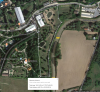
The gigantic asiatic plains exhibit:

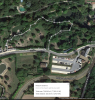
The somali wild ass exhibit:

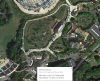
The bongo exhibit:

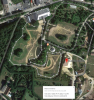
The first and second interconnected elephant exhibits:


The immense lion exhibit (for reference the majority of North American lion enclosures are just over 2000m2)

The savanna exhibit:

And finally the takin exhibit:

I am certainly voting 2-1 to Beauval. Might post about Chester later, but I do think that Beauval represents this ecosystem a lot better given that lots of the zoo is essentially centered around it (i.e the entire top half of it and the entire South Western bit)
Firstly, Beauval is probably one of the best zoos in the continent on this one. This category includes almost the whole zoo.
It has around 10 fantastic exhibits for African ungulates scattered around the zoo for Lesser kudu, Mountain bongo, Somali wild ass, Sable antelope, Nyala, Red river hog, Hippopotami (more on that exhibit in a sec), Blue wildebeest, Springbok, Reticulated giraffe, Grevy's zebra, Beisa oryx.
There is also the exhibit for takins in the Chinese area and the big cat enclosures.
There is also the fantastic plains exhibit for Asiatic hoofstock, sized at over 17000 m2. Only a small part of it is covered by the walkway, allowing the animals in question privacy. Species exhibited include Greater one-horned rhinoceroses, Blackbucks, Malayan tapirs and many others.
There is also the Australian greenhouse which is mostly grassland themed. It shows animals like Koalas, woylies and many species of bird in large and well-landscaped exhibits.
Then, the jewels in the crown. First come the immense and well thought through elephant exhibits. There is a sandy exhibit and a grassy exhibit, representing both ecosystems in this tie. The sandy exhibit is over 6000 m2 in area and the grassy plains area is over 18,600 m2 in area. This makes the elephant exhibit a total of over 24,600 m2 in area. For comparison, Chester's elephant exhibit is 9000 m2 in area including the elephant house.
Then comes the hippopotamus exhibit. This exhibit is merged with conjoined exhibits for nyala and red river hog, all under one massive aviary with vultures, multiple species of stork and ibis and many species of duck. The hippo pool is massive and the clear water allows to for viewing into the hippos' underwater behaviours. They also have a massive landscaped land area. The nyala have natural barriers between them and the hippos, meaning that the enclosure is reminiscent of the savanna in with all of these species dwell. There is also viewing from the restaurant right next to the hippos.
Then there is the cheetah exhibit. Built in the last 3 years, this exhibit is very large and spacious, around as large as the lion exhibit, perhaps larger. It has a single viewing walkway, providing a panoramic view across the whole exhibit. They also have a large pool and a couple of streams.
Lastly, Beauval also has a massive lion exhibit (all precise areas are given below, around twice the size as the majority of lion exhibits in North America. It has a large viewing walkway down the middle built entirely out of wood which the lions can climb on top of and interact with. In this way, the visitors can view in the lions to their sides and above them. Near to the lions there are also spaciouys exhibits for wild dogs (thinking of you @Brum
), meerkats and naked mole rats.Inside the elephant house there are also exhibits for elephant shrews.
The gigantic asiatic plains exhibit:
The somali wild ass exhibit:
The bongo exhibit:
The first and second interconnected elephant exhibits:
The immense lion exhibit (for reference the majority of North American lion enclosures are just over 2000m2)
The savanna exhibit:
And finally the takin exhibit:
I am certainly voting 2-1 to Beauval. Might post about Chester later, but I do think that Beauval represents this ecosystem a lot better given that lots of the zoo is essentially centered around it (i.e the entire top half of it and the entire South Western bit)
Attachments


OK, since I have been to both zoos, I will give my opinion on this one.
I think your interpretation of the category is rather broad. Bongo, Red River Hog, Koala and Takin are mostly forest animals, while hippos and ducks would fit better in the aquatics category. I know the boundaries are fuzzy and some of the species occur along ecosystem borders, so I won't say you're wrong, just pointing out that your interpretation is much broader than mine.
I feel there’s a case to be made for Chester that is yet to be made. Who wants to go?
Didn't that zoo have something special for some kind of African pachyderm?
I know species lists are not taken into account as much as they were in previous rounds but Beauval has 46 species in this category compared to Chester's 26. That combined with the fact that Beauval evokes the grasslands biome much better than Chester in completeness in my opinion should give them the win, even without the fantastic enclosures that Beauval has for its 46 species.
I feel there’s a case to be made for Chester that is yet to be made. Who wants to go?
I reckon I can have a crack at it
Beauval has 46 species in this category compared to Chester's 26. That combined with the fact that Beauval evokes the grasslands biome much better than Chester in completeness in my opinion should give them the win,
A *bit* of an exaggeration - even if one omits birds and reptiles, and count only mammals, I get a total of 29 species at Chester and 35 species at Beauval
and of course, if one includes birds and so forth the count for Chester will be even higher than you claimed.
First things first, as already alluded by @HOMIN96 - the fact that Chester has the best exhibit complex in Europe (possibly the world) for Black Rhinoceros cannot be overlooked. My previous post on this topic follows:
Eastern Black Rhinoceros
The complex for this species at Chester is (as I have already noted) the best for the species in Europe in my opinion, with multiple large and high-quality enclosures and houses both off-display and on-display, and regular breeding taking place at the collection. Moreover, the zoo is deeply involved in both the captive breeding programme for the species (the CEO of the zoo being the studbook holder for the species) and the in-situ conservation efforts taking place in Africa itself - in recent months they spearheaded the reintroduction of five individuals from the European captive programme into Rwanda.
There are, I believe, a total of seven paddocks for the Eastern Black Rhinoceros - three are entirely off-display, but can be seen from the roundabout leading into the car park of the Zoo. These are the outside enclosures for a large offshow house.
A further two large paddocks are served by the "new" onshow roundhouse, and are partially connected by underpasses etc. A third large paddock in this area is unconnected, and is served by an offshow house located behind the Bembe restaurant.
A final paddock is served by the "old" onshow house, which is now off-display, and which also serves as indoor housing for the Warthog enclosure visible in the entrance plaza.
The Black Rhinoceros at Chester Zoo are swapped around from paddock to paddock as required, variously for reasons of group harmony, breeding purposes, new arrivals, departures and so forth.
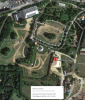
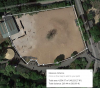
A satellite view of the complex from Google Maps:


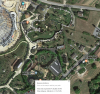
The other exhibits dotted around the zoo for African hoofstock resident to grasslands are also excellent; note that I personally don't count the Mountain Bongo or Okapi within this category, and the image of these exhibits in map form is included only for quotation consistency:
African Hoofstock Paddocks
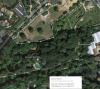
There are several large hoofstock paddocks surrounding the African Hunting Dog complex, all of which are high quality and well-suited to their inhabitants:

Clockwise these comprise:
Upper right - large set of paddocks for Grevy's Zebra
Upper right corner - one of two exhibits for Kirk's Dik-dik
Lower right - Mountain Bongo
Lower left - Western Sitatunga
Mid-left - Roan Antelope
Upper left - currently vacant
Grevy's Zebra


Kirk's Dik-dik
This photograph shows the exhibit next to Grevy's Zebra, and was taken shortly after the exhibit opened - it is now rather more well vegetated. There is another exhibit for the species elsewhere in the zoo, mixed with Grey Crowned Cranes - hopefully I will be able to locate better shots of this enclosure, and shots of the mixed exhibit, if the search function comes back online anon. It is worth noting that the species breeds semi-regularly at the collection.

Western Sitatunga

Roan Antelope
Note that the species regularly breeds in this exhibit.


Warthog
This exhibit - as already noted - is located between the main entrance complex (from which it is viewed) and the Black Rhinoceros complex, and the indoor housing for the warthogs is located within the "old" rhinoceros house. Note that the Banded Mongooses in one of these photographs are no longer in the collection.


Giraffe and Okapi Houses
This large complex comprises a large and spacious outdoor exhibit for a sizeable and regularly-breeding group of pure Rothschild's Giraffe, an indoor house for same, an indoor house for Okapi (also regularly breeding), Red Natal Duiker and various small mammals, reptiles and fish, two connected outdoor paddocks for Okapi and the Duiker (the two species being mixed), and a number of offshow houses and semi-offshow paddocks for further Okapi.

Top - Offshow Okapi housing and paddocks
Left - Rothschild Giraffe
Right - Okapi and Duiker
Centre - Indoor housing for above.
Rothschild's Giraffe
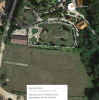
Hopefully photographs showing the larger portion of this exhibit will be available anon - this is the best I can do using Google:


As regards other African grassland and desert species, the following need highlighting:
Cape Rock Hyrax
This exhibit (located within the larger African Hunting Dog complex) comprises a pair of connected enclosures containing a large amount of rockwork, sheer cliff faces and other climbing opportunities - as noted, I believe this exhibit now also contains Dwarf Mongoose. The first photograph was taken during the construction process for this exhibit, the second shows a closeup of the interior of one of the enclosures, and the final two show the frontage of each enclosure.


Aardvark
This exhibit (located within the larger African Hunting Dog complex) comprises an indoor enclosure and a large and recently-renovated outdoor enclosure; the latter contains a deep sandy substrate allowing the inhabitants to exhibit natural digging behaviour, and smaller rock shelters.


African Wild Dog
This is the largest and best exhibit I have seen for this species, comprising two large paddocks - each larger than most African Wild Dog exhibits which one can see elsewhere in Europe - along with both onshow dens within a central viewing area and offshow dens on the outer perimeter of the exhibit complex, and (I believe) further hidden dens within the exhibit itself.


Meerkat
Surprisingly not many photographs of this exhibit in the gallery! It's a decent exhibit, but nothing special - good-sized indoor exhibit, and a good-sized outdoor exhibit. It's actually been a few years since I've bothered to look at it

Dwarf Mongoose
One of the more "prosaic" carnivore exhibits at the collection, this is nonetheless a pretty good enclosure and perhaps on the larger-than-average side for the species held within. Again, not too many photographs in the gallery of this one.


Sudan Cheetah
This exhibit complex comprises one of the largest I have ever seen for the species - the massive complex of both on-and-offshow exhibits at Hamerton is larger, but otherwise I am hard pushed to think of any bigger ones - and moreover the best without a doubt. Viewing of the multiple enclosures within the complex can be achieved via a covered yurt structure at the foot of one enclosure, with a footpath snaking alongside this exhibit and a neighbouring one, going up a ramp onto an elevated walkway from which these exhibits can be viewed. The exhibits contain large areas of space for the inhabitants, covered shelters and patches of thick vegetation, and (despite the degree to which the public can view the complex) plenty of scope for the inhabitants to escape view. There are also, I believe, a number of offshow holding areas.


As regards South American grassland species:
Giant Anteater and Capybara


Brazilian Tapir


And now a handful of Asian grassland and/or desert species, starting with one which I have already written:
Persian Onager and Bactrian Camel
A spacious and rather pleasant paddock containing a sizable and regularly-breeding group of Persian Onager, along with Bactrian Camel.


Indian Rhinoceros and Myanmar Thamin
Precious few photographs of this rather pleasant mixed exhibit in the gallery, with the nearly Eastern Black Rhinoceros exhibit complex rather overshadowing it - however, it is large and spacious (covering around 7,740 m²) with offshow indoor housing and a secondary paddock allowing the inhabitants to be separated.


Still mulling over whether or not to count the (excellent) Asian Elephant exhibit under this category......
However, to sum up I would argue that given the fact that Chester represents grassland/desert biomes in three distinct continents, rather than largely the one continent, and their highlight exhibit for this biome (the complex for Eastern Black Rhinoceros) is just THAT GOOD and (more importantly) represents both significant in-situ and ex-situ conservation work for a species which they have been instrumental in, Chester really does deserve the win here.
I will, however, acknowledge that it is bloody close and that yet again I'd love to be able to spread my vote evenly but I'll settle for hopefully convincing enough people to switch vote that the overall score ends up more even than it currently is, whichever collection actually wins this match.
Asiatic Lion
This exhibit, being the newest, is perhaps a little more shabby-looking than it will appear given time for the vegetation to "grow in" and the dulling of some of the harsher edges inherent in a new build which hasn't had a chance to settle - especially given the fact that thus far the only photographs available have been taken in the current wet and dismal autumn. This said, I think it has a LOT of potential and already provides a lot more space than *any* of the big cat enclosures at Prague do.


Persian Onager and Bactrian Camel
A spacious and rather pleasant paddock containing a sizable and regularly-breeding group of Persian Onager, along with Bactrian Camel.
Indian Rhinoceros and Myanmar Thamin
Precious few photographs of this rather pleasant mixed exhibit in the gallery, with the nearly Eastern Black Rhinoceros exhibit complex rather overshadowing it - however, it is large and spacious (covering around 7,740 m²) with offshow indoor housing and a secondary paddock allowing the inhabitants to be separated.
Still mulling over whether or not to count the (excellent) Asian Elephant exhibit under this category......
However, to sum up I would argue that given the fact that Chester represents grassland/desert biomes in three distinct continents, rather than largely the one continent, and their highlight exhibit for this biome (the complex for Eastern Black Rhinoceros) is just THAT GOOD and (more importantly) represents both significant in-situ and ex-situ conservation work for a species which they have been instrumental in, Chester really does deserve the win here.
I will, however, acknowledge that it is bloody close and that yet again I'd love to be able to spread my vote evenly
but I'll settle for hopefully convincing enough people to switch vote that the overall score ends up more even than it currently is, whichever collection actually wins this match.Attachments


New First things first, as already alluded by @HOMIN96
Did I say that? I think you got your Zoochatters wrong this time Dave
A *bit* of an exaggeration - even if one omits birds and reptiles, and count only mammals, I get a total of 29 species at Chester and 35 species at Beauval
No? Do you want me to post my species lists?
Beauval also is contributing to far far more conservation efforts than Chester, notably:
Bearded vultures in France and Spain: They reintroduce them into the Alps, having reintroduced over 140 vultures ever since the foundation began. They started a new project for reintroduction in Andulasia. They are also working to establish corridors through France by which the vultures can travel through France and into the Balkans.
South Africa - Southern ground hornbill: They provide constant population records, allowing IUCN and other wildlife organisations to track their fall and decline in South Africa. They also visit South African schools to teach them about the hornbills through colourings, talks and assemblies.
Kenya - African elephant: They pay for many rangers to be trained and paid to work in a large area of savanna to counteract poaching. They also pay for vehicles, radio collars and other essential equipment. They work to keep a corridor between two populations of the elephants open so as to widen the genetic pool in the now fragmented range of the elephants.
Senegal - Giant eland: they work to hold up the good work of African countries to save this species and try to make it known. They lead conservation initiatives to find out more about the antelopes in situ whilst making records on giraffes, hippos and zebras.
Namibia - Giraffe: They collect DNA strands from giraffes to help with genetic variation. They also collect records of the Namibian population of giraffes to help the IUCN with its records and to determine their status in the wild. They also finally organise the conservation efforts in situ which take care of the local fauna.
Morocco - Barbary macaque: They study human-macaque interactions and whether the macaques can coexist with humans in an increasingly urbanised world along with keeping close records of the populations to keep them stable and rising.
Senegal - African lions: They buy PoacherCams in regions of Africa for use in preventing illegal poaching and stopping the trade in lion parts. They also patrol the areas and try to forsee poaching attacks on animals before they happen to lessen the damage done.
All around Africa - Black and white rhinos: They fund patrols around areas where rhinos are known to congregate/live. They also fundraise in France and go around local towns to tell them about the importance of the rhinos.
Djibouti - PICODE: This is an initiative heavily supported by Beauval which is working to increase the area of protected wild land in Djibouti. This allows species like Klipspringers, dik-diks and Gerenuks to live safely in protected areas.
Giant armadillo: Beauval works with the RZSS to radio collar and tag armadillos in order to learn as much as they can about them. They track their diets, ranges, movement and place camera traps to record behaviour. They also study how the species comes into contact with humans.
South American tapir: They study the health of the local tapirs in Brazil and are trying to create a protected area for the animals to replenish their dwindling numbers.
Giant anteater: Works to study why the anteaters venture onto roads in the Cerrado and tries to therefore limit the number of roadkills taking place by placing limits on speed on the roads. It also radio collars the anteaters to find out more about their behaviour.
In comparison, Chester has nowhere nearly as many conservation in-situ projects.
And here are the Beauval exhibits:
In this one, only the nyala and naked mole rat exhibits are applicable for this round.
In conclusion, what Beauval has to offer is at least rivalling and if not better than Chester's exhibits, especially in variety of species - Chester almost exclusively keeps large ungulates, while Beauval has species in lots of different orders.
Furthermore, I would argue that Beauval represents this biome better and its enclosures are all lusher and more inviting for the animals.
Here are the photos. Thank you @Maguari again for every single photo from Beauval after your fantastic photographic tour of it
Starting with exhibits near to the entrance, Beauval has two large and interconnected islands for Kikuyu guereza, with a tree in the centre of one that is probably 60-70 metres tall. Nice greenery as well.
View attachment 423742
View attachment 423743
Next we have the cheetah enclosure. Built in 2018, it is quite recent and as a result very well done, with some nice but subtly theming and lots of space:
View attachment 423748
View attachment 423738
View attachment 423739
View attachment 423740
Next up is the spotted hyena enclosure near that of the cheetahs. It is also spacious. The photo only shows about a third of the enclosure.View attachment 423744
Next is the savanna. A really nice exhibit and, as @Brum pointed out, one of the greenest savanna exhibits in Europe, it has lots of space for giraffes, sable antelopes, springboks, zebras and rhinos. It also has a nice and large waterhole as shown in the second and third images.
View attachment 423745
View attachment 423746
View attachment 423747
More coming soon
Again thanks to @Maguari
Now, continuing with other exhibits around the zoo, we have the barbary macaque exhibit. It is quite large with lots of climbing opportunities and visitors can view it from two levels.
View attachment 423749
View attachment 423750
We then have the Kafue lechwe, Beisa oryx and Somali wild ass exhibit. It is large and green, but not much more to be said about it, as with most ungulate exhibits.
View attachment 423757
View attachment 423758
Next up are the gorilla exhibits. There are two of these - one is mixed with patas monkeys and the other with Moustached guenons. Both quite large and have lots of climbing structures.
View attachment 423755
View attachment 423754
View attachment 423756
Next up is the superb elephant exhibit. This is split into two exhibits, the sand exhibit and the grass exhibit. Males and females are mixed. They have a large herd and therefore they have lots of space along with a large waterhole. As always, nice and green.
View attachment 423753
View attachment 423752
View attachment 423751
More in the next one.
In this one, only the nyala and naked mole rat exhibits are applicable for this round.
And even more photos coming, again thanks to @Maguari
Now for the hippo exhibit. This may well be the best of its kind in Europe. It was built in 2016, so again quite recent. The hippos a large nicely landscaped exhibit with a massive pool. The water is very clear and makes for easy viewing. The hippos are mixed in with Yellow-billed storks, White-faced vultures, Southern Bald ibises and Great white pelicans. There is a large nyala exhibit with the same mix up birds under netting. There is also a large red river hog exhibit next door.
The exhibit has baobab trees scattered around it and visitors can view the hippos in 4 different ways. They can take the boardwalk that leads into the enclosure and view the hippos above water from there, look through the 20 metre-long underwater viewing glass, watch from an upper viewing deck in the themed house in front of the exhibit or watch them while eating a grill from the top deck of the building. Inside the building there is also a small exhibit for cichlids, although several species of cichlid are mixed in the hippo pool.
The hippo and nyala exhibits are both under a massive mesh canopy, allowing the birds to fly freely inside without flight-restricting surgery.
View attachment 423763
(Hippo enclosure overall view)
View attachment 423760
(Pool and landscaping)
View attachment 423761
(Underwater viewing photo taken from the upper deck)
View attachment 423762
(Underwater viewing from the ground)
View attachment 423759
(Cichlid tank)
View attachment 423766
(Nyala exhibit with Southern bald ibises and vultures)View attachment 423765
(Nyala exhibit and hippo enclosure in the foreground)
Next, we have the Naked mole rat exhibit near the hippos. It has lots of tunnels for the rats and little holes for the visitors to look through.
View attachment 423764
Near the elephants is the okapi exhibit. It is very green but more vegetation could be present.
View attachment 423768
View attachment 423767
More in the next one.
Thanks again to @Maguari
Now we have the 2017-built lion enclosure.
It is large and has lots of areas to it, including a kopje, a pool and a large grassy area. The visitors can view it from the edges or they can walk though a tunnel made of wood that goes through the enclosure. Visitors can observe the lions through windows in the sides or through viewing above them if the lions are on top of the walkway.
There are also various reptile exhibits in the walkway for African herps.
View attachment 423769
View attachment 423771
View attachment 423772
View attachment 423773
View attachment 423774
View attachment 423775
View attachment 423776
View attachment 423777
Next to the lions is an exhibit for meerkats:
View attachment 423778
And on the other side of the zoo there is a mediocre aviary for Lammergeiers:
View attachment 423770
The next one will be the last one, I promise.
And finally, thanks again to @Maguari, we have the final batch of photos.
The last exhibit is for Lesser kudu and is very large and green.
View attachment 423779
View attachment 423780
View attachment 423781
(Indoor area for the kudus along with Wattled cranes and Bongos )
View attachment 423782
In conclusion, what Beauval has to offer is at least rivalling and if not better than Chester's exhibits, especially in variety of species - Chester almost exclusively keeps large ungulates, while Beauval has species in lots of different orders.
Furthermore, I would argue that Beauval represents this biome better and its enclosures are all lusher and more inviting for the animals.
No? Do you want me to post my species lists?
Don't think that will be necessary - the discrepancy can probably be covered by you inadvertently miscounting for Chester, and (as people have noted above) counting dubiously valid species such as colobus, gorilla, bongo and red river hog for Beauval.
Beauval also is contributing to far far more conservation efforts than Chester, notably:
On my phone right now so writing a full list is awkward, but in terms of Chester's in-situ programmes which seem to have a bearing on the category I can see:
7 projects in Africa.
2 projects in South Asia.
5 projects in Latin America.
So that's 14 projects to the 12 at Beauval you listed - and at least one of yours (lammergeier) is most certainly non-category.
If I get onto my laptop before tonight I will list them fully

especially in variety of species - Chester almost exclusively keeps large ungulates, while Beauval has species in lots of different orders.
Except for the members of the rodentia, carnivora, xenarthra, macroscelidia and hyracoidea I already highlighted, plus a few other odds and ends I didn't cover due to borderline validity or being single exhibits, to cite only mammals
hardly "almost exclusively large ungulates". Conversely, not counting large hoofstock you've highlighted rodents, carnivora, primates and marsupials, with the validity of several in the latter two highly debatable.Perhaps from this evidence presented it's Beauval that almost exclusively keeps large hoofstock?