This one hurts, as we're comparing probably my two favorite zoos!
If they have an insect house it will be small. Based on data from the IZY species numbers are as follows:
Bronx
Reptiles 161
Amphibians 40
Fish 70
Invertebrates 36
Chester
Reptiles 53
Amphibians 29
Fish 88
Invertebrates 113
To the best of my knowledge the Bronx figures are more or less accurate, though I think they have slightly more reptiles and slightly less fish at the moment. They do not have an insect house, but do display a variety of invertebrates across the zoo (mainly in JungleWorld but also in CGF and World of Birds). Highlights include Cameroon Red Baboon Spider, Asian weevil beetle, atlas beetle, stag beetle, Red-Eyed Assassin Bug, and goliath beetle. Someone at Bronx really likes odd beetles.
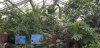
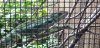
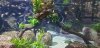
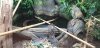
Below are just some highlights of the Bronx Zoo’s reptile collection. I do not record amphibian, fish, or insect species so I’ll leave that for others. I have also included an assortment of photos of the exhibits, yet their appears to be few world of reptiles photos in the gallery. I am voting 2-1 Bronx ,because of the Bronx’s larger Reptile and amphibian collection, generally high standard of exhibit, and great breeding efforts (especially with Asian turtles). Their are a few exhibit I do not like at the zoo mainly nile crocodiles in Madagascar and false gharial in WOR, but these are exceptions to a very good standard of exhibitry.
- Crocodilians: Gharial, false gharial, american alligator, chinese alligator, cuban alligator, nile crocidile, african dwarf crocodile
- Turtles/Tortoises: Roti island snake-necked turtle, radiated tortoise, spider tortoise, Israeli spur-thiged tortoise, aldabra giant tortoise, black-breasted leaf turtle, mary river turtle, chinese-yellow headed box turtle, chinese big-headed turtle, Sulawesi forest turtle, mccord’s box turtle, fly river turtle, giant snake-necked turtle, pancake tortoise
- Lizards: Komodo dragon, spiny-tailed monitor, merten's water monitor, blue tree monitor, shield-tailed agama, grand cayman blue iguana, northern caiman lizard, electric blue gecko
- Snakes: aruba island rattlesnake, mangrove snake, king cobra, copperhead, timber rattlesnake, green anaconda, asiatic cobra, african puff adder, burmese python, southwestern speckled rattlesnake
Komodo dragon indoor exhibit (their are 2 outdoor exhibits as well)
The exhibit for gharial, several species of turtle, giant gourami, and other fish
Roti-island snake-necked turtle and sailfin lizard
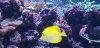
Fish tank in Congo Gorilla Forest
Radiated tortoise, spider tortoise, and lizard exhibit in Madagascar (now holds significantly smaller tortoises, larger ones move across the path to below exhibit)
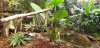
Radiated Tortoise and iguana sp. exhibit (mixed with lemur and birds)
False Gharial exhibit (one of the few exhibits in the zoo I personally find to be inadequate)
In addition to the species mentioned above, Bronx's highlight reptile species include Siamese Crocodile, both species of spider tortoise, Volcan Darwin Giant Tortoise, Egyptian Tortoise, Bog Turtle, Painted Batagur, Golden Coin Turtle, Bourret's Box Turtle, Indochinese Box Turtle, Pan's Box Turtle, Yellow-Headed Temple Turtle, Beal's Four-Eyed Turtle, Indian Roof Turtle, Bornean Pond Turtle, Forsten's Tortoise, Home's Hingeback Tortoise, nominate Asian Brown Tortoise, Big-Headed Amazon River Turtle, Red-Headed Amazon River Turtle, Arrau River Turtle, Alligator Snapping Turtle, Giant Horned Lizard, Philippine Sailfin Lizard, Weber's Sailfin Lizard, Standing's Day Gecko, various leaf-tailed geckos, Mozambique Girdled Lizard, Four-Lined Girdled Lizard, Black Tree Monitor, Gray's Monitor, Solomon Island Spiny Monitor, Calabar Python, Timor Python, African Rock Python, Madagascar Giant Hognose Snake, Snouted Cobra, West African Bush Viper, Ethiopian Mountain Viper, and Santa Catalina Island Rattlesnake.
Amphibian-wise the zoo has a solid collection of mantellas and poison dart frogs which they breed bts. Species include (but are not limited to) oddities such as Pleasing PDF, Blessed PDF, Golden PDF, Brazilian PDF, Brown Mantella, and Black-Eared Mantella. Other species include African Bullfrog, La Palma Glass Frog, Borneo Eared Frog, Splendid Treefrog, Sambava Tomato Frog, Panamanian Golden Frog, Evergreen Toad, Tropical Clawed Frog, Eastern Hellbender, and Anderson's Crocodile Newt. The zoo, of course, is renowned for their breeding work with the Kihansi Spray Toad as well.
Fish-wise the zoo sort of just has an assortment of different species from all over spread across the zoo in CGF, JW, the Children's Zoo, World of Reptiles, and Madagascar!. Species of interest include Spotted Gar, Peter's Longnose Elephantfish, Filament Barb, Sumatra Barb, Red Madagascar Panchax, Congo Tetra, Blotched Upside-Down Catfish, Iridescent Shark-Catfish, Common Electric Catfish, Bleher's Rainbowfish, Atlantic Mudskipper, Spotted Climbing-Perch, Banded Bushfish, Red Paradisefish, Giant Gourami, Green Pufferfish, and Marbled Lungfish. The also keeps a wide variety of African cichlids which are displayed in various locations across Madagascar! and CGF mainly. I'd imagine many of these species are rather common aquarium fish but they do keep/breed some real endangered species such as Marakely, Kotsovato, Spotted Damba, Pinstripe Damba, Juba Cichlid, Saro Cichlid, and Ishmael's Lake Victoria Cichlid.
When talking about Bronx and ectotherms it's natural to mention their extensive conservation work. Fish-wise, the WCS is involved in a lot of programs across the globe. Their main initiatives involve tackling overfishing in South Asia/South America, raising awareness of endangered shark populations across the globe and in the Long Island Sound, and establishing new marine protected areas in the Indian Ocean to conserve species such as mantas. An argument can be made, though, that a good chunk of this work can be attributed more to the aquarium than the zoo itself, though, so from here on out I'll stick to talking about herps. It's fairly well known that they zoo has a huge presence in South Asia working with crocodiles and freshwater turtles in particular. This work has translated into the larger zoo world with the zoo having imported and distributed much of the North American population of Indian Gharial and all of the population of Northern River Terrapin. The WCS has had a huge hand in reintroducing CR Puerto Rican Crested Toads back into the wild as well. More regionally, the zoo helps monitor CR Bog Turtle populations in Massachusetts and New York and reintroduces captive born Hellbenders into the Appalachians. The zoo also breeds both species bts. The zoo's largest accomplishment, however, is their saving the Kihansi Spray Toad from extinction. Back in 2001, following the construction of the Kihansi Dam in 1999 which doomed the toads in the wild, the zoo singlehandedly captured and transported 500 toads into the US. Together with Toledo, the zoo cracked the captive management requirements when less than 70 toads were left in existence and today maintains multiple colonies numbering in the thousands! Since 2010, the zoo has been actively working in Tanzania to attempt to recreate suitable habitat for the toad to be reintroduced back into, with several hundred animals already having been sent from the zoo to facilities
in-situ.
All in all, while I do think Chester beats Bronx in terms of invertebrates and fishes (Chester keeps/breeds a larger variety of endangered South Asian Cyprinidae afaik), Bronx clearly dominates when it comes to herps. While Chester certainly has some major accomplishments under their belt (namely the repeatedly tuatara breeding), in general the zoo seems to have an increasing lack of interest in herps and I've noticed they've been reducing the overall collection size quite substantially since my initial 2016 visit, whereas Bronx has been steadily increasing their collection as well as taking on more complicated and endangered species in the past few years. This, combined with their unmatched conservation programs, lead to a clear 2-1 victory as far as I'm concerned.
~Thylo