ZooChat Cup finals: Chester vs Plzen

Chester vs Plzen: Temperates

  • Chester 3-0 Plzen

    Votes: 0 0.0%
  • Chester 2-1 Plzen

    Votes: 0 0.0%

  • Total voters
    29
  • Poll closed .
So, let's get going with summing up the main points for Plzen - as has been the case of late, much of this will be cannibalised from prior photographic posts I have produced:

Chinese Goral

full


Snow Leopard

A decent sized exhibit and rather attractively designed; these photographs were taken several years ago, and the base of the exhibit is quite a bit more densely-vegetated now:

full


full


North Chinese Leopard


This exhibit is located next to the Snow Leopard exhibit and gives a good impression of what the base of said exhibit now looks like:

full


Amur Tiger

This photograph shows approximately half of the exhibit, from memory:

full


Wisent and Kiang


This is a large and rather pleasant mixed exhibit; looking at aerial photographs of the enclosure, the offshow paddocks and housing for these species is relatively substantial and appears to allow the two species to be kept seperate when need be. The wisent group regularly breeds, and per the 2018 annual report the most recent male calf is under consideration for suitability for an upcoming reintroduction programme in the Caucasus.

full


bison-png.425137


Eurasian Brown Bear

These images only show tiny fractions of the exhibit for this species, which is massive and the best exhibit I have seen for Brown Bear *anywhere* at approximately 3 acres in total.

full


full


full


The following is an image from Google Maps showing the scale of the exhibit:

bear-png.425136


Wolf

Another relatively large and pleasant exhibit which generally goes almost entirely unremarked-upon on the forum - possibly because of how out of the way it is, in the uppermost corner of the zoo among thick woodland; for all intents and purposes it comprises a stretch of woodland approximately 150 metres long, fenced off and with dens installed within. Until now, it has been entirely unphotographed on the forum - unfortunately my best photographs aren't gallery-worthy, but they are serviceable as attachments:

p1310092-jpg.425139
p1310094-jpg.425140
wolf-png.425141
 
Last edited:
Siberian Walkthrough Aviary

One of the hidden little gems of the collection, a walkthrough aviary containing a number of birds native to the Siberian taiga forests:

full


full


The following species list is, I think, accurate:

Siberian goldfinch Carduelis carduelis frigoris
Siberian Rubythroat Calliope calliope
European siskin Carduelis spinus
European linnet Carduelis cannabina cannabina
Yellowhammer Emberiza citrinella
Hawfinch Coccothraustes coccothraustes coccothraustes
Red crossbill Loxia curvirostra curvirostra
Black-breasted thrush Turdus dissimilis
Mistle thrush Turdus viscivorus
Fieldfare Turdus pilaris
Common starling Sturnus vulgaris vulgaris
Stock pigeon Columba oenas
Wood pigeon Columba palumbus
Eurasian turtle dove Streptopelia turtur turtur
Great spotted woodpecker Dendrocopos major pinetorum
Black grouse Lyrurus tetrix
Siberian thrush Zoothera sibirica

It is worth noting, incidentally, that the Siberian Rubythroat appears to be a species which the collection rather specialises in - contrary to some of the suggestions upthread that the passerine collection is something of an afterthought comprising non-breeding singletons, the collection breeds this species regularly and in large numbers, displaying it in several aviaries throughout the zoo.

North American Complex

Not all of the exhibits within this area fall within the category, but the initial map I originally created for a prior discussion will be retained for the sake of consistency and making the size and layout of exhibits clear; however, only the segments applicable to this biome will be included beyond this point.

To make describing the layout of this area easier, I have used Google Maps to create both a satellite shot of the area and (using the distance finder to draw lines) roughly marked the size and shape of exhibits under discussion on a second image in map view.

north-america-png.425171
north-america-diagram-png.425170


1) Tule Elk
2) California Bighorn Sheep
3) Dall's Sheep
4) Sonora House and environs
5) Central American Aviary
6) Woodchuck
7) Canada Lynx
8) Bobcat

Note that I have not drawn the boundary between 7 & 8, as I am not entirely sure of where the division between them lies due to how thickly-forested this area is.

Tule Elk:

The Tule Elk at Plzen are located within a large and densely-vegetated enclosure at the top of the zoo; the first three of these images comprise an effective "panorama" looking across the span of the exhibit, whilst the fourth has been taken from the side, looking towards the remaining North American hoofstock paddocks. The exhibit visible in the left-background of the first image is the top portion of the Bighorn Sheep exhibit, which is otherwise tricky to view due to how thickly-vegetated this area of the zoo is - although more visible than the Dall's Sheep exhibit, which is located within the mass of trees immediately behind the Elk exhibit and only readily visible from the path below.

dscf4129-jpg.425160


dscf4128-jpg.425156


dscf4130-jpg.425162


full


California Bighorn and Dall's Sheep

As noted, it is quite difficult to view the main body of these exhibits from the path except during winter, as the vegetation level hides the inhabitants quite well - however, both are sizable and (being partially located on a hillside) contain a large amount of both artificial and genuine rockwork for the inhabitants to climb and scramble around, along with flatter, more open areas closer to their interior housing and hardstanding. Portions of the exhibit for the former species are, as I said above, visible in one of the provided Tule Elk shots; the following image showing the very top of the Dall's Sheep exhibit has previously been uploaded by @twilighter

20191007_102943-jpg.425172


The hardstanding for these exhibits is visible from the main footpath near the interior housing for the two species, and is relatively large albeit plain - as my map images above hopefully show, both caprine species have quite generous housing and hardstanding.

full


Canada Lynx and Bobcat

Per the above observation, the Canada Lynx at Plzen breed very regularly and as such the path to view their exhibit has been closed on both occasions I have visited. Judging from various scattered references on the forum and in the gallery, most Zoochatters have fallen foul of this problem and as such there are actually NO images of their exhibit in the gallery, barring the following distant shot looking downhill at the elk exhibit, the indoor viewing hut for the lynx and the woodchuck exhibit:

full


I have had similar problems viewing the Bobcat exhibit, as it happens, having been unable to view it at all in 2017 (closed for breeding) and only viewing it in poor light in 2019, but one or two people *have* managed to photograph this particular exhibit per the following image:

full


It appears that this exhibit, and probably the Canada Lynx one too, is relatively large but viewing of the exhibit and the inhabitants within is limited due to thick vegetation (unsurprisingly given the satellite images I provided upthread) and the steep slope..... which is no poor thing, given the fact that the increased solitude and scope for the inhabitants to hide from view is doubtless the reason that both species breed so well at Plzen.
 
Last edited:
Dinopark and Asian Garden

These areas of the zoo contain a large number of aviaries, many of which house species which are relevant to this challenge. These aviaries can be divided into roughly three categories - the hexagonal "bird islands" which I have discussed in previous Zoochat Cup threads pertaining to Plzen, waterfowl ponds and larger aviaries for cranes and other such species.

The list of onshow species within the Dinopark written by @Vision which I have been referring to occasionally over the course of this thread is, of course, out of date - many species are no longer kept, and others have arrived or moved elsewhere in the zoo - but it nonetheless provides a fairly good impression of the "kind" of species located within these aviaries:

Asian Garden

[1]
1) Grey wagtail, Motacilla cinerea
Long-tailed rosefinch, Uragus sibiricus sibiricus
Bearded reedling, Panurus biarmicus
Azure tit, Cyanistes cyanus
Smew, Mergellus albellus

Corn crake, Crex crex
2) White-winged redstart, Phoenicurus erythrogastrus
3) Garden dormouse, Eliomys quercinus
4) Dusky pademelon, Thylogale brunii
[2]
1) Yellow-billed grosbeak, Eophona migratoria
Azure tit, Cyanistes cyanus
Siberian rubythroat, Luscinia calliope
Siberian thrush, Zoothera sibirica
Red-tailed laughingthrush, Trochalopteron milnei
Indian green-winged pigeon, Chalcophaps indica indica
Red turtle dove, Streptopelia tranquebarica
Edward's pheasant, Lophura edwardsi
2) European wood mouse, Apodemus sylvaticus
3) Grey-backed thrush, Turdus hortulorum
Himalayan bulbul, Pycnonotus leucogenys
Blue-crowned laughingthrush, Dryonastes courtoisi
Indian green-winged pigeon, Chalcophaps indica indica
Red turtle dove, Streptopelia tranquebarica
Vietnamese pheasant, Lophura hatinhensis
[3]
1) Pale-bellied myna, Acridotheres cinereus
Red-necked Sulawesi ground dove, Gallicolumba tristigmata bimaculata
Philippine pied imperial pigeon, Ducula bicolor bicolor (the ones in Philippine house are also of this subspecies)
Emperor goose, Anser canagicus
Sunda teal, Anas gibberifrons
Striated heron, Butorides striata
Eurasian oystercatcher, Haematopus ostralegus
Southern lapwing, Vanellus chilensis
2) Gunther's vole, Microtus guentheri
3) Grosbeak starling, Scissirostrum dubium
Grey wagtail, Motacilla cinerea
Collared kingfisher, Todiramphus chloris
Red-necked Sulawesi ground dove, Gallicolumba tristigmata bimaculata
Black-naped fruit dove, Ptilinopus melanospila
Sunda green imperial pigeon, Ducula aenea aenea
Common sandpiper, Actitis hypoleucos
[4]
1) Yellow-vented bulbul, Pycnonotus xanthopygos analis
Ruby-throated bulbul, Pycnonotus dispar
Pink-necked green pigeon, Treron vernans
Greater yellownape, Chrysophlegma flavinucha mystacalis
Spotted whistling-duck, Dendrocygna guttata
North Sumatran bronze-tailed peacock-pheasant, Polyplectron chalcurum scutulatum
Great argus pheasant, Argusianus argus argus
2) Siberian flying squirrel, Pteromys volans volans
3) Sumatran laughingthrush, Garrulax bicolor
Chestnut-capped laughingthrush, Garrulax mitratus
Sunda collared dove, Streptopelia bitorquata
Pink-necked green pigeon, Treron vernans
Wandering whistling-duck, Dendrocygna arcuata
Flying steamer duck, Tachyeres patachonicus*
Red junglefowl, Gallus gallus gallus
Salvadori pheasant, Lophura inornata
[5]
1) Scaly laughingthrush, Trochalopteron subunicolor
Western crowned pigeon, Goura cristata
Chestnut-naped green imperial pigeon, Ducula aenea paulina
Striated heron, Butorides striata
Australian thick-knee, Burhinus grallarius
Masked lapwing, Vanellus miles
Ring-necked pheasant, Phasianus colchicus colchicus
2) Striped field mouse, Apodemus agrarius
3) Oriental greenfinch, Carduelis sinica
Black-breasted thrush, Turdus dissimilis
Omei Shan liocichla, Liocichla omeiensis
Red-winged laughingthrush, Trochalopteron formosum

Eastern oriental turtle dove, Streptopelia orientalis orientalis
White-necklaced partridge, Arborophila gingica
Sichuan pheasant, Phasianus colchicus strauchi

Eurasian bird islands:
[1]
1) Iberian azure-winged magpie, Cyanopica cooki
Spotless starling, Sturnus unicolor
Common pheasant, Phasianus colchicus colchicus
2) Persian jird, Meriones persicus rossicus
3) White-spectacled bulbul, Pycnonotus xanthopygos
Coal tit, Periparus ater ater
Yellowhammer, Emberiza citrinella
Senegal laughing dove, Streptopelia senegalensis senegalensis
Persian pheasant, Phasianus colchicus persicus
[2]
1) Common redstart, Phoenicurus phoenicurus
Rosy starling, Pastor roseus
Rock bunting, Emberiza cia
Red-headed bunting, Emberiza bruniceps

Oriental turtle dove, Streptopelia orientalis orientalis
Baer's pochard, Aythya baeri
Turkmenian pheasant, Phasianus colchicus zarudnyi
2) Steppe lemming, Lagurus lagurus
3) Eastern white-eared bulbul, Pycnonotus leucotis leucotis (ssp. mesopotamia kept behind the scenes)
Chestnut-winged laughingthrush, Dryonastes berthemyi
Slender-billed spotted nutcracker, Nucifraga caryocatactes macrorhynchos
Madagascar turtle dove, Nesoenas picturata picturata
Garganey, Spatula querquedula
Zeravshan pheasant, Phasianus colchicus zerafshanicus
[3]
1) Dark grey tit, Periparus rufonuchalis
Goldfinch, Carduelis carduelis carduelis
Long-tailed rosefinch, Uragus sibiricus sibiricus
Greenfinch, Carduelis chloris chloris
Hawfinch, Coccothraustes coccothraustes coccothraustes
Oriental turtle dove, Streptopelia orientalis orientalis
Chiwa pheasant, Phasianus colchicus chrysomelas
2) Garden dormouse, Eliomys quercinus
3) Azure tit, Cyanistes cyanus
Goldfinch, Carduelis carduelis carduelis
Song thrush, Turdus philomelos philomelos
European bullfinch, Pyrrhula pyrrhula pyrrhula
Red-backed shrike, Lanius collurio
Red-vented bulbul, Pycnonotus cafer
Red-headed bunting, Emberiza bruniceps
Green-winged teal, Anas crecca crecca

Cypriot chukar partridge, Alectoris chukar cypriotes
Formosan pheasant, Phasianus colchicus formosanus
[4]
1) Spotted nutcracker, Nucifraga caryocatactes
White-shouldered starling, Sturnia sinensis
Black-breasted thrush, Turdus dissimilis
Chinese spotted dove, Streptopelia chinensis chinensis
Green-winged teal, Anas crecca crecca
Water rail, Rallus aquaticus
Mikado pheasant, Syrmaticus mikado
2) Empty exhibit
3) Siamese white-crested laughingthrush, Garrulax leucolophus diardi
Red-backed shrike, Lanius collurio
Chinese spotted dove, Streptopelia chinensis chinensis
Baikal teal, Sibirionetta formosa
Korean pheasant, Phasianus colchicus karpowi
Sichuan pheasant, Phasianus colchicus strauchi
[5]
1) Asian azure-winged magpie, Cyanopica cyanus
Black-collared starling, Gracupica nigricollis
Purple-backed starling, Agropsar sturninus
Baer's pochard, Aythya baeri
Pallas' pheasant, Phasianus colchicus pallasi
2) Reed vole, Microtus fortis
3) White-headed black bulbul, nominate
Grey-backed thrush, Turdus hortulorum
Moustached laughingthrush, Ianthocincla cineracea
Black redstart, Phoenicurus ochruros gibraltariensis
Chinese spotted dove, Streptopelia chinensis chinensis

Baer's pochard, Aythya baeri
Chinese pheasant, Phasianus colchicus torquatus
The following images are presented as general representations of the aviaries found in this area, rather than specific illustration:


full


dscf3981-jpg.425185


p1300840-jpg.425186


Miscellaneous Aviaries

Other aviaries and waterfowl ponds of this sort containing challenge-relevant species are dotted throughout the zoo; for instance the following aviary outside the Indian Rhinoceros house:

full


European Mountain Area

Another area of Plzen which is relevant to the geographic focus of this particular round, and which although currently lacking in any animal exhibits is nonetheless relevant on the basis of theming and educational displays, is the series of rocky paths criss-crossing the hillside running underneath the Mediterraneum, and also between this area and the aforementioned Underground World, Succulent House and Macaronesian greenhouses; these are dotted with plants native to various mountainous habitats within Europe, along with rockwork true to the geological nature of each of these mountain regions and educational signage discussing these regions and (in some cases) the wildlife native to these regions. Although currently lacking any animal exhibits, given the fact that the aforementioned Macaronesian area was merely an extension of this portion of the zoo (and similarly lacking in any animals) when I visited in 2017, but by 2019 had taken the form it has, one could reasonably expect further exhibits may pop up here and there on this hillside. In any case, the exhibit does have merit in its own right on the basis of education, theming and setting a general tone for this area of the zoo.

dscf3915-jpg.425188


dscf3919-jpg.425189


p1300704-jpg.425190


Aviary for Griffon Vulture and other Eurasian woodland/mountain species

This currently holds the following species, and is particularly large and spacious - rather moreso than the similar aviary at Chester which has been discussed above:

Waldrapp (Geronticus eremita)
Eurasian Griffon Vulture (Gyps fulvus fulvus)
Garganey (Anas querquedula)
Lesser White-fronted Goose (Anser erythropus)
Rock Pigeon (Columba livia livia)
Marbled Teal (Marmaronetta angustirostris)
Common Kestrel (Falco tinnunculus)

full


Red Panda

This exhibit comprises three sections - an indoor house, an enclosed outdoor cage area, and an open-topped area containing thick vegetation and trees.

full


full


Greater Spotted Eagle

This aviary is located close to the Siberian Aviary and the Amur Tiger exhibit, and contains a pair of this unusual and attractive bird of prey. It is large and spacious and as such well-suited to the inhabitants.

dscf4157-jpg.425138


Mediterraneum

This exhibit, located uphill from the Succulent House, is a large and very pleasant greenhouse with associated outdoor exhibits, the entirety of which is devoted to displaying various native plant and animal species of the Mediterranean, many of which naturally fall under the aegis of this category - although a completely different "kind" of woodland to the boreal woodland which many of the above exhibits represent, Mediterranean woodland is still I think category-relevant.

As best as I can recall, the following species are displayed within the greenhouse itself and the adjacent exhibits; the identity of the fish displayed has been derived from a thread posted by @Vision a few years ago, and so may be slightly inaccurate:

European Legless Lizard (Pseudopus apodus)
Spur-thighed Tortoise (Testudo graeca graeca)
Western Hermann's Tortoise (Testudo hermanni hermanni)
Eastern Hermann's Tortoise (Testudo hermanni boettgeri)
European Pond Turtle (Emys orbicularis)
Western Caspian Turtle (Mauremys rivulata)
Marginated Tortoise (Testudo marginata)
Cyclades Blunt-nosed Viper (Macrovipera schweizeri)
Tropidophoxinellus hellenicus
Pelasgus marathonicus
Rutilus aula
Alburnus arborella


full


full


p1300715-jpg.425123


full


full
 
Last edited:
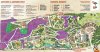
And now to conclude (for now) my summary of how overwhelmingly good Plzen is in this regard, a pair of maps as follows: the current official Plzen map for reference, followed by the same map annotated by myself to mark those areas where temperate/mountain exhibits are present; these areas are marked in transparent purple. The handful of areas marked in transparent green are borderline cases I have not recounted above; the Czech River complex, the Neolithic Czech Village (which may count on the grounds of education despite not containing any living species), and a large wetland bird aviary previously discussed elsewhere which contains several category-relevant species. I have also omitted the Underground World, but feel it worth noting that a number of the amphibian species within are native to European woodland and are relatively terrestrial in their habits, and one (Kaiser's Spotted Newt) is endemic to mountainous habitats.

zoo-mapa-CZ-2019-w.jpg

zoo-mapa-CZ-2019-w - annotated.jpg

I'd try to list just how many species Plzen holds relevant to this category, particularly among birds, but it would be overdoing it a little; suffice to say the figure is far, far into the triple digits. It feels bad enough sticking the dagger into Chester this hard without making it torturous!
 

Attachments

  • zoo-mapa-CZ-2019-w.jpg
    zoo-mapa-CZ-2019-w.jpg
    233.3 KB · Views: 23
  • zoo-mapa-CZ-2019-w - annotated.jpg
    zoo-mapa-CZ-2019-w - annotated.jpg
    221.1 KB · Views: 25
And for what it is worth, tomorrow I shall do a similar post making the case - what little there is - for Chester :)
 
I don't think a consensus has ever been reached, and it has been referenced in arguments for both biomes.

Consensus has not been reached, but the Spectacled bear is predator with very diverse habitat, so perhaps could be considered for both biomes. I would count it in this category rather than Tropical rainforest, personally. If we add the noteworthy Scottish wild cat project in Chester, probably they deserve a point ?
 
Last edited:
I will only go 2-1 out of principle because of the barn owl boxes flanking the entrance to the Siberian Aviary. But this is certainly Plzen's day.
 
As promised, coverage of the tiny handful of category-relevant exhibits at Chester:

Tuatara

This exhibit is large and well-vegetated, and provides plenty of space for the 1,5 individuals within. The enclosure contains several artificial burrows, and the substrate extends for a few feet I believe. The collection was the first collection outside of the native range to successfully breed the species some years ago.

full


full


Nepalese Red Panda

A relatively standard exhibit, with plenty of climbing opportunities for the inhabitants - in point of fact, the inhabitants often climb the pre-existing trees within the exhibit to quite an impressive height, rather than restricting themselves to the wooden frames provided. This photograph shows perhaps a little more than half of the exhibit, I reckon:

full


Spectacled Bear

These photographs show perhaps a shade over half of the area visible to the public - the onshow viewing extends further to the right than these images show.

full


full


Sand Lizard

A borderline species, as it might be better suited to grassland/desert - unfortunately there aren't many decent photographs of the exhibit as it stands presently, as it has recently undergone significant alteration to reduce the size of the exhibit by 50% and convert the other half into an exhibit for European Adder, due to go onshow in spring 2020. This photograph shows the exhibit mid-alteration.

full


Waldrapp Ibis et al

This aviary, which formerly held Andean Condor, has relatively-recently been renovated to hold several of the species once held in the late "Europe on the Edge" aviary, of which the following are relevant for the purposes of this tie:

Cinereous Vulture (Aegypius monachus)
Northern bald ibis (Geronticus eremita)
Rock pigeon (Columba livia)
Azure-winged Magpie (Cyanopica cyanus)


full


---

And that, I reckon, is the lot as far as Chester goes; some rather nice exhibits but compared to the weight of exhibits at Plzen (particularly the excellent European and North American woodland/mountain complexes) they pale into insignificance and, I fear, don't merit the sympathy point some are granting Chester.

I will only go 2-1 out of principle because of the barn owl boxes flanking the entrance to the Siberian Aviary. But this is certainly Plzen's day.

That aviary is definitely one of (if not the) worst enclosures in the whole zoo - though I'm not sure a single exhibit is enough to cancel everything else out enough to earn the collection which offers so little in this regard a "justice point" :p to be honest, given I know and understand your feelings about that particular aviary and that you would hence feel awkward given Plzen a clean vote, I somewhat expected you would sit this one out rather than vote for either collection!
 
As promised, coverage of the tiny handful of category-relevant exhibits at Chester:

Tuatara

This exhibit is large and well-vegetated, and provides plenty of space for the 1,5 individuals within. The enclosure contains several artificial burrows, and the substrate extends for a few feet I believe. The collection was the first collection outside of the native range to successfully breed the species some years ago.

full


full


Nepalese Red Panda

A relatively standard exhibit, with plenty of climbing opportunities for the inhabitants - in point of fact, the inhabitants often climb the pre-existing trees within the exhibit to quite an impressive height, rather than restricting themselves to the wooden frames provided. This photograph shows perhaps a little more than half of the exhibit, I reckon:

full


Spectacled Bear

These photographs show perhaps a shade over half of the area visible to the public - the onshow viewing extends further to the right than these images show.

full


full


Sand Lizard

A borderline species, as it might be better suited to grassland/desert - unfortunately there aren't many decent photographs of the exhibit as it stands presently, as it has recently undergone significant alteration to reduce the size of the exhibit by 50% and convert the other half into an exhibit for European Adder, due to go onshow in spring 2020. This photograph shows the exhibit mid-alteration.

full


Waldrapp Ibis et al

This aviary, which formerly held Andean Condor, has relatively-recently been renovated to hold several of the species once held in the late "Europe on the Edge" aviary, of which the following are relevant for the purposes of this tie:

Cinereous Vulture (Aegypius monachus)
Northern bald ibis (Geronticus eremita)
Rock pigeon (Columba livia)
Azure-winged Magpie (Cyanopica cyanus)


full


---

And that, I reckon, is the lot as far as Chester goes; some rather nice exhibits but compared to the weight of exhibits at Plzen (particularly the excellent European and North American woodland/mountain complexes) they pale into insignificance and, I fear, don't merit the sympathy point some are granting Chester.


That aviary is definitely one of (if not the) worst enclosures in the whole zoo - though I'm not sure a single exhibit is enough to cancel everything else out enough to earn the collection which offers so little in this regard a "justice point" :p to be honest, given I know and understand your feelings about that particular aviary and that you would hence feel awkward given Plzen a clean vote, I somewhat expected you would sit this one out rather than vote for either collection!
Some of those exhibits actually look pretty good.
 
Out of curiosity, how many of the 2-1 voters did so because they felt the tiny handful of Chester exhibits merited a point, how many did so because (as with FG) they thought Plzen shouldn't be given full marks because of disapproval of the collection, and how many just felt bad for Chester? :P as other than FG and twilighter, people merely switched vote in dribs and drabs, and didn't actually post to debate/discuss the matter.

Pyrrhic victory for Plzen in any case; it's still not going to win the cup (and nor do I think it should) but it's crippled the chances of Chester, a much better collection overall, in the process. But as I alluded up-thread, it's kinda fair turnaround given Chester knocked Prague out previously, a collection I suspect would have been in with an extremely good shot at the cup had it made it to the final 8.
 
Out of curiosity, how many of the 2-1 voters did so because they felt the tiny handful of Chester exhibits merited a point, how many did so because (as with FG) they thought Plzen shouldn't be given full marks because of disapproval of the collection, and how many just felt bad for Chester? :p
I'm in the bolded category, that and the fact one of the temperate species held happens to be tuatara... ;):p
 
that and the fact one of the temperate species held happens to be tuatara... ;):p

That would definitely help :p those were the thing that made me rather tempted to argue for 2-1 myself.
 
Out of curiosity, how many of the 2-1 voters did so because they felt the tiny handful of Chester exhibits merited a point, how many did so because (as with FG) they thought Plzen shouldn't be given full marks because of disapproval of the collection, and how many just felt bad for Chester? :p as other than FG and twilighter, people merely switched vote in dribs and drabs, and didn't actually post to debate/discuss the matter.

Pyrrhic victory for Plzen in any case; it's still not going to win the cup (and nor do I think it should) but it's crippled the chances of Chester, a much better collection overall, in the process. But as I alluded up-thread, it's kinda fair turnaround given Chester knocked Prague out previously, a collection I suspect would have been in with an extremely good shot at the cup had it made it to the final 8.

Same as Brum. Its actually your fault because you posted something about Chester. I was 3-0 before that. I just felt they had enough of a high quality to deserve a point.
 
Out of curiosity, how many of the 2-1 voters did so because they felt the tiny handful of Chester exhibits merited a point, how many did so because (as with FG) they thought Plzen shouldn't be given full marks because of disapproval of the collection, and how many just felt bad for Chester?

Bit of both, the one thing that is not mentioned often is that the separation exhibit for snow leopard isn't good at all as well...
 
Back
Top