You are using an out of date browser. It may not display this or other websites correctly.
You should upgrade or use an alternative browser.
You should upgrade or use an alternative browser.
ZooChat Cup finals: Vienna vs Wroclaw
- Thread starter CGSwans
- Start date

On the one hand, you have Wroclaw with its Afrykarium and all the other complxes focused on Aquatics, and then you have Vienna with its Polar bears (arguably), penguins, Amazon river walkthrough in the Reptile house and more. It has to be Wroclaw's win, but by how much? Going with 2-1 for now.
Freshwater is merged with marine and the ‘poles’ component of the former mountain and poles category. This category will be known as Aquatics, and it will inherit the former freshwater draw.

Between Wroclaw's Afrykarium (fantastic fur seal, penguin, hippo, manatee, crocodile, shark, and various other fish displays), Odrarium (fantastic representation of the Oder River Basin which includes otters, waterfowl, and various fishes from throughout the system in separate tanks), and their small Aquarium (fairly basic in design but includes some great species) I feel comfortable voting 2-1 Wroclaw. If you add on the zoo's focus on obscure and endangered fishes and freshwater turtles, it's a pretty clear victory to me.
~Thylo
~Thylo
I'm currently voting 2-1 Vienna seemingly alone. Probably fair, and if someone is going to make the case for Wroclaw then I will probably change my vote.
Meanwhile, Vienna has quite a few aquatic exhibits.
First and foremost, the Aquarium-Terrarium House has a variety of fish and reptiles. Highlights for me were the enclosures for Morelet's crocodile, caiman lizard and stingrays, anaconda, and the small reef tank. There's also a heavy focus on rare fish, with a couple of rare fish tanks (which in itself are nothing special). Still, a cool addition. Outside, there are small terrariums for a few native amphibians, as well as an enclosure for flamingos.


Vienna's polar bear habitat called Franz-Josef Land is the best I've seen.


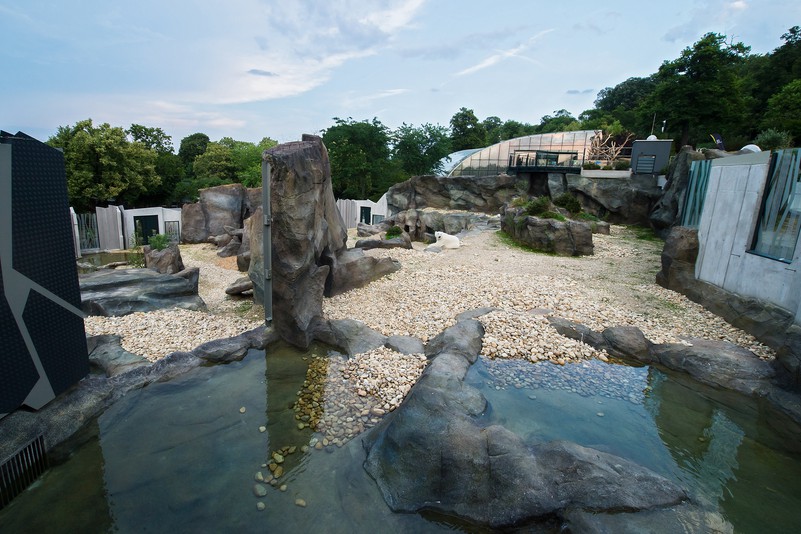
The Polarium houses aquatics as well: South American sea lions, northern rockhoppers and king penguins, as well as Humboldt penguins nearby.


The Rainforest House most notably has the Frogs & Friends exhibition, displaying two Staurois species, both of which Vienna has basically established in Europe. Also displayed here are vampire crabs, northern river terrapin (one of two European holders and first captive breeder), mudskippers, three species of treefrog, Asian small-clawed otters, eyespot pufferfish and giant gourami.
Aside from those four major displays, the zoo also houses common hippopotamuses, another species of flamingo, a few aquatic birds and amphibians in the bird house (sunbittern, African bullfrog, strawberry poison dart frog, African jacana, wattled jacana, dyeing poison dart frog), water buffalo, capybara, maned duck and a couple Eurasian waders in a European-themed aviary (pied avocet, little bittern, Eurasian teal).
Finally, Vienna also contributes quite a bit to aquatic species conservation and research. They set up conservation initiatives for the northern river terrapin in Bangladesh and India, support Polar Bears International, protect European pond turtles in Austria, keep and breed no less than 18 species of threatened Aphanius species (two of which are currently EW), and breeds and protects the European mudminnow (a species once thought extinct in Austria). They research communication in the two species of rock frogs and the occurrence of chytrid fungus in Austria.
Meanwhile, Vienna has quite a few aquatic exhibits.
First and foremost, the Aquarium-Terrarium House has a variety of fish and reptiles. Highlights for me were the enclosures for Morelet's crocodile, caiman lizard and stingrays, anaconda, and the small reef tank. There's also a heavy focus on rare fish, with a couple of rare fish tanks (which in itself are nothing special). Still, a cool addition. Outside, there are small terrariums for a few native amphibians, as well as an enclosure for flamingos.
Vienna's polar bear habitat called Franz-Josef Land is the best I've seen.
The Polarium houses aquatics as well: South American sea lions, northern rockhoppers and king penguins, as well as Humboldt penguins nearby.
The Rainforest House most notably has the Frogs & Friends exhibition, displaying two Staurois species, both of which Vienna has basically established in Europe. Also displayed here are vampire crabs, northern river terrapin (one of two European holders and first captive breeder), mudskippers, three species of treefrog, Asian small-clawed otters, eyespot pufferfish and giant gourami.
Aside from those four major displays, the zoo also houses common hippopotamuses, another species of flamingo, a few aquatic birds and amphibians in the bird house (sunbittern, African bullfrog, strawberry poison dart frog, African jacana, wattled jacana, dyeing poison dart frog), water buffalo, capybara, maned duck and a couple Eurasian waders in a European-themed aviary (pied avocet, little bittern, Eurasian teal).
Finally, Vienna also contributes quite a bit to aquatic species conservation and research. They set up conservation initiatives for the northern river terrapin in Bangladesh and India, support Polar Bears International, protect European pond turtles in Austria, keep and breed no less than 18 species of threatened Aphanius species (two of which are currently EW), and breeds and protects the European mudminnow (a species once thought extinct in Austria). They research communication in the two species of rock frogs and the occurrence of chytrid fungus in Austria.
Wroclaw's Afrykarium:
Nile Crocodile, Afrykarium - ZooChat
Nile Crocodile - Afrykarium - ZooChat
Hippopotamus, East Africa, Afrykarium - ZooChat
View of Land Area and part of Water Area of Hippo Enclosure - Afrykarium - ZooChat
Land area for the Hippos- Afrykarium - ZooChat
Hippo Pool - Afrykarium - ZooChat
Raised Walkway for Penguins - Afrykarium - ZooChat
African Penguin and Cape Shelduck Enclosure- Outdoor part of Afrykarium - ZooChat
View into Penguin Pool- Afrykarium - ZooChat
Fur Seal Enclosure - Outdoor part of Afrykarium - ZooChat
Cape Fur Seal Underwater - Afrykarium - ZooChat
View into Fur Seal Pool; one can be Seen in the Distance- Afrykarium - ZooChat
Fulvous Whistling Ducks on Manatee Pool - Afrykarium - ZooChat
Part of Manatee Tank from Above- Afrykarium - ZooChat
Antillean manatee - ZooChat
Part of Manatee Tank- Afrykarium - ZooChat
View into Red Sea Tank- Afrykarium - ZooChat
Diver inside Red Sea Tank - Afrykarium - ZooChat
View into Red Sea Tank - Afrykarium - ZooChat
Mozambique Channel Tank- Afrykarium - ZooChat
Mozambique Channel Shark Tank- Afrykarium - ZooChat
African Cichlid Tank - Afrykarium - ZooChat
Lake Malawi aquarium - ZooChat
Terrarium:
Mixed Turtle Enclosure (12 species) - Wroclaw Zoo Terrarium - ZooChat
Aquarium:
Pavilion of the aquarium - ZooChat
Inside of the pavilion of the Aquarium - ZooChat
Inside of the pavilion of the Aquarium - ZooChat
Odrarium:
New otter enclosure almost finished - ZooChat
New otter enclosure almost finished - ZooChat
New otter enclosure almost finished - ZooChat
New otter enclosure almost finished - ZooChat
New otter enclosure almost finished - ZooChat
Odrarium - ZooChat
Odrarium - ZooChat
Odrarium - ZooChat
Odrarium - ZooChat
~Thylo
Nile Crocodile, Afrykarium - ZooChat
Nile Crocodile - Afrykarium - ZooChat
Hippopotamus, East Africa, Afrykarium - ZooChat
View of Land Area and part of Water Area of Hippo Enclosure - Afrykarium - ZooChat
Land area for the Hippos- Afrykarium - ZooChat
Hippo Pool - Afrykarium - ZooChat
Raised Walkway for Penguins - Afrykarium - ZooChat
African Penguin and Cape Shelduck Enclosure- Outdoor part of Afrykarium - ZooChat
View into Penguin Pool- Afrykarium - ZooChat
Fur Seal Enclosure - Outdoor part of Afrykarium - ZooChat
Cape Fur Seal Underwater - Afrykarium - ZooChat
View into Fur Seal Pool; one can be Seen in the Distance- Afrykarium - ZooChat
Fulvous Whistling Ducks on Manatee Pool - Afrykarium - ZooChat
Part of Manatee Tank from Above- Afrykarium - ZooChat
Antillean manatee - ZooChat
Part of Manatee Tank- Afrykarium - ZooChat
View into Red Sea Tank- Afrykarium - ZooChat
Diver inside Red Sea Tank - Afrykarium - ZooChat
View into Red Sea Tank - Afrykarium - ZooChat
Mozambique Channel Tank- Afrykarium - ZooChat
Mozambique Channel Shark Tank- Afrykarium - ZooChat
African Cichlid Tank - Afrykarium - ZooChat
Lake Malawi aquarium - ZooChat
Terrarium:
Mixed Turtle Enclosure (12 species) - Wroclaw Zoo Terrarium - ZooChat
Aquarium:
Pavilion of the aquarium - ZooChat
Inside of the pavilion of the Aquarium - ZooChat
Inside of the pavilion of the Aquarium - ZooChat
Odrarium:
New otter enclosure almost finished - ZooChat
New otter enclosure almost finished - ZooChat
New otter enclosure almost finished - ZooChat
New otter enclosure almost finished - ZooChat
New otter enclosure almost finished - ZooChat
Odrarium - ZooChat
Odrarium - ZooChat
Odrarium - ZooChat
Odrarium - ZooChat
~Thylo