Ambalavao Madagascar Experience
So this is my contribution

the Ambalavao Madagascar Experience. The site is just under 9 acres. It is dedicated to the display, conservation and education of and about Madagascan species including multiple Lemurs and other rare and unusual animals
The enclosures are designed to be as large and as naturalistic as possible. Highlights include a huge nocturnal house featuring what would be Europe's only Sportive Lemurs (Red Tailed) and Highland Streaked Tenrecs (both which would be sourced from Madagascar as pair of a new ex-situ conservation program) and a group of Madagascan Flying Fox. A 2 acre lemur walkthrough displaying five different species. Crowned Sifaka's and Blue Eyed Black Lemur (the latter mixed with Crowned Lemur)
None primate species include Malagasy Giant Jumping Rats in the nocturnal house (mixed with Fat Tailed Dwarf Lemur) Fossa and Plowshare Tortoises which would be onshow in the restaurant
VISITOR WALKTHROUGH:
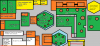
Visitors enter to the right of the development. On their left the first exhibit is a moated island (1/2 an acre) for a breeding group of Crowned Sifaka. An offshow house is situated at the back of the Island for their use along with a small keeper area
Turning right here, visitors have the option to see the Gentle Lemur exhibit which is located to the left the Lemur Walkthrough. North of this is the education center which would be used for school groups and visitors when not in use by the former.
Straight ahead of the entrance they pass through a set of double gates which take them into a 2 acre walkthrough exhibit. The enclosure is heavily planted and features several trees which the Lemurs are free to climb. A small group of Radiated Tortoise are allowed free range of the enclosure during good weather. It is open topped but with a 10ft fence (with hotwire) surrounding it to prevent escapes. The five Lemur species are:
• Ring Tailed Lemur (none breeding group)
• Black and White Belted Ruffed Lemur (small breeding group or pair)
• Mongoose Lemur (breeding pair or group)
• Red Bellied Lemur (none breeding)
• Black Lemur (breeding pair or group)
Situated at the back of the outdoor enclosure are three separate but interconnecting (via overhead raceways) houses for the Lemurs use. These are offshow except for the fronts which are visible from inside the walkthrough. A keeper yard is also situated behind. Visitors follow the path through the enclosure before exiting at the other end
Opposite the double door exit for the walkthrough is a ¾ acre moated enclosure for a mixed exhibit of Crowned lemur and Blue Eyed Black Lemur (both breeding groups/pairs). Visitors view both species from across the moat. The island is heavily planted and again has several trees that the Lemurs are free to climb. A house for both species is located on the other side of the enclosure. Unlike previous houses visitors are able to see into part of it through a glass viewing window.
From the side of this exhibit nearest to the walkthrough exit, visitors now have the choice to go left or right. To the right is the toilets and visitors restaurant. The restaurant is designed to have a capacity of upto 70 people at once. Inside are three exhibits for reptiles including two species of Chameleon (Parsons and Short Horned) and a group of Plowshare Tortoises. The latter are kept behind floor to ceiling glass for their security. Also viewable from the restaurant is one of the two Fossa exhibits. A one way mirror allows visitors to see into the outdoor enclosure without disturbing the Fossa
Coming out of the restaurant is an exhibit for Narrow Striped Mongoose (breeding group/pair) straight ahead. An offshow area for them is located at the top of the enclosure nearest to the restaurant entrance/exit. The outdoor enclosure is onshow and the Mongoose have access to it during good weather.
To the right are the previously mentioned Fossa enclosures. The exhibit is divided into two with only the one outdoor enclosure being onshow (through the one way mirror in the restaurant) whilst the second remains offshow. However a viewing window into the house (using the same one way system as the mirror on the outdoor enclosure) does give visitors another chance to see them.
The next enclosure (directly opposite the indoor Fossa house) is home to a group/pair of Northern Bamboo Lemur. The indoor house is offshow. The total exhibit (indoor and outdoor) is roughly ½ an acre. The enclosure is roofed and fenced with wire mesh. It is heavily planted to give opportunity’s for hiding and designed (like all good exhibits should be) to encourage breeding through giving the animals privacy.
After viewing the Bamboo Lemurs, visitors then follow a path before coming to an 80,000 square feet nocturnal house located towards the end of the experience. This house is home to:
• Aye-Aye – both indoor and outdoor exhibits are provided through the latter would normally only be used during the night (when the zoo is closed) due to the reverse lighting in use inside
• Red Sportive Lemur – a pair would be sourced from Madagascar to form the beginnings of a new ex-situ breeding programme. The species was previously kept at Paris Zoo many years ago but has not been held in Europe since. Research would be carried out to discover husbandry requirements and other essential knowledge which could then be passed to other collections in the hope of once again establishing them in Europe
• Fat Tailed Dwarf Lemur would be in the next exhibit along. They would be mixed with Malagasy Giant Jumping Rats to create a multispecies exhibit
• The enclosure opposite would be used for a group of Madagascan Flying Fox and Highland Streaked Tenrecs
All enclosures in the nocturnal house would be viewable through plexiglass viewing windows. The lighting would be reversed to give visitors the best chance of seeing the animals active. An animal feed kitchen is also situated behind the Aye-Aye exhibit
MAP COLOR CODE:
Green – Animal outdoor exhibit
Orange – Animal indoors and/or staff area
Brown circles – trees (not pictured in all exhibits due to descriptions)
Yellow – visitor facility
Grey – visitor paths
White – Nocturnal house indoor exhibit
Blue – water moat
Red (line) – visitor entry/exit point
SIZES:
Total roughly 9 acres for the whole site
Lemur Walkthrough: 2 Acres (87,000 SQF)
Sifaka Island: ½ an acre (21,000 SQF)
Visitor facilities: (toilets, restaurant) ¾ of an acre (30,000 SQF)
Blue Eyed Black and Crowned Lemur Island: ¾ of an acre (30,000 SQF)
Narrow Striped Mongoose enclosure: 10,000 SQF
Fossa house and enclosures: 1 acre (43,000 SQF)
Northern Bamboo Lemur house and enclosure: 20,000 SQF
Gentle Lemur house and enclosure: ½ an acre
Education Centre: 1/3 of an acre
Nocturnal House: 86,000 SQF (2 acres)
Signage is located at all exhibits to give information about the various species and there habitats. Visitors are also offered the chance to buy a guidebook specific to the Ambalavao Experience giving facts and knowledge about the species on display. Paths are tarmac to meet disability requirements and laws

 )
)