ZooChat Exhibit Design Competition #2

Thoughts

1. Save for 6 on the map, there is no green space to let the visitor rest from the constant stimulation of all animals all the time.
2. At 10,000 sf, the croc exhibit will probably be frustrating to guests trying to find the animals.
3. The savanna exhibit would be a good size for a large predator exhibit, but not for several herds of large antelope. Exhibits I've seen for similar species have ranged from 60,000 sf on up.
4. There are multiple dead ends in the primate area. Indoor chimp and guenon exhibits are completely inaccessible according to the map.
5. While technically allowable, imports of Bay Duikers and Bushbuck will wipe out the AZA population. There are maybe 5 duikers in the US and 10 or fewer bushbuck.
6. Consider mixing mammal species (primates and hoofstock). The interactions will be enrichment for the animals and entertaining for the guests.
7. The first thing the visitor sees when entering the exhibit is the off exhibit holding yards. Not an inviting way to enter. Also, those holding yards are not connected to any exhibits and are rendered useless.
8. Holding 10/11 need to be moved away from
9. Animal smells and events/eating aren't a winning combo.

My suggestion is to delete 48-50 entirely and use that as green space. Space out some of the exhibits so they don't all seem bunched up. Get rid of dead ends and think about a quasi "one way" route. Try and incorporate more of the creek into your design.

Thanks for the ideas! :)

One point that I'm not sure about is the bolded part of #4. They are accessible by that brown pathway which (as shown on the key) is a boardwalk. Maybe the confusion is a section of path obscured by the wall bit?
 
Could be. I can't see a pathway to get there in the images you uploaded though.
 
Could be. I can't see a pathway to get there in the images you uploaded though.

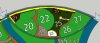
Yes, I think it's the angle of the images. Here is a view looking directly down.
 

Attachments

  • Additional View of Primate Building.jpg
    Additional View of Primate Building.jpg
    217.7 KB · Views: 27
Would anyone be able to list which Duiker species are in the US and in reasonable numbers? Europe seems to be very lacking in Duiker diversity.
 
Yellow-Backed is the most common. Blacks are around in small numbers. Red-Flanked is doing well. Bay might be down to a few individuals. Same with Maxwell's. Southern Blue is doing well (I think). Those might be the only species present currently.
 
Forgive me teasing others, let me also play a little :)

GUINEA CHIMPANZEE FOREST

VISITOR EXPERIENCE


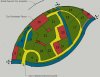
Visitors enter over a small bridge over the stream (1). They first pass a children playground with sandy ground (2). Climbing structures are themed as giant trunks of rainforest figs. Children can climb inside them, walk on suspended bridges and ropes looking like lianas and slide down on slides. The playground and climbing equipments is decorated with many sculptures of West African animals, focusing on species not found in zoos like forest elephants, chevrotains, pithacantres etc., with short information about their habits. There is also a large humorous sculpture of mokele-mbembe on which children can climb. There is also African themed restaurant (3). The restaurant backs the busy perimeter road and isolates the playground from the noise, but the upper part of the playground is visible above, making a teaser for families going on the street outside the zoo.

On the opposite side, we see the first animal exhibit, a lively troop of guinea baboons (4). They have moat exhibit with trees mimicking tree trunks in the playground, inviting the idea that playing children and climbing baboons are not so different. One side of the exhibit is enclosed by the high glass (5). It is a site of a daily animal encounter. Keeper gives talk abot baboons and rainforest, and then visitors can feed the baboons through holes in the glass. The glass forms a foot-wide bank at the waist hight on the baboon side. Baboons can sit on it, and reach through ssmall holes down, and pick food from visitors hands, but not stick the muzzle through and bite. Outside feeding, the holes are blocked by a thick plank of plastic. Nearby is open exhibit of cusimanse, with the view of baboons on the same rocky hill in the background.

Then visitors walk under giant fallen tree trunks suspended over the path, overgrown with ferns and lianas, and enter the area called Rainforest River.

We walk along a cross-section of West African river, with 8,3ft/2,5 m tall glass pane providing underwater and above water view. First is large exhibit for a pair of African manatees (6). Backdrop are rainforest plants. Then the manatee section passes seamlessly into underwater and above water exhibit of spotted-necked otters (7) It has waterfall and submerged rocks. In addition otters are periodically let inside manatee pool, providing enrichment for both. Another large fallen tree trunk separates otters from the next tank. It houses slender-snouted crocodiles and some fish (8). The pool has several tree trunks submerged in the water near the viewing window. Therefore crocodiles rest of them nicely presenting theselves towards visitors. Education is in the form of screens showing films, and sculptures showing animals and behaviors.

On the opposite side, there is an underwater view of exhibit for pygmy hippos and many large West African fish (9). This exhibit is covered with net and makes a walk-through aviary for African birds: hadada ibises, hornbills, parrots, turacos, glossy starlings and others. Co-habitants on the floor are also unstriped ground squirrels. Visitors can also enter the aviary on a wooden elevated walkway from the side, and see the birds on the upper level. There is additionally a treetop view of monkeys in the exhibit next door.

Then we enter the Chimpanzee Research Station (10). This is a building with wooden panneling, showing a research station studying chimpanzees in West Africa. Visitors can see equipment and everyday work of researchers, including field notes, processing samples (read: dung). Monitors show researchers and park guards talking about their work and chimpanzee behaviors. The purpose is to let people learn about chimpanzees, research and conservation, by showing everyday work of a field biologist. The second part showcases several reserves in Western Africa. Here rangers and park managers talk about their work, and films show everyday problems of park management. There are also interactive computer games: one asks player to guide a chimpanzee on its everyday activities in Africa, another to guide park manager facing daily problems of park management. This his gives visitors understanding of the problems faced with wildlife conservation in West Africa.

Left side of this building looks into a glass panel, which is many visually connected terraria for small animals: invertebrates, frogs, small reptiles, dwarf crocodiles, rock pythons, rodents etc. One terrarium is shared between goliath beetles which are much bigger than Matthey's mice. There are also some aquaria for smaller West African fish including freshwater butterfly fish and electric eels. There is also large night exhibit for aardvark, african brush-tailed porcupine, potto and senegal bushbaby. Right side of the building is a roofed veranda, like often in African houses. It overlooks exhibit of leopards (11). This exhibit is especially richly planted, because leopards don't destroy plants. It is protected by piano wire, and filled with tree trunks and living plants, imitating rainforest plants. First floor of this building houses conference/education halls. From there one can also see over the leopard exhibit on the first floor level, this time without the netting. This hall is also accessible directly from outside the zoo.

Then we go outside. We pass two glass-fronted exhibits for the zoological stars of the complex. One holds a pair of african golden cats, another pair of giant pangolins mixed with white-crested hornbills (12). Both mammal species have sleeping dens in a giant hollow, artificial log of a fallen tree. Humans can go inside and see these animals asleep in the red light. Both species are nocturnal, so the only way to see them is to present them asleep or a visit during the feeding time. Nearby aviary is shared by white-headed vultures and crested porcupines (13).

Then the visitor walkway crosses the stream. It is themed as a rainforest river, with logs suspended across it, fake rock outcrops etc. The walkway goes gently up, on a ramp 5 meters above the ground. We walk over two wooded exhibits (17,18). They are rotation exhibits, each houses forest buffalo one day and chimpanzees another. Afterwards the path descends to the ground. Then we pass the creek back.

Then we arrive at the chimpanzee encounter area (19). In front of a small grassy paddock, there is a small amphitheater. There are everyday feeding presentations of chimpanzees with educational message. There are video screens there, and a short film is played about chimpanzees and rainforest. Then chimps walk on suspended tree trunks across the creek, and come to the presentation area, and kepers throw them food, talking about each animal. Nearby is chimpanze indoor building (20). Overall, chimpanzees have access to four outside enclosures: two rotated with buffalo, which they cross on suspended logs over a creek, and one exclusive for them (21), which they pass via the wire tunnel overead of visitors.

Walking further, visitors encounter threats to the forest. Fake snares are attached to small trees. Tree trunks bear signs of cutting or are cut and gathered for transport. There is a camp of charcoal burners. There is also a site of illegal mining. There is also fake native hut, with a blood stained table in front. More blood is sprayed at the door of the hut. The explanation is double. First, all wild animals in Western Africa, from beetle grubs to chimpanzees, are eaten as bushmeat, which leads to their hunting to extinction. Second, butchering passes animal diseases to humans – including Ebola which breaks out in Western Africa. Nearby is the viewing tower. It allows to look at chimps and monkeys at the tree level. On a tree nearby, there is a platform of a biologist studying forest elephants, with his equipment and notes over elephant study.

On the other side of the tower, there is a shared exhibit of yellow-backed duikers and mona monkeys (22). It can be seen from the viewing tower above or from the ground level behind the glass. It is open topped, and surrounded by tall fence. Monkeys keep to the climbing equiplment in the middle of the exhibit, and duikers can run on the whole land are, also near the fence. Similar is another exhibit shared by bongos, white-naped mangabeys and diana monkeys (23).

Besides chimpanzee and baboon encounters, twice a day there are falconry shows in the chimpanzee encounter area. They feature West African birds like African sea eagle, bateleur, tawny eagle, lanner falcon and barn owl. In between, small animals like ball python and giant millipedes are shown by volunteers at the playground, the education building and the amphitheatre. In the mornings there are presentation feedings of all the animals. Keepers feed their animals, while a presenter goes from the exhibit to exhibit, explaining facts about animals. This is the best occassion to see golden cats and pangolins active.

EXHIBITS

Numbers correspond to the map.

1 - Entry bridge ca. 26ft/8m wide
2 – Treetop playground and mokele-mbembe sculpture - ca. 4300sq.ft/400m2
3 - Restaurant – ca. 3230sq.ft/300m2
4 – Guinea baboon hill – 6130sq.ft/ca. 570m2
5 – Rock hyrax exhibit ca. 320sq.ft/30m2, site of baboon feeding encounter and staff access
6 - Manatee exhibit – ca. 3770sq.ft/350m2 +2690sq.ft/250m2 filters, kitchen and staff area for water animals
7 - Otter exhibit – ca.1075sq.ft/100m2
8 – Slender-snouted crocodile exhibit – ca. 1615sq.ft/150m2.
9 - Pygmy hippo, unstriped ground squirrel and bird aviary - ca. 1075sq.ft/100m2 water area + 9690sq.ft/900m2 land area
10 - Chimpanzee research station (ground floor) and conference area/classroom (first floor) – ca. 4840sq.ft/450m2 visitor area + 2150sq.ft/200m2 staff space and small animal exhibits on each floor.
Smaller glass-fronted exhibits inside: mixed nocturnal exhibit for potto, bushbaby, aardvark and brush-tailed porcupine ca 807sq.ft/75m2, dwarf crocodile exhibit ca 323sq.ft/30m2, rock python ca 215sq.ft/20m2, and 15 aquariums and small animal exhibits ca 270sq.ft/25m2 together.
11 - Leopard exhibit – ca. 8070sq.ft/750m2
12 - African golden cat and giant pangolin exhibits – ca 2150sq.ft/200m2
13 – Vulture and porcupine aviary – ca. 1075sq.ft/100m2
14 – Start of elevated pathway
15 – Chimpanzee and forest buffalo rotation exhibit one, ca. 15605sq.ft/1450m2
16 – Chimpanzee view through the glass on the street
17 – Chimpanzee and forest buffalo rotation exhibit two, ca. 15605sq.ft/1450m2
18 – Buffalo holding building and service path, offshow aviaries for falconry birds, ca 1075sq.ft/100m2
19 – Chimpanzee encounter area with amphitheater, ca 4035sq.ft/400m2 visitor space + 4035sq.ft/400m2 chimps
20 – Chimpanzee holding building, ca 4035sq.ft/400m2
21 – Third chimpanzee exhibt connected by overhead pathway, ca 18300sq.ft/1700m2
22 – Yellow-backed duiker and mona monkey mixed exhibit, ca. 5380sq.ft/500m2
23 – Bongo, white-naped mangabey and diana monkey mixed exhibit, ca 11840sq.ft/1100m2
24 – Service area for pygmy hippo, birds, antelope and monkeys, partially below aviary walkway, ca 2150sq.ft/200m2

(full presentation in the attachment).
 

Attachments

  • zooafrican2.pdf
    zooafrican2.pdf
    415.9 KB · Views: 28
  • zooexhibit1.jpg
    zooexhibit1.jpg
    170.9 KB · Views: 37
The biggest problems I see are the lack of green space between the exhibits and lack of holding for a lot of the animals.

Having the chimps on an outer perimeter fence can be a dangerous situation if one ever gets out. That's an automatic shoot to kill scenario. The glass window the chimps have to outside the zoo I can envision going wrong in so many ways (mostly from people provoking the chimps).

I do like the forest buffalo/chimp rotational idea.

You mention Kusimanse, but I don't see them on the map.

Details on the interior of the building will be very helpful.
 
The biggest problems I see are the lack of green space between the exhibits....

Agreed, you might also consider that the way you have it drawn the public path is pretty much constantly right up against the containment and all the exhibits back right up to other exhibits. It is especially true for the chimp exhibits as they will have to be kept back from both the public walkway and the containment fence of other species. It seems like you are trying to fit too many species in there, my advice is to back down the number of species a bit and not be so tight with the remaining species. I look forward to seeing it once you have a chance to put in more detail for the exhibits/pathways/floorplans. Great job on the write-up though and very interesting ideas!

-Drew
 
Looks good Jurek, here are some of my thoughts:

The river themed area is really good, we haven't seen something like that yet in the competition.

I'm sure you're well aware of this, but more detail is needed on the fish, bird & 'small animal' species.

The main problem, although maybe you can prove me wrong, is that I think you will have to import more species than the rules allow for.
African Manatee
Unstriped Ground Squirrel (also this one is East Africa only)
African Golden Cat
Giant Pangolin
All these animals I believe are absent from European and North American collections. If we are being really strict, then I think there are actually no African Leopards in western zoos either; at this point they are all zoomix.

The set-up for the chimps, aside from the concerns of others, I like. Lots of space and different environments.
 
Here is my first offering:
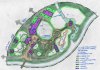
Africa on the Edge
The enclosure write up is far too long, but this is partly because I have included Discussion sections where I justify or question my decisions. These won't make the final draft. All feedback is welcomed.
 

Attachments

FunkyGibbon gave me a scare using Togo Slippery Frog as I was wanting to use the same species! so I wanted to post my progress before any of my other ideas were used :D

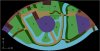
The attached design is a rough sketch coupled with a written description. I currently haven't come up with a name yet and the written portion still needs a bit of polish but hopefully it gets the design across. I plan of having more detailed plans of the buildings eventually.
 

Attachments

I really like that exhibit FunkyGibbon but having the reedbuck on the Chappal Waddi Building how ill you get the reedbuck to or from the exhibit as you cant bring a vehicle to the 1st floor of the building?
 
FunkyGibbon

A considerable step-up from the last challenge!

I live the detail put into the interior of the buildings.

I have just a few concerns. One is the central building (Waddi). Housing a restaurant inside of an animal holding area is a huge no-no. I've seen it done, and the results were unappetizing.

If you can do more to hide the animal holdings so that they're not as obtrusive to the visitors, it will go a long way. (I'm looking at 7 on the map).

Will the water around 6 and 8 come from the creek or be on a separate system? As currently arranged, the water won't flow properly through that layout.

If you could be more clear on your labeling of the numbers, it will make reading the map easier.

You've given some space for green space, but not really enough. Most enclosures but up next to each other.
 
FunkyGibbon gave me a scare using Togo Slippery Frog as I was wanting to use the same species! so I wanted to post my progress before any of my other ideas were used :D

The attached design is a rough sketch coupled with a written description. I currently haven't come up with a name yet and the written portion still needs a bit of polish but hopefully it gets the design across. I plan of having more detailed plans of the buildings eventually.

I wish I could draw at least half as good as you...
 
Thanks for all the great comments!

The biggest problems I see are the lack of green space between the exhibits

The site is described as „dense hardwood woodland“ and existing trees will be preserved, so it will be very lush and green. Compare Congo exhibit in Bronx – it is a string of exhibits without a designated green space, but it is very lush. I purposefuly try to keep vegetation inside exhibits as protected trees or green islands. I will try to put it on the pic

lack of holding for a lot of the animals.

All animals have holding described in the text.

Question to jbnbsn99:If you think some are missing or too little space, can you tell which?

The glass window the chimps have to outside the zoo I can envision going wrong in so many ways (mostly from people provoking the chimps).

Several zoos, including Berlin Tierpark and Warsaw have bear exhibits opening to the street outside the zoo. Are bears less problematic than chimps? OK, management objects. Will replace it with a climbing structure looking outside the zoo.

the public path is pretty much constantly right up against the containment and all the exhibits back right up to other exhibits. It is especially true for the chimp exhibits as they will have to be kept back from both the public walkway and the containment fence of other species.

I did not draw a precise plan with all the small green spaces. I think chimps will be divided by mock rock from the leopards and antelope, but it is natural to have chimp dry moat right towards visitors. Antelope and monkey exhibits quite commonly border each other. Chimp exhibits 15 and 17 are 'under' the raised pathway.

back down the number of species a bit and not be so tight with the remaining species.


OK, too little space – playground and restaurant go. They were not asked in the design anyway. Next to cull are buffaloes.

Question to jbnbsn99: Are exhibit sizes as written in square feet OK?

I think you will have to import more species than the rules allow for.
African Manatee

There is a number of African manatees in zoos in Japan and China, as per other threads. I think they can be imported or swapped for Carribeans from Europe.

Question to jbnbsn99
Is it OK if African manatee is sourced from Asia?

If we are being really strict, then I think there are actually no African Leopards in western zoos either; at this point they are all zoomix.


I think generic leopard is OK. If this is dropped, one would have to drop all zoomix African lions, jaguars, pumas, snow leopards, servals, elephants, common hippos, eland and most of other African animals from such type of exhibits.

Question to jbnbsn99:
Is it OK to have generic leopard?
 
Thanks for all the great comments!

The biggest problems I see are the lack of green space between the exhibits

The site is described as „dense hardwood woodland“ and existing trees will be preserved, so it will be very lush and green. Compare Congo exhibit in Bronx – it is a string of exhibits without a designated green space, but it is very lush. I purposefuly try to keep vegetation inside exhibits as protected trees or green islands. I will try to put it on the pic

lack of holding for a lot of the animals.

All animals have holding described in the text.

Question to jbnbsn99:If you think some are missing or too little space, can you tell which?

The glass window the chimps have to outside the zoo I can envision going wrong in so many ways (mostly from people provoking the chimps).

Several zoos, including Berlin Tierpark and Warsaw have bear exhibits opening to the street outside the zoo. Are bears less problematic than chimps? OK, management objects. Will replace it with a climbing structure looking outside the zoo.

the public path is pretty much constantly right up against the containment and all the exhibits back right up to other exhibits. It is especially true for the chimp exhibits as they will have to be kept back from both the public walkway and the containment fence of other species.

I did not draw a precise plan with all the small green spaces. I think chimps will be divided by mock rock from the leopards and antelope, but it is natural to have chimp dry moat right towards visitors. Antelope and monkey exhibits quite commonly border each other. Chimp exhibits 15 and 17 are 'under' the raised pathway.

back down the number of species a bit and not be so tight with the remaining species.


OK, too little space – playground and restaurant go. They were not asked in the design anyway. Next to cull are buffaloes.

Question to jbnbsn99: Are exhibit sizes as written in square feet OK?

I think you will have to import more species than the rules allow for.
African Manatee

There is a number of African manatees in zoos in Japan and China, as per other threads. I think they can be imported or swapped for Carribeans from Europe.

Question to jbnbsn99
Is it OK if African manatee is sourced from Asia?

If we are being really strict, then I think there are actually no African Leopards in western zoos either; at this point they are all zoomix.


I think generic leopard is OK. If this is dropped, one would have to drop all zoomix African lions, jaguars, pumas, snow leopards, servals, elephants, common hippos, eland and most of other African animals from such type of exhibits.

Question to jbnbsn99:
Is it OK to have generic leopard?

Green space isn't the vegetation inside the exhibit, rather it's the buffer between the exhibits that lets the space breathe.

Describing it in the text is one thing, not having it in the design specs is another.

Bears on the outside are one thing. Chimps are a whole different beast. Chimps have a high escape risk. I worry about outside visitors provoking the animals that are outside of the zoo's control. There are just too many variables with bad outcomes here.

You can display exhibits in either sq. ft. or sq. meters. I know, the US is weird...

If the Manatee can be sourced ethically, go ahead.

No zoo mix leopard. It takes a spot that could be used for something of real conservation importance. Unlike the other animals you mention, there are clear subspecies lines for leopards. Subspecies for the others are not as clearly demarcated or non-existent.

I think I answered everything.
 
Thanks!

I mean I put sizes of exhibits in square feet. Are they OK or too small?

Re: leopard - this means that the exhibit cannot have the top predator of the rainforest. I suppose Sri Lankan leopard as a standby for African one is unaceptable?
 
Thanks!

I mean I put sizes of exhibits in square feet. Are they OK or too small?

Re: leopard - this means that the exhibit cannot have the top predator of the rainforest. I suppose Sri Lankan leopard as a standby for African one is unaceptable?

Which exhibits in particular?

Do you need an apex predator?
 
Back
Top