ZooChat Exhibit Design Competition #2

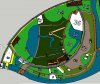
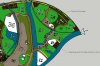
A little late to the party, but here is the design that I came up with. Keep in mind, I did not proofread the write-up at all. There may be some grammatical and spelling errors, but I just scribbled down all my thoughts.

I would appreciate any comments, questions, or feedback about anything. Thanks.

I have some comments relating to the birds.

I really like the idea of a flamingo exhibit at the entrance, people really like flamingos and a nice water feature would look nice near a plaza. Is there a reason why you've chosen a skewed sex ratio for your flamingo flock? (Management strategy?)

I feel like the "Flamingo & Waterfowl Exhibit" is lacking waterfowl, there's no ducks included. Pink-backed pelicans are a good choice. How are you going to flight-restrict the jacana and pygmy geese, or is the exhibit covered? As far as I know it is not recommended that either of those species be pinioned.

I would hesitate to mix any species of birds with monkeys in a covered exhibit where the birds don't really have anywhere to escape [potentially] predatory primates. In a large exhibit where the primates are confined to a specific area and the birds have access to significant areas to themselves, maybe. But I wouldn't trust primates with rarer species.
 
A little late to the party, but here is the design that I came up with. Keep in mind, I did not proofread the write-up at all. There may be some grammatical and spelling errors, but I just scribbled down all my thoughts.

I would appreciate any comments, questions, or feedback about anything. Thanks.

A few points.

1. You cannot move the entryway. While it works where you've put it, but not with the rests of the zoo's "infrastructure."
2. The mixing of pygmy hippo and bongo may or may not work. Pygmy's are nasty pieces of work from everything I've been told. There's not going to be a way to separate the two species from each other.
3. I like the mix of eagle and crocodile, but again I'm not sure how well it could work.
4. You've got a visitor pathway right next to the bongo/hippo barn. There doesn't seem to be a visual/smell barrier here. There will most likely be a dumpster full of wet hay and animal droppings in that service area, which will only be a few feet from the visitors.
 
A few points.

1. You cannot move the entryway. While it works where you've put it, but not with the rests of the zoo's "infrastructure."
2. The mixing of pygmy hippo and bongo may or may not work. Pygmy's are nasty pieces of work from everything I've been told. There's not going to be a way to separate the two species from each other.
3. I like the mix of eagle and crocodile, but again I'm not sure how well it could work.
4. You've got a visitor pathway right next to the bongo/hippo barn. There doesn't seem to be a visual/smell barrier here. There will most likely be a dumpster full of wet hay and animal droppings in that service area, which will only be a few feet from the visitors.

1. I thought the entryway was flexible because there wasn't indication that it couldn't be. In any design, you can get "the zoo" to change their opinion if you provide good enough reason, which I think I did in my write-up. Also, without any context to what was outside, it would seem reasonable that a zoo wouldn't have exhibits or infranstructure back up to the creek to protect the scenic beauty of the creek and maintain land value. (See Bronx or Cleveland)
2. The exhibit can be split or design in way to minimize interactions between the hippo and bongo. The exhibit is quite large and I think hippo and bongo would stick to their preferred areas. Since this is fairly conceptual, it was worth pitching.
3. Same idea, the exhibit would be high enough to keep the eagles away. (Though, Ituri mentioned the crocs might be in trouble if too small) They could also be moved into the Hippo 1 exhibit without the Mona monkeys.
4. The whole service area is walled/fenced in with planting retained in. The smell should not be a factor, as there are similar conditions in San Diego Zoo. There is also a room for keepers in the barn.


@fk Totally spaced on the flamingo flock. I forgot that genders are normally equal.

For the hornbills, I thought there may be enough room for them to get away. There is definitely enough room if mixed with the Mona and hippo to create perching and nests on one side of the exhibit. If need be, they could be moved to the aviary (unless you think the aviary is a little bit full?)

Yeah the flamingo and waterfowl exhibit could use more waterfowl. We can trade some species off with the aviary too, and maybe have more Comb ducks.
 
SECOND/FINAL SUBMISSION

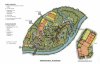
So here is my submission: West Africa – Journey into the Unknown with improvements

See attached text and maps.

Key to the maps:
1 – 1100 sq. ft. Entrance Area (includes 780 sq. ft. bridge)
2 - 3300 sq. ft. (2150 water, including part of the creek, 1150 land) Greater Flamingo and Pink-backed Pelican enclosure.
3 – 800 sq. ft. indoor building for flamingos and Pelicans with viewing from the path through windows.
4 - Raised walkway for viewing waterbirds in the Waterbird Aviary when they are in the creek.
5 –2700 sq. ft. Waterbird aviary with Black Crowned Crane, Grey Headed Gull, Spur Winged Lapwing, Black Winged Stilt, African Pygmy Goose, Spur Winged Goose, Knob-billed Duck, Egyptian Goose, Hartlaub's Duck, White-faced Whistling Duck, African Spoonbill, Abdim's Stork, African Sacred Ibis, Green-backed Heron and Squacco Heron.
6 –840 sq. ft. heated indoor building divided into two for the Saddle-Bill Storks and Waterbirds with viewing through windows from outside.
7 – 1250 sq. ft. Saddle-bill Stork aviary
8Landscaped area
9- Raised Boardwalk and bridge across the creek
10Area for Visitors with benches
11- 2400 sq. ft. Events Building with equal sized basement (accessible by lift) used as general multipurpose storage area for keepers
12 – 4025 sq. ft. (1250 water, 2775 land) Sitatunga and Marabou Stork Paddock
13 – 300 sq. ft. Viewing Deck over Sitatunga and Marabou Stork Enclosure
14 – 730 sq. ft. off show Sitatunga paddock
15 - 1100 sq. ft. Sitatunga and Marabou Indoor Building with 800 sq. ft. used for Sitatunga and 300 sq. ft. public viewing area
16 – 1800 sq. ft. Diana Monkey Outdoor netted over area with viewing through glass windows from the path. Also accessible for Banded Mongoose.
17 – 1400 sq. ft. Mona Monkey Outdoor netted over area with viewing through glass windows from the path. Also accessible for Banded Mongoose
18 – 7600 sq. ft. Chimpanzee Outdoors with public viewing across the creek through windows.
19 Additional creek area as border for chimps with viewing platforms and viewing windows into chimp enclosure.
20 – 430 sq. ft. Nocturnal Primates Darkened cave-themed Building (Senegal Bushbaby and Potto in separate 100 sq. ft. on show enclosures with 50 sq. ft. off show enclosures behind, and 130 sq. ft. visitor viewing. Enclosures also accessible for four-toed hedgehogs)
21 – 900 sq. ft. Visitor Seating Area (with benches, display of bushmeat and a toilet block)
22 – 3950 sq. ft. Chimp Indoor Area (could be divided into two if necessary)
23 – 630 sq. ft. Chimp off-exhibit holding
24 – 3100 sq. ft. indoor only Campbell’s Guenon Enclosure
25 – 3700 sq. ft. area of lush tropical planting for the free flying birds (though birds would be able to access the primate enclosures which would also be planted with trees, which would be hot-wired off if necessary)
26 – 120 sq. ft. enclosure for free flying birds to be taken off exhibit, can be subdivided
27 – 2130 sq. ft. Diana Monkey Indoors (also accessible for Banded Mongoose)
28 – 1680 sq. ft. Mona monkey indoors (also accessible for Banded Mongoose)
29 Treetop walkway with viewing tower over forested area with bird feeders visible prominently from the viewing tower
30 – 390 sq. ft. Small primates off exhibit holding enclosures can be divided into three 130 sq. ft. sections
31 – 2500 sq. ft. Yellow-backed Duiker Outdoor thickly wooded Paddock
32 – 900 sq. ft. Yellow-backed Duiker outdoor off-show holding yard
33 – 870 sq. ft. entry/exit to the Tropical Dome with decking area/viewing deck
34 – 8000 sq. ft. Yellow-backed Duiker indoor enclosure
35 – 700 sq. ft. Yellow-backed Duiker indoor off show holding yard
36 – 4100 sq. ft. Raised restaurant with panoramic viewing windows across the tropical dome. Has Toilet and fish tank with Featherfin Squeaker + Banded Jewelfish
37 – 4550 sq. ft. (2930 sq. ft. water, 1620 sq. ft. land) Slender-snouted Crocodile Enclosure. Can be divided in two with discreetly hidden mesh.
38 – 5250 sq. ft. (800 water, 4450 land) Red River Hog enclosure
39 Viewing Deck over Red River Hog and Crocodile enclosures
40 Treetop Walkway with viewing deck over the ‘canopy’
41 – 320 sq. ft. (240 sq. ft. land, 80 sq. ft. water) Home’s Hingeback Tortoise + West African Black Mud Turtle enclosure
42 – 200 sq. ft. Snake Cave with Western Green Mamba, Forest Cobra and Rhinoceros Viper in separate tanks
43 – 160 sq. ft. Viewing deck over Red River Hog enclosure
44 Waterfall going over the pathway and into the crocodile enclosure and the main waterway which goes to the pygmy hippo enclosure. From there water is filtered and pumped underground back to the waterfall to form a continuous loop.
45 – 1060 sq. ft. Off show crocodile holding area with small pools. Can be divided using fencing into as many smaller sections as necessary.
46 – 250 sq. ft. aviary for holding free flying birds and squirrels off show. Can be subdivided
47 – 230 sq. ft. enclosure for holding the free-roaming Red-flanked Duikers
48 – 780 sq. ft. Red River Hog off show holding area
49 Pathway through the general forest area (25000 sq. ft.) with bridges across water areas
50 – 17200 sq. ft. (7500 sq. ft. water, 9660 sq. ft. land) Pygmy Hippo Enclosure
51 – 3x 340 sq. ft. off show Pygmy Hippo holding yards
52 – 1000 sq. ft. Pangolin Cave (200 sq. ft. visitor viewing, 2x 200 sq. ft. on show enclosures, 2 x 200 sq. ft. off show enclosures)
53 Picnic Area/Seating area
54 – 130 sq. ft. building with enclosures for Savannah Monitors and Fat-tail Geckos viewable through glass fronts.
55 – 2155 sq. ft. Caracal Enclosure with 1725 sq. ft. outdoor area and 430 sq. ft. indoor building
56 – 150 sq. ft. snack and drink kiosk with an attached toilet block.
57 – Large landscaped area with various trees and plants and areas of ploughed ground with Cameroon Sheep, West African Dwarf Goat and Helmeted Guineafowl
58 – 2000 sq. ft. Patas Monkey, Sulcata Tortoise, Secretary Bird, Pied Crow, Laughing Dove Mixed Exhibit/aviary
59 – 12400 sq. ft. Netted over Egyptian vulture, Northern White-faced Owl and Honey badger enclosure with underground den in mock rock structure in the middle for honey badger and nest boxes for vultures
60 – 2150 sq. ft. Storage building with food storage and general storage and some small cages for holding birds, reptiles and small mammals off show or for holding offspring
61 Water filtration system for the creek
62 Keeper Access Bridge

Summary of Changes since original submission:

- A fruit bat species has been added free-flying in each tropical dome
- Red River Hog enclosure added next to the Crocodile enclosure (with the crocodile enclosure smaller as a result)
- The Bushbuck were changed to Sitatunga and a pair of Marabou storks would added to the enclosure. The indoor housing and off show holding paddock for this enclosure were moved away from the events area, and a water area was added to the enclosure, including part of the creek.
- Flamingo and Pelican enclosure added near the entrance area (using space that was used for a now redundant large hoofstock off show area which therefore has been reduced in size and hidden by vegetation)
- Bay Duiker changed to Red-flanked Duiker
- Added Four-toed Hedgehogs to the nocturnal primate enclosures
- African hoofstock exhibit removed and replaced with a large seating area with various enclosures around it.
-Circular route around the Primate building added to remove dead-ends (and therefore enclosures rearranged slightly)
- Banded Mongoose added to Guenon enclosures
- A few other minor adjustments and additions
 

Attachments

  • West Africa.pdf
    West Africa.pdf
    435.7 KB · Views: 42
  • Left Hand Side.jpg
    Left Hand Side.jpg
    187.1 KB · Views: 30
  • Right Hand Side.jpg
    Right Hand Side.jpg
    189 KB · Views: 24
  • Side View.jpg
    Side View.jpg
    251.4 KB · Views: 21
  • View from Above.jpg
    View from Above.jpg
    178.8 KB · Views: 25
LaughingDove

Theme 10
Collection 19
Exhibits 15
Visitor experience 10
Reqiurments 15
Write-up 18
Landscape 5
Interp./Conserv. 8

100/160

  1. Building 11 unstable foundation in current location (weak point in creek)
  2. Sitatunga enclosure too small
  3. Pelican/Flamingo too small
  4. Huge pinch point in indoor chimp exhibit
  5. Toilets at 21 not shown in map
  6. No double doors into Primate dome walk-through aviary
  7. no holding for Campbell's Geunons
  8. How do visitors get to treetop level in Primate Dome?
  9. No area in primate dome for mechanical/HVAC
  10. Guest backtracking to get back over creek
  11. Where are goats/sheep kept? No exhibit/holding
  12. No reason to house domestics without proper interpretation (none to be found)
  13. Duiker exhibits could benefit from mixed species
  14. Slender-Snouted Croc enclosure not on map (mislabled?)
  15. Main exhibit (hippo) on most minor pathway
  16. No back of house space in Tropical dome for HVAC, filtration, water pumps, etc.
  17. Honey Badger in a mixed species exhibit - goodbye other species, but good enrichment for the ratels
  18. Missing required event space
  19. Overall exhibit extremely claustrophobic, feels over crowded
  20. Having two dome buildings in one exhibit is overkill. A single structure could easily suffice.
  21. There is no space for service/support
  22. Entryway is uninviting
  23. There is no level of story-telling to the exhibit
  24. Conservation/ecology is not shown
  25. Visitor leaves with an appreciation for the biodiversity of the region, but little else
  26. Landscape is lacking. There are only two small green zones, no planting zones to buffer exhibits
 
Theme 10
Collection 19
Exhibits 15
Visitor experience 10
Reqiurments 15
Write-up 18
Landscape 5
Interp./Conserv. 8

100/160

  1. Building 11 unstable foundation in current location (weak point in creek)
  2. Sitatunga enclosure too small
  3. Pelican/Flamingo too small
  4. Huge pinch point in indoor chimp exhibit
  5. Toilets at 21 not shown in map
  6. No double doors into Primate dome walk-through aviary
  7. no holding for Campbell's Geunons
  8. How do visitors get to treetop level in Primate Dome?
  9. No area in primate dome for mechanical/HVAC
  10. Guest backtracking to get back over creek
  11. Where are goats/sheep kept? No exhibit/holding
  12. No reason to house domestics without proper interpretation (none to be found)
  13. Duiker exhibits could benefit from mixed species
  14. Slender-Snouted Croc enclosure not on map (mislabled?)
  15. Main exhibit (hippo) on most minor pathway
  16. No back of house space in Tropical dome for HVAC, filtration, water pumps, etc.
  17. Honey Badger in a mixed species exhibit - goodbye other species, but good enrichment for the ratels
  18. Missing required event space
  19. Overall exhibit extremely claustrophobic, feels over crowded
  20. Having two dome buildings in one exhibit is overkill. A single structure could easily suffice.
  21. There is no space for service/support
  22. Entryway is uninviting
  23. There is no level of story-telling to the exhibit
  24. Conservation/ecology is not shown
  25. Visitor leaves with an appreciation for the biodiversity of the region, but little else
  26. Landscape is lacking. There are only two small green zones, no planting zones to buffer exhibits

Thanks for taking the time to make the challenge and grade my submission! :)

Just four points though:

7. The holding for Campbell's Guenons is (as I wrote in my write-up) the same set of cages as the other guenons, or are those too far away from the main enclosure to be appropriate?
11. I intended the Goats and Sheep to be in the landscaped area #57, with the indoor building being that unlabelled one which I appreciate I didn't make sufficiently clear.
14. I'm not sure what you mean about the slender snouted croc exhibit not being on the map. It is #37.
18. The required event space is there. 2400 sq. ft. building #11 (the one you said is at a weak point in the creek and is unstable).

And one thing that I'm not arguing with necessarily, but I'm wondering why you think the entryway is uninviting (point 22).

Edit: Also, are you sure the birds wouldn't be ok mixed with ratels? Wouldn't they just fly out of reach?
 
Last edited:
Thanks for taking the time to make the challenge and grade my submission! :)

Just four points though:

7. The holding for Campbell's Guenons is (as I wrote in my write-up) the same set of cages as the other guenons, or are those too far away from the main enclosure to be appropriate?
11. I intended the Goats and Sheep to be in the landscaped area #57, with the indoor building being that unlabelled one which I appreciate I didn't make sufficiently clear.
14. I'm not sure what you mean about the slender snouted croc exhibit not being on the map. It is #37.
18. The required event space is there. 2400 sq. ft. building #11 (the one you said is at a weak point in the creek and is unstable).

And one thing that I'm not arguing with necessarily, but I'm wondering why you think the entryway is uninviting (point 22).

Edit: Also, are you sure the birds wouldn't be ok mixed with ratels? Wouldn't they just fly out of reach?

7. On the map, you haven't connected the exhibit to the holding in any way.
14. I think there was a typo in the full write-up. You had 46 twice.
18. Mea culpa. I simply missed it. (Still, the foundation of that building will crumble quickly from erosion.)

As for the uninviting entryway. You cross the bridge, and the first thing you see if a gigantic building. There's no planting to soften the building's impact. It's kind of a huge monolith.

I don't think any keepers would be keen on mixing ratels with anything. They have a similar reputation to Chimps.
 
7. On the map, you haven't connected the exhibit to the holding in any way.
14. I think there was a typo in the full write-up. You had 46 twice.
18. Mea culpa. I simply missed it. (Still, the foundation of that building will crumble quickly from erosion.)

As for the uninviting entryway. You cross the bridge, and the first thing you see if a gigantic building. There's no planting to soften the building's impact. It's kind of a huge monolith.

I don't think any keepers would be keen on mixing ratels with anything. They have a similar reputation to Chimps.

Fair enough :)

And in regards to #14. Yes, I've just noticed a typo in the full write-up.
 
Here is my final submission.
 

Attachments

  • Conceptual Siteplan-small.jpg
    Conceptual Siteplan-small.jpg
    623.3 KB · Views: 129
  • release flattened final.jpg
    release flattened final.jpg
    208 KB · Views: 102
  • africa-flattened.jpg
    africa-flattened.jpg
    464.4 KB · Views: 94
  • treehouse-flattened.jpg
    treehouse-flattened.jpg
    488.8 KB · Views: 96
  • Zoochat West African Exhibit.pdf
    Zoochat West African Exhibit.pdf
    102.9 KB · Views: 124
Drew's

I'm flabbergasted. Call the contractors now.

Theme 20
Collection 19
Exhibits 20
Visitor experience 20
Reqiurments 20
Write-up 18
Landscape 20
Interp./Conserv. 20
157/160

The renderings, to me, make this one of the absolute best African rainforest exhibits I've ever seen, in real life or in abstract.
The conservation and story-telling elements are as near to perfect as I've seen in a zoo design. The story is bordering on Disney-esque level and can provide a real emotional connection.

If I have any nits to pick, they are few.
1. By mixing Bongo and Bushbuck, there is a slight risk of hybridization, though, this can be mostly alleviated via management.
2. There seems to be a bit of dead space between the Golden Cat and C4. Perhaps some interpretive/play elements here?
3. Write-up could have used some more visuals.

And that's all I can see.
 
Great design Drew, pity I cannot draw so well. And I wouldn't dare to draw lots of palms and lianas surviving in an exhibit with troop of chimpanzees. ;)

Here is my design.

GUINEA CHIMPANZEE FOREST

HIGHLIGHTS

- innovative exhibits: chimpanzee and forest buffalo rotation exhibit, mixed exhibit of ten species of rainforest mammals

- golden cats, long-tailed pangolins, eight primate forms; total over 100 species

- 420 ft long treetop walkway with eye-level views of old trees, climbing monkeys and chimps

- 3200 ft2 event facility. Veranda goes directly inside aviary full of tropical birds, windows look at antelope over tropical creek

- three educational exhibits with dioramas, electronic material and many small animals

- 110 ft long continuous underwater view for crocodiles, turtles, fish, otters and pygmy hippos

- twice daily public feeding of baboons by visitors and chimpanzee encounter presentation

- 2300 ft2 treetop playground with baboons coming for a visit in a mesh tunnel

- visual education system with monitor screens, computer games, sculptures and downloadable material

- donating money to real conservation projects at Nikolo-Koba, Tai and Omo nature reserves
 

Attachments

Last edited:
Here is my final entry, for anyone who reads the pdf, skip to the East Section which is where most of the changes took place.

Changes
-Bongos and Pygmy Hippos have been switched
-Porcupines have joined the Red River Hogs, and Bongos in their rotation and an additional holding has been added
-Additional outdoor space for the Chimpanzees, and indoor space for the East Side rotation and Tortoises
-Cleaned up much of the East Side, did my best to remove extra enclosures and dead ends

Also for anyone who wants to take a closer look with some 3D/a closer look, I've uploaded my SketchUp file to DropBox, feel free to take a look. I ran out of time to do the pavilions themselves, but if you need an idea of what they look like, very similar to those at the Toronto Zoo.

https://www.dropbox.com/s/9iijhf6cjcwl1us/West Africa-Second Edit-Adv 3D.skp?dl=0

Hope you all enjoy.
 

Attachments

  • West African Rainforest Final.pdf
    West African Rainforest Final.pdf
    537.1 KB · Views: 13
  • WA2-Overview.jpg
    WA2-Overview.jpg
    620.7 KB · Views: 17
  • WA2-WB-1.jpg
    WA2-WB-1.jpg
    581.6 KB · Views: 6
  • WA2-WB-2.jpg
    WA2-WB-2.jpg
    541.8 KB · Views: 6
  • WA2-EB-1.jpg
    WA2-EB-1.jpg
    538.1 KB · Views: 7
  • WA2-EB-2.jpg
    WA2-EB-2.jpg
    445.5 KB · Views: 5
Summary of Changes since original submission:

- A fruit bat species has been added free-flying in each tropical dome

This has me a little concerned. I've never heard of fruit bats in a free flight aviary in captivity, and it may be different in Europe then here in Canada, but bats in general are carriers for a huge number of diseases that can be passed on to humans, not to mention those they can pass on to other animals.

I work in veterinary medicine, and we have a whole host of safety protocols we have to adhere to if we were to deal with bats, captive or wild, because of the diseases. I would be concerned with a guest, or other animal becoming sick from contact with a bat or any of its bodily fluids. I'm not sure if a zoo would take a risk, even with a captive population.

Just something I thought of while reading your entry.
 
This has me a little concerned. I've never heard of fruit bats in a free flight aviary in captivity, and it may be different in Europe then here in Canada, but bats in general are carriers for a huge number of diseases that can be passed on to humans, not to mention those they can pass on to other animals.

I work in veterinary medicine, and we have a whole host of safety protocols we have to adhere to if we were to deal with bats, captive or wild, because of the diseases. I would be concerned with a guest, or other animal becoming sick from contact with a bat or any of its bodily fluids. I'm not sure if a zoo would take a risk, even with a captive population.

Just something I thought of while reading your entry.

I know at Sedgwick County Zoo we have free range bats in the jungle building.
http://www.zoochat.com/610/jungle-building-free-ranging-fruit-bats-166243/
 
This has me a little concerned. I've never heard of fruit bats in a free flight aviary in captivity, and it may be different in Europe then here in Canada, but bats in general are carriers for a huge number of diseases that can be passed on to humans, not to mention those they can pass on to other animals.

I work in veterinary medicine, and we have a whole host of safety protocols we have to adhere to if we were to deal with bats, captive or wild, because of the diseases. I would be concerned with a guest, or other animal becoming sick from contact with a bat or any of its bodily fluids. I'm not sure if a zoo would take a risk, even with a captive population.

Just something I thought of while reading your entry.
there are a number of walk-through exhibits housing fruit bats in Europe - either walk-throughs solely housing fruit bats or walk-through rainforest halls with the bats being part of the overall inhabitants. There are some walk-throughs with fruit bats in Asia as well (e.g. at Singapore Zoo).
 
Yes, in Europe at least, mixed walkthrough bat exhibits (often with multiple species of bats) don't seem to be that much more unusual than bird ones. I usually find that having bats as well as birds makes an exhibit just that much more interesting, particularly for the average zoo visitor who may otherwise not pay much attention if it is just birds.
 
The Bronx keeps 2 species of bat in Jungle World and I have never seen them bother anyone and most of the time are ignored becase they're so secluded.
 
I'm going to try and get the two latest entries graded sometime today. Grading usually takes about an hour per entry.
 
I totally agree with you guys, far more interesting, would love to be able to see bats, my closest zoo exhibits their bats in a nocturnal setting making them very hard to see, I was just thinking of the zoonotic potential.
 
I'm flabbergasted. Call the contractors now.

Theme 20
Collection 19
Exhibits 20
Visitor experience 20
Reqiurments 20
Write-up 18
Landscape 20
Interp./Conserv. 20
157/160

The renderings, to me, make this one of the absolute best African rainforest exhibits I've ever seen, in real life or in abstract.
The conservation and story-telling elements are as near to perfect as I've seen in a zoo design. The story is bordering on Disney-esque level and can provide a real emotional connection.

If I have any nits to pick, they are few.
1. By mixing Bongo and Bushbuck, there is a slight risk of hybridization, though, this can be mostly alleviated via management.
2. There seems to be a bit of dead space between the Golden Cat and C4. Perhaps some interpretive/play elements here?
3. Write-up could have used some more visuals.

And that's all I can see.

Thanks! I like the idea of adding an interpretive/play element toward the end to balance out the one at the beginning.
 
Back
Top