ZooChat is 20 years old!

Simon Hampel

Administrator
Staff member
20+ year member
Today marks the 20th anniversary of the launch of ZooChat.

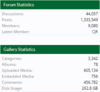
We now have 1,333,000 posts with over 86,000 posts added in the past year.

There are currently just over 9,000 valid users who are able to post, up more than 900 from this time last year.

We have passed 600,000 images in the gallery, with more than 70,000 images uploaded in the past 12 months.

upload_2023-10-19_22-48-46.png

If I get a chance, I'll try and post some statistics over the next few days.
 

Attachments

  • upload_2023-10-19_22-48-46.png
    upload_2023-10-19_22-48-46.png
    20.2 KB · Views: 130
Happy 20th Birthday ZooChat!

In the past 20 years:

The world’s first Przewalski’s horse was cloned in North America.

Europe farewelled their last Amazon river dolphin.

Sea World have ceased breeding Orca.

Steve Irwin passed away.

After the initial success of two Giant panda cubs born at the San Diego Zoo, the North American region has welcomed a further 15 surviving cubs; with San Diego Zoo no longer holding the species and the National Zoo returning their pandas to China this year.

Australasia welcomed it’s first elephant calf and it’s first second generation elephant calf; and are now moving towards phasing elephants out of city zoos in favour of multigenerational herds held at open range zoos.

Australasia bred their first Komodo dragons and Galapagos giant tortoise.
 
Today marks the 20th anniversary of the launch of ZooChat.

We now have 1,333,000 posts with over 86,000 posts added in the past year.

There are currently just over 9,000 valid users who are able to post, up more than 900 from this time last year.

We have passed 600,000 images in the gallery, with more than 70,000 images uploaded in the past 12 months.

View attachment 663766

If I get a chance, I'll try and post some statistics over the next few days.
Yes please you should definitely post the statistics soon! You still haven't posted the statistics for last year lol! :)
 
Yes please you should definitely post the statistics soon! You still haven't posted the statistics for last year lol! :)

As much as I'd like to, every day I spend posting statistics is another day longer it will take to get the site upgraded to the new forum software.
 
Today marks the 20th anniversary of the launch of ZooChat.

We now have 1,333,000 posts with over 86,000 posts added in the past year.

There are currently just over 9,000 valid users who are able to post, up more than 900 from this time last year.

We have passed 600,000 images in the gallery, with more than 70,000 images uploaded in the past 12 months.

View attachment 663766

If I get a chance, I'll try and post some statistics over the next few days.
Great milestone. Recent arrival here but you certainly get a sense of the history. Thanks for all the hard work providing and running such a fun site!
 
Happy Birthday, Zoochat, I came upon this site when I was in sixth and Seventh Grade Middle School 11-12 Years old before I signed to be a member.
 
A look back on the last 20 years, building upon @Zoofan15
2003
ZooChat launches!

London Zoo opens 'Happy Families' for otters, tamarins, and meerkats. It also renovates the Woodland Walk, set to open the following year.

San Diego Zoo announces that their giant panda, Bai Yun, is pregnant with twins. She later gives birth to one...but not the other. At the Safari Park, three African Savannah Elephants arrive from Swaziland, now Eswatini, after being deemed surplus.

Snowflake, the white gorilla of Barcelona Zoo, passes on.

The Bristol Zoological Society establishes a colony of water voles in an area close to Bristol.

Bronx Zoo opens Tiger Mountain, costing $8.5 million.

Living Coasts in Newquay is opened.

Penguin and Puffin Coast opens at the St Louis Zoo.

Keiko, star of 'Free Willy', passes on.

2004
A giant squid is caught on camera in Japanese waters for the first ever time.

London Zoo opens its Komodo Dragon exhibit - by none other than David Attenborough. At Whipsnade, a new Chimpanzee exhibit opens.

Marwell opens its Amur Leopard enclosure, 'Leopard Heights'.

Hua Mei, a panda who lived at the San Diego Zoo before returning to China, gives birth to twins. At San Diego Zoo, the first-ever clones banteng goes on display.

Its first major development this century, Durrell Wildlife Park, as it was known, opens 'Jewels of the Forest'.

Bristol Zoo receives Little Penguins - the only ones in the UK.

The last Po'ouli, a species of Hawai'ian honeycreeper, passes on.

London Zoo breeds Panay Cloudrunners for the first time.

2005
Bristol Zoo breeds and successfully rears Aye-Aye for the first time.

At Mauritius, an outbreak of the Psittacine Beak and Feather Disease threatens to jeopardise the conservation projects concerning the Echo Parakeet; which at this time remained under close watch from zoologists.

"Me at the Zoo" is filmed at the San Diego Zoo - the first ever video uploaded to YouTube. That year the zoo's popular caracal, Kasten, recovers from a severe snake bite.

The EAZA holds a campaign for turtles and tortoises.

Marwell opens 'Roof of the World', which improved the quality of snow leopard facilities at the zoo, and also provided enclosures for red panda and takin.

A leopard, 'Rajah', arrives at Borth Animalarium.

Koalas arrive at Edinburgh Zoo - the only ones in the UK at time of arrival.

2006
The last white uakari in Europe passes on in Cologne Zoo.

After disagreements with contemporary staff, Knowles resigns from his position at Marwell as Honourary Director; leading Marwell into the Cretney Years. 2006 was a good year for Marwell, with some 500,000 people visiting the zoo - a greater number than ever before. A new exhibit based off the Central African rainforest also opened that year.

A polar bear cub, Knut, is born at Berlin Zoo. With his mother rejecting him and his twin dying a few days after birth, he becomes world famous.

Steve Irwin passes on after a fatal encounter with a stingray.

A survey of the Yangtze fails to find any evidence of remaining baiji - the species declared extinct by many authorities.

2007
The Encounter Village at Marwell is redeveloped for more exotic animals - Cretney's first major development. [By 2011 feeding is commonplace, the exhibit becoming unsuccessful...]

The first Californian Condor flies into the Anza-Borrego Desert.

Bald Eagles are removed from the endangered species list following years of conservation measures.

Chester Zoo opens a new Orangutan enclosure - Realm of the Red Ape.

Durrell Wildlife Park successfully breeds Asian painted frog. It would also conceptualise 'TopSpots', which vowed to focus Durrell's attention on restoring populations of island-dwelling animals, as well as animals of other ecoregions of threatened species importance.

2008
The last Giant Panda at Ueno Zoo passes on; the species absent from the zoo for the first time since 1972.

After difficulty to keep the zoo alive in the state it was, Vincennes Zoo closes to the public... for a short while.

The Przewalski's Horse is declared as no longer being extinct in the wild.

Crocodile Swamp opens at Paignton Zoo.

Sir Nils Olav III is knighted - the first penguin to ever have been.

Mole Hill Wildlife Park closes to the public.

A picture circulates on the internet of the carcass of the 'Monatuk Monster', which apparently washed up at Long Island.

2009
The economic crisis proves troublesome to zoos everywhere - The ZSL's plans for Biota! [their exclaimation not mine], which would be the UK's largest aquarium, are dashed - and the Bronx Zoo ends up closing exhibits, and sending off animals.

Elephant Odyssey opens at San Diego Zoo - to mixed reception.

Marwell holds its head high in midst of economic crisis - rebranding as Marwell Wildlife. That year sees the opening of the African Valley by none other than the High Comissioner of Kenya.

Although Biota is not to be, the ZSL doesn't lose total hope - they open Animal Adventure at London Zoo, and Rhinos of Nepal at Whipsnade.

St Louis Zoo celebrates its centennial!

Highland Wildlife Park receives its first polar bear - providing a glimmer of hope for a species considered 'done for' in UK captivity by many.

The first elephant calf is born in an Australian zoo.

The kakapo population reaches 100!

2010
After a period of poor foot-health, Gay, Paignton Zoo's resident Asiatic Elephant, is euthanised.

Sun bears and Amur Leopards arrive to Colchester Zoo.

The Horton Plains slender loris, believed extinct, is rediscovered in Sri Lanka by the ZSL.

The Yellow-spotted Bell Frog is also rediscovered.

Another Polar Bear arrives to Highland Wildlife Park. The same year, a wolf escapes from its enclosure.

The oldest known kakapo passes on at around 80 years of age.

Dawn Brancheau at SeaWorld Orlando is involved in a fatal attack with Tilikum, SeaWorld's largest orca. Much media attention is received.

2011
Following a successful fundraising campaign, Savannah Tracks, Marwell's new cheetah exhibit, opens to the public.

After 17 years, pandas return to the United Kingdom as a pair arrive at Edinburgh Zoo.

Godwanaland, Europe's largest tropical hall, opens at Leipzig Zoo.

London Zoo opens England's biggest penguin pool - a definite step up from what was.

Daily cheetah runs begin at San Diego Zoo Safari Park, where cheetahs chase a mechanical lure.

Anne the Elephant arrives to Longleat - the last circus elephant in the UK.

Paignton Zoo's African Savannah Elephant, Duchess, goes under a novel eye removal surgery - which resulted in her remaining eye experiencing better eyesight.

Knut drowns in his pool at Berlin Zoo.

2012
A beaver escapes at Borth Animalarium.... somehow.

Queen Elizabeth II visits Chester Zoo.

A man enters the tiger exhibit at the Bronx Zoo to prompt attack - but survives.

Richard Benyon is criticised for backing plans to destroy buzzard nests in favour of propogating pheasant populations.

A large number of saiga are found suddenly dead in Kazakhstan.

6 Javan Rhinoceros calves are caught on camera.

2013
Tiger Territory opens at London Zoo.

Bristol Zoo Gardens opens a sister-site closer to Gloucestershire - 'The Wild Place'.

'Blackfish' premieres - a film that caused a great shift in public perception towards not only SeaWorld but other marine parks like it.

A giant squid is caught on video in Japanese waters for the first ever time.

Koalas breed at Edinburgh Zoo for the first time. This is the first breeding of this species in the UK.

Similar to the Great Pacific Garbage Patch, the Great Lakes seem to have a Garbage Patch building up of their own.

The Coelacanth has its genome sequenced!

The Iberian Lynx is reported in Portugal.

2014

After intensive restructuring, Vincennes Zoo reopens to the public.

Two male penguins are seen to bond at London Zoo, to much intrigue. [though this had happened numerous times before]

Copenhagen Zoo receives much negative publicity after it culled its surplus giraffe, Marius.

An anaconda at West Midlands Safari Park gives birth to three young through parthogenesis!

The Orangutan Centre at Indianapolis Zoo opens - to heavily divisive reception.

Eastern Quolls arrive to Bristol Zoo's Twilight World.

2015
South Lakes Zoo announces forecoming closure in the year 2016.

After financial difficulties, the Rare Species Conservation Centre in Sandwich closes to the public.

Leipzig Zoo announces the arrival of bilbies scheduled for 2017.

London Zoo, after negative publicity received, terminates Zoo Lates parties. That year, they also open the first-ever walkthrough spider enclosure.

Tbilisi flooding causes disaster for the resident zoo - as the zoo's larger animals roam the streets at large shortly after.

The bat house at Marwell is ursurped to make way for the 'Wild Explorers' exhibit - spacious, but a bit lacking in substance.

Placebo rhinoceros horns are 3D-printed for the first time.

Cecil the Lion is found dead - to much anger on the internet.

An Annamite striped rabbit, one of the rarest species of rabbit, was handled temporarily for a rare photograph.

The last Northern White Rhino outside of native range is euthanised at the San Diego Zoo Safari Park.

Chester Zoo opens 'Islands' to the public.

2016
A Northern Brown Kiwi arrives at Paignton Zoo. Though whether visitors ever see it is another matter...

South Lakes Zoo announces that it is, in fact, not closing after all.

SeaWorld announces that they will no longer breed orcas. One orca, Takara, however, is already pregnant - and under grandfather's clause is allowed to give birth.

Sir Nils Olav III is promoted to Brigadier.

The Borth Animalarium is under new ownership of the Tweedy family.

At the Cincinnati Zoo, after a young boy enters his enclosure, Harambe is shot dead. The reception from much of the internet is overwhelmingly negative.

Kumbuka at London Zoo escapes - but is retrieved not long after. He is thought to have consumed some 5 litres of blackcurrent juice during his 'liberation'.

Marwell releases several Scimitar-horned Oryx into Abu Dhabi.

The St. Louis Zoo opens an exhibit for Tasmanian Devils.

2017
The turmoil faced by Cincinnati online appears short-lived with the birth of Fiona the hippo - who is instantly ushered in with joy.

Rosa King, at Hamerton Zoo, is involved in a fatal attack with one of the zoo's tigers.

Wingham Wildlife Park takes ownership of the former site of the RSCC - converting it into Sandwich Wildlife Park.

Bilbies do not, in fact, arrive at Leipzig.

A new elephant house opens at Whipsnade Zoo by none other than Elizabeth II.

Durrell Wildlife Park announces that they are renaming themselves, once again, as Jersey Zoo. The owning organisation, however, still bears Durrell's name.

The coup de grâce arrives to South Lakes Zoo as a harrowing report documents various animal deaths that had taken place at the zoo, many of shocking nature. David Gill loses his license to operate the zoo, with it being given to a new management team - which showed a 'marked improvement' in animal welfare afterwards.

The situation at Borth Animalarium starts to sour, with lynx escapes occurring. The animal is shot dead as per a decision approved by the local council - but of grave disapproval by the public.

Some news websites report that Edinburgh's female panda is to give birth 'tomorrow' - something which never occurs.

A Humboldt penguin at Tobu Zoo is seen showing affection to a promotional anime cutout in its enclosure. Having gained much internet traction, when the penguin died later that year, a signficant memorial was erected in 'Grape-kun''s honour.

The last orca to be born at SeaWorld, Kyara, is born to Takara.

'Africa Rocks' opens at San Diego Zoo to largely positive reception.

A sudden fire at London Zoo destroys the Animal Adventure - leading to the deaths of four meerkats and both aardvarks held at the zoo. Initial reports tell of the immediate death of one aardvark - the second dead not long after.

Bristol Zoo breeds quolls for the first time!

2018
A cheetah at the St. Louis Zoo gives birth to eight cubs!

The last northern white rhino male dies; leaving only two females left.

Marwell Zoo opens a new tropical house - which in addition to being larger, uses biofuel as its main source of electricity.

A fire largely destroys Chester's 'Monsoon Forest' - the larger of two Tropical Houses at the zoo. A disastrous turn to an otherwise very good year at the zoo - with almost 1.8 million people visiting.

Colchester Zoo's Chimpanzee 'Billy-Joe' passes on - he was at the zoo since the 1970s.

2019

After surveys failed to find any remaining birds, the Po'ouli is finally declared as extinct. Genetic material, however, still survives at a facility operated by the San Diego Zoo Wildlife Alliance.

At Paignton Zoo, Duchess is euthanised - the last elephant at the Zoo.

Hamerton Zoo is at the peak of 'Oz-mania' - with numerous introductions of Australian animals previously unseen in the United Kingdom, including Tiger Quolls and Wombats.

London Zoo closes its Aquarium - which was the first public aquarium in the world.

After 23 years, the San Diego Zoo repatriates its Giant Pandas to China. By this time about 15 panda cubs had been born in the USA.

Koalas are considered 'functionally extinct'.

After more than 50 years, platypi return to the USA - arriving at the San Diego Zoo Safari Park.

2020
Living Coasts, unable to survive financial losses, closes to the public after 17 years.

Bristol Zoo Gardens, in a similar situation, announces its closure. But in a somewhat less dire situation; as it promises to establish a new zoo on its sister site in 2024.

The Smithsonian National Zoo announces that their Common Opossum was in fact a Virginian Opossum of curious morphology.

Baby, the last boto outside of native range, passes on at age 45.

After a shocking report, Borth Animalarium loses its Category I license, and the entire zoo is shut down until the remaining animals are rehomed.

During lockdown worldwide, many zoos everywhere take to the internet to show their animal collections whilst restrictions on travel remain in place.

In a few areas during lockdown, into '21, some animal populations seemed to thrive without human interference.

Many zoos financially suffered during lockdown, with the compensation given by the government being panned as insufficient.

2021
Much like the RSCC before it [and Monkey Rainforest before that], the Sandwich Wildlife Park fails to eke through a second national lockdown - and announces closure.

A band of teenagers breaks into Marwell Zoo around midnight and record video footage of their mindless attacks on several of the zoo's animals - heavily panned not only by the public but also by the media. As of time of writing, they have avoided jail sentence.

With the end of lockdown in many places, life starts to return to normal for many zoological collections.

A chimpanzee is vaccinated against Covid-19 at the St. Louis Zoo.

Perhaps the pinnacle of many divisive decisions made by Damian Aspinall - as he expresses intent to release the herd of elephants at Howletts to Africa.

Mosquitos are recorded on Kaui - and lead to grave concerns amongst ornithologists that, if not for captive breeding, it will lead to the swift demise of many of the island's endemic species.

Concern manifests that the effectiveness of the Endangered Species Act could be undermined by some politicians.

Marwell's last cheetah and Amur leopard both pass on that year. Their exhibits are repurposed for serval, and for clouded leopard the following year respectively.

2022
The first Komodo Dragons to be born in Australia [since their dispersion about 50,000 years ago] hatch at the Australian Reptile Park.

'Kurt' is born to a quarterhorse surrogate - the first Przewalski's Horse to be cloned.

Bristol Zoo Gardens in Clifton closes to the public in September after 186 years of operation.

Rosamond Gifford Zoo sees their female elephant, Mali, give birth to twin calves!

The kakapo population reaches about 250.

President Biden signs the 'Big Cat Safety Act' - prohibiting public interactions with big cats, and the ownership of big cats as pets.

A bittersweet year for Hamerton - the remaining tiger quolls and aardwolves pass on at the zoo. Lesser spot-nosed guneons arrive from the USA, but as of writing only 2 females remain.

2023
The end of the 'Cretney Years' - as James Cretney resigns as Chief Executive of Marwell, his legacy being one without much fanfare. At time of writing, however, he remains in post for the time being. His last year at Marwell saw what Marwell hadn't for a good while - with former enclosures repurposed for returning species. 2023 was perhaps, then, Marwell's best year in a while - and it was that year that it became carbon-netural!

Frustration is drummed up at Jersey - with reports that the zoo had been left in neglect. Durrell, however, denies this - and general reception of the zoo remains high as ever.

The Dolphin Company, the owners of the Miami Seaquarium, announce Lolita's translocation to a sea-pen close to the Salish Sea. Lolita then dies later that year, to much outcry from animal activists advocative of her release, and also those of the Lumni tribe who looked forward to her release as well.

Quokkas arrive to Wilhelma Zoo in Stuttgart, ending the 27-year absence of the species on the continent.

Kakapos are reintroduced to the mainland for the first time!

Edinburgh announces plans for a grand send-off for their pandas, as does The Smithsonian National Zoo - as both are preparing to repatriate their pandas this year. At Edinburgh, Sir Nils Olav III is promoted once more - for he is now 'the very model of a modern major general!'

And so that then I think is the bulk of it... though I do imagine there were some things which I missed! And perhaps I spent longer than I should have putting it together..
 
Last edited:
A look back on the last 20 years, building upon @Zoofan15
2003
ZooChat launches!

London Zoo opens 'Happy Families' for otters, tamarins, and meerkats. It also renovates the Woodland Walk, set to open the following year.

San Diego Zoo announces that their giant panda, Bai Yun, is pregnant with twins. She later gives birth to one...but not the other. At the Safari Park, three African Savannah Elephants arrive from Swaziland, now Eswatini, after being deemed surplus.

Snowflake, the white gorilla of Barcelona Zoo, passes on.

The Bristol Zoological Society establishes a colony of water voles in an area close to Bristol.

Bronx Zoo opens Tiger Mountain, costing $8.5 million.

Living Coasts in Newquay is opened.

Penguin and Puffin Coast opens at the St Louis Zoo.

Keiko, star of 'Free Willy', passes on.

2004
A giant squid is caught on camera in Japanese waters for the first ever time.

London Zoo opens its Komodo Dragon exhibit - by none other than David Attenborough. At Whipsnade, a new Chimpanzee exhibit opens.

Marwell opens its Amur Leopard enclosure, 'Leopard Heights'.

Hua Mei, a panda who lived at the San Diego Zoo before returning to China, gives birth to twins. At San Diego Zoo, the first-ever clones banteng goes on display.

Its first major development this century, Durrell Wildlife Park, as it was known, opens 'Jewels of the Forest'.

Bristol Zoo receives Little Penguins - the only ones in the UK.

The last Po'ouli, a species of Hawai'ian honeycreeper, passes on.

London Zoo breeds Panay Cloudrunners for the first time.

2005
Bristol Zoo breeds and successfully rears Aye-Aye for the first time.

At Mauritius, an outbreak of the Psittacine Beak and Feather Disease threatens to jeopardise the conservation projects concerning the Echo Parakeet; which at this time remained under close watch from zoologists.

"Me at the Zoo" is filmed at the San Diego Zoo - the first ever video uploaded to YouTube. That year the zoo's popular caracal, Kasten, recovers from a severe snake bite.

The EAZA holds a campaign for turtles and tortoises.

Marwell opens 'Roof of the World', which improved the quality of snow leopard facilities at the zoo, and also provided enclosures for red panda and takin.

A leopard, 'Rajah', arrives at Borth Animalarium.

Koalas arrive at Edinburgh Zoo - the only ones in the UK at time of arrival.

2006
The last white uakari in Europe passes on in Cologne Zoo.

After disagreements with contemporary staff, Knowles resigns from his position at Marwell as Honourary Director; leading Marwell into the Cretney Years. 2006 was a good year for Marwell, with some 500,000 people visiting the zoo - a greater number than ever before. A new exhibit based off the Central African rainforest also opened that year.

A polar bear cub, Knut, is born at Berlin Zoo. With his mother rejecting him and his twin dying a few days after birth, he becomes world famous.

Steve Irwin passes on after a fatal encounter with a stingray.

A survey of the Yangtze fails to find any evidence of remaining baiji - the species declared extinct by many authorities.

2007
The Encounter Village at Marwell is redeveloped for more exotic animals - Cretney's first major development. [By 2011 feeding is commonplace, the exhibit becoming unsuccessful...]

The first Californian Condor flies into the Anza-Borrego Desert.

Bald Eagles are removed from the endangered species list following years of conservation measures.

Chester Zoo opens a new Orangutan enclosure - Realm of the Red Ape.

Durrell Wildlife Park successfully breeds Asian painted frog. It would also conceptualise 'TopSpots', which vowed to focus Durrell's attention on restoring populations of island-dwelling animals, as well as animals of other ecoregions of threatened species importance.

2008
The last Giant Panda at Ueno Zoo passes on; the species absent from the zoo for the first time since 1972.

After difficulty to keep the zoo alive in the state it was, Vincennes Zoo closes to the public... for a short while.

The Przewalski's Horse is declared as no longer being extinct in the wild.

Crocodile Swamp opens at Paignton Zoo.

Sir Nils Olav III is knighted - the first penguin to ever have been.

Mole Hill Wildlife Park closes to the public.

A picture circulates on the internet of the carcass of the 'Monatuk Monster', which apparently washed up at Long Island.

2009
The economic crisis proves troublesome to zoos everywhere - The ZSL's plans for Biota! [their exclaimation not mine], which would be the UK's largest aquarium, are dashed - and the Bronx Zoo ends up closing exhibits, and sending off animals.

Elephant Odyssey opens at San Diego Zoo - to mixed reception.

Marwell holds its head high in midst of economic crisis - rebranding as Marwell Wildlife. That year sees the opening of the African Valley by none other than the High Comissioner of Kenya.

Although Biota is not to be, the ZSL doesn't lose total hope - they open Animal Adventure at London Zoo, and Rhinos of Nepal at Whipsnade.

St Louis Zoo celebrates its centennial!

Highland Wildlife Park receives its first polar bear - providing a glimmer of hope for a species considered 'done for' in UK captivity by many.

The first elephant calf is born in an Australian zoo.

The kakapo population reaches 100!

2010
After a period of poor foot-health, Gay, Paignton Zoo's resident Asiatic Elephant, is euthanised.

Sun bears and Amur Leopards arrive to Colchester Zoo.

The Horton Plains slender loris, believed extinct, is rediscovered in Sri Lanka by the ZSL.

The Yellow-spotted Bell Frog is also rediscovered.

Another Polar Bear arrives to Highland Wildlife Park. The same year, a wolf escapes from its enclosure.

The oldest known kakapo passes on at around 80 years of age.

Dawn Brancheau at SeaWorld Orlando is involved in a fatal attack with Tilikum, SeaWorld's largest orca. Much media attention is received.

2011
Following a successful fundraising campaign, Savannah Tracks, Marwell's new cheetah exhibit, opens to the public.

After 17 years, pandas return to the United Kingdom as a pair arrive at Edinburgh Zoo.

Godwanaland, Europe's largest tropical hall, opens at Leipzig Zoo.

London Zoo opens England's biggest penguin pool - a definite step up from what was.

Daily cheetah runs begin at San Diego Zoo Safari Park, where cheetahs chase a mechanical lure.

Anne the Elephant arrives to Longleat - the last circus elephant in the UK.

Paignton Zoo's African Savannah Elephant, Duchess, goes under a novel eye removal surgery - which resulted in her remaining eye experiencing better eyesight.

Knut drowns in his pool at Berlin Zoo.

2012
A beaver escapes at Borth Animalarium.... somehow.

Queen Elizabeth II visits Chester Zoo.

A man enters the tiger exhibit at the Bronx Zoo to prompt attack - but survives.

Richard Benyon is criticised for backing plans to destroy buzzard nests in favour of propogating pheasant populations.

A large number of saiga are found suddenly dead in Kazakhstan.

6 Javan Rhinoceros calves are caught on camera.

2013
Tiger Territory opens at London Zoo.

Bristol Zoo Gardens opens a sister-site closer to Gloucestershire - 'The Wild Place'.

'Blackfish' premieres - a film that caused a great shift in public perception towards not only SeaWorld but other marine parks like it.

A giant squid is caught on video in Japanese waters for the first ever time.

Koalas breed at Edinburgh Zoo for the first time. This is the first breeding of this species in the UK.

Similar to the Great Pacific Garbage Patch, the Great Lakes seem to have a Garbage Patch building up of their own.

The Coelacanth has its genome sequenced!

The Iberian Lynx is reported in Portugal.

2014

After intensive restructuring, Vincennes Zoo reopens to the public.

Two male penguins are seen to bond at London Zoo, to much intrigue. [though this had happened numerous times before]

Copenhagen Zoo receives much negative publicity after it culled its surplus giraffe, Marius.

An anaconda at West Midlands Safari Park gives birth to three young through parthogenesis!

The Orangutan Centre at Indianapolis Zoo opens - to heavily divisive reception.

Eastern Quolls arrive to Bristol Zoo's Twilight World.

2015
South Lakes Zoo announces forecoming closure in the year 2016.

After financial difficulties, the Rare Species Conservation Centre in Sandwich closes to the public.

Leipzig Zoo announces the arrival of bilbies scheduled for 2017.

London Zoo, after negative publicity received, terminates Zoo Lates parties. That year, they also open the first-ever walkthrough spider enclosure.

Tbilisi flooding causes disaster for the resident zoo - as the zoo's larger animals roam the streets at large shortly after.

The bat house at Marwell is ursurped to make way for the 'Wild Explorers' exhibit - spacious, but a bit lacking in substance.

Placebo rhinoceros horns are 3D-printed for the first time.

Cecil the Lion is found dead - to much anger on the internet.

An Annamite striped rabbit, one of the rarest species of rabbit, was handled temporarily for a rare photograph.

The last Northern White Rhino outside of native range is euthanised at the San Diego Zoo Safari Park.

Chester Zoo opens 'Islands' to the public.

2016
A Northern Brown Kiwi arrives at Paignton Zoo. Though whether visitors ever see it is another matter...

South Lakes Zoo announces that it is, in fact, not closing after all.

SeaWorld announces that they will no longer breed orcas. One orca, Takara, however, is already pregnant - and under grandfather's clause is allowed to give birth.

Sir Nils Olav III is promoted to Brigadier.

The Borth Animalarium is under new ownership of the Tweedy family.

At the Cincinnati Zoo, after a young boy enters his enclosure, Harambe is shot dead. The reception from much of the internet is overwhelmingly negative.

Kumbuka at London Zoo escapes - but is retrieved not long after. He is thought to have consumed some 5 litres of blackcurrent juice during his 'liberation'.

Marwell releases several Scimitar-horned Oryx into Abu Dhabi.

The St. Louis Zoo opens an exhibit for Tasmanian Devils.

2017
The turmoil faced by Cincinnati online appears short-lived with the birth of Fiona the hippo - who is instantly ushered in with joy.

Rosa King, at Hamerton Zoo, is involved in a fatal attack with one of the zoo's tigers.

Wingham Wildlife Park takes ownership of the former site of the RSCC - converting it into Sandwich Wildlife Park.

Bilbies do not, in fact, arrive at Leipzig.

A new elephant house opens at Whipsnade Zoo by none other than Elizabeth II.

Durrell Wildlife Park announces that they are renaming themselves, once again, as Jersey Zoo. The owning organisation, however, still bears Durrell's name.

The coup de grâce arrives to South Lakes Zoo as a harrowing report documents various animal deaths that had taken place at the zoo, many of shocking nature. David Gill loses his license to operate the zoo, with it being given to a new management team - which showed a 'marked improvement' in animal welfare afterwards.

The situation at Borth Animalarium starts to sour, with lynx escapes occurring. The animal is shot dead as per a decision approved by the local council - but of grave disapproval by the public.

Some news websites report that Edinburgh's female panda is to give birth 'tomorrow' - something which never occurs.

A Humboldt penguin at Tobu Zoo is seen showing affection to a promotional anime cutout in its enclosure. Having gained much internet traction, when the penguin died later that year, a signficant memorial was erected in 'Grape-kun''s honour.

The last orca to be born at SeaWorld, Kyara, is born to Takara.

'Africa Rocks' opens at San Diego Zoo to largely positive reception.

A sudden fire at London Zoo destroys the Animal Adventure - leading to the deaths of four meerkats and both aardvarks held at the zoo. Initial reports tell of the immediate death of one aardvark - the second dead not long after.

Bristol Zoo breeds quolls for the first time!

2018
A cheetah at the St. Louis Zoo gives birth to eight cubs!

The last northern white rhino male dies; leaving only two females left.

Marwell Zoo opens a new tropical house - which in addition to being larger, uses biofuel as its main source of electricity.

A fire largely destroys Chester's 'Monsoon Forest' - the larger of two Tropical Houses at the zoo. A disastrous turn to an otherwise very good year at the zoo - with almost 1.8 million people visiting.

Colchester Zoo's Chimpanzee 'Billy-Joe' passes on - he was at the zoo since the 1970s.

2019

After surveys failed to find any remaining birds, the Po'ouli is finally declared as extinct. Genetic material, however, still survives at a facility operated by the San Diego Zoo Wildlife Alliance.

At Paignton Zoo, Duchess is euthanised - the last elephant at the Zoo.

Hamerton Zoo is at the peak of 'Oz-mania' - with numerous introductions of Australian animals previously unseen in the United Kingdom, including Tiger Quolls and Wombats.

London Zoo closes its Aquarium - which was the first public aquarium in the world.

After 23 years, the San Diego Zoo repatriates its Giant Pandas to China. By this time about 15 panda cubs had been born in the USA.

Koalas are considered 'functionally extinct'.

After more than 50 years, platypi return to the USA - arriving at the San Diego Zoo Safari Park.

2020
Living Coasts, unable to survive financial losses, closes to the public after 17 years.

Bristol Zoo Gardens, in a similar situation, announces its closure. But in a somewhat less dire situation; as it promises to establish a new zoo on its sister site in 2024.

The Smithsonian National Zoo announces that their Common Opossum was in fact a Virginian Opossum of curious morphology.

Baby, the last boto outside of native range, passes on at age 45.

After a shocking report, Borth Animalarium loses its Category I license, and the entire zoo is shut down until the remaining animals are rehomed.

During lockdown worldwide, many zoos everywhere take to the internet to show their animal collections whilst restrictions on travel remain in place.

In a few areas during lockdown, into '21, some animal populations seemed to thrive without human interference.

Many zoos financially suffered during lockdown, with the compensation given by the government being panned as insufficient.

2021
Much like the RSCC before it [and Monkey Rainforest before that], the Sandwich Wildlife Park fails to eke through a second national lockdown - and announces closure.

A band of teenagers breaks into Marwell Zoo around midnight and record video footage of their mindless attacks on several of the zoo's animals - heavily panned not only by the public but also by the media. As of time of writing, they have avoided jail sentence.

With the end of lockdown in many places, life starts to return to normal for many zoological collections.

A chimpanzee is vaccinated against Covid-19 at the St. Louis Zoo.

Perhaps the pinnacle of many divisive decisions made by Damian Aspinall - as he expresses intent to release the herd of elephants at Howletts to Africa.

Mosquitos are recorded on Kaui - and lead to grave concerns amongst ornithologists that, if not for captive breeding, it will lead to the swift demise of many of the island's endemic species.

Concern manifests that the effectiveness of the Endangered Species Act could be undermined by some politicians.

Marwell's last cheetah and Amur leopard both pass on that year. Their exhibits are repurposed for serval, and for clouded leopard the following year respectively.

2022
The first Komodo Dragons to be born in Australia [since their dispersion about 50,000 years ago] hatch at the Australian Reptile Park.

'Kurt' is born to a quarterhorse surrogate - the first Przewalski's Horse to be cloned.

Bristol Zoo Gardens in Clifton closes to the public in September after 186 years of operation.

Rosamond Gifford Zoo sees their female elephant, Mali, give birth to twin calves!

The kakapo population reaches about 250.

President Biden signs the 'Big Cat Safety Act' - prohibiting public interactions with big cats, and the ownership of big cats as pets.

A bittersweet year for Hamerton - the remaining tiger quolls and aardwolves pass on at the zoo. Lesser spot-nosed guneons arrive from the USA, but as of writing only 2 females remain.

2023
The end of the 'Cretney Years' - as James Cretney resigns as Chief Executive of Marwell, his legacy being one without much fanfare. At time of writing, however, he remains in post for the time being. His last year at Marwell saw what Marwell hadn't for a good while - with former enclosures repurposed for returning species. 2023 was perhaps, then, Marwell's best year in a while - and it was that year that it became carbon-netural!

Frustration is drummed up at Jersey - with reports that the zoo had been left in neglect. Durrell, however, denies this - and general reception of the zoo remains high as ever.

The Dolphin Company, the owners of the Miami Seaquarium, announce Lolita's translocation to a sea-pen close to the Salish Sea. Lolita then dies later that year, to much outcry from animal activists advocative of her release, and also those of the Lumni tribe who looked forward to her release as well.

Quokkas arrive to Wilhelma Zoo in Stuttgart, ending the 27-year absence of the species on the continent.

Kakapos are reintroduced to the mainland for the first time!

Edinburgh announces plans for a grand send-off for their pandas, as does The Smithsonian National Zoo - as both are preparing to repatriate their pandas this year. At Edinburgh, Sir Nils Olav III is promoted once more - for he is now 'the very model of a modern major general!'

And so that then I think is the bulk of it... though I do imagine there were some things which I missed! And perhaps I spent longer than I should have putting it together..
This is legitimately one of my favorite ZooChat posts of all time - a fitting date for it I suppose. Thanks for this awesome timeline! I can't imagine a better post summarizing these two decades, and I can't wait to see what other events we'll have in 20 more years.
 
A look back on the last 20 years, building upon @Zoofan15
2003
ZooChat launches!

London Zoo opens 'Happy Families' for otters, tamarins, and meerkats. It also renovates the Woodland Walk, set to open the following year.

San Diego Zoo announces that their giant panda, Bai Yun, is pregnant with twins. She later gives birth to one...but not the other. At the Safari Park, three African Savannah Elephants arrive from Swaziland, now Eswatini, after being deemed surplus.

Snowflake, the white gorilla of Barcelona Zoo, passes on.

The Bristol Zoological Society establishes a colony of water voles in an area close to Bristol.

Bronx Zoo opens Tiger Mountain, costing $8.5 million.

Living Coasts in Newquay is opened.

Penguin and Puffin Coast opens at the St Louis Zoo.

Keiko, star of 'Free Willy', passes on.

2004
A giant squid is caught on camera in Japanese waters for the first ever time.

London Zoo opens its Komodo Dragon exhibit - by none other than David Attenborough. At Whipsnade, a new Chimpanzee exhibit opens.

Marwell opens its Amur Leopard enclosure, 'Leopard Heights'.

Hua Mei, a panda who lived at the San Diego Zoo before returning to China, gives birth to twins. At San Diego Zoo, the first-ever clones banteng goes on display.

Its first major development this century, Durrell Wildlife Park, as it was known, opens 'Jewels of the Forest'.

Bristol Zoo receives Little Penguins - the only ones in the UK.

The last Po'ouli, a species of Hawai'ian honeycreeper, passes on.

London Zoo breeds Panay Cloudrunners for the first time.

2005
Bristol Zoo breeds and successfully rears Aye-Aye for the first time.

At Mauritius, an outbreak of the Psittacine Beak and Feather Disease threatens to jeopardise the conservation projects concerning the Echo Parakeet; which at this time remained under close watch from zoologists.

"Me at the Zoo" is filmed at the San Diego Zoo - the first ever video uploaded to YouTube. That year the zoo's popular caracal, Kasten, recovers from a severe snake bite.

The EAZA holds a campaign for turtles and tortoises.

Marwell opens 'Roof of the World', which improved the quality of snow leopard facilities at the zoo, and also provided enclosures for red panda and takin.

A leopard, 'Rajah', arrives at Borth Animalarium.

Koalas arrive at Edinburgh Zoo - the only ones in the UK at time of arrival.

2006
The last white uakari in Europe passes on in Cologne Zoo.

After disagreements with contemporary staff, Knowles resigns from his position at Marwell as Honourary Director; leading Marwell into the Cretney Years. 2006 was a good year for Marwell, with some 500,000 people visiting the zoo - a greater number than ever before. A new exhibit based off the Central African rainforest also opened that year.

A polar bear cub, Knut, is born at Berlin Zoo. With his mother rejecting him and his twin dying a few days after birth, he becomes world famous.

Steve Irwin passes on after a fatal encounter with a stingray.

A survey of the Yangtze fails to find any evidence of remaining baiji - the species declared extinct by many authorities.

2007
The Encounter Village at Marwell is redeveloped for more exotic animals - Cretney's first major development. [By 2011 feeding is commonplace, the exhibit becoming unsuccessful...]

The first Californian Condor flies into the Anza-Borrego Desert.

Bald Eagles are removed from the endangered species list following years of conservation measures.

Chester Zoo opens a new Orangutan enclosure - Realm of the Red Ape.

Durrell Wildlife Park successfully breeds Asian painted frog. It would also conceptualise 'TopSpots', which vowed to focus Durrell's attention on restoring populations of island-dwelling animals, as well as animals of other ecoregions of threatened species importance.

2008
The last Giant Panda at Ueno Zoo passes on; the species absent from the zoo for the first time since 1972.

After difficulty to keep the zoo alive in the state it was, Vincennes Zoo closes to the public... for a short while.

The Przewalski's Horse is declared as no longer being extinct in the wild.

Crocodile Swamp opens at Paignton Zoo.

Sir Nils Olav III is knighted - the first penguin to ever have been.

Mole Hill Wildlife Park closes to the public.

A picture circulates on the internet of the carcass of the 'Monatuk Monster', which apparently washed up at Long Island.

2009
The economic crisis proves troublesome to zoos everywhere - The ZSL's plans for Biota! [their exclaimation not mine], which would be the UK's largest aquarium, are dashed - and the Bronx Zoo ends up closing exhibits, and sending off animals.

Elephant Odyssey opens at San Diego Zoo - to mixed reception.

Marwell holds its head high in midst of economic crisis - rebranding as Marwell Wildlife. That year sees the opening of the African Valley by none other than the High Comissioner of Kenya.

Although Biota is not to be, the ZSL doesn't lose total hope - they open Animal Adventure at London Zoo, and Rhinos of Nepal at Whipsnade.

St Louis Zoo celebrates its centennial!

Highland Wildlife Park receives its first polar bear - providing a glimmer of hope for a species considered 'done for' in UK captivity by many.

The first elephant calf is born in an Australian zoo.

The kakapo population reaches 100!

2010
After a period of poor foot-health, Gay, Paignton Zoo's resident Asiatic Elephant, is euthanised.

Sun bears and Amur Leopards arrive to Colchester Zoo.

The Horton Plains slender loris, believed extinct, is rediscovered in Sri Lanka by the ZSL.

The Yellow-spotted Bell Frog is also rediscovered.

Another Polar Bear arrives to Highland Wildlife Park. The same year, a wolf escapes from its enclosure.

The oldest known kakapo passes on at around 80 years of age.

Dawn Brancheau at SeaWorld Orlando is involved in a fatal attack with Tilikum, SeaWorld's largest orca. Much media attention is received.

2011
Following a successful fundraising campaign, Savannah Tracks, Marwell's new cheetah exhibit, opens to the public.

After 17 years, pandas return to the United Kingdom as a pair arrive at Edinburgh Zoo.

Godwanaland, Europe's largest tropical hall, opens at Leipzig Zoo.

London Zoo opens England's biggest penguin pool - a definite step up from what was.

Daily cheetah runs begin at San Diego Zoo Safari Park, where cheetahs chase a mechanical lure.

Anne the Elephant arrives to Longleat - the last circus elephant in the UK.

Paignton Zoo's African Savannah Elephant, Duchess, goes under a novel eye removal surgery - which resulted in her remaining eye experiencing better eyesight.

Knut drowns in his pool at Berlin Zoo.

2012
A beaver escapes at Borth Animalarium.... somehow.

Queen Elizabeth II visits Chester Zoo.

A man enters the tiger exhibit at the Bronx Zoo to prompt attack - but survives.

Richard Benyon is criticised for backing plans to destroy buzzard nests in favour of propogating pheasant populations.

A large number of saiga are found suddenly dead in Kazakhstan.

6 Javan Rhinoceros calves are caught on camera.

2013
Tiger Territory opens at London Zoo.

Bristol Zoo Gardens opens a sister-site closer to Gloucestershire - 'The Wild Place'.

'Blackfish' premieres - a film that caused a great shift in public perception towards not only SeaWorld but other marine parks like it.

A giant squid is caught on video in Japanese waters for the first ever time.

Koalas breed at Edinburgh Zoo for the first time. This is the first breeding of this species in the UK.

Similar to the Great Pacific Garbage Patch, the Great Lakes seem to have a Garbage Patch building up of their own.

The Coelacanth has its genome sequenced!

The Iberian Lynx is reported in Portugal.

2014

After intensive restructuring, Vincennes Zoo reopens to the public.

Two male penguins are seen to bond at London Zoo, to much intrigue. [though this had happened numerous times before]

Copenhagen Zoo receives much negative publicity after it culled its surplus giraffe, Marius.

An anaconda at West Midlands Safari Park gives birth to three young through parthogenesis!

The Orangutan Centre at Indianapolis Zoo opens - to heavily divisive reception.

Eastern Quolls arrive to Bristol Zoo's Twilight World.

2015
South Lakes Zoo announces forecoming closure in the year 2016.

After financial difficulties, the Rare Species Conservation Centre in Sandwich closes to the public.

Leipzig Zoo announces the arrival of bilbies scheduled for 2017.

London Zoo, after negative publicity received, terminates Zoo Lates parties. That year, they also open the first-ever walkthrough spider enclosure.

Tbilisi flooding causes disaster for the resident zoo - as the zoo's larger animals roam the streets at large shortly after.

The bat house at Marwell is ursurped to make way for the 'Wild Explorers' exhibit - spacious, but a bit lacking in substance.

Placebo rhinoceros horns are 3D-printed for the first time.

Cecil the Lion is found dead - to much anger on the internet.

An Annamite striped rabbit, one of the rarest species of rabbit, was handled temporarily for a rare photograph.

The last Northern White Rhino outside of native range is euthanised at the San Diego Zoo Safari Park.

Chester Zoo opens 'Islands' to the public.

2016
A Northern Brown Kiwi arrives at Paignton Zoo. Though whether visitors ever see it is another matter...

South Lakes Zoo announces that it is, in fact, not closing after all.

SeaWorld announces that they will no longer breed orcas. One orca, Takara, however, is already pregnant - and under grandfather's clause is allowed to give birth.

Sir Nils Olav III is promoted to Brigadier.

The Borth Animalarium is under new ownership of the Tweedy family.

At the Cincinnati Zoo, after a young boy enters his enclosure, Harambe is shot dead. The reception from much of the internet is overwhelmingly negative.

Kumbuka at London Zoo escapes - but is retrieved not long after. He is thought to have consumed some 5 litres of blackcurrent juice during his 'liberation'.

Marwell releases several Scimitar-horned Oryx into Abu Dhabi.

The St. Louis Zoo opens an exhibit for Tasmanian Devils.

2017
The turmoil faced by Cincinnati online appears short-lived with the birth of Fiona the hippo - who is instantly ushered in with joy.

Rosa King, at Hamerton Zoo, is involved in a fatal attack with one of the zoo's tigers.

Wingham Wildlife Park takes ownership of the former site of the RSCC - converting it into Sandwich Wildlife Park.

Bilbies do not, in fact, arrive at Leipzig.

A new elephant house opens at Whipsnade Zoo by none other than Elizabeth II.

Durrell Wildlife Park announces that they are renaming themselves, once again, as Jersey Zoo. The owning organisation, however, still bears Durrell's name.

The coup de grâce arrives to South Lakes Zoo as a harrowing report documents various animal deaths that had taken place at the zoo, many of shocking nature. David Gill loses his license to operate the zoo, with it being given to a new management team - which showed a 'marked improvement' in animal welfare afterwards.

The situation at Borth Animalarium starts to sour, with lynx escapes occurring. The animal is shot dead as per a decision approved by the local council - but of grave disapproval by the public.

Some news websites report that Edinburgh's female panda is to give birth 'tomorrow' - something which never occurs.

A Humboldt penguin at Tobu Zoo is seen showing affection to a promotional anime cutout in its enclosure. Having gained much internet traction, when the penguin died later that year, a signficant memorial was erected in 'Grape-kun''s honour.

The last orca to be born at SeaWorld, Kyara, is born to Takara.

'Africa Rocks' opens at San Diego Zoo to largely positive reception.

A sudden fire at London Zoo destroys the Animal Adventure - leading to the deaths of four meerkats and both aardvarks held at the zoo. Initial reports tell of the immediate death of one aardvark - the second dead not long after.

Bristol Zoo breeds quolls for the first time!

2018
A cheetah at the St. Louis Zoo gives birth to eight cubs!

The last northern white rhino male dies; leaving only two females left.

Marwell Zoo opens a new tropical house - which in addition to being larger, uses biofuel as its main source of electricity.

A fire largely destroys Chester's 'Monsoon Forest' - the larger of two Tropical Houses at the zoo. A disastrous turn to an otherwise very good year at the zoo - with almost 1.8 million people visiting.

Colchester Zoo's Chimpanzee 'Billy-Joe' passes on - he was at the zoo since the 1970s.

2019

After surveys failed to find any remaining birds, the Po'ouli is finally declared as extinct. Genetic material, however, still survives at a facility operated by the San Diego Zoo Wildlife Alliance.

At Paignton Zoo, Duchess is euthanised - the last elephant at the Zoo.

Hamerton Zoo is at the peak of 'Oz-mania' - with numerous introductions of Australian animals previously unseen in the United Kingdom, including Tiger Quolls and Wombats.

London Zoo closes its Aquarium - which was the first public aquarium in the world.

After 23 years, the San Diego Zoo repatriates its Giant Pandas to China. By this time about 15 panda cubs had been born in the USA.

Koalas are considered 'functionally extinct'.

After more than 50 years, platypi return to the USA - arriving at the San Diego Zoo Safari Park.

2020
Living Coasts, unable to survive financial losses, closes to the public after 17 years.

Bristol Zoo Gardens, in a similar situation, announces its closure. But in a somewhat less dire situation; as it promises to establish a new zoo on its sister site in 2024.

The Smithsonian National Zoo announces that their Common Opossum was in fact a Virginian Opossum of curious morphology.

Baby, the last boto outside of native range, passes on at age 45.

After a shocking report, Borth Animalarium loses its Category I license, and the entire zoo is shut down until the remaining animals are rehomed.

During lockdown worldwide, many zoos everywhere take to the internet to show their animal collections whilst restrictions on travel remain in place.

In a few areas during lockdown, into '21, some animal populations seemed to thrive without human interference.

Many zoos financially suffered during lockdown, with the compensation given by the government being panned as insufficient.

2021
Much like the RSCC before it [and Monkey Rainforest before that], the Sandwich Wildlife Park fails to eke through a second national lockdown - and announces closure.

A band of teenagers breaks into Marwell Zoo around midnight and record video footage of their mindless attacks on several of the zoo's animals - heavily panned not only by the public but also by the media. As of time of writing, they have avoided jail sentence.

With the end of lockdown in many places, life starts to return to normal for many zoological collections.

A chimpanzee is vaccinated against Covid-19 at the St. Louis Zoo.

Perhaps the pinnacle of many divisive decisions made by Damian Aspinall - as he expresses intent to release the herd of elephants at Howletts to Africa.

Mosquitos are recorded on Kaui - and lead to grave concerns amongst ornithologists that, if not for captive breeding, it will lead to the swift demise of many of the island's endemic species.

Concern manifests that the effectiveness of the Endangered Species Act could be undermined by some politicians.

Marwell's last cheetah and Amur leopard both pass on that year. Their exhibits are repurposed for serval, and for clouded leopard the following year respectively.

2022
The first Komodo Dragons to be born in Australia [since their dispersion about 50,000 years ago] hatch at the Australian Reptile Park.

'Kurt' is born to a quarterhorse surrogate - the first Przewalski's Horse to be cloned.

Bristol Zoo Gardens in Clifton closes to the public in September after 186 years of operation.

Rosamond Gifford Zoo sees their female elephant, Mali, give birth to twin calves!

The kakapo population reaches about 250.

President Biden signs the 'Big Cat Safety Act' - prohibiting public interactions with big cats, and the ownership of big cats as pets.

A bittersweet year for Hamerton - the remaining tiger quolls and aardwolves pass on at the zoo. Lesser spot-nosed guneons arrive from the USA, but as of writing only 2 females remain.

2023
The end of the 'Cretney Years' - as James Cretney resigns as Chief Executive of Marwell, his legacy being one without much fanfare. At time of writing, however, he remains in post for the time being. His last year at Marwell saw what Marwell hadn't for a good while - with former enclosures repurposed for returning species. 2023 was perhaps, then, Marwell's best year in a while - and it was that year that it became carbon-netural!

Frustration is drummed up at Jersey - with reports that the zoo had been left in neglect. Durrell, however, denies this - and general reception of the zoo remains high as ever.

The Dolphin Company, the owners of the Miami Seaquarium, announce Lolita's translocation to a sea-pen close to the Salish Sea. Lolita then dies later that year, to much outcry from animal activists advocative of her release, and also those of the Lumni tribe who looked forward to her release as well.

Quokkas arrive to Wilhelma Zoo in Stuttgart, ending the 27-year absence of the species on the continent.

Kakapos are reintroduced to the mainland for the first time!

Edinburgh announces plans for a grand send-off for their pandas, as does The Smithsonian National Zoo - as both are preparing to repatriate their pandas this year. At Edinburgh, Sir Nils Olav III is promoted once more - for he is now 'the very model of a modern major general!'

And so that then I think is the bulk of it... though I do imagine there were some things which I missed! And perhaps I spent longer than I should have putting it together..
Believe it or not ZooChat is even older than YouTube, as well as iPhones.
 
My thoughts on the next 20 years...

I do feel that never before has the future been more difficult to predict. The end of the 20th century I think was one of hopeful nature; the new millennium to look forward to; an era where human beings would continue to march for real progress.
The 21st century, suffice to say, was not such a utopia as was dreamed up to be... the internet has been both a blessing and a curse. Never before has accurate information on any subject at all been easier to find... but never before has inaccurate information been easier to find all the same. The internet 20 years ago I think was designed to be useful - smaller than it was today, yes. But I have said for quite a while that the 'pioneers' of the internet trod into this 'new frontier' with good reason - as television in the year 2003 was rather censoring of what they wanted to convey, and so of course the internet would be more liberal in this regard!
But now, I feel, the internet has become what those pioneers wanted to get away from. New ideas have been overshadowed by what works - stale repetition, monotonization. The internet is no longer designed for the individual - it now works mainly as an algorithim which rewards those who get the most clicks. And some click-rich websites are rather shoddy information-wise.

I do also believe that it is now easier than ever for public figures to get mass notoriety; get themselves clicks. Anyone can sell an idea on the internet - even if that idea fails to hold up to scrutiny. And now the age of gAI [generative Artifical Intelligence] is upon us... I will say that ChatGPT is barely functional at things other than what the best gAI is currently capable of... it predicts the most likely word to come next based off what it has been provided. And it can be weighted by its corporation to support a certain ideal or political party; for better or for worse. It will make mistakes; but oftentimes these mistakes are disguised rather well. I do think that corporations know that gAI still isn't ready yet... but are in denial in regards to it. And dissenting voices at Google have already been fired for voicing their concerns about how it is in its current state... but then the sad truth is that whilst gAI is not great in practice, the idea of it sounds great... so corporations have no problem placing it into everything. I expect by 2043 gAI will be greatly more advanced than it is today. Will it be any better? I cannot say. But I do think that it will be used for purposes of all kinds; even those nefarious. But for what worrisome possibilities the internet of 2043 may provide, I think with social media there is some good news - most social media platforms are experiencing losses for various reasons, with people moving onto smaller, more diverse platforms - so I expect by 2043 the monopoly that flails today will be no longer.

And as for animals... for all that has occurred to the natural world in the last 20 years, numerous extinctions... there have been numerous positive events happening as well. Kakapos are making a bounce back from extinction; and for endangered species such as tigers in particular, governmental pressure to preserve these species in a wild state is stronger than ever before. And I will say that many people at the end of the 20th century deemed tigers a lost cause! And for other endangered species there is a fighting chance yet - the Californian Condor didn't have to go extinct, and so neither does the vaquita. A recent survey of the tiny area the vaquitas inhabit failed to find evidence of any gillnets - implying that fishing no longer takes place in this area to the degree it did in the past. But I do feel also that in putting efforts into preserving species of other nations, some people are forgetting about species close to home - recent action by politicians hasn't done the wolf population any favours. And in the UK the waterways are polluted as ever - with little punishment to the oil barons and wasteful corporations. Even if we will manage to salvage the foreign species we find appealing, it should be paramount that we don't leave everything else to rack and ruin. But there is hope, methinks... so maybe 2043 may not look as bad for some species as one may think.

In regards to zoological collections, I think that there will be some interesting developments by '43 - as innovations in breeding technologies have improved greatly since 2003, I don't think it's hard to think that by '43 some species will be significantly easier to breed. And what will the species of the zoo of '43 look like? I do believe that many zoos will build larger enclosures for their larger animals than was in the past, not only for their sake but also for the sake of educating visitors of their proper ecologies. And for zoos that lack the capacity to, which is the case for many zoos, I do believe that smaller animals will be more popular with zoos of the future. But then will the public pay good money to see lemurs and rakali in place of lions and rhinoceros? If this is to be, then zoos will have to do something that, in a digital age, zoos seem to have shyed away from somewhat - provide comprehensive paedological material. And so there may be a sort of inbalance after all - as more people travel further to larger zoos to see larger animals. Many smaller, older zoos were founded on the premise of 'a giraffe and a gorilla in every city' - so it could well be that in '43 this idea has been fully deconstructed. And probably for the better methinks... but I think there could be amongst private collectors a sort of 'uprising' - if the model of smaller animals works, then many private collectors could have success in establishments of small, unusual animals. And how will the premier zoological associations deal with this? Will there be the establishment of a new association of underdogs? We will just have to wait to find out.

But to speak idealistically here... I feel that in '23 there is a sense of 'indifference'. The 'premier' nations pride themselves on excelling in regards to human rights, which is great and all. But they seem to take a blind eye on nations which are either indifferent to human rights; or are hostile to protestors. And so then I see two ways this could go... my ideal idea is that some pressure is exerted by other nations to improve human rights... though another more 'sensible-sounding' idea is, in my thoughts, that nations of contested rights will experience civil unrest; just like what occurred in other nations some centuries ago. And lest we let the 'indifference' kill us all.

To speak idealistically again... I do believe that the future that was strived for in the last minutes of the 20th century is still possible. The 21st century has not been what we wanted so far. But should international situations clear up once again... I do hope that some good humans can build a sense of optimism... and make life in the 21st century what was yearned for - then the 22nd century after that would be even greater! I recall MLK Jr. told of himself 'witnessing the promised land [...] but never [reaching] it.' I do believe that at the start of the 21st century we had some glimmers of such a promised land... and so it is now encroaching into the first quarter-century of this millenium that we should not forget about such a promised land... then even if none of us in the 21st century shall live to witness it; our children in the 22nd century will have us to thank for getting them there! The last 20 years were of little precedence... so no doubt the next 20 will be of great surprise in many respects. But it will be up to those who care to make the wait worthwile!
 
My thoughts on the next 20 years...

I do feel that never before has the future been more difficult to predict. The end of the 20th century I think was one of hopeful nature; the new millennium to look forward to; an era where human beings would continue to march for real progress.
The 21st century, suffice to say, was not such a utopia as was dreamed up to be... the internet has been both a blessing and a curse. Never before has accurate information on any subject at all been easier to find... but never before has inaccurate information been easier to find all the same. The internet 20 years ago I think was designed to be useful - smaller than it was today, yes. But I have said for quite a while that the 'pioneers' of the internet trod into this 'new frontier' with good reason - as television in the year 2003 was rather censoring of what they wanted to convey, and so of course the internet would be more liberal in this regard!
But now, I feel, the internet has become what those pioneers wanted to get away from. New ideas have been overshadowed by what works - stale repetition, monotonization. The internet is no longer designed for the individual - it now works mainly as an algorithim which rewards those who get the most clicks. And some click-rich websites are rather shoddy information-wise.

I do also believe that it is now easier than ever for public figures to get mass notoriety; get themselves clicks. Anyone can sell an idea on the internet - even if that idea fails to hold up to scrutiny. And now the age of gAI [generative Artifical Intelligence] is upon us... I will say that ChatGPT is barely functional at things other than what the best gAI is currently capable of... it predicts the most likely word to come next based off what it has been provided. And it can be weighted by its corporation to support a certain ideal or political party; for better or for worse. It will make mistakes; but oftentimes these mistakes are disguised rather well. I do think that corporations know that gAI still isn't ready yet... but are in denial in regards to it. And dissenting voices at Google have already been fired for voicing their concerns about how it is in its current state... but then the sad truth is that whilst gAI is not great in practice, the idea of it sounds great... so corporations have no problem placing it into everything. I expect by 2043 gAI will be greatly more advanced than it is today. Will it be any better? I cannot say. But I do think that it will be used for purposes of all kinds; even those nefarious. But for what worrisome possibilities the internet of 2043 may provide, I think with social media there is some good news - most social media platforms are experiencing losses for various reasons, with people moving onto smaller, more diverse platforms - so I expect by 2043 the monopoly that flails today will be no longer.

And as for animals... for all that has occurred to the natural world in the last 20 years, numerous extinctions... there have been numerous positive events happening as well. Kakapos are making a bounce back from extinction; and for endangered species such as tigers in particular, governmental pressure to preserve these species in a wild state is stronger than ever before. And I will say that many people at the end of the 20th century deemed tigers a lost cause! And for other endangered species there is a fighting chance yet - the Californian Condor didn't have to go extinct, and so neither does the vaquita. A recent survey of the tiny area the vaquitas inhabit failed to find evidence of any gillnets - implying that fishing no longer takes place in this area to the degree it did in the past. But I do feel also that in putting efforts into preserving species of other nations, some people are forgetting about species close to home - recent action by politicians hasn't done the wolf population any favours. And in the UK the waterways are polluted as ever - with little punishment to the oil barons and wasteful corporations. Even if we will manage to salvage the foreign species we find appealing, it should be paramount that we don't leave everything else to rack and ruin. But there is hope, methinks... so maybe 2043 may not look as bad for some species as one may think.

In regards to zoological collections, I think that there will be some interesting developments by '43 - as innovations in breeding technologies have improved greatly since 2003, I don't think it's hard to think that by '43 some species will be significantly easier to breed. And what will the species of the zoo of '43 look like? I do believe that many zoos will build larger enclosures for their larger animals than was in the past, not only for their sake but also for the sake of educating visitors of their proper ecologies. And for zoos that lack the capacity to, which is the case for many zoos, I do believe that smaller animals will be more popular with zoos of the future. But then will the public pay good money to see lemurs and rakali in place of lions and rhinoceros? If this is to be, then zoos will have to do something that, in a digital age, zoos seem to have shyed away from somewhat - provide comprehensive paedological material. And so there may be a sort of inbalance after all - as more people travel further to larger zoos to see larger animals. Many smaller, older zoos were founded on the premise of 'a giraffe and a gorilla in every city' - so it could well be that in '43 this idea has been fully deconstructed. And probably for the better methinks... but I think there could be amongst private collectors a sort of 'uprising' - if the model of smaller animals works, then many private collectors could have success in establishments of small, unusual animals. And how will the premier zoological associations deal with this? Will there be the establishment of a new association of underdogs? We will just have to wait to find out.

But to speak idealistically here... I feel that in '23 there is a sense of 'indifference'. The 'premier' nations pride themselves on excelling in regards to human rights, which is great and all. But they seem to take a blind eye on nations which are either indifferent to human rights; or are hostile to protestors. And so then I see two ways this could go... my ideal idea is that some pressure is exerted by other nations to improve human rights... though another more 'sensible-sounding' idea is, in my thoughts, that nations of contested rights will experience civil unrest; just like what occurred in other nations some centuries ago. And lest we let the 'indifference' kill us all.

To speak idealistically again... I do believe that the future that was strived for in the last minutes of the 20th century is still possible. The 21st century has not been what we wanted so far. But should international situations clear up once again... I do hope that some good humans can build a sense of optimism... and make life in the 21st century what was yearned for - then the 22nd century after that would be even greater! I recall MLK Jr. told of himself 'witnessing the promised land [...] but never [reaching] it.' I do believe that at the start of the 21st century we had some glimmers of such a promised land... and so it is now encroaching into the first quarter-century of this millenium that we should not forget about such a promised land... then even if none of us in the 21st century shall live to witness it; our children in the 22nd century will have us to thank for getting them there! The last 20 years were of little precedence... so no doubt the next 20 will be of great surprise in many respects. But it will be up to those who care to make the wait worthwile!
I'm a newish member and I have to say that if you are into all things zoo, I can't think of better or more relaxed way of learning about this topic
 
And as for animals... for all that has occurred to the natural world in the last 20 years, numerous extinctions... there have been numerous positive events happening as well. Kakapos are making a bounce back from extinction; and for endangered species such as tigers in particular, governmental pressure to preserve these species in a wild state is stronger than ever before. And I will say that many people at the end of the 20th century deemed tigers a lost cause! And for other endangered species there is a fighting chance yet - the Californian Condor didn't have to go extinct, and so neither does the vaquita. A recent survey of the tiny area the vaquitas inhabit failed to find evidence of any gillnets - implying that fishing no longer takes place in this area to the degree it did in the past. But I do feel also that in putting efforts into preserving species of other nations, some people are forgetting about species close to home - recent action by politicians hasn't done the wolf population any favours. And in the UK the waterways are polluted as ever - with little punishment to the oil barons and wasteful corporations. Even if we will manage to salvage the foreign species we find appealing, it should be paramount that we don't leave everything else to rack and ruin. But there is hope, methinks... so maybe 2043 may not look as bad for some species as one may think.
Sadly I think we'll see more extinctions in Hawaii, or at least extinctions in the wild, [Most notably akikiki!] (although I believe a few 'CRE' finches have been de-listed as extinct by the USFWS already)
 
Sadly I think we'll see more extinctions in Hawaii, or at least extinctions in the wild, [Most notably akikiki!] (although I believe a few 'CRE' finches have been de-listed as extinct by the USFWS already)
Perhaps, but I think if efforts are put in, all of the Hawaiian bird species can still be saved. It wouldn't take much to go wrong for this not to be the case, but none are a lost cause and I am optimistic.

Extinctions in the wild will certainly happen, though. Akikiki and Akekee might already have reached that point.
 
I expect to see more extinctions in the future. I don't think wildlife conservation is in vogue right now as it was twenty years ago - with the general public, I think animal rights' causes and welfare concerns overshadow habitat preservation and the kind of conservation, ex-situ or in-situ, that we discuss here. There is still the very real possibility that zoos will someday be the only place to see for example tigers or rhinoceros, not the wild, even if conservation efforts make these less likely outcomes in some instances.
 
Back
Top