Week Three: Chomel
Key information:
Name: Chomel
Species: Malayan sun bear
Helarctos malayanus malayanus
Facility: Wellington Zoo
Born: 1988
Arrived: 1992
Died: 2009
Life history:
Chomel was born 02/08/1988 at the Miami Metro Zoo (now Zoo Miami). She was transferred to the San Diego Zoo in 1989, before being imported by Wellington Zoo in April 1992. She arrived along with her intended mate, Bakti, who had been born at San Diego Zoo 17/09/1989.
Chomel was initially housed with Bakti in a large concrete exhibit (34.8m x 10.7m) separated from the public by a 1m wide wet moat and viewing barrier. The terraced exhibit featured a waterfall, a dead tree and numerous logs and bark pits. The exhibit was initially serviced by two dens - the north den (4.4m x 2.4m) and the south den (4.9m x 2.8m).
On 20/01/1996, Chomel gave birth to her first cub. The cub was heard via audio monitoring, but when Chomel was released from the den several days later, there was no cub - indicating she’d cannibalised it. The cub’s death was attributed to Chomel’s inexperience and inadequate privacy.
On 06/05/1997, the remains of twins were found in the main exhibit. One twin was a male and found with several lacerations caused by the teeth and claws of an adult. It was full term, but a post mortem revealed it’s lungs weren’t fully inflated and it was likely stillborn. Only the paw of the second cub was found, though the cub’s pelt and several claws were later found in Chomel’s faeces.
The next time Chomel began showing pregnancy signs, she was confined to the south den. Chomel was unsettled and became unnerved by any disturbance e.g. the keeper’s presence or when Bakti approached the den door. Chomel became very aggressive, charging the door and barking loudly. The pregnancy was revealed to be a pseudo pregnancy, though there were clear signs Chomel needed privacy if she was to successfully rear cubs.
The maternity wing was connected to the main exhibit via the north dens and opened in September 1997. It was converted from a pre-existing disused bear exhibit, which had been isolated from the main public throughfare. The exhibit was a deep concreted grotto (14m x 8.5m) with bark chips covering the ground. It featured a large dead tree and numerous logs. It was serviced by a den (4m x 2m). Video surveillance allowed the den to be monitored without disturbing Chomel.
It was decided in September 1997 to seperate Chomel from Bakti for a few weeks. Chomel was isolated in the maternity wing and appeared relaxed. She spent time foraging and rolling in the bark chips and her pacing decreased, which she used to routinely do while on exhibit. She spent the night in the cubbing den, typically entering at sunset and emerging at sunrise.
Chomel give birth in the north dens on 11/12/1997. A healthy cub was observed via video surveillance, but Chomel showed no interest in the cub. An hour later, Chomel rolled on the cub, smothering it. When Chomel exited the den the next morning, no young were visible in the nest.
Because Chomel had been in a reproductive state for over a year, a decision was made to seperate the bears for six months. They were reintroduced in August 1998 and observed mating in September. Two weeks later, Chomel became aggressive towards Bakti and was isolated in the maternity wing and north dens, before being reintroduced.
On 10/12/1998, Chomel had been left with Bakti after showing anxiety about being separated from him. She gave birth the next morning in the south dens. Bakti was isolated in the north dens and maternity wing to give Chomel privacy. Vocalisation from the cub ceased 18/12/1998 and the den was later found to be empty, though Chomel’s nipples indicated she’d been lactating.
Chomel came back into estrus and was reintroduced to Bakti. She gave birth to live male twins in the maternity dens 10/04/1999. To minimise disturbance, servicing of the area was suspended and a routine for feeding was implemented after Chomel became upset by a staff member arriving early one day. The cubs thrived and were noticeably vocal, especially when Chomel left the den to feed. They emerged from the den in June 1999 and progressed well in their development.
Chomel’s cubs were named Arataki (Māori for leader) and Madu (Malaysian for honey) - honouring their ancestral home of Malaysia and their birthplace of New Zealand. Sadly, Madu died in May 2001, as the zoo were preparing to send him to Australia. It was discovered he had a hole in his heart. Arataki was sent in his place and subsequently fathered a female cub at the Canberra National Zoo.
Bakti also died in 2001, which brought an end to the zoo’s prolific breeding pair. The zoo received a new male named Sean in 2004, who after an operation to overcome a reproductive problem, subsequently bred with Chomel to produce a female cub named Sasa on 22/09/2006.
Chomel died 30/09/2009 at Wellington Zoo. She collapsed in her exhibit on 29/09/2009 with stroke-like symptoms and was euthanised the following day after she failed to respond to treatment.
Other facts:
Chomel’s twin births were considered statistically unusual for her species. It was suggested she was genetically predisposed to producing twins, being one herself.
Chomel’s twin was called Ringo. He was transferred with Chomel to the San Diego Zoo, where he later bred.
During a global study of 28 breeding female sun bears, Chomel was ranked as the most prolific - giving birth to five litters in 3.5 years. Chomel was the first female of her species in Australasia to successfully raise a litter to adhulthood and remains the most reproductively successful female in the region - producing a total six litters, with three cubs surviving to independence.
Chomel developed a begging habit, typical of many captive bears. She would stand upright or walk bipedally, bobbing her head to solicit attention. This behaviour was initially directed at keepers, who fed her daily at the keeper talks; but later was also directed at visitors she noticed carrying food.
Chomel would routinely use the moat as her toilet area, by backing over the edge. The most represented the buffer zone between her exhibit and the public and was believed to be her way of marking the boundary of her territory.
Chomel weighed 85kg in 1997.
The sun bears moved to a new exhibit in 2012, with Chomel’s old exhibit currently being renovated to house Snow leopard.
Photos:
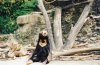
Chomel (October 2002):
View attachment 532613
Photo taken by
@Chlidonias
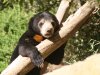
Sasa (March 2007):
View attachment 532614
Photo taken by
@ZooPro