Zoofan15’s Guide to Iconic Australasian Zoo Animals

@Jambo @Zoofan15 @Zorro Yeah was sad to see the Syrian Brown Bears all pass away, wasn't until very recently thanks to ZooFan15 that was made aware that the Syrian Bears at Melbourne actually successfully had cub(s) in the '90s, so that was a big success to Melbourne Zoo, was only aware of Syrian Bears having cubs at Adelaide Zoo in 1980 with sibling pair Missy and Barney. While 100% supporting the request in the past for a lot of the bigger zoos to find space for potentially keeping Sun Bears (and in Melbourne's case nothing coming of it so far) really wish it didn't have to mean phasing out an endangered and charismatic Brown Bear subspecies also. While in the end the last Syrian Bears passed from advanced age, did have a look on Zootierliste and there have been several Syrian Bears born at zoos in Europe over the past few decades so the potential is there if any of our regions zoos can ever find the interest again, and the funds for future imports. But at same time am very strong advocate for continuing with potential Sun Bear breeding (and rescuing when needed).
 
@Jambo @Zoofan15 @Zorro Yeah was sad to see the Syrian Brown Bears all pass away, wasn't until very recently thanks to ZooFan15 that was made aware that the Syrian Bears at Melbourne actually successfully had cub(s) in the '90s, so that was a big success to Melbourne Zoo, was only aware of Syrian Bears having cubs at Adelaide Zoo in 1980 with sibling pair Missy and Barney. While 100% supporting the request in the past for a lot of the bigger zoos to find space for potentially keeping Sun Bears (and in Melbourne's case nothing coming of it so far) really wish it didn't have to mean phasing out an endangered and charismatic Brown Bear subspecies also. While in the end the last Syrian Bears passed from advanced age, did have a look on Zootierliste and there have been several Syrian Bears born at zoos in Europe over the past few decades so the potential is there if any of our regions zoos can ever find the interest again, and the funds for future imports. But at same time am very strong advocate for continuing with potential Sun Bear breeding (and rescuing when needed).

I’m quite disappointed Melbourne chose to include double up exhibits in their Carnivores Trail; the space used for a second Tiger enclosure and second Tasmanian Devil enclosure could’ve very well be used to create a bear enclosure. I’m quite sure Melbourne actually planned to move Honey off display permanently after her enclosure was being renovated for the Carnivores construction. She unfortunately died right before this was to occur.

Some Zoos such as Wellington and San Diego have had great success with breeding Sun Bears in the past so they’re not a lost cause. I don’t see Syrian Brown Bears returning though. If the region is giving up on Sun Bears, than I’d strongly consider looking into Andean Bears who seem to have a quite decent breeding record in captivity.
 
@Jambo Andean Bears would be interesting to see and have in the region; have often thought it was a shame that our region has never really had any (especially not recently, every time have read a members recalling the 60s and 70s eras at our regions bigger zoos when there were many 'Bear Pits' or 'Bear Grottoes' or 'Bear Terraces/Rows' there never was really mention of any Andean/Spectacled Bears being there though had read somewhere at least one individual made it to Austr' shores at some point in the early-mid 20th century but seemed to have died soon after, cant remember if it was Melbourne, Perth, Adelaide or Taronga). Saw some footage of some Andean Bears at one of the US zoos and man they are charismatic. Would be nice though if it didnt have to be an 'either or' situation and we could see some different Bear species come/return to Australia and New Zealand while continuing with our Sun Bears.
 
@Jambo @Zoofan15 @Zorro Yeah was sad to see the Syrian Brown Bears all pass away, wasn't until very recently thanks to ZooFan15 that was made aware that the Syrian Bears at Melbourne actually successfully had cub(s) in the '90s, so that was a big success to Melbourne Zoo, was only aware of Syrian Bears having cubs at Adelaide Zoo in 1980 with sibling pair Missy and Barney. While 100% supporting the request in the past for a lot of the bigger zoos to find space for potentially keeping Sun Bears (and in Melbourne's case nothing coming of it so far) really wish it didn't have to mean phasing out an endangered and charismatic Brown Bear subspecies also. While in the end the last Syrian Bears passed from advanced age, did have a look on Zootierliste and there have been several Syrian Bears born at zoos in Europe over the past few decades so the potential is there if any of our regions zoos can ever find the interest again, and the funds for future imports. But at same time am very strong advocate for continuing with potential Sun Bear breeding (and rescuing when needed).

I think what hasn’t helped with the Malayan sun bears is we’ve had very little cooperation between the zoos. Taronga and Adelaide each had a pair where the male and female from the two respective pairs was lacking in reproductive ability. Did either of them think to swap?

Perth Zoo have had a viable breeding pair at the end of their reproductive life. They’ve never been bred again because Perth apparently lacks the space. Why then do Perth have a breeding pair?

The region would have benefited from Wellington Zoo and one or two others being the breeding hub, supplying surplus bears to the non breeding zoos - with non breeding bears at the other zoos subbed into breeding pairs to replace underperforming animals or for the sake of genetic diversity.
 
@Jambo Andean Bears would be interesting to see and have in the region; have often thought it was a shame that our region has never really had any (especially not recently, every time have read a members recalling the 60s and 70s eras at our regions bigger zoos when there were many 'Bear Pits' or 'Bear Grottoes' or 'Bear Terraces/Rows' there never was really mention of any Andean/Spectacled Bears being there though had read somewhere at least one individual made it to Austr' shores at some point in the early-mid 20th century but seemed to have died soon after, cant remember if it was Melbourne, Perth, Adelaide or Taronga). Saw some footage of some Andean Bears at one of the US zoos and man they are charismatic. Would be nice though if it didnt have to be an 'either or' situation and we could see some different Bear species come/return to Australia and New Zealand while continuing with our Sun Bears.

Andean Bears would fit nicely with a South American theme, which is something Australian zoos do lack. The Australian climate, especially in Melbourne and Taronga would be quite perfect for them. There are a heap in the US and even Europe too so it’d be fairly easy to source some surplus individuals from over there. They’re a beautiful species to watch, and are quite active too; whilst also being vulnerable and carrying a nice conservation message.

Ive never heard of Andean Bears being held in Australia before. Melbourne definitely hasn’t had them. Don’t think Taronga too. Could’ve been Adelaide or Perth though; both were famous for their bear rows.
 
I’m quite disappointed Melbourne chose to include double up exhibits in their Carnivores Trail; the space used for a second Tiger enclosure and second Tasmanian Devil enclosure could’ve very well be used to create a bear enclosure. I’m quite sure Melbourne actually planned to move Honey off display permanently after her enclosure was being renovated for the Carnivores construction. She unfortunately died right before this was to occur.

Some Zoos such as Wellington and San Diego have had great success with breeding Sun Bears in the past so they’re not a lost cause. I don’t see Syrian Brown Bears returning though. If the region is giving up on Sun Bears, than I’d strongly consider looking into Andean Bears who seem to have a quite decent breeding record in captivity.

The doubling up of exhibits is an annoying trend that looks set to continue. Hamilton Zoo are phasing ahead with plans to build a third tiger exhibit in the hope of being one of the region’s breeding hubs - when Auckland Zoo and Taronga Zoo already have the capacity to hold multiple tigers. I’ve often said how I’d prefer Hamilton Zoo allocates this space to a different South East Asian species - either Sri Lankan leopard or Malayan sun bear.

Malayan sun bears are indeed not hard to breed. You need:

A (quiet) off display area for privacy
A well socialised (fertile) pair
A capacity to seperate them

If these are satisfied, success is likely.
 
I think what hasn’t helped with the Malayan sun bears is we’ve had very little cooperation between the zoos. Taronga and Adelaide each had a pair where the male and female from the two respective pairs was lacking in reproductive ability. Did either of them think to swap?

Perth Zoo have had a viable breeding pair at the end of their reproductive life. They’ve never been bred again because Perth apparently lacks the space. Why then do Perth have a breeding pair?

The region would have benefited from Wellington Zoo and one or two others being the breeding hub, supplying surplus bears to the non breeding zoos - with non breeding bears at the other zoos subbed into breeding pairs to replace underperforming animals or for the sake of genetic diversity.

Id have also preferred if zoos swapped their pairs once they realised they weren’t breeding well, instead of sitting on them for the rest of their reproductive years. It’s a shame as there were indeed multiple possible breeding individuals who never got a chance to breed.

Right now, the focus should be getting the young females, Mary and Maly mates. It seems the right direction would be to swap Otay for Maly at the National Zoo and then send Jamran to Taronga to be paired with Mary. Both males are proven breeders, so hopefully it serves as a better chance for future cubs in the region.
 
Wow didnt know any details about which individual Sun Bears were lacking in breeding ability but that is very frustrating that Taronga and Adelaide didnt think to exchange, honestly seems like a major missed opportunity.

Hearing Perth Zoo say they didnt have the space when I remember donating (and encouraging family in Perth to donate) to the fundraising campaign in 2004 that PZ had to build their 'state-of-the-art' (their words at the time and the two exhibits are very big and accommodating) exhibits for Bopha and Jamran and it was only completed in 2007 so is still a very recently and specifically designed exhibit that has shown its planning was successful with the birth of Maly only a year later, how then can PZ say they didn't have the space for Bopha and Jamran to of had had any more potential cubs when the exhibits have plenty of space and clearly any new cubs who reached maturity would have gone to different zoos in the region (or overseas worst case scenario). With PZ having Sean sent over to Wellington to be with Chomel in 2004 they actually accepted that they were going to be without any Sun Bears for nearly 3 years until the new exhibits were ready for Bopha and Jamran to come from Cambodia. So glad they sent Sean when they did as it worked well for Chomel to not be alone for too long after being use to living with a fellow Sun Bear of the opposite sex and suddenly having her partner and one son die and her other son Arataki sent away. Sean did not get a good deal with living space at Perth Zoo. Firstly the first four years he lived (Jan/Feb 1998-May 2002) in the very small (approximately 185 sq m) enclosure (current home of Raja the Komodo Dragon) with Takia/Barbera and Viva who he came from Cambodia with (Viva died 2000 am not sure what her cause of death was and poor Takia was euthanised aged five in May 2002 as a aortic aneurism diagnosed not long after she arrived and found to be inoperable was growing too fast, keepers said they hoped she could have some quality of life for a few years longer but unfortunately it grew too fast), Sean then moved to the eastern-most of the 'Great Cat' exhibits (slightly larger than the tiny exhibit he had just left but still small) where he paced around a lot suddenly by himself, so when he went to Wellington in '04 was a very very good decision for him and for Chomel from what can see.
 
Id have also preferred if zoos swapped their pairs once they realised they weren’t breeding well, instead of sitting on them for the rest of their reproductive years. It’s a shame as there were indeed multiple possible breeding individuals who never got a chance to breed.

Right now, the focus should be getting the young females, Mary and Maly mates. It seems the right direction would be to swap Otay for Maly at the National Zoo and then send Jamran to Taronga to be paired with Mary. Both males are proven breeders, so hopefully it serves as a better chance for future cubs in the region.

It’s ridiculous that Perth Zoo are sitting on Jamran when they’re not allowed to breed. At least the National Zoo have been trying to breed (albeit unsuccessfully) from Arataki and Otay.

Personally, I’d like to see Jamran sent to Wellington Zoo to breed with Sasa before she’s post reproductive (a fast closing window), since she represents a maternal line associated with twins.

I emailed Wellington recently and were told they have maternity dens to breed if they need. Presumably these were built in for a reason when the new exhibit opened in 2012.
 
It’s ridiculous that Perth Zoo are sitting on Jamran when they’re not allowed to breed. At least the National Zoo have been trying to breed (albeit unsuccessfully) from Arataki and Otay.

Personally, I’d like to see Jamran sent to Wellington Zoo to breed with Sasa before she’s post reproductive (a fast closing window), since she represents a maternal line associated with twins.

I emailed Wellington recently and were told they have maternity dens to breed if they need. Presumably these were built in for a reason when the new exhibit opened in 2012.

Perth’s enclosures are both small to an extent, so I can see where ‘spatial issues’ are coming from. It would be an issue if the region didn’t have the space for more Sun Bears, but as this isn’t the case I don’t see why they shouldn’t be bred again. Both Taronga and Wellington have space for additional bears.

Considering Wellington’s past success it would be nice if they had the opportunity to hold a breeding pair again. The swap of Maly and Otay should also be a priority. This would give the National Zoo an entirely new breeding pair with a young, unpaired female and an older, proven breeding male. The National Zoo has also encountered success with breeding this species in the past, and has the right facilities to accommodate this.
 
@Jambo @Zoofan15 Agree with you completely Jambo about there should be a focus on Mary and Maly who are still aged in the potential mother age bracket and ZooFan15 you just majorly pointed out the fact that hadn't stopped to think about: that Jamran could once again be a potential sire to a female Sun Bear (well not Maly obviously) and you're so right that Wello' would be the best place for him to be (and if not then Taronga); had always just thought of Bopha and Jamran as a duo that would stay together, even though they don't actually live together they are in separate enclosures next to each other, and with Perth's current two Sun Bear enclosures they could really accommodate space for a future Sun Bear or too, though sadly their future plans dont really look like they want to continue keeping them which I pray is not the case.
 
The doubling up of exhibits is an annoying trend that looks set to continue. Hamilton Zoo are phasing ahead with plans to build a third tiger exhibit in the hope of being one of the region’s breeding hubs - when Auckland Zoo and Taronga Zoo already have the capacity to hold multiple tigers. I’ve often said how I’d prefer Hamilton Zoo allocates this space to a different South East Asian species - either Sri Lankan leopard or Malayan sun bear.

Malayan sun bears are indeed not hard to breed. You need:

A (quiet) off display area for privacy
A well socialised (fertile) pair
A capacity to seperate them

If these are satisfied, success is likely.
The doubling up could be way of just filling up the space due to the number of species being phased out over time
 
Perth’s enclosures are both small to an extent, so I can see where ‘spatial issues’ are coming from. It would be an issue if the region didn’t have the space for more Sun Bears, but as this isn’t the case I don’t see why they shouldn’t be bred again. Both Taronga and Wellington have space for additional bears.

Considering Wellington’s past success it would be nice if they had the opportunity to hold a breeding pair again. The swap of Maly and Otay should also be a priority. This would give the National Zoo an entirely new breeding pair with a young, unpaired female and an older, proven breeding male. The National Zoo has also encountered success with breeding this species in the past, and has the right facilities to accommodate this.

@Jambo @Zoofan15 Agree with you completely Jambo about there should be a focus on Mary and Maly who are still aged in the potential mother age bracket and ZooFan15 you just majorly pointed out the fact that hadn't stopped to think about: that Jamran could once again be a potential sire to a female Sun Bear (well not Maly obviously) and you're so right that Wello' would be the best place for him to be (and if not then Taronga); had always just thought of Bopha and Jamran as a duo that would stay together, even though they don't actually live together they are in separate enclosures next to each other, and with Perth's current two Sun Bear enclosures they could really accommodate space for a future Sun Bear or too, though sadly their future plans dont really look like they want to continue keeping them which I pray is not the case.

Perth Zoo’s masterplan is focussed on a rotational exhibit space for Malayan sun bears and Sumatran tigers. Potentially it could be highly stimulating for both species, though given the sensitivity of the female sun bear during pregnancy and the newborn stage, it sounds like a recipe for disaster re. future breeding.

Perth Zoo could still fulfil the role of a non breeding holder however. Ship off Jamran to Wellington - then they can have his offspring back to house in their new precinct.
 
@Zoofan15 Jamran could potentially pair with Sasa at Wellington or Mary at Taronga and wonder if Arataki's sperm could maybe be used in vivo or in vitro for Maly to potentially give birth to a cub; in that way Arataki does not have to part with Otay at Canberra as I imagine they are a close pair. Jamran's departure would probably (and hopefully) not have the same impact for Bopha as she lives alone.

P.S Agree with you about your point on the close presence of Tigers (wow plans for Malayan?) would not be good for Sun Bears to be relaxed enough to mate. Perhaps Perth will become another zoo without Sun Bears but as long as they are still in our region in future can accept that (kinda).
 
Its not the direction Perth is going in so my comment is pointless but if the two current exhibits were renovated to become one larger exhibit, it would be over 1,000 sq m of space and would fit a lot better with modern spatial standards, however like I said, won't be the case as plans are going different direction.

Definitely seems that Wellington, Canberra and Taronga should be the zoos to continue with housing all the current Sun Bears in our region (with the exception of Bopha at Perth who hopefully will have quality of life for as many years to come as possible); in that sense if Jamran was sent east it would mean Bopha could have her living space doubled as mentioned above.
 
@Zoofan15 Jamran could potentially pair with Sasa at Wellington or Mary at Taronga and wonder if Arataki's sperm could maybe be used in vivo or in vitro for Maly to potentially give birth to a cub; in that way Arataki does not have to part with Otay at Canberra as I imagine they are a close pair. Jamran's departure would probably (and hopefully) not have the same impact for Bopha as she lives alone.

P.S Agree with you about your point on the close presence of Tigers (wow plans for Malayan?) would not be good for Sun Bears to be relaxed enough to mate. Perhaps Perth will become another zoo without Sun Bears but as long as they are still in our region in future can accept that (kinda).

AI has been carried out with Polar bears. I’m not sure how successful it would be with Malayan sun bears or if staff would have the skill to implement this in Australasia.

Arataki and Otay are quite independent of each other (as were Bakti and Chomel); but behavioural wise, Jamran and Bopha could be more problematic as they’ve had an unsettled background. From memory, it was Bopha who was the most sensitive to changes.

Sorry, that was a typo I just corrected. Sumatran tigers and Malayan sun bears (not tigers). Perth Zoo are planning to continue with sun bears, but not breed them.
 
If Perth Zoo considered the option there is other space in their property that could be used for a future much much larger living space for their Sun Bears. While they do struggle for space in some regards no disputing that there actually could be space where they wouldnt have to live so closely to the Sumatran Tigers. Even whilst still remaining closeby to the Asian geo-region. For example further up the hill road they currently live is still some space for future exhibits.
 
Week Four: Dora

Key information:


Name: Dora
Species: Indian rhinoceros Rhinoceros unicornis
Facility: Taronga Western Plains Zoo
Born: 1999
Arrived: 2003
Died: N/A

Life history:

Dora was born 14/08/1999 at the Nagoya Higashiyama Zoo in Japan. His parents are Sanver and Nilgiri.

Dora was imported into Australia by Taronga Zoo in October 2001 and was the first of his species to be held in an Australasian zoo.

Dora was transferred to Taronga Western Plains Zoo 01/05/2003 with the plan of importing a female to pair with him.

In 2006, a female was imported from San Diego Zoo. She was initially housed at Taronga Zoo, with the intention of transferring her to Taronga Western Plains Zoo to breed with Dora. Unfortunately the young cow died the following year. The cause of death was a blocked intestinal tract. It was discovered during the post mortem, she was pregnant.

In 2009, a second female was imported from Los Angeles Zoo. Amala had been born in January 2006 at the Oklahoma City Zoo and was identified as a suitable mate for Dora. They were initially housed separately to give the female chance to mature.

Introductions began in 2012, with Dora and Amala being given fence contact. After a few months, keepers were happy with the signs they observed and the rhinos were given full contact. This resulted in a lot of roaring and chasing, with both animals appearing nervous.

The introductions continued over the next two years, with the duration they were left together increased. Dora initially appeared confused about his role in the courtship process, but positive progress was observed with each subsequent introduction.

Mating was observed in July 2014 and Amala was subsequently confirmed to be pregnant.

On 24/10/2015, Amala delivered a healthy male calf. The calf was named Rajah and was the first of his species to be born in Australasia. Rajah sadly died of a tetanus infection in September 2017.

Dora and Amala welcomed a second calf born 17/10/2021. The male calf has been named Hari and is developing into a healthy young bull.

Other facts:

Dora’s name means “Dragon” in Japanese. He was named after the Nagoya baseball team.

With Dora’s arrival, Taronga Western Plains Zoo became the only zoo in the region to hold three species of rhinoceros. Rhinos are much celebrated throughout Dubbo, with several statues celebrating them and raising awareness of their conservation.

Although Dora can be short tempered, he has a friendly relationship with his keepers. He’s highly food motivated and particularly enjoys apples.

His exhibit includes a large waterhole close to the visitor viewing area, which allows visitors to watch him wading.

Dora’s mother, Nilgiri, was born at Basel Zoo in Switzerland in 1991. He has a full sister named Sera, born 2003.

Photos:

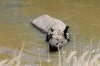
Dora (December 2021):
upload_2022-3-25_23-7-7.jpeg
Photo taken by @akasha

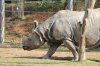
Dora (June 2020):
upload_2022-3-25_23-8-37.jpeg
Photo taken by @akasha
 

Attachments

  • upload_2022-3-25_23-7-7.jpeg
    upload_2022-3-25_23-7-7.jpeg
    102.1 KB · Views: 28
  • upload_2022-3-25_23-8-37.jpeg
    upload_2022-3-25_23-8-37.jpeg
    203.7 KB · Views: 28
Last edited:
Week Four: Dora

Key information:


Name: Dora
Species: Indian rhinoceros Rhinoceros unicornis
Facility: Taronga Western Plains Zoo
Born: 1999
Arrived: 2003
Died: N/A

Life history:

Dora was born 14/08/1999 at the Nagoya Higashiyama Zoo in Japan. His parents are Sanver and Nilgiri.

Dora was imported into Australia by Taronga Zoo in October 2001 and was the first of his species to be held in an Australasian zoo.

Dora was transferred to Taronga Western Plains Zoo 01/05/2003 with the plan of importing a female to pair with him.

In 2006, a female was imported from San Diego Zoo. She was initially housed at Taronga Zoo, with the intention of transferring her to Taronga Western Plains Zoo to breed with Dora. Unfortunately the young cow died the following year. The cause of death was a blocked intestinal tract. It was discovered during the post mortem, she was pregnant.

In 2009, a second female was imported from Los Angeles Zoo. Amala had been born in January 2006 at the Oklahoma City Zoo and was identified as a suitable mate for Dora. They were initially housed separately to give the female chance to mature.

Introductions began in 2012, with Dora and Amala being given fence contact. After a few months, keepers were happy with the signs they observed and the rhinos were given full contact. This resulted in a lot of roaring and chasing, with both animals appearing nervous.

The introductions continued over the next two years, with the duration they were left together increased. Dora initially appeared confused about his role in the courtship process, but positive progress was observed with each subsequent introduction.

Mating was observed in July 2014 and Amala was subsequently confirmed to be pregnant.

On 24/10/2015, Amala delivered a healthy male calf. The calf was named Rajah and was the first of his species to be born in Australasia. Rajah sadly died of a tetanus infection in September 2017.

Dora and Amala welcomed a second calf born 17/10/2021. The male calf has been named Hari and is developing into a healthy young bull.

Other facts:

Dora’s name means “Dragon” in Japanese. He was named after the Nagoya baseball team.

With Dora’s arrival, Taronga Western Plains Zoo became the only zoo in the region to hold three species of rhinoceros. Rhinos are much celebrated throughout Dubbo, with several statues celebrating them and raising awareness of their conservation.

Although Dora can be short tempered, he has a friendly relationship with his keepers. He’s highly food motivated and particularly enjoys apples.

His exhibit includes a large waterhole close to the visitor viewing area, which allows visitors to watch him wading.

Dora’s mother, Nilgiri, was born at Basel Zoo in Switzerland in 1991. He has a full sister named Sera, born 2003.

Photos:

Dora (December 2021):
View attachment 536341
Photo taken by @akasha

Dora (June 2020):
View attachment 536342
Photo taken by @akasha
How many generations is Dora from the original breeding pairs at Basel? Can you trace the individuals involved? I remember Basel's Indian rhinos as I saw the original female Joymothi, her daughter Moola and the second bull Arjun, on my first visit there.
 
Back
Top