Zoofan15’s Guide to Notable Australasian Exhibits

Zoofan15

Well-Known Member
10+ year member
Introduction

Welcome to @Zoofan15’s Guide to Notable Australasian Exhibits.

The purpose of this thread is to give an overview of exhibits that are considered notable within the region. Reasons an exhibit could be considered notable include (but are not limited to): architectural design and innovative design features; size; historical significance; population management; and national or regional uniqueness (e.g. the only exhibit of a species within the country or region).

I have titled this ‘Zoofan15’s’ guide to acknowledge there will be a degree of subjectivity. Every person on ZooChat will have differing ideas of what constitutes notable. Nonetheless, I have outlined some of the criteria I will be using to assess notability; and will endeavour to create a varied thread that I hope will be of interest to people.

The definition of ‘exhibit’ in the title will extend to notable buildings and complexes. I note there is geographical discrepancy over the use of terms such as precinct and complex; so for the benefit of those who don’t frequent the Australian/New Zealand forums, here’s a couple of examples of the structure that myself and most Australasian members recognise:

- Auckland Zoo has three Sumatran tiger exhibits
- Those three tiger exhibits form Auckland Zoo’s Sumatran tiger complex
- Auckland Zoo’s Sumatran tiger complex is in the South East Asia precinct

- Melbourne Zoo’s Reptile House is a building/complex
- Melbourne Zoo’s Reptile House has multiple exhibits

Each post will detail a notable building, exhibit or complex (if applicable); but not precincts.

This guide will only feature buildings, exhibits and complexes currently in existence. This includes those that have no current occupants or have been repurposed. An obvious example is an elephant house that is now a cafe.
 
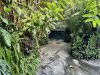
Auckland Zoo - Swamp Forest Complex

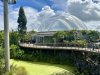
Auckland Zoo’s Swamp Forest (more commonly known as the ‘tropical dome’) is a complex that opened to the public on Saturday October 22, 2022.

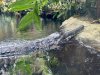
The Swamp Forest is a unique complex regionally and part of Auckland Zoo’s South East Asia precinct. It’s notable for displaying the only False gharial in Australasia.

In addition to False gharial, other species exhibited in the complex are: Asian arowana, Indonesian tiger perch, Three spot gourami, Peal gourami, Tiger barb, Tinfoil barb, Checkered barb, Odessa barb, Neon dwarf rainbowfish, Siamese algae eater, Harlequin rasbora, Pearl danio and Clown loach.

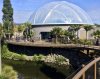
The dome is 400m2 and 14 metres high at its peak. The dome is climate controlled, maintained at 28 degrees and between 70-90 percent humidity. The roof is made of transparent ethylene tetrafluoroethylene, supported by steel ribs. Below the roof hangs a large ‘halo’, providing additional lighting; and a sprinkler system to simulate rainfall.

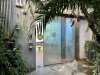
The Swamp Forest was closed between August-December 2024 to allow the installation of double doors at the entry and exit to support climate control in the dome.
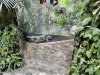
Visitors walk along a one way trail (with designated entry/exit doors) past eight viewing windows. The main exhibit, which consists of three interconnected tanks houses False gharial. Two female False gharial (Malu and Sumpit) were imported from Krokodille Zoo in Denmark in September 2022.
Off display, a life support room houses pumps, heaters and filtration equipment. There’s also an aquarist room with a range of holding tanks for fish quarantine and breeding; as well as a dedicated space for crocodile management and training, with water-tight doors leading to the main pool.

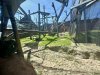
Swamp Forest (Tropical Dome):


upload_2025-10-1_11-13-25.jpeg
Photo taken by @Zoofan15 (15/02/2025)

Entrance:

upload_2025-10-1_11-30-5.jpeg
Photo taken by @Zoofan15 (15/02/2025)

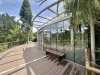
Exit:

upload_2025-10-1_11-28-12.jpeg
Photo taken by @Zoofan15 (15/02/2025)

Pathway:

upload_2025-10-1_11-34-19.jpeg
Photo taken by @Zoofan15 (03/05/2025)

Viewing Window 2 (False Gharial):

upload_2025-10-1_11-36-38.jpeg
Photo taken by @Zoofan15 (03/05/2025)

Viewing Window 7 (Asian Arowana):

upload_2025-10-1_11-35-34.jpeg
Photo taken by @Zoofan15 (03/05/2025)

Sumpit (False Gharial):

upload_2025-10-1_11-38-30.jpeg
Photo taken by @Zoofan15 (03/05/2025)

Opening Day (Original Doors):

upload_2025-10-1_11-31-51.jpeg
Photo taken by @Zoofan15 (22/10/2022)
 

Attachments

  • upload_2025-10-1_11-13-25.jpeg
    upload_2025-10-1_11-13-25.jpeg
    202 KB · Views: 88
  • upload_2025-10-1_11-28-12.jpeg
    upload_2025-10-1_11-28-12.jpeg
    239.8 KB · Views: 105
  • upload_2025-10-1_11-30-5.jpeg
    upload_2025-10-1_11-30-5.jpeg
    229.1 KB · Views: 84
  • upload_2025-10-1_11-31-51.jpeg
    upload_2025-10-1_11-31-51.jpeg
    197.7 KB · Views: 96
  • upload_2025-10-1_11-34-19.jpeg
    upload_2025-10-1_11-34-19.jpeg
    338.8 KB · Views: 84
  • upload_2025-10-1_11-35-34.jpeg
    upload_2025-10-1_11-35-34.jpeg
    311.4 KB · Views: 96
  • upload_2025-10-1_11-36-38.jpeg
    upload_2025-10-1_11-36-38.jpeg
    326.8 KB · Views: 100
  • upload_2025-10-1_11-38-30.jpeg
    upload_2025-10-1_11-38-30.jpeg
    205 KB · Views: 89
Great posts and pics. How they make sure that the alligator (cannot remember the correct species name at the moment) not break the glass?
 
Great posts and pics. How they make sure that the alligator (cannot remember the correct species name at the moment) not break the glass?

It’s a False gharial (Tomistoma schlegelii).

The viewing panels are acrylic and the main pool is separated from the off display pool by water tight doors, built strong enough to hold 200,000 litres (200 tonnes) of water.

Something else that may interest people is that Auckland Zoo originally planned to house turtles and terrapins in the tropical dome. In 2013, an application was made to import the following species:

False gharial
Southern river terrapin
Northern river terrapin
Painted terrapin
Amboina box turtle
Giant Asian pond turtle
Spiny turtle
Sulawesi forest turtle
Malaysian giant turtle
Asian forest turtle
 
Thanks. That is it. My brain must be so tired!

Maybe I will visit Australia some day and visit all of the zoos, especially with the elephants.
 
Ooh, interesting. If you don’t mind my asking how many exhibits do you ultimately plan to feature?
 
Ooh, interesting. If you don’t mind my asking how many exhibits do you ultimately plan to feature?

Good question! I actually haven’t put a number on it as it’s inevitable I’ll realise I’ve overlooked an exhibit, complex or building on what’s already a sizeable draft list I’ve compiled.

I’d rather not give too much away with regards to what’s to come, but in addition to obvious architectural stand outs (e.g. Melbourne’s Gorilla Rainforest); they’ll be buildings and exhibits notable for their historical significance; exhibits that enable population management close to the wild state; and exhibits notable for being the only exhibit of that species in the region. My aim is to keep it as varied as possible.
 
It’s a False gharial (Tomistoma schlegelii).

The viewing panels are acrylic and the main pool is separated from the off display pool by water tight doors, built strong enough to hold 200,000 litres (200 tonnes) of water.

Something else that may interest people is that Auckland Zoo originally planned to house turtles and terrapins in the tropical dome. In 2013, an application was made to import the following species:

False gharial
Southern river terrapin
Northern river terrapin
Painted terrapin
Amboina box turtle
Giant Asian pond turtle
Spiny turtle
Sulawesi forest turtle
Malaysian giant turtle
Asian forest turtle
It's a real shame they don't have a male gharial and even attempt to breed them I am sure other collections in the region would be quite keen to have them!
Are you taking "requests" for different zoo exhibits or do you just have your own list?
 
It's a real shame they don't have a male gharial and even attempt to breed them I am sure other collections in the region would be quite keen to have them!
Are you taking "requests" for different zoo exhibits or do you just have your own list?
I believe they aren't actually sure whether one of the two is a female. If it's a male, that could open up opportunities for breeding (depending on whether or not the zoo's willing to).
 
It's a real shame they don't have a male gharial and even attempt to breed them I am sure other collections in the region would be quite keen to have them!
I believe they aren't actually sure whether one of the two is a female. If it's a male, that could open up opportunities for breeding (depending on whether or not the zoo's willing to).

It’s interesting you mention this as in researching the tropical dome, I discovered Auckland Zoo initially planned to import three False gharial.

From this, I wonder if there was a plan to import a male along with the two females and breed, indicating an interest from other facilities within the region in receiving offspring. Either that interest was revoked; or the size of the Auckland’s tropical dome was deemed too small to manage breeding (possibly a combination of both). The display tank they have is certainly at capacity with the two they have; but I note they have an additional off display tank.

As per @ApeLadyNZ’s post from August, it’s unconfirmed if Malu (the larger False gharial) is male or female. Sexual maturity in males is reached at 15-18 years, so within the next 3-5 years, we should have an answer if DNA testing isn’t undertaken sooner.
Are you taking "requests" for different zoo exhibits or do you just have your own list?

At this stage, I have a massive list, but you (and anyone else reading this) is free to send me a message with any suggestions. Please do this via PM though.
 
Auckland Zoo - Swamp Forest Complex

Auckland Zoo’s Swamp Forest (more commonly known as the ‘tropical dome’) is a complex that opened to the public on Saturday October 22, 2022.

The Swamp Forest is a unique complex regionally and part of Auckland Zoo’s South East Asia precinct. It’s notable for displaying the only False gharial in Australasia.

In addition to False gharial, other species exhibited in the complex are: Asian arowana, Indonesian tiger perch, Three spot gourami, Peal gourami, Tiger barb, Tinfoil barb, Checkered barb, Odessa barb, Neon dwarf rainbowfish, Siamese algae eater, Harlequin rasbora, Pearl danio and Clown loach.

The dome is 400m2 and 14 metres high at its peak. The dome is climate controlled, maintained at 28 degrees and between 70-90 percent humidity. The roof is made of transparent ethylene tetrafluoroethylene, supported by steel ribs. Below the roof hangs a large ‘halo’, providing additional lighting; and a sprinkler system to simulate rainfall.

The Swamp Forest was closed between August-December 2024 to allow the installation of double doors at the entry and exit to support climate control in the dome.

Visitors walk along a one way trail (with designated entry/exit doors) past eight viewing windows. The main exhibit, which consists of three interconnected tanks houses False gharial. Two female False gharial (Malu and Sumpit) were imported from Krokodille Zoo in Denmark in September 2022.

Off display, a life support room houses pumps, heaters and filtration equipment. There’s also an aquarist room with a range of holding tanks for fish quarantine and breeding; as well as a dedicated space for crocodile management and training, with water-tight doors leading to the main pool.

Swamp Forest (Tropical Dome):


View attachment 830322
Photo taken by @Zoofan15 (15/02/2025)

Entrance:

View attachment 830338
Photo taken by @Zoofan15 (15/02/2025)

Exit:

View attachment 830337
Photo taken by @Zoofan15 (15/02/2025)

Pathway:

View attachment 830340
Photo taken by @Zoofan15 (03/05/2025)

Viewing Window 2 (False Gharial):

View attachment 830342
Photo taken by @Zoofan15 (03/05/2025)

Viewing Window 7 (Asian Arowana):

View attachment 830341
Photo taken by @Zoofan15 (03/05/2025)

Sumpit (False Gharial):

View attachment 830343
Photo taken by @Zoofan15 (03/05/2025)

Opening Day (Original Doors):

View attachment 830339
Photo taken by @Zoofan15 (22/10/2022)

I hope this kind of exhibitry takes off in Australasia! I'm very fond of tropical houses and indoor rainforests, but they seem to be a lot more common in museums for some reason. Are there any other animals or environments you think would lend themselves well to this kind of exhibit? I think we've talked about the possibility of exhibiting neotropical primates, especially smaller ones, in this sort of exhibit.
 
I hope this kind of exhibitry takes off in Australasia! I'm very fond of tropical houses and indoor rainforests, but they seem to be a lot more common in museums for some reason. Are there any other animals or environments you think would lend themselves well to this kind of exhibit? I think we've talked about the possibility of exhibiting neotropical primates, especially smaller ones, in this sort of exhibit.

You’re right, they’re certainly not common in Australasia - presumably due to the climate being suitable for many tropical species to be housed in open air exhibits year round.

Small South American monkeys are the obvious one (tamarins, marmosets etc). Some Australasian zoos (especially those in colder climates like Wellington) house tamarins in greenhouses.

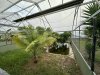
With regards to walkthroughs like Auckland Zoo’s tropical dome, the closest we have is probably the tropical house at Ti Point Reptile House, which has exhibits for tortoises and American alligator. There’s also butterfly houses such as the ones at Melbourne Zoo and Butterfly Creek. The latter has adjacent indoor exhibits for American alligator, iguana and other reptiles.

Tropical House (Ti Point Reptile Park):

upload_2025-10-1_19-12-45.jpeg
 

Attachments

  • upload_2025-10-1_19-12-45.jpeg
    upload_2025-10-1_19-12-45.jpeg
    257.9 KB · Views: 95
You’re right, they’re certainly not common in Australasia - presumably due to the climate being suitable for many tropical species to be housed in open air exhibits year round.

Small South American monkeys are the obvious one (tamarins, marmosets etc). Some Australasian zoos (especially those in colder climates like Wellington) house tamarins in greenhouses.

With regards to walkthroughs like Auckland Zoo’s tropical dome, the closest we have is probably the tropical house at Ti Point Reptile House, which has exhibits for tortoises and American alligator. There’s also butterfly houses such as the ones at Melbourne Zoo and Butterfly Creek. The latter has adjacent indoor exhibits for American alligator, iguana and other reptiles.

Tropical House (Ti Point Reptile Park):

View attachment 830365
The Hancocks master plan for Melbourne Zoo included a suggestion for a house in the middle of the tropic zone. It was no more than the outline of a rectangle on the plan. I recall hearing Hancocks talk about it, and even he was not sure of what it might contain.

The classic European tropic house relies largely on free-flight birds, however there are almost no exotic species that might be suitable in Australia. A Daintree exhibit might work, with free-range tree kangaroos and musky rat-kangaroos as well as birds.
 
Taronga Zoo - Chimpanzee Park

Chimpanzee Park is an exhibit at Taronga Zoo that houses Common chimpanzee. The official opening of Chimpanzee Park was held on August 18, 1980; with the chimpanzees having moved in two months prior. The cost to landscape the exhibit was $470,000.

The exhibit is notable for being the first park style great ape exhibit in an Australasian zoo, setting a precedent for exhibits like Auckland Zoo’s Orangutan Park and (1987-2017) and Wellington Zoo’s Chimpanzee Park (1991). Prior to this, zoos in the region exhibited great apes in either cages or grottos.

Taronga’s Chimpanzee Park is also notable for housing the region’s largest troop of chimpanzee, which had been praised by experts such as the late Dr. Jane Goodall as functioning how a wild community of this species would operate. The community totalled 21 chimpanzees from six families on opening day; and today, totals 21 chimpanzees from six families.

The exhibit consists of two grass paddocks. The main paddock is 1440m2 and the separation paddock is 470m2, giving a total space of 1910m2. It is the third largest chimpanzee exhibit in the region, behind Monarto Safari Park (3000m2) and Hamilton Zoo (2500m2 approx). The exhibit has various features including climbing structures, fallen logs, a stream, rock ledges, caves and an artificial termite mound.

In 2009, the chimpanzees were moved to a temporary exhibit (the orangutan exhibit) while a $7.1 million renovation of Chimpanzee Park was undertaken. This included the installation of new climbing structures (some up to 12 metres high); the construction of the fully enclosed separation paddock to facilitate introductions and separations within the community; and a refurbishment of the night dens. It was completed in 2011 at a cost of $9 million.

Following completion of the 2009-2011 renovations, the moat was listed as 275m2. Sections were widened in 2021 following an escape of one of the chimpanzees, which returned to its exhibit voluntarily without incident.

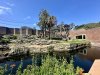
Exterior (Separation Paddock):

upload_2025-10-9_12-3-34.jpeg
Photo taken by @Zoofan15 (20/11/2024)

Main Paddock:

upload_2025-10-9_12-33-56.jpeg
Photo taken by @Zoofan15 (20/11/2024)

Main Paddock:

upload_2025-10-9_12-4-24.jpeg
Photo taken by @Zoofan15 (20/11/2024)

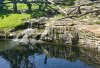
Stream/Snowy’s Rock:

upload_2025-10-9_12-5-57.jpeg
Photo taken by @Zoofan15 (20/11/2024)

Separation Paddock:

upload_2025-10-9_12-6-42.jpeg
Photo taken by @Zoofan15 (20/11/2024)

Moat (Main Paddock):

upload_2025-10-9_12-7-14.jpeg
Photo taken by @Zoofan15 (18/11/2024)

Viewing Shelter (Main Paddock/Indoor Cave):

upload_2025-10-9_12-9-32.jpeg
Photo taken by @Zoofan15 (18/11/2024)

Indoor Cave:

upload_2025-10-9_12-9-3.jpeg
Photo taken by @Zoofan15 (18/11/2024)

Samaki and Kuma (Common Chimpanzee):

upload_2025-10-9_12-10-48.jpeg
Photo taken by @Zoofan15 (18/11/2024)

Historic Photo (1980):

upload_2025-10-9_12-17-38.jpeg
Photo taken by @Hix (00/06/1980)
 

Attachments

  • upload_2025-10-9_12-3-34.jpeg
    upload_2025-10-9_12-3-34.jpeg
    138 KB · Views: 72
  • upload_2025-10-9_12-4-24.jpeg
    upload_2025-10-9_12-4-24.jpeg
    237.9 KB · Views: 66
  • upload_2025-10-9_12-5-57.jpeg
    upload_2025-10-9_12-5-57.jpeg
    269.3 KB · Views: 63
  • upload_2025-10-9_12-6-42.jpeg
    upload_2025-10-9_12-6-42.jpeg
    247.1 KB · Views: 68
  • upload_2025-10-9_12-7-14.jpeg
    upload_2025-10-9_12-7-14.jpeg
    228.4 KB · Views: 68
  • upload_2025-10-9_12-9-3.jpeg
    upload_2025-10-9_12-9-3.jpeg
    200.5 KB · Views: 63
  • upload_2025-10-9_12-9-32.jpeg
    upload_2025-10-9_12-9-32.jpeg
    185.7 KB · Views: 70
  • upload_2025-10-9_12-10-48.jpeg
    upload_2025-10-9_12-10-48.jpeg
    294.8 KB · Views: 66
  • upload_2025-10-9_12-17-38.jpeg
    upload_2025-10-9_12-17-38.jpeg
    162.4 KB · Views: 69
  • upload_2025-10-9_12-33-56.jpeg
    upload_2025-10-9_12-33-56.jpeg
    246.8 KB · Views: 71
This is a terrific idea for a thread, and it will provide an overview of the excellence that is displayed in zoos throughout Australasia. I've not been to Auckland Zoo, but I have seen the Chimpanzee complex at Taronga Zoo and it's amazing at how well it holds up 45 years after its debut.
 
This is a terrific idea for a thread, and it will provide an overview of the excellence that is displayed in zoos throughout Australasia. I've not been to Auckland Zoo, but I have seen the Chimpanzee complex at Taronga Zoo and it's amazing at how well it holds up 45 years after its debut.

Thank you @snowleopard.

I was excited to feature this exhibit, as it is in my mind, the best chimpanzee exhibit in the region. Monarto and Hamilton have bigger exhibits; but neither have troops the size of Taronga’s, which functions as a community. For a species as socially complex as chimpanzee, there’s truly no greater enrichment.

I agree the exhibit has aged exceptionally well. There’s very few exhibits in the region’s city zoos that are approaching half a century of operation and still offer a high standard of accomodation for the species they were originally designed for. Auckland Zoo’s Orangutan Park (1987-2017) was looking very outdated by the time it was demolished.

The exhibit has not been without controversy. Chimpanzees drowned in the moat in 1996 and 1999; and when the exhibit opened, it was a mixed species exhibit of chimpanzees and jackals, which ended as you’d expect.
 
This is an exhibit that was truly innovative when it opened, and as others have commented has held up remarkably well to the present day.
 
Taronga Western Plains Zoo - Platypus Rescue HQ

Platypus Rescue HQ is a complex that opened to the public on February 13, 2024. At 2,800m2, it’s the largest purpose built platypus conservation centre in the world and was built at a cost of $12.5 million (co-funded by the NSW Government, Taronga Conservation Society and philanthropic donors).

The complex has a capacity to hold up to 65 platypus and features a research centre; rescue and rehabilitation facilities; and an outdoor pre-release area to prepare recovered platypus into the wild.

The centre will enable Taronga Western Plains Zoo to provide temporary housing to wild platypus in case of natural disasters (floods, bushfires etc). In addition, breeding pairs will be held in this complex in order to study the reproductive behaviour of this species.

A total of 80 tubs are divided into five streams. Each stream contains ten water tanks, five soil/earth tubs and a yabbies tub. The purpose of having five streams (each with their own life support system) is to isolate populations of wild Platypus from each other to maintain their population health.

The facility uses just over half a megalitre of water (350,000 litres within the refuge; 16,000 litres in the research facility; 8,000 litres in the exhibit; and 112,500 litres in the refuge plantroom).

For visitors, the highlight is a purpose built Platypus habitat, displaying a male Platypus named Mackenzie. He was captive born at Healesville in 2000 and was the fourth Platypus successfully bred in captivity.

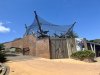
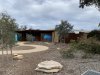
Platypus Rescue HQ:

upload_2025-10-17_13-54-38.jpeg
Photo taken by @akasha (07/09/2025).

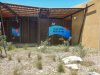
Entrance:

upload_2025-10-17_13-55-36.jpeg
Photo taken by @Hix (31/12/2024)

Rear View:

upload_2025-10-17_14-0-27.jpeg
Photo taken by @akasha (07/09/2025).

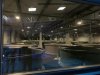
Tubs/Streams:

upload_2025-10-17_13-58-23.jpeg
Photo taken by @akasha (07/09/2025).

Tubs/Streams Signage:

upload_2025-10-17_13-58-53.jpeg
Photo taken by @akasha (07/09/2025).

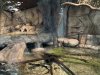
Platypus Exhibit:

upload_2025-10-17_13-59-27.jpeg
Photo taken by @akasha (07/09/2025).

Pre-release Exhibit:

upload_2025-10-17_14-1-22.jpeg
Photo taken by @akasha (07/09/2025).
 

Attachments

  • upload_2025-10-17_13-54-38.jpeg
    upload_2025-10-17_13-54-38.jpeg
    215.7 KB · Views: 49
  • upload_2025-10-17_13-55-36.jpeg
    upload_2025-10-17_13-55-36.jpeg
    217 KB · Views: 52
  • upload_2025-10-17_13-58-23.jpeg
    upload_2025-10-17_13-58-23.jpeg
    121.9 KB · Views: 48
  • upload_2025-10-17_13-58-53.jpeg
    upload_2025-10-17_13-58-53.jpeg
    81.4 KB · Views: 55
  • upload_2025-10-17_13-59-27.jpeg
    upload_2025-10-17_13-59-27.jpeg
    228.4 KB · Views: 48
  • upload_2025-10-17_14-0-27.jpeg
    upload_2025-10-17_14-0-27.jpeg
    271.7 KB · Views: 53
  • upload_2025-10-17_14-1-22.jpeg
    upload_2025-10-17_14-1-22.jpeg
    297.6 KB · Views: 47
I believe it is possible that apart from the rescue side of things a "small number" of captive bred animals could be sent on a "very limited level" to some high level international zoos in the future perhaps in exchange for some rare "highly prized" rare species!
 
Back
Top