Zoofan15’s Guide to Notable Australasian Exhibits

I believe it is possible that apart from the rescue side of things a "small number" of captive bred animals could be sent on a "very limited level" to some high level international zoos in the future perhaps in exchange for some rare "highly prized" rare species!

San Diego had a swap a couple of years ago. I believe they got a pair.
 
San Diego had a swap a couple of years ago. I believe they got a pair.

In February 2017, an agreement was reached between Taronga Zoo and San Diego Zoo to exchange Platypus for Okapi. San Diego Zoo received the following Platypus:

0.1 Eve (2003) Abby x Maryanne (Taronga)
1.0 Birrarung (2011) Tarrabi x Binarri (Healesville)

Okapi were never received by Taronga (or any Australian zoo); though I note that San Diego Zoo Wildlife Alliance has since partnered with Taronga Zoo and the University of NSW to fund a five year research project.

There were initially plans for SDZWA to fund research carried out by Taronga (in addition to sending Okapi); but I’m wondering if the level of funding has since been increased in place of sending Okapi (just guessing here).
 
In February 2017, an agreement was reached between Taronga Zoo and San Diego Zoo to exchange Platypus for Okapi. San Diego Zoo received the following Platypus:

0.1 Eve (2003) Abby x Maryanne (Taronga)
1.0 Birrarung (2011) Tarrabi x Binarri (Healesville)

Okapi were never received by Taronga (or any Australian zoo); though I note that San Diego Zoo Wildlife Alliance has since partnered with Taronga Zoo and the University of NSW to fund a five year research project.

There were initially plans for SDZWA to fund research carried out by Taronga (in addition to sending Okapi); but I’m wondering if the level of funding has since been increased in place of sending Okapi (just guessing here).

That is longer ago than I thought. I could not remember all of the details.

Thanks.
 
In February 2017, an agreement was reached between Taronga Zoo and San Diego Zoo to exchange Platypus for Okapi. San Diego Zoo received the following Platypus:

0.1 Eve (2003) Abby x Maryanne (Taronga)
1.0 Birrarung (2011) Tarrabi x Binarri (Healesville)

Okapi were never received by Taronga (or any Australian zoo); though I note that San Diego Zoo Wildlife Alliance has since partnered with Taronga Zoo and the University of NSW to fund a five year research project.

There were initially plans for SDZWA to fund research carried out by Taronga (in addition to sending Okapi); but I’m wondering if the level of funding has since been increased in place of sending Okapi (just guessing here).
My guess is as we know currently that Okapi can't be imported, But when the IRA is completed at some point in the future I believe that its likely we will see a pair imported into the country!
 
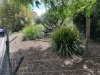
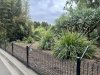
Melbourne Zoo - Collared Peccary Exhibit

Melbourne Zoo’s Collared peccary exhibit is notable for being the only exhibit of this species in Australasia.

The peccary exhibit is open air and extensively planted with vegetation, including bushes and trees. It has a small pool, logs and a den area with two nest boxes. An off display exhibit adjoins the main exhibit, which is roughly 80% of the size of the main exhibit. It contains two den areas, each with a nest box. These facilities previously enabled the zoo to seperate peccaries as required (most recently, an elderly male was held off display until his death); but the current (cohesive) group have the run of both exhibits.

Collared peccary were first shown to be housed in the current exhibit on the 2011 map. Tapir previously occupied this area. Previous maps indicate the peccaries have had a few exhibits over the decades. The 2007 and 2010 maps show them housed adjacent to Big Cat Row; the 1983, 1992 and 2004 maps show them housed opposite the zebra exhibit; and the 1978 map shows them housed in a row of many small exhibits adjacent to the Great Flight Aviary.

Melbourne Zoo has an extensive history with Collared peccary. They first acquired peccaries in the early 1970’s and produced 41 peccaries between 1973 and 2012. The entire regional population was founded by a single pair imported by Wellington Zoo from Canada in 1969. Other zoos subsequently acquired the species including Adelaide, Taronga, Dubbo and Werribee. Melbourne Zoo currently have a trio of 1.2 peccaries, who were all born at Melbourne Zoo: Messi (2010), Jabali (2012) and Nina (2012).

Melbourne’s peccary are a non-breeding group as the species has been designated as phase out by Zoos Victoria. It’s therefore expected this species will disappear from the region within the decade.

Collared Peccary Exhibit:

upload_2025-10-24_13-47-15.jpeg
Photo taken by @Zoofan15 (21/11/2023).

Collared Peccary Exhibit:

upload_2025-10-24_13-46-0.jpeg
Photo taken by @Zoofan15 (21/11/2023).

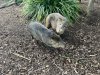
Collared Peccary:

upload_2025-10-24_13-49-5.jpeg
Photo taken by @Zoofan15 (21/11/2023).

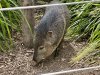
Collared Peccary:

upload_2025-10-24_13-48-22.jpeg
Photo taken by @Zoofan15 (27/11/2023).
 

Attachments

  • upload_2025-10-24_13-46-0.jpeg
    upload_2025-10-24_13-46-0.jpeg
    336.4 KB · Views: 65
  • upload_2025-10-24_13-47-15.jpeg
    upload_2025-10-24_13-47-15.jpeg
    328.4 KB · Views: 65
  • upload_2025-10-24_13-48-22.jpeg
    upload_2025-10-24_13-48-22.jpeg
    385.6 KB · Views: 69
  • upload_2025-10-24_13-49-5.jpeg
    upload_2025-10-24_13-49-5.jpeg
    352.2 KB · Views: 65
I find it quite amazing that yet another species in the region that bred well and was popular was allowed to just fade away even after the trouble of getting them imported in the first place :rolleyes:

It will be sad to see them disappear from the region.

It seems peccaries followed a typical trajectory of species held in 20th century Australasian zoos in that a pair were imported and due to them breeding well, other zoos in the region acquired them. Inbreeding was clearly no concern and the success of the initial pair meant there was no incentive to import more founders (back when it was an option to do so).

Aside from Zoos Victoria’s species criteria relegating them to the phase out list, I wonder if it reached a point where the genetic viability of the population no longer supported further inbreeding. Regional populations of Waterbuck, Indian antelope, Barbary sheep etc all descend from a small number of founders; but none, from a single pair.
 
These facilities previously enabled the zoo to seperate peccaries as required (most recently, an elderly male was held off display until his death); but the current (cohesive) group have the run of both exhibits.
I'm not sure if they do anymore actually - I was taking a look in one of my earlier visits this year, from the now Tapir enclosure, and it looked rather overgrown. Perhaps now with smaller numbers, it's just easier to hold them in the main exhibit and then retire them into the dens overnight.
Collared peccary were first shown to be housed in the current exhibit on the 2011 map. Tapir previously occupied this area. Previous maps indicate the peccaries have had a few exhibits over the decades. The 2007 and 2010 maps show them housed adjacent to Big Cat Row; the 1983, 1992 and 2004 maps show them housed opposite the zebra exhibit; and the 1978 map shows them housed in a row of many small exhibits adjacent to the Great Flight Aviary.
An old map from the late 60's seems to show Camel in the current area, a map from 1978 then shows Bison but after that it's apparently 'nothing'. Brazilian Tapirs would make the most sense from the 80's onwards, but the Tapir were then moved into the former Water Buffalo enclosure in the mid 2000's (which is where they still are today). That would leave a period for the former area left by the Tapirs to be refurbished for a new Peccary complex (on display and off display enclosures).

The exhibit they occupied next to the Big Cat Row was the former Cheetah enclosure, and was quite huge compared to their current enclosure. They were only in there for a matter of a few years and they moved out from there in early 2010 to make way for the Leopard Lodge construction.
 
It will be sad to see them disappear from the region.

It seems peccaries followed a typical trajectory of species held in 20th century Australasian zoos in that a pair were imported and due to them breeding well, other zoos in the region acquired them. Inbreeding was clearly no concern and the success of the initial pair meant there was no incentive to import more founders (back when it was an option to do so).

Aside from Zoos Victoria’s species criteria relegating them to the phase out list, I wonder if it reached a point where the genetic viability of the population no longer supported further inbreeding. Regional populations of Waterbuck, Indian antelope, Barbary sheep etc all descend from a small number of founders; but none, from a single pair.
I personally think it's the fact that they are unable to import more and the ones they have are inbred and it's not viable.

On this basis I have held the unpopular opinion that Zoos Victorian have made the right call. It's unfortunate but reality is 50 years of constant inbreeding always meant this was the inevitable conclusion.
 
I personally think it's the fact that they are unable to import more and the ones they have are inbred and it's not viable.

On this basis I have held the unpopular opinion that Zoos Victorian have made the right call. It's unfortunate but reality is 50 years of constant inbreeding always meant this was the inevitable conclusion.
I agree with your call, My disappointment is that a "major zoo" had only imported "one pair" to start with as if this was somehow expected to go well for their future, I would expect more from zoo management! ;)
 
I agree with your call, My disappointment is that a "major zoo" had only imported "one pair" to start with as if this was somehow expected to go well for their future, I would expect more from zoo management! ;)
100% with you. I think the whole thing is unfortunate. That only 1 pair was imported to begin with, that when others joined with the species that none of them imported any, and then now we lose it forever. (I guess when the suidae import ban came in is when time on this species was really up. There is potential that Zoos Vic had hopes that eventually the ban would be lifted and in that alternate history may have imported 1 or 2 pairs, but that's ahistorical)
 
I agree with your call, My disappointment is that a "major zoo" had only imported "one pair" to start with as if this was somehow expected to go well for their future, I would expect more from zoo management! ;)
At the time, I imagine it was assumed that they could import such a common species "as required". Then in the early '80's the major zoos agreed to concentrate on African and South-east Asian species, putting them into the phase out category. Now, whatever is their policy, it is too late.
 
Last edited:
Auckland Zoo - The Coast

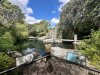
The Coast (originally named Sea Lion and Penguin Shores) is a complex that opened to the public on September 20, 2001 housing pinnipeds and penguins. The complex took 18 months to build and at $5 million, was the zoo’s most expensive exhibit at the time of opening.

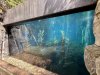
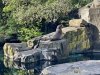
The highlight of the complex is a 3.6 metre deep pool for pinnipeds that holds 500,000 litres of water. The pinniped exhibit also includes rookeries to view the pinnipeds basking in the sun, a jetty and a 140mm thick underwater viewing window. $1.5 million of the construction costs was allocated to a life support system, including filtration equipment.

Within the complex is an aviary that has predominantly held a colony of Little blue penguins; but has held other marine birds including a Spotted shag that died in 2022.

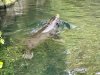
Today, the complex is notable for featuring New Zealand’s only pinniped exhibit and holding a Subantarctic fur seal, which is scarce within captivity within Australasia (also held at Sea World).

On opening day, Auckland Zoo had three pinnipeds - 1.2 California sea lions named Scuttle, Keel and Kipper. All had been born at Auckland Zoo and previously lived in a small inground pool, which had been built during the 1920’s. The zoo initially considered crating the sea lions, but instead trained them to be walked across to the new exhibit.

From the beginning, the complex was built to represent a New Zealand coastal ecosystem, with the California sea lions stand in’s for New Zealand pinnipeds. Upon opening, Auckland Zoo intended to acquire two New Zealand fur seals from Marineland to join their sea lions; but instead, two female California sea lions were sent. They returned circa 2003 and Auckland Zoo subsequently acquired 2.1 New Zealand fur seal and 1.0 Subantarctic fur seal. This latter acquisition is now the pinniped exhibit’s sole occupant after the deaths of his companions from age related causes.

Pinniped Exhibit:

upload_2025-11-6_17-55-59.jpeg
Photo taken by @Zoofan15 (31/10/2024).

Pinniped Exhibit - Underwater Viewing Window:

upload_2025-11-6_17-56-54.jpeg
Photo taken by @Zoofan15 (31/10/2024).

Pinniped Exhibit - Rookery:

upload_2025-11-6_17-57-18.jpeg
Photo taken by @Zoofan15 (27/05/2025).

Orua (Subantarctic Fur Seal):

upload_2025-11-6_17-57-55.jpeg
Photo taken by @Zoofan15 (15/02/2025).

Little Blue Penguin Exhibit:

upload_2025-11-6_17-58-18.jpeg
Photo taken by @Zoofan15 (15/02/2025).
 

Attachments

  • upload_2025-11-6_17-55-59.jpeg
    upload_2025-11-6_17-55-59.jpeg
    314.9 KB · Views: 33
  • upload_2025-11-6_17-56-54.jpeg
    upload_2025-11-6_17-56-54.jpeg
    238.1 KB · Views: 33
  • upload_2025-11-6_17-57-18.jpeg
    upload_2025-11-6_17-57-18.jpeg
    315.5 KB · Views: 42
  • upload_2025-11-6_17-57-55.jpeg
    upload_2025-11-6_17-57-55.jpeg
    223.5 KB · Views: 40
  • upload_2025-11-6_17-58-18.jpeg
    upload_2025-11-6_17-58-18.jpeg
    315.1 KB · Views: 30
Last edited:
I believe it is possible that apart from the rescue side of things a "small number" of captive bred animals could be sent on a "very limited level" to some high level international zoos in the future perhaps in exchange for some rare "highly prized" rare species!

It would be good to see us stop gate keeping certain species. Let there build up a global captive population. The platypus are going they are in need of a decent insurance population.
The precinct at WPZ is nicely done tho.
 
Auckland Zoo - The Coast

The Coast (originally named Sea Lion and Penguin Shores) is a complex that opened to the public on September 20, 2001 housing pinnipeds and penguins. The complex took 18 months to build and at $5 million, was the zoo’s most expensive exhibit at the time of opening.

The highlight of the complex is a 3.6 metre deep pool for pinnipeds that holds 500,000 litres of water. The pinniped exhibit also includes rookeries to view the pinnipeds basking in the sun, a jetty and a 140mm thick underwater viewing window. $1.5 million of the construction costs was allocated to a life support system, including filtration equipment.

Within the complex is an aviary that has predominantly held a colony of Little blue penguins; but has held other marine birds including a Spotted shag that died in 2022.

Today, the complex is notable for featuring New Zealand’s only pinniped exhibit and holding a Subantarctic fur seal, which is scarce within captivity within Australasia (also held at Sea World).

On opening day, Auckland Zoo had three pinnipeds - 1.2 California sea lions named Scuttle, Keel and Kipper. All had been born at Auckland Zoo and previously lived in a small inground pool, which had been built during the 1920’s. The zoo initially considered crating the sea lions, but instead trained them to be walked across to the new exhibit.

From the beginning, the complex was built to represent a New Zealand coastal ecosystem, with the California sea lions stand in’s for New Zealand pinnipeds. Upon opening, Auckland Zoo intended to acquire two New Zealand fur seals from Marineland to join their sea lions; but instead, two female California sea lions were sent. They returned circa 2003 and Auckland Zoo subsequently acquired 2.1 New Zealand fur seal and 1.0 Subantarctic fur seal. This latter acquisition is now the pinniped exhibit’s sole occupant after the deaths of his companions from age related causes.

Pinniped Exhibit:

View attachment 839915
Photo taken by @Zoofan15 (31/10/2024).

Pinniped Exhibit - Underwater Viewing Window:

View attachment 839916
Photo taken by @Zoofan15 (31/10/2024).

Pinniped Exhibit - Rookery:

View attachment 839917
Photo taken by @Zoofan15 (27/05/2025).

Orua (Subantarctic Fur Seal):

View attachment 839918
Photo taken by @Zoofan15 (15/02/2025).

Little Blue Penguin Exhibit:

View attachment 839919
Photo taken by @Zoofan15 (15/02/2025).

It looks to be quite a nice exhibit, do they intend to continue with pinnipeds ?
 
It looks to be quite a nice exhibit, do they intend to continue with pinnipeds ?

I agree. Though it was surpassed by Melbourne’s Wild Sea exhibit, I think Auckland Zoo’s pinniped exhibit has aged exceptionally well considering it will be a quarter of a century next year since it opened.

Unfortunately Auckland Zoo plan to phase out pinnipeds, which is very disappointing. They’re held pinnipeds of various species (including New Zealand natives and California sea lions) since the 1920’s and they’re a popular exhibit with the public. The supporting infrastructure (filtration equipment etc) is at the end of its lifespan and the zoo apparently don’t want to invest in renewing this. It cost 30% of the total cost of the complex when it opened in 2001, so it would be a significant outlay (albeit one I think is worth it).
 
I agree. Though it was surpassed by Melbourne’s Wild Sea exhibit, I think Auckland Zoo’s pinniped exhibit has aged exceptionally well considering it will be a quarter of a century next year since it opened.

Unfortunately Auckland Zoo plan to phase out pinnipeds, which is very disappointing. They’re held pinnipeds of various species (including New Zealand natives and California sea lions) since the 1920’s and they’re a popular exhibit with the public. The supporting infrastructure (filtration equipment etc) is at the end of its lifespan and the zoo apparently don’t want to invest in renewing this. It cost 30% of the total cost of the complex when it opened in 2001, so it would be a significant outlay (albeit one I think is worth it).

With the way pinnipeds have been down sized it's sad to see another facility phase them out. Taronga is lucky in that while they have an extensive filtration system, they also pump water directly from the harbour which significantly reduces costs etc. So I can imaging that size pool would have a significant cost outlay for Auckland Zoo.
 
It would be good to see us stop gate keeping certain species. Let there build up a global captive population. The platypus are going they are in need of a decent insurance population.
The precinct at WPZ is nicely done tho.
I could take years and perhaps a change of guard before the gate keeping subsides
 
Back
Top