Do you remember the film 'Zorillas in the Mist'?
You are using an out of date browser. It may not display this or other websites correctly.
You should upgrade or use an alternative browser.
You should upgrade or use an alternative browser.
Zoological inaccuracies & mistakes
- Thread starter Elephas Maximus
- Start date
What is biodiversity and how are we protecting it? - BBC News says that "Amur leopards are one of the most endangered species in the world"


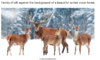
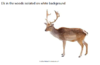

New What the elk?


They definitely seem confused, but worth noting the Elk and Red Deer have been considered conspecific in the past, additionally Alces alces is often called European Elk across much of Europe and Asia.

Pantheraman
Well-Known Member
It's very often said that rhinos have poor eyesight and that black rhinos are the most ready-to-charge rhinos in the world because of it. This, however, is apparently false as a 2008 showed that the eyesight of the Black Rhinoceros is actually as good as a rabbit's.
Retinal ganglion cell density of the black rhinoceros (Diceros bicornis): calculating visual resolution - PubMed.
"A single right retina from a black rhinoceros was whole mounted, stained and analyzed to determine the visual resolution of the rhinoceros, an animal with reputedly poor eyesight. A range of small (15-microm diameter) to large (100-microm diameter) ganglion cell types was seen across the retina. We observed two regions of high density of retinal ganglion cells at either end of a long, but thin, horizontal streak. The temporal specialization, which receives light from the anterior visual field, exhibited a ganglion cell density of approximately 2000/mm2, while the nasal specialization exhibited a density of approximately 1500/mm2. The retina exhibited a ganglion cell density bias toward the upper half, especially so, the upper temporal quadrant, indicating that the rhinoceros would be processing visual information from the visual field below the anterior horizon for the most part. Our calculations indicate that the rhinoceros has a visual resolution of 6 cycles/degree. While this resolution is one-tenth that of humans (60 cycles/deg) and less than that of the domestic cat (9 cycles/deg), it is comparable to that of the rabbit (6 cycles/deg), and exceeds that seen in a variety of other mammals including seals, dolphins, microbats, and rats. Thus, the reputation of the rhinoceros as a myopic, weakly visual animal is not supported by our observations of the retina. We calculate that the black rhinoceros could readily distinguish a 30 cm wide human at a distance of around 200 m given the appropriate visual background."
Retinal ganglion cell density of the black rhinoceros (Diceros bicornis): calculating visual resolution - PubMed.
"A single right retina from a black rhinoceros was whole mounted, stained and analyzed to determine the visual resolution of the rhinoceros, an animal with reputedly poor eyesight. A range of small (15-microm diameter) to large (100-microm diameter) ganglion cell types was seen across the retina. We observed two regions of high density of retinal ganglion cells at either end of a long, but thin, horizontal streak. The temporal specialization, which receives light from the anterior visual field, exhibited a ganglion cell density of approximately 2000/mm2, while the nasal specialization exhibited a density of approximately 1500/mm2. The retina exhibited a ganglion cell density bias toward the upper half, especially so, the upper temporal quadrant, indicating that the rhinoceros would be processing visual information from the visual field below the anterior horizon for the most part. Our calculations indicate that the rhinoceros has a visual resolution of 6 cycles/degree. While this resolution is one-tenth that of humans (60 cycles/deg) and less than that of the domestic cat (9 cycles/deg), it is comparable to that of the rabbit (6 cycles/deg), and exceeds that seen in a variety of other mammals including seals, dolphins, microbats, and rats. Thus, the reputation of the rhinoceros as a myopic, weakly visual animal is not supported by our observations of the retina. We calculate that the black rhinoceros could readily distinguish a 30 cm wide human at a distance of around 200 m given the appropriate visual background."
I am aware of both of these, though I find it a bit curious that whoever was choosing the images were not able to tell how different the various deer looked.They definitely seem confused, but worth noting the Elk and Red Deer have been considered conspecific in the past, additionally Alces alces is often called European Elk across much of Europe and Asia.
That and I'm pretty secure on my methinks that kodkods are not leopards and wolverines are not bears


Frank Buck Zoo in Texas recently installed signage around their gazebo area for animal ambassadors, and they use a picture of a sea turtle for their turtle ambassador.
Frank Buck Zoo
Frank Buck Zoo
In a recent episode of 'The Spark' on Radio 4, a scientist said that a tick is an insect

Charles
Well-Known Member
I don’t know if this is the right place but when zoos just seem to call one species so many different things, there are the common ones of “visayan spotted deer” vs “Philippine spotted deer” and “Celebes crested macaque” vs “Sulawesi crested macaque”
but there are some like “collared mangabey” or “cherry crowned mangabey” or what they’re listed on red list “red capped mangabey” and also “lac alaotran gentle lemur” “lac alaotra bamboo lemur” and what they’re called on red list “Alaotran reed lemur”
would love to hear the other ones that I might have missed
but there are some like “collared mangabey” or “cherry crowned mangabey” or what they’re listed on red list “red capped mangabey” and also “lac alaotran gentle lemur” “lac alaotra bamboo lemur” and what they’re called on red list “Alaotran reed lemur”
would love to hear the other ones that I might have missed

I don’t know if this is the right place but when zoos just seem to call one species so many different things, there are the common ones of “visayan spotted deer” vs “Philippine spotted deer” and “Celebes crested macaque” vs “Sulawesi crested macaque”
but there are some like “collared mangabey” or “cherry crowned mangabey” or what they’re listed on red list “red capped mangabey” and also “lac alaotran gentle lemur” “lac alaotra bamboo lemur” and what they’re called on red list “Alaotran reed lemur”
would love to hear the other ones that I might have missed
There are likely thousands of examples of this, especially when you add in taxonomy-related name changes and places not updating signs. I have an extra spreadsheet for my life lists that's just for keeping track of what name I use for different species.

Also known as Prince Alfred’s deer....when zoos just seem to call one species so many different things, there are the common ones of “visayan spotted deer” vs “Philippine spotted deer”.....
I went to the Paris Menagerie. The gaur had different scientific names on 2 different signs on its enclosureI don’t know if this is the right place but when zoos just seem to call one species so many different things, there are the common ones of “visayan spotted deer” vs “Philippine spotted deer” and “Celebes crested macaque” vs “Sulawesi crested macaque”
but there are some like “collared mangabey” or “cherry crowned mangabey” or what they’re listed on red list “red capped mangabey” and also “lac alaotran gentle lemur” “lac alaotra bamboo lemur” and what they’re called on red list “Alaotran reed lemur”
would love to hear the other ones that I might have missed
If anyone feels in the mood for poking mistake-holes in something, I think I have found the channel for you.
youtube.com/watch?v=hm4kth6AGv8
This particular video .. I found rather painful to watch. The video begins with clips of wapiti to talk introduce the subject deer .. which is fair enough. The narrator then recalls a story from North Carolina about a white-tailed deer regenerating parts of its skeleton - the footage so far, nothing consequential. Until it shows another wapiti, that is. Then it all goes down from there ...
After another montage of white-tailed deer pictures whilst talking about regeneration, the narrator then introduces the subject of reindeer antlers suddenly. Whilst a white-tailed deer is still onscreen. It then talks about antler velvet, which it implies that no other deer has - 'nothing like this has ever been observed in any large mammal'. Then there is a montage of more clips - some of these are reindeer, though most of these are other deer.
From that hallucinogenic segment nothing else in the video really stood out other than some technicalities - in a segment about bears, recalling a particularly large brown bear, one picture showed an unrelated black bear. In a segment about honeybees [as the video seemingly shifts spontaneously between topics], a wasp's nest is used to illustrate from where the bees emerge.
The whole video itself is rather difficult for myself to watch eitherway given the offputting narration and occasional cartoon interference.
youtube.com/watch?v=hm4kth6AGv8
This particular video .. I found rather painful to watch. The video begins with clips of wapiti to talk introduce the subject deer .. which is fair enough. The narrator then recalls a story from North Carolina about a white-tailed deer regenerating parts of its skeleton - the footage so far, nothing consequential. Until it shows another wapiti, that is. Then it all goes down from there ...
After another montage of white-tailed deer pictures whilst talking about regeneration, the narrator then introduces the subject of reindeer antlers suddenly. Whilst a white-tailed deer is still onscreen. It then talks about antler velvet, which it implies that no other deer has - 'nothing like this has ever been observed in any large mammal'. Then there is a montage of more clips - some of these are reindeer, though most of these are other deer.
From that hallucinogenic segment nothing else in the video really stood out other than some technicalities - in a segment about bears, recalling a particularly large brown bear, one picture showed an unrelated black bear. In a segment about honeybees [as the video seemingly shifts spontaneously between topics], a wasp's nest is used to illustrate from where the bees emerge.
The whole video itself is rather difficult for myself to watch eitherway given the offputting narration and occasional cartoon interference.
Did our mammal ancestors live alongside dinosaurs? New research hopes to end long-running debate states "Debate has raged for many years among palaeontologists (who study the earth through fossils) over whether placental mammals, evolved alongside dinosaurs or appeared only after they died out." Placentals include Juramaia, which lived in the Late Jurassic, long before non-avian dinosaurs died out.


PantheraLeoMelanochaita
Well-Known Member
Went to the Bronx Zoo the other day and had an awesome time, but the lion signage said that only one male holds a pride at a time, which is inaccurate because coalitions of two or more male lions are way more successful at holding prides than just one. And on another zoo website it stated that females ambush prey to drive them in the direction of males because they aren't strong enough to take down wildebeest by themselves; in reality, even a single female can take down a wildebeest. Lionesses do recruit males to help them hunt, but typically do that when hunting their largest prey, the Cape buffalo. Lion inaccuracies just really annoy me haha, I feel like a lot of signage just regurgitates the same basic info instead of incorporating all the new things we've learned about them
Went to the Bronx Zoo the other day and had an awesome time, but the lion signage said that only one male holds a pride at a time, which is inaccurate because coalitions of two or more male lions are way more successful at holding prides than just one. And on another zoo website it stated that females ambush prey to drive them in the direction of males because they aren't strong enough to take down wildebeest by themselves; in reality, even a single female can take down a wildebeest. Lionesses do recruit males to help them hunt, but typically do that when hunting their largest prey, the Cape buffalo. Lion inaccuracies just really annoy me haha, I feel like a lot of signage just regurgitates the same basic info instead of incorporating all the new things we've learned about them
Stephen Jay Gould's essay "The case of the creeping fox terrier clone" springs to mind. Or in other words; if those that create popular summaries of species' behaviour and ecology rely on other such popular summaries as their main sources then these outdated 'facts' will just be repeated ad infinitum.

Osedax
Well-Known Member
The most recent season of the zoo documentary "Taronga: Who's Who in the Zoo" was advertised with an African elephant, a hybrid tiger and a Green-winged Macaw - none of these species are currently at Taronga.
African Elephant - not held since around WW2
Hybrid tiger - not since about 1970s (?)
Green-winged Macaw - this one is more recent, they were still there (off-display) until around 2018.
African Elephant - not held since around WW2
Hybrid tiger - not since about 1970s (?)
Green-winged Macaw - this one is more recent, they were still there (off-display) until around 2018.
Last edited:
Eric Carle's Book of Amazing Animals show a chimpanzee and an orang-utan with visible tails