Zoological inaccuracies & mistakes

A few years ago I saw a YouTube video that was titled something along the lines of, "Top 10 Most Dangerous Animals". One of the animals included in the list was, I think, the, "cigarette snail" (probably the geography cone). But while the captions explained why that snail species is dangerous, the footage that accompanied them showed a plain old garden snail.
If it was called a cigarette snail that's definitely some kind of cone snail. the name is mostly only used in australia, the idea being that if you get stung, you have about enough time to smoke a cigarette before you die. plenty of footage in those kinds of videos don't match up with the animal they're talking about, i've seen them play footage of monitor lizards when they're talking about komodo dragons, emu when they mean cassowary or vice versa, stuff like that.
 
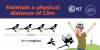
Recently, the Australian Capital Territory Health Directorate posted this graphic about social distancing to their Facebook page.
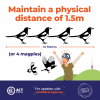
ACT mag 1.jpg Upon being notified that it does not feature the correct species of magpie, they responded by editing the appearance of the birds as follows.
ACT mag 2.png
 

Attachments

  • ACT mag 1.jpg
    ACT mag 1.jpg
    41.4 KB · Views: 122
  • ACT mag 2.png
    ACT mag 2.png
    255.9 KB · Views: 122
Recently, the Australian Capital Territory Health Directorate posted this graphic about social distancing to their Facebook page.
View attachment 454178 Upon being notified that it does not feature the correct species of magpie, they responded by editing the appearance of the birds as follows.
View attachment 454179
At least they fixed their mistake, few of the other examples on this list can boast about that :)
 
full


It shows a picture of an Eastern Bearded Dragon (Pogona barbata) when the exhibit contains Central Bearded Dragon's.
 
One of my favourite zoological fumbles:

full


This is a publicity pamphlet for the 1991 release of tuatara postage stamps in New Zealand, raising money for WWF (The Worldwide Fund For Nature). The stamps themselves did show actual Tuatara!

This has to be one of the most ridiculous zoological inaccuracies and especially given that this was by the WWF and that a green iguana doesn't even look remotely similar to a tuatara. o_O

But then again (as usual with this organization) the priority was getting money from the public rather than providing any type of meaningful education for them.
 
Last edited:
I keep on reading that all adult female marsupials have pouches. The authors often mention species that lack pouches.
 
Here's one of the funniest I've come across. This was in DK's 'Snakes and other Reptiles and Amphibians'. See how many mistakes you can spot on this page alone :D:


(Press on the pic to go the photo in the gallery which you can then enlarge by pressing the magnifying glass icon :))
DK isn't the best at accuracy, I'll take some pictures of things I find in another book.
 
Here's one of the funniest I've come across. This was in DK's 'Snakes and other Reptiles and Amphibians'. See how many mistakes you can spot on this page alone :D:


(Press on the pic to go the photo in the gallery which you can then enlarge by pressing the magnifying glass icon :))

That picture looks remarkably like a saltwater crocodile to me o_O :confused:

Plus it is strange how in some of the pictures they do actually appear to show American alligators. There is evidently some very shoddy editing going on at DK publishing.
 
That picture looks remarkably like a saltwater crocodile to me o_O :confused:

Yup - almost. Almost the inset pictures plus the larger two are the same photo of a Nile crocodile zoomed in/out (DK always use the same photo for some reason. The only pics on the page that actually depict alligators are the closeup of the teeth and the alligator farm.

Plus it is strange how in some of the pictures they do actually appear to show American alligators. There is evidently some very shoddy editing going on at DK publishing.

Yeah, normally it’s quite a trustworthy but occasionally you do find mistakes in the lower budget books like this one. For example I have about 5 more wildlife books from them and at least 3 of them are excellent and have (near to) no mistakes that I can see.
 
Yup - almost. Almost the inset pictures plus the larger two are the same photo of a Nile crocodile zoomed in/out (DK always use the same photo for some reason. The only pics on the page that actually depict alligators are the closeup of the teeth and the alligator farm.


Yeah, normally it’s quite a trustworthy but occasionally you do find mistakes in the lower budget books like this one. For example I have about 5 more wildlife books from them and at least 3 of them are excellent and have (near to) no mistakes that I can see.

Ah , almost , a Nile crocodile :confused:

Yes, that kind of bad editing is quite a shame as I know DK do produce some fairly decent popular science encylopedias and reference books.
 
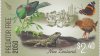
In 2018, a set of postage stamps were released in New Zealand in celebration of the Predator-Free 2050 goal. One of the stamps featured the foreign Red Admiral species Vanessa atalanta when the stamp was supposed to feature New Zealand's endemic and only Red Admiral species; Vanessa gonerilla.
Admiral Stamp.jpg
Also, recently, New Zealand supermarket chain Countdown started distributing the "Super Insects" card game, which was created to educate children about the insects that are found in New Zealand. A newspaper advertisement for the game featured a Lucanus species, or something similar. New Zealand does not have any stag beetles that closely resemble it. Fortunately, the "Super Insects" webpage does not reproduce this mistake.
Beetle.png
 

Attachments

  • Admiral Stamp.jpg
    Admiral Stamp.jpg
    76.7 KB · Views: 121
  • Beetle.png
    Beetle.png
    448.9 KB · Views: 13
Last edited:
Many people think that the aye-aye's twig-like 3rd finger is its longest finger. The thicker 4th finger is longer.
 
Back
Top