But are you really going to use Xerus in a kid's song. Same thing could be said with Xenarthrans, Plenty of zoos are going to have some sort of Xenarthran on exhibit, but that wouldn't make sense to include in a kid's song. This also isn't species found in zoos, it's specifically the Saint Louis Zoo- which, to the best of my knowledge, wouldn't have x-ray fish, nor am I aware of any US Zoos keeping them.Quite a few zoos have x-ray fish. I've seen a card with X for Xerus, a genus of ground squirrels
You are using an out of date browser. It may not display this or other websites correctly.
You should upgrade or use an alternative browser.
You should upgrade or use an alternative browser.
Zoological inaccuracies & mistakes
- Thread starter Elephas Maximus
- Start date

I think the same about the letter "U" - though interestingly, a urial appears to be featured under "R" as 'ram' - though to my knowledge, STL has rhinos - so would it not have made sense to use those under "R"? Then again, I guess not many kids would know what a urial is, so makes sense to place the "ram" under R whilst making a silly joke under "U".- Calling caiman alligators really isn't a big deal, as caimans are part of the family Alligatoridae.
- Had you watched with sound, you would've heard them say after the bongo, "unicorn? I don't think so". Seems more like a joke that fell flat than an inaccuracy (would've been a ridiculous error to make)
- The two non-animals ones are ridiculous though. Good luck finding an animal beginning with "x" at the zoo to use, but I'm sure something could've been found for "W", whether it be wolves, wild dogs, wildebeest, warthogs, or something else entirely.
To my knowledge, the large aviary at STL has bobwhite quail, so would have been nice to have used those under "Q" rather than guineafowl seen in the video.
I can, to some extent, excuse the cop-out at "X" - chances are there was no obvious option available for 'X' at the zoo - and even if STL held four species of Xenarthran in 2007 [two sloths, one anteater and armadillo] if children were unaware of a urial, Xenarthran would surely fly over their head. For W though STL had warthogs in 2007 - surely from the Lion King craze a few children would be aware of Warthogs' existence?
For Y it is a bit more understandable if disappointing - again no obvious choice at the zoo - but hey, kids, this animal looks kind of like a yak - so, as the child in the video says, "I guess it's close enough"!
It is what it is...
My brother had a children's animal alphabet book that had X for Xenurus (naked-tailed armadillo).But are you really going to use Xerus in a kid's song. Same thing could be said with Xenarthrans, Plenty of zoos are going to have some sort of Xenarthran on exhibit, but that wouldn't make sense to include in a kid's song. This also isn't species found in zoos, it's specifically the Saint Louis Zoo- which, to the best of my knowledge, wouldn't have x-ray fish, nor am I aware of any US Zoos keeping them.
Again, hardly any kids know what a Xenurus is. And it's now an old name for what is now Cabassous. And, most integrally, STL didn't have naked-tailed armadillos in 2007. [And doesn't today, either. And most likely did not in the intervening time between the footage being filmed and the present day.]My brother had a children's animal alphabet book that had X for Xenurus (naked-tailed armadillo).

But are you really going to use Xerus in a kid's song.
Weirdly, it's what they use for 'X' in the animal alphabet inside the lids of Petits Filous fromage frais..!
It seems that STL didn't have animals representing all letters of the alphabet so shouldn't have done an STL Zoo animal alphabet.Again, hardly any kids know what a Xenurus is. And it's now an old name for what is now Cabassous. And, most integrally, STL didn't have naked-tailed armadillos in 2007. [And doesn't today, either. And most likely did not in the intervening time between the footage being filmed and the present day.]
I don't actually think that this was comissioned by the STL Zoo officially in any proximity - not to my knowledge anyways. Other videos on the channel seem to make use of multimedia software to some degree - so chances are whoever is behind the channel had some experience with using it. The reason as to the video's creation, however, I am not sure - as I am not sure as to its intended calibre - seemingly enough to demand a child's voice-over, at any rate.It seems that STL didn't have animals representing all letters of the alphabet so shouldn't have done an STL Zoo animal alphabet.

Not to mention the American children's book series "Sweet Pickles" whose cast of 26 charecters are animals each representing one letter of the alphabet similar to their traits. Albeit the art seems off and some species don't look like what they are supposed to be.Weirdly, it's what they use for 'X' in the animal alphabet inside the lids of Petits Filous fromage frais..!

Again, hardly any kids know what a Xenurus is. And it's now an old name for what is now Cabassous. And, most integrally, STL didn't have naked-tailed armadillos in 2007. [And doesn't today, either. And most likely did not in the intervening time between the footage being filmed and the present day.]
It's called learning
I'm listening to 'Nature Table' on BBC Radio 4 (Radio 4 - Listen Live - BBC Sounds). Lucy Cooke has said that the naked mole rat is the only mammal with a social system similar to that of social insects. I'm surprised that she didn't know that the Damaraland mole rat shows the same kind of behaviour.
In a review of 'Dogs in the wild: Meet the family', the Daily Mail Weekend magazine said the maned wolf ‘is the only last survivor left on Earth of a unique subspecies’,

I’m surprised they didn’t get that a bit more wrong, tbhIn a review of 'Dogs in the wild: Meet the family', the Daily Mail Weekend magazine said the maned wolf ‘is the only last survivor left on Earth of a unique subspecies’,

The cat on the image is a Marble Cat, which is a domestic variety (a form of Bengal Cat). It isn't a Marbled Cat (Pardofelis).the extremely rare and unknown Marbled Cat though (whoever said it's a hybrid is mistaken I believe or thinking of Bengal Cats, unless I missed the humour, Marbled Cats are so rare and haven't been crossed with domestic cats don't believe).

The cat on the image is a Marble Cat, which is a domestic variety (a form of Bengal Cat). It isn't a Marbled Cat (Pardofelis).
Oh I thought it was meant to imply Marbled Cat sorry
Well yes, that was the point in the original post. The image was clearly supposed to be of a Marbled Cat given the context, but they used a photo of a Marble Cat instead. Therefore it is an error.Oh I thought it was meant to imply Marbled Cat sorry

Kakapo
Well-Known Member
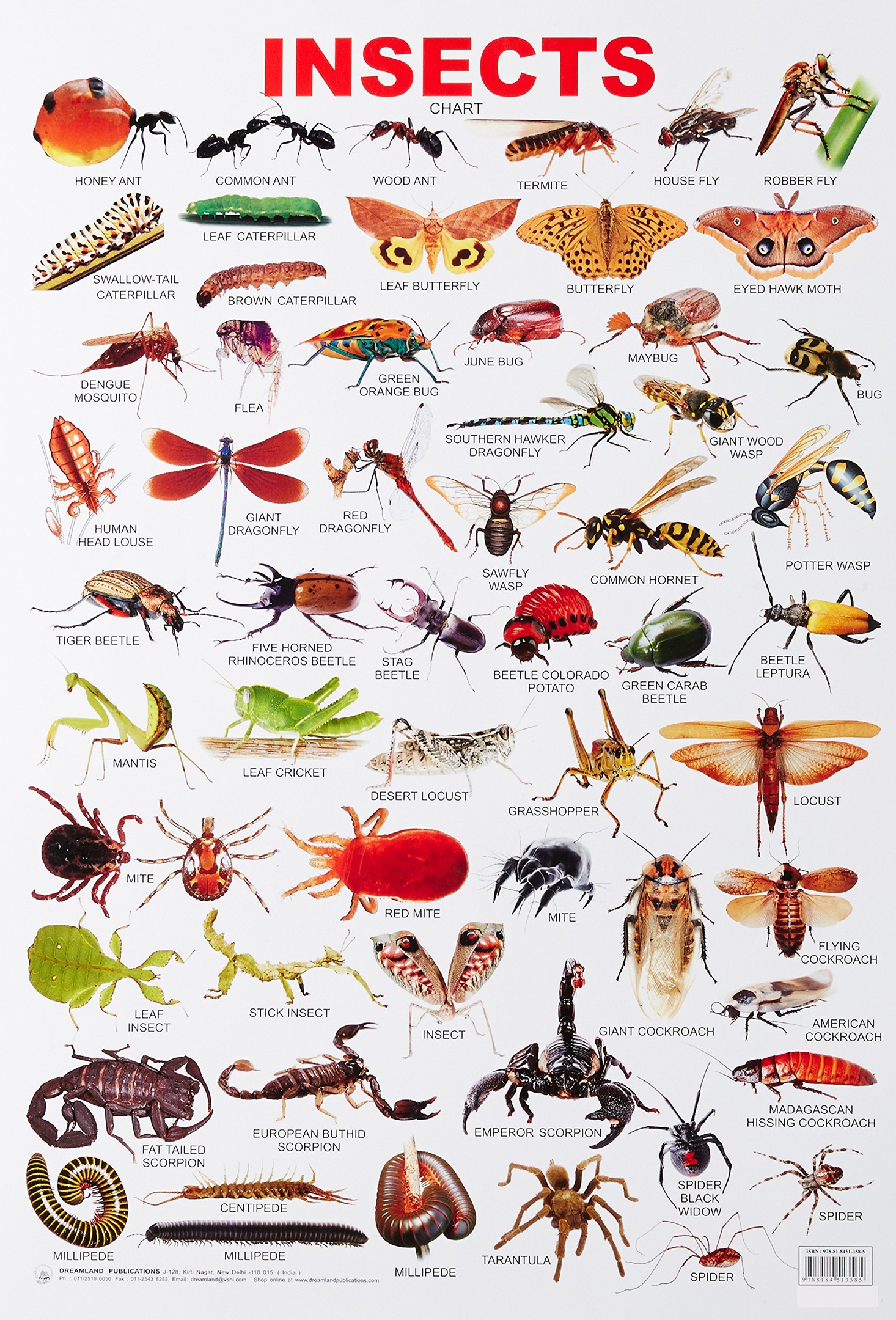
As Steveroberts resurrected this old (agust 2020) post (where the question of the marbled cat was already discussed shortly after), I checked said post and saw the nightmare that is the insect poster. Besides the errors already mentioned by ElephasMaximus, there are more:
There is no such concepts as "common ant", "leaf caterpillar", "brown caterpillar", "red dragonfly", or "green orange bug", except for any ant that is common, any caterpillar that thrives on leaves (basically every one), any caterpillar that is brown in color, any dragonfly whose males are red, and any bug that is green and orange. The species depicted as "green orange bug" is Cantao ocellatus and if you want to use a common name for this species, would be "ocellated shield bug". Or just "shield bug" or even simply "bug" would be more correct.
"House fly" is a flesh fly (family Sarcophagidae). Different family, as related with a house fly as a cat with a dog.
"Leaf butterfly" is Eudocima tyrannus. The many species of the genus Eudocima are called "fruit-piercing moths". Calling it "leaf butterfly" can only lead to a mistake with the completely different "true" leaf butterfly, Kallima inachus.
"Dengue mosquito" designates basically the species Aedes aegypti (a more widely used common name for it would be Yellow fever mosquito". The mosquito in the image is not Aedes aegypti. Just "mosquito" would have been much better.
The kind of saturnid moth already noticed by Elephas Maximus is Antheraea polyphemus. It's a extremely well known species because it's North American. "Polyphemus moth" would have been appropiate, as would have been just "moth".
I had to check Google to know what "Giant wood wasp" is it. It's used only for the Urocerus gigas, that can't be more different from the small crabronid wasp of the image.
The "giant dragonfly" also was noticed by Elephas maximus. I don't know if a real species of dragonfly have the common name of "Giant dragonfly", but I highly doubt it. The species depicted is a Calopteryx, probably Calopteryx virgo, the usual common name for it is "Beautiful demoiselle".
"Tiger beetle" is not a tiger beetle (family Cicindelidae) but a ground beetle (family Carabidae) and more precisely a Carabus, I don't know which one. Not a very giant mistake, as sometimes Cicindelidae are included within Carabidae. It would be roughly the same as to call a red river hog "Peccary".
"Beetle colorado potato" should be "Colorado potato beetle". "Beetle leptura" and "Spider black widow" have similar syntaxis problem.
"Green carab beetle" should be probably "Green scarab beetle". If you write "carab", entomologists would think in Carabus (ground beetles) instead chafers. Anyway, "Green scarab beetle" also would not designate any species, but just any of the hundreds of species of scarab beetles that casually are green in colour. The species depicted could belong to genus Chrysina.
"Leaf cricket" it's a less used alternative name for "katydid", so, any member of the big family Tettigoniidae. This is not even an Ensifera. It's a nymph of locust, probably Egyptian locust (Anacridium aegyptium).
"Desert locust" is illustrated with a female Calliptamus, by the image I think is Calliptamus wattenwylianus. Well, Calliptamus species are often called locusts (despite being quite small), and this species tend to favour more arid habitats than the other two species of same genus native of my country, however, when one have the name "Desert locust" inmediately the species that is associated with this common name is the completely different desert locust (Schistocerca gregaria).
While ticks are technically mites (superorder Acari), would have been much better to just call them ticks.
Again there is no such thing as "red mite" except for any mite that is red (the vast majority of free-living mites are red).
In same manner there is no such thing as "flying cockroach" except for any cockroach that is able to fly. The fact the desiccated individual used for photo was prepared with wings spread, don't make it a "flying cockroach".
European buthid scorpion is an Euscorpius and these were never considered in the family Buthidae.
And the biggest error of all: Use of common names instead scientific names for arthropods
By Dreamland Publications, India
Spiders, scorpions, myriapods, ticks and daddy long legs (named spider) as insects
"Eyed hawk moth" is some species of Saturniidae moth
"American cockroach" is Blaberus
"Hornet" is other wasp, presumably Polistes sp.
"Tiger beetle" is Ground beetle
"Bug" is Eurasian Bee Beetle
Not a Giant dragonfly
Simply "insect" is Pterochroza ocellata
There is no such concepts as "common ant", "leaf caterpillar", "brown caterpillar", "red dragonfly", or "green orange bug", except for any ant that is common, any caterpillar that thrives on leaves (basically every one), any caterpillar that is brown in color, any dragonfly whose males are red, and any bug that is green and orange. The species depicted as "green orange bug" is Cantao ocellatus and if you want to use a common name for this species, would be "ocellated shield bug". Or just "shield bug" or even simply "bug" would be more correct.
"House fly" is a flesh fly (family Sarcophagidae). Different family, as related with a house fly as a cat with a dog.
"Leaf butterfly" is Eudocima tyrannus. The many species of the genus Eudocima are called "fruit-piercing moths". Calling it "leaf butterfly" can only lead to a mistake with the completely different "true" leaf butterfly, Kallima inachus.
"Dengue mosquito" designates basically the species Aedes aegypti (a more widely used common name for it would be Yellow fever mosquito". The mosquito in the image is not Aedes aegypti. Just "mosquito" would have been much better.
The kind of saturnid moth already noticed by Elephas Maximus is Antheraea polyphemus. It's a extremely well known species because it's North American. "Polyphemus moth" would have been appropiate, as would have been just "moth".
I had to check Google to know what "Giant wood wasp" is it. It's used only for the Urocerus gigas, that can't be more different from the small crabronid wasp of the image.
The "giant dragonfly" also was noticed by Elephas maximus. I don't know if a real species of dragonfly have the common name of "Giant dragonfly", but I highly doubt it. The species depicted is a Calopteryx, probably Calopteryx virgo, the usual common name for it is "Beautiful demoiselle".
"Tiger beetle" is not a tiger beetle (family Cicindelidae) but a ground beetle (family Carabidae) and more precisely a Carabus, I don't know which one. Not a very giant mistake, as sometimes Cicindelidae are included within Carabidae. It would be roughly the same as to call a red river hog "Peccary".
"Beetle colorado potato" should be "Colorado potato beetle". "Beetle leptura" and "Spider black widow" have similar syntaxis problem.
"Green carab beetle" should be probably "Green scarab beetle". If you write "carab", entomologists would think in Carabus (ground beetles) instead chafers. Anyway, "Green scarab beetle" also would not designate any species, but just any of the hundreds of species of scarab beetles that casually are green in colour. The species depicted could belong to genus Chrysina.
"Leaf cricket" it's a less used alternative name for "katydid", so, any member of the big family Tettigoniidae. This is not even an Ensifera. It's a nymph of locust, probably Egyptian locust (Anacridium aegyptium).
"Desert locust" is illustrated with a female Calliptamus, by the image I think is Calliptamus wattenwylianus. Well, Calliptamus species are often called locusts (despite being quite small), and this species tend to favour more arid habitats than the other two species of same genus native of my country, however, when one have the name "Desert locust" inmediately the species that is associated with this common name is the completely different desert locust (Schistocerca gregaria).
While ticks are technically mites (superorder Acari), would have been much better to just call them ticks.
Again there is no such thing as "red mite" except for any mite that is red (the vast majority of free-living mites are red).
In same manner there is no such thing as "flying cockroach" except for any cockroach that is able to fly. The fact the desiccated individual used for photo was prepared with wings spread, don't make it a "flying cockroach".
European buthid scorpion is an Euscorpius and these were never considered in the family Buthidae.
And the biggest error of all: Use of common names instead scientific names for arthropods
Kakapo
Well-Known Member
No. The mistakes were in the first episode. I did an Open University course using the DVDs and the mistakes had been rectified by then.
From memory, the mistakes were:
Mammals evolved from reptiles
? All female marsupials have pouches
Marsupials only live in Australasia and the Americas
Thylacoleo was one of the earliest marsupials (implied in a short montage of pictures)
AFAIK, mammals evolved from reptiles, all female marsupials have pouches, and marsupials only live in Australasia and the Americas. I can't speak for Thylacoleo as I don't know from memory in which age it lived. What's wrong here then?
Mammals are synapsids and synapsids diverged from early amniotes before reptiles did, so mammals didn't evolve from reptiles.AFAIK, mammals evolved from reptiles, all female marsupials have pouches, and marsupials only live in Australasia and the Americas. I can't speak for Thylacoleo as I don't know from memory in which age it lived. What's wrong here then?
About 20% of marsupial species have pouchless females. These include many opossums as well as the numbat.
Bear cuscuses and some other marsupials live in Sulawesi, which is part of Asia.
Thylacoleo lived from about 2 million years ago to about 4,000 years ago, which is relatively recent in marsupial history.