Zoological inaccuracies & mistakes

wW1xlOr.jpeg

"Encyclopedia of Animals - A Family Reference Guide" by Parragon (2012) seems pretty okay as far as zoological stuff goes. But when I flipped open this book from my tween years to a random page, I saw this "Rufous Hummingbird", that not only doesn't resemble a Rufous Hummingbird, but no hummingbird I've ever seen.

Sidenote: What bird is this?
 
wW1xlOr.jpeg

"Encyclopedia of Animals - A Family Reference Guide" by Parragon (2012) seems pretty okay as far as zoological stuff goes. But when I flipped open this book from my tween years to a random page, I saw this "Rufous Hummingbird", that not only doesn't resemble a Rufous Hummingbird, but no hummingbird I've ever seen.

Sidenote: What bird is this?
certainly looks like a [European] robin to me
 
Yeah, that's a European Robin. How did that mix up even happen?
Could have been the book, of at least that illustration, was originally published in the UK, and when published in the North American market, an editor decided to give it a name more aligned to that market. They probably did not have a budget (or maybe did not think it necessary) to consult a zoologist.
 
1fe3cb72d13ce185b4f4e53f830bfd0b.jpg

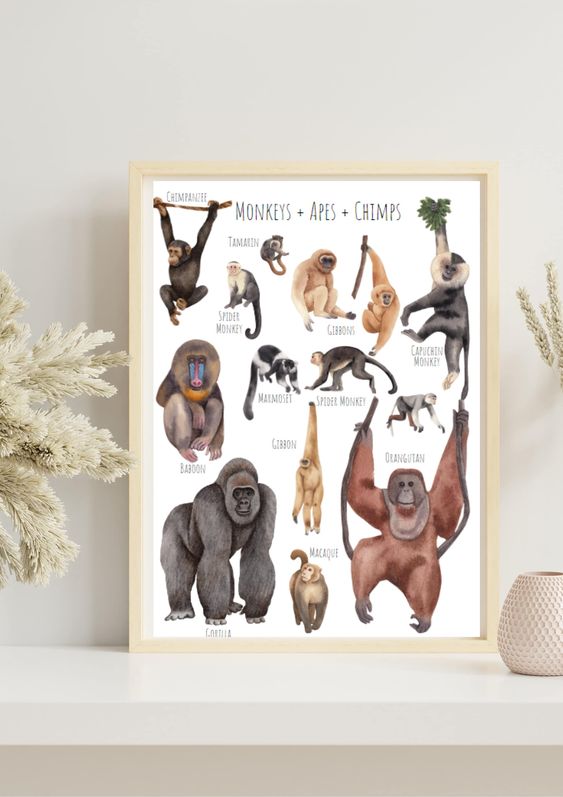
Pick your favourite mistake from this Etsy poster (Sorry for the low quality.) Mine is the lion-tailed macaque being called a Capuchin monkey.

There's also a Mandrill being labelled a baboon, the black and white ruffed lemur labelled as a marmoset, and the capuchin labelled as a spider monkey.
 
seaotter1-full.jpg


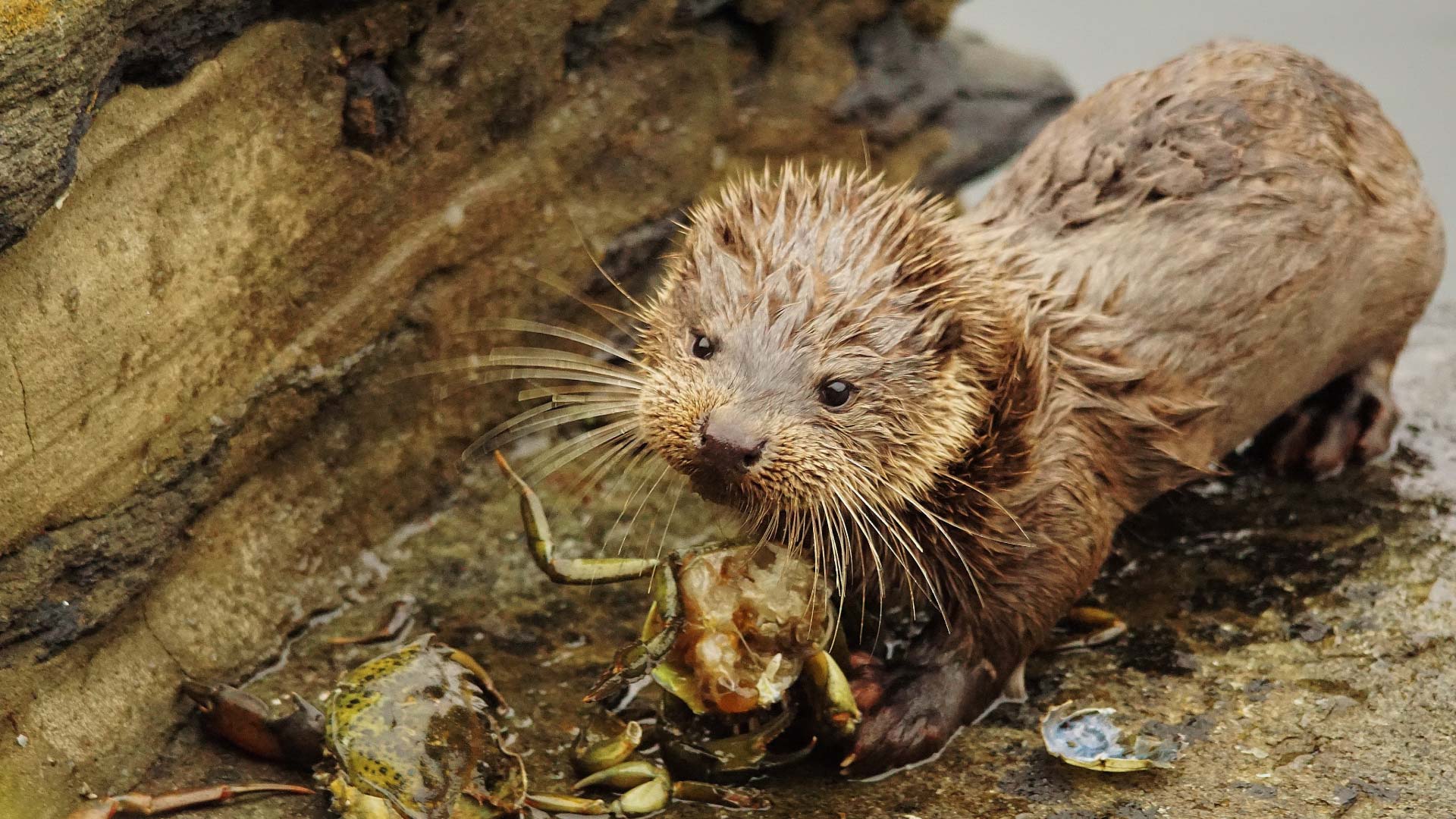
The listing for "Sea Otters" on SeaWorld Abu Dhabi's website shows a picture of a river otter (the claws and lack of flippers on the hindlimbs make this obvious).

https://www.seaworldabudhabi.com/en/realms/arctic

Given the crab this could perhaps be the chungungo or marine otter from South America, and perhaps that is why the mistake occured.

That said, on Google I also found this image used in a Dutch folder on the Chinese mitten crab. We do have otters in Europe, but the Eurasian otter looks a bit different to this one.
 
1fe3cb72d13ce185b4f4e53f830bfd0b.jpg

Pick your favourite mistake from this Etsy poster (Sorry for the low quality.) Mine is the lion-tailed macaque being called a Capuchin monkey.

There's also a Mandrill being labelled a baboon, the black and white ruffed lemur labelled as a marmoset, and the capuchin labelled as a spider monkey.
Also implying that chimps are neither monkeys nor apes!

Some interesting looking spider monkeys; and a ludicrously over-sized “capuchin” indeed.

But what intrigues me most is why two gibbons have regulation sized heads; and the other has a pin-head. :p:p
 
1fe3cb72d13ce185b4f4e53f830bfd0b.jpg

Pick your favourite mistake from this Etsy poster (Sorry for the low quality.) Mine is the lion-tailed macaque being called a Capuchin monkey.

There's also a Mandrill being labelled a baboon, the black and white ruffed lemur labelled as a marmoset, and the capuchin labelled as a spider monkey.
And you've got the douc there, poor chap, just wanderin' around unlabeled.
Or did they actually label him as 'orangutan' and leave the orangutan hanging?o_O
 
I still remember how the children's cartoon The Magic School Bus had an episode that featured a bullfrog that was kept as a class pet. At some point the pet bullfrog escapes into a swamp. When the pet bullfrog is relocated, it is discovered that the pet bullfrog has now paired up with a wild bullfrog, so the class's students decide not to take the pet bullfrog back into captivity. At the very end of the episode, those two bullfrogs are shown as having three baby bullfrogs in tow.

The Magic School Bus was a cartoon that seemed paradoxical on paper; it was educational, but had a fantastical premise. The parts that were fantastical, however, were usually meant to obviously be unrealistic to its target audience. But while it is unlikely that this cartoon would have caused many kids to believe that technology exists which can shrink humans to microscopic size, an inaccurate depiction of the bullfrog's life cycle is probably not as immediately obvious.
 
The website of New Zealand's Department of Conservation says that the introduction of the Plague Skink (Lampropholis delicata) to Hawai'i has caused, "the serious decline of native skink species", there. In reality, Hawai'i has almost certainly never had native skinks. There is a remote chance that the Azure-tailed Skink (Emoia impar) is native to Hawai'i, but it was most likely introduced to there by early Polynesian settlers.
 
A sign in Taronga Zoo’s new reptile house says Rhinoceros Iguana are found on three islands: Hispaniola, Haiti and Dominican Republic.
 
Last edited:
The website of New Zealand's Department of Conservation says that the introduction of the Plague Skink (Lampropholis delicata) to Hawai'i has caused, "the serious decline of native skink species", there. In reality, Hawai'i has almost certainly never had native skinks. There is a remote chance that the Azure-tailed Skink (Emoia impar) is native to Hawai'i, but it was most likely introduced to there by early Polynesian settlers.
well, a natruralized species is in any chance better then a new invader.
 
Back
Top