[I have locked this thread after moving it to the Myanmar forum. Sebbe67 is an internet hoaxer from Sweden who has never been to Myanmar, so everything in this thread is either imaginary or based on internet blogs of other genuine travellers.
- Chlidonias]
Hello,
I though it was about time to create a seperate thread about the zoos and wildlife centres here in Myanmar and my write about my visits so people may get a better knowledge about the zoos in this country.
I have been living here in Myanmar over 1 year now but I have visited very few zoos or wildlife centres in the country so far, probably becuase the small number but also because I dont like visiting zoos were the animals are kept in appauling conditions, something that sadly is a common thing here, which I largely base on how poorly most "pets" (apart from livestock) is cared for in this country
Unlike close by Thailand were there is plenty of rehabilitation centres and zoos, the number of either of these in Myanmar is very small (should I say luckily?). The lack of rehabiliation centres in the country may be becuase the past and present isolation in this country and the zoo in Yangon is the only relatively large and well known outside the country and therefore also the only zoo that foreign people choose to visit (if they now visit a zoo during their stay in Myanmar that is).
Yangon Zoo Garden
This is the zoo located in Yangon (or Rangoon), the capital of Myanmar. And also being the only zoo in the Yangon area to my knowledge, never heard of any rehab centres or safari parks from this area. I usually take the time to visit Yangon zoo for 1-2 hours every time I have the occasion to drive up to the capital for buisness.
When I first visited the zoo I expected to find alot of animals in neglect and poorly cared for but the zoo showed to be not as bad as reported by many people I had spoke with which had visited the zoo a few years previously. Sure there is still alot that can be improved and especially the encloasers leave much to wish for.
The Yangon zoo is well known for its past breeding succes of Takin, a species they still keeps but with less breeding succes than in the past it seems like at least
The most important species they now keep is with out doubt the Burmese Brown-antlered deer of which the zoo has distributed a very large number to other Asian zoos as well as several zoos in Europe and North America. They always seems to have a large herd present and they seems to be breeding in large numbers in Yangon. They have also released large numbers in the wild over the years. One can say that Yangon has played a very important role, to say to least in saving this species from extinction. Unfortunely the encloaser in the zoo itself leaves much to wish for. Its only consist of rocks and dirt and has since long lost all the vegetation, looks even worse in the rain season when deep mud cover most of the encloaser. Their muntjac and hog deer encloasers is both considerbly better and is both spacy as well as lush and green at least parts of the year.
Other ungulates they keep in the zoo is Southern White rhino, Plain zebra, African savannah Buffalo, sambar, axis and mouse deer.
My favoruite part of the park is the large birdlake in the zoo, were you in the past could rent a small boat and paddle around on your own, but as aggresive pelicans became a problem they apparently stopped renting out boats. Some wild waterbirds being resident in the lake being spot-bellied pelicans (with a few pairs breeding on a island in the middle of the lake in the late 1990s), Grey heron, Great-billed heron, cattle egret, spot-bellied duck and comb duck. Its difficult to know which other of the birds belongs to the zoo but there is often large number of egrets and whistling-ducks present on the lake.
A pair of captive Sarus cranes as well as a single crowned crane is resident around the lake for years, spot-bellied pelicans belonging to the zoo is also present on the lake, as is a few Dalmatian pelicans, mandarin ducks, black swans and night herons (black-crowned and rufous). I have seen a variety of other ornamental ducks in the past but they seems to change often. My bar-headed goose I had before was born in Yangon and I believe they still keep and breed these but i have not seen any.
A few pairs of White-winged wood ducks were occasionally visit the lake in the early 1980s and apparently some of these captured by the zoo as it was mantained in 1985-1988 by the zoo, also these living on the lake. The zoo still mantained it in 2003 but I have not see any all since. A Greater adjutant was brought into the zoo in 1991 but didnt live for more than a few months. The Ardea insignis has also been kept in this zoo in the late 1990s, also that a wild bird that didnt survive for more than a few months.
They have also kept Lesser adjutant wooly-necked stork but somewhat failed with mantaining either, the last Lesser adjutant died sometime in 2006 I believe. The Asian openbill having a semi-wild colony in the grounds of the zoo. I spoke to a keeper in June 2007 and there was some interest in getting storms stork and woolly-necked stork from Indonesia.
The most interesting bird in Yangon zoo being their hornbills, they have had Tickels brown, white-crowned, wrinkled and plain-poached hornbills in the past but i think they have breed few and their populations have died out, the only hornbill of any interest they keeps now is Aceros nipalensis and I believe breeds quite succesfully (mostly to release into the wild).
They keep a large number of common asian species of parrots, galliformes and birds of preys, most of these common in zoos around the globe. Most interesting being their collection of silver pheasants probably (keep 5 different) which they keep in decent encloasers next to each other, make you realize how divserse this species is.
Among the worst part of the zoo is how they keep their herd of Burmese elephants, which are kept in appauling conditions. They are kept chained under a small sun shade during most of the day while being feed with all sorts of things by passing visitors, which means that the only thing they does during the day is standing and begging for food all day, if they are lucky they are allowed to walk a 20min round a few times a day, earlier have the opporunity for kids to ride on the elephants but after some accidents they have stoped with this, the elephants are used in a few shows a few times a week, that remainds of those in circuses.
Most of the primates encloasers is really dated and boring, needs to be updated or the zoo needs to restrict themselfes to fewer species, as it is now they most of their Dusky langurs is kept in mixed groups togehter with Barbes Langurs, which means that probably most of their langurs is hybrids, no conservation value at all in that. The zoo has in the past been breeding eastern holock gibbon but I havent seen any increase in numbers or any infants on any of my visits and their encloaser is also is bad need of a update.
All their bears (asian black ans sun) lives in concrete pitts and they spend the days sitting in their asses and starring at the visitors which happily thrown down all sorts of food to them, they only behaviour I have ever seen the bears doing is sitting and begging for food, except for those already being heavily overweight which spends most of their time sleeping. Their encloasers is really pittiful and have probably not been updated all since the zoo first open.
The zoo has a really huge number (easily over 150) of macaques on display (4-5 species), and most of them show the same behaviour as the bears, spending most of the day sitting by the bars, reaching out their hands and begging for food from the visitors.
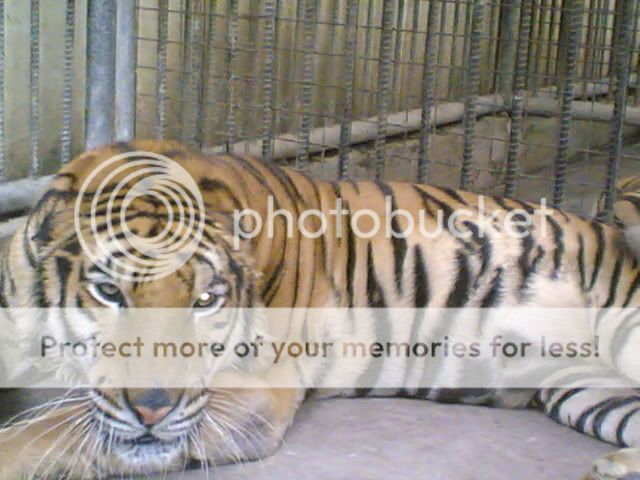
They have keept Indochinese Tiger in the past in the zoo, and has also been succesfully in breeding this, for some reason they have choosed to replace them with bengal Tigers of which they have had some succes with, but alot of the cubs has been raised by humans and therefore elemenating any serious attempts to try and release any back into the wild. The tiger encloasers is also very boring, basically a concrete floor and iron bars, some of them is quite spacy and I have not seen any tigers that looks abused or in bad shape but they have noting to stiumulate themselfes with and it looks like they are very bored.
The case is same for their Indian and Indochinese leopards, they are kept in large encloasers and seems to be in good condition but being very under stimulated. They keep a number of smaller cats such as Leopard and clouded leopard.
Other carnivores they keep is otters (2 species), which also spends most of the days begging food for visitors and these are among the most popular animals in the zoo to feed as they have become very good at catching food thrown in, their pools is often very dirty parts of fish and other food thrown isnt cleaned away. They keep a large number of small carnivores such as common, small-toothed, banded and masked palm civets, lesser and greater indian civet, Malay civet, linsang as well as crab-eating and Indian grey mongoose. I have seen Chinese Red Panda here several times but not on my last visits, may just have been moved to a encloaser and that I has missed them.
The zoo keep both Pygmy and Common Hippos and both are kept in similar, boring, encloasers, quite spacy but the pools are poor and it looks like being way to small for the common hippos which has to lay right next to each other if they want to take a bath together, and as they spend most of their time in the pool, if they are not being feed by visitors, a larger one would be very advicable. The floor in the common hippon encloaser is concrete while the one in the pygmy hippo encloaser consist of sand, at least during the short dry season, but the sand is usually washed away during the rain season and then the pygmy hippos has to walk around on a concrete floor aswell.
Their reptile collection is very boring and given the high number of endangered turtles and other reptiles found in the country this group of animals could really be well displayed if there had been a interest to do so, the only reptile (except the siamese crocs which is gone now) of any interest I have seen here is their big-headed turtles, which they luckily breeds quite many of each year. Other is mostly common box turtles, mangrove monitor, hybrid crocs, large pythons (retic, burmese, Indian, blood and short-tailed) as well as a few other snakes
Mammals that has left the collection in the last few years (2003-2007) is Pangolins of which I think they have had both Indian and Sunda, neither seems to have lasted very long. Large-spotted civet, Cougar (I have not seen any for several years now), black leopards (yeah, not a true species but still), jackal, red giant flying squirrel, Bandicoot rat (lesser and greater), plenty other other rodents (keep very few rodents now) and siamese crocodile.
I would give Yangon zoo 4 out of 10.
The most positive is that they run several breeding programmes for species being highly endangered in the wild, such as Rufous-necked hornbill, brown-antlered deer, big-headed turtle and hog deer for reintroduction purpose. And has breed large numbers of Eastern hoolock gibbon, Takin, Indochinese tiger and siamese crocodiles in the past. But still, most of these lives in very boring encloasers in the zoo itself and it would probably be better to create a seperate, more modern, breeding facility for these sepcies, keeping most of them off display would also be good as thefts has been a common occurence in the past.
The zoo should improve the bird lake, phase out all non-native ducks and replace these with native water birds, perhaps lesser adjutant or some asian stork. Move the single remaning crowned crane to some other zoo were others are kept.
Animals such as common hippo, white rhino, african lion, african buffalo axis deer and common palm-civet should be phased out completely so that the zoo can restrict themself to asian species exclusively and restrict themself to species they can care for properly.
The Pygmy hippos should be moved to a zoo that can care for them better, to be honest aim very supprised to find a species like this in a zoo such as Yangon.
The bearspits should have been demolished a long time ago, if there is not financial possible to build new and much better encloasers, move the bears to some bear sanctuary in Thailand or India.
The elephants should be moved out of the zoo to a place which can care for them properly.
Increase the number of primates in the zoo and stop cross bred the langurs, stop breeding the macaques completely and phase out the hoolock gibbons.
Do not allow the visitors to feed ANY of the animals as this is a huge problem and is the reason why so many of the animals shows begging behaviours, which is just idiotic, and sad to watch.
Yangon Zoo Garden Myanmar (Burma)
Here is the website of this zoo.
- Chlidonias]
Hello,
I though it was about time to create a seperate thread about the zoos and wildlife centres here in Myanmar and my write about my visits so people may get a better knowledge about the zoos in this country.
I have been living here in Myanmar over 1 year now but I have visited very few zoos or wildlife centres in the country so far, probably becuase the small number but also because I dont like visiting zoos were the animals are kept in appauling conditions, something that sadly is a common thing here, which I largely base on how poorly most "pets" (apart from livestock) is cared for in this country
Unlike close by Thailand were there is plenty of rehabilitation centres and zoos, the number of either of these in Myanmar is very small (should I say luckily?). The lack of rehabiliation centres in the country may be becuase the past and present isolation in this country and the zoo in Yangon is the only relatively large and well known outside the country and therefore also the only zoo that foreign people choose to visit (if they now visit a zoo during their stay in Myanmar that is).
Yangon Zoo Garden
This is the zoo located in Yangon (or Rangoon), the capital of Myanmar. And also being the only zoo in the Yangon area to my knowledge, never heard of any rehab centres or safari parks from this area. I usually take the time to visit Yangon zoo for 1-2 hours every time I have the occasion to drive up to the capital for buisness.
When I first visited the zoo I expected to find alot of animals in neglect and poorly cared for but the zoo showed to be not as bad as reported by many people I had spoke with which had visited the zoo a few years previously. Sure there is still alot that can be improved and especially the encloasers leave much to wish for.
The Yangon zoo is well known for its past breeding succes of Takin, a species they still keeps but with less breeding succes than in the past it seems like at least
The most important species they now keep is with out doubt the Burmese Brown-antlered deer of which the zoo has distributed a very large number to other Asian zoos as well as several zoos in Europe and North America. They always seems to have a large herd present and they seems to be breeding in large numbers in Yangon. They have also released large numbers in the wild over the years. One can say that Yangon has played a very important role, to say to least in saving this species from extinction. Unfortunely the encloaser in the zoo itself leaves much to wish for. Its only consist of rocks and dirt and has since long lost all the vegetation, looks even worse in the rain season when deep mud cover most of the encloaser. Their muntjac and hog deer encloasers is both considerbly better and is both spacy as well as lush and green at least parts of the year.
Other ungulates they keep in the zoo is Southern White rhino, Plain zebra, African savannah Buffalo, sambar, axis and mouse deer.
My favoruite part of the park is the large birdlake in the zoo, were you in the past could rent a small boat and paddle around on your own, but as aggresive pelicans became a problem they apparently stopped renting out boats. Some wild waterbirds being resident in the lake being spot-bellied pelicans (with a few pairs breeding on a island in the middle of the lake in the late 1990s), Grey heron, Great-billed heron, cattle egret, spot-bellied duck and comb duck. Its difficult to know which other of the birds belongs to the zoo but there is often large number of egrets and whistling-ducks present on the lake.
A pair of captive Sarus cranes as well as a single crowned crane is resident around the lake for years, spot-bellied pelicans belonging to the zoo is also present on the lake, as is a few Dalmatian pelicans, mandarin ducks, black swans and night herons (black-crowned and rufous). I have seen a variety of other ornamental ducks in the past but they seems to change often. My bar-headed goose I had before was born in Yangon and I believe they still keep and breed these but i have not seen any.
A few pairs of White-winged wood ducks were occasionally visit the lake in the early 1980s and apparently some of these captured by the zoo as it was mantained in 1985-1988 by the zoo, also these living on the lake. The zoo still mantained it in 2003 but I have not see any all since. A Greater adjutant was brought into the zoo in 1991 but didnt live for more than a few months. The Ardea insignis has also been kept in this zoo in the late 1990s, also that a wild bird that didnt survive for more than a few months.
They have also kept Lesser adjutant wooly-necked stork but somewhat failed with mantaining either, the last Lesser adjutant died sometime in 2006 I believe. The Asian openbill having a semi-wild colony in the grounds of the zoo. I spoke to a keeper in June 2007 and there was some interest in getting storms stork and woolly-necked stork from Indonesia.
The most interesting bird in Yangon zoo being their hornbills, they have had Tickels brown, white-crowned, wrinkled and plain-poached hornbills in the past but i think they have breed few and their populations have died out, the only hornbill of any interest they keeps now is Aceros nipalensis and I believe breeds quite succesfully (mostly to release into the wild).
They keep a large number of common asian species of parrots, galliformes and birds of preys, most of these common in zoos around the globe. Most interesting being their collection of silver pheasants probably (keep 5 different) which they keep in decent encloasers next to each other, make you realize how divserse this species is.
Among the worst part of the zoo is how they keep their herd of Burmese elephants, which are kept in appauling conditions. They are kept chained under a small sun shade during most of the day while being feed with all sorts of things by passing visitors, which means that the only thing they does during the day is standing and begging for food all day, if they are lucky they are allowed to walk a 20min round a few times a day, earlier have the opporunity for kids to ride on the elephants but after some accidents they have stoped with this, the elephants are used in a few shows a few times a week, that remainds of those in circuses.
Most of the primates encloasers is really dated and boring, needs to be updated or the zoo needs to restrict themselfes to fewer species, as it is now they most of their Dusky langurs is kept in mixed groups togehter with Barbes Langurs, which means that probably most of their langurs is hybrids, no conservation value at all in that. The zoo has in the past been breeding eastern holock gibbon but I havent seen any increase in numbers or any infants on any of my visits and their encloaser is also is bad need of a update.
All their bears (asian black ans sun) lives in concrete pitts and they spend the days sitting in their asses and starring at the visitors which happily thrown down all sorts of food to them, they only behaviour I have ever seen the bears doing is sitting and begging for food, except for those already being heavily overweight which spends most of their time sleeping. Their encloasers is really pittiful and have probably not been updated all since the zoo first open.
The zoo has a really huge number (easily over 150) of macaques on display (4-5 species), and most of them show the same behaviour as the bears, spending most of the day sitting by the bars, reaching out their hands and begging for food from the visitors.
They have keept Indochinese Tiger in the past in the zoo, and has also been succesfully in breeding this, for some reason they have choosed to replace them with bengal Tigers of which they have had some succes with, but alot of the cubs has been raised by humans and therefore elemenating any serious attempts to try and release any back into the wild. The tiger encloasers is also very boring, basically a concrete floor and iron bars, some of them is quite spacy and I have not seen any tigers that looks abused or in bad shape but they have noting to stiumulate themselfes with and it looks like they are very bored.
The case is same for their Indian and Indochinese leopards, they are kept in large encloasers and seems to be in good condition but being very under stimulated. They keep a number of smaller cats such as Leopard and clouded leopard.
Other carnivores they keep is otters (2 species), which also spends most of the days begging food for visitors and these are among the most popular animals in the zoo to feed as they have become very good at catching food thrown in, their pools is often very dirty parts of fish and other food thrown isnt cleaned away. They keep a large number of small carnivores such as common, small-toothed, banded and masked palm civets, lesser and greater indian civet, Malay civet, linsang as well as crab-eating and Indian grey mongoose. I have seen Chinese Red Panda here several times but not on my last visits, may just have been moved to a encloaser and that I has missed them.
The zoo keep both Pygmy and Common Hippos and both are kept in similar, boring, encloasers, quite spacy but the pools are poor and it looks like being way to small for the common hippos which has to lay right next to each other if they want to take a bath together, and as they spend most of their time in the pool, if they are not being feed by visitors, a larger one would be very advicable. The floor in the common hippon encloaser is concrete while the one in the pygmy hippo encloaser consist of sand, at least during the short dry season, but the sand is usually washed away during the rain season and then the pygmy hippos has to walk around on a concrete floor aswell.
Their reptile collection is very boring and given the high number of endangered turtles and other reptiles found in the country this group of animals could really be well displayed if there had been a interest to do so, the only reptile (except the siamese crocs which is gone now) of any interest I have seen here is their big-headed turtles, which they luckily breeds quite many of each year. Other is mostly common box turtles, mangrove monitor, hybrid crocs, large pythons (retic, burmese, Indian, blood and short-tailed) as well as a few other snakes
Mammals that has left the collection in the last few years (2003-2007) is Pangolins of which I think they have had both Indian and Sunda, neither seems to have lasted very long. Large-spotted civet, Cougar (I have not seen any for several years now), black leopards (yeah, not a true species but still), jackal, red giant flying squirrel, Bandicoot rat (lesser and greater), plenty other other rodents (keep very few rodents now) and siamese crocodile.
I would give Yangon zoo 4 out of 10.
The most positive is that they run several breeding programmes for species being highly endangered in the wild, such as Rufous-necked hornbill, brown-antlered deer, big-headed turtle and hog deer for reintroduction purpose. And has breed large numbers of Eastern hoolock gibbon, Takin, Indochinese tiger and siamese crocodiles in the past. But still, most of these lives in very boring encloasers in the zoo itself and it would probably be better to create a seperate, more modern, breeding facility for these sepcies, keeping most of them off display would also be good as thefts has been a common occurence in the past.
The zoo should improve the bird lake, phase out all non-native ducks and replace these with native water birds, perhaps lesser adjutant or some asian stork. Move the single remaning crowned crane to some other zoo were others are kept.
Animals such as common hippo, white rhino, african lion, african buffalo axis deer and common palm-civet should be phased out completely so that the zoo can restrict themself to asian species exclusively and restrict themself to species they can care for properly.
The Pygmy hippos should be moved to a zoo that can care for them better, to be honest aim very supprised to find a species like this in a zoo such as Yangon.
The bearspits should have been demolished a long time ago, if there is not financial possible to build new and much better encloasers, move the bears to some bear sanctuary in Thailand or India.
The elephants should be moved out of the zoo to a place which can care for them properly.
Increase the number of primates in the zoo and stop cross bred the langurs, stop breeding the macaques completely and phase out the hoolock gibbons.
Do not allow the visitors to feed ANY of the animals as this is a huge problem and is the reason why so many of the animals shows begging behaviours, which is just idiotic, and sad to watch.
Yangon Zoo Garden Myanmar (Burma)
Here is the website of this zoo.
Last edited by a moderator:

 p). I continued to walking and promised myself I wouldent stop by any more of these small buckets. The next row of encloasers really chocked me (or did it?) and made me massively depressed
  ), it was a large number of small, rusty, iron cages with concrete floor contaning about 3-4 tigers each. A hole in the middle looked like it was suppose to contain water for batching purpose. The few "lucky ones" had a few logs in their encloasers, else than then pretty much nothing else.